1. A school nurse has been teaching high school students about the risks associated with marijuana use. However, the nurse has been met with considerable skepticism on the part of students, most of whom believe that mari
...
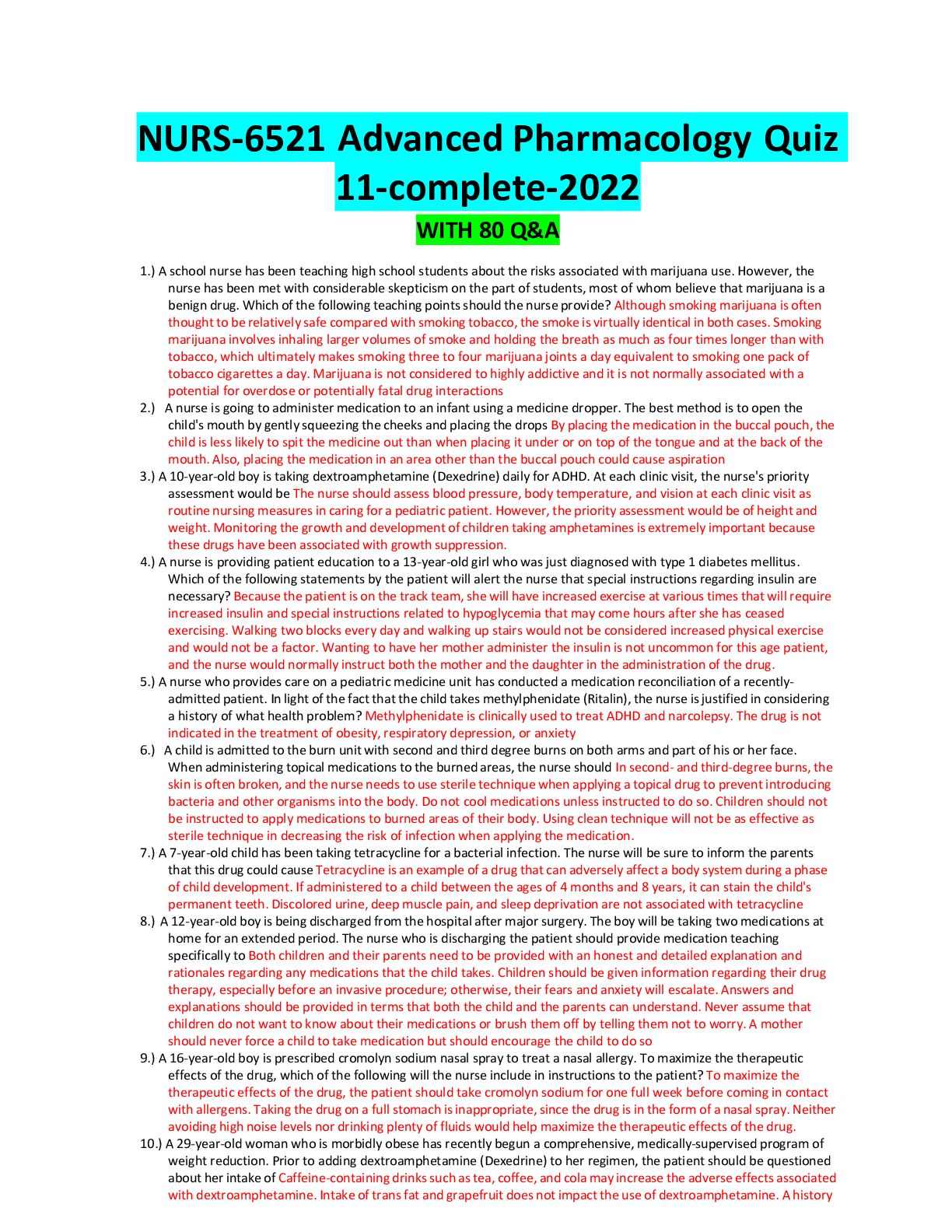
1. A school nurse has been teaching high school students about the risks associated with marijuana use. However, the nurse has been met with considerable skepticism on the part of students, most of whom believe that marijuana is a benign drug. Which of the following teaching points should the nurse provide? Although smoking marijuana is often thought to be relatively safe compared with smoking tobacco, the smoke is virtually identical in both cases. Smoking marijuana involves inhaling larger volumes of smoke and holding the breath as much as four times longer than with tobacco, which ultimately makes smoking three to four marijuana joints a day equivalent to smoking one pack of tobacco cigarettes a day. Marijuana is not considered to highly addictive and it is not normally associated with a potential for overdose or potentially fatal drug interactions
2.) A nurse is going to administer medication to an infant using a medicine dropper. The best method is to open the child's mouth by gently squeezing the cheeks and placing the drops By placing the medication in the buccal pouch, the child is less likely to spit the medicine out than when placing it under or on top of the tongue and at the back of the mouth. Also, placing the medication in an area other than the buccal pouch could cause aspiration
3.) A 10-year-old boy is taking dextroamphetamine (Dexedrine) daily for ADHD. At each clinic visit, the nurse's priority assessment would be The nurse should assess blood pressure, body temperature, and vision at each clinic visit as routine nursing measures in caring for a pediatric patient. However, the priority assessment would be of height and weight. Monitoring the growth and development of children taking amphetamines is extremely important because these drugs have been associated with growth suppression.
4.) A nurse is providing patient education to a 13-year-old girl who was just diagnosed with type 1 diabetes mellitus. Which of the following statements by the patient will alert the nurse that special instructions regarding insulin are necessary? Because the patient is on the track team, she will have increased exercise at various times that will require increased insulin and special instructions related to hypoglycemia that may come hours after she has ceased exercising. Walking two blocks every day and walking up stairs would not be considered increased physical exercise and would not be a factor. Wanting to have her mother administer the insulin is not uncommon for this age patient, and the nurse would normally instruct both the mother and the daughter in the administration of the drug.
5.) A nurse who provides care on a pediatric medicine unit has conducted a medication reconciliation of a recently- admitted patient. In light of the fact that the child takes methylphenidate (Ritalin), the nurse is justified in considering a history of what health problem? Methylphenidate is clinically used to treat ADHD and narcolepsy. The drug is not indicated in the treatment of obesity, respiratory depression, or anxiety
6.) A child is admitted to the burn unit with second and third degree burns on both arms and part of his or her face.
When administering topical medications to the burned areas, the nurse should In second- and third-degree burns, the skin is often broken, and the nurse needs to use sterile technique when applying a topical drug to prevent introducing bacteria and other organisms into the body. Do not cool medications unless instructed to do so. Children should not be instructed to apply medications to burned areas of their body. Using clean technique will not be as effective as sterile technique in decreasing the risk of infection when applying the medication.
CONTINUED.....
[Show More]