NREMT Practice Exam QUESTIONS
WITH ANSWERS. GRADED A+
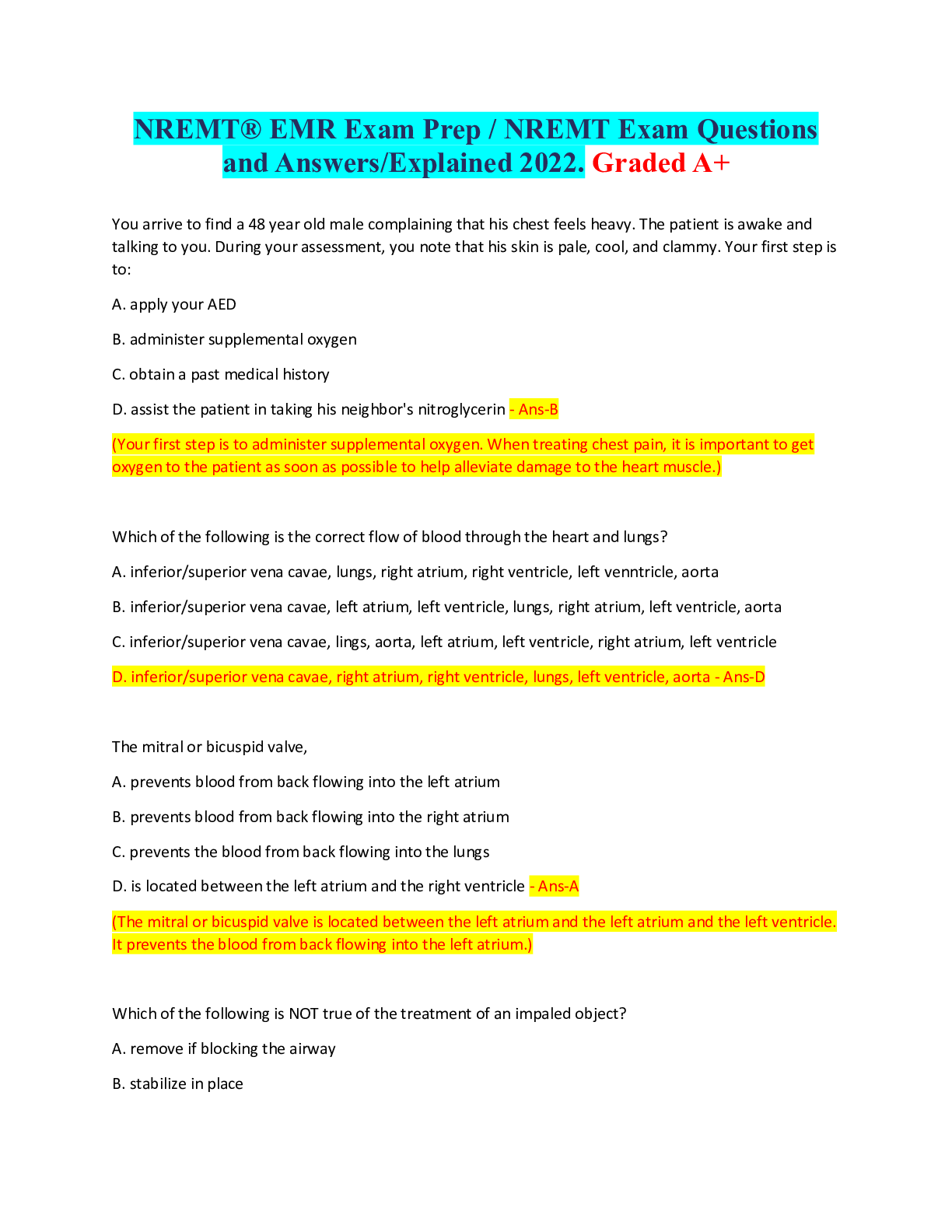
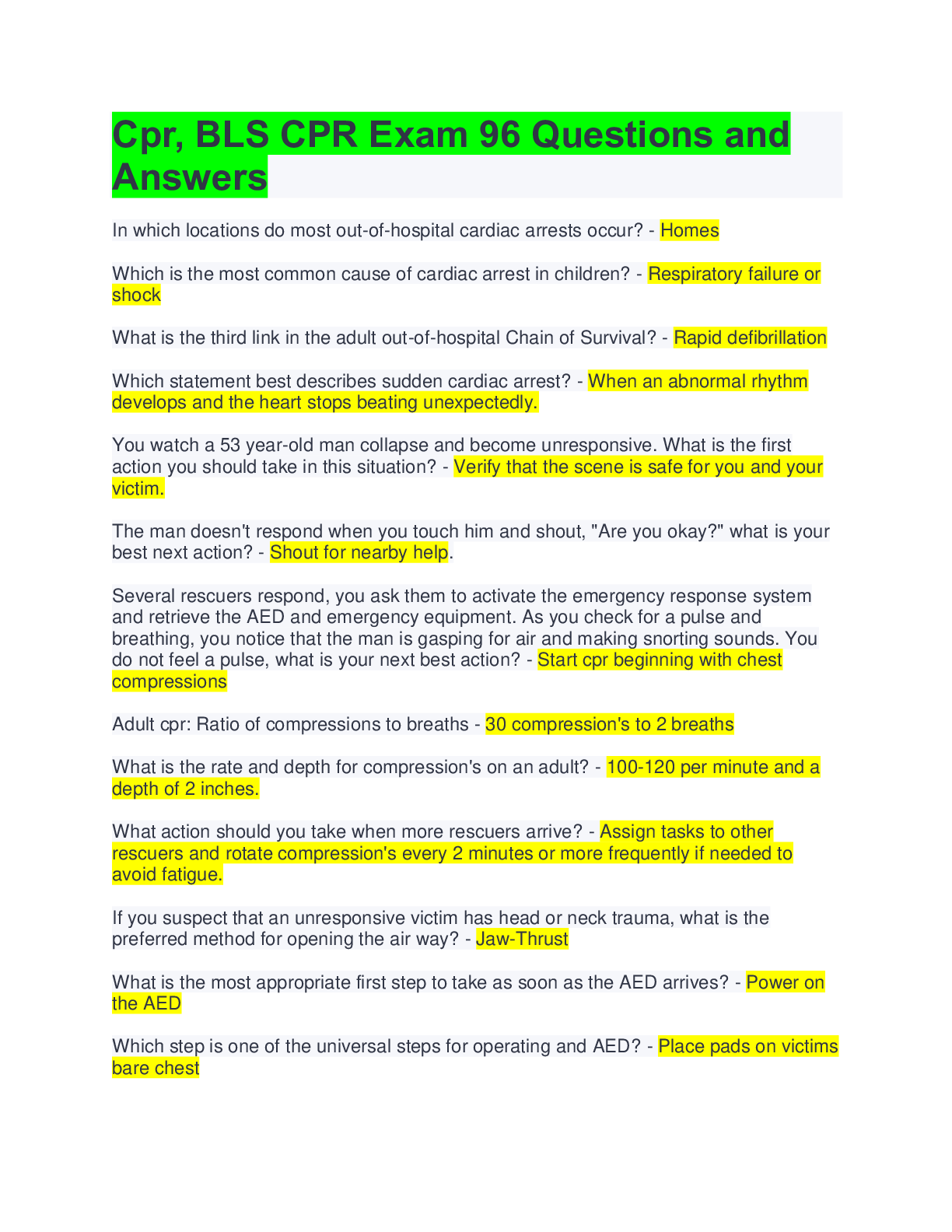
Which of the following is an example of an unsafe scene for an EMT-Basic to enter?
A. Fifty-four-year old male with difficulty breathing
B. Twenty-three-year old
...
NREMT Practice Exam QUESTIONS
WITH ANSWERS. GRADED A+
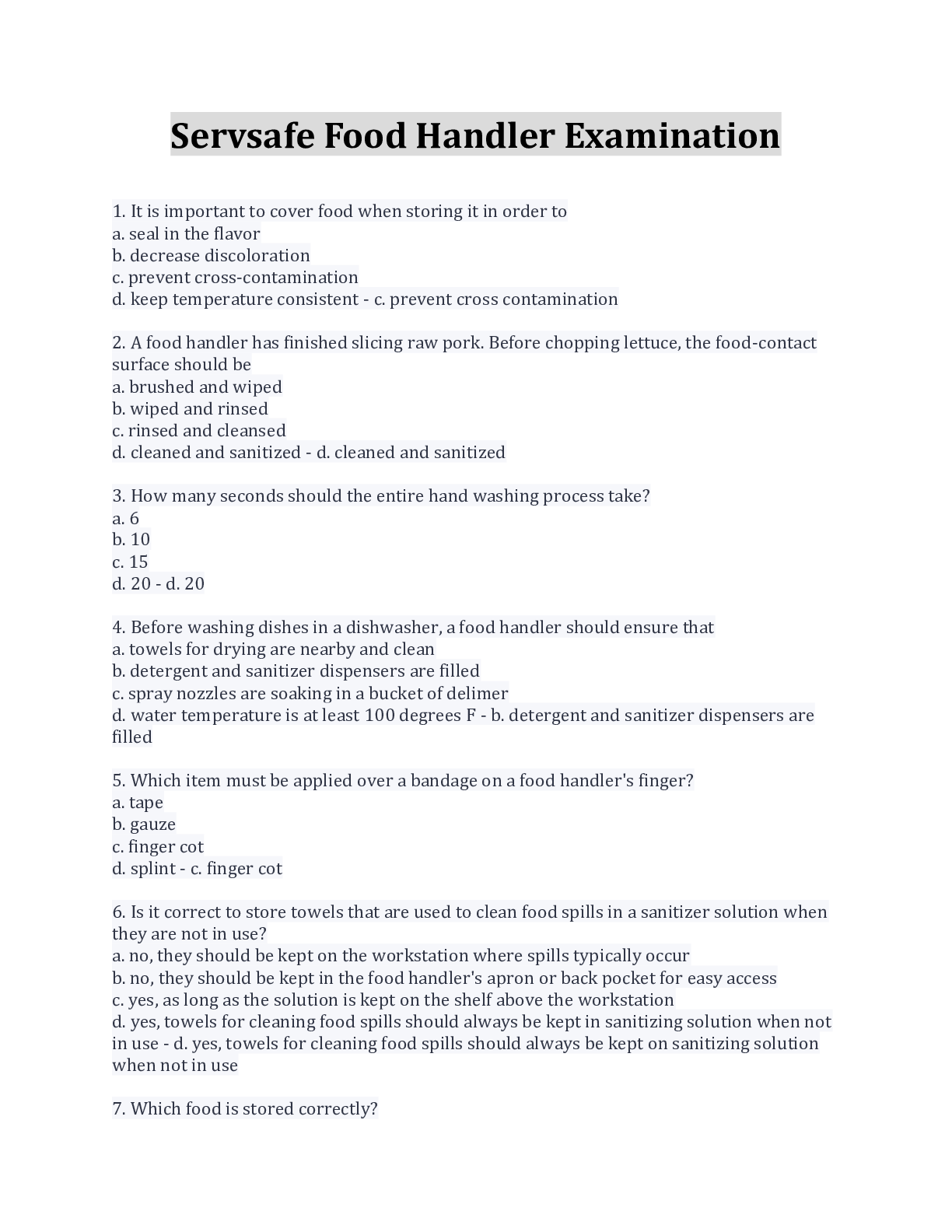
Which of the following is an example of an unsafe scene for an EMT-Basic to enter?
A. Fifty-four-year old male with difficulty breathing
B. Twenty-three-year old female with abdominal pain
C. Eighteen-year old adolescent with a gunshot wound to the chest
D. Four-year old child with leg pain - Ans-C. Eighteen-year old adolescent with a gunshot wound to the
chest
Reason: Any dispatch to a call with violence involved, such as a gunshot wound, must be secured by
police prior to EMS involvement. The other calls do not give any inidication of being unsafe.
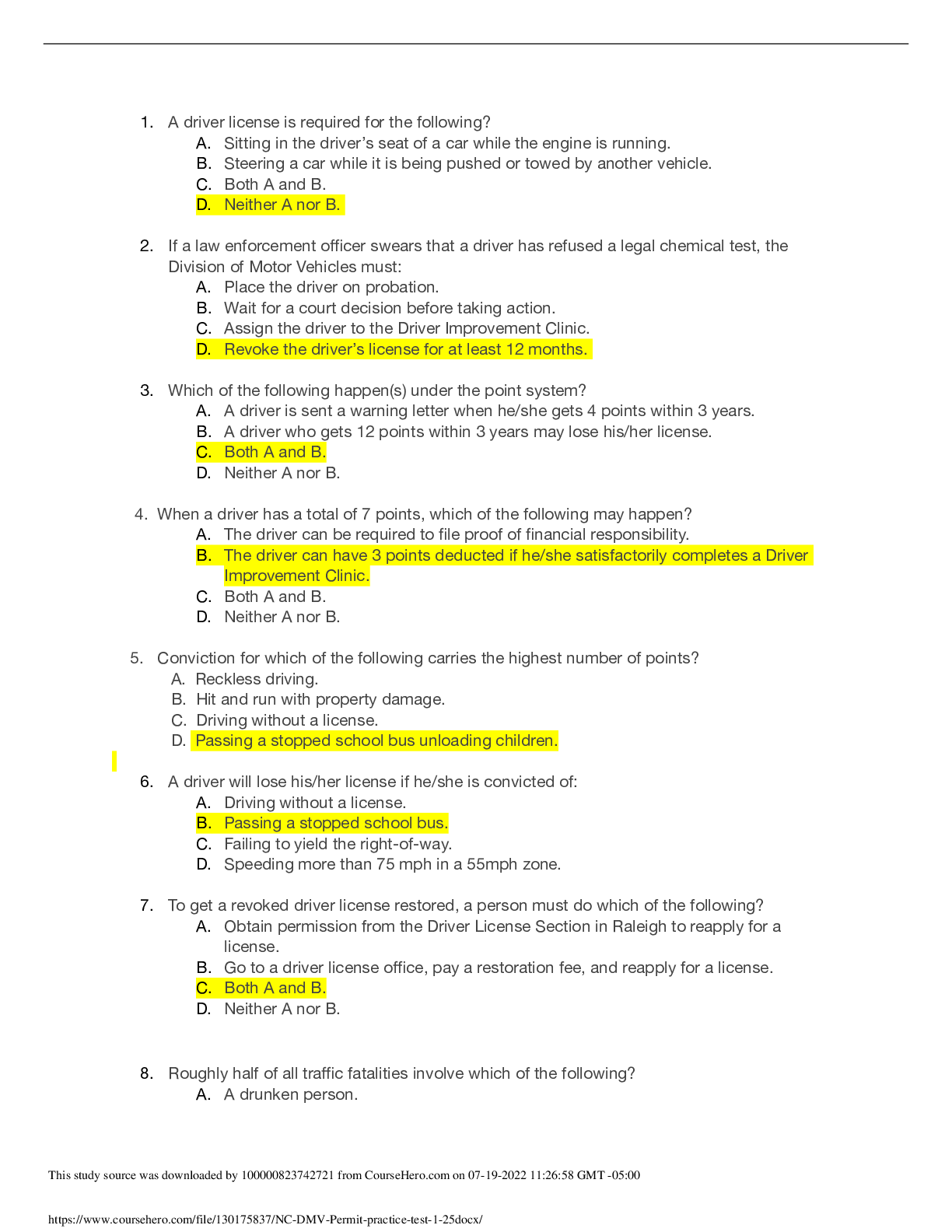
The arterioles connect the _________ and the capillaries.
A. Veins
B. Venules
C. Arteries
D. Vena cavae - Ans-C. Arteries
Reason: The path of blood flow goes from the heart to the aorta to the arteries to the arterioles to the
capillaries to the venules to the veins to the vena cavae to the heart.
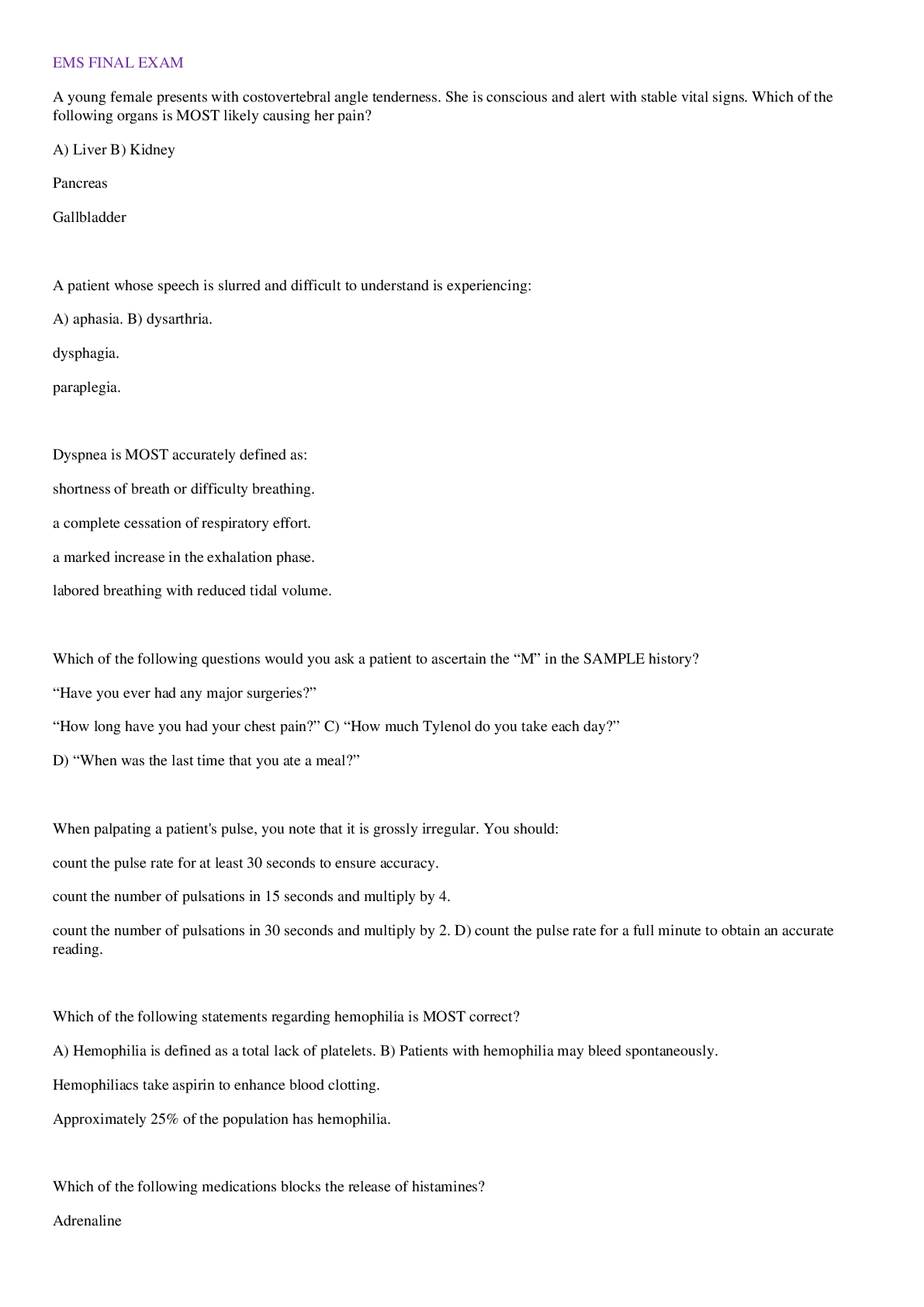
Which of the following patients is at greatest risk for hypothermia?
A. Thirty-year old firefighter
B. Twelve-year old skier
C. Forty-five year old EMT
D. Seventy-year old librarian - Ans-D. Seventy-year old librarianReason: The very young and very old are greater rsk for hypothermia
The zygomatic bones are located in the
A. Chest
B. Lower leg
C. Back
D. Face - Ans-D. Face
Reason: The zygomatic bones are the cheekbones
Which of the following federal laws was created to prevent "patients dumping" and the practice of
denying treatment to patients with no insurance?
A. Emergency Medical Treatment and Active Labor Act (EMTALA)
B. The White Paper Act
C. Health Insurance Portability and Accountability Act (HIPAA)
D. The Medical Practice Act of 1988 - Ans-A. Emergency Medical Treatment and Active Labor Act
(EMTALA)
Reason: The EMTALA was enacted by Congress in 1986 to ensure public access to emergency services
regardless of their ability to pay. This act was also created to prevent hospitals from dumping their
patients on other hospitals because of the patient's financial status. The White Paper (A) was not an act,
but was a paper published in 1966 addressing the inadequacy of pre-hospital emergency medical care.
The Health Insurance Portability and Accountability Act (HIPAA) (C) was created to protect the provacy
of healthcare information. There is no such act as the Medical Practice Act of 1988 (D).
When using air transport, the EMT-Basic should approach a helicopter
A. From the uphill sideB. From the rear
C. Only when instructed by a helicopter crew member
D. Under no circumstances, but instead allow the crew to come to them - Ans-C. Only when instructed
by a helicopter crew member
Reason: Helicopters are dangerous vechicles, and safety rules include never approaching from the uphill
side because of the danger of the rotors, or from the rear because of the tail rotor. In addition, EMTBasics should never approach until instructed by a helicopter crew member so that the patient loading
can be coordinated safely. Not approaching the helicopter at all may be impractical due to patient care
concerns.
Which of the following should be noted as insignificant in conducting the patient assessment?
A. Medication bottles
B. Comments of bystanders and family members
C. Physical condition of the patient
D. Patient's medical insurance - Ans-D. Patient's medical insurance
Reason: (A), (B), and (C) are all significant in conducting patient assessment. A patient's medical
insurance is not a consideration in treating emergency patients.
Which of the following is NOT a component of the Glasgow Coma Scale?
A. Eye opening
B. Verbal response
C. Motor response
D. Tactile sensatory response - Ans-D. Tactile sensatory response
Reason: (A), (B), and (C) are all components of the Glasgow Coma Scale
[Show More]