Lifeguard Written Test. QUESTIONS AND
ANSWERS. RATED A+ MASTERPIECE.
The primary responsibility of a lifeguard is to ensure _____________ _____________ and to
protect ____________________. - Ans-patron safety and prot
...
Lifeguard Written Test. QUESTIONS AND
ANSWERS. RATED A+ MASTERPIECE.
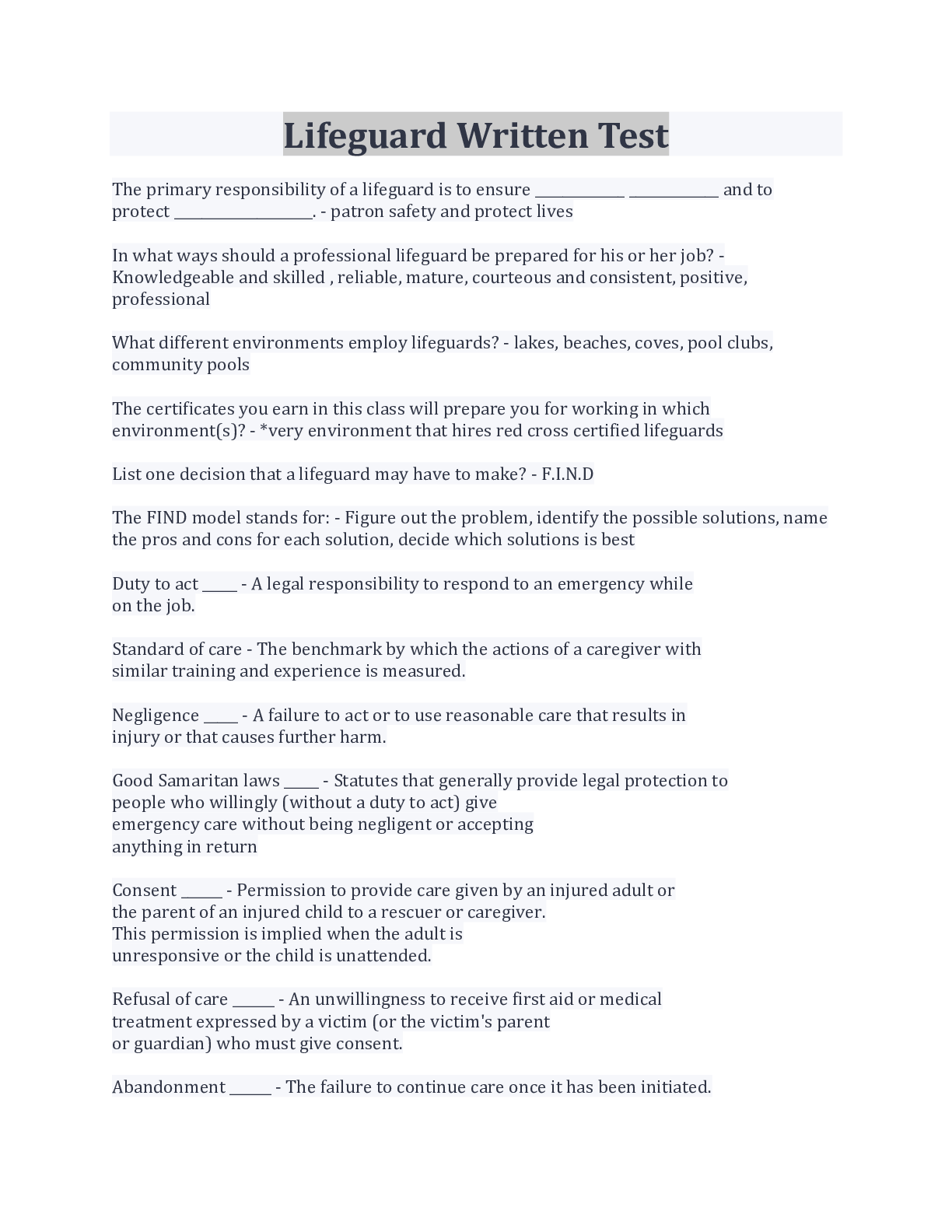
The primary responsibility of a lifeguard is to ensure _____________ _____________ and to
protect ____________________. - Ans-patron safety and protect lives
In what ways should a professional lifeguard be prepared for his or her job? - Ans-Knowledgeable and
skilled , reliable, mature, courteous and consistent, positive, professional
What different environments employ lifeguards? - Ans-lakes, beaches, coves, pool clubs, community
pools
The certificates you earn in this class will prepare you for working in which environment(s)? - Ans-*very
environment that hires red cross certified lifeguards
List one decision that a lifeguard may have to make? - Ans-F.I.N.D
The FIND model stands for: - Ans-Figure out the problem, identify the possible solutions, name the pros
and cons for each solution, decide which solutions is best
Duty to act _____ - Ans-A legal responsibility to respond to an emergency while
on the job.
Standard of care - Ans-The benchmark by which the actions of a caregiver with
similar training and experience is measured.
Negligence _____ - Ans-A failure to act or to use reasonable care that results in
injury or that causes further harm.
Good Samaritan laws _____ - Ans-Statutes that generally provide legal protection to
people who willingly (without a duty to act) give
emergency care without being negligent or accepting
anything in return
Consent ______ - Ans-Permission to provide care given by an injured adult or
the parent of an injured child to a rescuer or caregiver.
This permission is implied when the adult is
unresponsive or the child is unattended.
Refusal of care ______ - Ans-An unwillingness to receive first aid or medical
treatment expressed by a victim (or the victim's parent
or guardian) who must give consent.
Abandonment ______ - Ans-The failure to continue care once it has been initiated.
Confidentiality _____ - Ans-The safeguarding of a victim's right to privacy as it
concerns his or her medical condition, etc.
Documentation _____ - Ans-A form, like an accident report, that describes what was
seen, heard, and done during an emergency.
As you keep in mind the legal considerations explained in this chapter, read the following
scenario and answer the related questions: A female patron slips and falls on the deck. She hits
her head, and it is lightly bleeding. You ask for consent, but the patron refuses. She says she will
get dressed and go home.
a. What should you do?
A few minutes after the patron enters the locker room, another patron comes out and says the
woman is now unconscious in the locker room.
b. Should you help the patron now? Why or why not? - Ans-A- fill out a report and ask her to sign if not,
write that down on the documentations.B- Then you would help her because she is unconscious it is
called implied consent
What is the importance of the lifeguard team? - Ans-working together, following rules and regulations,
acting fast when it comes to an emergency, and understanding how to wok like a team
The lifeguard team is part of a larger team - the _______________ ________________ team. - Ans-the
lifeguard team and the safety team
how to prevent injuries - Ans-patron safety
risk management - Ans-identifying dangerous conditions/ behaviors that can cause injury and then
taking steps to minimize them
preventive life guarding - Ans-most time will be spent on trying to make sure emergencies don't happen
what are some examples of life- threatening injures - Ans-submersion (nonfatal/drowning). injuries to
the head, neck or back (spiral injuries), unconsciousness. breathing emergencies, cardiac emergencies,
severe bleeding
what are the most two serious aquatic emergencies to prevent - Ans-drowning and head,neck and back
injuries
Drowning - Ans-happens when a person suffocates in the water
How are patrons informed of a potential injury at an aquatic facility - Ans-Rules and regulations
Rules and regulations - Ans-Lifeguards need to understand the rules and regulations of the facility where
they work, rules do not keep patron from having fun, but are for every ones health and safety
when are safety checks conducted - Ans-before opening the facility, during daily operations,at closing
what to do if you find an unsafe condition - Ans-correct it if possible before the facility opens, if you
cannot correct the problem, tell the LG supervisor immediately
While you are conducting a safety check, you find a large crack on the pool deck near the deep end. you
should- - Ans-close off the area and tell the lifeguard supervisor right away
Weather conditions - Ans-Lightning and thunderstorms happen more often in the summer.
what should lifeguards do in the event of a thunder and lightning - Ans-clear everyone from the water at
the first sound of thunder or first sight of lighting.
Patron surveillance - Ans-a lifeguards primary responsibility is to ensure patron safety and protect lives.
what is the primary tool to accomplish that function is patron surveillance - - Ans-keeping a close watch
over people in the facility, you will spend most of your time on patron surveillance, you must be alert
and attentive at all times
what is the RID factor - Ans-most drownings at supervised swim areas happen when neither lifeguards
nor patrons notice that a victim had slipped below the surface
RID stands for - Ans-Recognition Instructive Distraction
EAP(s)stands for - Ans-Emergency action plans
What are EAP(s) - Ans-detailed plans describing everyone's responsibilities in an emergency and should
be in the facility policies and procedures manual
When should EAP be practiced - Ans-Regularly during orientation and in- service training sessions.
What are 4 signals that would help you recognize an emergency? - Ans-Unusual sighs, unusual odors,
unusual behaviors, and unusual noises
[Show More]

.png)