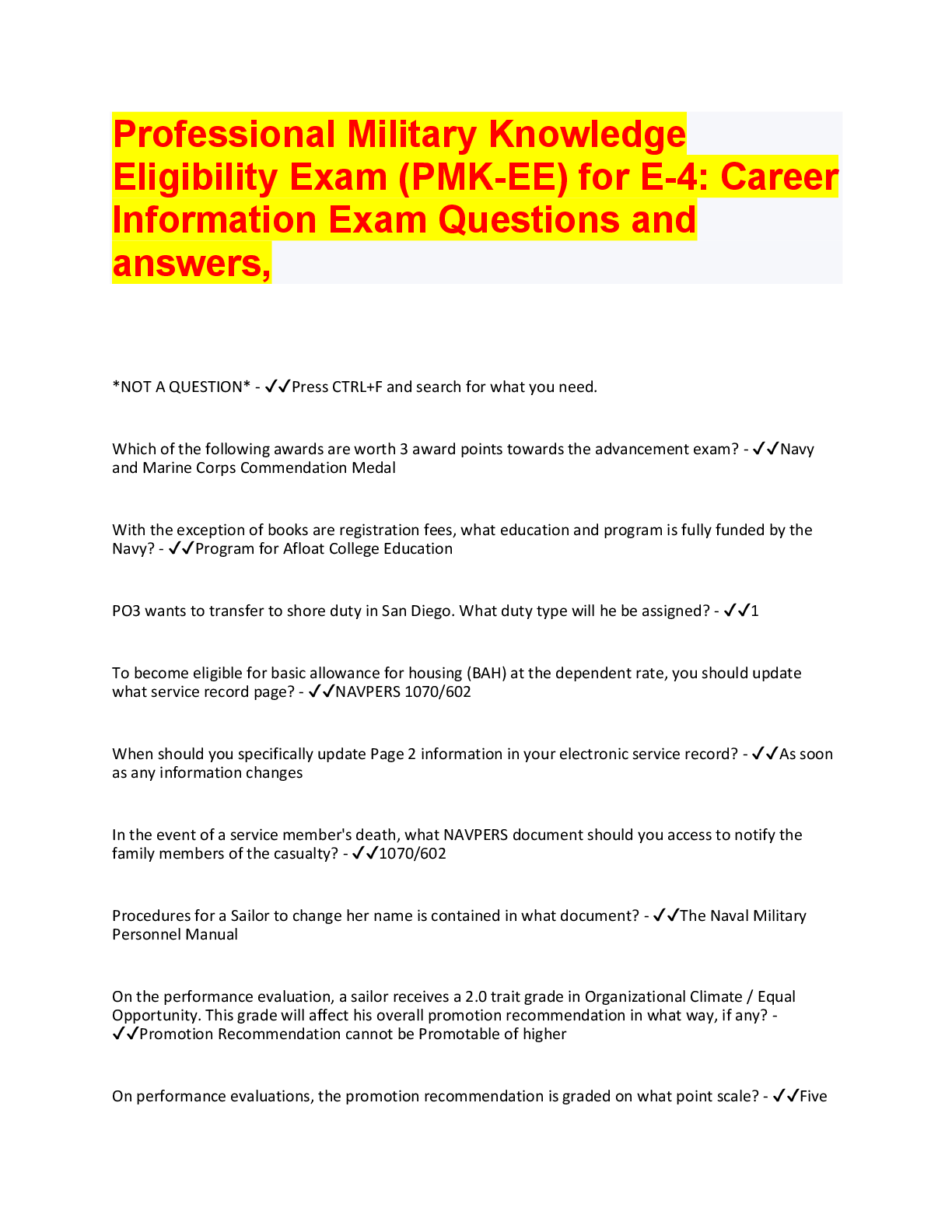
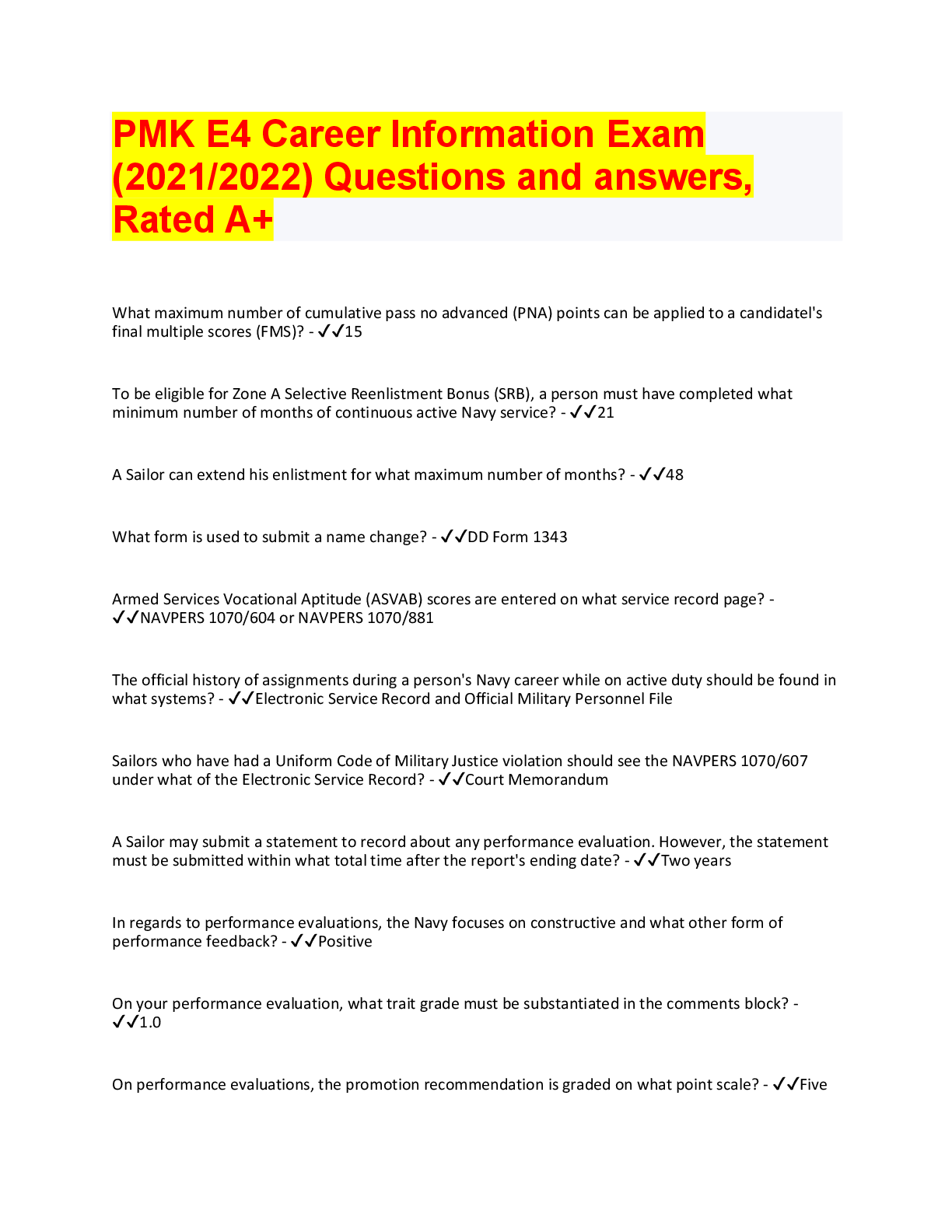
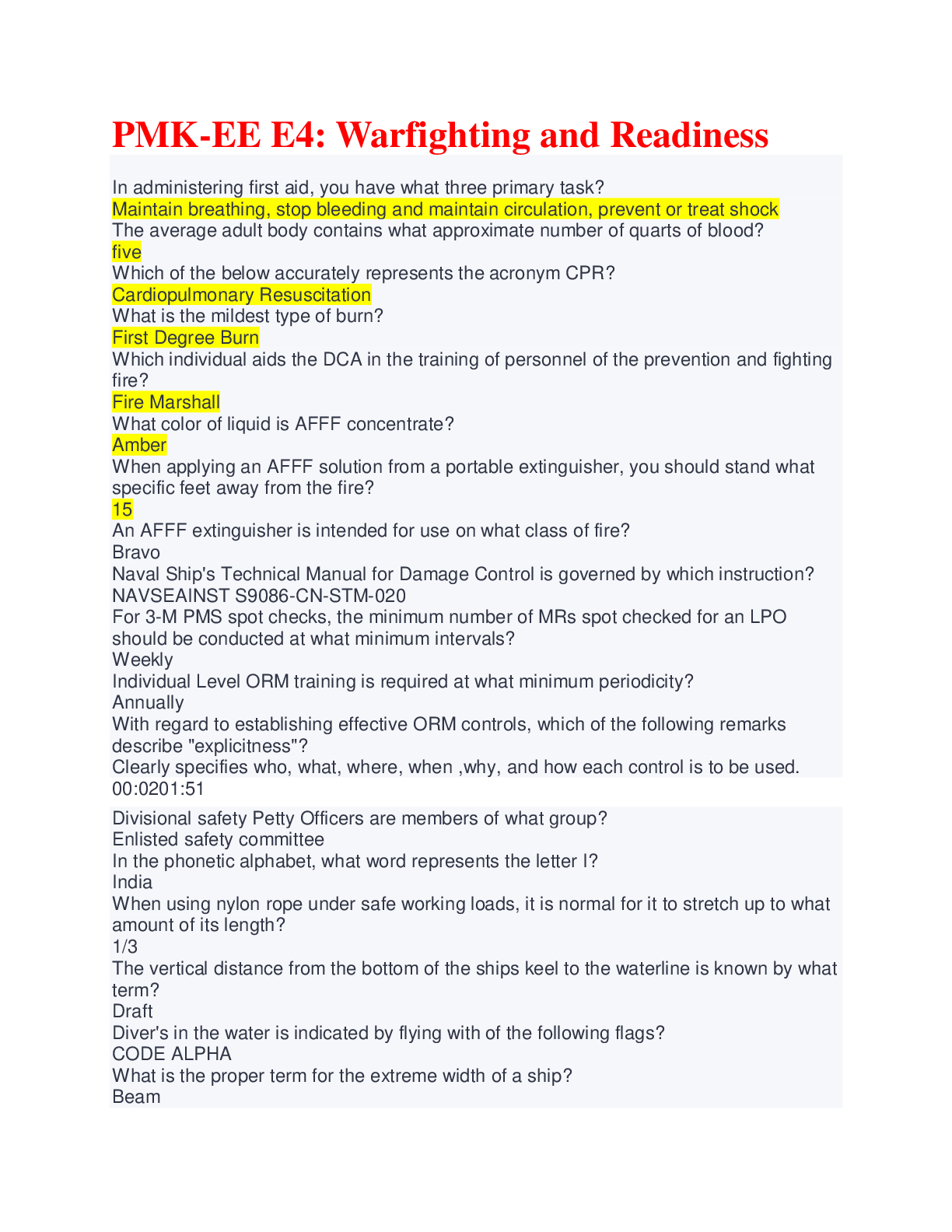
Biology > QUESTIONS & ANSWERS > Biology Portage Learning Mod-1 Quizzes and answers. GRADED A+. (All)
Biology Portage Learning Mod-1 Quizzes and answers. GRADED A+.
Document Content and Description Below
Last updated: 3 years ago
Preview 1 out of 7 pages
Instant download

Buy this Document to get the Full Access Instantly
Provided by Students Who Aced it
We Verify Document Content to Gurantee Accuracy
Reviews( 0 )
Document information
Connected school, study & course
About the document
Uploaded On
Jun 19, 2022
Number of pages
7
Written in
All
Seller

Reviews Received
Additional information
This document has been written for:
Uploaded
Jun 19, 2022
Downloads
0
Views
223
Topic Tags
Recommended For You
Get more on QUESTIONS & ANSWERS »
Biology Portage Learning Mod-1 Quizzes and answers. GRADED A+.
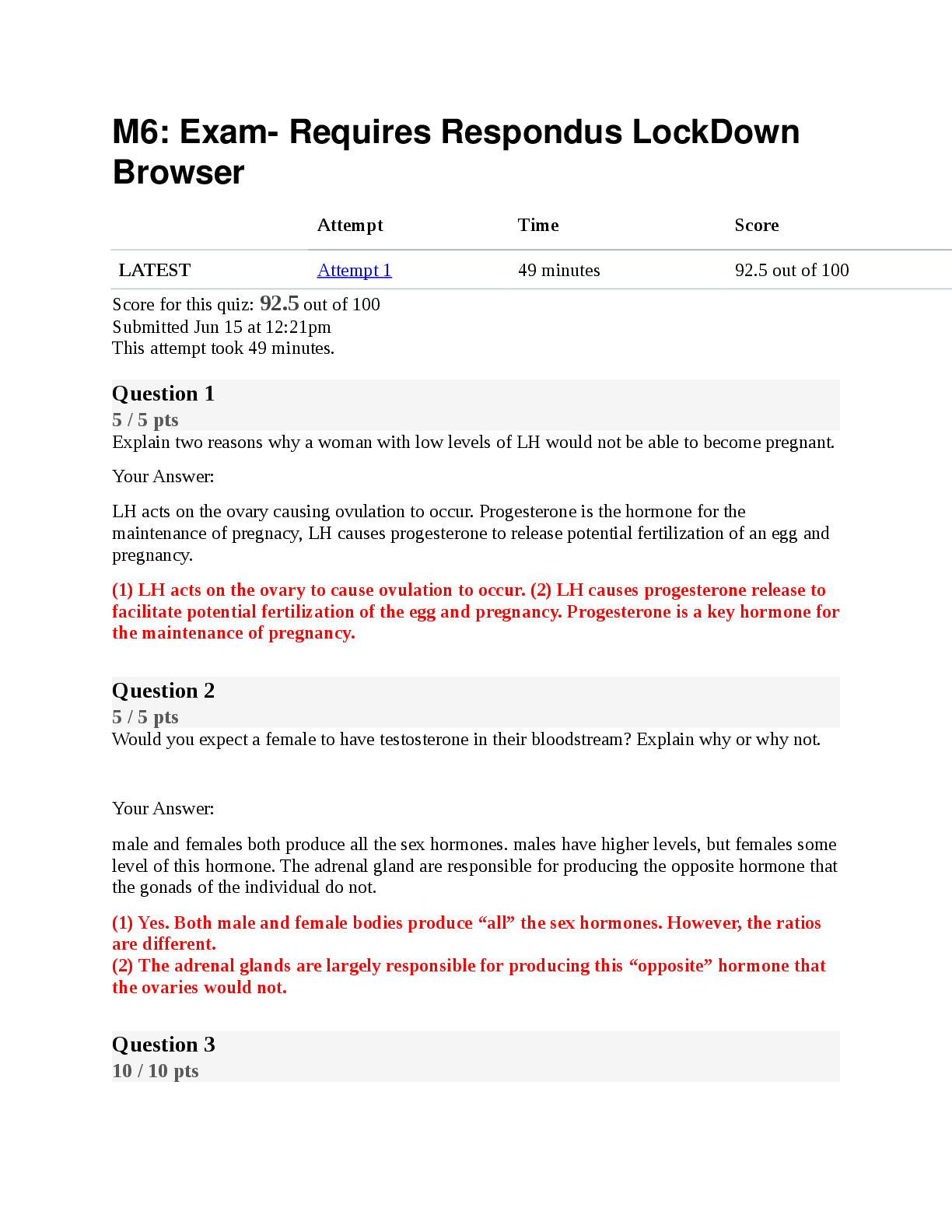
BIOD 151 / BIOD151 Portage Learning Module 6 Exam With Respond...

BIOD 171 Essential Microbiology Portage Learning Module 5 Exam...



Portage Learning Module 7 Problem Set Questions and Answers,10...

BIOD 171 Essential Microbiology Portage Learning Module 2 Exam...

A&P 1 101 PORTAGE LEARNING MODULE 4 SKELETAL SYSTEM TEST LATES...

BIOD 121 PORTAGE LEARNING MODULE 2 PROBLEM SET ESSENTIALS IN N...
BIOD 121 PORTAGE LEARNING MODULE 2 PROBLEM SET ESSENTIALS IN N...

BIOD 121 PORTAGE LEARNING MODULE 3 PROBLEM SET ESSENTIALS IN N...

BIOD 121 PORTAGE LEARNING MODULE 4 PROBLEM SET ESSENTIALS IN N...

BIOD 121 PORTAGE LEARNING MODULE 5 PROBLEM SET ESSENTIALS IN N...