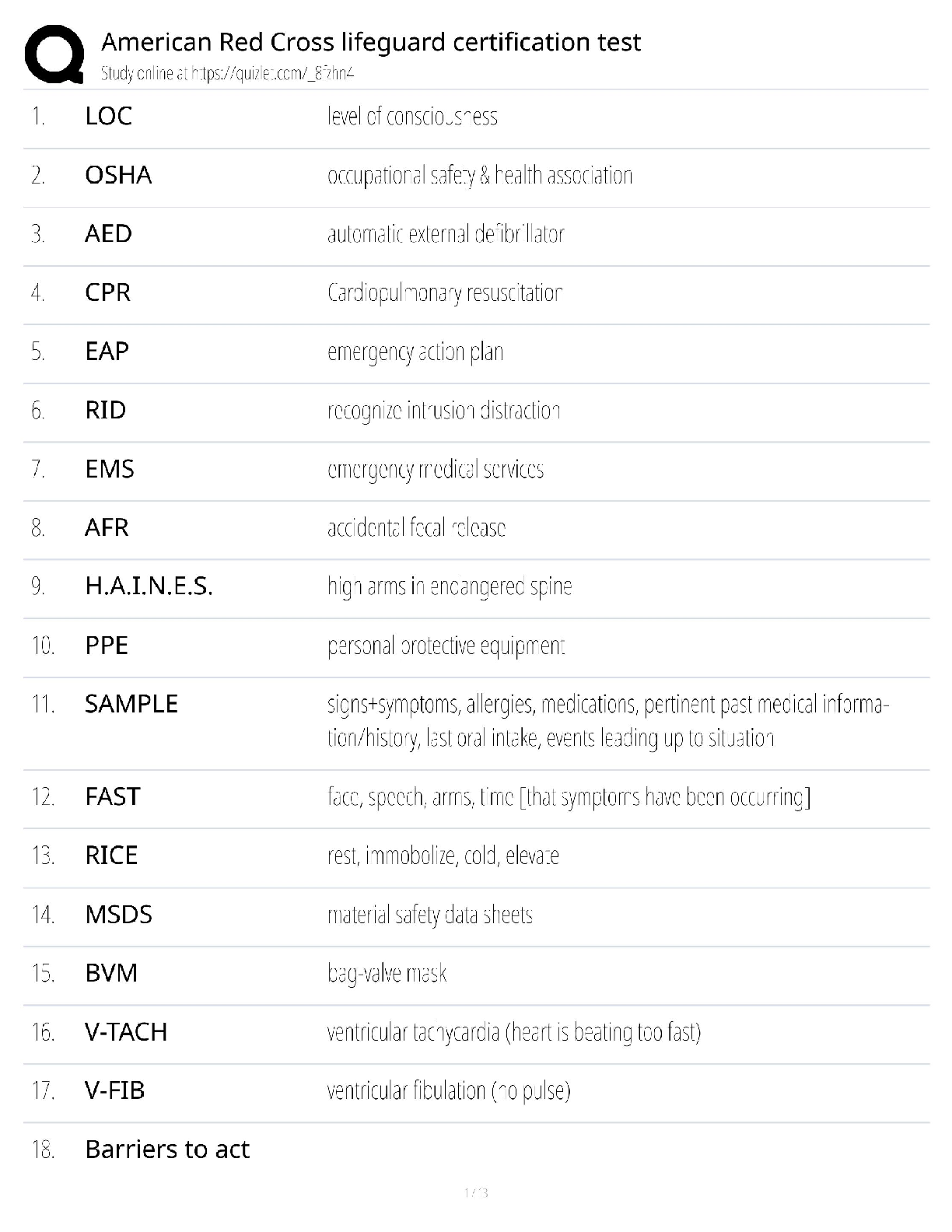
Red cross life guarding test study
Complete set. Graded A+
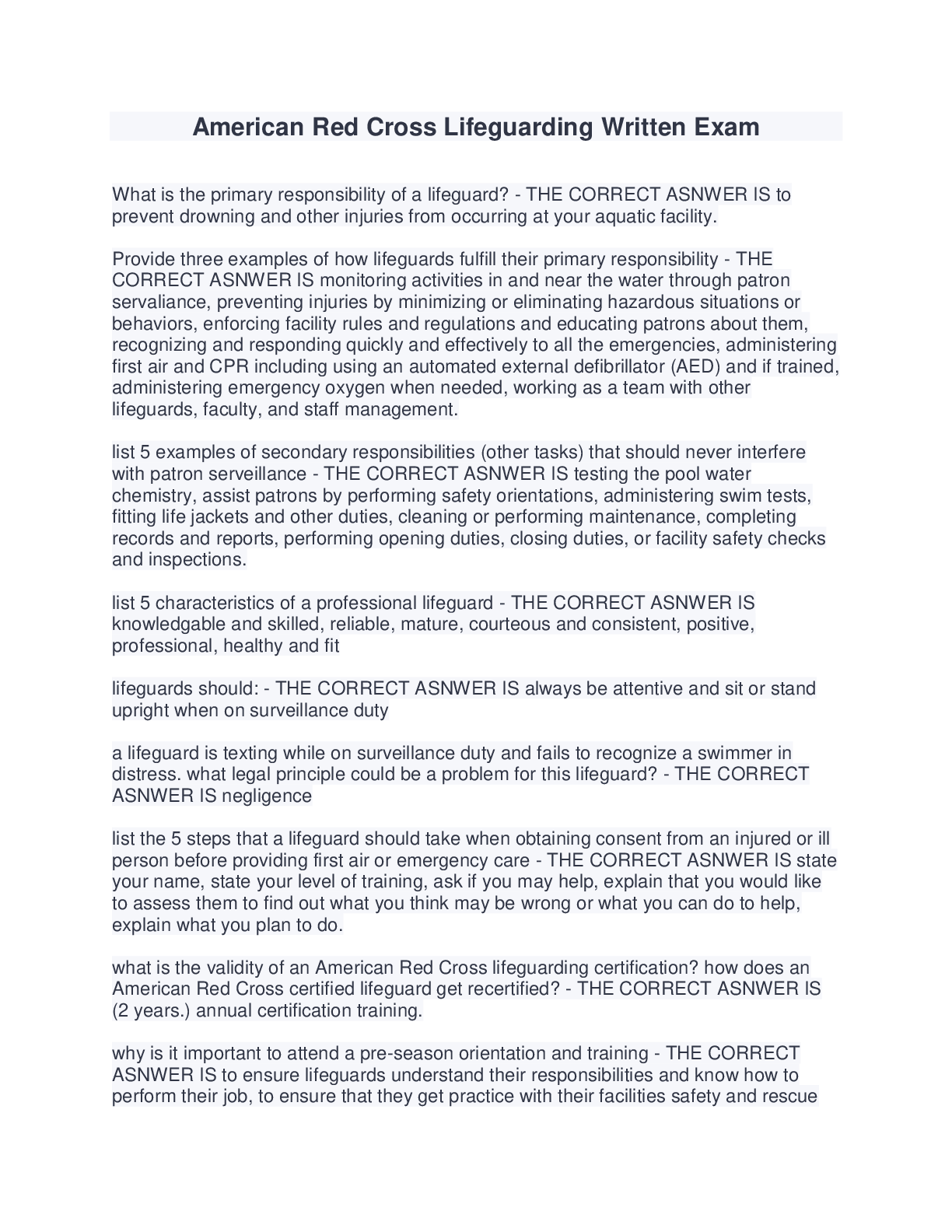
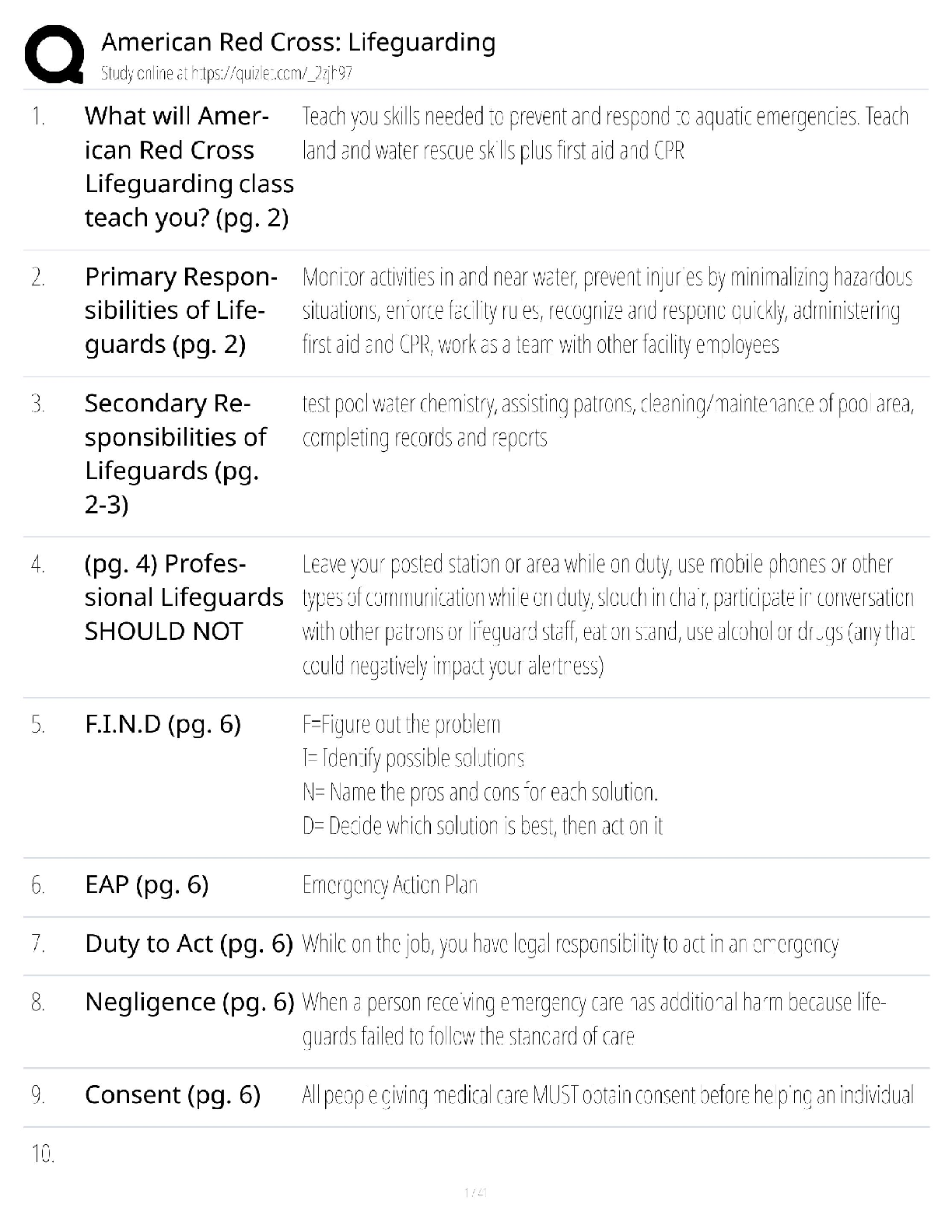
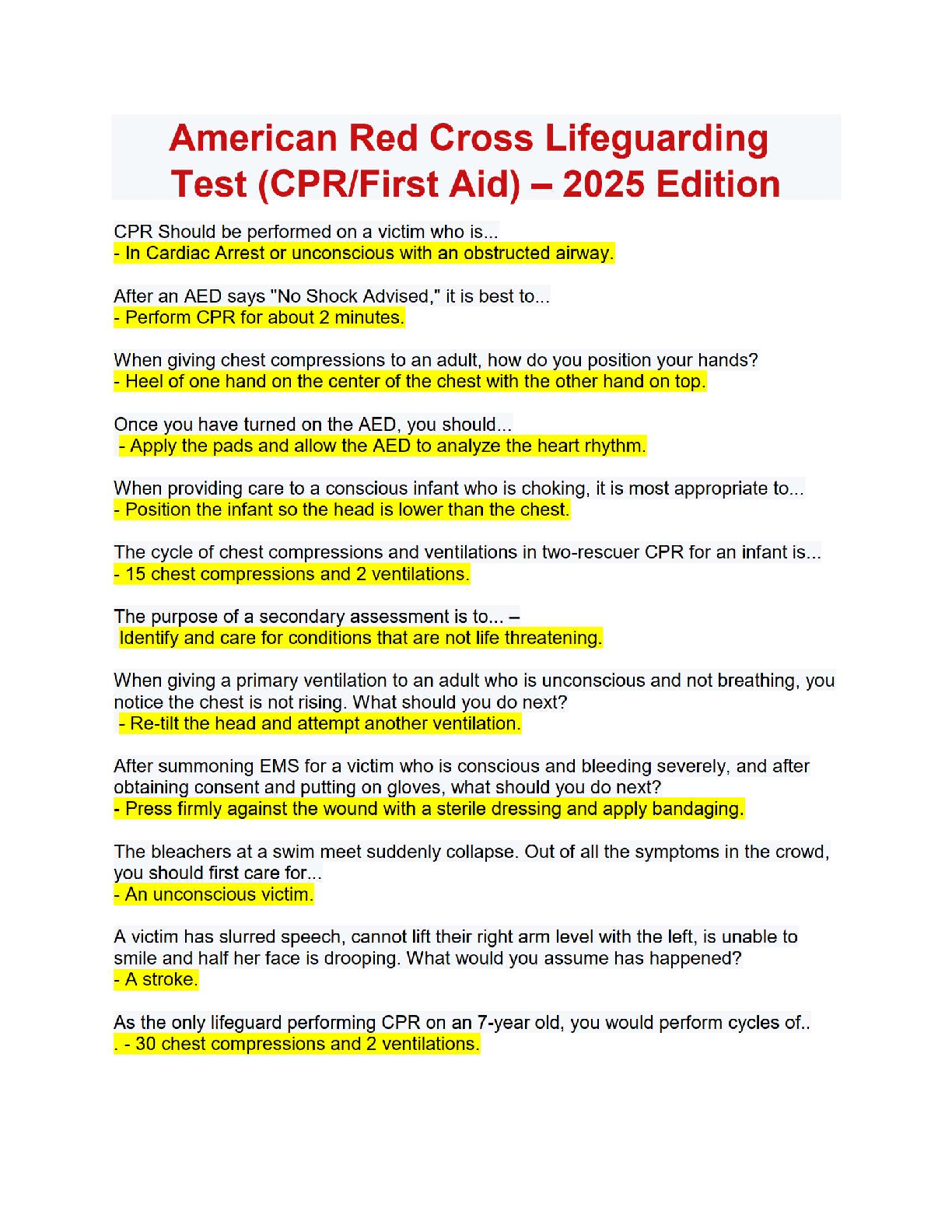
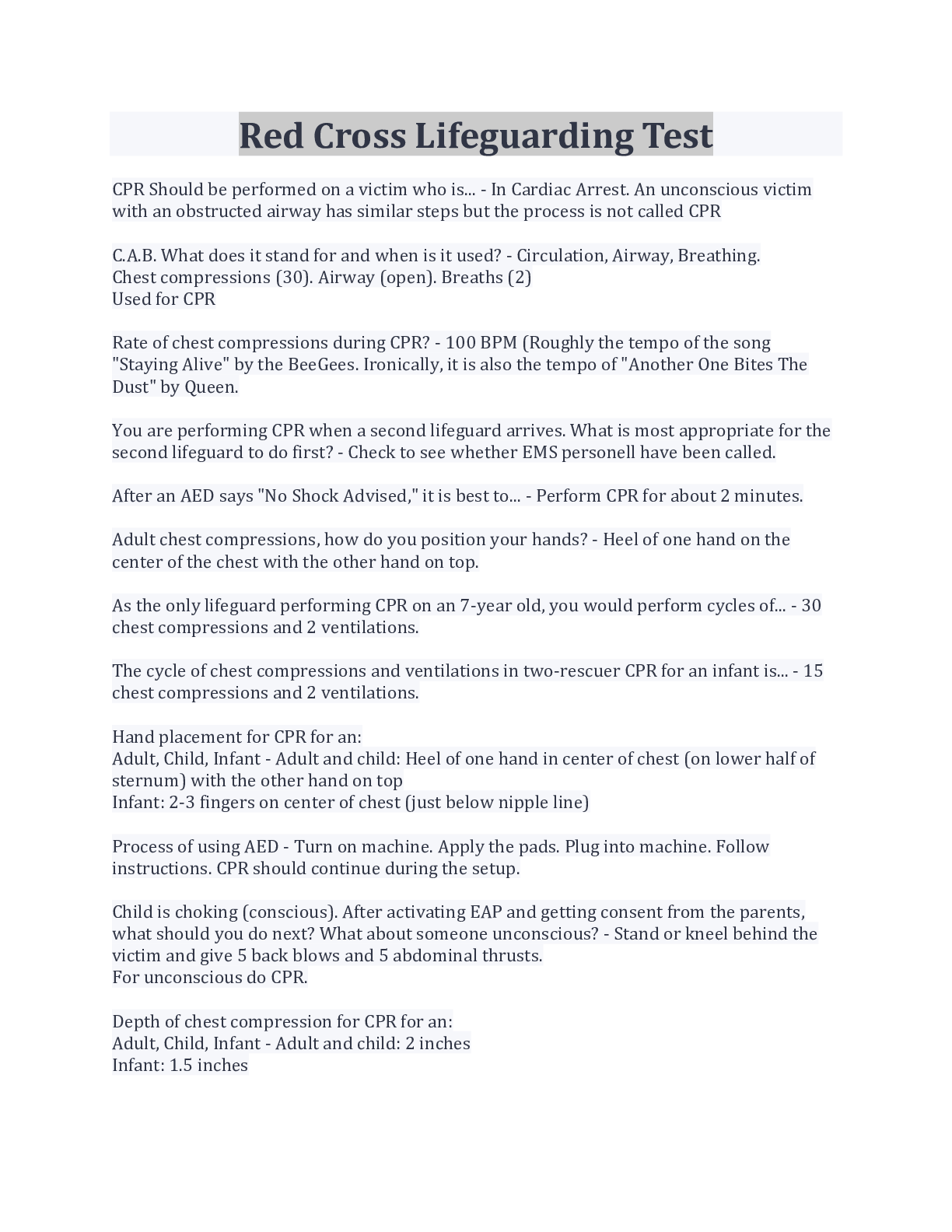
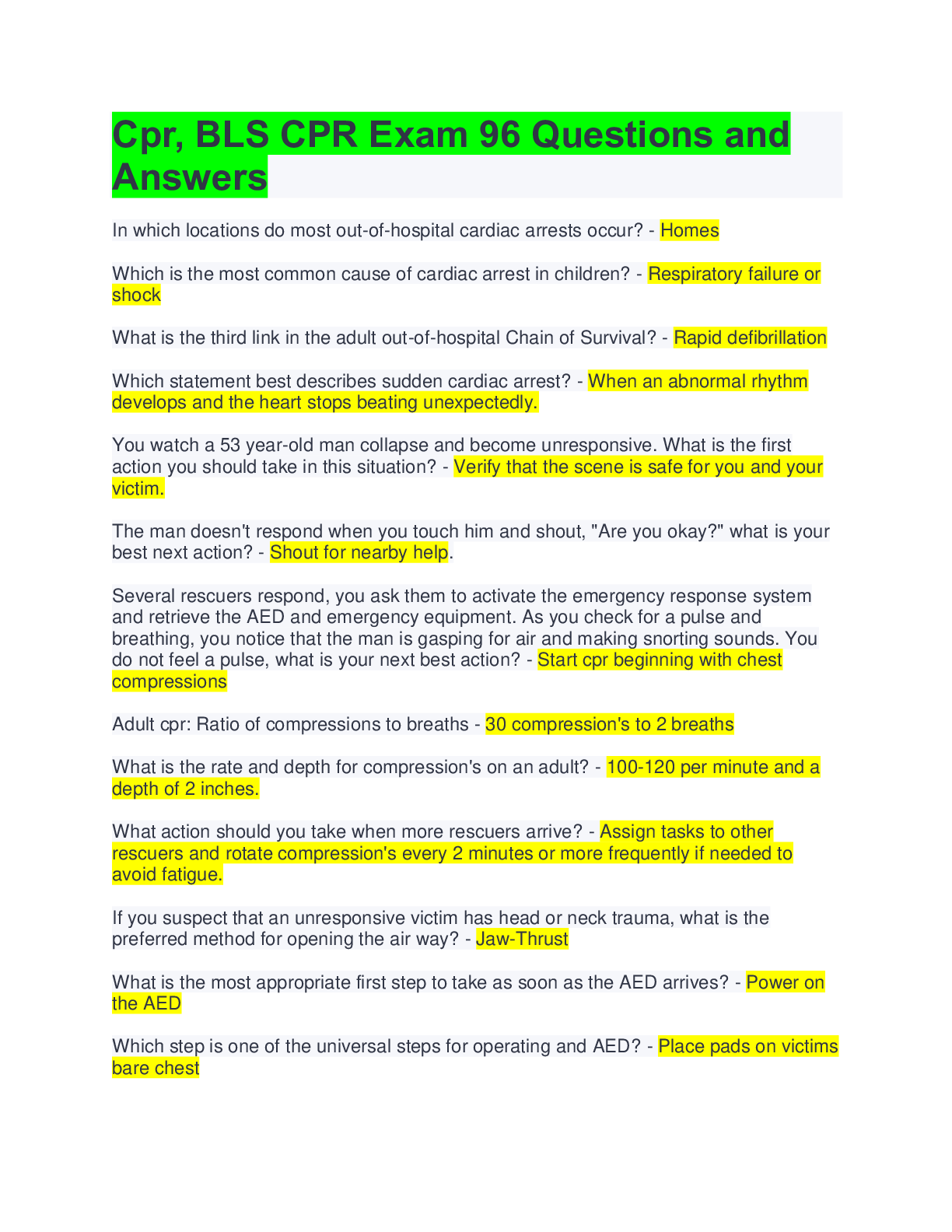
As the only lifeguard performing CPR on a & year old child, you would perform cycles of: - Ans-30 chest
compressions and 2 ventilations
Which of the followin
...
Red cross life guarding test study
Complete set. Graded A+
As the only lifeguard performing CPR on a & year old child, you would perform cycles of: - Ans-30 chest
compressions and 2 ventilations
Which of the following would you identify as the universal sign that a conscious person is choking? - AnsClutching the throat
The patron asks, "Should we move them to the first aid room?" What should you do next? - Ans-Tell the
patron the victim should not be moved since there is no immediate danger.
How can you best protect yourself from possible bloodborne pathogen transmission when providing
care? - Ans-Use protective equipment, such as disposable gloves and a breathing barrier, when
providing care.
A patron has slurred speech, is unable to lift their right arm level with their left arm and is unable to
smile without one side of their face drooping. These are symptoms of: - Ans-stroke
You are walking on the pool deck when the swim team coach suddenly collapses in front of you. During
your primary assessment, you find that the victim doesn't have a pulse. You should: - Ans-Immediately
begin CPR using cycles of 30 compressions followed by 2 ventilations.
Which of the following is most essential to use when giving ventilations to protect you and the victim
from disease transmission? - Ans-resuscitation masks
You are giving ventilations to a 5 year old child using a resuscitation mask. You should give 1 ventilation
about every: - Ans-3 secondsYou are providing care to an adult who is unresponsive and not breathing as a result of a drowning. You
give your first ventilation before performing CPR and notice that the chest doesn't rise. Which of the
following should you do next? - Ans-Re-tilt the victim's head and then attempt another ventilation.
A patron seems to be having a diabetic emergency. You should: - Ans-Give them a glucose tablets.
While preparing to use an AED on a victim, you notice a medication patch on the victim's chest. Which
action is appropriate? - Ans-Removing the patch with a gloved hand.
What statement about BVMs is most accurate? - Ans-Ventilations are more effective when 2 rescuers
operate the BVM.
you complete a primary assessment and find that the victim has a pulse but is not breathing. Which of
the following should you do next? - Ans-give ventilations at a rate of 1 about every 5-6 seconds
You and another lifeguard are preparing for CPR on an adult who collapsed in the locker room. You
determine that there is no breathing or pulse and state, "Victim has no pulse. Begin CPR." Which of the
following should the other lifeguard do next? - Ans-begin chest compressions
A patron has cut their leg on the edge of the bleachers and is bleeding heavily. You think the patron is in
shock because they: - Ans-become reckless and irritable
A person has been injured and is responsive. You obtain consent to check the victim for life threatening
conditions. What life-threatening conditions would require you to immediately summon EMS
personnel? - Ans-persistent chest pain
You determine that a victim is unresponsive but breathing. While waiting with the victim for EMS
personnel, you would position the victim: - Ans-in a recovery position
An AED indicates that "no shock is advised". What is most appropriate to do next ? - Ans-perform CPR
for about 2 minutes.If a victim is having a seizure in the water: - Ans-Support the victim with their head above water until the
seizure ends.
When using an AED, what should you do immediately after attaching the AED pads to the victim's chest?
- Ans-Tell everyone to stand clear
what should you do first when approaching the scene of an emergency? - Ans-Size-up the scene while
forming an initial impression.
You are providing care to a conscious infant who is choking. When giving chest thrusts, what would you
see? - Ans-2 or 3 fingers
During a primary assessment, which of the following should you check first? - Ans-responsiveness
You are performing CPR on a victim and an assisting responder arrives. What is most appropriate for the
assisting responder to do first? - Ans-Check to see whether EMS personnel have been called.
When giving abdominal thrusts to an adult who is chocking, where should you position your fist? - AnsIn the middle of the abdomen, just above the navel.
Your initial impression reveals severe life threatening bleeding in an adult victim who appears to be
unresponsive. Your next step should be: - Ans-control the bleeding with any available resources.
An injured patron is responsive and bleeding. After summoning EMS personnel, obtaining consent and
putting on disposable gloves, what is your next care step? - Ans-Press firmly against the wound w/ a
sterile dressing and bandage.
What is the 1st step your should take in caring for a victim with burns? - Ans-Remove the victim from
the source of the burn.You are providing care to a patron who started chocking on some food. The victim becomes
unresponsive. What should you do first? - Ans-Lower the victim to the ground and begin CPR starting w/
chest compressions.
you are giving ventilations with a resuscitation mask, the victim vomits. What should you do first? - AnsTurn the victim onto their side and clear the airway of the vomit immediately.
what signs and symptoms would indicate that a victim is experiencing respiratory distress? - AnsGasping for breath
[Show More]