Five Roles / Responsibilities of the EMR
(ANS-
1. Personal Health and Safety
2. Caring Attitude, Maintaining Composure
3. Neat, Clean, and Professional Appearance
4. Keep Up to Date knowledge and skills
5. Put
...
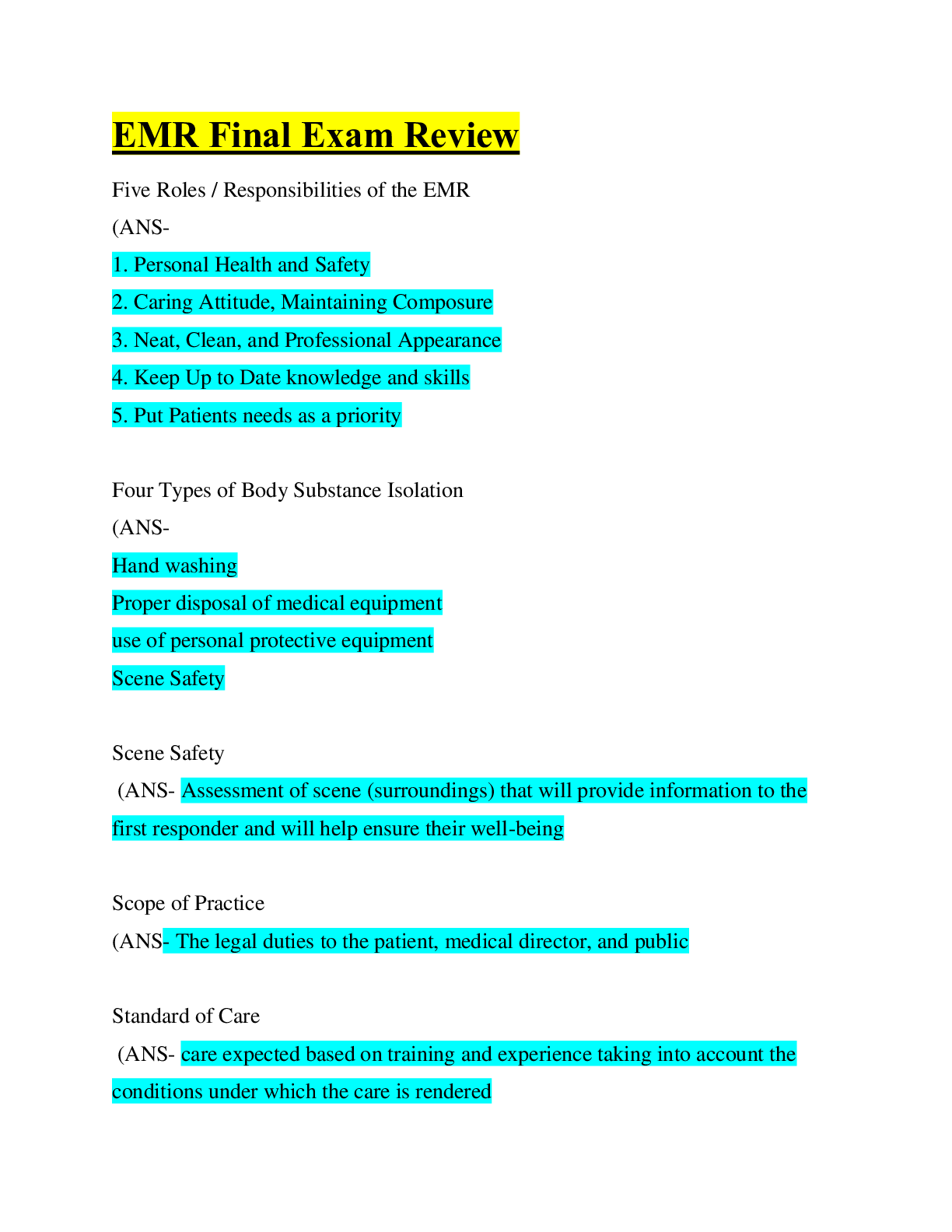
Five Roles / Responsibilities of the EMR
(ANS-
1. Personal Health and Safety
2. Caring Attitude, Maintaining Composure
3. Neat, Clean, and Professional Appearance
4. Keep Up to Date knowledge and skills
5. Put Patients needs as a priority
Four Types of Body Substance Isolation
(ANS-
Hand washing
Proper disposal of medical equipment
use of personal protective equipment
Scene Safety
Scene Safety
(ANS- Assessment of scene (surroundings) that will provide information to the first responder and will help ensure their well-being
Scope of Practice
(ANS- The legal duties to the patient, medical director, and public
Standard of Care
(ANS- care expected based on training and experience taking into account the conditions under which the care is rendered
Competence
(ANS- The ability to understand questions and to the implication of decisions made ( do you know who / where / what you are? )
Expressed Consent
(ANS- The patient must be told in an easy to understand nature and the extent of the procedure to be preformed as well as the possible risks involved
Implied Consent
(ANS- Consent based on the assumption that the unresponsive patient would consent to life saving interventions
Advanced Directives
(ANS- Written documentation that specifies what medical treatment a patient wishes to have and what to withhold should the patient become unable to make a decision
Assault and Battery
(ANS- Unlawfully touching a patient without consent providing emergency medical care when a competent patient does not consent to the emergency medical care
Abandonment
(ANS- Terminating care of the patient without insuring that care will continue at the same level or higher
Four Components of Negligence
(ANS-
1. Duty to act (legal obligation)
2. Breach of Duty (failure to act)
3. Injury where Inflicted (some injury occurred)
4. Proximate Cause (the actions of the EMR caused injury)
Negligence
(ANS- Deviating from the accepted standard of care resulting in further injury of the patient
Good Samaritan Law
(ANS- State Laws intended to protect care providers from liability if they deliver the standard care in good faith to the level of their training and to the best of their ability. Don't protect from Wanton, Gross, or Willful Negligence
Circulatory
(ANS- Delivers oxgen and nutrients to the tissues and removes waste products from the tissues
Central Nervous System
(ANS- Brain and Spinal Cord
Skin
(ANS- Protects the body from the environment, bacteria and other organisms
regulates temperature and prevents dehydration
Senses heat/cold touch pressure and pain transmits to the brain and spinal cord
Rules of Body Mechanics to prevent Injury
(ANS- weight of patient and need for help
know your physical ability and limitations
lift without twisting and feet properly
communicate clearly with partner
Reasons for using an Emergency Move
(ANS- immediate danger to the patient if not moved
life saving care cant be given
further injury is potential
[Show More]

![Preview of Walden University NURS 6640 Midterm Exam [76 Questions] (2021)](https://scholarfriends.com/storage/Walden University NURS 6640 Midterm Exam.png)

x.png)