HESI 4 Complete Study Guide 2020 – University of Arizona
Chapter 10 Analgesic Drugs
Overview
• Pain management priority of nursing care, should incorporate both nonpharmaceutical and pharmaceutical methods
...
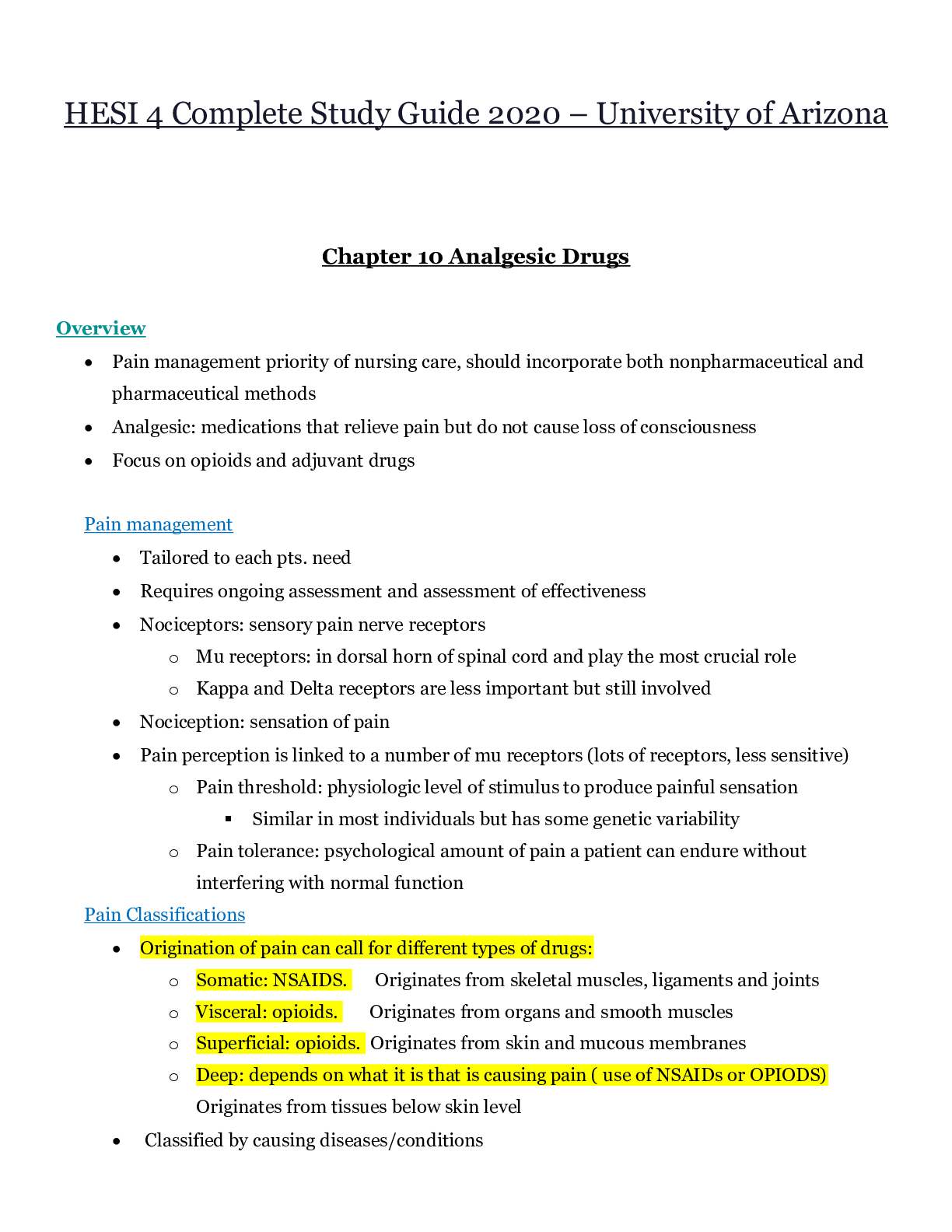
HESI 4 Complete Study Guide 2020 – University of Arizona
Chapter 10 Analgesic Drugs
Overview
• Pain management priority of nursing care, should incorporate both nonpharmaceutical and pharmaceutical methods
• Analgesic: medications that relieve pain but do not cause loss of consciousness
• Focus on opioids and adjuvant drugs
Pain management
• Tailored to each pts. need
• Requires ongoing assessment and assessment of effectiveness
• Nociceptors: sensory pain nerve receptors
o Mu receptors: in dorsal horn of spinal cord and play the most crucial role
o Kappa and Delta receptors are less important but still involved
• Nociception: sensation of pain
• Pain perception is linked to a number of mu receptors (lots of receptors, less sensitive)
o Pain threshold: physiologic level of stimulus to produce painful sensation
Similar in most individuals but has some genetic variability
o Pain tolerance: psychological amount of pain a patient can endure without interfering with normal function
Pain Classifications
• Origination of pain can call for different types of drugs:
o Somatic: NSAIDS. Originates from skeletal muscles, ligaments and joints
o Visceral: opioids. Originates from organs and smooth muscles
o Superficial: opioids. Originates from skin and mucous membranes
o Deep: depends on what it is that is causing pain ( use of NSAIDs or OPIODS) Originates from tissues below skin level
• Classified by causing diseases/conditions
o Vascular: migraine
o Referred: visceral nerve fibers synapse at a level in spinal cord close to fibers supplying specific subcut. -
-
-
-
-
-
-
-
-
-
-
-
-
-
-
-
-
-
-
-
-
-
-
-
Oxycodone hydrochloride
• Schedule II; forms: PO
• Combined with acetaminophen (Percocet), or aspirin (Percodan)
• Available Immediate- release (oxyIR) and Sustained-release (oxycontin)
• Hydrocodone similar but weaker. Combined with acetaminophen (Vicodin)
Opioid Agonists- Antagonists Drug Profile
• Bind to mu receptors and complete with other substances
• Lower risk for misuse and dependence
• Can cause withdrawal in opioid dependent
• Used for short term pain control or those who have hx of opioid dependence
• Buprenorphine, butorphanol, nalbuphine, pentazocine
Opioid Antagonists Drug Profile
Naloxone hydrochloride (Narcan)
• No analgesia or CNS depression
• Used as antidote for opioid causing respiratory depression
• Primary adverse effect is opioid withdrawal syndrome due to over-reversal in opioid-tolerant pts.
Nonopioid and Miscellaneous Analgesics
• Acetaminophen (APAP, Tylenol) most widely used
o Blocks peripheral pain impulses by inhibiting prostaglandin synthesis
o Lowers body temp by acting on hypothalamus when febrile
o NO anti-inflammatory properties
o Not associated with CV or platelet or GI side effects
o Contraindicated in allergy, severe liver disease, G6PD deficiency (genetic)
o Adverse effects: skin disorders, N/V, dyscrasisas, nephrotoxicity, hepatotoxicity
o Hepatotoxicity most serious and associated with OD
o Limit dose to 4000mg/day (manufacturer limits 3000mg/day)
o Potentially lethal when OD
• Acute OD:
• Can cause hepatic necrosis and/or hepatic nephrotoxicity
• Possibly reversed with acetylcysteine which prevents hepatotoxic metabolites from forming
Acetylcysteine- Works best if given within 10 h
Smells like rotten eggs, likely to cause vomiting: redosing if vomiting occurs within 1 hour of dosing
• Long term-OD
• More likely to cause perm liver damage
• Monitor serum levels no sooner than 4 hours after ingestion, if no serum level cannot be determining ( due to not knowing amount or when token) then the over dose will be assume toxic and treatment with acetylcysteine, take serum level and keep redosing every 1 hours until vomiting stops
o Interactions
• Alcohol ( if chronic alcohol abuser, limit to 2000mg/day)
• Phenytoin, barbiturates, warfarin, isoniazid, rifampin, beta blockers, anticholinergics
• Anything that causes CNS depression
• All NSAIDS
• Tramadol
o Dual action: weak bond to mu opioid receptors and inhibits re-uptake of norepi and serotonin
o Sched IV (last five years), PO
o Rapidly absorbed and not affected by food
o Excreted by kidneys
o Adverse effects mimic opioids
o Increased risk of serotonin syndrome if taken with antidepressants, (SSRIs, MOI, antileptics other seizures meds)
-
-
-
-
-
-
-
-
-
-
-
-
-
-
-
-
-
-
-
-
-
-
-
-
-
-
-
-
-
--
-
-
parasiticidal drugs ( Lice or pediculosis & scabies)
Lindane (Kwell)
• Form: Lotion or Shampoo
• Leave lotion on for 12h then rinsed, shampoo for 4 min
• Can cause rash & CNS effects (typically from overuse) dizziness, seizures, death
Hair Growth Drugs
Minoxidil (Rogaine)
• Vasodilator that promotes growth ( It is used also for hypertension) so will have problems with other Cardio vascular meds
• Can take 4 mon to see growth
• AE: tachycardia, fluid retention, weight gain ( all S/S of hypotension) . Hair drying can negate effects
Sunscreens
• Used for UV radiation protection from the sun
o 2to 50 SPF protection
Antineoplastic drugs
Fluorouracil
• Used for premalignant skin lesions and basal cell carcinomas
• Antimetabolite to destroy rapidly growing cells for actinic keratosis or superficial basal cell
• Local inflammatory side effects. Do not apply with metal applicator
Immunomodulators
Pimecrolimus (Elidel)
• Tx. Of Atopic dermatitis caused by hereditary susceptibility to pruritus associated w. allergic rhinitis, hay fever and asthma
Imiquimod (Aldara)
• Tx. Actinic keratosis, superficial basal cell carcinoma and anogenital warts
Wound Care Drugs
• Debridement
• Acetic acid (vinegar), sodium hypochlorite (Dakins Bleach), cadexomer iodine, collagenase, biafine topical emulsion
Skin Prep Drugs
• Isopropyl alcohol (alcohol swabs)
• Povidone-iodine (betadine)-watch allergies
• Chlorhexidine (hibiclens)-surgical scrub or hand wash
• Benzalkonium chloride (zephiran)
Analgesic Assess, Implement, Edu.
• Know allergies & assess skin
• Consider concentration of med, duration of contact, condition of skin, extent of surface contact, skin condition
• Younger and older more at risk for increased absorption
• Assess pregnancy risk in retinoids (tazarotene & isotretinoin)
• Monitor for pulse, weight & edema in minoxidil
• Hand-wash before and after. Standard precautions
• Follow application directions or instructions including possible dressings
• May need to protect from sunlight
• Avoid hair dryer for minoxidil
Chapter 57: Ophthalmic Drugs
Patho of Glaucoma
• Disorder of increased intraocular pressure (Iop) that damages optic nerve
• Typically related to insufficient drainage of aqueous humor out of anterior chamber
• Closed angle (complete closure of anterior angle increases IOP) vs open angle (anterior angle remains open, but the canal of schlemm is obstructed by tissue abnormalities)
Antiglaucoma Drugs
Cholinergic (Miotics)
• MOA: Direct acting that mimic/are acetylcholine
Indirect acting that inhibit anticholinesterase
Miosis promotes aqueous humor to drain by stretching iris
Pupillary constriction
• Indication: Used for both types of glaucoma, convergent strabismus, surgery
Also used to reverse the effect of mydriatic (pupil-dilating drugs)
• AE: Effects typically local and limited to eye, indirect agents have longer duration
Blurred vision, myopia, inflammation, stinging upon instillation, reduced low light vision, conjunctivitis, lacrimation, twitching
Antipsoriatic Drug Profiles
Acetylcholine
-
-
-
-
-
-
-
-
-
-
-
-
-
-
-
-
-
-
-
-
lockers (central and peripheral) not talked about much
• Indications: Hypertension, glaucoma, BPH
• Contraindicated Allergy, possible uncompensated (acute) HF, MAOI, PUD, severe liver/kidney disease
• AE: Bradycardia with possible reflective tachycardia, postural and post-exercise hypotension, dry mouth, dizziness, edema, hypotension, depression, constipation, impotence, HA, N, rash, palpitations
Orthostatic hypotension risk esp associated with alpha blockers & first dose phenomenon
Central acting agents if abruptly discontinued can cause rebound hypertension (risk for all agents, but in particular central acting)
Nonselective blocking drugs also cause bronchoconstriction and metabolic inhibition of glycogenolysis in the liver
• Interactions: Additive CNS depressives effects w/ ETOH, benzos, opioids
First gen antidepressants, CNS stimulants: decreased antihypertensive effects
Diuretics, nitrates, other antihypertensives; increase effects
• Contraindicated Allergy, possible uncompensated (acute) HF, MAOI, PUD, severe liver/kidney disease
Drug Profiles
Clonidine (Catapress)
▪ Most common alpha2 receptor agonists (central)
▪ Decrease production of epi and norepi production
▪ High incidence of adverse effects (not a first line agent) r/t strong vasodilatory effects
▪ AE: Orthostatic hypotension, fatigue and dizziness, risk for rebound hypertension when stopped abruptly
Can cause fluid retention and edema (freq. assess)
▪ Assess WBC, K, Na and proteinuria
▪ Available as PO- pill or patch
▪ Teach pt & family how to monitor VS (mainly BP) at home, avoid driving until dizziness/drowsiness subsides
Doxazosin (Cardura)
▪ Common alpha1 blocker (peripheral)
▪ Same drug class as Tamsulosin (which is exclusively used for BPH)
▪ Reduces PVR by dilating both arteries and veins
▪ Immediate and ER form: matrix of capsule is expelled in stool after active drug has been absorbed
▪ Edu: this will happen and not to take a dose again over confusion of capsule
▪ High risk of dizziness and syncope; postural hypotension
▪ First dose phenomenon
Nebivolol (Bystolic)
▪ Newest Beta1 Selective blocker (peripheral)
▪ Used for hypertension and HF
▪ Has BB action but also can vasodilate
▪ Promoted as less adverse risk of impotence
▪ Must be tapered
▪ Assess BP & HR, breath sounds (worried about new onset of wheezing and crackles) & heart sounds
Carvedilol (Coreg)
▪ Dual Action Alpha1 and Beta Blockers (peripheral)
▪ Widely used and tolerated
▪ Used for mild to mod HF and hypertension
▪ Contraindicated: allergy, cardiac shock, severe bradycardia, uncomp HF, bronchoconstriction d/o, some dysrhythmias
Angiotensin- converting enzyme (ACE) Inhibitors ( focus on for exam ) “- prils”
▪ Blocks angiotensin 2 and blocks aldosterone, (potent vasodilator losing sodium and holding onto potassium)
▪ 10 available and many combo drugs with thiazide diuretics or CCBs
▪ Captopril, benazepril, enalapril, fosionopril, linsinopril, moexipril, perindopril, quinapril, Ramipril, trandolapril
▪ All very similar but might vary in clinical properties like duration, resulting in dosage frequency differences
▪ Prodrugs except captopril and Lisinopril
▪ Prodrugs: Drugs have to be metabolized into active form by liver to be effective
▪ Captopril and Lisinopril is an advantage when treating a pt. w/ liver dysfunction
▪ Enalapril only one available IV
▪ Captopril has to be dosed more frequently r/t short half life
▪ First line drugs for both HF and htn
▪ Great for HF r/t blocking of aldosterone and sodium retention. Water follows
• Indications: Inhibit angiotensin-converting enzyme
▪ Cardiovascular and renal effects
▪ Reduce SVR, decreasing afterload. Also have diuretic effect decreasing preload
▪ Prevent remodeling or hypertrophy following MI
▪ Drug of choice for hypertensive patients who have HF
▪ Reduce glomerular filtration pressure which is renal-protective- shown to slow down diabetic nephropathy in the kidneys
▪ CV drug of choice for diabetic patients
• Contraindicated: Allergies (esp with angioedema), hyperkalemia, last two trimesters of pregnancy & lactation, children and bilateral renal artery stenosis
• AE: Rare but life-threatening angioedema, Dry, nonproductive cough ( can cause adherence issues, pt. not wanting to take anymore) that is reversible when therapy is D/C, Fatigue, dizziness, mood changes, headaches, First dose hypotensive effect, Loss of taste, hyperkalemia, renal failure
• Toxicity: Hypotension tx with IVF and other supportive means. Possibly Hemodialysis depending on agent
• Interactions : NSAIDS reduce BP effects & increase risk of AKI, other antihypertensives/diuretics, lithium, potassium supplements or K sparing diuretics
ACE Inhibitors Drug Profiles
Captopril (Capoten)
▪ First available, prototype
▪ Demonstrated efficacy in decreasing remodeling post MI resulting in HF
▪ Short half-life, dosed 3-4 x d
▪ Does not need liver action to be activated
Enalapril (Vasotec)
▪ Only ACE available both PO and IV
▪ Does not require cardiac monitoring if given IV (vs BB) because it does not work directly on the heart
▪ Prodrug that requires functioning liver to be activated
ACE Inhibitors Assess, Implement, Edu.
▪ Assess VS( mainly BP) , respiratory status for cough
▪ Monitor K for hyperkalemia, CBC for neutropenia
▪ Notify MD immediately with angioedema
▪ Impaired taste can last up to 2-3 mons. post discontinuation
▪ May take several weeks to see full effects
Angiotensin II Receptor Blockers (ARBs) “ -tan”
▪ MOA: Block binding for angiotensin II to type 1 angiotensin II receptors
▪ Primarily affect vascular smooth muscle and adrenal gland
▪ Blocking vasoconstriction and preventing secretion of aldosterone
▪ Indications: Equally effective as ACE inhibitors in decreasing hypertension
Unclear if effective in HF or protecting kidneys
▪ Contraindicated: Allergy, pregnancy, lactation
Use cautiously in older adults and patients with renal dysfunction
▪ Adverse effects: Chest pain, fatigue, hypoglycemia, diarrhea, UTI, anemia and weakness
▪ Toxicity: Hypotension and tachycardia tx w/ supportive care
▪ Interactions: NSAIDS, lithium, rifampin, K supplements or K sparing diuretics
ARB Blockers Drug Profiles
Losartan (Cozaar)
▪ Used for hypertension and heart failure
Caution in renal or hepatic dysfunction and renal artery stenosis
▪ Contraindicated in lactating mothers
Calcium Channel Blockers (CCBs)
▪ Primary for hypertension and angina; works similar to beta blockers
▪ Blocks calcium from binding to receptors, resulting in smooth muscle relaxation
▪ Has been added as first line htn tx: Amlodipine( Norvasc)
▪ Negative Chronatrope, Also, can be used to treat dysrhythmias
▪ Raynaud’s, migraines and preventing spasm post subarachnoid hemorrhage
▪ Negative inotropic drugs that might exacerbate HF
▪ AE: Constipation
Vasodilators
▪ Work directly on arteriolar and/or venous smooth muscle to cause relaxation
▪ Don’t work via adrenergic receptors
▪ Peripheral vasodilation decreases SVR and produce significant hypotension***
▪ Diazoxide, hydralazine, minoxidil(Rogaine) (topical meds that can be used for hair loss) work through arteriolar vasodilation
▪ Nitroprusside has both arteriolar and venous effects
▪ Indications: All vasodilators used for hypertension
▪ IV Nitroprusside and IV diazoxide only for hypertensive emergencies
▪ Contraindications: Allergies, hypotension, cerebral edema, head injury, acute MI and CAD, Some types of HF
▪ Adverse effects for each drug
▪ Hydralazine: dizziness, headache, anxiety, tachycardia, edema, dyspnea, N/V/D, hepatitis, SLE, vitamin B6 deficiency, rash
▪ Minoxidil: T wave EKG changes, pericardial effusion or tamponade, angina, breast tenderness, rash, thrombocytopenia
▪ Sodium nitroprusside: bradycardia, decreased platelet aggregation, rash, hypothyroidism, hypotension, methemoglobinemia, cyanide toxicity
▪ Toxicity for each drug
▪ Hydralazine: hypotension, tachycardia, headache, skin flushing
▪ Tx with supportive care, IVF, digitalis or BB for tachycardia
▪ Sodium nitroprusside
▪ Severe hypotension, half-life of 10 min means BP restores quickly upon stopping
▪ Cyanide toxicity: antidote kit: sodium nitrite and sodium thiosulfate for injection and amyl nitrate for inhalation
▪ Interactions: Hydralazine can have additive hypotensive effects with other BP meds
Vasodilators Drug Profiles
Hydralazine (Apresoline)
▪ Oral or IV for emergencies/NPO
▪ Contraindicated in allergies, CAD, mitral valve dysfunction
▪ One part of the pill in the BiDil which is indicated as adjunct treatment of HF in African-Americans
Sodium nitroprusside (Nitropress)
▪ ICU for hypertensive emergencies, IV
▪ Contraindicated in severe heart failure, known inadequate cerebral perfusion
Vasodilators Assess, Implement, Edu.
▪ Be sure to monitor and assess neuro status with administration
▪ Cautious use in elderly with risk of syncope
▪ Expect possible more drastic effects on BP
▪ Monitor for SLE (photosensitivitiy, skin rashes, CNS changes, blood disorders) in hydralazine
▪ Nitroprusside must be diluted and close ICU monitoring
Miscellaneous Drug Profiles
Eplernone (Inspra)
▪ Selective aldosterone locker
▪ Hypertension and post MI heart failure
▪ Contraindicated in allergies, hyperkalemia, severe renal impairment and concurrent use of meds that inhibit cytochrome P-450 enzyme 3A4 (antibiotics, antifungals, antivirals)
Bosentan (tracleer)
• Blocks receptors to endothelin
• Indicated for pulmonary hypertension in mod to severe HF
• Limited distribution
Treprostinil (Remodulin)
• Dilates pulmonary and systemic blood vessels and inhibits platelet aggregation
• Indicated for pulmonary hypertension in mod to severe HF
All Antihypertensives Assess, Implement, Edu.
▪ Assess
▪ Full exam and history, VS
▪ Possible EKG, BMP for lytes, CBC, renal function, CRP, cholesterol, LFT
▪ Eye/retina exam
▪ Educate on not stopping abruptly due to risk of rebound hypertension
▪ Educate/discuss common side effect of impotence since they may affect adherence
Anti- Anginal
▪ Goal of angina is to balance mismatch between demand & supply
▪ Increase oxygen supply or decrease oxygen demand by decreasing consumption
Nitrates/ Nitrites
▪ Mainstay of prophylaxis and treatment of angina
▪ Multiple preparations
▪ Sublingual tabs & spray, Oral pills & Capsules, Ointments & patches, IV
▪ Rapid and long acting preparations
▪ Nitroglycerin (rapid and long dosing forms)
▪ Isosorbide dinitrate (rapid and long)
▪ Isosorbide mononitrate (long)
▪ Mech of action: Dilate ALL blood vessels
▪ Begin more venous but dose dependent arterial effect
▪ Potent effect on large and small coronary arteries (even those not completely obstructed by atherosclerosis)
▪ Can be used prophylactically before exercise to prevent exercise induced spams, encouraging physical activity in patients
▪ Indications: Stable (having chest pain that can be recognized but EKG looks normal, blood work doesn’t show indication), unstable (unpredictable, the first time having angina, acute chest pain), vasospastic angina (
Long acting more prophylactic ( patches and ointments
Rapid acting or IV for acute anginal attacks ( SL, spray options also)
▪ Contraindications: Allergy, severe anemia, closed angle glaucoma, hypotension, severe head injury ( increase ICP, bleeding in brain),
▪ concurrent use of Erectile Dysfunction drugs (sildenafil, tadalafil, vardenafil) can cause extreme hypotension
▪ Adverse Effects: Headache (typically subsides soon after start), reflex tachycardia, postural hypotension, Topical can cause dermatitis,
tolerance (long acting or Around The Clock use, also cross formularies)
▪ Interactions: Alcohol (hypotension), BB, CCB, phenothiazines, ED drugs can cause hypotension
Nitrates/Nitrites Drug Profiles*** ( Focus for Exam)
Isosorbide Dinitrate (Isordil)
▪ Broken down into two metabolites by the liver
▪ Rapid acting SL tabs, IR tabs, Long acting oral forms
Isosorbide Mononitrate (Imdur)
▪ More consistent steady response than dinitrate
▪ IR and SR (sustained release more common)
Nitroglycerin (NTG)
▪ Many different trade names (nitro-bid, nitrostat)
▪ Most important drug in regard to angina
▪ Oral: large amount of NTG removed by liver on first pass, so typically dosed via other routes
▪ SL: acute onset or prevention
▪ Store in original container (exposure to air & moisture deactivates it)
▪ SL: aerosol spray for acute onset
▪ IV used for BP control, tx of ischemic pain, HF< pulmonary edema
▪ Topical avoids first pass, continuous slow delivery. Patches typically worn 12-14 hours/day
Nitrates Assess, Implement, Edu.
▪ Check about alcohol use or ED drug use
▪ Assess for tolerance if used for long term (educate about notifying provider if angina symptoms increasing or worsening)
▪ When supine, expect BP to decrease 10 mmHG or HR to increase 10 beats/min
▪ Give APAP (Tylenol) to help with HA
▪ Edu: SL for acute angina
▪ Take at first sign (have them sit down to prevent hypotension and stop what they are doing to decrease oxygen demand)
▪ If unrelieved in 5 min, call 911
▪ Then take two more tabs 5 min apart (max total 3 doses) until chest pain relieved ( if you are at that 3rd tab they need to call 911 and be on way to emergency room)
▪ Keep away from moisture, light, heat and cotton filler
▪ Burning/tingling is good=still potent
▪ If they feel underneath their tongue it is okay and normal
▪ Replace every 3-6mo to keep potency , and travel with it
▪ Aerosol: do not shake can
▪ Ointment/Transdermal
▪ Thin layer on clean, dry hairless skin of upper arms or body
▪ Avoid placing below knees and elbows
▪ Do not rub into skin
▪ Cover with occlusive dressing
▪ Rotate application sites and cleanse skin
▪ Remove if cardioverting or AED
▪ IV
▪ Emergency and ICU settings
▪ May lead to sudden and severe hypotension, CV collapse & shock
▪ Typically supplied in special bag & tubing to prevent breakdown
Beta Blockers (BB)
▪ Tx angina, MI, hypertension, dysrhythmias
▪ BB approved for anti-angina effects
▪ Atenolol, Metoprolol, Nadolol, Propranolol
▪ Block Beta1 receptors in heart
▪ Negative chronotropic & inotropic effects decrease O2 demand
▪ Suppress renin secretion
▪ Indications :Exertional angina (exercise-induced)
Exercise in these patients might include ADLs
▪ Contraindications: Conduction disturbances, Systolic HF, Use cautiously in asthma
▪ Adverse Effects: Decrease HR and cardiac OP, Bronchoconstriction, Decreased SA & AV conduction, Decrease in BP, Mask hypoglycemia, cause irregularities in sugar levels, Fatigue, insomnia, weakness, impotence
BB Assess, Implement, Edu.
▪ Watch diabetic patients more carefully-educate re: masking S/S of hypoglycemia
▪ Monitor for worsening HF (ie-increase in edema)
▪ Avoid abrupt withdrawal
▪ Orthostatic hypotension instructions
▪ Worry about wheezing; bronchoconstriction
Calcium Channel Blockers (CCB)
▪ Three chemical classes & their prototypes. *****(Do not need to know classes)
▪ Phenylalkylamines
▪ Verapamil
▪ Benzothiazepines
▪ Diltiazem
▪ Dihydropyridines
▪ Amlodipine, Nifedipine
▪ MOA: Calcium participates in contraction of heart, smooth muscle and skeletal muscle
▪ Blocking calcium results in muscle relaxation
▪ Relaxation of smooth muscle around coronary arteries causes them to dilate
▪ Systemic dilation results in a decrease in SVR and oxygen demand
▪ Reduce myocardial contractility
▪ Verapamil and diltiazem decrease HR
▪ Indications: First line treatment for angina, hypertension, Supraventricular Tachycardia (above the ventricles)
Better for vasopastic angina (less helpful than BB in exercise induced)
Also used for afib & aflutter, migraines, Raynaud’s
▪ Contraindications: Allergy, acute MI, Second or third-degree AV block, hypotension
▪ Adverse Effects: Hypotension, palpitations, tachycardia/bradycardia, Constipation, nausea, Dyspnea, rash, flushing, peripheral edema
Nifedipine only extended release use (unless prepared for pharm for premature labor)
▪ Interactions: BB (bradycardia, AV block), Digoxin (increased dig levels), Amiodarone (bradycardia & neg inotropic)
antifungals ending in -Azole , macrolides, antiretrovirals (increase effects of CCB), Statins: increased risk of statin toxicity, Cyclosporine: possible toxicity of either drug
Calcium Channel Drug Profiles
Dilriazem (Cardizem)
▪ Strongest action on conduction system
▪ Works well for angina from coronary insufficiency and hypertension
▪ IV for fast arrhythmias like afib/aflutter and Supraventricular tachycardia ( above the ventricles)
▪ A couple different extended release brands w/ different dosing frequencies
Amlodipine (Norvasc)
▪ Very popular
▪ Used for angina or hypertension
▪ Only PO
CCB Assess, Implement, Edu.
▪ Watch for drug-grapefruit interactions
▪ Be sure to administer right dosage form (ER or IR)
▪ Be careful in patients with hx of hypotension, palpitations, fast/slow HRs, constipation, dyspnea, edema
▪ Increase activity, fluid, fiber to help with constipation
▪ Avoid abrupt withdrawal
▪ Measure weight and monitor for edema
▪ Constipation education
Miscellaneous Anti-Anginal
Ranolazine (Ranexa)
▪ Used for chronic angina
▪ Does not affect HR or BP
▪ May prolong QT interval on EKG
▪ Contraindicated in prolonged QT syndrome or other drugs with same issue, hepatic impairment
▪ Interacts w/ ketoconazole, verapamil, digoxin
▪ Forms: only PO
▪ Assessment : May monitor LFT
All Anti- Anginal Assess, Implement, Edu.
▪ Assess
▪ Full H & P
▪ VS (hold if SBP < 90 and report to provider, apical HR <60, >100)
▪ Chest pain assessment
▪ Possible EG
▪ Reduce risk of injury r/t falls
▪ Administer while seated
▪ Avoid alcohol, hot environment (saunas), excessive exertion
Heart Failure Drugs
▪ Described as left or right sided. Left sided more common and primary cause of right sided
▪ COMMON S/S. of HF: dyspnea, fatigue, fluid retention, pulmonary edema
▪ Goal of treating chronic HF
▪ Reduce effects of RAAS and the SNS
▪ ACE (or ARB), Beta blockers, loop diuretics and aldosterone inhibitors together with progression- used for compensated HF
▪ After above drugs, digoxin is added
▪ BiDil (hydralazine/isosrbide dinitrate) used for African American population
Angiotensin-Converting Enzyme Inhibitors “-prils”
▪ Block enzyme that converts angiotensin I to angiotensin II
▪ Inhibit aldosterone, decreasing Na retention and promoting diuresis and decreasing preload
▪ Also used as antihypertensive and post MI to prevent remodeling that can lead to HF
Lisinopril
do not use in last two trimesters of pregnancy, concern re: hyperkalemia, can cause dry cough and angioedema
Angiotension II Receptor Blockers “-tan”
▪ Blocks angiotensin II resulting in potent vasodilating effect
▪ Decrease Systemic vascular resistance (a measure of afterload)
Valsartan
Pregnancy Category D and shares a lot of same adverse effects (except cough & less likely to cause hypokalemia)
Beta Blockers “-lol”
▪ Reduce SNS, cardioprotective effect on heart
▪ Reduce heart rate, delay AV node conduction, reduce contractility, decreased automaticity
Metoprolol
Treat heart failure
Carvedilol
Carvedilol is non-selective beta, alpha 1 and has Calcium Channel Blocker and antioxidant properties.
Used for Heart failure, hypertension and angina
Aldosterone Antagonists (Potassium Sparing Diuretics )
Spironolactone
▪ Used in severe stages of heart failure
Also a Potassium-sparing diuretic
Eplerenone
▪ Used in severe stages of heart failure
▪ Blocks aldosterone in the kidney, heart, blood vessels and brain
Miscellaneous HF Drugs
Hydralazine/Isosorbide dinitrate (BiDil)
▪ Approved specifically for African Americans
Dobutamine
▪ Beta1 selective adrenergic agonist drug
▪ IV infusion
▪ Positive inotropic
Positive inotropic agents, phosphodiesterase inhibitors, cardiac glycosides and B-types natriuretic peptide - are for decompensated HF
B-type Natriuretic Peptide (BNP)
Nesiritide (Natrecor)
▪ Synthetic version of BNP that is released from ventricles of heart in response to increased heart pressure as HF develops
▪ Higher BNP=more fluid retention
▪ Nesiritide vasodilates arteries and veins in heart and systemically
▪ Diuresis (urinary fluid loss)
▪ Natriuresis (urinary sodium loss)
▪ Vasodilation
▪ IV, used in ICU for severe life-threatening HF (no longer the first like drugs it is used as a final effort)
▪ Adv effects: hypotension, cardiac dysrhythmias, insomnia, headache, abdominal pain
Phosphodiesterase Inhibitors
Milrinone (Primacor)
▪ Similar to methylxanthines (theophylline) (related to caffeine)
▪ Increase cAMP resulting in smooth muscle relaxation
▪ Milrinone works only on phosphodiesterase in heart and vascular smooth muscles
▪ Positive inotrope and vasodilator (inodilator)
▪ Also increases amount of Ca in heart muscle (inotropic and increased relaxation
▪ Indications: ICU, short term management of acute HF
▪ Contraindicated: allergy, severe aortic or pulmonary valvular disease or HF from diastolic dysfunction
▪ Adverse effects: Ventricular dysrhythmia, Hypotension, angina, hypokalemia, tremor, thrombocytopenia
▪ Interactions: Diuretics: hypovolemia and reduced cardiac filling pressure
Digoxin: increased inotropic effects
Glycosides (Digitalis)
▪ Indication: Used for HF and atrial fibrillation
Digoxin
▪ Positive inotropic effect by increasing cellular sodium and calcium concentrations and negative chronotropic effects
▪ Augments cholinergic stimulation via vagus nerve
▪ Reduces HR and allows for more ventricular filling
▪ Decreases rate of electrical conduction and prolongs refractory period between SA and AV node
▪ Oral and IV formularies (loading dose usually given)
No longer the first line drug, new is used in adjunction with BB, diuretics, ACE inhibitors/ARB
▪ Contraindication: Allergy, Second or third-degree heart block ,Ventricular fibrillation
▪ Adverse Effects: Bradycardia or reflexive tachycardia, hypotension, headache, fatigue, confusion, convulsions, colored vision or halo vision, anorexia, N/V/D
▪ Toxicity (normal serum level 0.5-2)
▪ Increased risk of toxicity in hypokalemia or hypomagnesia
▪ Also increased risk in renal function
▪ Toxicity S/S: Bradycardia, headache, dizziness, confusion, nausea, vision changes (color and halo around lights), heart block, atrial tachycardia, ventricular dysrhythmias
▪ Antidote: Digoxin immune Fab (Digifab)
▪ Used in hyperkalemia, life-threatening dysrhythmias or life-threatening OD (more than 10mg of digoxin)
▪ Fab is an antibody that recognizes digoxin as an antigen, binds to it and inactivates the free digoxin
▪ Interactions
▪ Numerous, most important r/t likelihood of dig toxicity
▪ Amiodarone, Quinidine, Verapamil
▪ Diet
▪ Bran reduces levels, Many herbal supplements
▪ Drugs that result in hypokalemia or hypomagnesia
▪ Any drugs that causing problem with the heart
Glycosides- Digoxin Assess, Implement, Edu.
▪ Monitor electrolytes (Potassium)
▪ Monitor digoxin levels (normal 0.5-2)
▪ Monitor for headaches, fatigue, confusion, seizures, LOC
▪ *******Assess BP and apical pulse (full min) notify provider if out of limits*********
▪ Monitor for extra heart sounds, vision changes
Anti-dysrhythmics
▪ Indication: Type of drug choice depends on dysrhythmia
▪ Contraindications: Allergy, Second or third-degree AV block, BBB, cardiogenic shock, sick sinus syndrome
▪ May worsen existing dysrhythmia, esp in those with structural heart damage such as post MI
▪ Adverse Effects: Hypersensitivity, N/V/D, Dizziness, headache, blurry vision, dysrhythmias including QT prolongation
Class I (A, B, C)
▪ Class I: sodium channel blockers (Quinidine, Procainamide, Lidocaine)
▪ 3 subclasses that have different effects on action potential duration
Class I: Adverse effects: hypotension, rash, diarrhea
▪ I-A: delay repolarization and increase action potential duration
Procainamide (Pronestyl)
▪ Atrial and ventricular tachy-arrhythmias
▪ Chemically related to procaine (anesthetic)
▪ Can cause dysrhythmias and blood disorders and SLE in long term therapy
▪ Adverse effects: GI side effects, QT prolongation, fever, leukopenia, rash and flushing
Quinidine(Quinidex)
▪ Works on heart and anticholinergic effects
▪ Can cause asystole and ventricular ectopic beats
▪ Can cause mild cinchonism: poisoning of bark used in making drug, S/S include tinnitus, loss of hearing, blurry vision GI
▪ Contraindicated: hypersensitivity, thrombocytopenic purpura, AV block QT prolongation
▪ I-B: accelerate repolarization, decrease action potential duration
▪ Act better on ischemic myocardial tissue
Lidocaine (Xylocaine) – Ventricular
▪ Only used in ventricular dysrhythmias
▪ Must be given IV or IM r/t first pass effect
▪ Raises ventricular fibrillation threshold
▪ Adverse effects: twitching, convulsing, confusion, resp. depression, hypotension, bradycardia, dysrhythmias
▪ Contraindicated: Allergies, SA/AV block, Wolf-Parkinson-White syndrome
Assess, Implement, Edu.
▪ Monitor HR and BP
▪ Note “cardiac” or “not for cardiac use”
▪ Parenteral soln only stable for 24 hours
▪ Do not confuse anesthetic lidocaine for IV lidocaine
▪ Local anesthetic; a transdermal form for analgesia
Phenytoin- More commonly used as an anticonvulsant than as an antidysrhythmic drug
▪ I-C: blocks sodium channels but has little effect on repolarization and action potation duration
▪ Significantly slow conduction in atria, AV node and ventricles
▪ Used to suppress PVCs
Flecainide (Tambocor)
▪ Limited use to life-threatening ventricular dysrhythmias
▪ Some current findings suggest use for afib
▪ Better tolerated than other class 1’s drugs
▪ Oral only
Propafenone (Rythmol)
▪ Also has mild beta blocking effects
▪ Similar to fecainide
Class II (Beta Blockers)
▪ Class II: block sympathetic nervous system stimulation to the heart; depression of phase 4 depolarization; helps slow the HR rather than change dysrhythmia
Class II Adverse effects: Bradycardia, AV block, HF, changes in blood glucose
Esmolol (Breviblock)
▪ Ultra-short acting
▪ Used in acute treatment of supraventricular tachydysrhythmias; used for hypertension after acute MI
▪ Contraindicated in severe bradycardia, heart blocks, heart failure, cardiogenic shock, severe asthma
Metoprolol
▪ Treatment of hypertension and angina
Atenolol
▪ Given after MI to reduce risk for sudden cardiac death
Blocking heart from epi and norepi
▪ Treatment of hypertension and angina
Class III ( Potassium channel blockers)
▪ Class III: increase action optional duration by prolonging repolarization in phase 3; used in dysthymias difficult to treat
Class III (Amiodarone specifically) Adverse effects: Pulm. Toxicity, thyroid disorders, hypotension, bradycardia
Amiodarone- Ventricular
▪ Inhibits repolarization, prolongs refractoriness and action potential duration
▪ Life threatening VT, VF, SVT, atrial dysrhythmias
▪ ACLS first line drug
▪ Can cause thyroid abnormalities
▪ Adverse effects: Corneal microdeposits, pulmonary toxicity, long half life
▪ Interacts with digoxin and warfarin
Assess, Implement, Edu.
▪ Monitor resp & thyroid fxn with amio
▪ May cause GI upset
▪ Photosensitivity and photophobia considerations (sunscreen, sunglasses etc)
▪ High fiber (not bran) diet
▪ Immediately report any blue-gray discoloration of skin or jaundice, unusual rahs or skin reactions, N/V, dizziness
Dronedarone
▪ Similar to amio but less adverse effects and drug interactions
▪ Possible hepatotoxicity
Sotalol (Betapace)
▪ Selective beta blocker
▪ Has both class II and III properties
▪ Can cause new dysrhythmias
▪ Used more for life threating ventricular dysrhythmias
▪ Contraindications: asthma, cardiogenic shock, bradycardia
▪ PO only
Class IV ( Calcium channel blockers)
▪ Class IV: reduce influx of calcium ions during action potentials; depression of phase 4 depolarization
Class IV Adverse effects: Heart block, hypotension, constipation
Verapamil and Diltiazem
▪ Dysrhythmias originating above ventricles
Unclassified Anti-arrhythmic
Adenosine
▪ Used to slow conduction through AV node to change PSVT to sinus rhythm
▪ Contraindicated in second or third heart block, sick sinus syndrome, atrial flutter or fib and VT
▪ Half-life less than 10 sec (given as fast IV Push)
▪ Causes asystole for a couple seconds after push
All Anti- Anginal Assess, Implement, Edu.
▪ History & Physical
▪ VS
▪ Drug to drug interactions including grapefruit
▪ Watch for QT prolongation ( all antiarrhythmics)
▪ Oral: give with food to minimize GI upset
▪ Avoid alkaline ash food (citrus, veggies, milk)
▪ Limit caffeine
▪ Never stop without specific instructions to
Coagulation Modifiers
Anticoagulants
▪ Prevent formation of clot by inhibiting clotting factors
▪ NO EFFECT ON A THROMBUS THAT HAS ALREADY FORMED
▪ Indications: Prophylaxis: Prevent clot in conditions that cause a high likelihood of thrombus forming OR prevent thrombus from growing
MI, unstable angina, afib, indwelling devices, blood stasis
• Contraindications
o Allergy, Acute bleed (can hemorrhage), High risk of acute bleed
o Warfarin cannot be used in pregnancy
o LMWH can’t be given while pt has epidural (has to be 2 h post)
• Adverse effects
o Bleeding (risk is dose dependent)
Localized, systemic
Increased with intake of aspirin or other meds that affect platelet function
o Heparin-induced thrombocytopenia (tx with direct thrombin inhibitors)
o Warfarin can cause skin necrosis and “purple toes” syndrome
• Toxicity
o Reversing underlying cause
o Effects are hemorrhagic (causing bleeding)
Hematuria, melena, petechiae, ecchymosis, gum bleeding
o Immediately stop medication
o Choose the correct antidote if needed
Heparin & LMWH: Protamine Sulfate IV (works as quickly as 5 min)
Warfarin: Vitamin K1 (Phytonadione) IV, oral
• Once vit K is given, Warfarin (Coumadin) resistance can occur for up to 7 days
Possible blood transfusions, FFP or clotting factor concentrates
• Interactions: Many varied, different reactions
Heparin: ASA, NSAIDS< other anticoagulants, antiplatelets, thrombolytics
Warfarin:
• Acetaminophen, amiodarone, bumetanide, furosemide=increased bleeding
• ASA, NSAIDS, broad spectrum antbx=increased bleeding
• Barbituates, carbamazepine, rifampin, phenytoin=decreased effect
• Cimetidine, statins, other GI meds
• Garlic, ginkgo, dong quai, St. John’s wart
Bridge Therapy
Concurrent use of warfarin with other anticoagulants such as heparin or enoxaparin (
Continue bridge therapy until warfarin levels become therapeutic (INR >2)
Therapeutic Drug Monitoring
Heparin IV – more potent
PTT- partial thromboplastin time
aPTT- activated partial thromboplastin time
Anti-Xa- newest, more expensive
Higher the PTT or aPTT number, longer to clot and the thinner the blood- concern for bleeding
Warfarin
PT/INR- prothrombin time/ INR=international normalized ratio. PT is used to calculate INR. INR between 2-3 (3.5) therapeutic for someone on warfarin. The higher the number, the longer it will take to clot
Direct Thrombin Inhibitors Drug Profiles
Argatroban
• IV or subq
• Active HIT or PCI in those at risk for HIT.
• Decreased dosage with severe hepatic dysfunction
Dabigatran (Pradaxa)
• Oral
• Used to prevent strokes and thrombosis with only afib without any other heart valve issues
• Increased risk of GI bleeding comparatively to warfarin
• No blood monitoring needed
Heparins : Low Molecular Weight Heparin (LMWH)
Enoxaparin (Lovenox)
• Subcutaneous injection
• More bioavailability & Longer half-life than unfractionated =less frequent dosing
• No monitoring needed
• NEVER give concurrently with heparin or other anticoagulants EXCEPT warfarin
• Prefilled syringes (do not expel air bubble)- do not push air out it helps seal the med in the skin
Heparins : Unfractionated Heparin ( Regular Heparin )
• Obtained from longs or intestinal mucosa of pigs
• Used subq for prophylaxis (5,000 units 2-3xd)
• Sometimes used to keep central IV lines patent “Hep-Lock” (200-300 units)
• IV infusion to prevent further clot development (vs prophylactically)
o High risk, institutional protocols, weight based, aPTT q6h until therapeutic
o Typically used as a bridge to therapeutic warfarin levels
Selective Factor Xa Inhibitors
Fondaparinux (Arixtra)
• Subq
• Prophylaxis or tx of DVT or PE
• Contraindicated in allergies, Decreased Cr Cl or body weight <50 kg
• Risk of bleeding and thrombocytopenia
• Do not give with 6-8h of surgery or with epidural; very cautiously with warfarin
• No antidote
Rivaroxban (Xarelto)
• Oral
• Prevention of strokes in non-valvular afib, post op knee/hip replacement prophylaxis, tx of DVT or PE
• Dosages dependent on condition and decreased if renal fx impaired
• Do not use with epidural catheters
• Adverse effects: peripheral edema, dizziness, headache, bruising, diarrhea, hematuria, bleeding
• No routine monitoring and no concurrent use with other anticoagulants
***Warfarin (Coumadin) ****
• Most commonly prescribed; works by inhibiting Vit K dependtant clotting factors
• Only Oral
• INR monitoring (2-3.5), elderly lower threshold, higher risk
• Afib, thromboprevention, artificial heart valve
• Lots of drug interactions (amiodarone, fluconazole, metronidazole erythromycin, sulfonamides, cimetidine, garlic, ginkgo, dong quai, St. John’s wart
• Need to keep consistent levels of vit K in diet: leafy greens, Brussel sprouts, lettuce, chard, green tea
All Anti-coagulants Assess, Implement, Edu.
• Subq heparin, LMWH
o Avoid within 2 in of umbilicus, wound, drains, open areas, bruises/oozy areas
o Best given in abdomen
• IV heparin
o Severe hypertension, ulcers, ulcerative colitis, aneurysms, alcoholism, head injuries can have increased bleed potential
o Heparin drug of choice during pregnancy if needed rather than warfarin
• Never give heparin and enoxaparin concurrently!
• Rotate sites, do not aspirate or massage site
• Warfarin
o Need to stop multiple days before procedures (with provider instructions)
o Needs constant and skillful monitoring (PT/INR)
o Common to need heparin or enoxaparin as bridge therapy
• Xa inhibitors should not be given with other anticoagulants
o Fondaparinux assess renal function
Antiplatelets
• Prevent clot formation by preventing platelet adhesion at site of blood vessel injury (which occurs before clotting cascade)
• Once platelets adhere to injured vessel lumen, they release stimulators and prostaglandin to call others platelets to the site to aggregate and vasoconstrict vessels
• Platelet plugs are not stable and can be come emboli, need to be replaced by more permanent fibrin plug
• Common antiplatelet drugs: Aspirin, copidogrel, eptifibatide
• May work on the cyclooxygenase pathway which is lst step of arachidonic pathway which works on both platelets and blood vessel walls.
• ASA inhibits cyclooxygenase in platelet irreversibly, last lifespan of platelet (7d), impairs those platelets ability to aggregate and dilation of blood vessels
• Clopidogrel: ADP inhibitor that inhibits GP IIb/IIIa glycoprotein receptors on the surface membrane of platelet. Typically, receptors would bind to ADP which allows it to then bind to fibrinogen which would cause the platelets to aggregate and form a clot
• Eptifibatide: GP IIb/IIIa inhibitors lock protein from binding to GP IIB/IIIA receptors, , blocking aggregation (only available IV)
• Indication based on type of drug : ASA
• Stroke prevention
Clopidogrel (ADP inhibitors)
• Reduce risk of thrombotic stroke
• TIA prophylaxis
• Post-MI
Eptifibatide (Glycoprotein IIa/IIIb inhibitors)
• Acute unstable angina and MI
• Given during coronary invasive procedures (cath lab/angioplasty)
• Contraindications: Allergy, Thrombocytopenia, Active bleeding, traumatic injury, GI ulcer, recent stroke, vitamin K deficiency, Leukemia
• Adverse effects: Serious bleeding, Others dependent on drug
• Interactions: NSAIDS increased risk of antiplatelet activity and increased bleeding
Steroids & ASA=stomach ulcers
ASA and clopidogrel combination common
Eptifibatide & heparin commonly given together
Drug Profiles
Aspirin
• Contraindicated in children/teenagers, risk of Reye’s
• Cross sensitivity with NSAIDS
• Watch for ASA allergy
• Give po or rectal
• MI & CVA prophylaxis
Clopidogrel (Plavix)
• ORAL only
• Used primarily has history or post MI to prevent further thrombotic events or TIA prophylaxis
• Black box warning against specific genetic abnormalities
• Interacts with amiodarone, CCB, NSAIDS, PPI
Eptifibatide (GP IIa/IIb)
• IV only
• Unstable MI, MI, percutaneous coronary procedures
• ICU or cath lab setting
• Handle patient carefully
• Do not take BP in lower extremities
• Watch VS closely
All Anti-Platelet Assess, Implement, Edu.
• Hold ASA, NSAIDS and other antiplatelets 5-7 days before surgical procedures (with provider assistance)
• Clopidogrel note any preexisting chest pain, edema, HA, dizziness, epistaxis or flu like symptoms
• CBC, pay close attention to platelets (<80,000 very concerning)
• ASA avoid in children and teenagers, pregnancy, vit K def, PUD, bleeding disorders
• Take EC ASA with full glass of water and sit upright for 30 min
• Discard if vinegar odor
• Report joint aches, back pain, dizziness, severe headache, dyspepsia, flu-lie S/S
Thrombolytic. “ t-plas”
• Lyse thrombi in coronaries
• Early thrombolytic therapy in a MI can reduce mortality by about 50%, reduce size of infarction, improve left ventricular function and decrease incidence of HF
• Percutaneous coronary intervention preferred over thrombolytic drugs, if available
• “t-Plas” for names of drugs
• Activate conversion of plasminogen to plasmin to lyse thrombus. Works quicker than bodies normal fibrinolytic system
• Newer thromboyltics are fibrin specific; older discontinued from US market (streptokinase, urokinase) b/c they were less specific and carried higher risk of bleeding
• Indications: Acute MI, Arterial thrombosis, DVT, Occlusion of shunts or catheters, PE, Acute ISCHEMIC stroke
• Contraindications: Allergies, Concurrent use of drugs that alter clotting (ie-anticoagulants, antiplatelets)
o Adverse Effects: Internal, intracranial, superficial bleeding
o Toxicity: Symptomatic and supportive
Short half life
o Interactions: Other drugs affecting bleeding or platelet function
Drug Profiles
Alteplase (Activase)
• Form: IV
• Made through recombinant DNA techniques
• Fibrin specific
• Half-life of 5 min
• Given to open vessel, but administered with heparin to prevent re-occlusion
• Small dosage “cathflo activase” for clogged catheters
• Can also be used for ischemic stroke
Thrombolytic Assess, Implement, Edu.
• CBC
• Monitor for hypotension and cardiac dysrhythmias
• Major concerns & cautions
• Close and continuous observation for bleeding
o Arterial punctures, venous sites, PICC, central lines
o Never give IM injection can cause severe bleeding
o Watch bleeding from wounds, GI, GU, resp tract, CNS changes
Anti- Fibrinolytic (hemostatic) *** Don’t worry about these drugs***
• Prevent lysis of fibrin, promoting clot formation (hemostatic)
• Typically given IV
• Topical formulary can be used during surgery to stop excessive bleeding or on bandages
• Aminocaproic acid: displace plasminogen from surface of fibrin, preventing plasmin action in lysing clot. ONLY work if a clot has already formed.
• Desmopressin (DDAVP): increases level of factor VII (von Willebrand factor) which anchors platelet to damaged vessels and increases concentration of tissue plasminogen activator
• Indications: Prevention and treatment of excessive bleeding from systemic hyperfibrinolysis or surgical complications
(oozy chest tubes, TBL/duration of bleeding in post op period)
Desmopression
Hemophilia or von Willebrand disease
• Contraindications: Allergy, Disseminated intravascular coagulation (DIC)
• Adverse Effects: Thrombotic events, Dysrhythmias, bradycardia, orthostatic hypotension
o HA, dizziness, fatigue, hallucinations, convulsion, N/V/D, cramps
Anti-Fibrinolytics Assess, Implement, Edu.
▪ Monitor for dysrhythmias, hypotension, bradycardia, convulsions, N/V, abd pain, diarrhea
All Coagulation Modifiers Assess, Implement, Edu.
• Full medical H & P
• Assessment of thrombus risk and bleeding
o Immobility, limited activity, prolonged bed rest, dehydration, obesity, smoking, HF, heart valve disorders, CAD, PVD, surgeries, etc
• Assess skin, oral mucous membranes, gums, urine, stool for bleeding
• Easy bruising or nosebleeds
• CBC
• Monitor VS
• Box 26-1 on pg 429 re: anticoagulation
• IV protamine reversal agent of heparin
• IV or oral vit. K reversal of Coumadin
• Handle patient carefully
• Avoid invasive procedures
• Monitor puncture sites and other areas for bleeding
• Teach patient to avoid using hard bristled toothbrush, straight razor, participating in physical type of activity that can result in injury
• Be cautious when trimming nails or gardening
Anti-Lipemic
• Fats broken down to triglycerides in intestestines
• Chylomicrons incorporate triglycerides and carry them to liver to make steroid hormones, lipid structural components for peripheral cells and bil acids
• Liver makes VLDL
o In circulation, VLDLmakes IDL and then LDL
o HDL forms in liver and intestines and responsible for carrying cholesterol back to the liver
• Hypercholesterolemia is the decrease of LDL receptors on liver (leaving more in circulation)
• Liver requires acetyl coenzyme A (CoA) reductase enzyme
HMG-COA Reductase Inhibitors “-statin”. *** focus more for exam****
• Hydroxymethylglutaryl-Coenzyme A Reducatase Inhibitor
• Most potent for lowering LDL
• Lovastatin, pravastatin, simvastatin, atorvastatin, fluvastatin, rosuvastatin, pitavatatin
• Maximum effect 6-8 weeks after starting
• Therapeutically equivalent but different dosages
• Decrease rate of cholesterol production by inhibiting enzyme required to make cholesterol
o Less cholesterol causes liver to increase number of LDL receptors to recycle LDL back into liver from blood to make cholesterol products like steroids
• First line drug therapy for hypercholesterolemia (esp LDL)
o Can reduce LDL by up to 50%
• Effects are dose dependent
• Overall tendency to also increase HDL
• Contraindications: Allery, Pregnancy, Liver disease or elevation of LFT
• Adverse Effects
o Generally well-tolerated, significant adv effects uncommon
o Abd pain, rash and HA most common
o Elevations of LFT
o Dizziness, blurred vision, fatigue, insomnia, constipation/diarrhea, nausea, myalgia
o Myopathy (muscle pain that can advance to rhabdomyolysis
Report muscle soreness/changes in urine color immediately
• Interactions
o Warfarin
o Erythromycin/Clarithromycin
o Gemfibrozil
o Azole antifungals, antiarrhythmics (quinidine, verapamil, amiodarone, diltiazem, amlodipine), grapefruit, protease inhibitors, cyclosporine
Drug Profiles
Atorvastatin (Lipitor)
o Lower total, LDL and triglycerides
o May increase HDL
o Dosed at night
o Preg X- all statins are contraindicated in preganancy
Simvastatin (Zocor)
o First to be generic
Bile Acid
• Cholestyramine, colestipol, colesvelam
• Second line after statins
• May cause slight increase in triglycerides
• Bind bile and prevent reabsorption of bile acids from small intestines
• Insoluble bile acid and resin complex excreted in feces
• More bile acid lost in feces, more liver converts cholesterol to bile acids in the liver, lowering serum cholesterol levels
• May be used adjunctively to statin
• Contraindications: Allergy, Biliary or bowel obstruction, Phenylketonuria (PKU)
• Adverse Effects: Constipation (most common), Heartburn, Nausea, belching and bloating
• Interactions
o Do not give other meds within 1 hour before or 4-6 h after administration of bile acid sequestrants
o High doses might block absorption of weight-soluble vitamin
Drug Profiles
Cholestyramine
• Available as a dry powder that has to be mixed
o 4-6 z, mix as well as possible and then dilute undissolved with more fluid and dissolve for 1 full minute
o Take just before or with meals
• Sometimes also given for diarrhea
• Avoid taking at same time as other meds! (no meds 1 hour before, 4-6 hours after!!)
Vitamin B3
Niacin
• Much larger dosages when used for cholesterol rather than vitamin supplement
• Inhibit lipolysis in adipose tissue, decrease esterification of triglycerides in the liver, increase lipase action
• May also vasodilate cutaneous vessels and release histamine in stomach and stimulate fibrinolytic system
• Not recommended as first line therapy
• Flushing, pruritus, GI distress
o Take NSAIDS/ASA 30 min before to minimize flushing
o Take with meals
• Interactions: Statins increased myopathy risk
• Contraindications :Allergy, PUD, hepatic disease, hemorrhage, lactation, gout
• Available OTC and prescription
-
-
-
-
-
-
-
-
-
-
-
-
-
-
-
-
-
-
-
-
-
-
-
-
[Show More]