BIOD121 REVIEW FINAL EXAM. MODULE 1
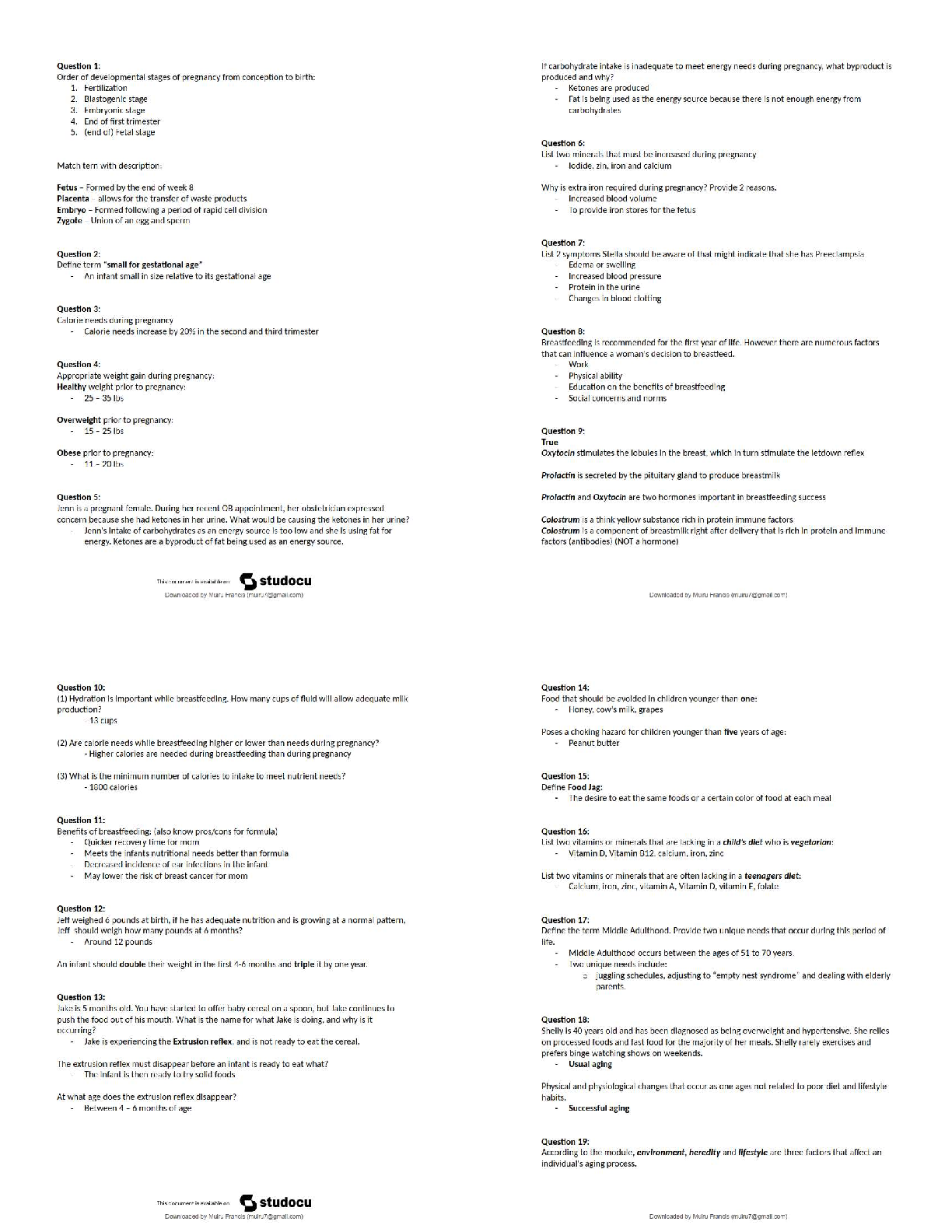
Question 1
5 / 10 pts
What is the difference between hunger and appetite? Your Answer:
Hunger : sensation that prompts to eat Appetite : a desire to sonsume specific foods.
CORREC
...
BIOD121 REVIEW FINAL EXAM. MODULE 1
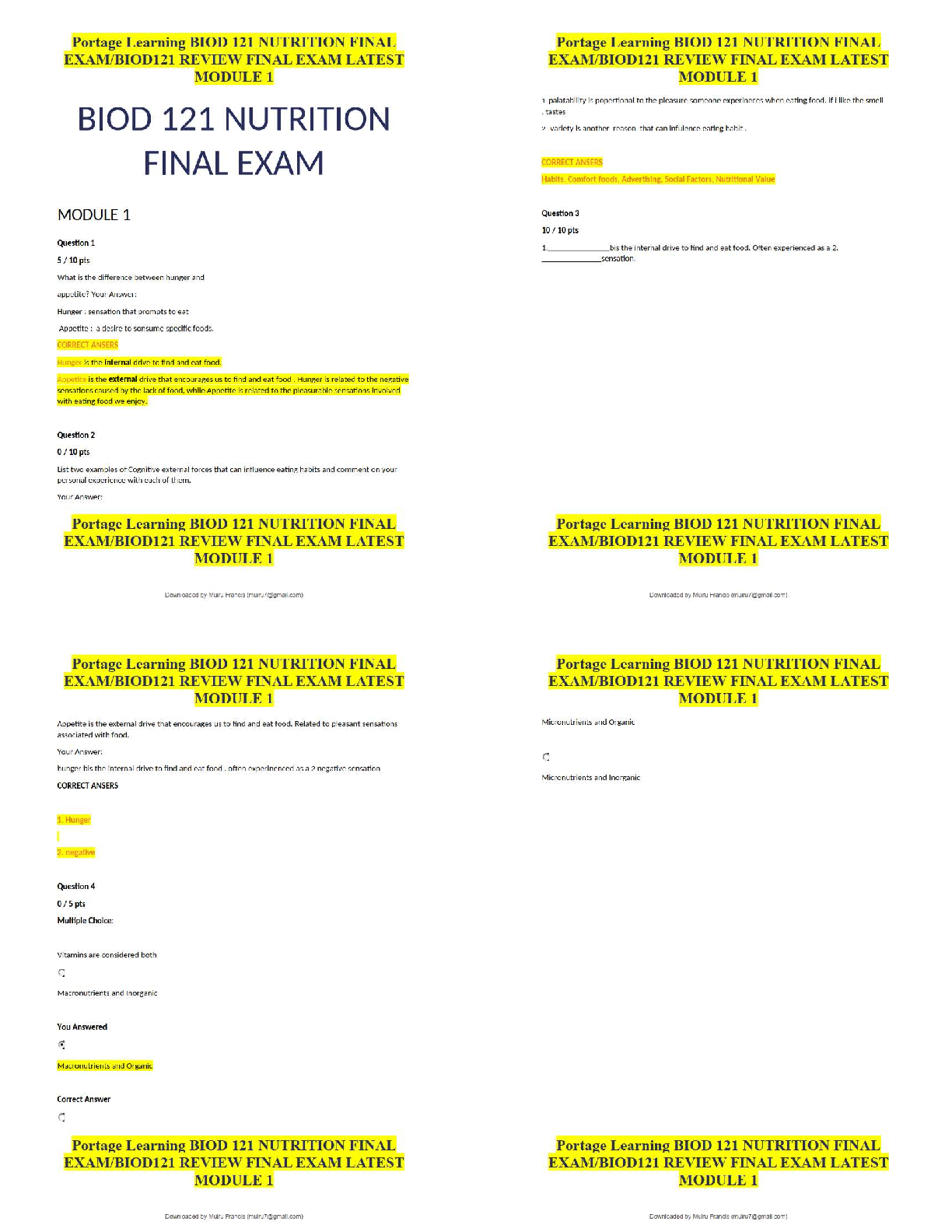
Question 1
5 / 10 pts
What is the difference between hunger and appetite? Your Answer:
Hunger : sensation that prompts to eat Appetite : a desire to sonsume specific foods.
CORRECT ANSERS
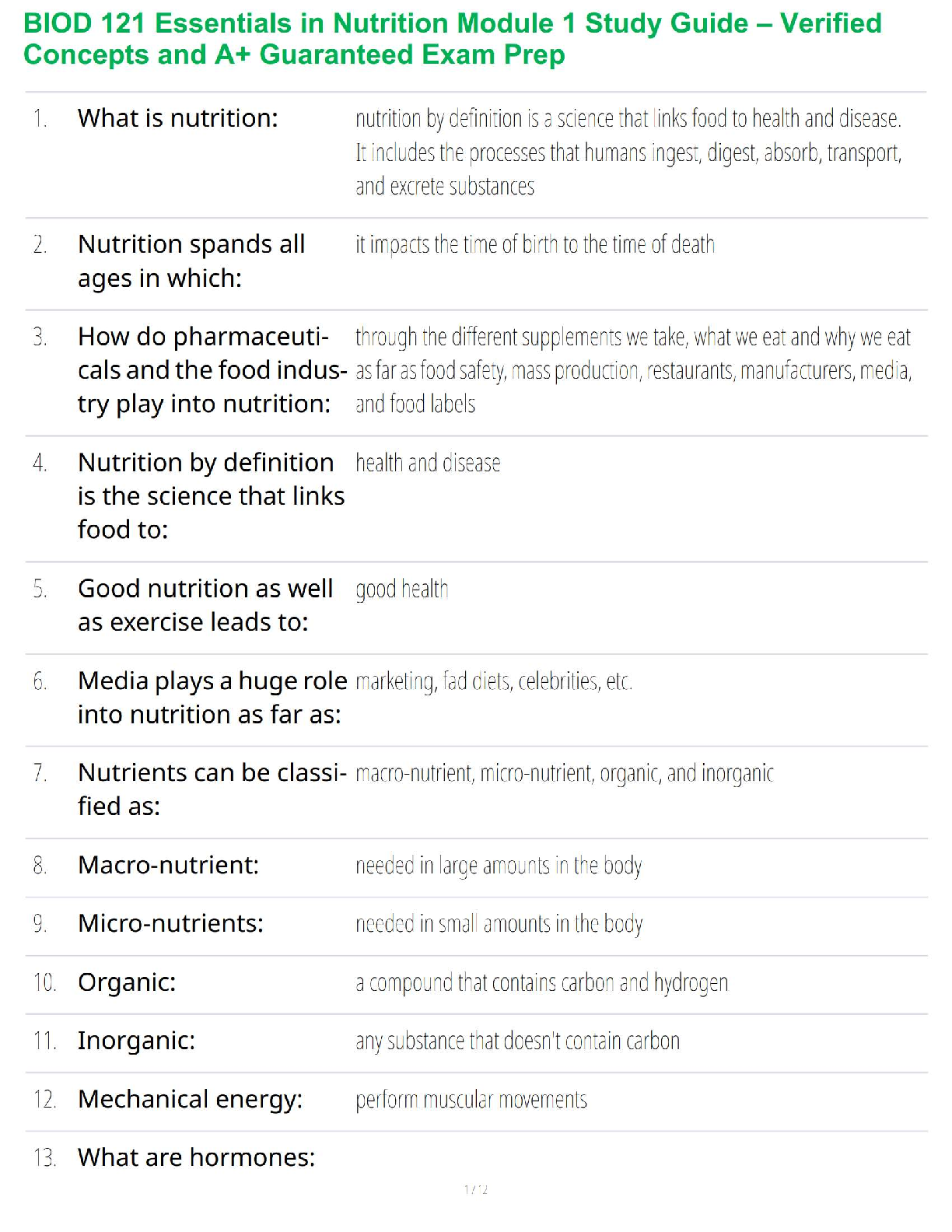
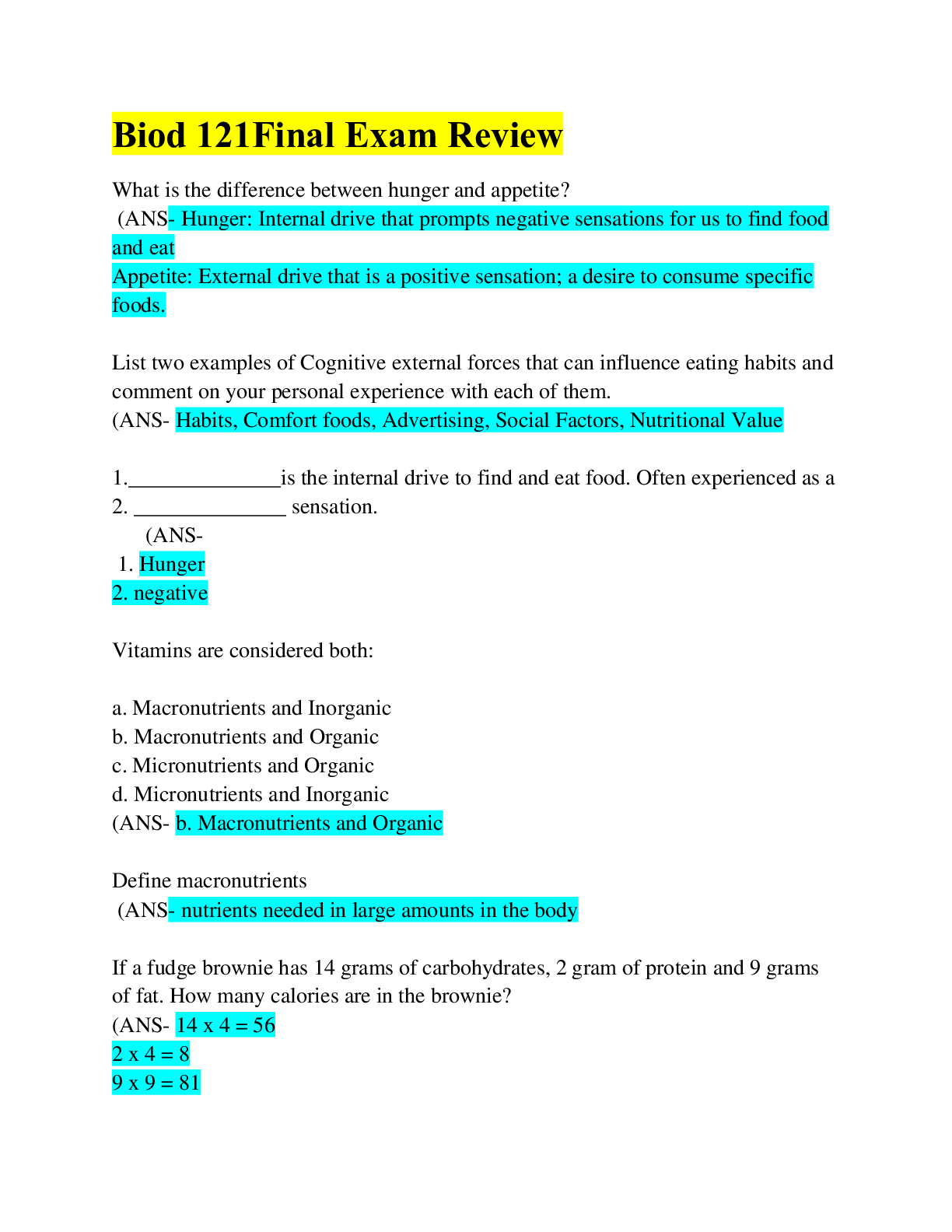
Hunger is the internal drive to find and eat food.
Appetite is the external drive that encourages us to find and eat food . Hunger is related to the negative sensations caused by the lack of food, while Appetite is related to the pleasurable sensations involved with eating food we enjoy.
Question 2
0 / 10 pts
List two examples of Cognitive external forces that can influence eating habits and comment on your personal experience with each of them.
Your Answer:
1- palatability is popertional to the pleasure someone experineces when eating food. if i like the smell , tastes
2- variety is another reason that can infulence eating habit .
CORRECT ANSERS
Habits, Comfort foods, Advertising, Social Factors, Nutritional Value
Question 3
10 / 10 pts
1. bis the internal drive to find and eat food. Often experienced as a 2.
sensation.
Appetite is the external drive that encourages us to find and eat food. Related to pleasant sensations associated with food.
Your Answer:
hunger bis the internal drive to find and eat food . often experinenced as a 2 negative sensation
CORRECT ANSERS
1. Hunger
2. negative
Question 4
0 / 5 pts Multiple Choice:
Vitamins are considered both
Macronutrients and Inorganic
You Answered
Macronutrients and Organic
Correct Answer
Micronutrients and Organic
Micronutrients and Inorganic
Question 5
0 / 5 pts
Short Answer:
Define macronutrients Your Answer:
Macronuclients ; any chemical element or substance that required in minutes amounts or trace amounts for the growth and proper heath of a living organism .
CORRECT ANSERS
Macronutrient – nutrients needed in large amounts in the body
Question 6
10 / 10 pts
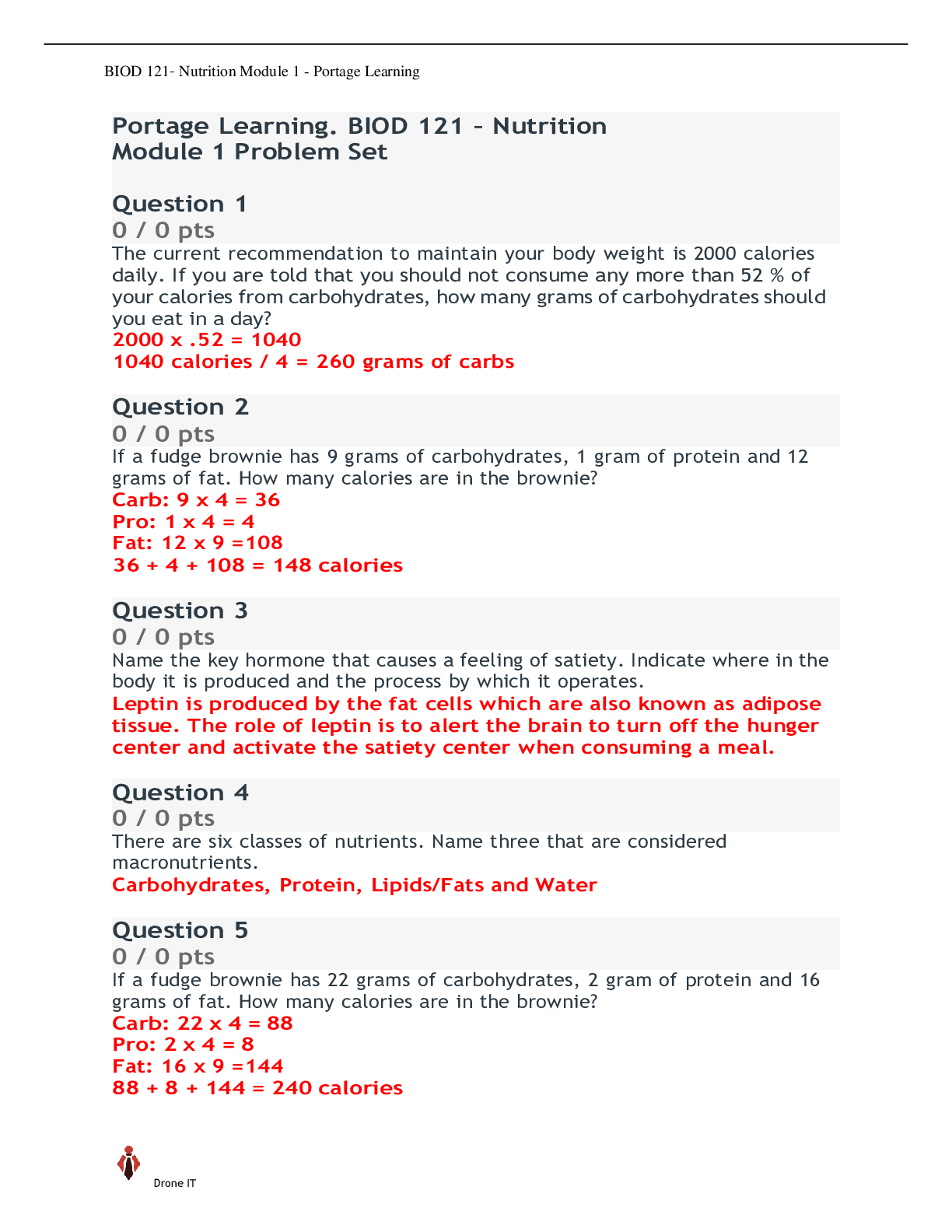
If a fudge brownie has 14 grams of carbohydrates, 2 gram of protein and 9 grams of fat. How many calories are in the brownie?
Your Answer:
145 calories.
14 x 4 = 56 2 x 4 = 8 9 x 9 = 81 56 + 8 + 81 =
145 calories
Question 7
0 / 10 pts
The current recommendation to maintain your body weight is 2000 calories daily. You should not consume any more than 65% of your calories from carbohydrates. How many grams of carbohydrates should you eat in a day?
Your Answer:
the current recommendation to maintain your body weight is 2000 calories daily. you should not consume any more than 60% of your calories from carbohydrates 300 grams of carbs .
325 grams
(2000 x .65 = 1300 1300calories / 4 = 325 grams of carbs
Question 8
10 / 10 pts
1. The state of nutrition can be achieved by eating a variety of foods which provide all the essential nutrients.
2. Malnutrition can either be a nutritional state of (A) or
(B) nutrition. Your Answer:
1. state of adequacy
2- overnutrition or undernutrition
CORRECT ANSERS
1. desirable
2.
A. over
B. under
Question 9
10 / 10 pts
An individual’s health can be assessed using the ABCDEs of nutritional assessment. Give a brief description of what A stands for.
Your Answer:
A = Anthropometrics - measurementsof body composition such as height and weight.
CORRECT ANSERS
Anthropometrics- measurements of body composition such as height and weight
Question 10
9 / 10 pts
Answer the following:
According to MyPlate, what types of food should we increase in our diet? Your Answer:
fruits, vegetables, whole grains, proteines, low fat dairy .
CORRECT ANSERS
fruits, vegetables, whole grains, low fat dairy
Question 11
0 / 10 pts
Based on the nutritional label shown below, how many calories would you consume if you ate the entire container of macaroni and cheese?
Your Answer: 250 calories
CORRECT ANSERS
250 calories per serving x 2 servings per container
= 500 calories
MODULE 2
pecific parts of the GI tract include the (A) , esophagus, stomach, (B) , large intestine and rectum. Other organs such as the liver, (C) and pancreas aid in digestion but are not considered part of the GI tract.
Your Answer:
GI tract include the mouth, esophagus, stomach, small intestine, large intestine and rectum.
other organs such as the liver, gallblader, and pancreas aid in digestion but are not considered part of the GI tract.
CORRECT ANSERS
A. mouth
B. small intestine
C. gallbladder
Question 2
10 / 10 pts
Explain the cause and symptoms of heartburn. Your Answer:
it is caused by acid refluxing back into the esophagus.
symptomes may includes a burning sensation behind the sternum either as aspasm or asharp pain.
CORRECT ANSERS
Heartburn is a burning sensation in the esophagus due to an improper closing of a sphincter that allows stomach acids to enter into the esophagus.
Question 3
10 / 10 pts
Sphincters play an important role in the GI tract.
Name two sphincters discussed in the module and using your own words, briefly describe their functions.
Your Answer:
The esophageal sphincter prevents the contents of the stomach from reentering the esophagus. The pyloric sphincter controls the releaseof chyme into the small intestines from the stomach .
CORRECT ANSERS
The esophageal sphincter prevents the contents of the stomach from reentering the esophagus. The
pyloric sphincter controls the release of chyme into the small intestines from the stomach. The
ileocecal sphincter prevents the contents of the large intestine from entering the small intestine.
Question 4
10 / 10 pts
Define the role of enzymes in digestion. Are enzymes an example of the chemical or mechanical process of digestion?
Your Answer:
ezymes in digestion helped building muscle, destroying toxins, and breacking down food particles during digestion.
chemical digestion is a vital part of digestion process while mechanical digestion involves physical movements , such as chewing, and musccles contarctions.
chemical digestion uses enzymes to break down food .
CORRECT ANSERS
Enzymes role is to breakdown food particles into smaller parts and readies the nutrients for absorption. Enzymes are an example of chemical digestion.
Question 5
0 / 10 pts
Carbohydrates can be classified as monosaccharides, disaccharides, polysaccharides and fiber. Match the following with the descriptions.
a. Monosaccharides
b. Disaccharides
c. Insoluble Fiber
d. Soluble Fiber
e. Functional Fiber
1. Examples include sucrose and maltose
2. Examples include fructose and galactose
3. Added to food for intestinal health
4. Dissolves in the GI tract
5. Also called non fermentable fiber
You Answered
1. Examples include sucrose and maltose
Correct Answer
b. Disaccharides
You Answered
2. Examples include fructose and galactose
Correct Answer
a. Monosaccharides
You Answered
3. Added to food for intestinal health
Correct Answer
e. Functional Fiber
You Answered
4. Dissolves in the GI tract
Correct Answer
d. Soluble Fiber
You Answered
5. Also called non fermentable fiber
Correct Answer
c. Insoluble Fiber
Question 6
5 / 5 pts Multiple Choice:
Which of the following is NOT True concerning blood sugar regulation?
Hormones are responsible for control
High blood sugar is called hyperglycemia
Correct!
Glucagon helps to lower blood sugar levels
Excess glucose is stored as glycogen
Question 7
5 / 5 pts
Short Answer:
What is the function of glucagon? Your Answer:
stimulate glucose, msaintains bloog glucose level .
CORRECT ANSERS
Glucagon is released from the pancreas. This hormone converts liver glycogen to glucose and improves blood sugar to greater than 70 mg/dl.
Question 8
0 / 10 pts
Name the food groups that vegans will include in their diet and those that they avoid. Your Answer:
meat, poultry, fish and eggs
CORRECT ANSERS
Vegans will consume plant foods only.
Question 9
10 / 10 pts
The biological value of a protein is different in (A) vs plant sources. (B) sources are considered high quality or complete proteins. Plant sources are considered lower quality or
(C) protein. When two or more plant proteins combine, the proteins are called complimentary proteins. A condition resulting from regularly consuming insufficient amounts of proteins and calories is called protein- calorie malnutrition.
Your Answer: A . Animal
B Animal
c. incomplete
CORRECT ANSERS
A. animal
B. Animal
C. incomplete
Question 10
5 / 5 pts Multiple Choice:
Which of the following is NOT true concerning fats and lipids?
Correct!
Polyunsaturated fatty acids cause the greatest increase in LDL levels
A relationship has been found between a diet high in fat and cardiovascular disease
Some fat is necessary in our diet
To lower blood cholesterol levels choose foods made with unsaturated fats
Question 11
5 / 5 pts
Short Answer:
What are lipoproteins comprised of? Your Answer:
Lipoproteines are comprised of a monolayer shell of polar lipids and proteines surrounds a hydrophobic core containing cholesterol esters and tryglycerides.
CORRECT ANSERS
Lipoproteins are lipids surrounded by a shell of protein, phospholipids and cholesterol.
Question 12
10 / 10 pts
Define protein calorie malnutrition. Your Answer:
proteine malnutrition is inadequate intake of proteine and calories over a period of time which leads to muscle wasting, and increased risk of infection due to a compromised immune system .
CORRECT ANSERS
Quiz Score: 80 out of 100
MODULE 3
Multiple Choice:
Which of the following questions is NOT true of the basal metabolic rate (BMR)?
The BMR is the minimal amount of calories used by the body in a fasting state when resting
You Answered
Males have a higher BMR than females
Pregnancy increases the BMR
Correct Answer
Physical activity is a component of the BMR
Question 2
5 / 5 pts
Short Answer:
Define the term energy balance. Your Answer:
The state in wich energy intake , in the form of food and bereages, matches the energy expended , primarily through basal metabolism and physical activity . ( equilibrum)
CORRECT ANSERS
Energy balance is defined as energy intake being equal to energy expended
Question 3
0 / 5 pts
Using the guidelines for Body Mass Index someone with a body mass index of greater than 31 would be considered .
Your Answer: overweight
CORRECT ANSERS
obese
Question 4
5 / 5 pts
Comparing the amount of oxygen consumed with the amount of carbon dioxide expired measures a person’s energy expenditure using .
Your Answer: Idirect calorimeter CORRECT ANSERS
Indirect calorimetry
Question 5
10 / 10 pts
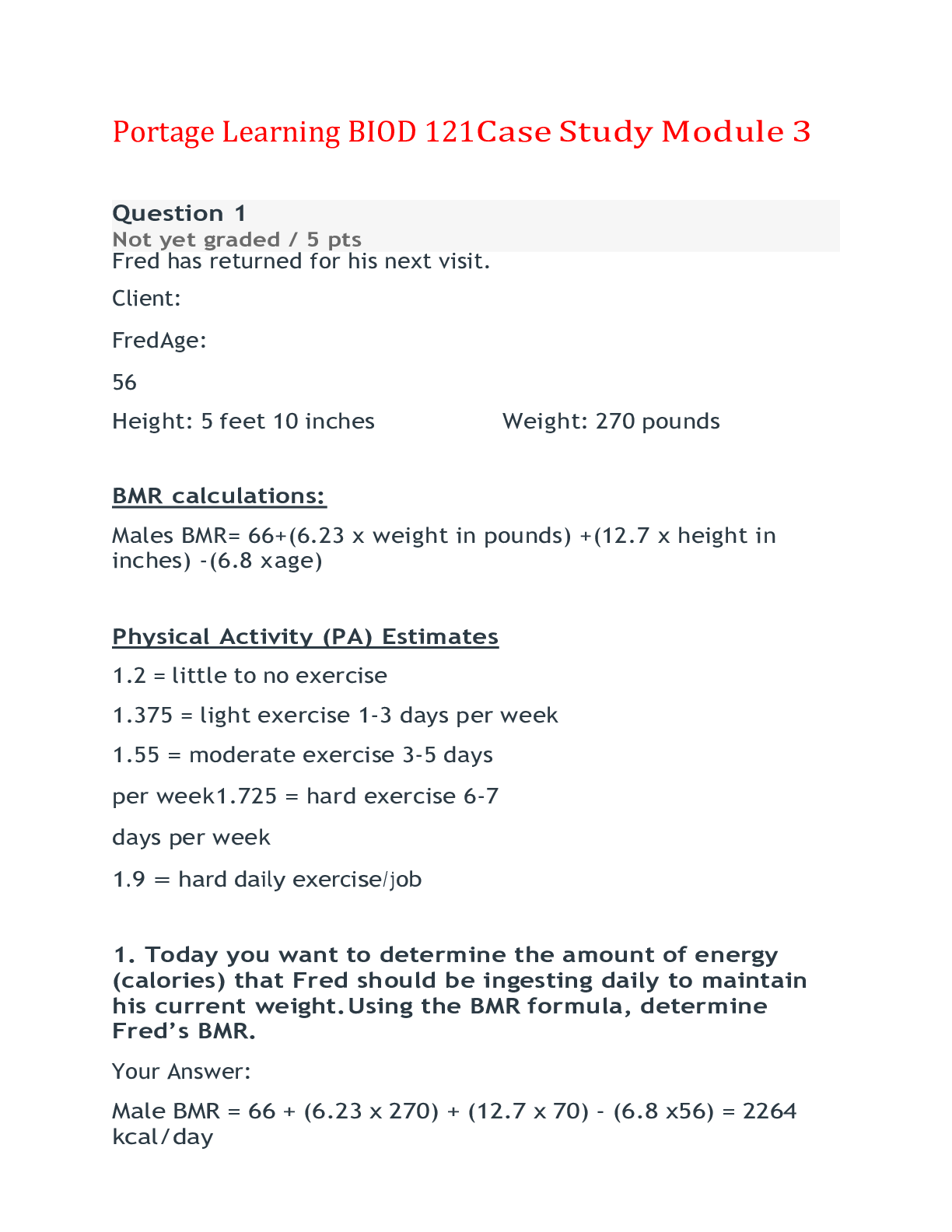
Calculate the EER for a male who is 20 years old, 5 feet 11 inches tall, 155 pounds with an active lifestyle.
Activity Level PA Men PA Women
Sedentary - No exercise 1.00 1.00
Low Activity - exercises the equivalent of walking 2 miles per day at 3-4 mph 1.11 1.12
Active - exercises the equivalent of walking 7 miles per day 1.25 1.27
Very Active - exercises the equivalent of walking 17 miles per day 1.48 1.45
Males: EER = 662 - (9.53 x AGE) + PA x (15.91 x WT + 539.6 x HT) Females: EER = 354 - (6.91 x AGE) + PA x (9.36 x WT + 726 x HT)
1 kg = 2.2 pounds 1m = 39.37 inches
Your Answer:
Males EER= 662-(9.53*AGE)+ PA*(15.91*WT+539.6*HT)= 3086.7 CALORIES.
CORRECT ANSERS
Males: EER = 662 - (9.53 x AGE) + PA x (15.91 x WT + 539.6 x HT)
where:
AGE = 20
PA = 1.25 (from chart)
WT = 155 lbs x 1 kg/2.2 lbs = 70.45 kg HT = 71 in x 1 m/ 39.37 in = 1.80 m Plug in the numbers for the variables:
EER = 662 - (9.53 x 20) + 1.25 x (15.91 x 70.45 + 539.6 x 1.80)
Multiply the numbers inside the parenthesis: EER = 662 - (190.6) + 1.25 x (1120.9 + 971.3)
Add inside the parenthesis:
EER = 662 – 190.6 + 1.25 x 2092.2
Multiply before adding:
EER = 662 – 190.6 + 2615.3
Add and Subtract:
EER = 3086.7 calories
Question 6
10 / 10 pts
1. The distribution of fat in the body is important. Males often have an apple shape, often referred to as
obesity.
2. Females have a pear shape often referred to as obesity.
3. The shape that has the highest health risks associated with it is the shape. Your Answer:
1. apple
2. android
3. apple
CORRECT ANSERS
1. android
2. gynoid
3. apple
Question 7
3.33 / 10 pts
Which person is at a greater risk for health issues related to being overweight or obese? Explain your answer.
Janet has a BMI of 24 and a waist to hip ratio of .8. Fred has a BMI of 25 and a waist to hip ratio of 1.0. Your Answer:
Fred
Fred
CORRECT ANSERS
The desired hip to waist ratio in males is <0.9 and in females < 0.8.
A BMI of 18-24.9 is considered healthy
A BMI of 25-29.9 is considered overweight
A BMI of 30 or greater is considered obese
Exceeding the respective values would be indicative of a health risk
Question 8
5 / 10 pts
What table can be used to determine if an individual is in a healthy weight range, an overweight range or is considered obese?
Would this table be appropriate for a muscular individual? Your Answer:
BMI = BODY MASS INDEX
CORRECT ANSERS
Body Mass Index Table
No it would not be appropriate
Question 9
6.66 / 10 pts
Nature and nurture both play a role in determining our weight. Mark each statement as nature or nurture.
1. Your body’s set point .
2. Identical twins often share the same body type .
3. High fat diets and inactivity promote weight gain . Your Answer:
1. nurture
2. nature
3. nurture
CORRECT ANSERS
1. nature
2. nature
3. nurture
Question 10
10 / 10 pts
The least number of calories that Joe should consume in order to lose weight but continue to meet his nutrient needs is .
Your Answer:
less than 1500 calories.
1500 calories
Question 11
6.66 / 10 pts
1. energy balance occurs when energy intake is greater than energy expenditure resulting in weight gain.
2. A energy balance occurs when intake is less than energy expended resulting in a weight loss.
3. Most adults should be in a state of energy where energy intake is equal to energy output. This results in weight maintenance.
Your Answer:
1. positive energy balance
2. negative energy
3. intake
CORRECT ANSERS
1. Positive
2. negative
3. balance
Question 12
10 / 10 pts
Match the following behavior modification strategies with the correct statement.
A. Cognitive Restructuring
B. Chain Breaking
C. Stimulus Control
D. Contingency Management
E. Self Monitoring
1. Keeping a food diary helps you track calories.
2. To avoid overeating at a party you keep a low cal drink in your hands and stay away from the food.
3. You shift your thoughts on food from allowed and not allowed to moderation.
Correct!
1. Keeping a food diary helps you track calories.
Correct!
2. To avoid overeating at a party you keep a low cal drink in your hands and stay away from the food.
Correct!
3. You shift your thoughts on food from allowed and not allowed to moderation.
Quiz Score: 71.65 out of 100
MODULE 4
Multiple Choice:
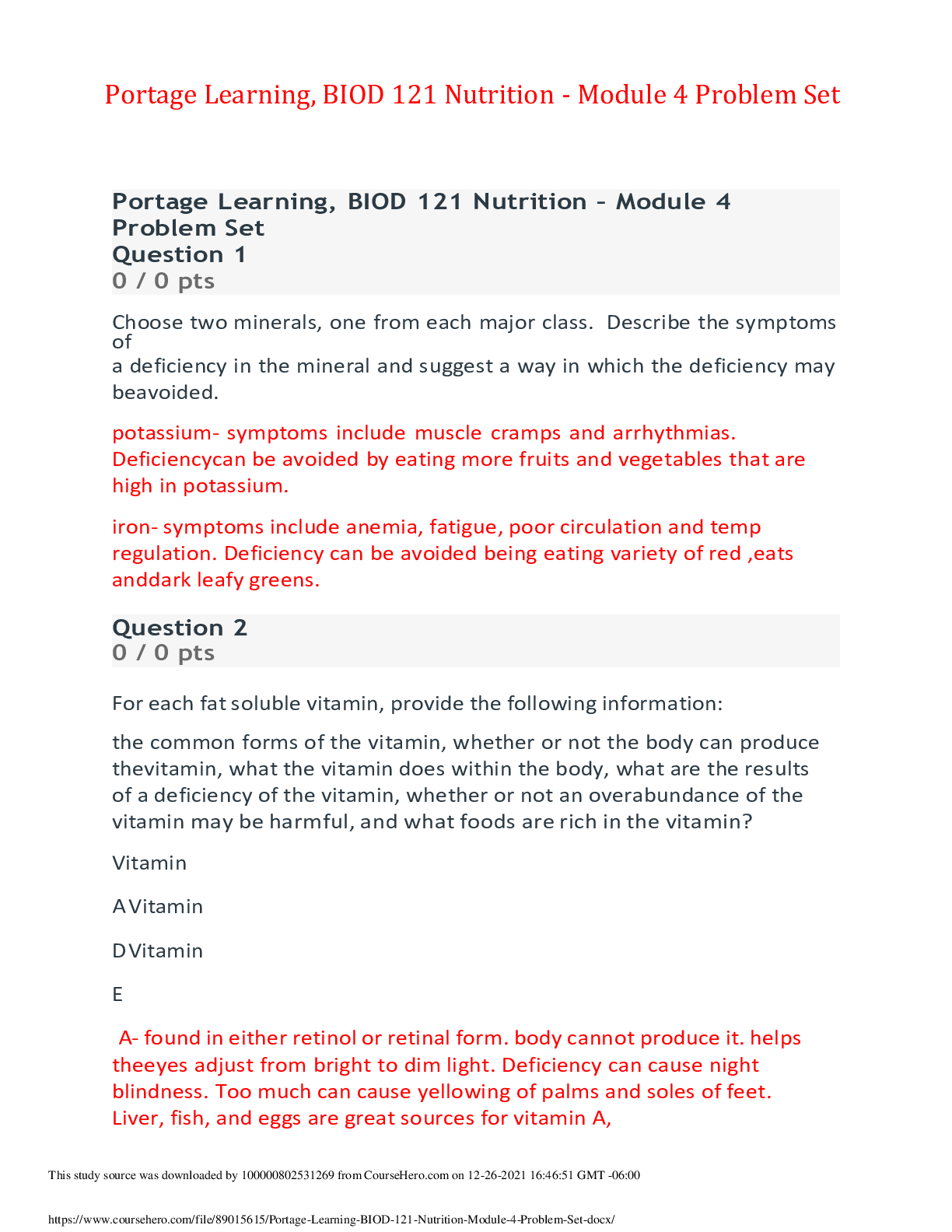
Fat soluble vitamins have all the following characteristics except:
They are organic
Are absorbed into the lymph system
Correct!
All are synthesized by the body
Are stored in large quantities
Question 2
0 / 5 pts Multiple Choice:
Fat soluble vitamins have all the following characteristics except: You Answered
They are organic
Correct Answer
They provide energy
Are absorbed into the lymph system
Are stored in large quantities
Question 3
10 / 10 pts
1. Lack of this vitamin can lead to rickets in children and osteoporosis in adults.
2. Xeropthalmia is a result of a deficiency of . Your Answer:
1. vitamin D
2. vitamin A
CORRECT ANSERS
1. Vitamin D
2. Vitamin A
Question 4
6.66 / 10 pts
1. Vitamin C is important in the formation of .
Like Vitamin A and E it works as an antioxidant scavenging free radicals.
2. Combining with good sources of this vitamin will improve its absorption.
3. A deficiency results in scurvy which can be prevented by consuming . This vitamin is often marketed as a cure for the common cold.
Your Answer: 1 . Collagen
2. Antioxidant
3. Citrus fruits
CORRECT ANSERS
1. collagen
2. iron
3. citrus fruits
Question 5
0 / 10 pts
1. A friend of yours is a weight lifter. He just purchased a supplement of vitamin B-6. What are the side effects of mega doses of this vitamin?
2. Why would he consider taking this? Your Answer:
1. side effects of mega doses of this vitamin are :
disfiguring skin lesions, loss of balance, feeling tired, headache, drowsiness
2. because is important for normal brain development and for keeping the nervous system and immune system healthy.
CORRECT ANSERS
1. Megadoses of B-6 from supplements can cause hand and foot numbness as well as irreversible nerve damage.
2. Weight lifters use large amounts to build muscle mass.
Question 6
10 / 10 pts
1. A deficiency of thiamin results in beriberi which translates to I can’t I can’t.
Pellagra is a deficiency of niacin and the symptoms include diarrhea, dermatitis, and death.
2. Ariboflavinosis results from a riboflavin deficiency leading to an inflamed tongue known as glossitis and , cracks around the mouth.
3. A deficiency of folate and vitamin both result in megaloblastic anemia, formation of large immature red blood cells.
Your Answer:
1. Dementia
2. Cheilolosis 3. B-12
CORRECT ANSERS
1. dementia
2. cheilosis
3. B-12
Question 7
10 / 10 pts
1. To prevent dehydration two hormones are secreted. is secreted from the adrenal glands to conserve sodium and water.
2. The pituitary glands release to decrease urine output. Your Answer:
1. Aldosterone
2. Antidiuretic hormone
CORRECT ANSERS
1. Aldosterone
2. antidiuretic hormone
Question 8
10 / 10 pts What are ions? Your Answer:
ions are minerals that have an electrical charge and are called electrolytes.
CORRECT ANSERS
Ions are minerals that have an electrical charge and are called electrolytes.
Question 9
6.66 / 10 pts
1. are essential nutrients. The degree to which they can be absorbed is called their bioavailability.
2. Minerals needed in amounts > 100 mg per day are called major minerals while those needed in quantities < 100 mg daily are minerals.
3. Would vitamins or minerals be more likely to be destroyed during the cooking process? Your Answer:
1. Minerals are essential nutrients.
2. trace minerals
3. They are not destroyed during cooking process.
CORRECT ANSERS
1. vitamins and/or minerals
2. trace
3. Vitamins
Question 10
6.66 / 10 pts
Name three factors that may negatively affect iron absorption. Your Answer:
zinc supplements can interfere with iron absorption and calcium and eggs.
CORRECT ANSERS
High fiber intake or Pica both adversely affects absorption. Zinc supplements can also interfere with iron absorption as well as other minerals.
Question 11
10 / 10 pts
Match the following minerals to their disease/deficiency.
a. Iron
b. Selenium
c. Iodide
d. Calcium
1. A particular type of heart disease
2. Osteoporosis
3. Congenital hypothyroidism in children
4. Anemia resulting from a low hematocrit and hemoglobin level
Correct!
1. A particular type of heart disease
Correct!
2. Osteoporosis
Correct!
3. Congenital hypothyroidism in children
Correct!
4. Anemia resulting from a low hematocrit and hemoglobin level
Quiz Score: 74.98 out of 100
MODULE 5
Determine the maximum heart rate and the target zone for a 55 year old.
1. Maximum heart rate
2. Target zone to beats/minute Your Answer:
1. 165
2. target zone 99 to 149
1. 165
2. (220-55=165) (165x.6= 99), (220-55=165) (165x.9=149)
Question 2
5 / 5 pts Multiple Choice:
The primary fuel used for a 100 meter sprint would be
Fat
Correct!
Carbohydrates
Protein
Both carbohydrates and fats
Question 3
5 / 5 pts
Short Answer:
Name three benefits that occur from regular physical activity. Your Answer:
1. strenthens your cardiovascular system
2. manage your weight
3. improves your balance and coordination.
CORRECT ANSERS
There are many benefits that occur from regular physical activity. These include increased cardiovascular function, reduced stress, lower blood pressure, weight loss/control, reduced risk of certain cancers, improved sleep, improved immune function, and improved blood glucose control, slowing of the aging process and an improved self-image.
Question 4
10 / 10 pts
What compound is broken down to form ATP when the muscle stores are depleted? How long can this compound maintain muscle contractions?
Your Answer:
phosphocreatine ( PCr ) is broken down into phosphate and creatine to form more ATP . PCr can maintain muscle contractions for approximately 10 seconds.
CORRECT ANSERS
Phosphocreatine (PCr) is broken down into phosphate and creatine to form more ATP. PCr can maintain muscle contractions for approximately 10 seconds.
Question 5
10 / 10 pts
1. can lead to serious consequences including heat exhaustion, cramps and heatstroke.
2. For every lost during a workout 2 ½ to 3 cups of fluid should be consumed during the exercise or afterwards.
3. Sports beverages are good for events lasting greater than 60 minutes and provide , sodium and potassium which will stimulate thirst and make the beverage taste good.
Your Answer:
1. Dehydration
2. Pound (Lb)
3. Carbohydrates
CORRECT ANSERS
1. Dehydration
2. pound
3. carbohydrates
Question 6
5 / 5 pts Multiple Choice:
Which of the following is not characteristic of disordered eating?
Use of stereoids
Striving for perfection
Correct!
Exercising for fitness
Shape preoccupation
Question 7
5 / 5 pts
Short Answer:
What is the translation of anorexia nervosa and bulimia? Your Answer:
Anorexia Nervosa : eating disorder involving a pschological loss or denial of appetite , followed by self - starvation.
Bulimia Nervosa : eating disorder in wich large quantities of food are eaten at one time ( binge eating) and then purged from the body by vomiting.
CORRECT ANSERS
Anorexia Nervosa translates to a denial of appetite. Bulimia translates as Ox hunger.
Question 8
5 / 5 pts Multiple Choice:
Which eating disorder best describes this scenario? Caitlin is extremely competitive and runs hurdles for her college team. This is her freshman year and she has noticed that she has gained the freshman 15 over the winter. When she and her coach get together they decide that she may need to lose a little weight to improve her performance. She restricts calories by skipping lunch, drinking diet colas in place of milk and watching what she eats. At the same time, spring practice has started and she makes sure she is at the track for an hour after practice to improve her performance. What she doesn’t realize is that by continuing her current eating patterns and exercise level she may actually be hurting her performance and her health.
Correct!
Female athlete triad
Anorexia Nervosa
Bulimia Nervosa
Binge eating disorder
Question 9
5 / 5 pts Multiple Choice:
Which eating disorder best describes this scenario? Caitlin has always been at a normal weight and never was really concerned about her body shape. She enjoys being adventuresome and her friends describe her as reckless and impulsive. Often times she and her roommates will take a break from studying and spend an hour eating junk food. When they are all stuffed beyond the point of feeling full they head to the bathroom to purge.
Binge eating disorder
Female athlete triad
Night eating syndrome
Correct!
Bulimia nervosa
Question 10
5 / 5 pts Multiple Choice:
Which of the following is not a characteristic of Anorexia Nervosa?
Control of food leads to empowerment
Correct!
Food equals comfort
Preoccupied with food
Denial of appetite
Question 11
5 / 5 pts
Short Answer:
Provide one example of the effects of anorexia on each of the following: hair, heart and blood
Your Answer:
hair: people with anorexia often develop long fine downy hair on face and body
heart: the heart is often damaged, no enough fat to protect the heart will causes anemia
blood : poor circulation resulting in feeling constanly cold .
2.
CORRECT ANSERS
Hair- brittle or thin
Heart- slow heart rate, low blood pressure or heart disease
Blood- anemia
Question 12
5 / 5 pts Multiple Choice:
Which of the following is not a characteristic of Bulimia Nervosa?
Tooth erosion
Correct!
BMI < 17
Normal weight
Gum disease
Question 13
5 / 5 pts
Name the three components of the Female Athlete Triad. Your Answer:
1. lack of menstruation
2. osteoporosis due to inadequate intake of calcium and vitamin D
3. disordered eating
CORRECT ANSERS
The female athlete triad involves disordered eating, lack of menstrual periods and osteoporosis related to inadequate calcium and vitamin D intake.
Question 14
10 / 10 pts
1. Undernutrition is the most common form of in developed as well as developing countries.
2. Food insecurity is the inability to get enough food or the quality and variety of the food is inadequate to meet needs.
Your Answer:
1. malnutrition.
2. nutrient needs.
CORRECT ANSERS
1. malnutrition
2. nutrient
Question 15
10 / 10 pts
What are three strategies being used by the World Food Bank to counter undernutrition? Your Answer:
1. increasing diversity of the food supply.
2. fortifying food with nutrients.
3. providing nutrient supplementation.
CORRECT ANSERS :
The World Food Bank is currently working to implement three approaches to counter undernutrition; increasing diversity of the food supply, fortifying food with nutrients and providing nutrient supplementation.
MODULE 6
1. The first stage of gestation, during which rapid cell division occurs is known as the
stage.
2. Development occurs from about week two through the week and is called the embryonic stage. The fetal stage occurs from week nine to the end of the pregnancy and is a period of growth.
3. All pregnancies are divided into three equal time periods, known as trimesters, each lasting approximately 13-14 weeks. A baby born after the thirty seventh week of pregnancy is considered
term. Your Answer:
1. Blastogenic stage
2. eighth week
3. full term
CORRECT ANSERS
1. blastogenic
2. eighth
3. full
Question 2
5 / 10 pts What is Pica? Your Answer:
The consistent eating of non - nutritive substances for at least a month.
CORRECT ANSERS :Pica an abnormal craving for both food and nonfood items.
Question 3
10 / 10 pts
1. Prior to delivery, hormones prepare the breast for milk production.
is a hormone secreted by the pituitary gland for milk production.
2. As the baby suckles oxytocin stimulates the and the letdown reflex to secrete milk.
3. During the first few days following birth colostrum, which is high in protein and
, is secreted. This helps protect the intestinal health of the infant. Your Answer:
1. prolactin
2. lobules
3. immune factors
CORRECT ANSERS
1. Prolactin
2. lobules
3. immune factors
Question 4
10 / 10 pts
1. Human milk or formula should meet the total nutrient needs for the first months of life.
2. Both are rich in to provide a concentrated source of calories and for brain and nervous system development.
Arachidonic and docosahexaenoic acid are long chain fatty acids essential for brain and eye development. Solid foods can be introduced at 6 months of age.
3. A new food should be introduced at the rate of one per week to check for . Your Answer:
1. six months
2. fat
3. allergies
CORRECT ANSERS
1. six
2. fat
3. allergies
Question 5
3.33 / 10 pts
Name three concerns that occur during the school age years that may impact a child’s nutritional status. Your Answer:
a. Behavior
b. energy and activity levels
c. obesity
CORRECT ANSERS Lack of regular meals, excess fat consumption, increased incidence of obesity and cardiovascular disease as well as diabetes.
Question 6
10 / 10 pts
1. During growth spurts adolescents have increased need for calcium for bone formation and iron to prevent .
2. A typical diet is also low in , fat soluble vitamins and folate.
3. Teenagers should moderate their intake of fast food, sugar laden snacks and
and focus on nutrient dense food choices from the five food groups.
The media, peer pressure, concern over appearance and exertion of independence all affect their food choices.
Your Answer:
1. anemia
2. zinc
3. sugary beverages
CORRECT ANSERS 1. anemia
2. zinc
3. sugary beverages
Question 7
5 / 5 pts Multiple Choice:
The increased incidence of overweight/obese children and teens and poor diet habits has resulted in all the following for this age group except:
Type 2 Diabetes
Hypertension
Correct!
Type 1 Diabetes
Cardiovascular disease
Question 8
0 / 5 pts Multiple Choice:
The increased incidence of overweight/obese children and teens and poor dietary habits has resulted in all the following for this age group except:
High blood pressure
High Cholesterol levels
You Answered
Type 2 Diabetes
Correct Answer
Pica
Question 9
0 / 10 pts
There are two main factors that are related to nutrient needs of adults and nutrition concerns that occur with aging. These factors are?
Your Answer:
calcium and vitamin D
CORRECT ANSERS Physiological changes and psychosocial needs
Question 10
10 / 10 pts
1. The rate at which we age is influenced by several factors including lifestyle, environment and
.
2. Physical and (A) changes that are an expected part of aging such as increased fatty tissue, high blood pressure and declining bone and lean body mass is referred to as (B) aging.
Individuals who make wise diet and lifestyle choices can decrease the risk for disease and age-related decline of functions occur at a slower rate. This is called Successful aging.
Your Answer:
1. heredity
2.A . physiology
B. usual aging
1.) heredity
2.)
A. physiological
B. usual
Question 11
3 / 10 pts
Specify four reasons that an older adult would benefit from taking a multivitamin. Your Answer:
a. boost immunity
b. reduce cancer risk
c. reduce the risk for heart disease
d. improve memory loss
CORRECT ANSERS: Physical limitations, dental issues, taste changes all decrease food intake. Social isolation and depression and lack of money or transportation can limit nutrient intake.
[Show More]


-MODULE 1 QUESTIONS AND ANSWERS.png)


 MODULE 4 LATEST UPDATE.png)



.png)




.png)

.png)

