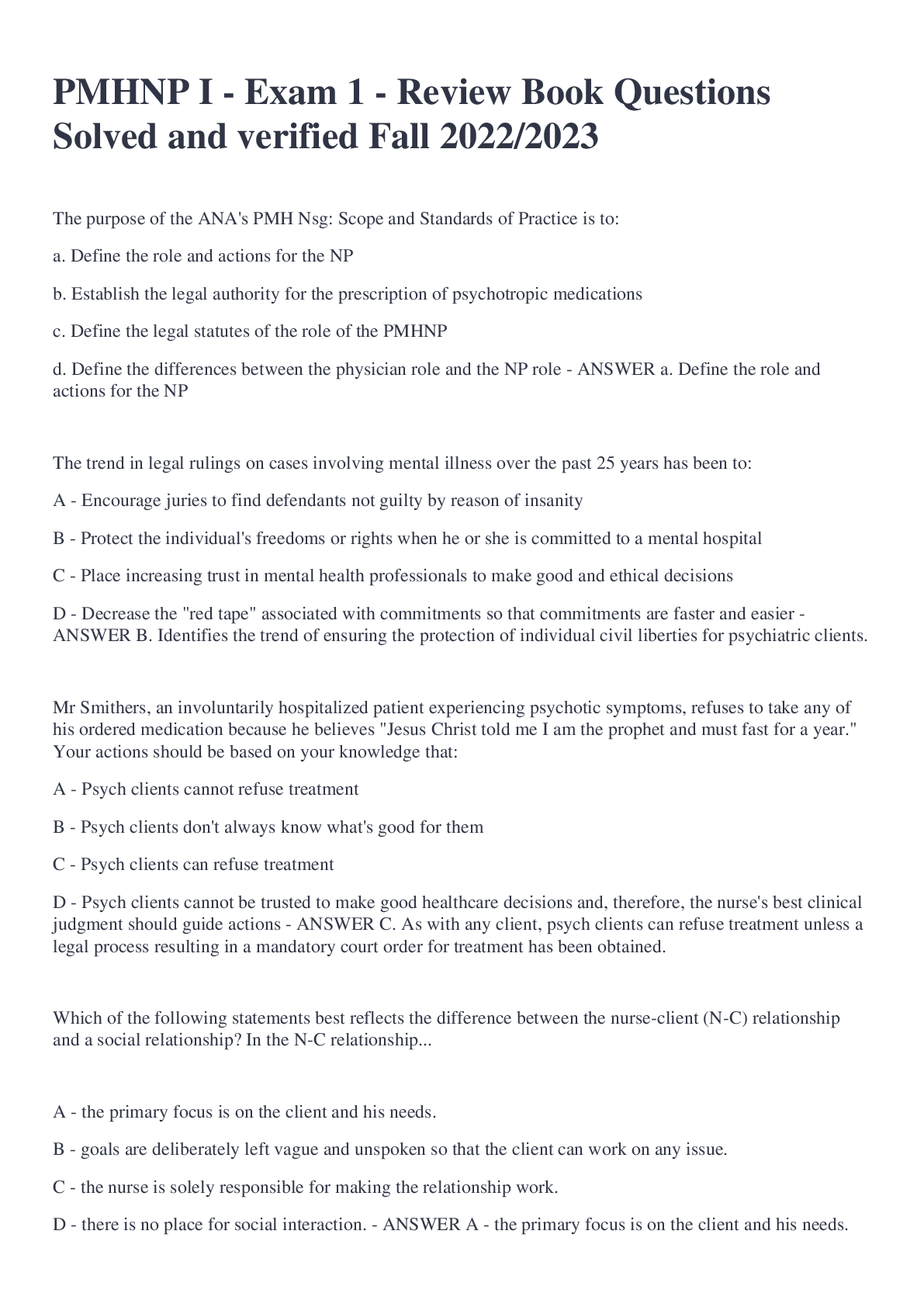
Lab Value - Calcium (Ca)
(Serum Electrolyte) - ANSWER 8.6 - 10.2 mg/dL
-If a patient has severe hypocalcemia, take seizure precautions and assess the airway. Also, monitor for tetany, tingling sensations in the tips
...
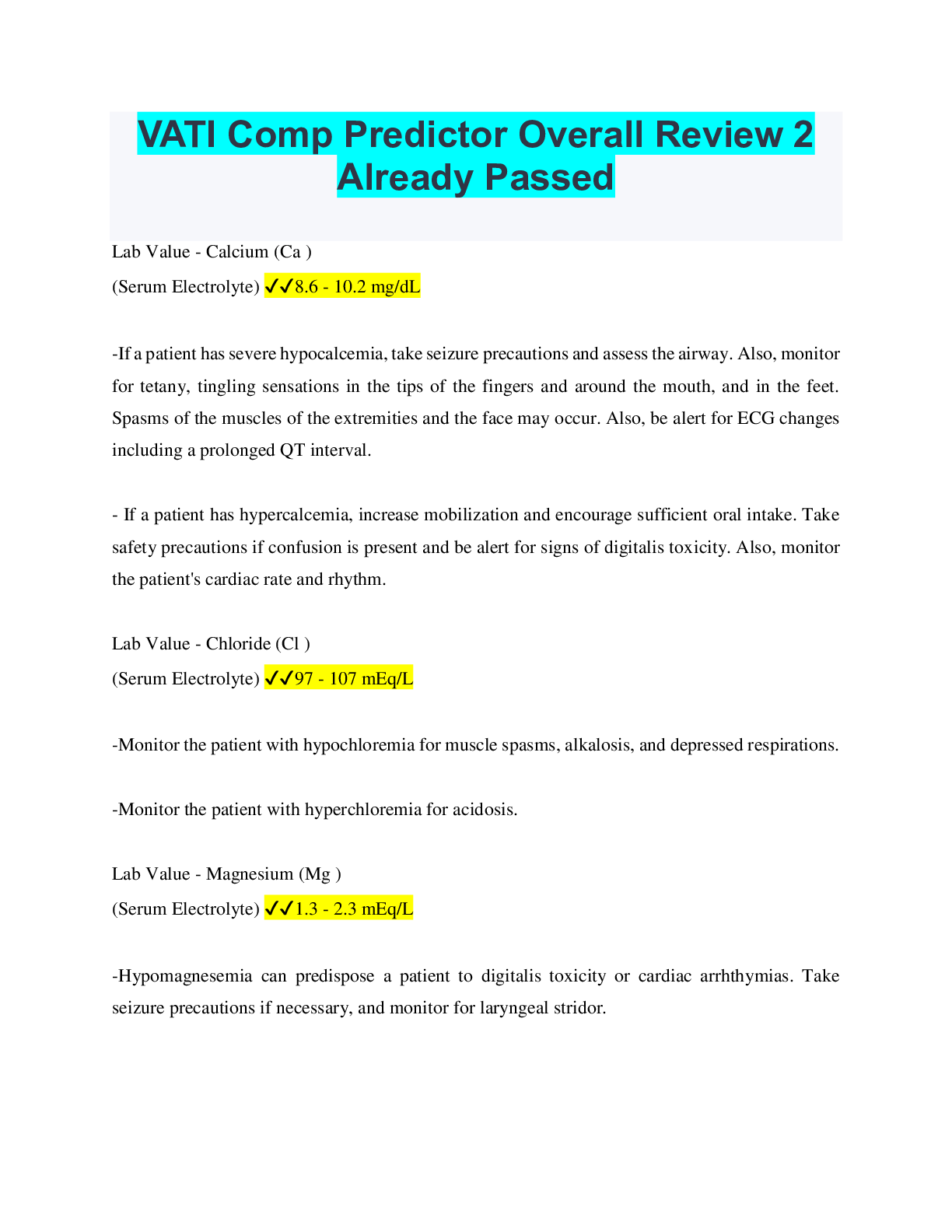
Lab Value - Calcium (Ca)
(Serum Electrolyte) - ANSWER 8.6 - 10.2 mg/dL
-If a patient has severe hypocalcemia, take seizure precautions and assess the airway. Also, monitor for tetany, tingling sensations in the tips of the fingers and around the mouth, and in the feet. Spasms of the muscles of the extremities and the face may occur. Also, be alert for ECG changes including a prolonged QT interval.
- If a patient has hypercalcemia, increase mobilization and encourage sufficient oral intake. Take safety precautions if confusion is present and be alert for signs of digitalis toxicity. Also, monitor the patient's cardiac rate and rhythm.
Lab Value - Chloride (Cl)
(Serum Electrolyte) - ANSWER 97 - 107 mEq/L
-Monitor the patient with hypochloremia for muscle spasms, alkalosis, and depressed respirations.
-Monitor the patient with hyperchloremia for acidosis.
Lab Value - Magnesium (Mg )
(Serum Electrolyte) - ANSWER 1.3 - 2.3 mEq/L
-Hypomagnesemia can predispose a patient to digitalis toxicity or cardiac arrhthymias. Take seizure precautions if necessary, and monitor for laryngeal stridor.
-If hypermagnesemia is present, be alert for hypotension and shallow respirations, lethargy, drowsiness, and coma. Don't give magnesium containing medications to patient with renal failure or compromised renal function. Check deep tendon relfexes frequently.
Lab Value - Phosphate (PO )
(Serum Electrolyte) - ANSWER 2.5 - 4.5 mg/dL
-Patients with severe hypophosphatemia are at greater risk for infection. Admin IV phosphate products cautiously and give TPN cautiously in malnourished patients. Monitor for diarrhea when taking oral supplements. A sudden increase in serum phosphate level can cause hypocalcemia.
-With hyperphosphatemia, monitor for signs of tetany. Soft tissue calcification can be a long-term complication of chronically elevated serum phosphate levels.
Lab Value - Potassium (K )
(Serum Electrolyte) - ANSWER 3.8 - 5 mEq/L
-Hypokalemia can be life-threatening. Assess for hypokalemia in patients taking digoxin. Patients with hypokalemia are at risk for cardiac arrhythmias. Monitor for muscle cramps and weakness, paresthesias, fatigue, anorexia, decreased bowel motility, and an irregular heartbeat. To prevent hypokalemia, educate about abuse of laxatives and diuretics.
- Hyperkalemia can be life-threatening. Monitor pts for arrhythmias, irritability, paresthesias, and anxiety, as well as GI symptoms such as nausea and intestinal colic. Prevent hyperkalemia by administering potassium correctly, according to your facility policy. Also, avoid giving pts with renal insufficiency potassium-saving diuretics, potassium supplements, or salt substitutes. Pts on ACE inhibitors should avoid potassium supplements.
Lab Value - Sodium (Na )
(Serum Electrolyte) - ANSWER 135 - 145 mEq/L
- For pts with hyponatremia, monitor fluid losses and gains, monitor for GI symptoms (Anorexia, nausea, vomiting, abdominal cramping) and CNS symptoms (lethargy, confusion, muscle twitching, seizures), and check urine specific gravity. Take seizure precautions when hyponatremia is severe.
- When hypernatremia is present, monitor fluid losses and gains, and monitor for changes in behavior such as restlessness, lethargy, and disorientation. Look for excessive thirst and elevated body temp and check urine specific gravity. Give sufficient water with tube feedings to keep serum NA+ and BUN at normal limits.
Latex allergy risk factor? - ANSWER Banana Allergy
Antidote / Reversal Agent - Heparin (Lovenox)? - ANSWER Protamine Sulfate
aPTT normal range and therapeutic? - ANSWER Normal 30-40 seconds. Therapeutic is 1.5 - 2.5x seconds.
Antidote / Reversal Agent - Acetaminophen? - ANSWER acetylcysteine (Mucomyst)
Antidote / Reversal Agent - Iron? - ANSWER deferoxamine (Desferal)
Antidote / Reversal Agent - Lead? - ANSWER succimer (Chemet)
Antidote / Reversal Agent - Digitalis - ANSWER digibind (Digoxin immune FAB)
DKA (Diabetic Ketoacidosis) - Early S & S - ANSWER Thirst or very dry mouth, polyuria, high blood glucose levels, high level of ketones in the urine.
DKA (Diabetic Ketoacidosis) - Late S & S - ANSWER Constantly tired, dry or flushed skin, nausea, vomiting, abdominal pain, difficulty breathing, FRUITY BREATH, and confusion.
Serum Electrolytes - ANSWER Na - 136 to 145
K - 3.5 to 5
Ca - 9 to 10.5
Mg - 1.3 to 2.1
P - 3 to 4.5
Cl - 98 to 106
Diabetics - Exercise teaching? - ANSWER Exercise at insulin's peak, blood glucose is closer to normal, and urinary ketones are absent. Monitor blood glucose levels before, during, and after exercise.
Nutrition for Heart Failure? - ANSWER Decrease Na, increase fluids, increase fiber, increase K with diuretic use.
Pregnancy - positive signs? - ANSW
[Show More]

![Preview of Walden University NURS 6640 Midterm Exam [76 Questions] (2021)](https://scholarfriends.com/storage/Walden University NURS 6640 Midterm Exam.png)

![Preview of AORN PERIOP 101 FINAL EXAM 2026 QUESTIONS AND VERIFIED ANSWERS [LATEST UPDATE]](https://browseimages.nyc3.digitaloceanspaces.com/paper-images/2026/04/07/sGJvJ3aH2026-04-07-04-5869d464cbba16f.png)

.png)
.png)
x.png)