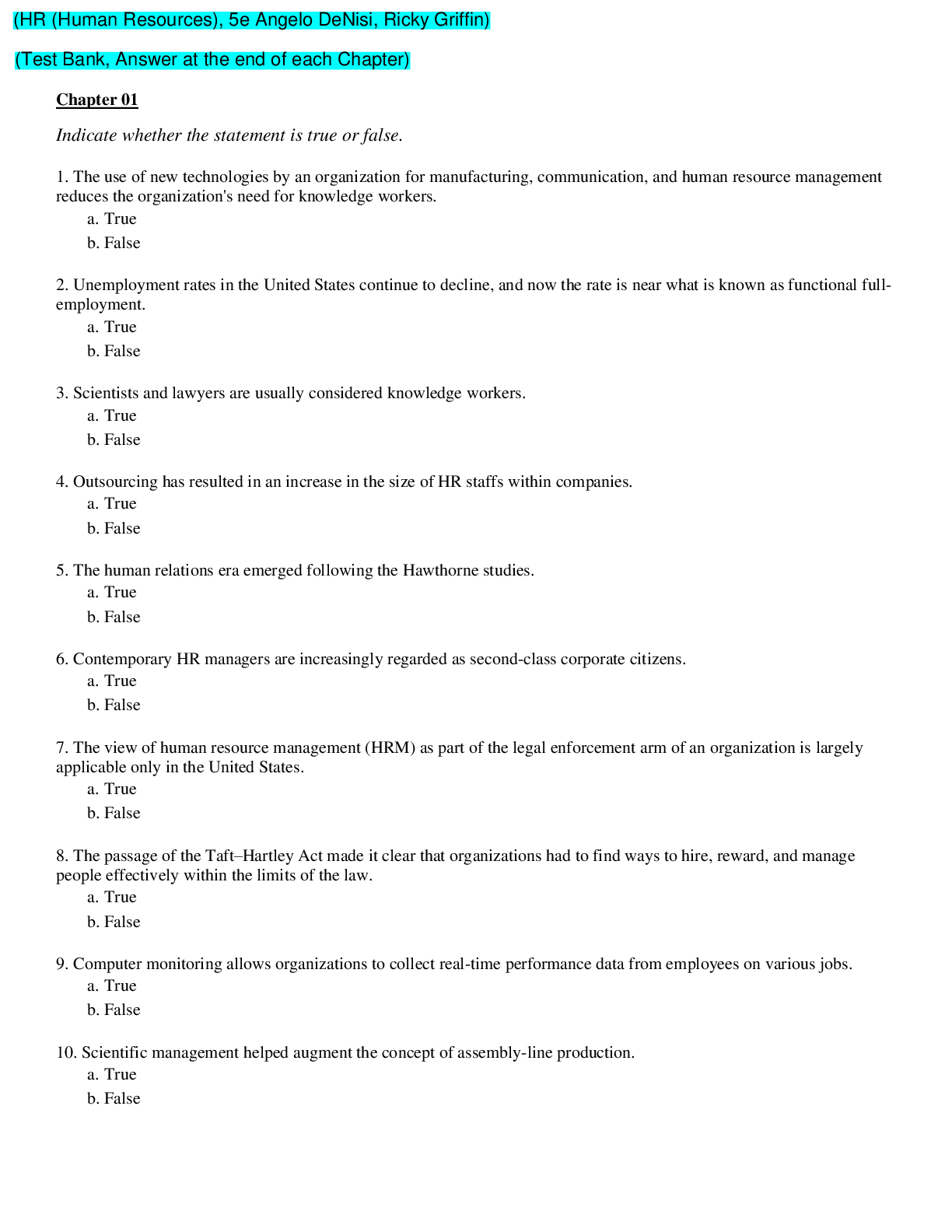
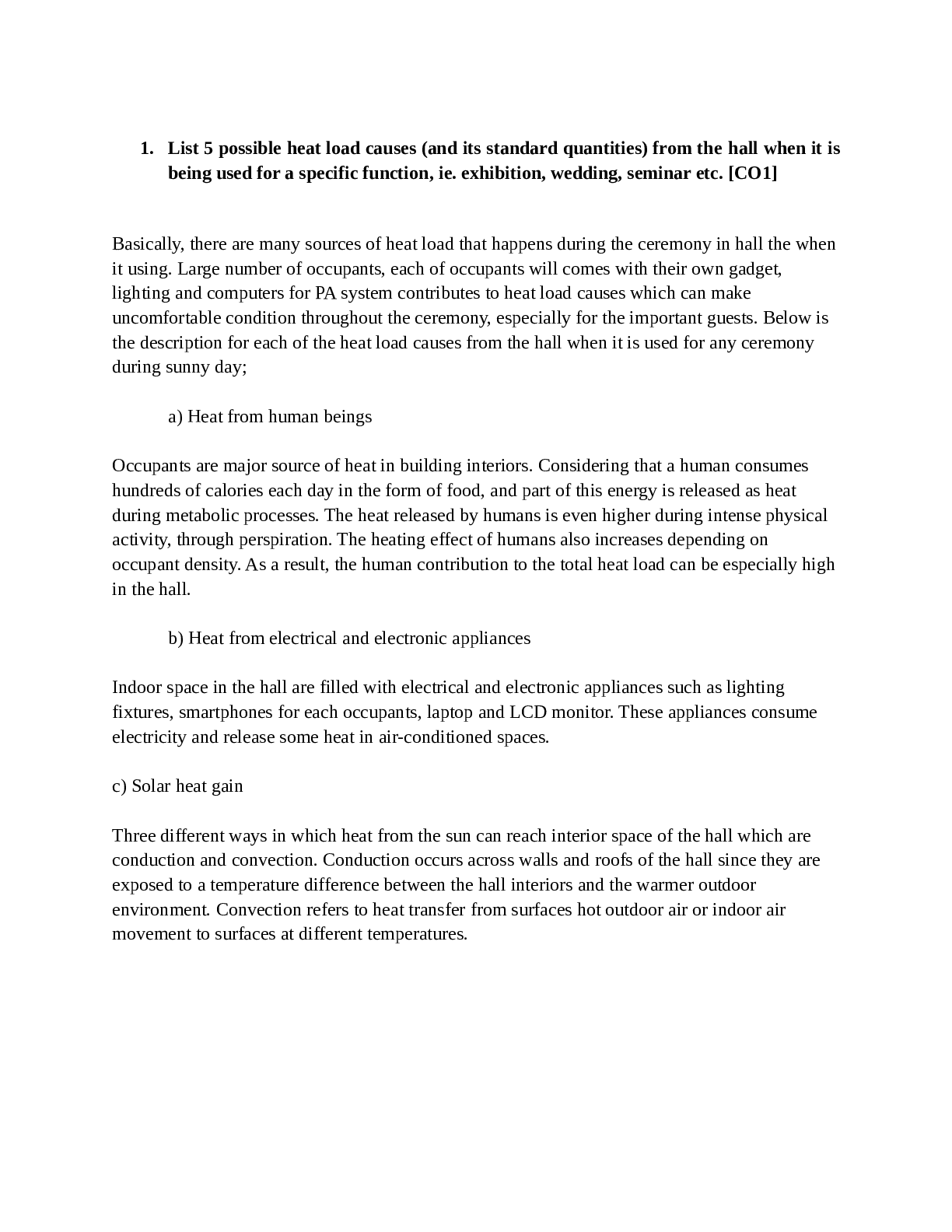
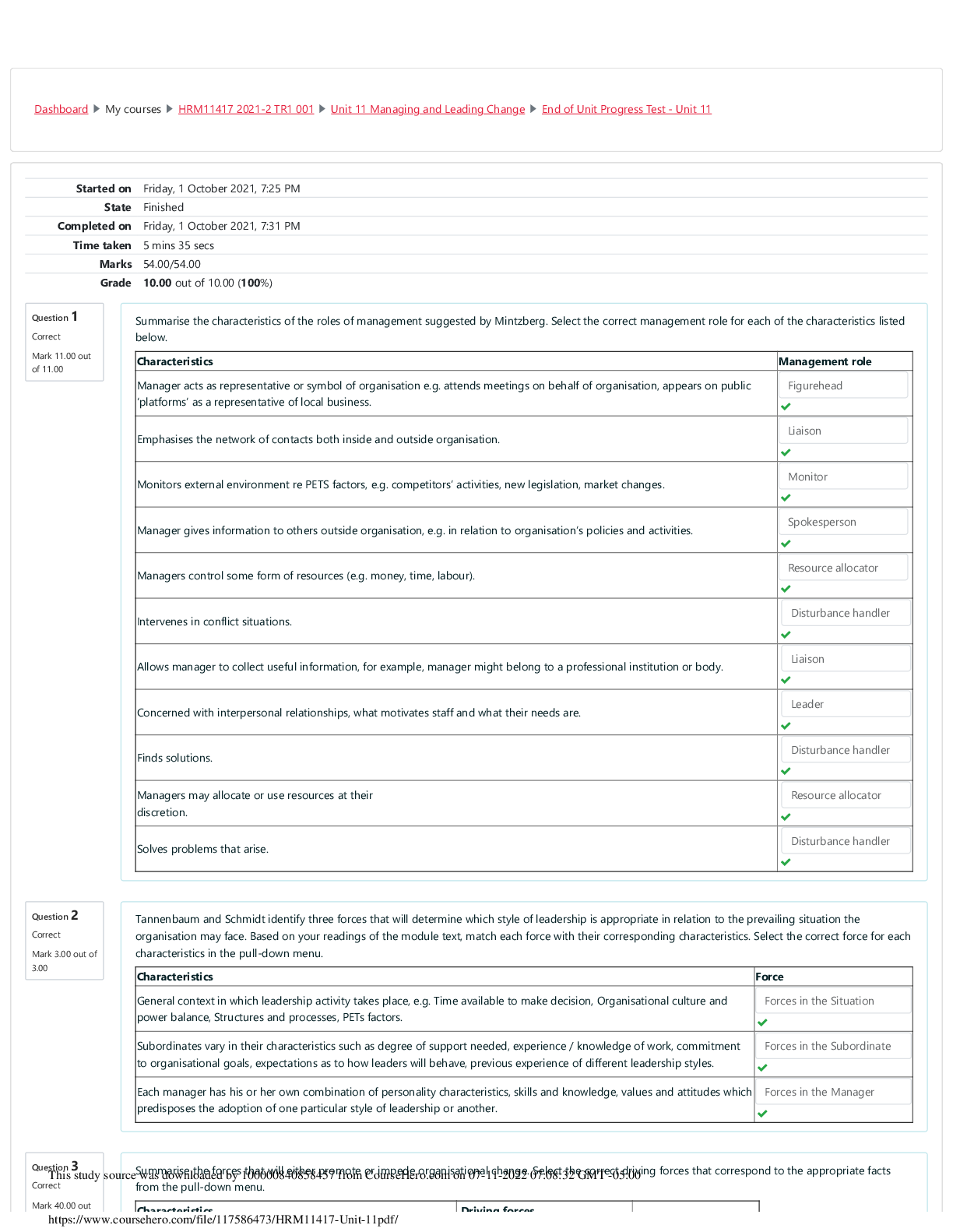
Human Resource Management > QUESTION PAPER (QP) > HRM11417 2021-2 TR1 001 Unit 11 Managing and Leading Change (All)
HRM11417 2021-2 TR1 001 Unit 11 Managing and Leading Change
Document Content and Description Below
Last updated: 3 years ago
Preview 1 out of 2 pages
Instant download
Buy this Document to get the Full Access Instantly
Provided by Students Who Aced it
We Verify Document Content to Gurantee Accuracy
Reviews( 0 )
Document information
Connected school, study & course
About the document
Uploaded On
Aug 04, 2022
Number of pages
2
Written in
All

Additional information
This document has been written for:
Uploaded
Aug 04, 2022
Downloads
0
Views
177
Topic Tags
Recommended For You
Get more on QUESTION PAPER (QP) »

Solution Manual For Business Law Text and Cases 16th Edition b...

Pearson BTEC Level 1/Level 2 First Award Construction and the...
.png)
Pearson BTEC Level 1/Level 2 First Certificate Construction an...

Unit 1.1 AP World History, Question sections with accurate an...

.png)

NUTR 331 UNIT 1-15 (Learning Objectives) Final Exam Study Gui...

( BEHAVIOURAL P1.P2 )UNIT 11:PSYCHOLOGICAL PERSPECTIVES SUMMAR...

Unit 19 Research Project Assignment Brief- Pearson BTEC HND in...


BU224 Unit 1 .docx Purdue University Global BU224 Microec...

NUR 210 Unit 11 Drugs Worksheet – Galen College 2025 Update –...

Theories of Human Development, 3e by Barbara Newman, Philip Ne...
International Human Resource Management, 6e Peter Dowling, Mar...