TNCC Written Exam 92 Questions and Answers 100% correct
1. What is the best measure of the adequacy of cellular perfusion and helps predict the outcome of resuscitation? - Base deficit used in conjunction with serum l
...
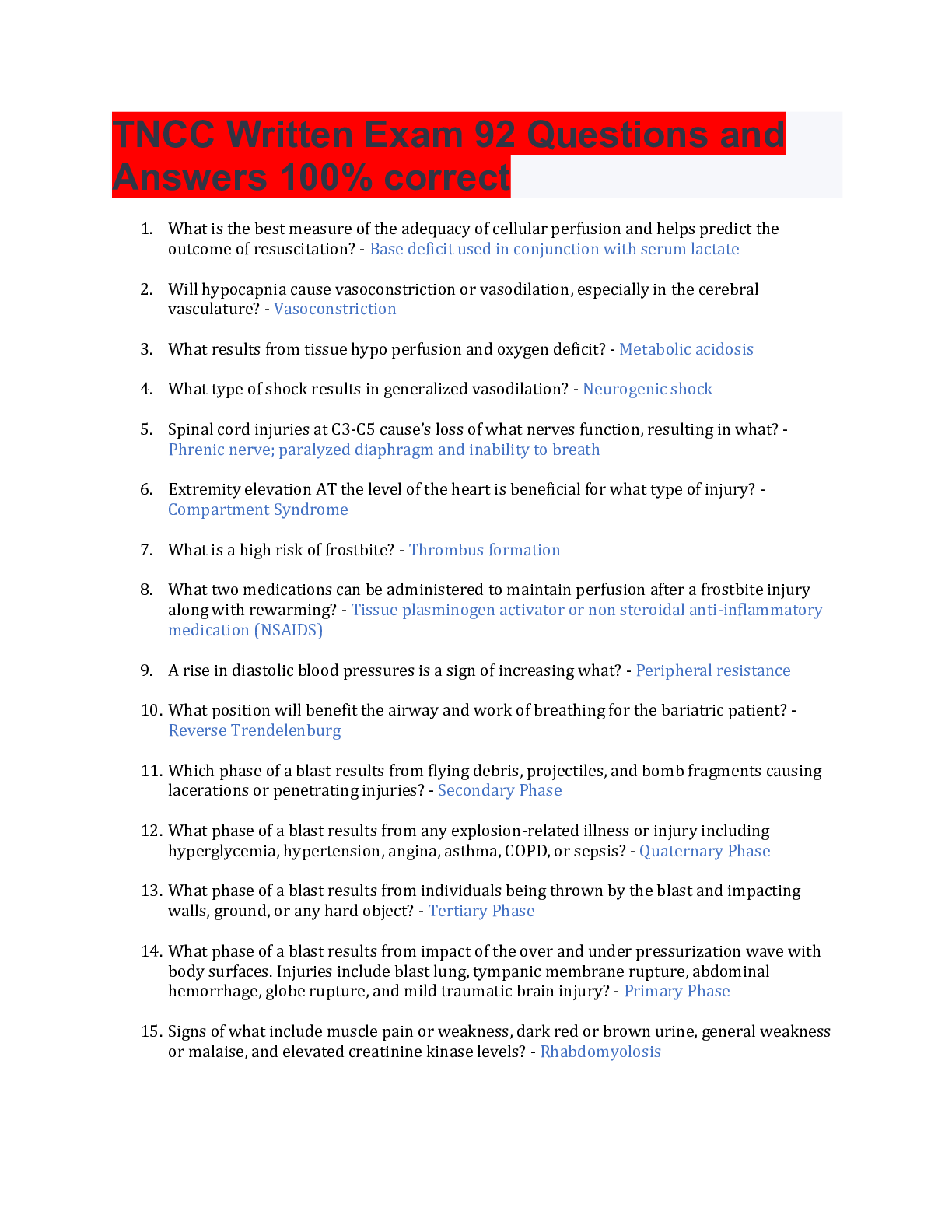
TNCC Written Exam 92 Questions and Answers 100% correct
1. What is the best measure of the adequacy of cellular perfusion and helps predict the outcome of resuscitation? - Base deficit used in conjunction with serum lactate
2. Will hypocapnia cause vasoconstriction or vasodilation, especially in the cerebral vasculature? - Vasoconstriction
3. What results from tissue hypo perfusion and oxygen deficit? - Metabolic acidosis
4. What type of shock results in generalized vasodilation? - Neurogenic shock
5. Spinal cord injuries at C3-C5 cause’s loss of what nerves function, resulting in what? - Phrenic nerve; paralyzed diaphragm and inability to breath
6. Extremity elevation AT the level of the heart is beneficial for what type of injury? - Compartment Syndrome
7. What is a high risk of frostbite? - Thrombus formation
8. What two medications can be administered to maintain perfusion after a frostbite injury along with rewarming? - Tissue plasminogen activator or non steroidal anti-inflammatory medication (NSAIDS)
9. A rise in diastolic blood pressures is a sign of increasing what? - Peripheral resistance
10. What position will benefit the airway and work of breathing for the bariatric patient? - Reverse Trendelenburg
11. Which phase of a blast results from flying debris, projectiles, and bomb fragments causing lacerations or penetrating injuries? - Secondary Phase
12. What phase of a blast results from any explosion-related illness or injury including hyperglycemia, hypertension, angina, asthma, COPD, or sepsis? - Quaternary Phase
13. What phase of a blast results from individuals being thrown by the blast and impacting walls, ground, or any hard object? - Tertiary Phase
14. What phase of a blast results from impact of the over and under pressurization wave with body surfaces. Injuries include blast lung, tympanic membrane rupture, abdominal hemorrhage, globe rupture, and mild traumatic brain injury? - Primary Phase
15. Signs of what include muscle pain or weakness, dark red or brown urine, general weakness or malaise, and elevated creatinine kinase levels? - Rhabdomyolosis
[Show More]