NR 566 / NR566 Advanced Pharmacology Final Exam Review | Rated A | Complete Guide | Chamberlain College
1. Antacids MOA
- Neutralize gastric acid to bring the pH above 3 and inactivate pepsin
2. which antacids have
...
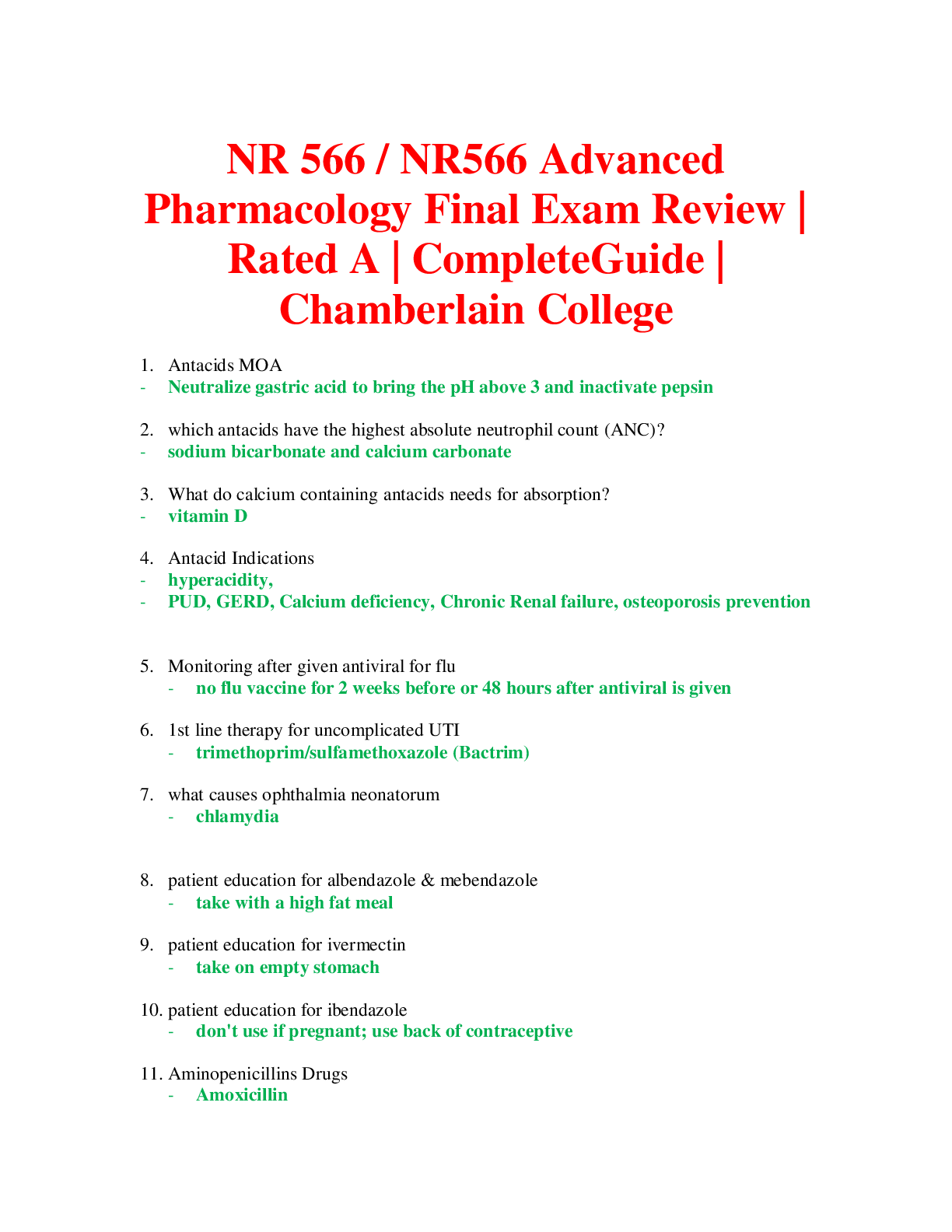
NR 566 / NR566 Advanced Pharmacology Final Exam Review | Rated A | Complete Guide | Chamberlain College
1. Antacids MOA
- Neutralize gastric acid to bring the pH above 3 and inactivate pepsin
2. which antacids have the highest absolute neutrophil count (ANC)?
- sodium bicarbonate and calcium carbonate
3. What do calcium containing antacids needs for absorption?
- vitamin D
4. Antacid Indications
- hyperacidity,
- PUD, GERD, Calcium deficiency, Chronic Renal failure, osteoporosis prevention
5. Monitoring after given antiviral for flu
- no flu vaccine for 2 weeks before or 48 hours after antiviral is given
6. 1st line therapy for uncomplicated UTI
- trimethoprim/sulfamethoxazole (Bactrim)
7. what causes ophthalmia neonatorum
- chlamydia
8. patient education for albendazole & mebendazole
- take with a high fat meal
9. patient education for ivermectin
- take on empty stomach
10. patient education for ibendazole
- don't use if pregnant; use back of contraceptive
11. Aminopenicillins Drugs
- Amoxicillin
- Ampicillin
- Combinations:
- Amoxicillin-clavulanate (Augmentin)
12. Fluoroquinolone older drugs
- cipofloxacin (cipro)
- norfloxacin (noroxin)
- ofloacin (flovin)
13. Fluoroquinolones new drugs
- gemifloxacin (factive)
- levofloxacin (levaquin)
- moxifloxacin (avelox)
14. Macrobid indication
- UTI
15. the most common cause of Traveler's diarrhea
- E. coli
16. PUD stepped-approach algorithm
- Step 1: lifestyle modification/antacids
- Step 2: H. pylori testing/PPI
- Step 3 (uncomplicated): tx for H.pylori
- Step 4 (uncomplicated): PPI continues for 8-12 weeks until healed
- Step 5 (uncomplicated, low risk): no on-going therapy
- Step 5 (uncomplicated, high risk): PPI or H2RA (smokers, >60, CPOD, CAD, hx of bleeding, ulcers or NSAIDs)
- Step 3 (complicated, bleeding): refer to GI for endoscopy
- Step 4 (complicated): tx for H. pylori
- Step 5 (complicated): repeat endoscopy in 12 weeks to determine healing
17. what causes most diarrhea?
- infection, food or drug ingestions, or inflammatory bowel disease
18. symptomatic treatment for viral URIs
- decongestant
- Tylenol
- ASA
- Motrin
- increase fluid intake
- cough drops
- nasal saline spray
- rest
19. 1st lines therapy for acute otitis media (AOM) & sinusitis
- Amoxicillin
20. When aminopenicillins are combined with beta-lactamase inhibitors
- their spectrum in broadened
21. beta-lactamase inhibitors that can be combined with aminopenicillins
- clavulanate, sulbactam, & tazobactam
22. Penicillinase-resistant penicillins drugs
- Nafcillin
- Oxacillin
- Cloxacillin
- Dicloxacillin
- Methicillin
23. Penicillinase-resistant penicillins active against
- Streptococcus, MSSA, some coagulase-negative staphylococci, peptostreptococcus
24. Anti-pseudomonal penicillin drugs
- Piperacillin
- Ticarcillin
- combination:
o piperacillin/taxobactam
- ticarcillin/clavulanate
25. Anti-pseudomonal penicillins active against
- gram (-) organisms
26. 1st generation cephalosporins drugs
- Cephradine (Anspor)
- Cefazolin (ancef)
- Cefadroxil (Duricef)
- Cephalexin (keflex)
27. 1st generation cephalosporins active against
- gram (+) cocci
28. 2nd generation cephalosporins drugs
- Cefuroxime sodium (Zinacef)
- Cefuroxime (Ceftin)
- Cefaclor
- Cefprozil
- Cefotetan (Cefotetan)
- Cefoxitin (Mefoxin)
29. 3rd generation cephalosporins drugs
- Cefdinir (Omincef)
- Cefpodoxime (Vantin)
- Cefotaxime (Celizox)
- Ceftazidime Fortax)
- Ceftriaxone (Rocephin)
- Cedax
- Cefixime (Suprax)
30. 4th generation cephalosporins drugs
- Cefepime (Maxipime)
31. 2nd generation cephalosporins active against
- gram (+)
- increased activity for H. influenzae
- bateroides fragilis
32. 3rd generation cephalosporins active against
- uncommon gram (-) organisms
33. 4th generation cephalosporins active against primarily
- Gram (+) and but also Gram (-)
34. which cephalosporins are best against gram (+) organisms
- cefdinir & cefpodoxime
35. ADR for cephalosporins
- serum sickness
- seizure
- coagulation abnormalities
36. indications for cephalosporins
- exacerbation of chronic bronchitis
- AOM (when amoxicillin fails)
- Sinusitis
37. Pharmacodynamics of cephalosporins
- inhibit synthesis of bacterial cell wall
38. fluoroquinolones active against
- Gram (-) organisms
39. Pharmacodynamics of fluoroquinolines
- Interferes with DNA synthesis leading to inability to divide and ultimately, cell death
40. Fluoroquinolones indications
- PNA
- sinusitis
- UTI
- proctitis
- bronchitis
- skin, joint infections
- Travelers diarrhea (!st line therapy)
41. black box warning for fluoroquinolones
- tendon rupture
42. macrolide drugs
- erythromycin
- clarithromycin
- dirithromycin
- azithromycin
- telithromycin
43. Pharmacodynamics of macrolides
- Interferes with steps involves in protein synthesis thereby rendering cell division non-functional
44. macrolides are active against
- gram (+) organisms & gram (-) organisms
45. Macrolide indications
- CAP (DOC)
- legionella PNA (DOC)
- pertussis
- chronic bronchitis
- chlamydia
- H. pylori
- Group A Strep
- mycobacterium avium complex
- endocarditis prophylaxis
46. Macrolide drug interactions
- CYP450 & 3A4 inhibitors
- statins
- theophylline
- colchicine
- carbamazepine
47. sulfonamide drugs
- sulfasalazine
- mafenide
- silver sulfasalazine
- combinations:
- trimethoprim/sulamethoxazole (Bactrim)
48. sulfonamide drugs active against
- Grams (+) & Gram (-)
49. sulfonamide indications
- Ulcerative colitis
- ocular infections
- burn infections
- toxoplasmosis
- chronic bacterial proctitis
- prevention of UTIs in women
50. Pharmacodynamics of sulfonamides
- Inhibits invading organisms from using substances essential to their growth and development; block folic acid synthesis
51. Trimethoprim mechanism of action
- inhibits DNA synthesis
52. Trimethoprim active against
- gram (-) & gram (+) organisms
53. Nitrofurantoin mechanism of action
- inhibits acetyl co-enzymes
54. Nitrofurantoin active against
- gram (-) & gram (+) organisms
55. sulfonamide drug interactions
- sulfonylureas
- methotrexate
- cyclosporine
- hydantoins
- probenecid
- thiazide diuretics
- warfarin
56. nitrofurantoin drug interactions
- probenecid
- anticholinergics
- magnesium salts
57. sulfonamide ADR
- N/V/D
- hypersensitivity reactions
- photosensitivity
- G6PD deficiency
- Steven-Johnson syndrome
- crystals in urine
58. AIDS and sulfonamides
- AIDs patients are at increased risk for ADRs
59. Nitrofurantoin ADR
- Cough
60. ADR with G6PD and sulfonamides
- results in acute hemolytic anemia
61. blood dyscrasias and sulfonamides
- toxic effects and death
62. Bactrim indications
- uncomplicated UTI
- exacerbations of chronic bronchitis
- MRSA
63. Bactrim drug interactions
- ACEI
- ARBs
- phenytoin
- warfarin
- cyclosporine
64. Clindamycin indications
- MRSA (1st line therapy in areas where resistance is low)
- gram (+) cocci (2nd line therapy)
- endocarditis prophylaxis
- pneumococcal PNA
- skin/tissue infections
- URI/LRI (2nd or 3rd line)
- Malaria
- dental infections
- bacterial vaginosis (off-label)
65. clindamycin ADRs
- C-diff infection
- N/V
- bitter or metallic taste
66. Clindamycin mechanism of action
- suppress protein synthesis
67. prophylaxis treatment for ophthalmia neonatorum
- erythromycin ointment within one hour of delivery
68. most common UTI orgamisms
- E.coli
- Klebsiella
- Proteus (men)
- Pseudomonas
- Enterobacter
- Staphylococcus saprophyticus
69. 1st line therapy for uncomplicated UTI in adult woman
- nitrofurantoin
70. Characteristics of Complicated UTI
- symptoms > 7 days
- Rigors
- flank pain
- DM, pregnancy, immunocompromised, renal calculi
- recent d/c from hospital for nursing home
- 3 or > UTI in past year
- failed antibiotics within past 4 months
- resident at ECF
71. Recurrent UTI prevention
- Bactrim single strength daily at bedtime x 6 months
72. indications for referral to Urologist
- neonates, children <5
- gross hematuria
- persistent microscopic hematuria
- symptoms of obstruction
- persistent UTIs
- infection with urea-splitting bacteria
- symptomatic pregnant patients
- high fever
- dehydrated
- septic
73. Antimycobacterial drugs
- isoniazid (INH)
- Rifampin
- Ethambutol
- Pyrazinamide
- Streptomycin
74. antimycobacterial mechanism of action
- interferes with lipid &Nucleic acid
- biosynthesis in growing organisms
75. active TB first phase (initiation phase) drugs
- 2 Months:
- INH, Rifampin (RIF), pyrazinamide (PZA) and ethambutol (EMB)
76. active TB 2nd phase (continuation) drugs
- 4-7 months:
- INH & RIF
77. antiviral drugs: nucleoside analogues
- Acyclovir (Zovirax), valacyclovir
- Famciclovir
- Ganciclovir
- cidofovir
- valgancidovir
- ribavirin
78. Acyclovir (Zovirax) indications
- HSV-1 & 2, varicella-zoster virus, EBV, herpes virus 6, CMV,
79. Valacyclovir (Valtrex) indications
- HSV-1 & 2, varicella-zoster virus, EBV, herpes virus 6, CMV,
80. famciclovir indications
- HSV-1 & 2, EBV, Hep B
81. Ganciclovir indications
- CMV
82. Ribavirn indications
- Chronic Hep C, RSV
83. antiviral (nucleoside analogues) mechanism of action
- interferes with DNA synthesis & inhibiting viral replication
84. Antivirals for Influenza (neuraminidase inhibitors)
- oseltamivir (Tamiflu), (PO) zanamivir (inhaled)
- Peramivir (IV)
85. Antiviral Neuraminidase inhibitor mechanism of action
- cleaving viral attachment to the host cell surface allow for viral circulation
86. Antifungal (Antimycotics) classes
- azoles
- polyene macrolides
- Allylamines
- Nuclear Acid Synthesis inhibitors
- Griseofulvin
87. Azoles - Triazoles drugs
- fluconazole (Diflucan)
- itraconazole (Onmel)
- voriconazole (Vfend)
- Clotrimazole
- Ketoconazole
- minonazole
- terconazole
- tioconazole
88. Polyene Macrolides drugs
- amphotericin B
- nystatin
89. Allylamines Drugs
- Terbinafine (Lamasil)
- Naftifine
90. Nuclear acid synthesis inhibitor drugs
- Flucytosine
91. Azoles mechanism of action
- reduce erogsterol production by inhibition of the fungal CYP450 enzyme 14 alpha-demethylase
92. Polyene Macrolides MOA
- binds to sterol in the fungal cell membrane, altering cell permeability and allowing intracellular components to leak out
93. Flucytosine mechanism of action
- Inhibits DNA synthesis by conversion to 5-fluorouracil; inhibits thymidylate synthase.
94. Ketoconazole mechanism of action
- Inhibits steroid synthesis (inhibits desmolase).
95. fluconazole & posaconazole mechanism of action
- inhibit fungal CYP450=fungal cell walls weaken
96. itraconazole & voriconazole mechanism of action
- inhibit formation of ergosterol= increases cell wall permeability=osmotic instability
97. Clotrimazole indications
- Dermatophyte
- candida albicans
- oral and vaginal canidasis
98. Ketoconazole indications
- vulvovaginal candidasis
- paronychia
- fungal PNA
- esophageal candidasis
99. Fluconazole indications
- candidiasis, cryptococcal meningitis
- severe systemic infections, vaginal candidasis
- oropharyngeal candidasis
- esophageal candidasis
100. Itraconazole (Sporanox) indications
- blastomycosis,
- nonmeningeal histoplasmosis,
101. Posaconazole (Noxafil) indications
- oropharyngeal candidiasis
102. Voriconazole (Vfend) indications
- invasive aspergillosis
103. Terbinafine (Lamisil) indications
- onychomycosis of fingernails and toenails
104. Amphotericin B
- severe systemic fungal infections: HIGHLY TOXIC
105. Griseofulvin indications
- Oral treatment of superficial infections- dermatophytes (tinea, ringworm)
- tinea capitis (1st line drug)
106. Miconazole (Monistat) indications
- Primarily used for vaginal candidiasis.
107. Antifungal monitoring
- monitor for liver toxicity
108. Anthelmintic (antiparasitic) drugs
- mebendazole
- thiabendazole
- albendazole
- pyrantel
- ivermectin
109. Benzimidazoles MOA
- Interfere with elongation of the microtubules that are responsible for parasitic cellular structure, leading to a disruption of growth and division
110. Pyrantel MOA
- paralyzes worms to allow expulsion by peristalsis
111. Ivermectin MOA
- intensifying *GABA-mediated signal transduction* in peripheral nerves (causing worm *paralysis*)
112. Mebendazole (Vermox) indications
- DOC for intestinal & tissue nematodes (roundworm)
113. Nematodes
- Intestinal and tissue roundworms
114. Cestodes
- flatworms and tapeworms
115. Trematodes
- flukes
116. Albendazole (Albenza) indication
- tissue nematodes:
- hookworm, trichiasis
- giardiasis
117. Pyrantel indications
- pinworm, trichiasis, hookworms
118. Ivermectin (Stromectol) indications
- tissue nematodes
119. Metronidazole (Flagyl), nitazoxanide, & tinidazole
- used to treat protozoal infections:
- t. vaginalis
- G. lambila
- E. histolytica
120. Metronidazole indications
- protozoal & bacterial infections
121. Nitazoxanide (Alinia) indications
- diarrhea caused by G. Lambila & C. parvum
122. Tinidazole (Tindamax) indications
- amebiasis bacterial vaginosis, giardiasis, & trichomoniasis
123. Metronidazole MOA
- inhibits DNA synthesis
124. Nitazoxanide (Alinia) MOA
- interferes with the pyruvate ferredoxin oxidoreductase-dependent electron transfer reaction
125. tinidazole (Tindamax): MOA
- deactivates DNA and other proteins
126. Metronidazole drug interactions
- Warfarin (increases anticoagulation)
- -Alcohol (Disulfiram reaction)
- -lithium (increases level)
- -CYP450 inhibitors & inducers (affect drug concentration)
127. bacterial vaginosis treatment
- Metronidazole (Flagyl)-1st line therapy
128. Diagnosis of bacterial vaginosis
- Three or four criteria:
- Thin, white vaginal discharge
- Vaginal discharge with pH of >4.5
- Clue cells
- Positive KOH whiff test (fishy odor secondary to release of amines)
129. cardinal symptoms of chronic bronchitis which indicate need for antibiotic
- increased sputum volume
- increased sputum purulence
- increase dyspnea
130. Tinea corporis (ringworm) treatment
- terbinafine
- naftifine
- butenafine
- ciclopirox olamine
131. Tinea pedis (athletes foot) treatment
- terbinafine
- naftifine
- butenafine
- ciclopirox olamine
132. Tinea Capitis (Scalp Ringworm) treatment
- Terbinafine
- Griseofulvin (1st line therapy)
133. Tinea Cruris (Jock Itch) Treatment
- naftifine
- butenafine
- ciclopirox olamine
134. onychomycosis
- ciclopirox
135. 1st line treatment for primary and secondary skin infections
- 1st generation Cephalosporins:
- cephalexin
- dicoxacillin
- amoxilcillin/claulanate
- clindamycin
136. medications and dose to eradicate nasal MRSA
- intranasal mupirocin: 1/2 tube in each nostril BID x 5 days
137. treatment for acute sinusitis
- amoxicillin with or without clavulanate
138. What is the 1st line therapy for GERD?
- H2 blockers and PPIs
139. Antacid ADRs
- Mg-diarrhea
- aluminum & Ca=constipation
140. Antacids: Drug Interactions
- Adsorption of other drugs to antacids:
- Reduces the ability of the other drug to be absorbed into the body=separate administration by 2 hours
141. antacid patient education
- symptoms > than 2 weeks,
- extreme pain, cramping, or blood in stool=call provider
142. lifestyle changed to prevent GERD symptoms
- stop smoking
- increase HOB while sleeping
- no spicy food, no alcohol, no fatty foods, no chocolate, no caffine
143. Antidiarrheal classes
- Opiates
- Absorbents
- Anticholinergics
- Crofelemer
144. Absorbent antidiarrheals drugs
- Kaolin
- Pectin
- Bismuth subsalicylate (Pepto-Bismol) ; use with each loose stool
145. opiate antidiarrheals drugs
- Diphenoxylate with atropine (Lomotil)
- Diphenoxin with atropine (Motofen)
- Loperamide (immodium)
146. anticholinergic antidiarrheals drugs
- atropine
- propantheline
147. Kaolin MOA
- attracts and holds on to bacteria
148. pectin MOA
- thickens stool
149. Bismuth Subsalicylate MOA
- antisecrectory & antimicrobial effects
150. Lomotil (diphenoxylate/atropine) MOA
- decreases bowel secretions and peristalsis
151. motofen (difenoxin/atropine) MOA
- decreases bowel secretions and peristalsis
152. Loperamide (Imodium) MOA
- Decreases GI motility; binds to opioid receptors
153. Crofelemer (Fulyzaq) indication
- diarrhea in patient with HIV/AIDS who are taking antivirals
154. antidiarrheal precautions/contraindications
- opiods: toxic megacolon
- pepto: do not use in children with flu-like illness
- contraindicated in most children
- caution in pts with hepatorenal disease
155. antidiarrheal ADRs
- constipation
- bismuth=black tongue, gray/black stool
- anticholinergic effects
- CNS effects
156. antidiarrheal drug interactions
- ASA: increased risk for salicylate toxicity
- insulin or oral DM meds: increased risk for hypoglycemia
- thrombolytics: increased risk for bleeding
- lomotil & immodium: increased CNS depression with alcohol and anticholinergic effects with other anticholinergics drugs
157. Laxative classes
- stimulants
- osmotics
- bulk-producing laxatives
- lubricants
- surfactants
- hyperosmolar laxatives
- chloride channel activators
- opioid receptor antagonists
158. laxative stimulant
- cascara
- senna
- bisacodyl
- castor oil; stimulate myenteric plexus; rapid acting, short term
159. Osmotic laxatives
- Mg hydroxide
- Mg citrate
- Na phosphate
- polyethlyene glycol electrolyte solution
- polyethlyene glycol (PEG) 3350; draw water into intestinal lumen
160. Bulk producing laxative
- Psyllium
- methyl cellulose
- polycarbophil; mixes with water in intestine; slow response, long-term; older adults
161. Lubricant laxatives
- mineral oil; soften stool, lubricates intestine
162. surfactant laxative
- docusate compounds (Colace); reduce surface tension on the oil water interface on the stool & facilitate a mixture of fat & water into the stool
163. hyperosmolar laxative
- glycerine
- laculose; draws water into intestines
164. Chloride channel activators drugs
- lubiprostone (Amitiza); soften stools and increases GI motility; choric idiopathic constipation, IBS, opioid induced constipation
165. Opioid receptor antagonists drugs
- methylnaltrexone; antagonist in the mu-receptor in the GI track; opioid induced constipation
166. laxative 1st line therapy
- stimulants
167. Laxatives are contraindicated in
- N/v
- undiagnosed abd pain
- bowel obstruction
- Renal dysfunction (Mg hydroxide)
168. laxative precautions
- abuse and dependency
- cathartic colon=ulcerative colitis
- tartrazine sensitivity=allergic reactions=asthma
169. Cytoprotective agents
- sucralfate (Carafate)
- misprostol (Cytotec); tx Peptic ulcers caused by NSAID use
170. Clinical Pearl for polyethylene glycol electrolyte solution
- salty taste; place on ice in Basin; drink 240 ml/10 mins; tic tac or hard candy reduces salty taste
171. Sucralfate (Carafate)
- Adheres to injured gastric ulcers upon contact with gastric acids; . Used for gastric and duodenal ulcers and GERD. Administer on an empty stomach at least one hour before meals and at HS and do not administer within 30 minutes of antacids.; use for 8 weeks
172. Misprostol (Cytotec)
- inhibits gastric secretion, mucosal protection; analog of prostaglandin E1; prophylaxis for duodenal ulcers due to NSAIDS or for those that must use NSAIDS; only take during NSAID therapy!; take with food
173. Cytoprotective Agents Side Effects
- Carafate=constipation
- misoprostol=diarrhea, menstrual problems
174. Misoprostol precautions
- pregnancy category X;
- Caution with renal impairment;
175. antiemetic classes
- Phenothaizine,
- Anticholinergics,
- Antihistamines,
- -5-HT3 Receptor Blockers,
- Cannaboids,
- P/neurokinin 1 (NK1) receptor antagonists,
- trimethobenzamide
176. Antihistamines antiemetics
- anticholinergic, histamine-blocking;
- Dramamine, Benadryl, Vistaril, Antivert
177. Phenothiazines antiemetics
- block dopamine receptors in chemoreceptor trigger zone; not for children; Compazine, perphenazine, Phenergan
178. Cannaboids antiemetics
- for N/V associated with cancer & appetite stimulant: dronabinol (Marinol)
179. 5-HT3 receptor antagonist antiemetics
- ondansetron (Zofran)
- palonosteron (Aloxi)
- dolaseton mesylate (Anzmet)
- granisetron (Kytril, Sancuso)
180. Anticholinergic antiemetics
- Scopolamine (Transderm Scop)
181. P/neurokinin 1 receptor antagonist antiemetic
- Aprepitant (emend)
182. Mics antiemetic
- trimethobenamide (Tigan)
183. monitoring of long term use of promethazine
- CBC=monitor for bone marrow depression & blood dyscrasias
184. antihistamine antiemetic precautions/ contraindications
- anticholinergic effects, narrow angle glaucoma, seizure, pyloric obstruction, hyperthyroidism, CV disease, BPH, contraindicated in severe liver disease
185. phenothiazine precautions/contraindications
- contraindicated in parkinsons, narrow angle glaucoma, bone marrow depression, severe CV disease; precaution in respiratory impairment="silent PNA", and aspiration risk
186. dronabinol precautions/contraindications
- lowers seizure threshold
- allergy to sesame oil
- potential for abuse
- CV disorders
187. 5-HT3 antagonists antiemetic precuations/contraindications
- mask progressive ileus
- zofran contains aspartame=caution in patients with phenylketonuria
188. Scopalamine (Transderm Scop) precuations/contraindications
- caution: open-angle glaucoma, eldery-increases CNS effects, GI or bladder neck obstruction
- contraindicated: narrow-angle glaucoma
189. Aprepitant (Emend) precautions/contraindications
- contraindicated to use other drugs metabolized by CYP 34A
190. Phenothiazines ADR
- extrapyramidal reactions
191. Promethazine (Phenergan) ADR
- fatal respiratory depression in children < 2
192. H2 receptor antagonists MOA
- inhibit acid secretion by parietal cells. reduced gastric acid secretion by 35%-50%;
- zantac is 5-12 times more potent; pepcid 30-60 times for potent that Tagamet
193. H2 receptor antagonists drugsCimetidine (Tagamet)
- Ranitidine (Zantac)
- Famotidine (Pepcid)
- nizatidine (Axid)
194. H2 receptor antagonists precuations/contraindications
- caution in: renal impairment-reduce dose for renal dysfunction; no Zantac or Pepcid for children;
- axid can causes hepatocellular injury
195. H2 receptor antagonists ADR
- gynecomastia, impotence, (cimetadine=worst effects), confusion, agitation, depression, disorientation, blood dyscrasias
196. H2 receptor antagonists drug inteactions
- cimetidine and CYP 1A2, 2C9, & 2D6
197. H2 receptor antagonists monitoring
- liver function with high doses or long term use
198. H2 receptor antagonists patient education
- take with meals, separate antacids by 30 min-1hr, smoking decreases absorption, alcohol increases gastric irritation, don't double the dose, no carafate within 2 hours
199. Prokinetic drugs
- Metoclopramide (Reglan)
200. prokinetic MOA
- stimulate motility of GI tract without stimulating gastric, biliary or pancreatic secretions
201. black box warning for metoclopramide (Reglan)
- increased risk for tardive dyskinesia
202. Metoclopramide (Reglan) pecaution/contraindications
- contraindicated: GI bleed, mechanical obstruction, new GI sx, perforation
- Caution: in patient with depression=increases SI
203. Metoclopramide (Reglan) ADR
- tardive dyskinesia, depression, dizziness, diarrhea, hypoglycemia (diabetics)
204. Metoclopramide (Reglan) drug interactions
- increase CNS depression with other CNS depressant drugs,
- increased risk for EPs with other drugs that cause EPs, anticholinergics reverse action of Reglan
205. Proton Pump Inhibitors (PPIs) MOA
- antisecretory; inhibit H+/K+/ATpase enzyme system secretory surface or parietal cell; suppress gastric acid secretion up to 72 hours
206. Proton Pump Inhibitors (PPIs) indications
- hyperacidity, duodenal & gastric ulcers, erosive gastritis, Zollinger-Ellison syndrome, part of regimen for PUD, GERD
207. Proton Pump Inhibitors (PPIs)
- omeprazole (Prilosec), esomeprazole (Nexium), pantoprazole (Protonix), lansoprazole (Prevacid), dexlansoprazole (Dexilant), rabeprazole (Aciphex)
208. PPI Precautions/Contraindications
- caution in: hepatic dysfunction, & elderly
- contraindicated:
- protonix & rabeprazole in children <12
209. PPI ADRs
- nutrient deficiencies: decreased iron, B12, & Ca+ (long-term use, increases risk for osteoporosis and fractures, increased risk for c-diff, samonella, and campy,
- increases risk for PNA (short-term), ? causes gastric cancer
210. PPI drug interactions
- CYP 450 enzymes, decreased effects of certain antivirals, decreases absorption of ketoconazole, ampicillin, digoxin, and iron salts,
- monitor INR with coumadin and PPIs
211. PPI black box warning
- Plavix and omeprazole: decreases the active metabolite of Plavix by 46%= decreased effectiveness
212. PPI monitoring
- patients on PPI for ulcer= test for H. pylori, stop PPI therapy x 2 weeks for H. pylori breath test or stool test.
213. GERD management
- Non-pharm measures
o Elevate head of bed
o Avoid alcohol, caffeine, spices, peppermint, etc
o Stop smoking
o Weight reduction if obese
- Antacids PRN
- H2 blockers ("-tidines") in high doses at night or divided BID dosing
- PPIs ("-zoles") if H2 blockers are ineffective
- GI/surgical consult PRN
214. PPI therapy for mod to severe GERD
- PPI daily x 8 weeks, 30-60 mins before breakfast; tailored to symptom relief; if no relief after 3 months=refer to GI specialist;
215. PPI step up or step down approach
- if no symptom relief in 8 weeks, increase PPI to BID for 4-8 weeks; if symptom free for 4 weeks step down to daily PPI & reassess in 6-12 months; no symptom relief in 8 weeks=refer
216. 1st line triple therapy for H. Pylori
- PPI BID
- clarithromycin 500 mg BID or metronidazole 500 mg BID
- amoxicillin 1G BID
- x 10-14 days
217. 2nd line therapy for H. Pylori with PCN allergy
- PPI BID
- clarithromycin 500 mg BID
- metronidazole 500 mg BID
- x 7-14 days
218. 2nd line therapy or rescue therapy for H. Pylori
- PPI BID
- levofloxacin 250-500 mg BID
- amoxicillin 1G BID
- x 10-14 days
219. IBS with constipation treatment
- lupiprastone (Amitiza)
220. Traveler's Diarrhea Treatment
- bismuth subsalicylate (pepto-bismol) 2 tablets or 2 oz before each meal and at HS;
221. High risk destinations for traveler's diarrhea
- Central & South American, Africa, Middle East, Mexico, Asia,
222. Intermediate risk destinations for traveler's diarrhea
- eastern Europe, South Africa, and Caribbean Islands
223. other causes of traveler's diarrhea
- campy
- shigella
- salmonella
224. Bacterostatic
- kills the bacteria
225. bacteriocidal
- kills the bacteria and stops the growth or spread of the infection
226. Bacteriostatic drugs
- clindamycin
- macrolides
- sulfonamides
- tetracyclines
227. Bactericidal drugs
- ahminoglycosides
- beta-lactums
- fluroquinolones
- Metronidazole
- Streptogramins
- vancomycin
228. anti-microbial resistance
- not knowing if the pt had recent use of antibiotics
- provider overuse of broad=spectrum antibiotics
- not performing susceptibility testing
- Age younger than 2 years or older than 65 years
- Daycare center attendance
- Exposure to young children
- Multiple medical co-morbidities
- Immunosuppression
229. subclasses of Beta-lactams PCNS
- natural PCNS
- aminopenicillins
- anti-staphylococcal PCNs
- extended Spectrum PCNs
230. Pharmacodynamics of Beta-lactam PCNs
- inhibit biosynthesis of bacterial wall (beta-lactam ring)
231. 1st line therapy for Strep pharyngitis.
- penicillin V
232. 1st line therapy for all bites
- Amoxicillin/Clavulanate (Augmentin)
233. Natural PCN's, Drugs
- Penicillin V potassium (ledercillin) Penicillin G sodium (PCN G-Na)
- Penicillin G procaine (Duracillin)
- Penicillin G benzathine (Permapen)
- Penicillin G potassium (Pfizerpen)
234. Natural PCNs active against
- aerobic gram (+) organisms
235. Aminopenicillins active against
- Gram (-) organisms
[Show More]









.png)


