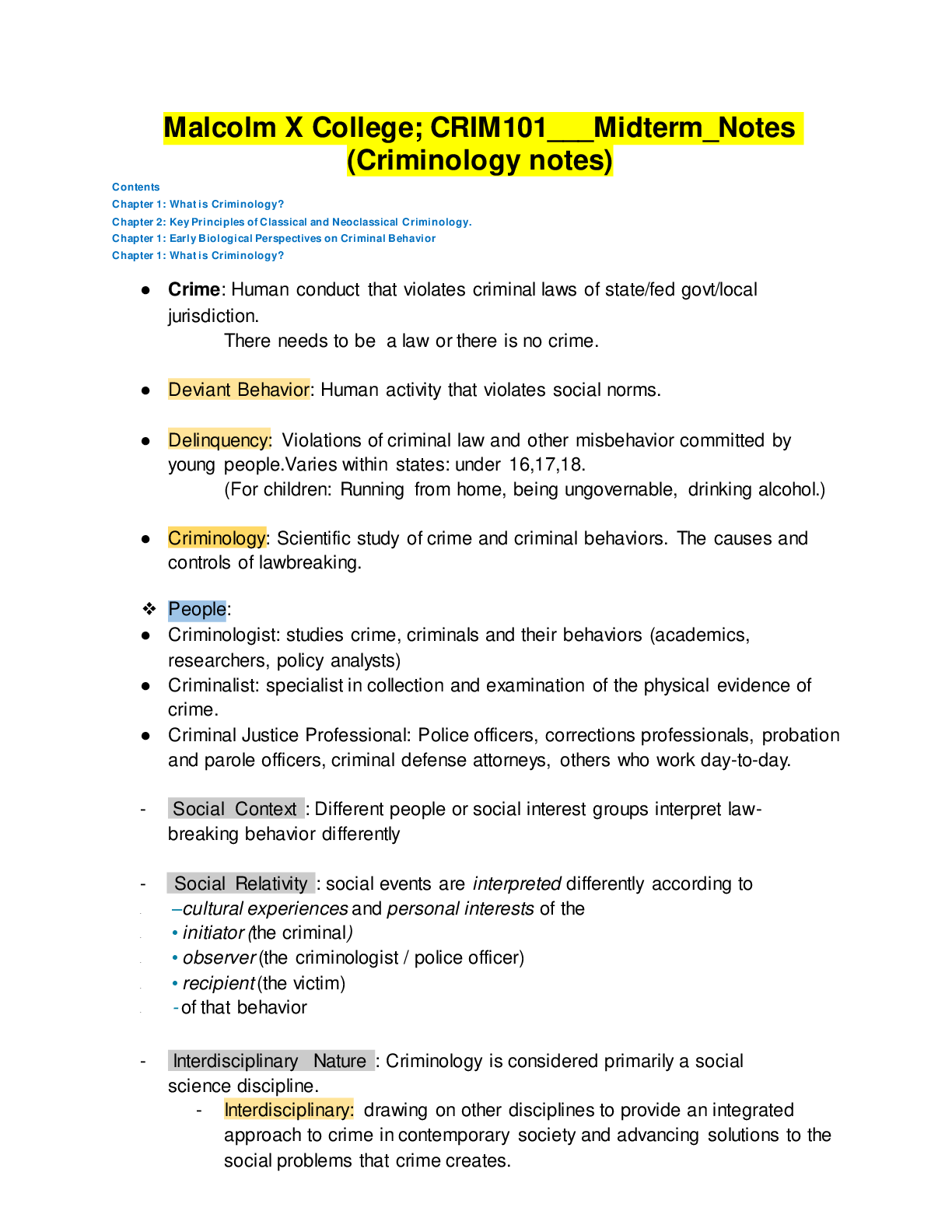
CRIM101___Midterm_Notes (Criminology notes) latest Malcolm X College
Document Content and Description Below
CRIM101___Midterm_Notes (Criminology notes) latest Malcolm X College
Contents
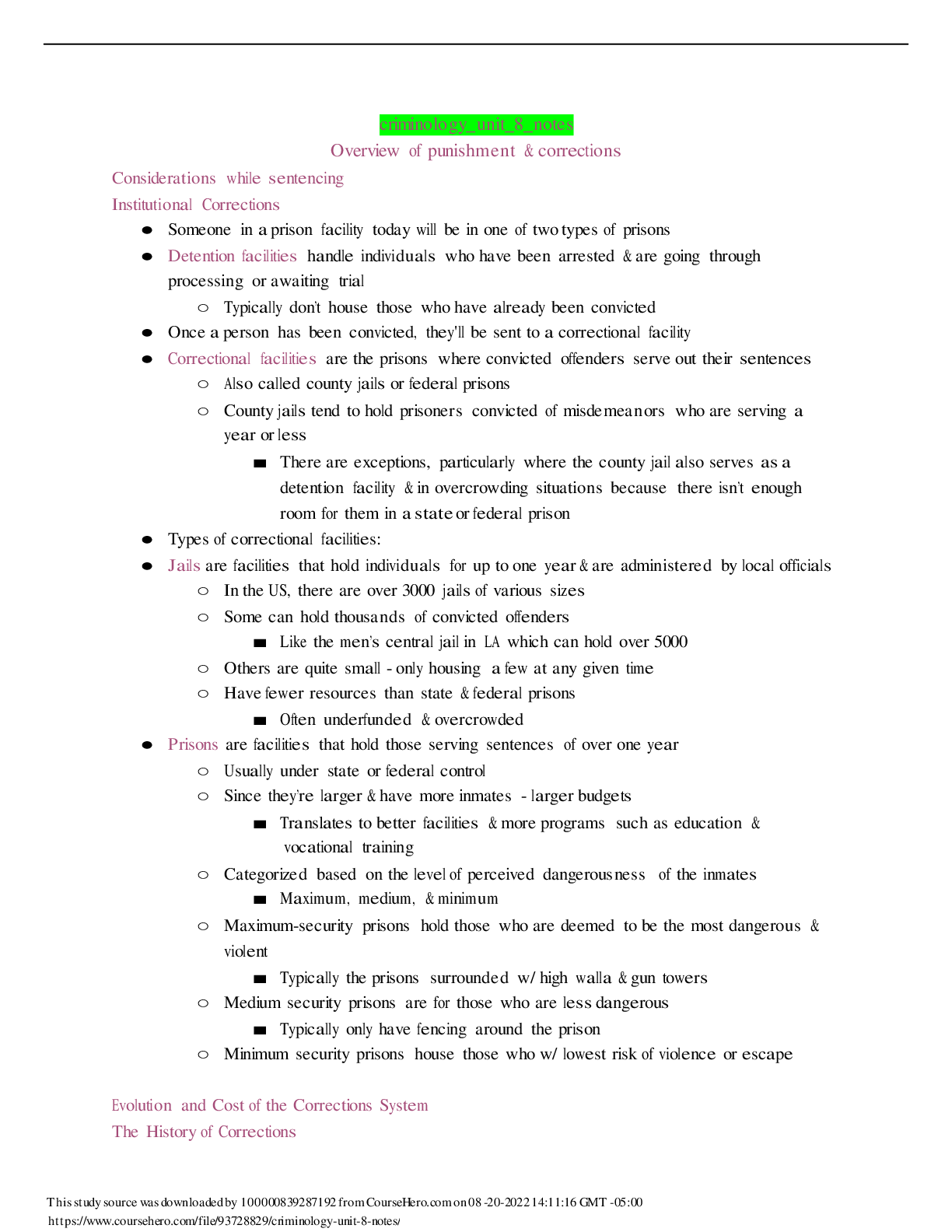
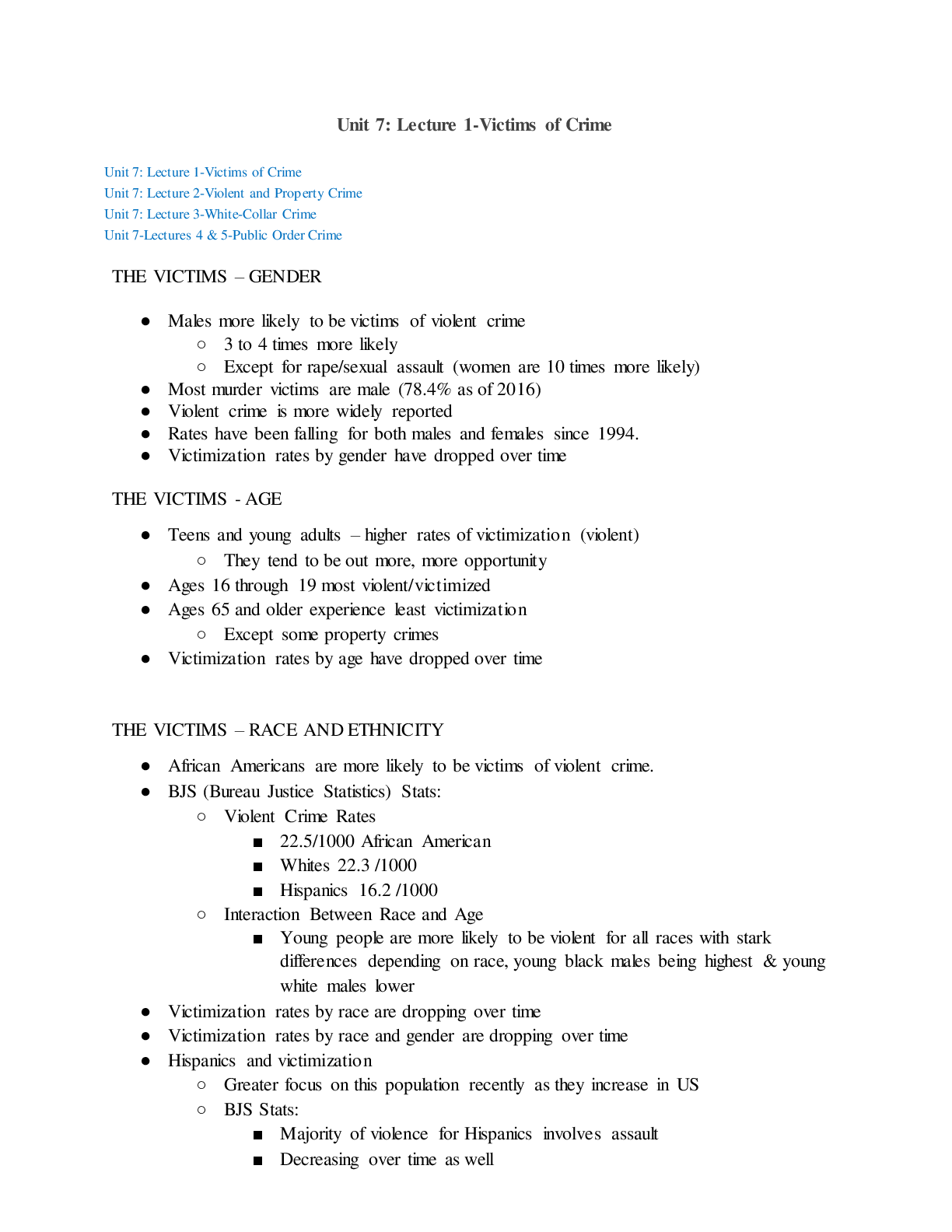
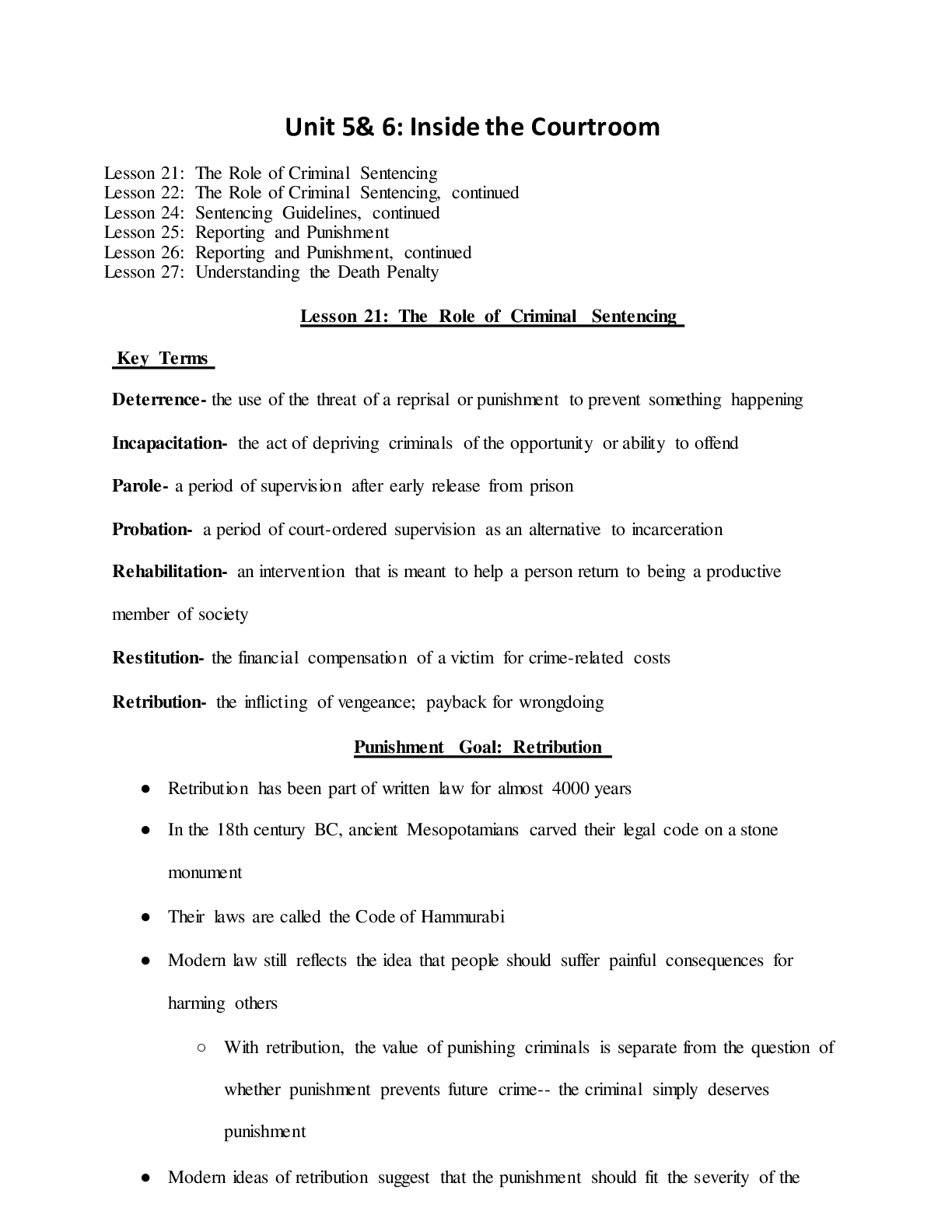
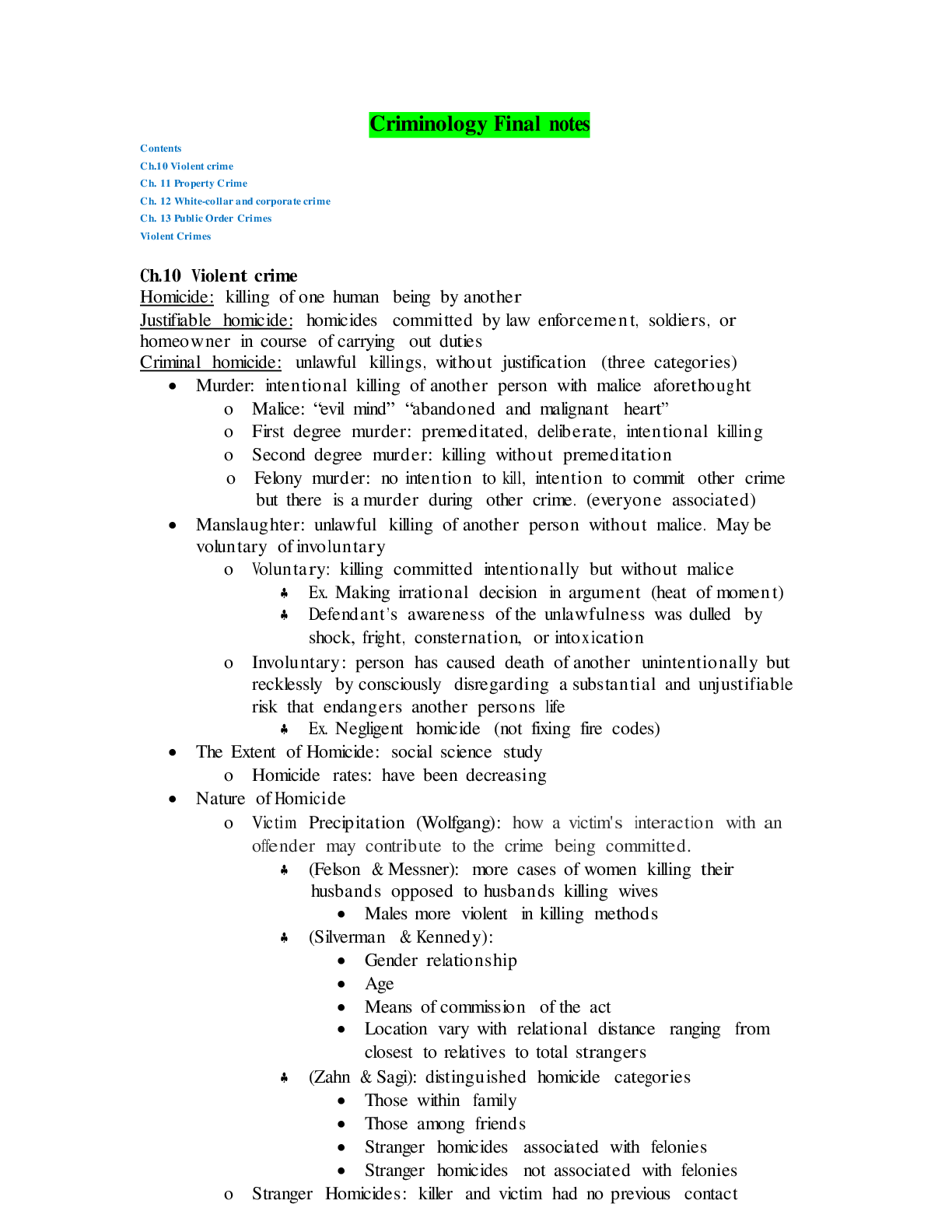
Chapter 1: What is Criminology?
Chapter 2: Key Principles of Classical and Neoclassical Criminology.
Chapter 1: Early Biological Perspect
...
[Show More]
Last updated: 4 years ago
Preview 1 out of 10 pages
Instant download
Buy this Document to get the Full Access Instantly
Provided by Students Who Aced it
We Verify Document Content to Gurantee Accuracy
Reviews( 0 )
Document information
Connected school, study & course
About the document
Uploaded On
Aug 21, 2022
Number of pages
10
Written in
All

Additional information
This document has been written for:
Uploaded
Aug 21, 2022
Downloads
0
Views
406
Topic Tags
Recommended For You
Get more on Summary »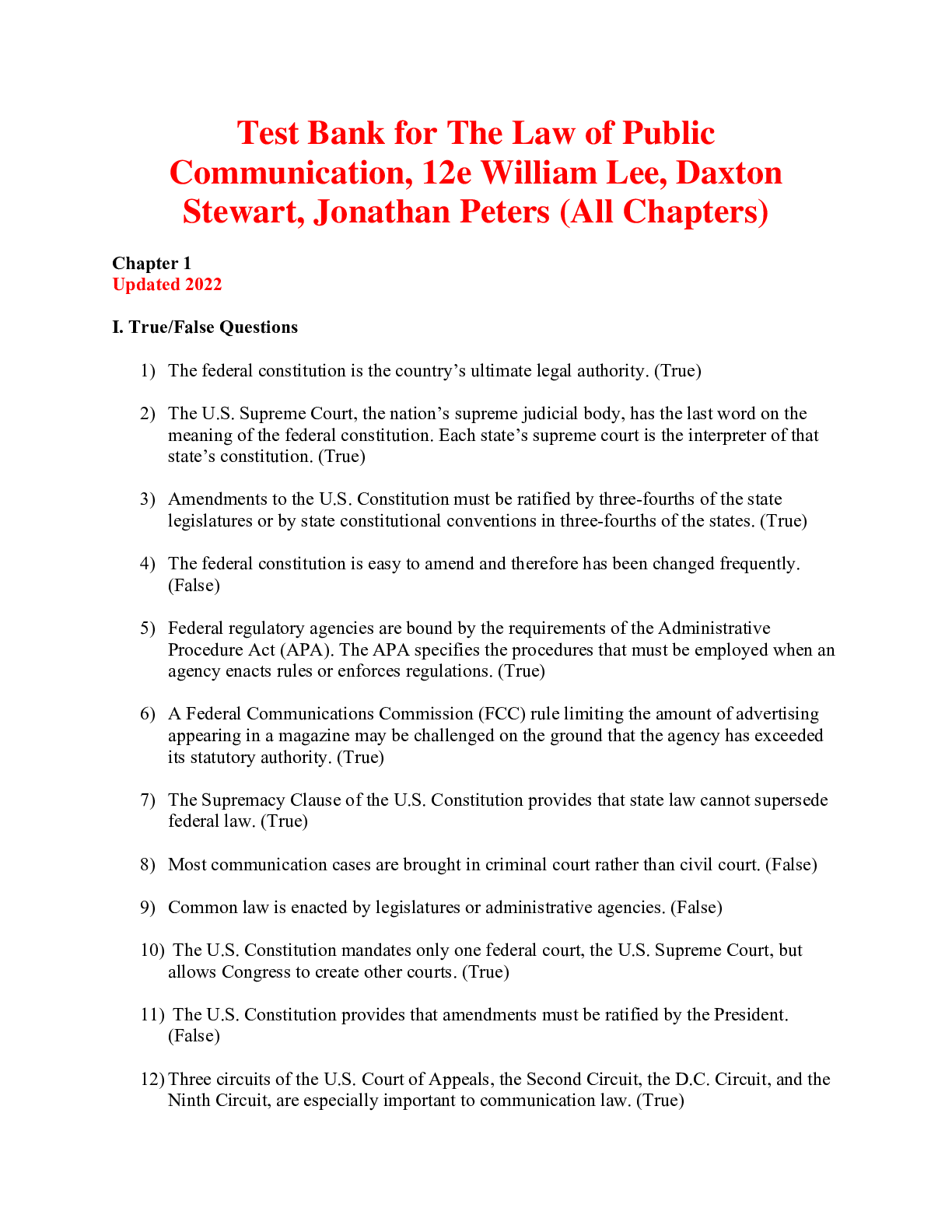
$25
107 Pages
The Law of Public Communication, 12th Edition William, Daxton...
$25
80 Pages
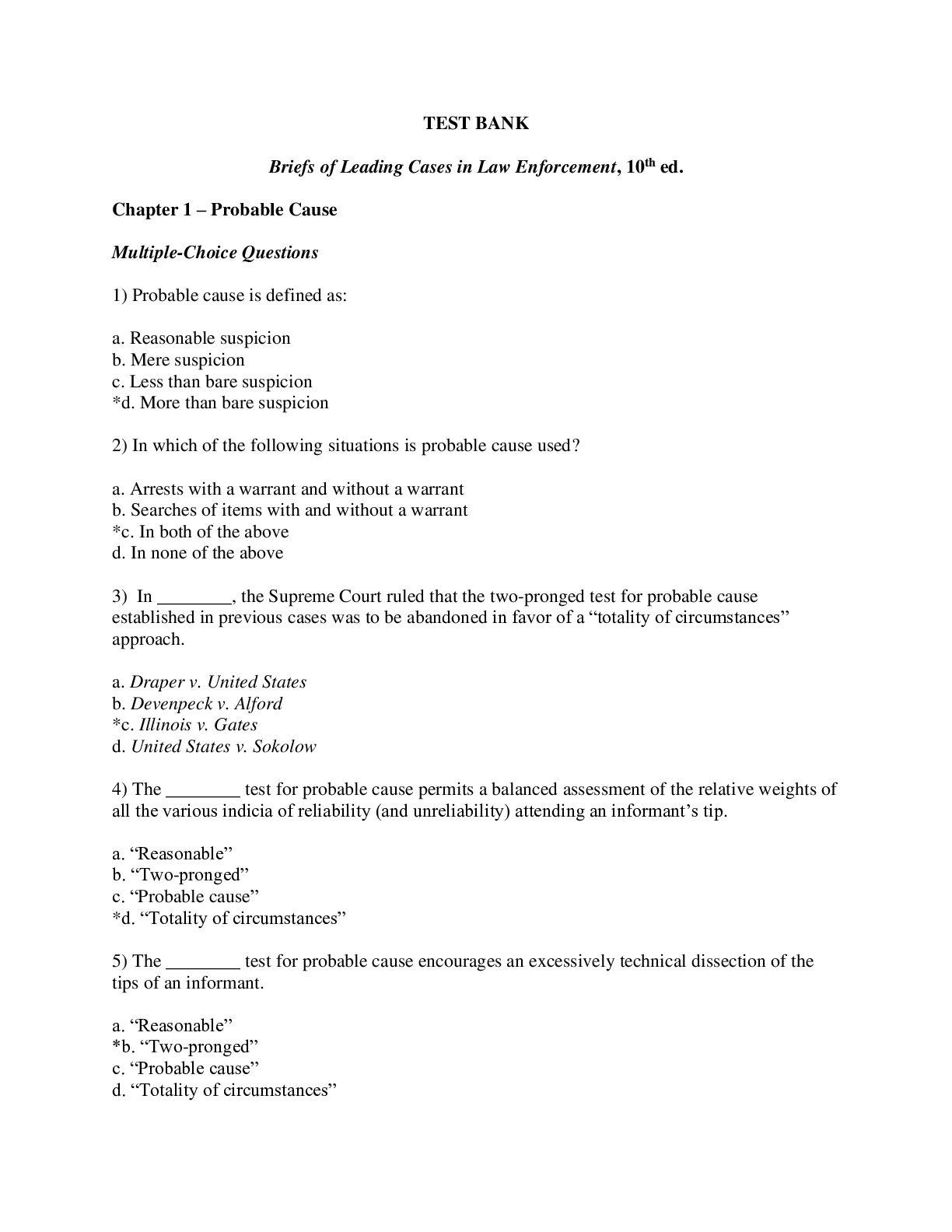
Briefs of Leading Cases in Law Enforcement, 10e Rolando Del Ca...
$20
885 Pages
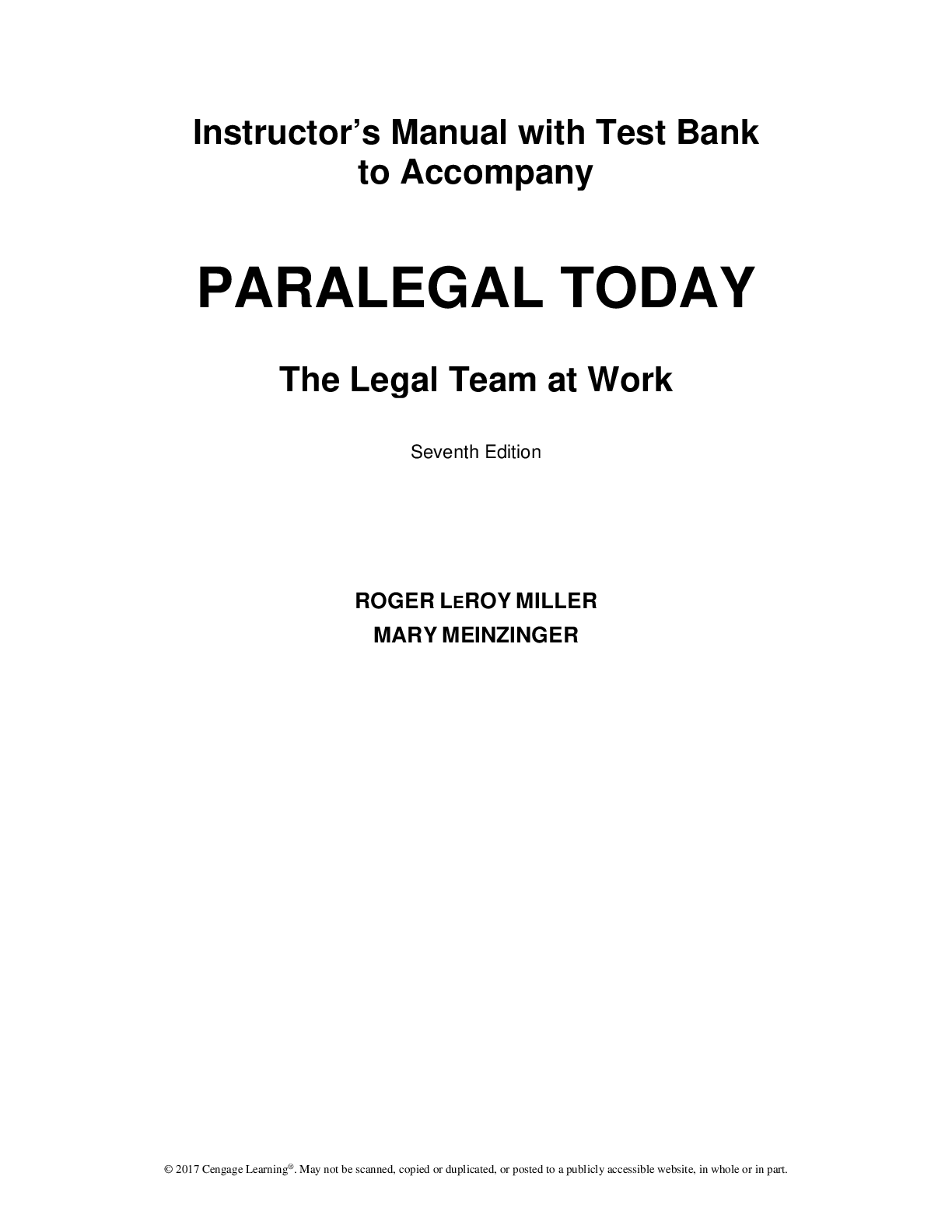
Test Bank for Paralegal Today The Legal Team at Work 7th Edit...
$15
69 Pages
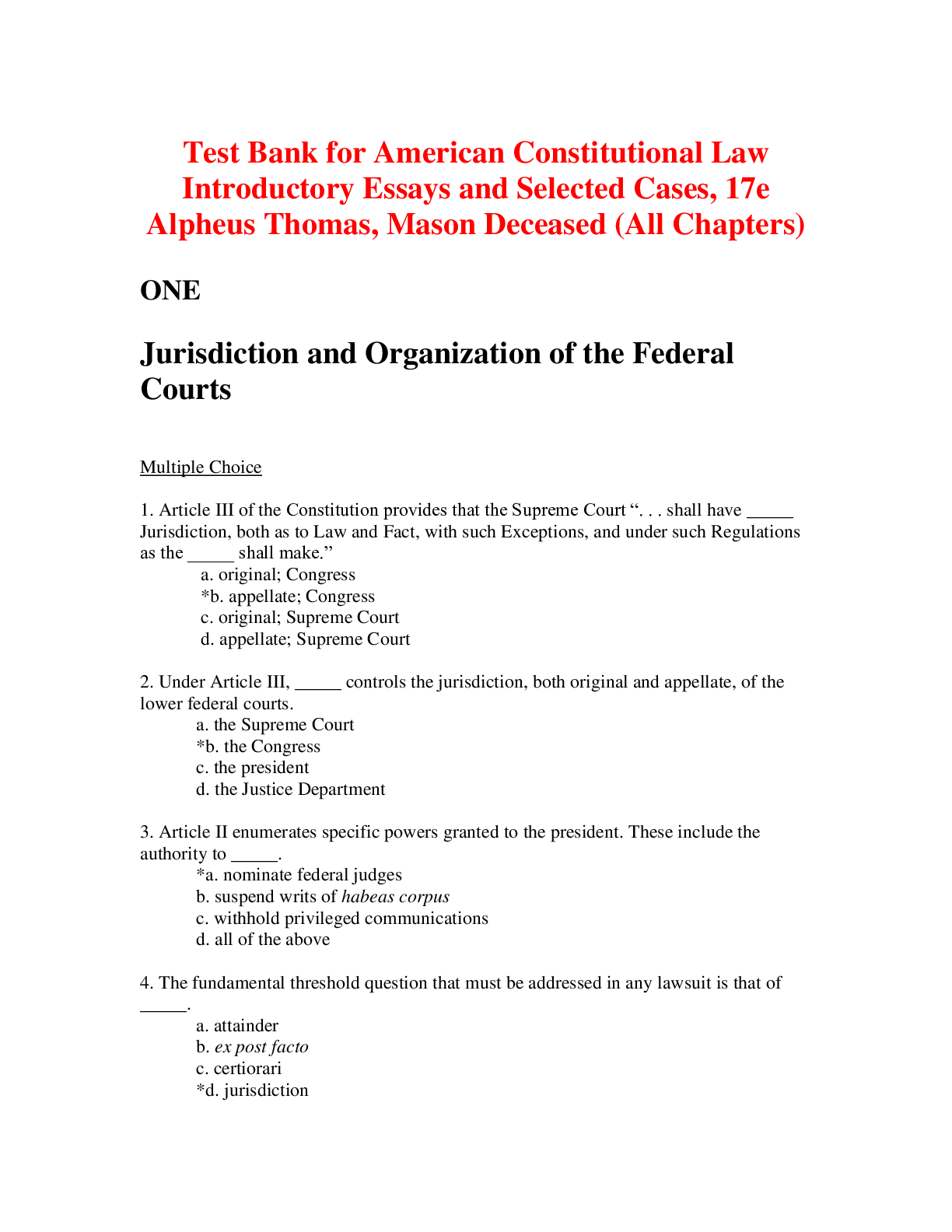
American Constitutional Law Introductory Essays and Selected C...

$15
36 Pages
Summary NSG 405 EXAM 1 Completed Study Guide > latest (Spring...
$10
18 Pages
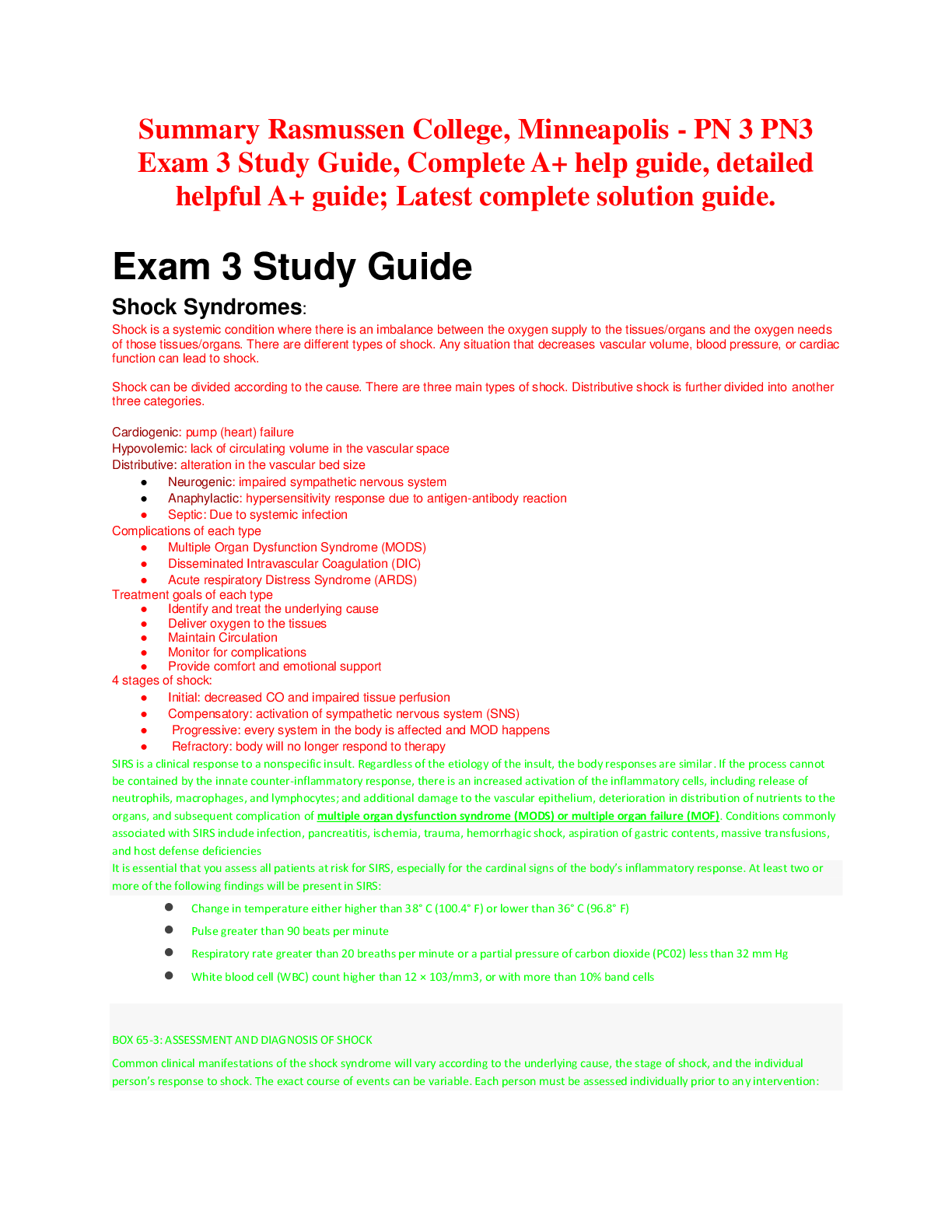
Summary Rasmussen College, Minneapolis - PN 3 PN3 Exam 3 Study...

$5
20 Pages
Summary Med surg ATI (study guide; latest Fall 2020, A+ help

$6
10 Pages
NR566 / NR 566 Week 1 Notes (Latest): Advanced Pharmacology fo...

$8
50 Pages
NR603 / NR-603 Week 3 Summary Notes (Latest): Advanced Clinica...
More related documents below