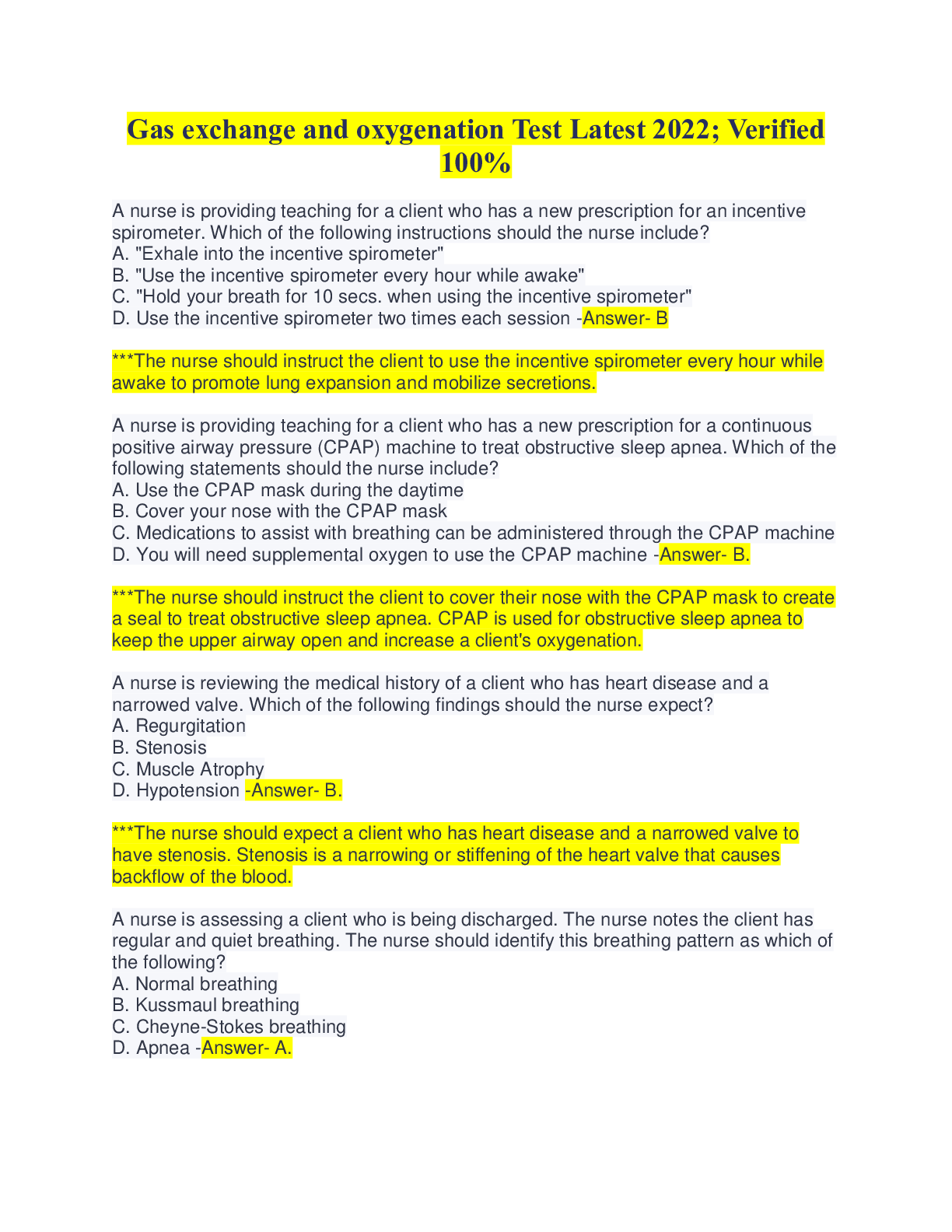
Computer Science > QUESTIONS & ANSWERS > CompTIA Cybersecurity Analyst (CySA+) - Module 2: Vulnerability Management (All)
CompTIA Cybersecurity Analyst (CySA+) - Module 2: Vulnerability Management
Document Content and Description Below
Last updated: 4 years ago
Preview 1 out of 11 pages
Instant download

Buy this Document to get the Full Access Instantly
Provided by Students Who Aced it
We Verify Document Content to Gurantee Accuracy
Also available in bundle (1)
Click Below to Access Bundle(s)

CySA Bundled Exams with complete solution; Everything you need is here.
CySA+ 231 More Questions with 100% Correct Answers CySA+ 2022 Questions and Answers with complete solution CySA+ Final - Study Guide 2022 with complete solution Final SAS study guide Question...
By Professor Lynne 4 years ago
$18
17
Reviews( 0 )
Document information
Connected school, study & course
About the document
Uploaded On
Sep 05, 2022
Number of pages
11
Written in
All

Additional information
This document has been written for:
Uploaded
Sep 05, 2022
Downloads
0
Views
318
Topic Tags
Related Subjects & Courses
Explore similar study resources and related concepts.
Recommended For You
Get more on QUESTIONS & ANSWERS »
CompTIA Cybersecurity Analyst (CySA+) - Module 3: Cyber Incide...
CompTIA Cybersecurity Analyst (CySA+) - Module 1: Threat Manag...
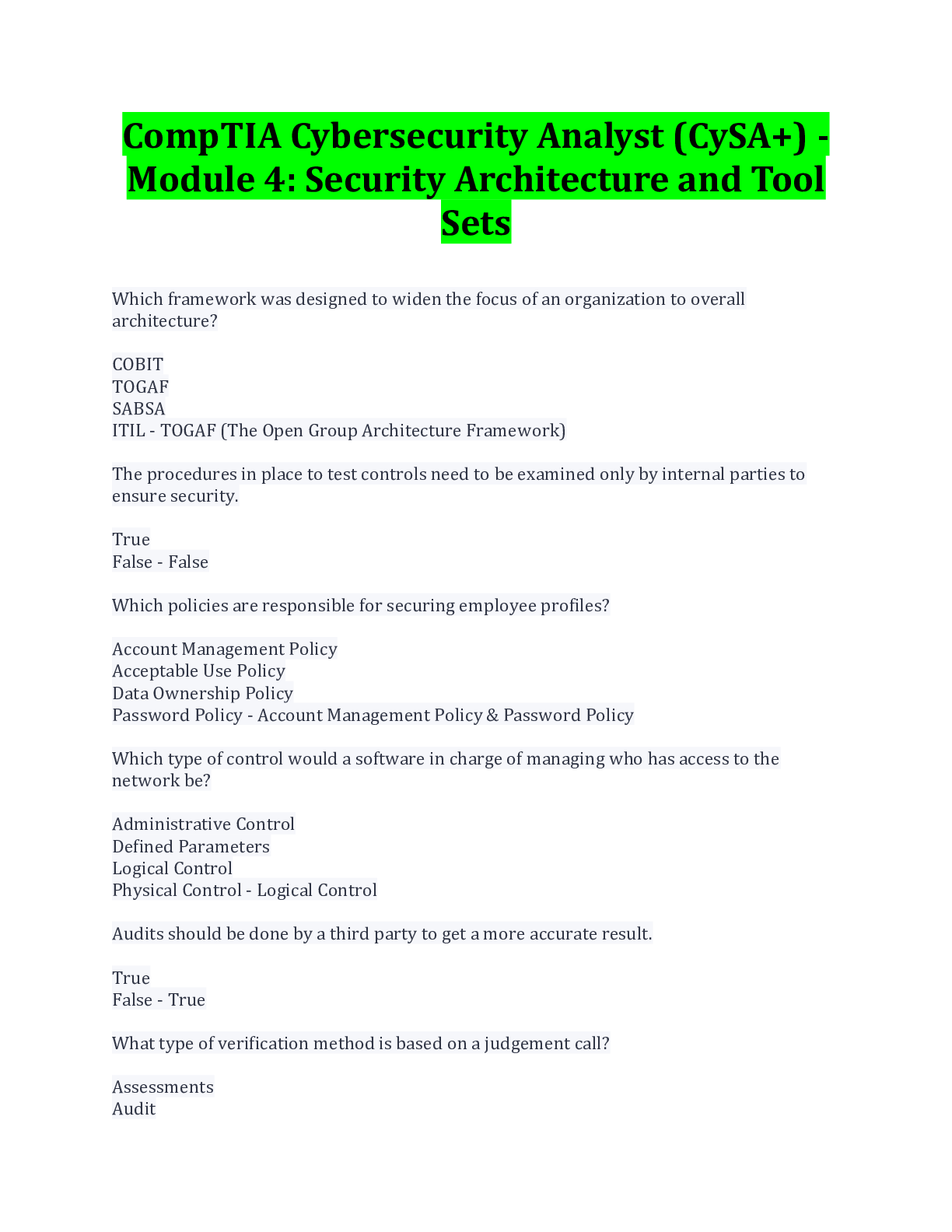
CompTIA Cybersecurity Analyst (CySA+) - Module 4: Security Arc...
CompTIA Cybersecurity Analyst (CySA+) - Module 4: Security Arc...
CompTIA Cybersecurity Analyst (CySA+) - Module 3: Cyber Incide...
CompTIA Cybersecurity Analyst (CySA+) - Module 1: Threat Manag...
CompTIA Cybersecurity Analyst (CySA+) - Module 2: Vulnerabilit...
CompTIA Cybersecurity Analyst (CySA+) - Module 1: (Threat Mana...
CompTIA Cybersecurity Analyst (CySA+) - Module 4: (Security Ar...
CompTIA Cybersecurity Analyst (CySA+) - Module 2: Vulnerabilit...
CompTIA Cybersecurity Analyst (CySA+) - Module 4: (Security Ar...
CompTIA Cybersecurity Analyst (CySA+) - Module 2: Vulnerabilit...
CompTIA Cybersecurity Analyst (CySA+) - Module 4: (Security Ar...
CompTIA Cybersecurity Analyst (CySA+) - Module 1: Threat Manag...
CompTIA Cybersecurity Analyst (CySA+) - Module 4: Security Arc...
CompTIA CYBERSECURITY ANALYST (CS0-002) VERSION 10.0 CYBER DEF...
CompTIA Cybersecurity Analyst (CySA+) - Module 2: Vulnerabilit...
.png)
CompTIA Cybersecurity Analyst (CySA+) - Module 4: Security Arc...