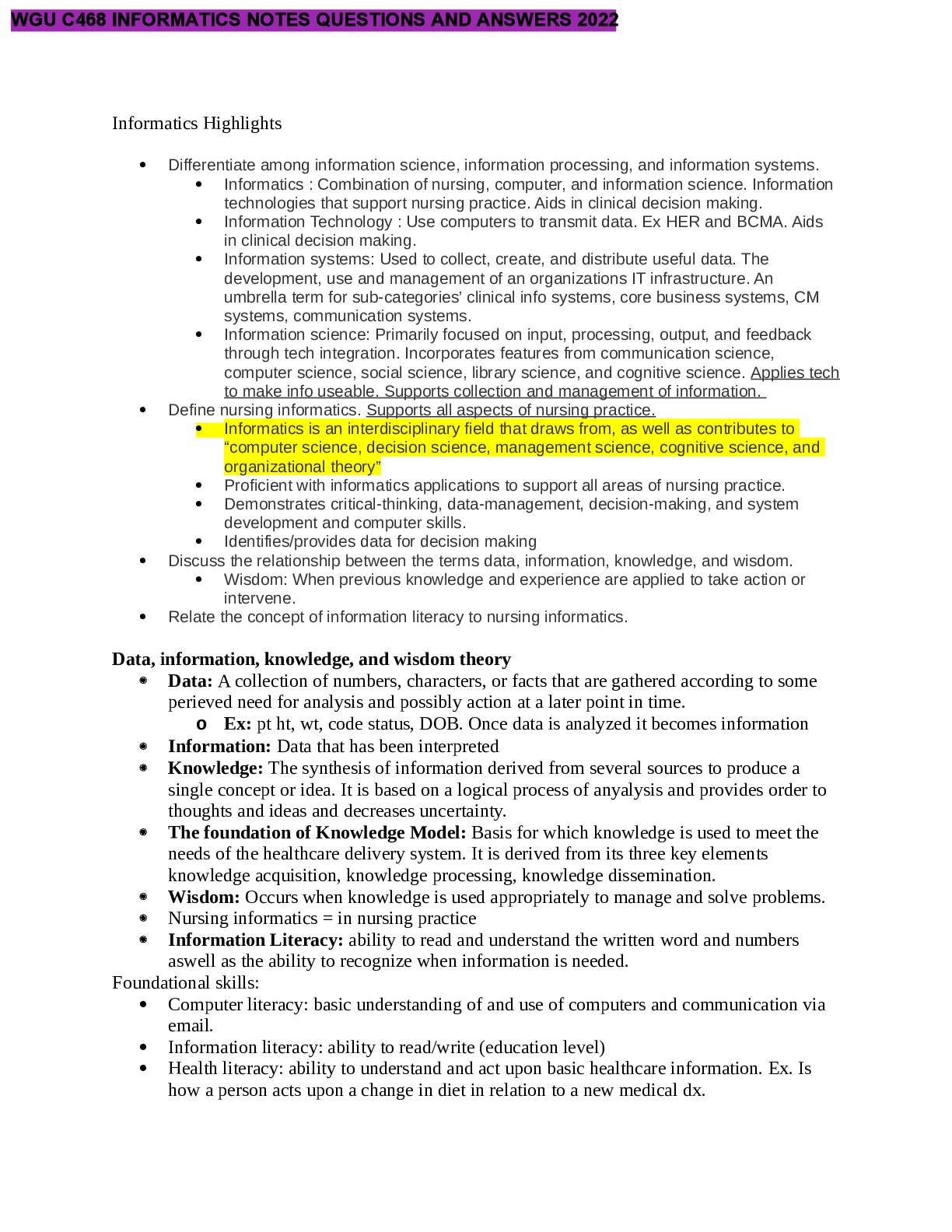
WGU Information Management - C468 with complete
solution
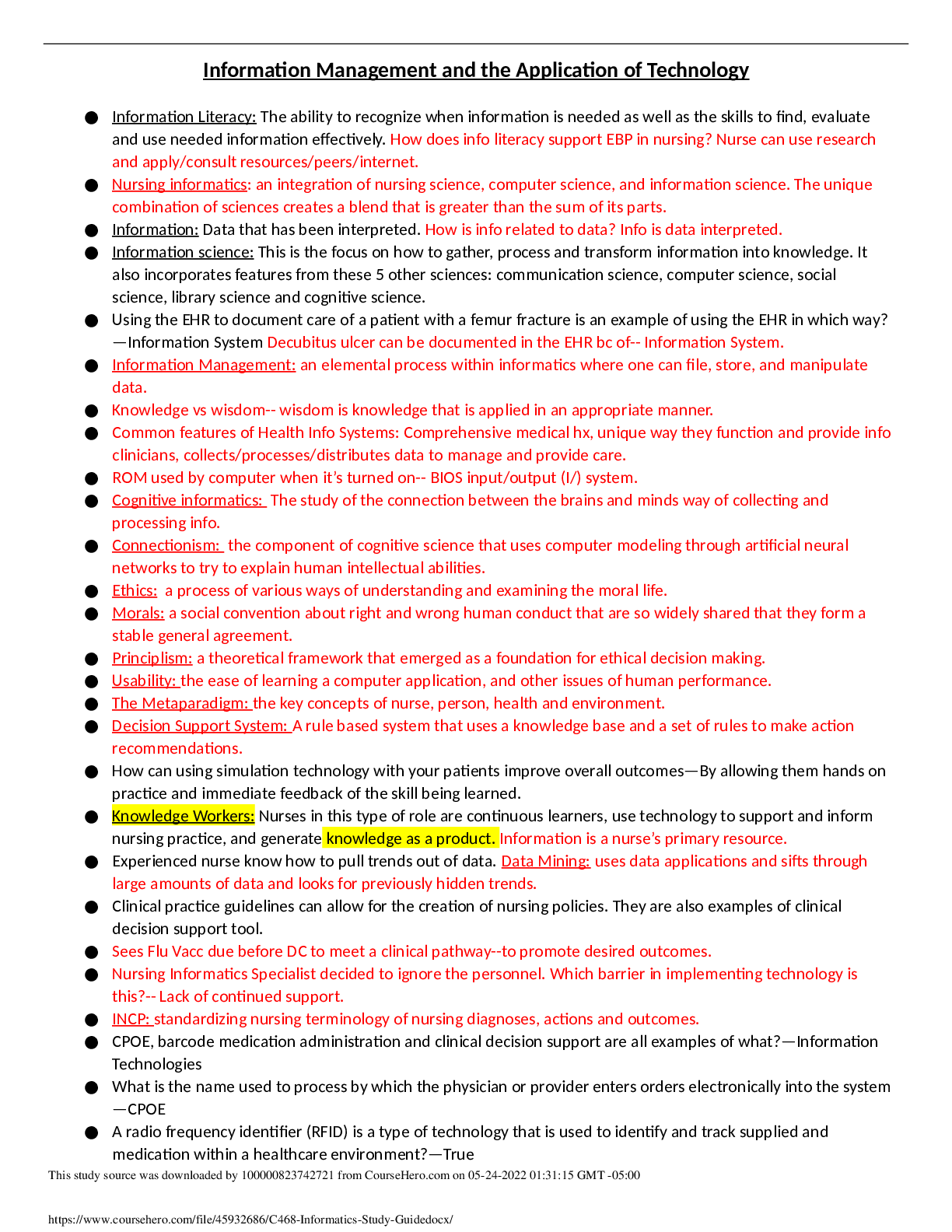
Information literacy Ans- Defined as the ability to recognize when information is needed as well as the
skills to find, evaluate and use needed information effe
...
WGU Information Management - C468 with complete
solution
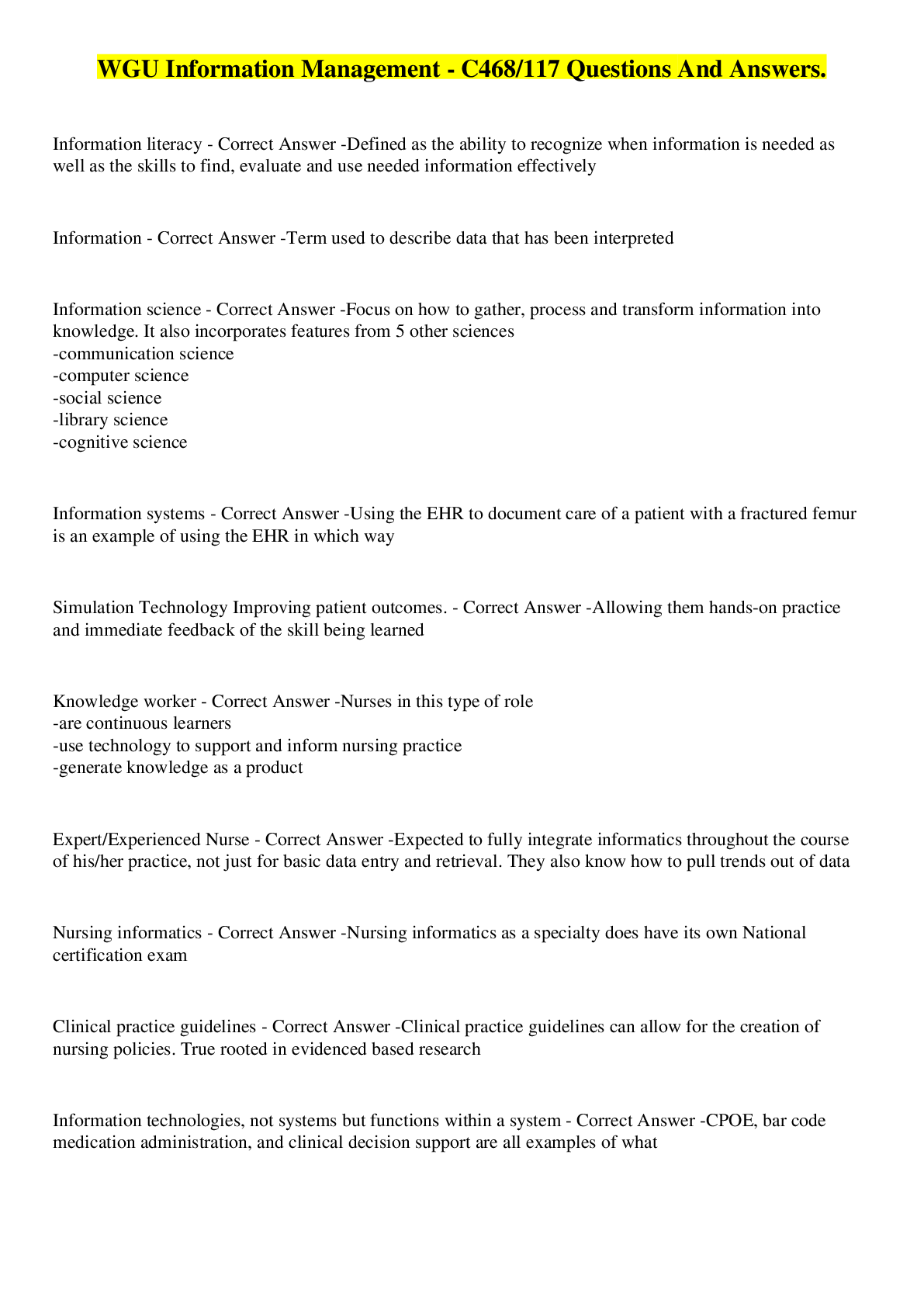
Information literacy Ans- Defined as the ability to recognize when information is needed as well as the
skills to find, evaluate and use needed information effectively
Information Ans- Term used to describe data that has been interpreted
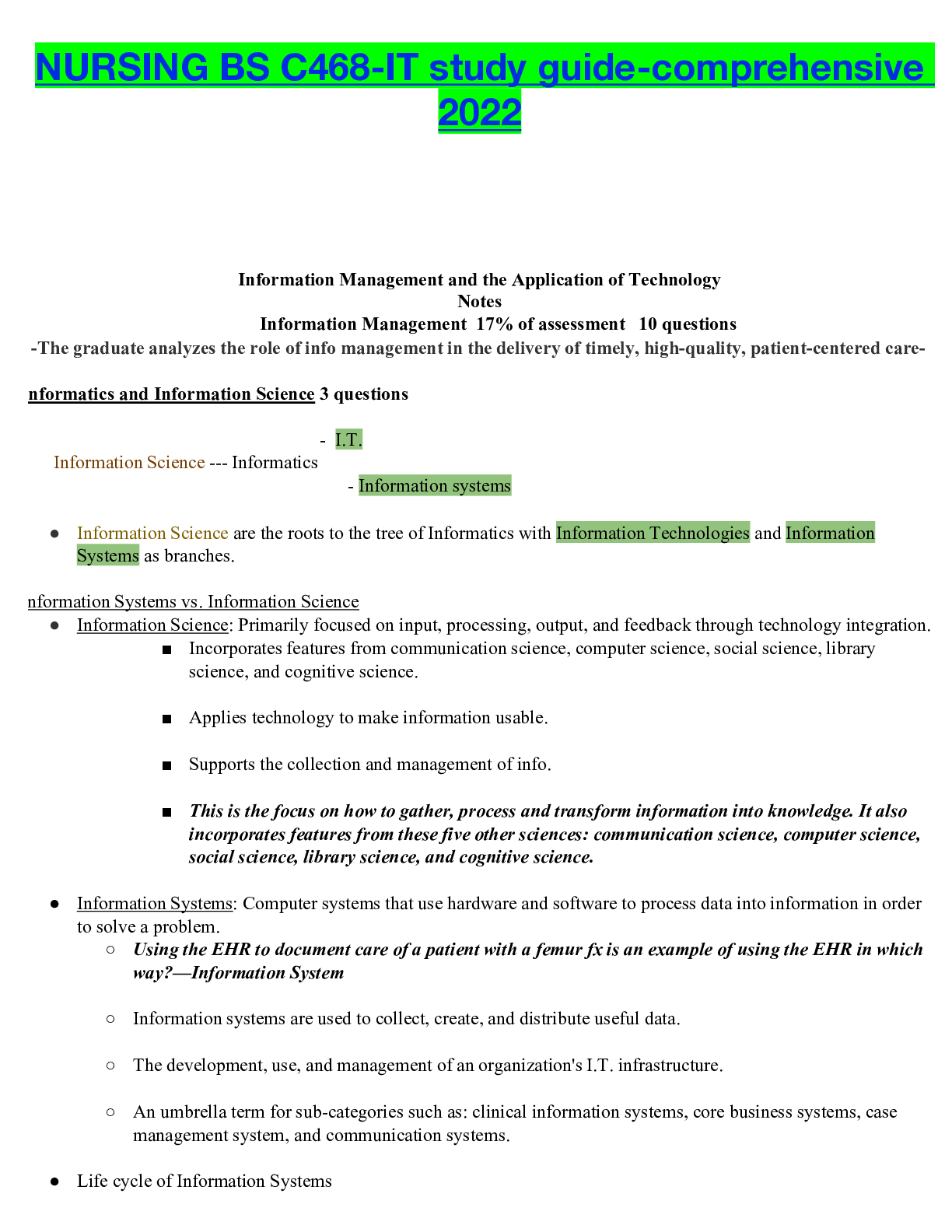
Information science Ans- Focus on how to gather, process and transform information into knowledge. It
also incorporates features from 5 other sciences
-communication science
-computer science
-social science
-library science
-cognitive science
Information systems Ans- Using the EHR to document care of a patient with a fractured femur is an
example of using the EHR in which way
Simulation Technology Improving patient outcomes. Ans- Allowing them hands-on practice and
immediate feedback of the skill being learned
Knowledge worker Ans- Nurses in this type of role
-are continuous learners
-use technology to support and inform nursing practice
-generate knowledge as a product
Expert/Experienced Nurse Ans- Expected to fully integrate informatics throughout the course of his/her
practice, not just for basic data entry and retrieval. They also know how to pull trends out of data
Nursing informatics Ans- Nursing informatics as a specialty does have its own National certification examClinical practice guidelines Ans- Clinical practice guidelines can allow for the creation of nursing policies.
True rooted in evidenced based research
Information technologies, not systems but functions within a system Ans- CPOE, bar code medication
administration, and clinical decision support are all examples of what
Computerized Physician Order Entry (CPOE) Ans- The name used to describe the process by which the
physician or provider enters orders electronically into the EHR
RFID Ans- A radio frequency identifier (RFID) is a type of (information) technology that is used to identify
and track supplies and medications within a healthcare environment
Informatics affecting Nursing Practice Ans- Clinical pathways and computer generated care plans are
examples of how informatics can affect nursing practice True, examples of clinical decision support
Nursing informatics Ans- The use of technology and information to help support all aspects of nursing
practice
The foundation of knowledge model Ans- The basis for which knowledge is used to meet the needs of
the healthcare delivery system
It is derived from its 3 key elements of knowledge acquisition, knowledge processing and knowledge
dissemination
Data (not information until it has been analyzed) Ans- A patients height, weight, code status, and date of
birth are all examples of what
Less consumer accountability Ans- Not an emerging trend in healthcare
Mission Ans- The purpose or reason for an organizations existenceStrategic planning, long-range Ans- The development of a comprehensive long range plan for guiding the
activities and operations of an organization
They will need to be trained on the system Ans- Why is it not important that selection committee board
members understand software and electronic processes
Strategic Planning Ans- Strategic planning is not driven by short term goals as Strategic Planning is a
LONG TERM GOAL
Blogging Ans- Not a national trend related to nursing informatics
Needs assessment Ans- During which phase of the information life cycle should the "musts" and "wants"
be determined
Information Life Cycle Phases Ans- 1. Needs assessment phase
2. System selection phase
3. System implementation phase
4. Maintenance phase
Project scope Ans- Term that defines the size and details of a collaborative effort
Nurses active participation in Electronic Information Importance Ans- To ensure the information is
current and accessible to the healthcare team
Project Implementation Team Responsibilities Ans- Execution of system changes, active involvement in
user participation, knowledge of current workflows
Company history Ans- A common request contained in a request for information (RFI) document
includes what
System Implementation Role Ans- Go-live planning, applying system changes as needed, end-user
trainingContinuous Ans- Term that best describes the life cycle of an information system
EHR Essential Components Ans- Evidence-based decision support, assessment findings, vital signs,
demographic data
EHR Function Ans- Bar-code medication administration
EHR Benefits Ans- Reduces medication errors, improves provider documentation
Patient Support Example Ans- Providing education material
EHR Primary Benefit Ans- One primary benefit of the EHR is a decreased wait time for diagnostic
testing...FALSE
EHR Main Goal Ans- Primary goal of EHR functionality in contrast to that of a health information system
is promoting patient safety
HIS Health Information System Ans- Broad term used to describe administrative and clinical systems to
streamline work flow processes efficiency
Barrier to patient centered care Ans- Is waiting until the end of the shift to chart patient assessments a
barrier to patient centered care...Yes, chart in real time.
Computer position can be a barrier if it is placed between the provider and the patient...pay attention to
your patient.
Standardization of Data and Different data needs of each clinic Ans- What potential challenge can occur
when implementing an EHR in a medical center with various outpatient clinics
Local Area Network (LAN) access Ans- What is the type of connection is needed to access the EHR when
an internet connection is lostEHR Information Includes Ans- Immunization history, CT scan results, date of birth
EHR Quality Care Between Facilities Ans- By providing continuity of care, interoperability
EHR Ans- The EHR is a longitudinal electronic patient record of all health care encounters...carries with
the patient (longitudinal)
Medication Administration System (Pyxis) Access Ans- Barcode ID badge, fingerprint
Order entry system Ans- Type of health information system that ensures the accuracy of physician
orders
ADT System (Admission, discharge, transfer) Ans- A registration system is also commonly refereed to as
Health information systems Ans- A group of systems used within the hospital to support and enhance
healthcare
HIS Implementation Nursing Ans- It is important to secure staff nurses active participation when
implementing a health information system b/c the nurses knowledge of current patient care workflow
may improve implementation decisions
Standardized Terminologies important to nursing Ans- They improve communication within the
interdisciplinary team
HIS Examples Ans- Laboratory system, pharmacy system, registration system
Perioperative nursing data set (PNDS) Ans- Which nursing terminology contains a nursing diagnosis,
interventions and outcomes specific to the perioperative experience
Standardized Terminologies in Nursing Informatics Development is Driven by what Principles AnsAccessibility, ubiquity, longevity, reusabilityCollaboration when selecting a Health Care System Ans- Collaboration leads to knowledge sharing
Administrative Information System Examples Ans- Scheduling system, financial system, admission,
discharge and transfer (ADT) system
Clinical Information Systems Examples of Effectiveness Ans- The information retrieved can be used to
foster research, improves nursing documentation compliance, It can improve clinician workflow
HL7 (Health Level 7) Ans- Acronym used to refer a standard of interoperability and exchange of clinical
data
Financial Systems are designed to do what Ans- Manage the expenses and revenue of providing
healthcare, report and track fiscal outcomes as they relate to organizational goals, help to determine the
organizations strategic direction
EHR implementation challenges in a medical center with various specialties Ans- Identifying the different
data needs for each specialty practice
Clinical Decision Support Tool Characteristics Ans- Takes specific patient data, analyzes it and provides
recommendations (next action)
Clinical Decision Support Tool Examples Ans- Computer generated care plans, alerts, smart pumps,
electronic drug references
Culture of Safety Principles Ans- 1. Commitment of resources
2. Cross collaboration
3. Blame free environment
Security Threats to data/information Ans- 1. Unautho
[Show More]





.png)