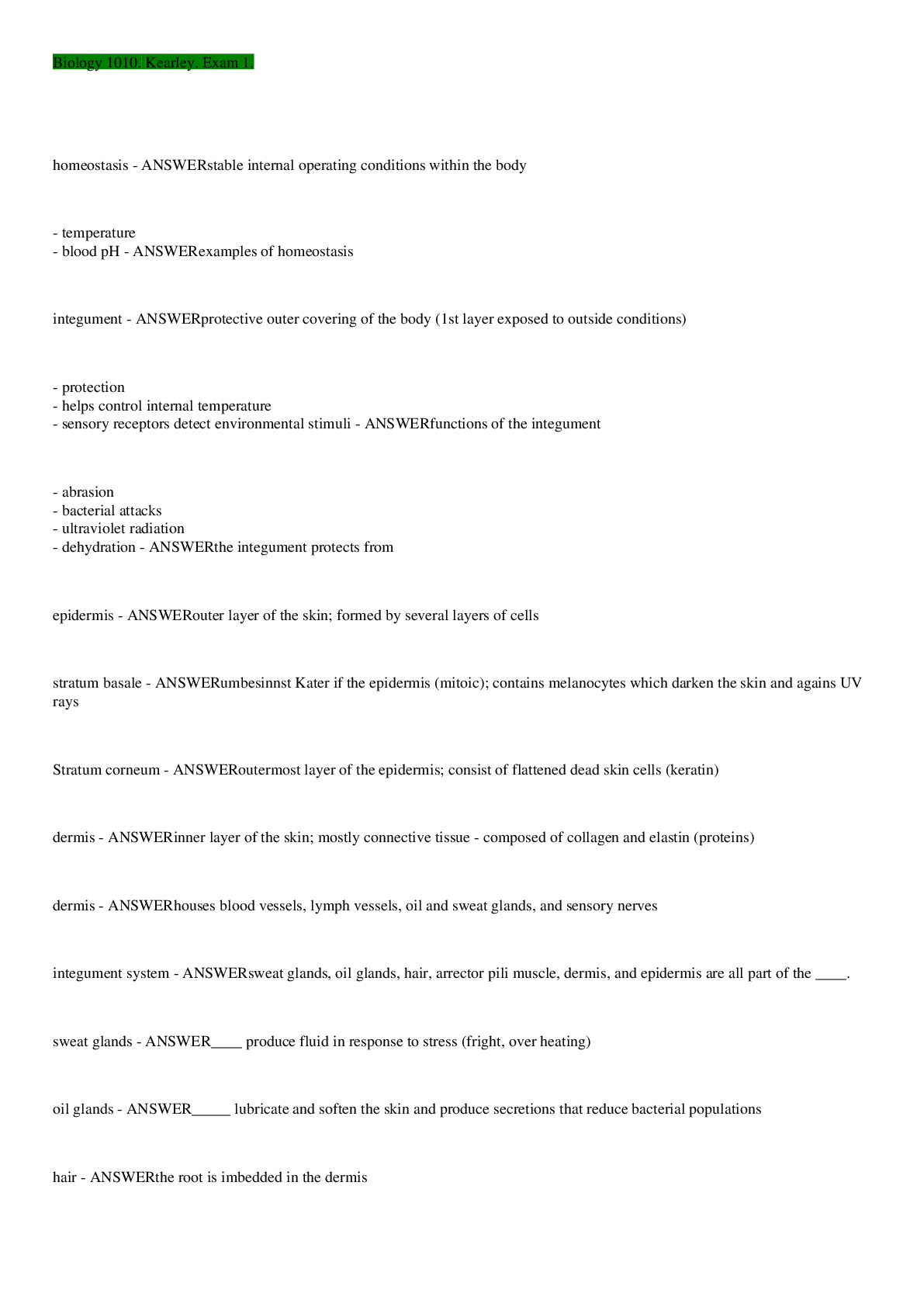
homeostasis
stable internal operating conditions within the body
- temperature
- blood pH
examples of homeostasis
integument
protective outer covering of the body (1st layer exposed to outside conditions)
...
homeostasis
stable internal operating conditions within the body
- temperature
- blood pH
examples of homeostasis
integument
protective outer covering of the body (1st layer exposed to outside conditions)
- protection
- helps control internal temperature
- sensory receptors detect environmental stimuli
functions of the integument
- abrasion
- bacterial attacks
- ultraviolet radiation
- dehydration
the integument protects from
epidermis
outer layer of the skin; formed by several layers of cells
stratum basale
umbesinnst Kater if the epidermis (mitoic); contains melanocytes which darken the skin and agains UV rays
Stratum corneum
outermost layer of the epidermis; consist of flattened dead skin cells (keratin)
dermis
inner layer of the skin; mostly connective tissue - composed of collagen and elastin (proteins)
dermis
houses blood vessels, lymph vessels, oil and sweat glands, and sensory nerves
integument system
sweat glands, oil glands, hair, arrector pili muscle, dermis, and epidermis are all part of the ____.
sweat glands
____ produce fluid in response to stress (fright, over heating)
oil glands
_____ lubricate and soften the skin and produce secretions that reduce bacterial populations
hair
the root is imbedded in the dermis
arrector pili
smooth muscles that are attached to, and erect hairs - cause goose bumps (cold, scared)
hypertrichosis
abnormal amounts of hair - genetic condition in humans
skin cancer
the most common form of cancer in the US - about 1/2 of the cancers found each year
- basal cell carcinoma
- squamous cell carcinoma
- malignant melanoma (most dangerous)
types of skin cancer
melanoma
____ accounts for almost 3/4 of the deaths due to skin cancer (5 year survival rates)
[Show More]