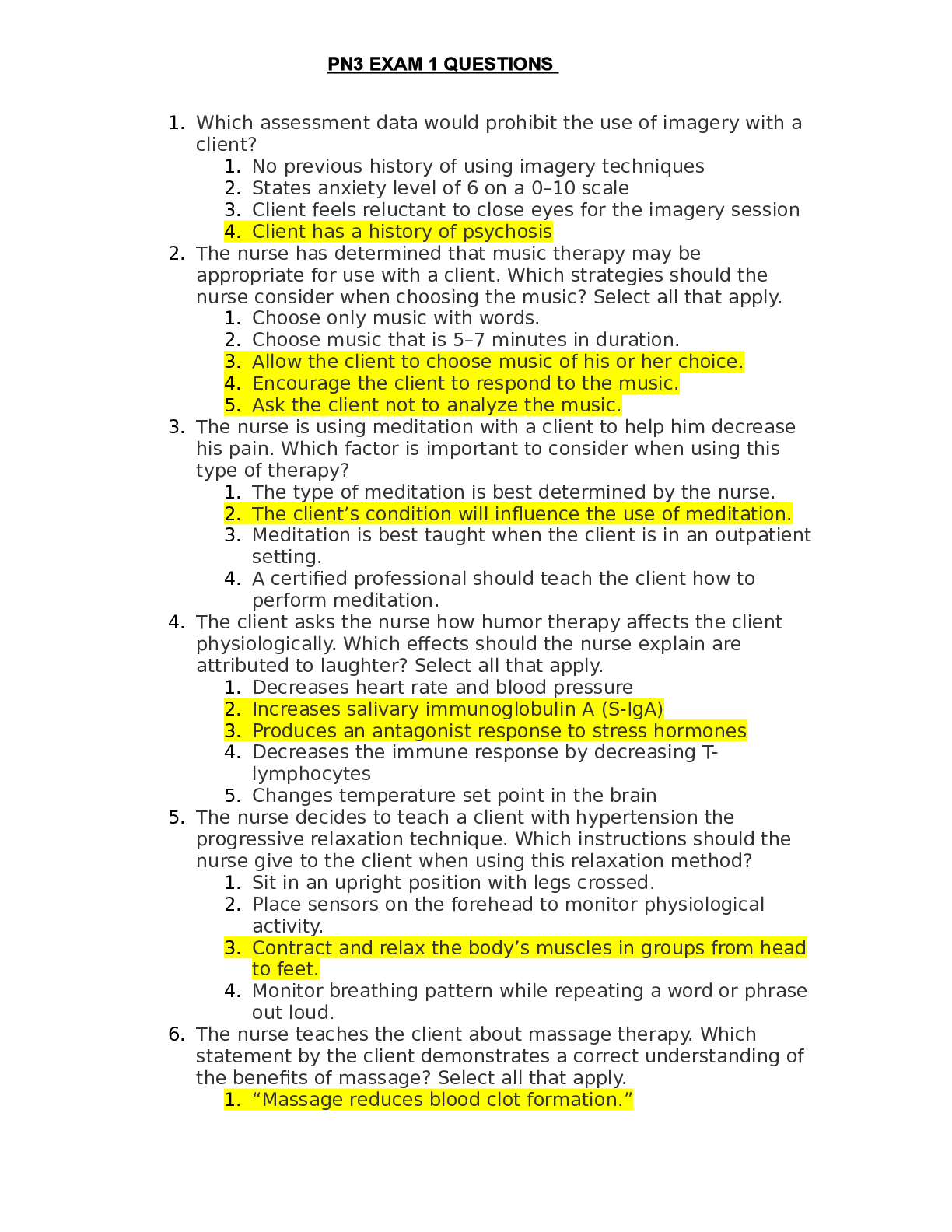
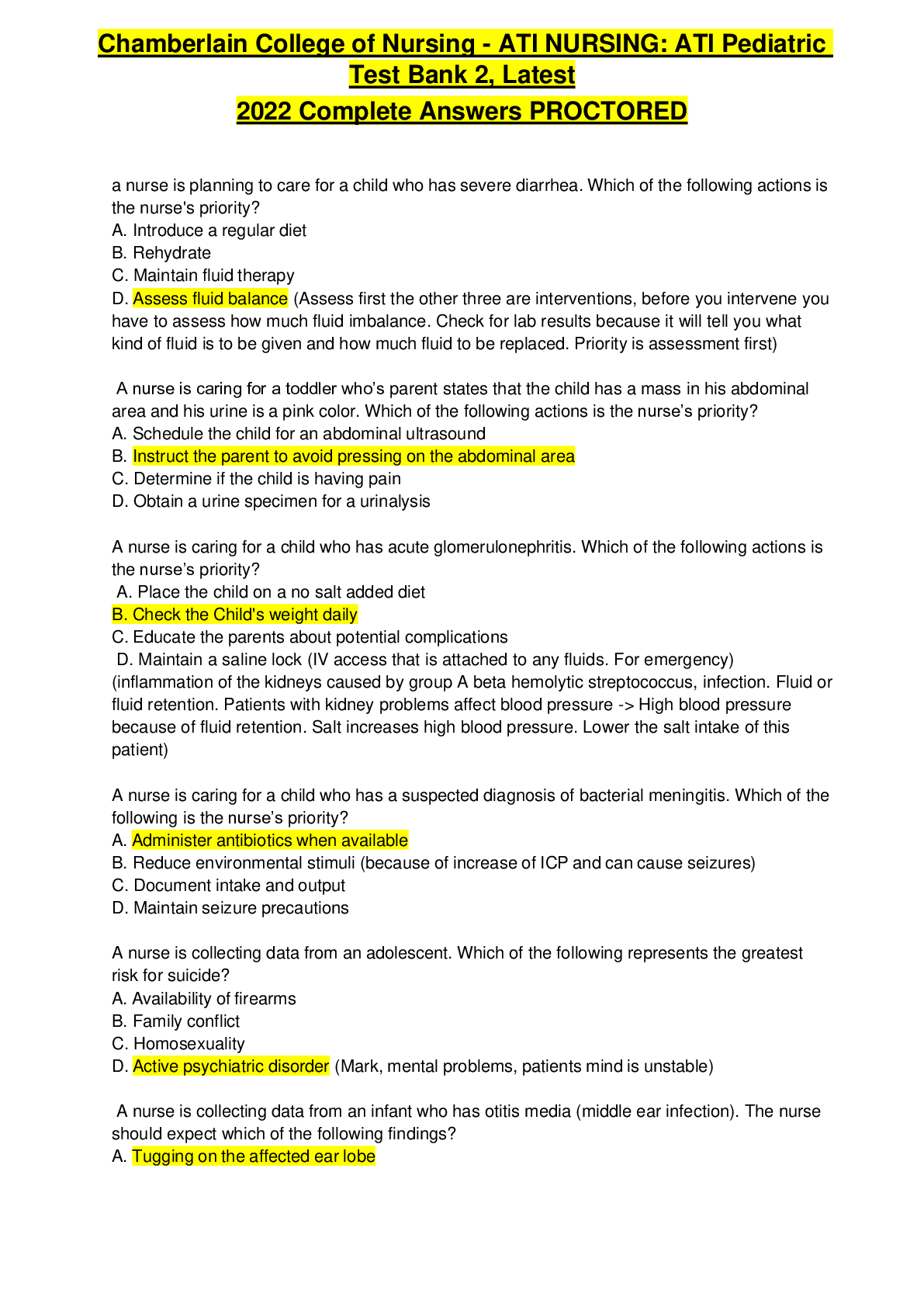
NURSING > QUESTIONS & ANSWERS > NCLEX questions: Perioperative Nursing Latest 2022 with Verified Solutions (All)
NCLEX questions: Perioperative Nursing Latest 2022 with Verified Solutions
Document Content and Description Below
Last updated: 4 years ago
Preview 1 out of 5 pages
Instant download
.png)
Buy this Document to get the Full Access Instantly
Provided by Students Who Aced it
We Verify Document Content to Gurantee Accuracy
Also available in bundle (1)
Click Below to Access Bundle(s)
.png)
PERIOPERATIVE NCLEX BUNDLED EXAMS QUESTIONS AND ANSWERS 100% PASS( LATEST 2022)
Perioperative NCLEX BUNDLED EXAMS QUESTIONS AND ANSWERS 100% PASS( LATEST 2022)
By Nutmegs 4 years ago
$20
12
Reviews( 0 )
Document information
Connected school, study & course
About the document
Uploaded On
Sep 26, 2022
Number of pages
5
Written in
All

Additional information
This document has been written for:
Uploaded
Sep 26, 2022
Downloads
0
Views
264
Topic Tags
Recommended For You
Get more on QUESTIONS & ANSWERS »
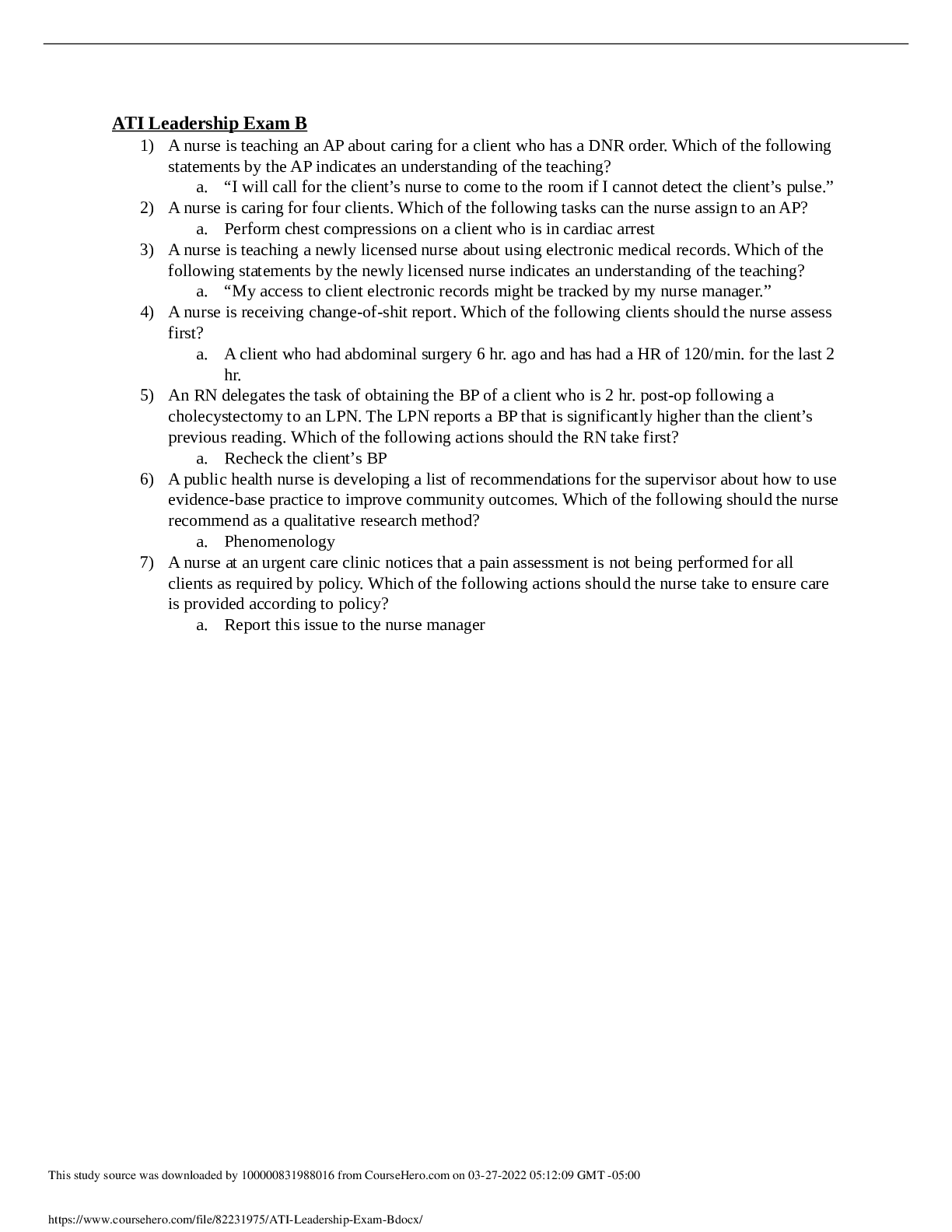
NURSING 266 RN LEADERSHIP EXAM B LATEST 2022 ALREADY PASSED

STRATFORD UNIVERSITY – NSG 325 / NSG325 COMPLEX FINAL EXAM LAT...

AGNP BOARD EXAM QUESTIONS PRESCRIPTION GASTROENTEROLOGY (85 QU...

PN RN EXIT V1 – MEDSURGE FINAL EXAM ANSWERS LATEST 2022 – VERI...

NURS 120 / NURS120 | RN EXIT | ADVANCED MED SURGE – MEDSURGE F...

NR 511 / NR511 FINAL EXAM 1 STUDY GUIDE LATEST 2022 GRADED A

SAUNDERS COMPREHENSIVE REVIEW FOR NCLEX TEST BANK latest 2022/...
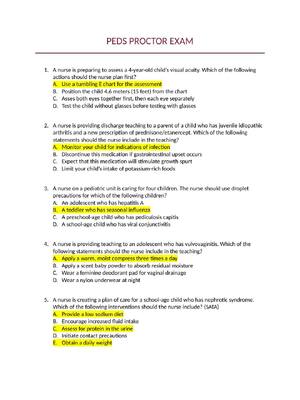
ATI PEDS PROCTORED EXAM | A nurse is preparing to assess a 4-...
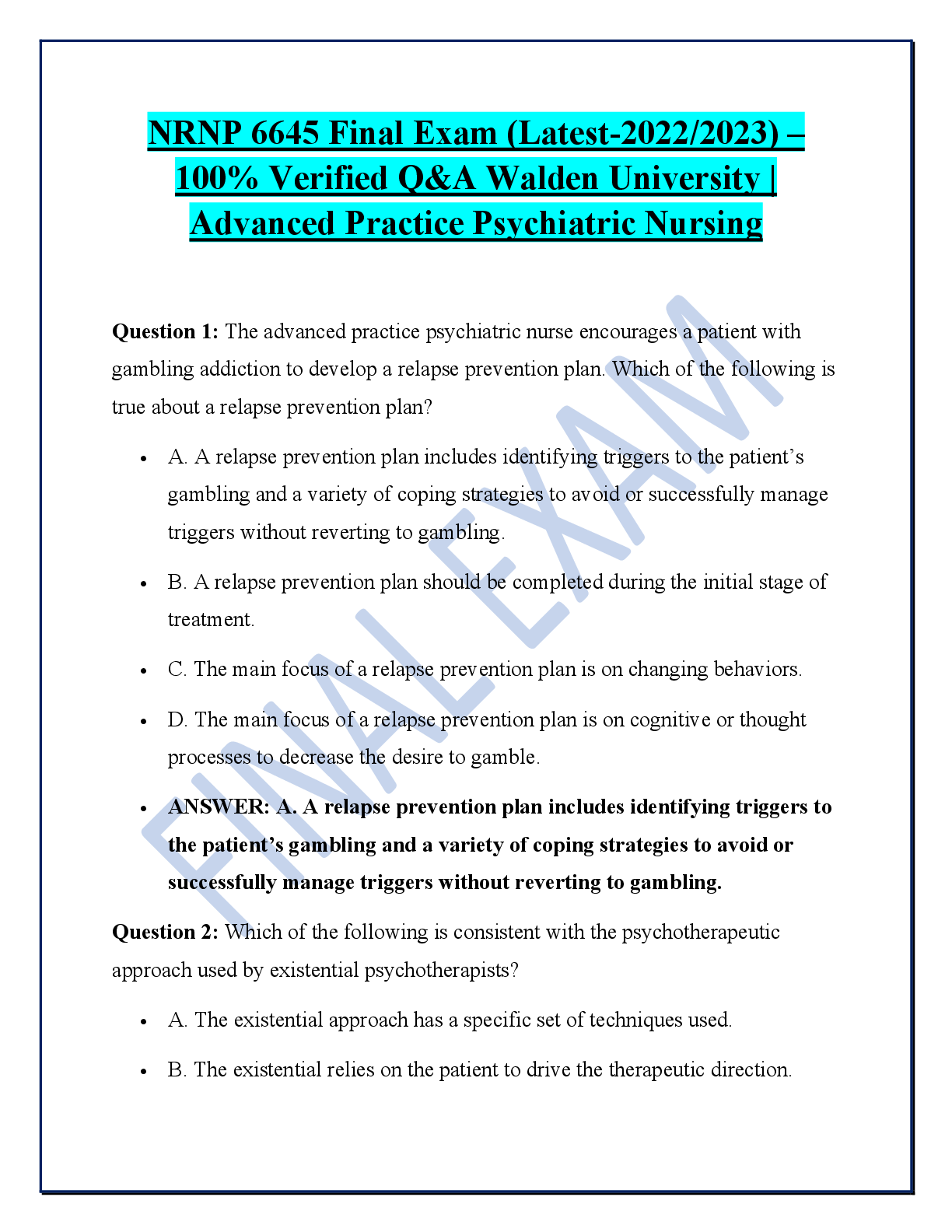
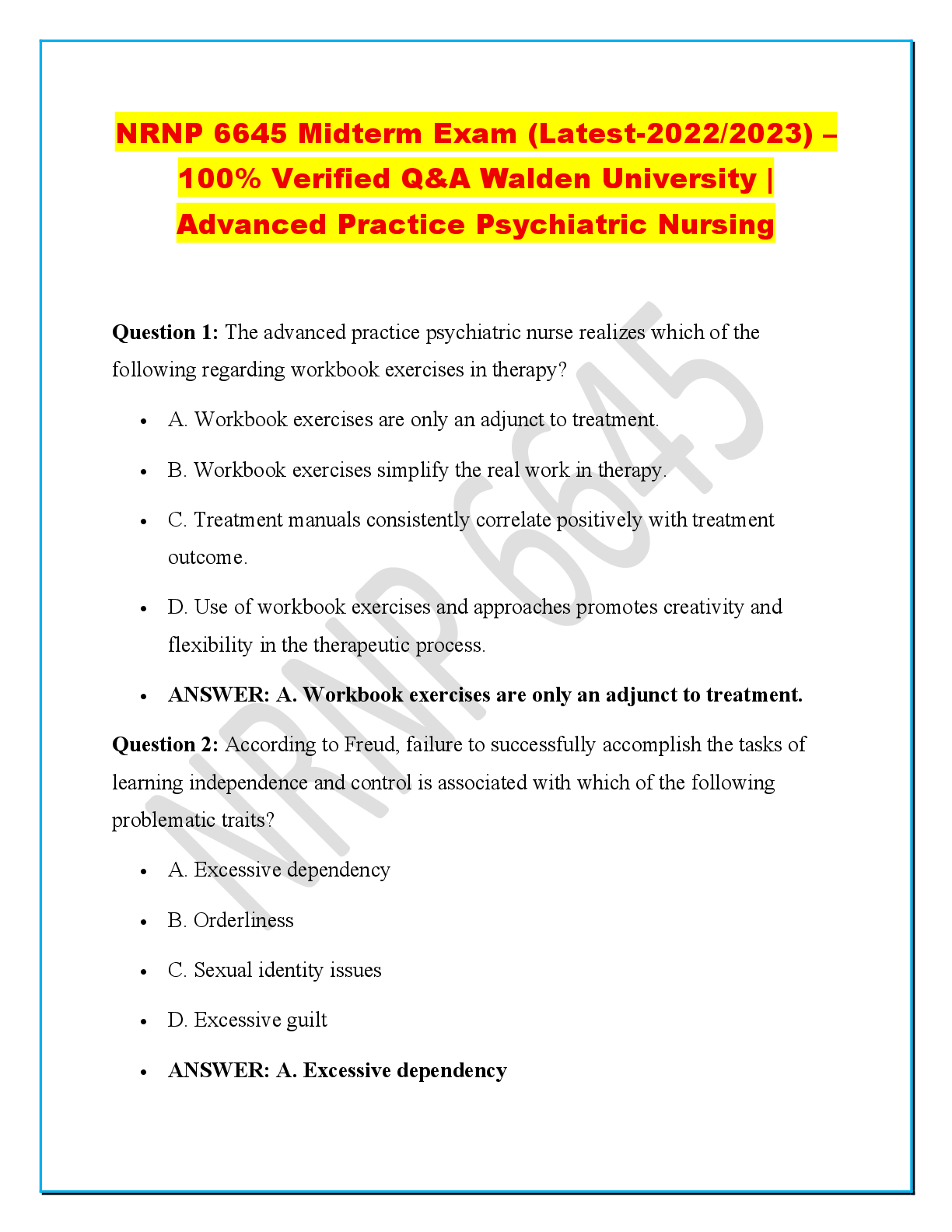

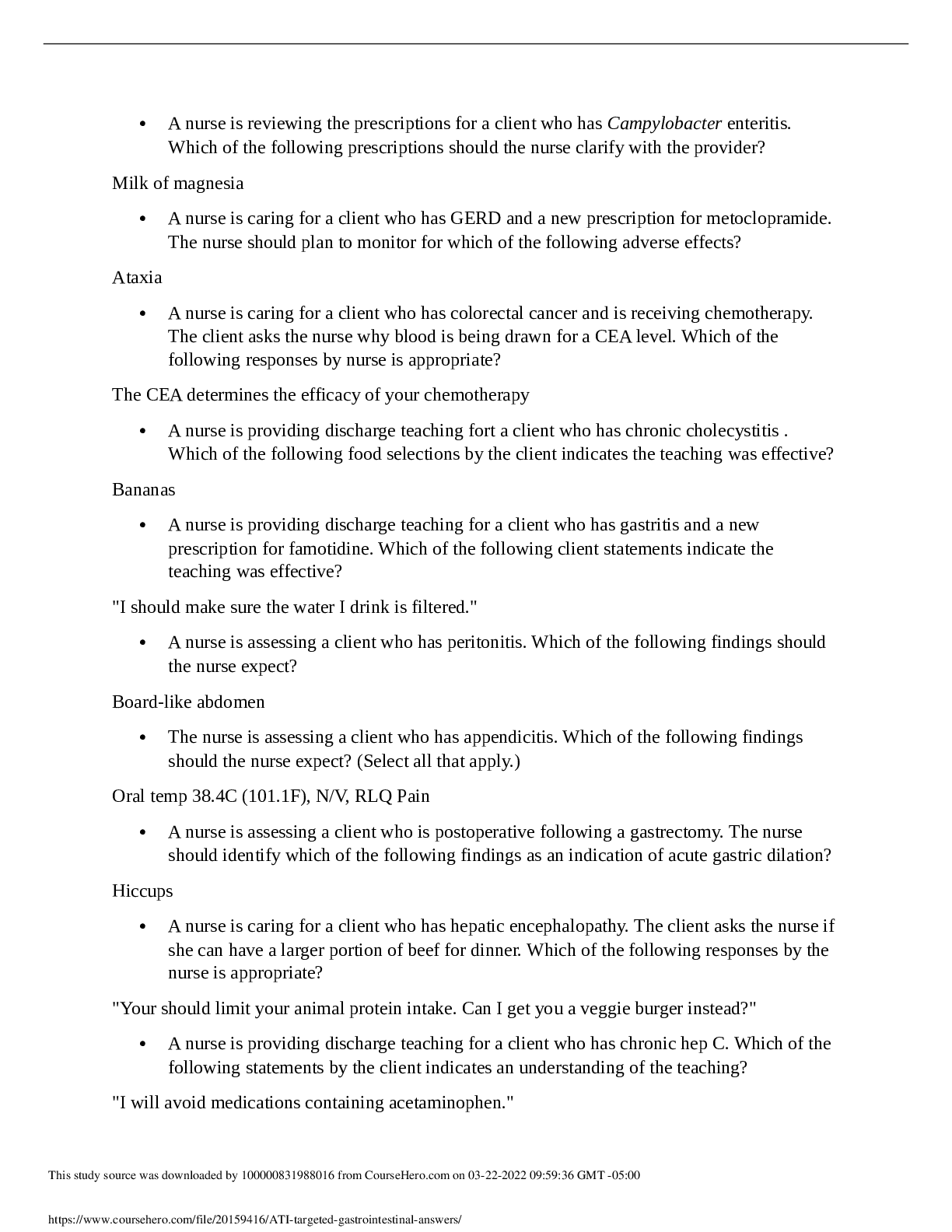
RN TARGETED GASTROINTESTINAL ANSWERS LATEST 2022 RATED A+
{NGN}ATI RN Comprehensive 2023!!!! ATI COMPREHENSIVE PREDICTOR...
MED SURG HESI EXIT EXAM QUESTIONS AND ANSWERS CORRECT/VERIFIED...
MED SURG HESI EXIT EXAM Compilation of highly tested Questions...

ATI-RN-FUNDAMENTALS-PROCTORED-EXAM-22-VERSIONS-LATEST-2022/202...