Challenges to food safety
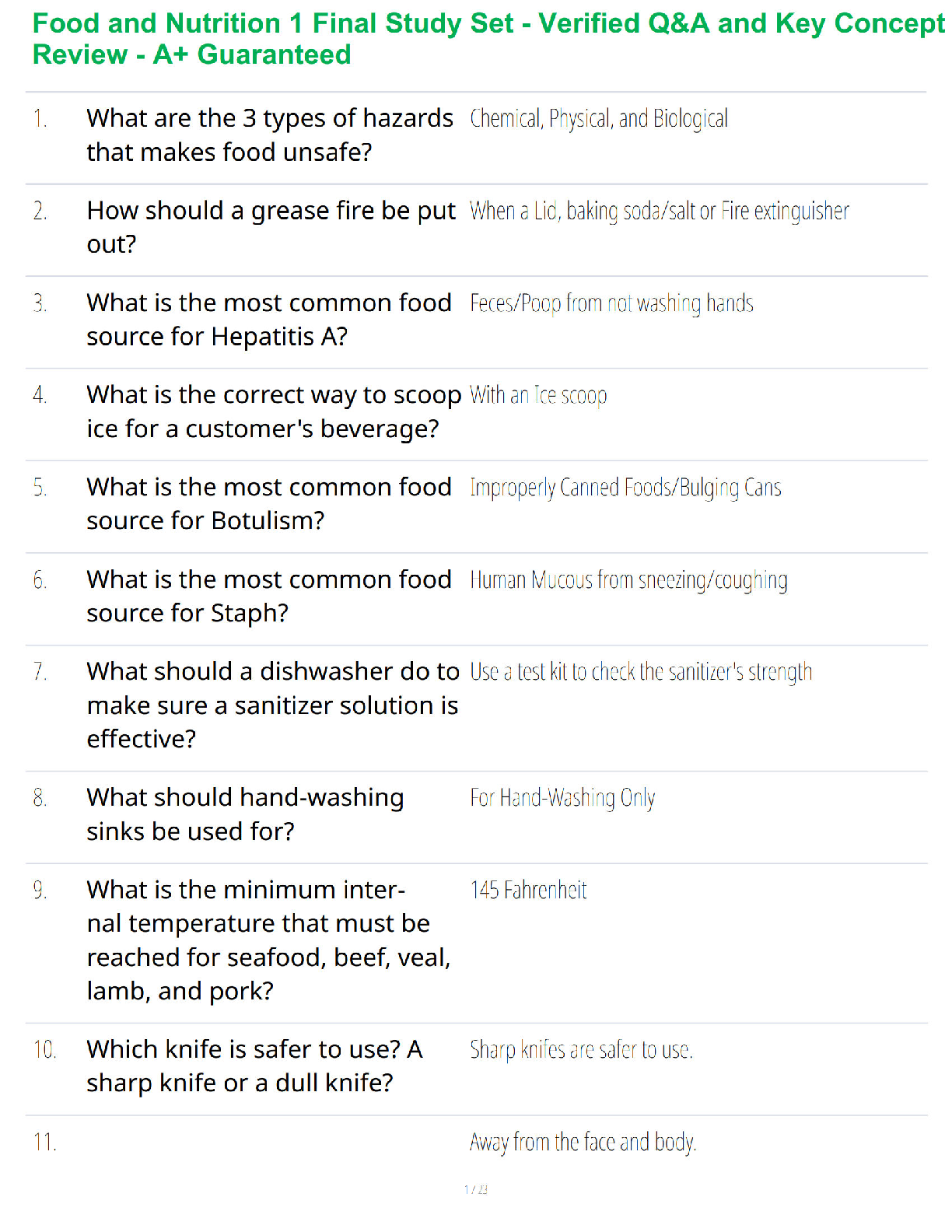
Time, language/culture, literacy/education, pathogens, unapproved food suppliers, high risk customers, and staff turnover
Who are the high risk customers?
Very old, very young, and immu
...
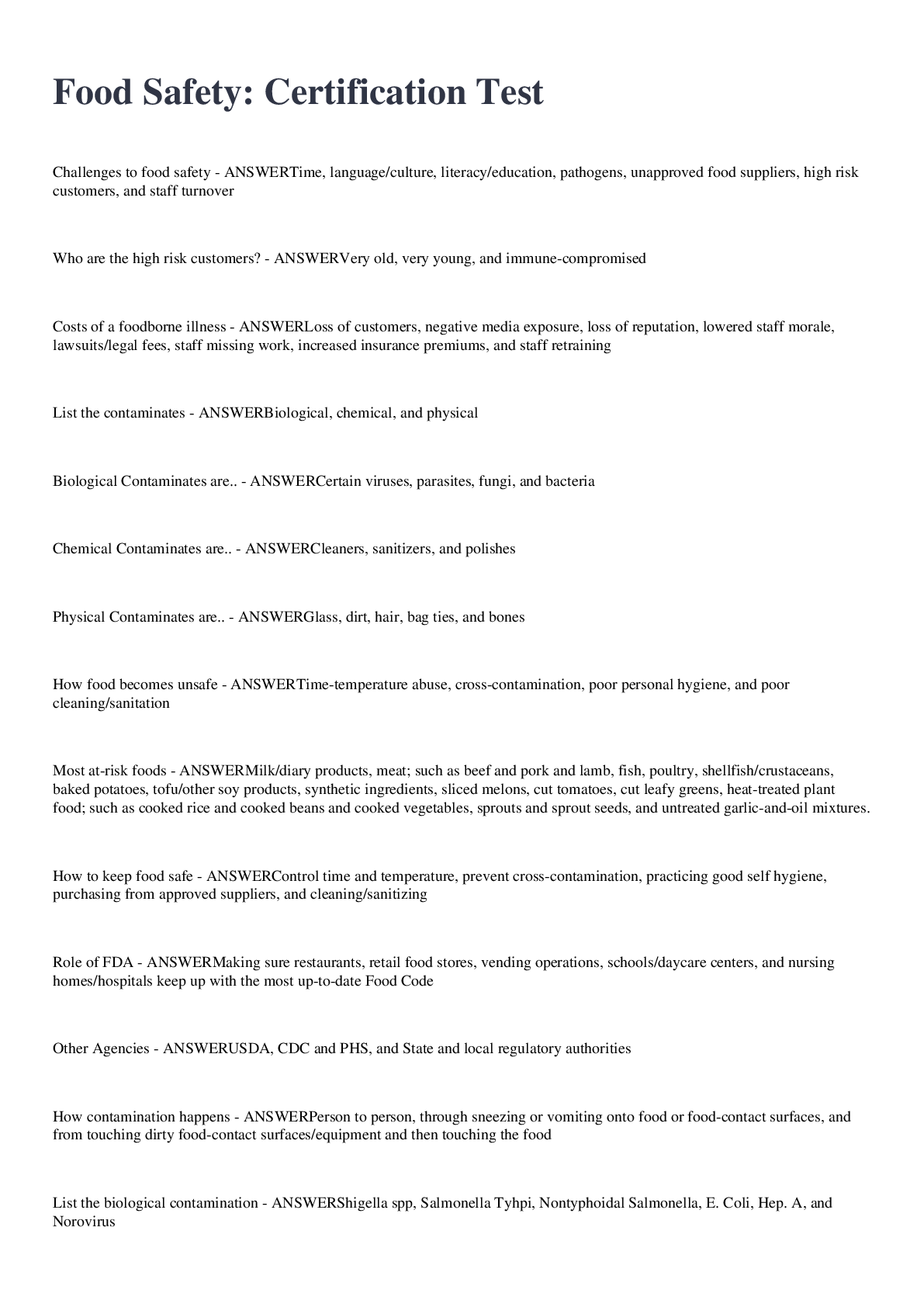
Challenges to food safety
Time, language/culture, literacy/education, pathogens, unapproved food suppliers, high risk customers, and staff turnover
Who are the high risk customers?
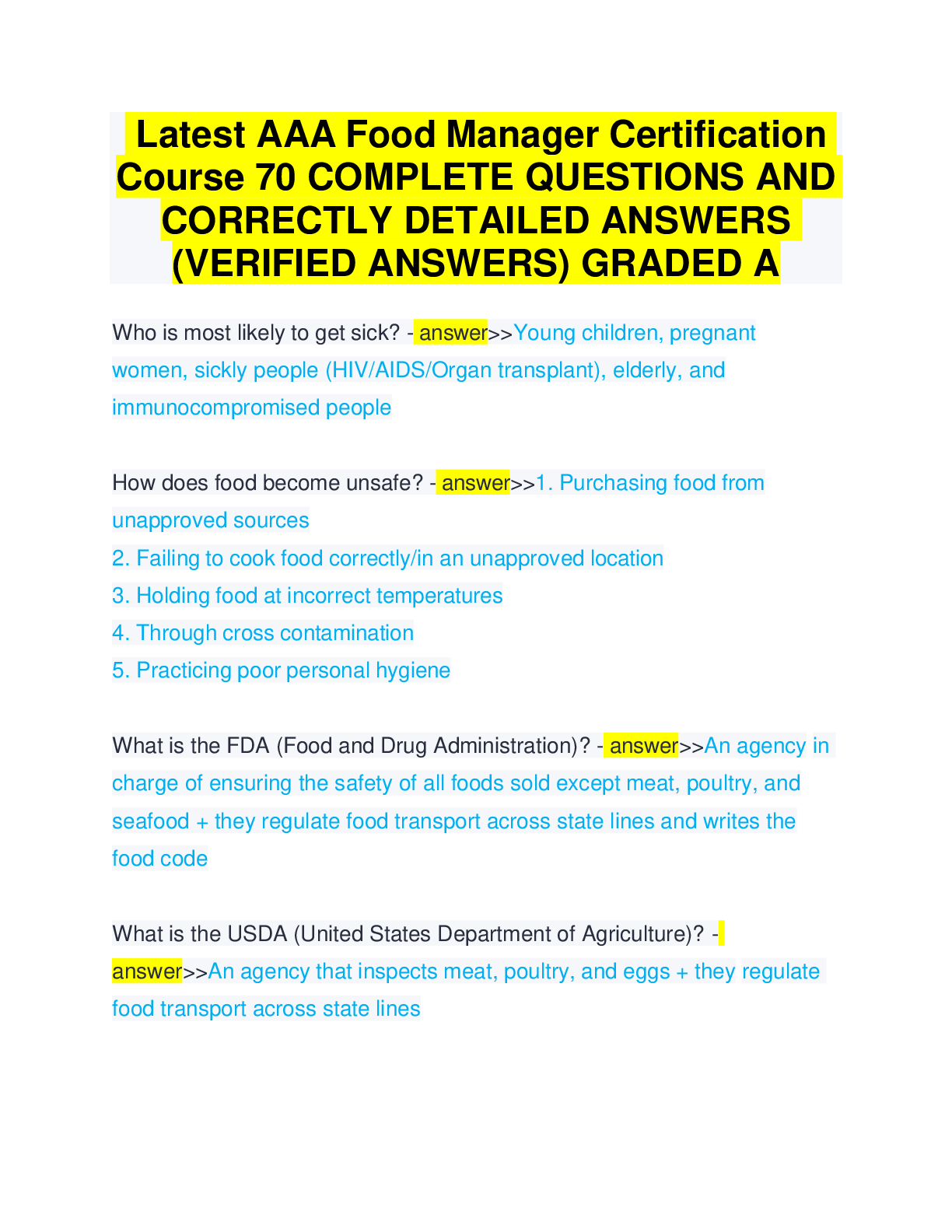
Very old, very young, and immune-compromised
Costs of a foodborne illness
Loss of customers, negative media exposure, loss of reputation, lowered staff morale, lawsuits/legal fees, staff missing work, increased insurance premiums, and staff retraining
List the contaminates
Biological, chemical, and physical
Biological Contaminates are..
Certain viruses, parasites, fungi, and bacteria
Chemical Contaminates are..
Cleaners, sanitizers, and polishes
Physical Contaminates are..
Glass, dirt, hair, bag ties, and bones
How food becomes unsafe
Time-temperature abuse, cross-contamination, poor personal hygiene, and poor cleaning/sanitation
Most at-risk foods
Milk/diary products, meat; such as beef and pork and lamb, fish, poultry, shellfish/crustaceans, baked potatoes, tofu/other soy products, synthetic ingredients, sliced melons, cut tomatoes, cut leafy greens, heat-treated plant food; such as cooked rice and cooked beans and cooked vegetables, sprouts and sprout seeds, and untreated garlic-and-oil mixtures.
How to keep food safe
Control time and temperature, prevent cross-contamination, practicing good self hygiene, purchasing from approved suppliers, and cleaning/sanitizing
Role of FDA
Making sure restaurants, retail food stores, vending operations, schools/daycare centers, and nursing homes/hospitals keep up with the most up-to-date Food Code
Other Agencies
USDA, CDC and PHS, and State and local regulatory authorities
How contamination happens
Person to person, through sneezing or vomiting onto food or food-contact surfaces, and from touching dirty food-contact surfaces/equipment and then touching the food
[Show More]