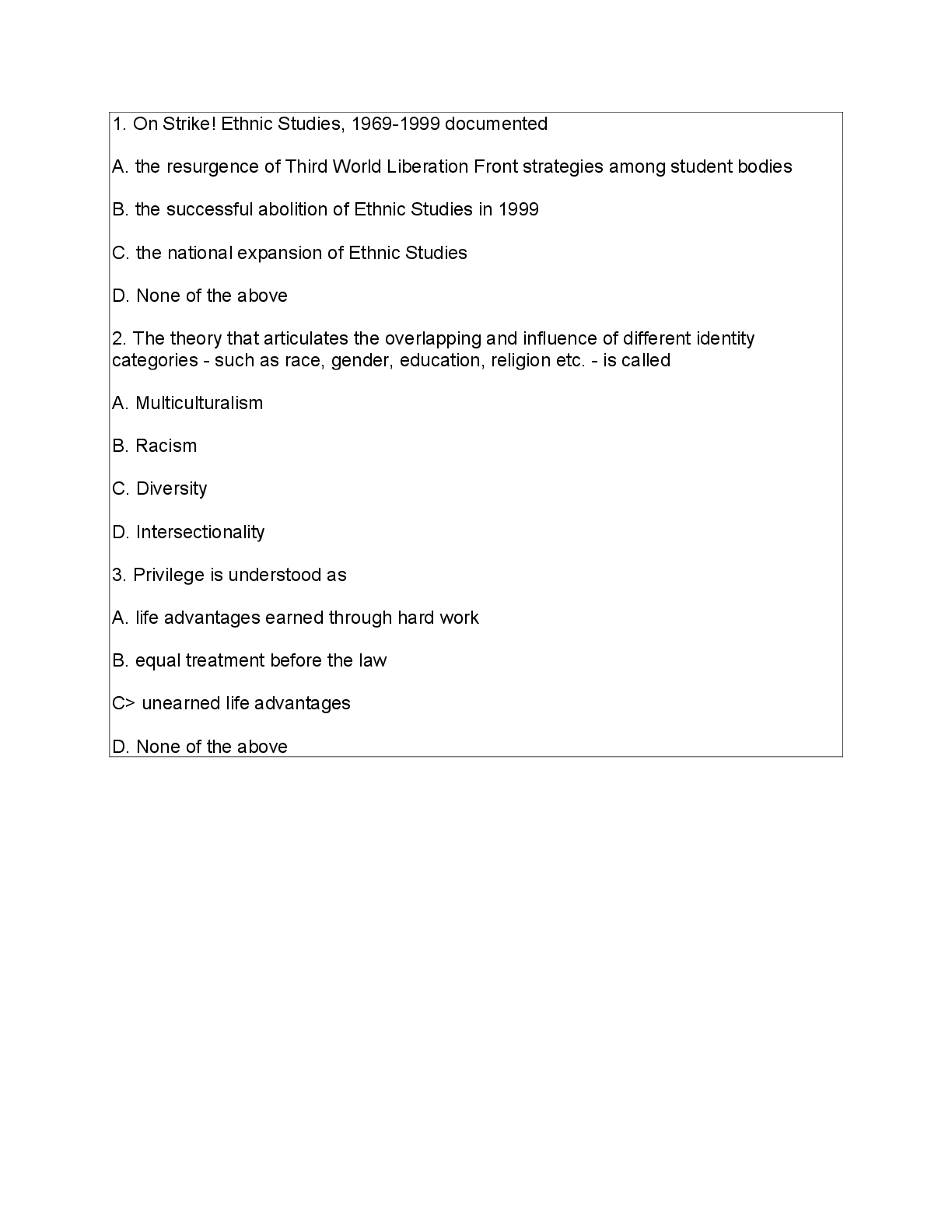
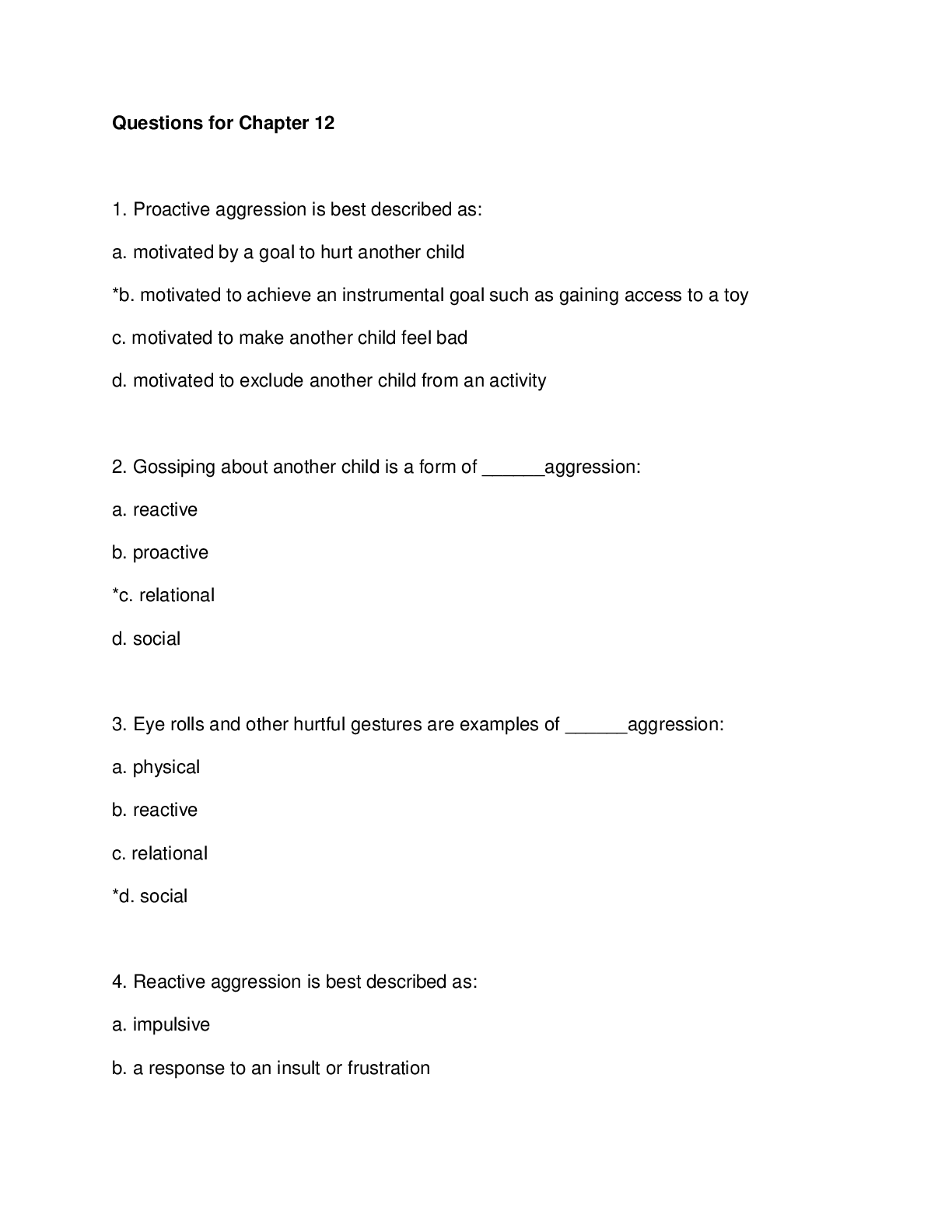
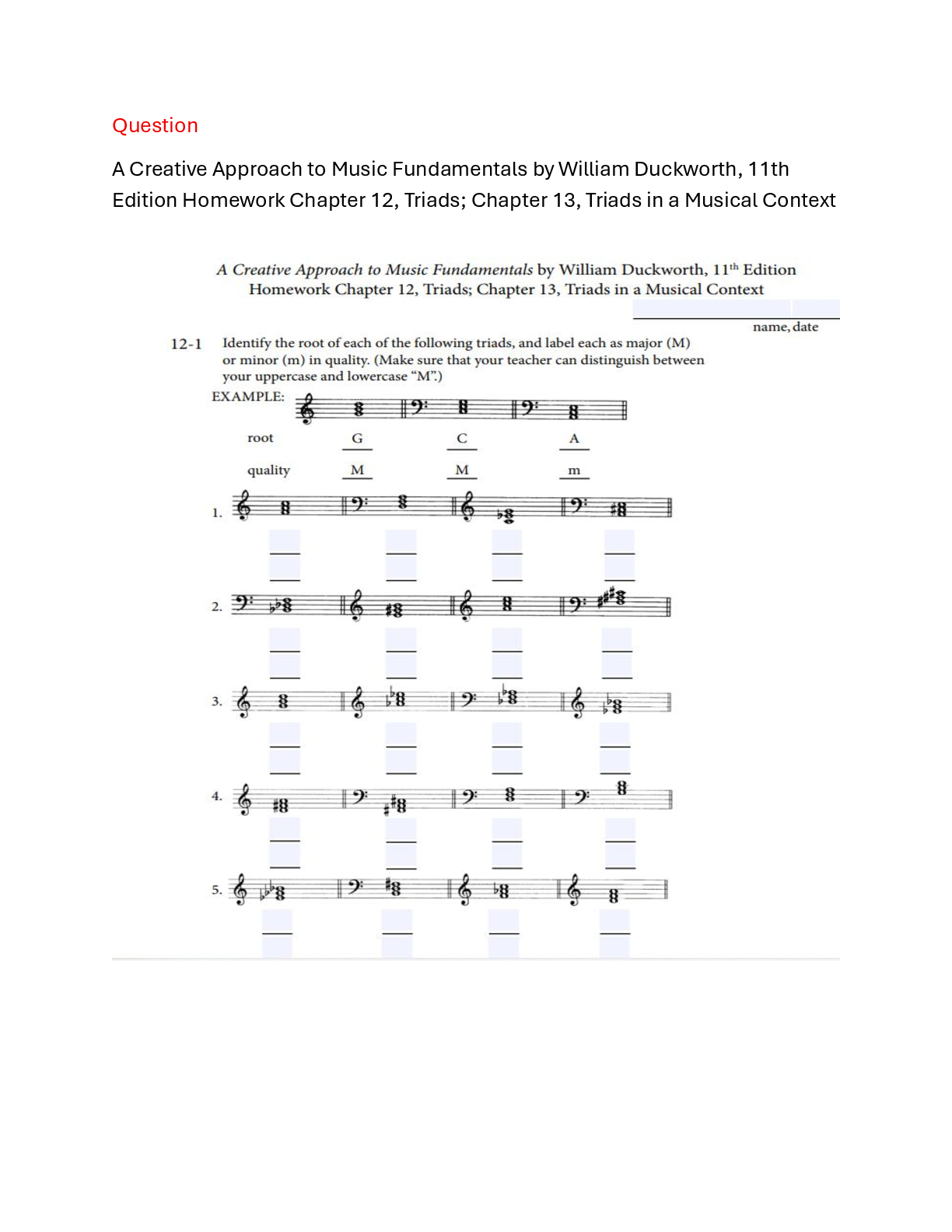
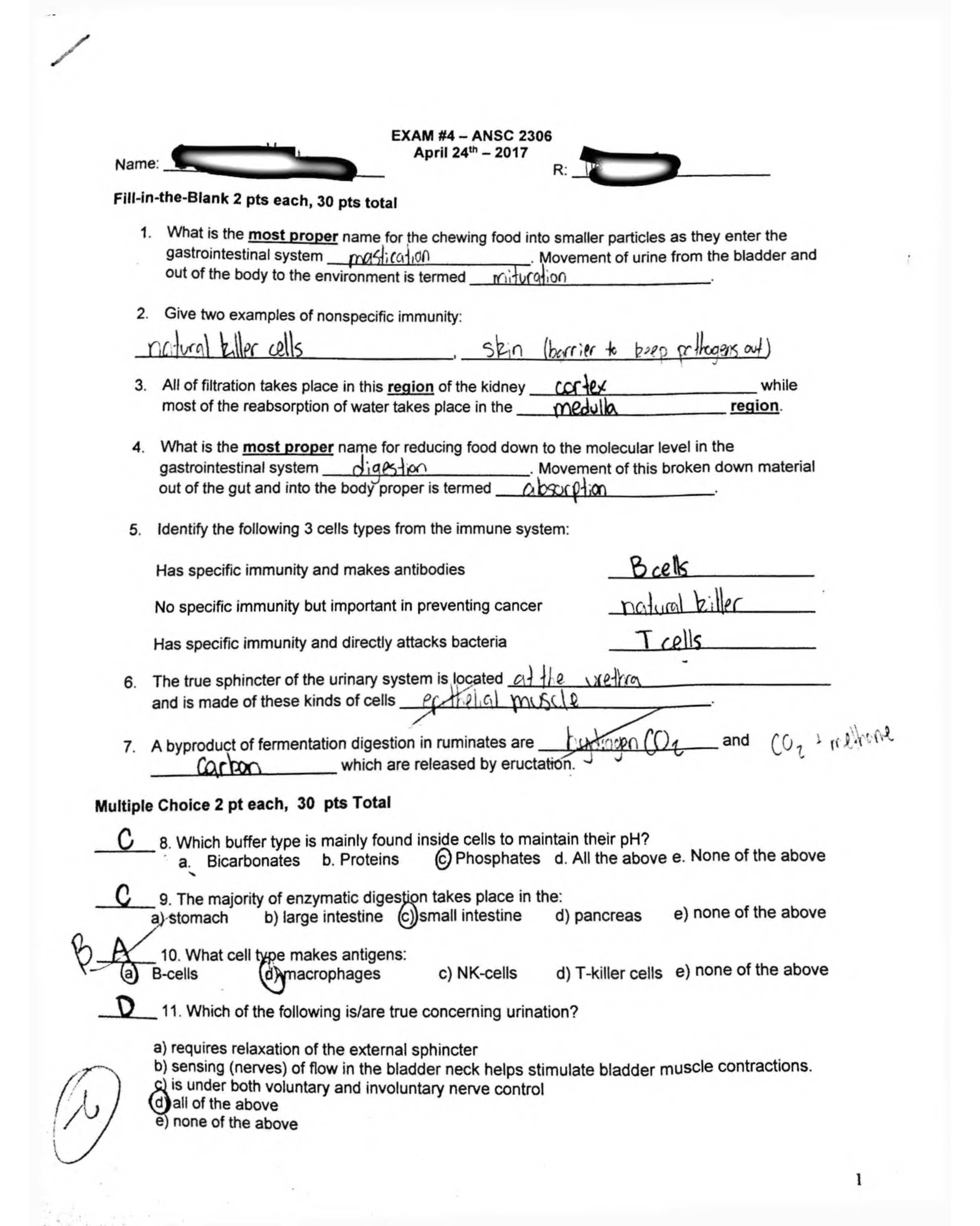
Question 1
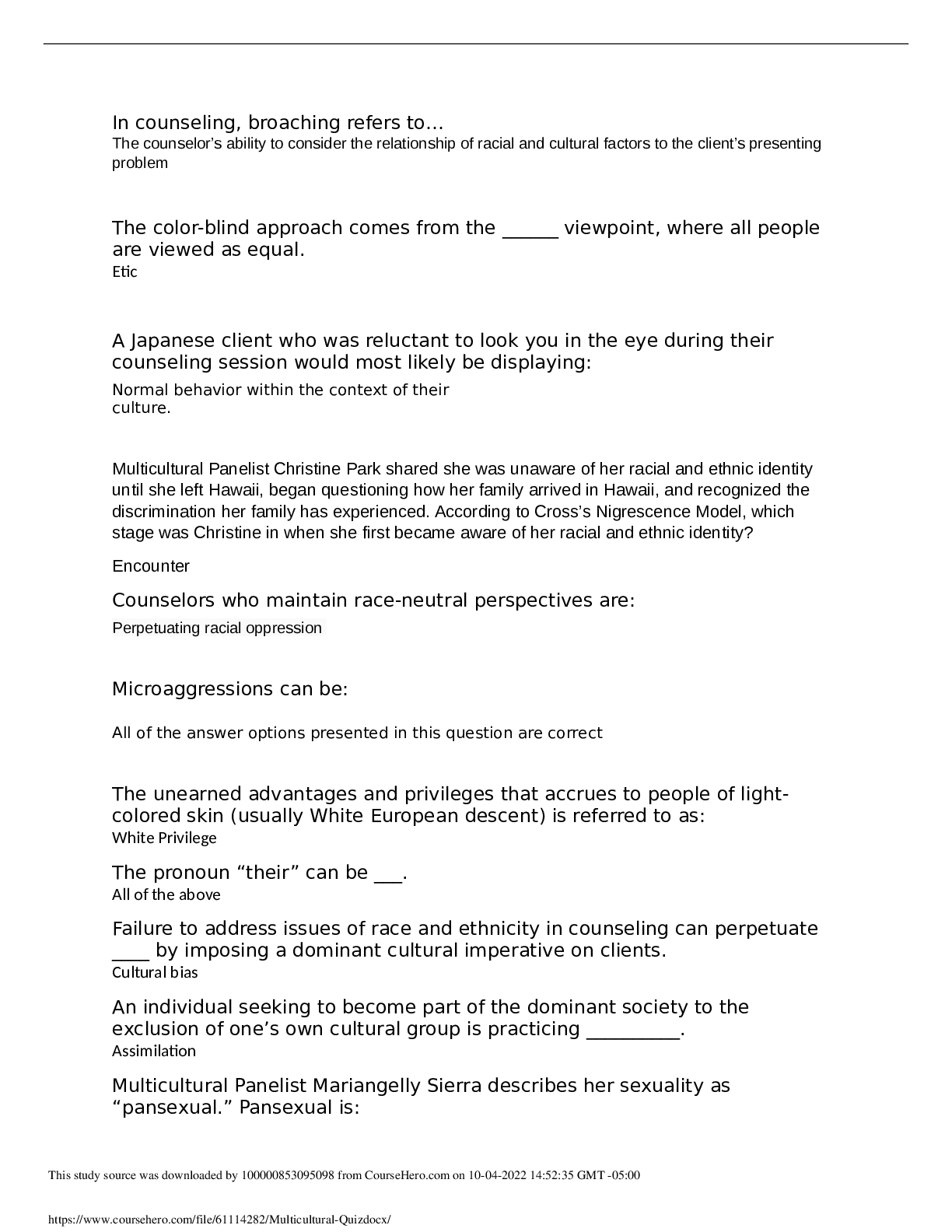
1. Microaggressions can be:
Communications that exclude, negate or nullify the psychological thoughts, feelings, or
experiential reality of a person of color
Explicit racial derogation characterized primar
...
Question 1
1. Microaggressions can be:
Communications that exclude, negate or nullify the psychological thoughts, feelings, or
experiential reality of a person of color
Explicit racial derogation characterized primarily by a verbal or nonverbal attack
All of the answer options presented in this question are correct
Brief and commonplace daily verbal, behavioral, and environmental indignities
0.5 points
Question 2
1. The pronoun “their” can be ___.
All of the answer options presented in this question are correct.
A singular gender-neutral pronoun.
Used in APA papers as a singular gender-neutral pronoun.
A pronoun for plural use.
0.5 points
Question 3
1. Poverty is influenced by:
Morally deficient disadvantaged people
Poverty does not exist
Systemic issues and classism
Laziness
0.5 points
Question 4
1. According to the Multicultural Panelist Avis Garcia, how many Indigenous North
American/American Indian/Native American tribes are in the United States?
334
85
534
Over 1,000
0.5 points
Question 5
1. The color-blind approach comes from the ______ viewpoint, where all people are viewed
as equal.
Autoplastic
Emic
Alloplastic
Etic
0.5 points
Question 6
1. Systemic oppression refers to:
A businesses refusal to promote a person of color.
The phenomena of individual, interpersonal, institutional and structural systems of
oppression.
A businesses refusal to promote a person of color.
The lack of high paying jobs for members of minority groups.
0.5 points
Question 7
1. Cultural power is:
The degree of privilege received in society based on cultural identity
The interconnected nature of social and political discrimination in the U.S.
How race, class, gender, and other individual characteristics intersect with one another
and overlap
An ideological set of ideas about the overlap of various forms of social stratification
0.5 points
Question 8
1. Counselors who are committed to social justice and equality that transcends the bounds
of their professional identity are demonstrating:
Multicultural counseling
Social justice counseling
All of the answer options presented in this question are correct
Infusing broaching style
0.5 points
Question 9
1. Multicultural Panelist Mariangelly Sierra describes her sexuality as “pansexual.”
Pansexual is:
The new word for heterosexual
Having an attraction to animals
Same as being gay
Sexual, romantic or emotional attraction towards people regardless of their sex or
gender identity
0.5 points
Question 10
1. In counseling, broaching refers to…
Recognizing that all humans experience difficulties
The counselor’s ability to consider the relationship of racial and cultural factors to the
client’s presenting problem
Working with clients from a race-neutral perspective
An ornament fastened to clothing
0.5 points
Question 11
1. Ethnocentrism:
Means race.
Uses one’s own culture as a yardstick to measure all others.
All of the answer options presented in this question are correct.
Is a genetic term.
0.5 points
Question 12
1. Ethnocentricity is:
The belief that one’s culture is superior to other cultures.
The commonalities that exists among all cultures.
The equality of all cultures.
The belief that no culture is superior to other cultures.
0.5 points
Question 13
1. The termination rate for white clients is around ___ and the termination rate for clients of
color is _____.
30%; 50%
50%; 30%
15%; 30%
10%; 60%
0.5 points
Question 14
1. Racism is:
Overcome by maintaining race-neutral perspectives
Dying in our society
Always covert and easy to see
Often disguised, covert, ambiguous, and nebulous
0.5 points
Question 15
1. An umbrella term that encompasses a number of understandings of gender and sexuality
among many Indigenous North Americans/American Indians is _____.
Two-spirit
Blended-spirit
LGBTQA+
Geenumu Gessalagee
0.5 points
Question 16
1. Failure to address issues of race and ethnicity in counseling can perpetuate ____ by
imposing a dominant cultural imperative on clients.
Racism
Stereotyping
Cultural bias
Discrimination
0.5 points
Question 17
1. A Japanese client who was reluctant to look you in the eye during their counseling
session would most likely be displaying:
Ambivalent transference.
Positive transference.
Normal behavior within the context of their culture.
Severe negative transference.
0.5 points
Question 18
1. Counselors who maintain race-neutral perspectives are:
Perpetuating racial oppression
Practicing cultural competence
Observant and aware
Demonstrating a positive understanding of race
0.5 points
Question 19
1. Implicit bias, also known as aversive racism,
Does not exist.
Is a form of subtle and unintentional racism.
Is an illusion based more on ideology than reality.
Is unimportant.
0.5 points
Question 20
1. ____ previously had biological connotations but is now recognized as a social
construction that refers to systems of dominance.
Social Science
Culture
Race
[Show More]