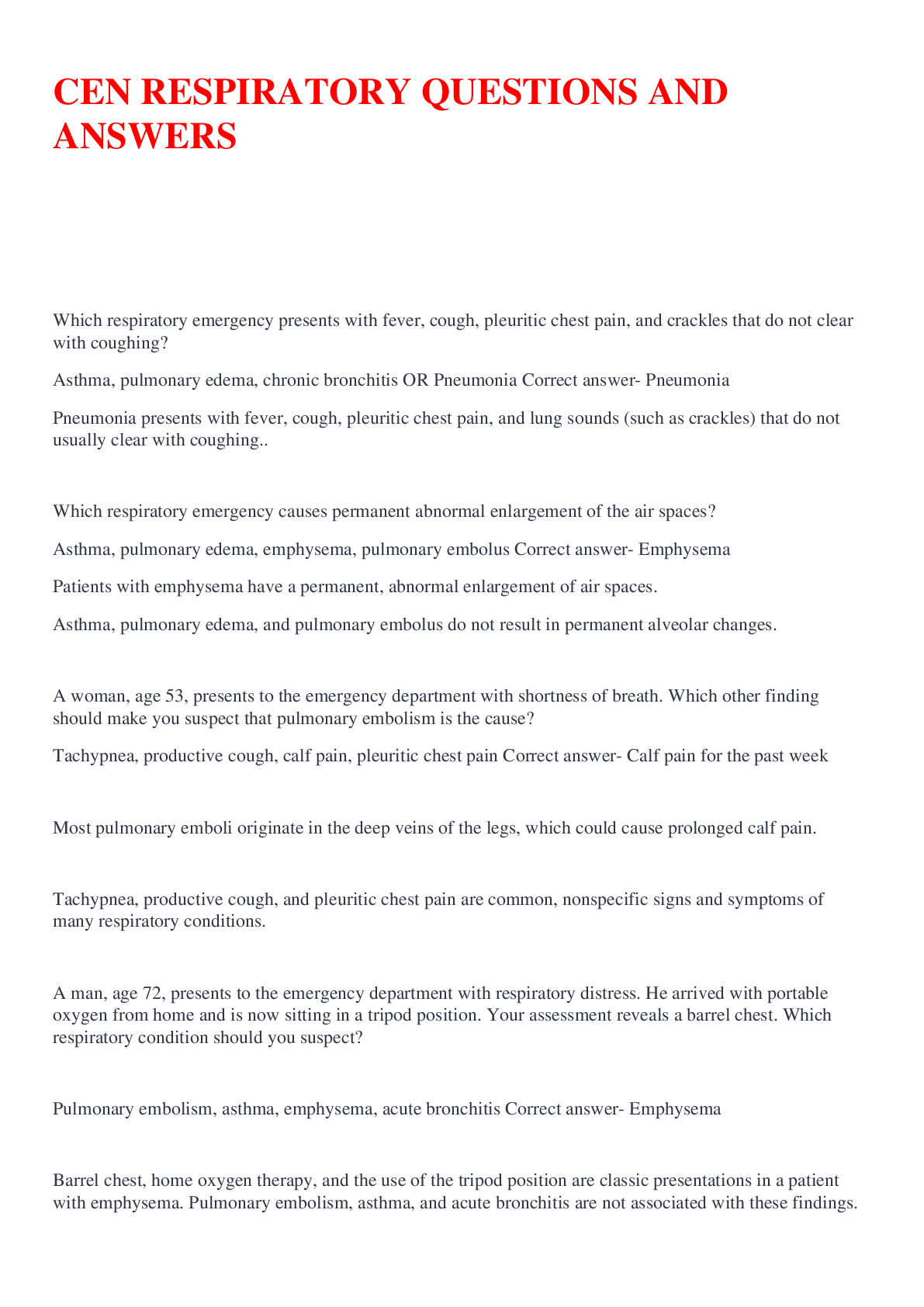
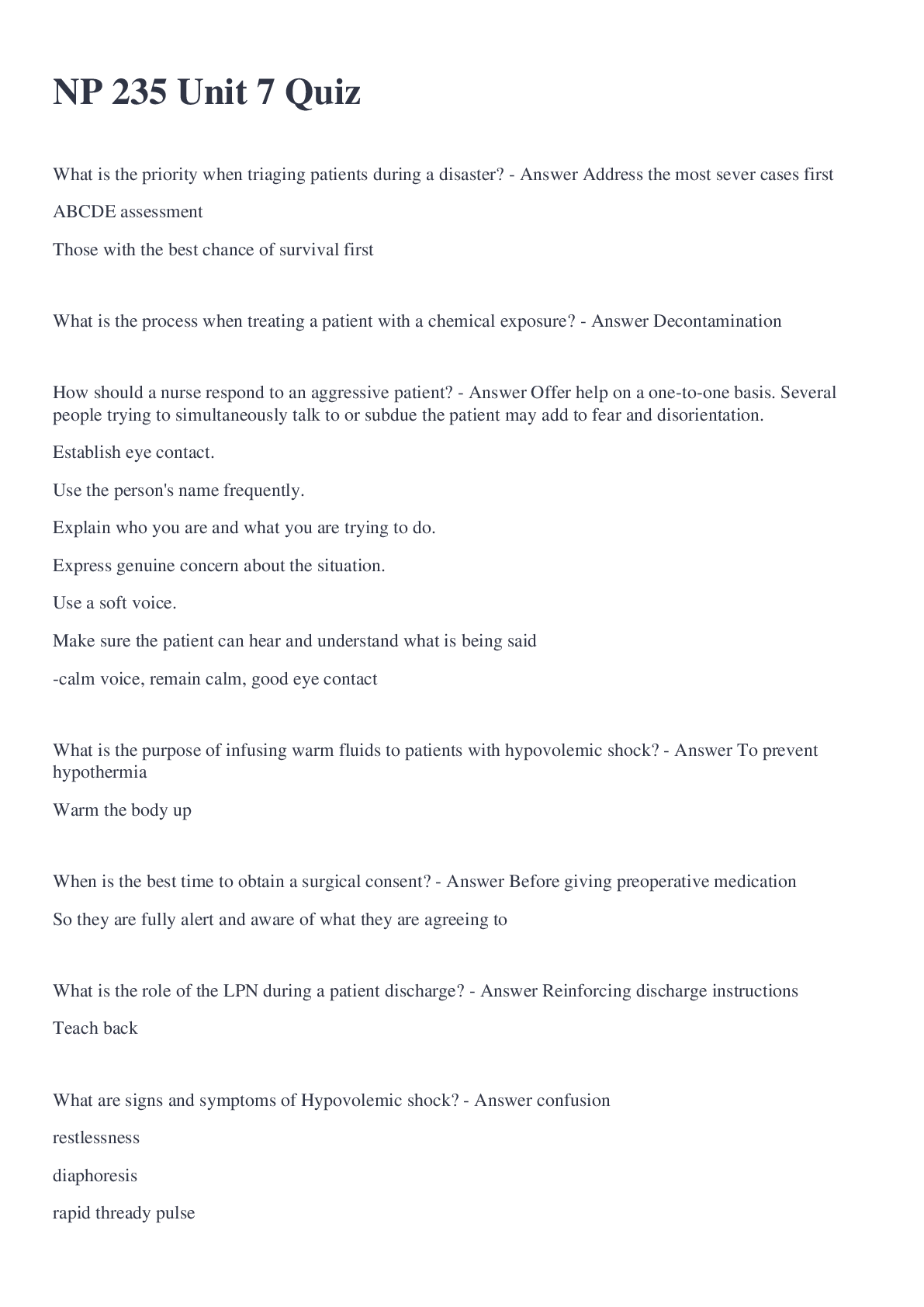
1. What is the priority when triaging patients during a disaster?
care for the victims first that have the best chance of survival
What is the process when treating a patient with a chemical exposure?
Those expo
...
1. What is the priority when triaging patients during a disaster?
care for the victims first that have the best chance of survival
What is the process when treating a patient with a chemical exposure?
Those exposed to toxic chemicals should be decontaminated in the field before transport to a medical facility.
Decontamination is usually done with running water and scrubbing. Most emergency departments have an isolated decontamination area in which the water from the shower area goes into a special holding tank.
If multiple victims need decontamination, a portable tent may be placed outside of the facility
remove clothing, hose them down and scrub them
00:43
00:46
How should a nurse respond to an aggressive patient?
Offer help on a one-to-one basis. Several people trying to simultaneously talk to or subdue the patient may add to fear and disorientation.
Establish eye contact.
Use the person's name frequently.
Explain who you are and what you are trying to do.
Express genuine concern about the situation.
Use a soft voice.
Make sure the patient can hear and understand what is being said.
Observe for signs of drug or alcohol use.
calm voice, remain calm, good eye contact
What is the purpose of infusing warm fluids to patients with hypovolemic shock?
If large volumes of fluid are required for fluid resuscitation, warming of the fluids can help prevent hypothermia
When is the best time to obtain a surgical consent?
The nurse must always check that a consent form has been signed before giving the preoperative medication.
What is the role of the LPN during a patient discharge?
reinforce dischage instructions
What are signs and symptoms of Hypovolemic shock?
confusion,
restlessness,
diaphoresis,
rapid thready pulse,
increased respiratory rate,
cold, clammy skin,
decreased blood pressure,
What are the stages of hypovolemic shock?
20%
At rest, no signs or symptoms; slight postural hypotension when standing; tachycardia with exercise
30%
Blood pressure and pulse normal when supine; postural hypotension and tachycardia with exercise
40%
Below-normal blood pressure, central venous pressure, and cardiac output at rest; rapid, thready pulse and cold, clammy skin
50%
Shock and potential death
[Show More]









.png)