ABG Interpretation - ANSWER •The level of the CO2 is controlled by breathing so any abnormal values in carbon dioxide levels are considered to be a respiratory problem
•The level of HCO3 in the blood is controlled by
...
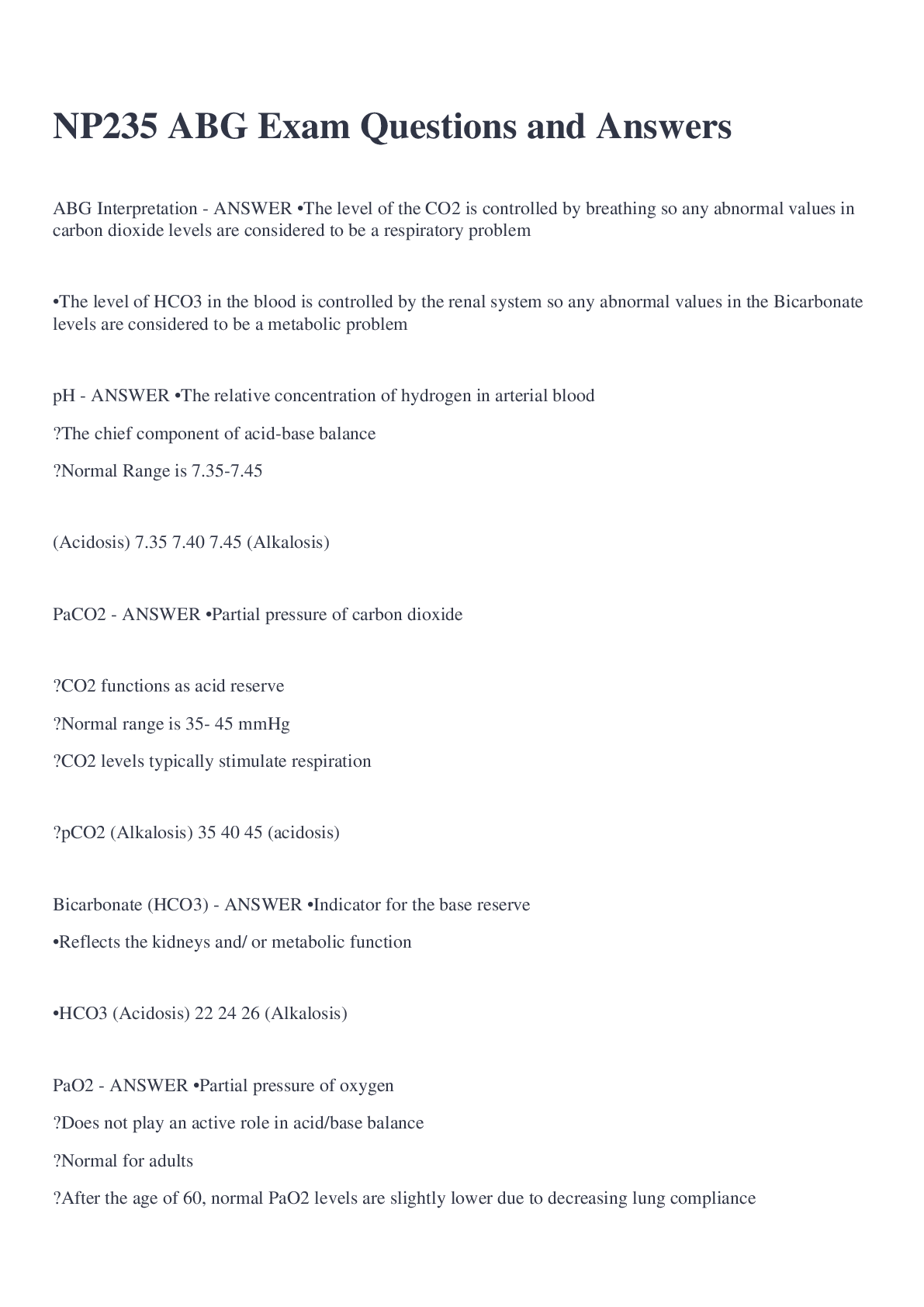
ABG Interpretation - ANSWER •The level of the CO2 is controlled by breathing so any abnormal values in carbon dioxide levels are considered to be a respiratory problem
•The level of HCO3 in the blood is controlled by the renal system so any abnormal values in the Bicarbonate levels are considered to be a metabolic problem
pH - ANSWER •The relative concentration of hydrogen in arterial blood
❖The chief component of acid-base balance
❖Normal Range is 7.35-7.45
(Acidosis) 7.35 7.40 7.45 (Alkalosis)
PaCO2 - ANSWER •Partial pressure of carbon dioxide
⮚CO2 functions as acid reserve
⮚Normal range is 35- 45 mmHg
⮚CO2 levels typically stimulate respiration
⮚pCO2 (Alkalosis) 35 40 45 (acidosis)
Bicarbonate (HCO3) - ANSWER •Indicator for the base reserve
•Reflects the kidneys and/ or metabolic function
•HCO3 (Acidosis) 22 24 26 (Alkalosis)
PaO2 - ANSWER •Partial pressure of oxygen
▪Does not play an active role in acid/base balance
▪Normal for adults < 60 years is 80-100mmHg
▪After the age of 60, normal PaO2 levels are slightly lower due to decreasing lung compliance
Normal 80-100mmHg
Mild 60-80mmHg
Moderate 40-60mmHg
Severe <40mmHg
Oxygen Saturation (SaO2) - ANSWER •Percent of hemoglobin which is bound to oxygen
•Normal is 94-100%
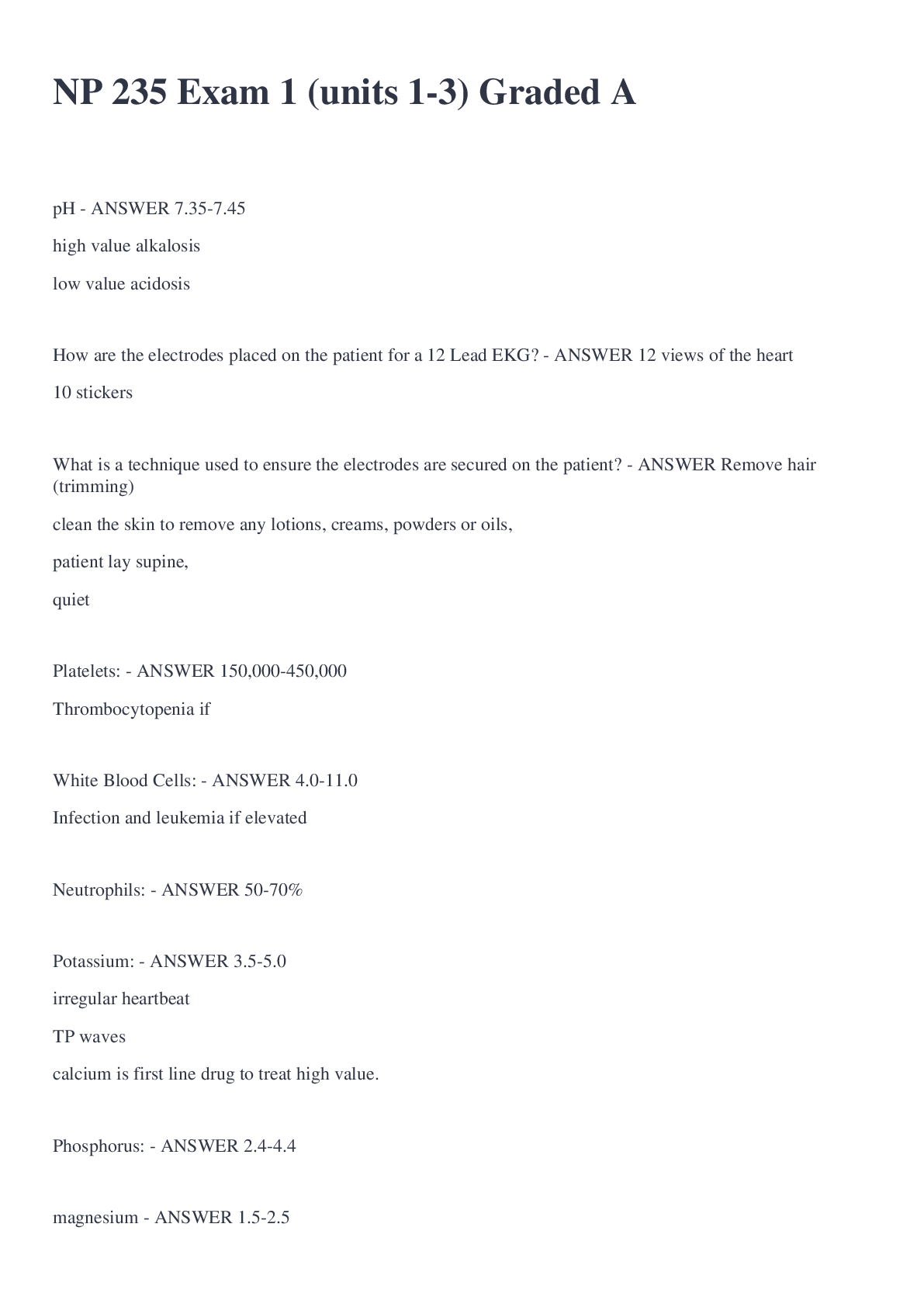
Normal Values - ANSWER Low End. High End
•pH (< acidic) 7.35. 7.45 (>alkalotic)
•pCO2 (
acidic)
•pO2 80mmHg 100 mmHg
•HCO3 (< acidic) 22 26 (>alkalotic)
Is is Metabolic or Respiratory? - ANSWER •For Metabolic disorders remember the Ph changes in the same direction as the HC03
•For Respiratory disorders remember the Ph changes in the opposite direction as the Co2.
Metabolic Acidosis: Serum pH/Serum HC03 decreased ; the PaCo2 decreases to compensate.
Metabolic Alkalosis: Serum pH/Serum HC03 increased ; the PaCo2 increases to compensate.
Respiratory Acidosis: Serum pH decreased / PaCo2 increased ; the HC03 increases to compensate
Respiratory Alkalosis: Serum pH increased / PaCo2 decreased ; HC03 decreases to compensate.
Hypoxemia: - ANSWER •Low oxygen content in arterial blood (seen on the ABGs)
Hypoxia: - ANSWER •Inadequate oxygen at the tissue or cellular level (clinical judgement)
•Clinical signs/symptoms:
-Tachycardia
-Cyanosis
-Hyperventilation
-Restlessness, uncoordinated activities
-hypertension
Hypercarbia> Increase Co2 - ANSWER Clinical signs/symptoms:
▪Lethargy, confusion, progressing coma
▪Depression of reflexes, tremors
▪Reversal of sleep pattern, headaches
▪Full bounding pulses with a warm periphery
Respiratory Acidosis - ANSWER Causes
•COPD
•Over sedation
•Neuromuscular disorder
•Hypoventilation with mechanical ventilation
Interventions
•Assess the pt. for changes in mental status, lethargy, restlessness or confusion
•Auscultate breath sounds to determine consolidation or bronchospasm
•Monitor respirations and serial ABG's
•Cough and deep breath
•Frequent repositioning
•Suctioning if necessary
•Mechanical ventilation/aerosol therapy
Respiratory Alkalosis - ANSWER Causes
•Hypoxia
•Anxiety
•Pulmonary Emboli
•Pregnancy
•Hyperventilation with mechanical ventilation
•Brain injury
•CHF
•Asthma
•Severe anemia
Interventions
•Monitor respirations and ABG's
•Administer pain medication, as indicated to prevent hyperventilation
•Teach the patient to recognize the onset of hyperventilation
Metabolic Acidosis - ANSWER Causes
•Ketoacidosis- diabetic or alcoholic
•Poisonings
•Lactic acidosis
•Renal failure
•Diarrhea
•Vomiting
Interventions
•Monitor intake and Output
•Monitor UA specific gravity
•Assess frequent dysrhythmias
•Protect pt. from trauma or injury (seizure precautions)
•Monitor ABG's
•Monitor electrolytes
Metabolic Alkalosis - ANSWER Causes
•Excessive fluid loss from upper GI tract-vomiting
•Rapid correction of chronic hypercapnia
•Diuretic therapy
•Cushing's therapy
•Corticosteroid therapy
•Hyperaldosteronism
•Severe potassium depletion
•Overuse of Nasogastric suctioning
Interventions
•Monitor vital signs and ABG's
•Fluid and electrolyte replacement
•Assess signs of hypokalemia, such as muscle weakness, dysrhythmias, and dizziness
Take precautions to protect patient against falls
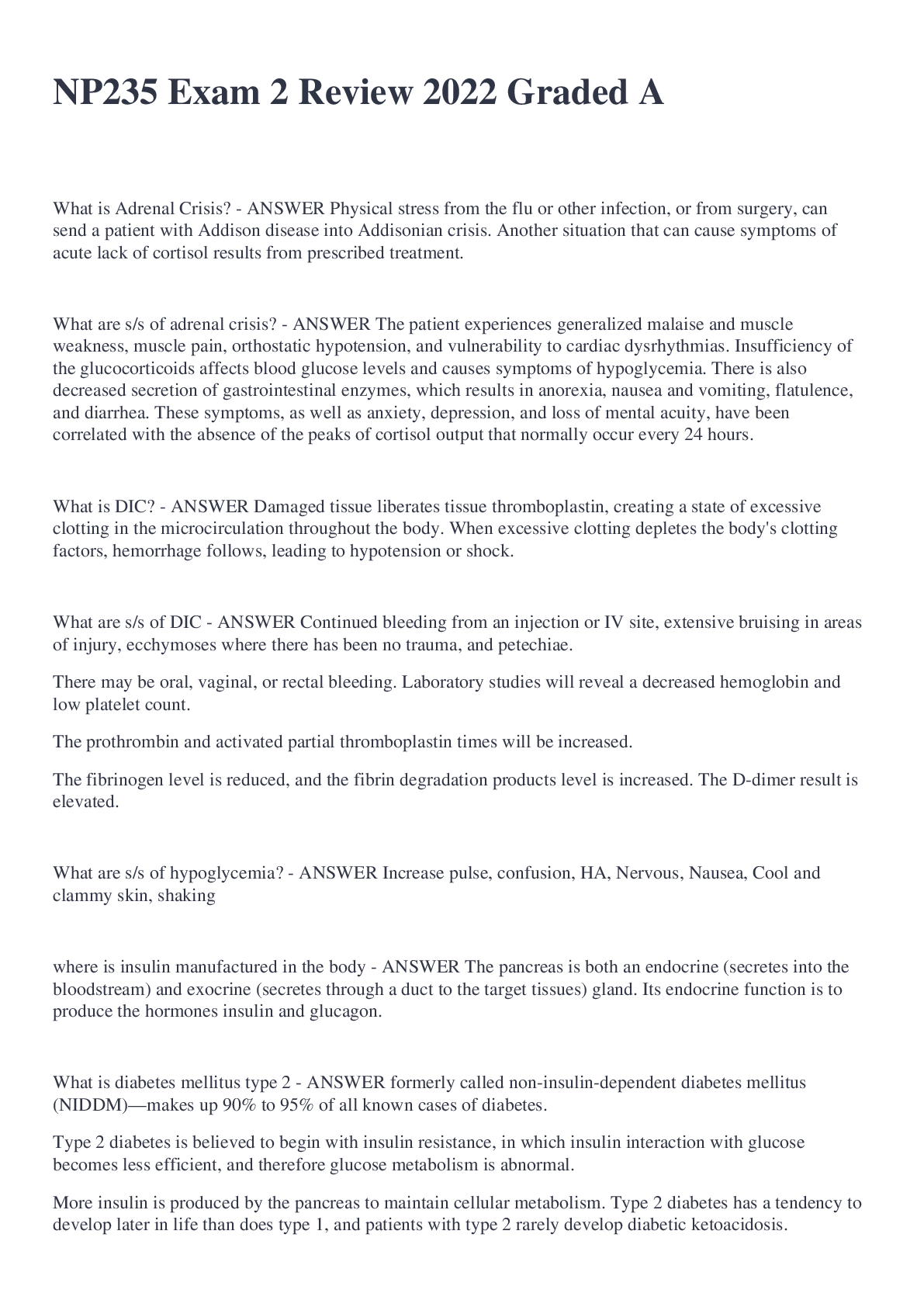
Lymph System - ANSWER clearish liquid that bathes the cells with water and nutrients.
Lymph is blood plasma -- the liquid that makes up blood minus the red and white cells
●Lymph system drains and filters fluids to detect and remove the bacteria
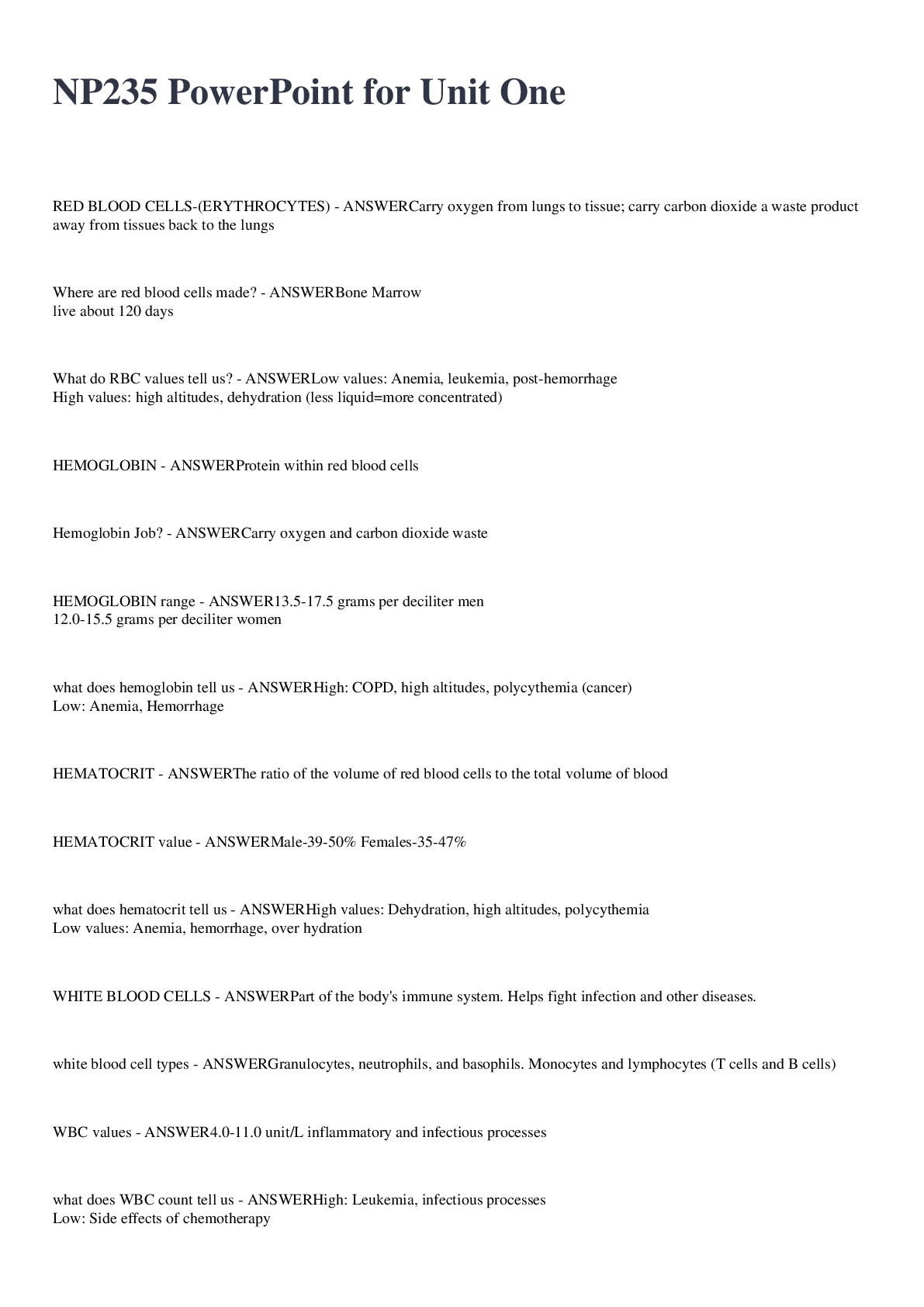
Bone Marrow - ANSWER Produces new blood cells, both red and white.
●White blood cells (most important)
○whole collection of different cells that work together to destroy bacteria and viruses
Body → harmful substance → triggers the immune system to produce antibodies (immunoglobulins
What is an antitoxin? - ANSWER Antibody are proteins created by WBC that float through the bloodstream looking for germs.
●they attack germs
immune globulins (Ig): - ANSWER The antibody's ability to form a bond with its antigen is important to the destruction of the antigen, but it can sometimes result in damage to the body's own cells.
Complement System - ANSWER Series of proteins and each are sensitive to a specific antigen
Manufactured in the liver
Hormones - ANSWER Generally known as lymphokines
●Certain hormones suppress the immune system
○Steroids and corticosteroids
●Tymosin (produced by the thymus) encourages lymphocyte production
what's the purpose or mechanism of a fever? - ANSWER ●Kill bacteria
Age Related changes - ANSWER ●Neonates are susceptible to infection because they have an immature immune system.
●The thymus gland is largest during childhood and adolescence. After adolescence, it begins to shrink in size, and its production of T lymphocytes decreases.
●Aging causes skin to become thin, less elastic, and more prone to injury. The skin is the first barrier encountered by pathogens.
●Decreased ciliary action in the respiratory system and gastrointestinal tract results in decreased removal of potentially harmful organisms.
●The presence of chronic diseases can decrease the immune response.
All cancers begin in the cell. - ANSWER Cells produce signals -->faulty or missing signals → cells start to grow and multiply → producing tumors
Primary tumor is where the cancer starts.
Leukemia - ANSWER starts from blood cells
●They don't form solid tumors - it builds up cancer cells in the blood and sometimes in the bone marrow
Physiology of Cancer - ANSWER An abnormal replication of cells results in a neoplasm (new growth of tissue, or tumor), which is not beneficial.
Malignant Growth - ANSWER 1.A sarcoma arises from mesenchymal tissues (bone, muscles, and other connective tissues).
2.A carcinoma originates in epithelial tissues (skin and mucous membranes). These kinds of cancers make up most cancers of the stomach, uterus, lungs, skin, and tongue.
3.Leukemia and lymphoma are cancers of the blood-forming system.
4.Malignancy of the pigment cells of the skin is called melanoma.
Warning Signs of Cancer - ANSWER ●Unusual bleeding or discharge
●A sore that does not heal
●A change in bowel or bladder habits
●A lump in the breast or other part of the body
●A nagging, persistent cough
●An obvious change in a mole
●Difficulty in swallowing
Nursing Care for cancer - ANSWER Monitor the effectiveness of treatment
Second look surgery
Blood test such as CEA levels (an antigen that is a glycoprotein that is produced during fetal life but is not normally present after birth), PSA levels (prostate cancer), and CA-125 (ovarian cancer).
Common problems (Side effects)with cancer treatment - ANSWER Anorexia (loss of appetite) - alteration in taste
Mucositis - artificial saliva helps keep the mucous membranes soft and moist (buffer acidity in mouth and reduces irritation of the oral mucosa)
Weight loss - small, frequent feedings; supplements, increase protein; record weight
Nausea/Vomiting/Diarrhea - eat before treatment; administer antiemetic (serotonin antagonists), Oral care
Nursing: cancer treatment - ANSWER onitor patients for s/s of dehydration and electrolyte imbalance
Avoid high-fiber foods (WHY ?)
Applying petroleum jelly, A&D ointment, or Desitin cream to buttock/rectal area to decrease discomfort and skin breakdown
Additional problems - Constipation
The immune Response - ANSWER Immune deficiency - Lack of appropriate response
Autoimmune disease - Body produces an immune response to a self-cell or tissue
Primary Humoral Response: - ANSWER It immediately produces a protein (called an antibody) that is specifically designed to do battle with the antigen.
Secondary Cellular Response: - ANSWER Cellular response involves whole cells called sensitized lymphocytes and occurs out in the tissues.
Lymphocyte T cells - ANSWER provide defense against viral infections
identify the virus fragment as foreign and kill the host cell
Immune deficiency disorders - ANSWER (an insufficient production of antibodies, immune cells or both)
Leaves the body unable to resist foreign microbes or toxins
Viral infections such as influenza or infectious mononucleosis
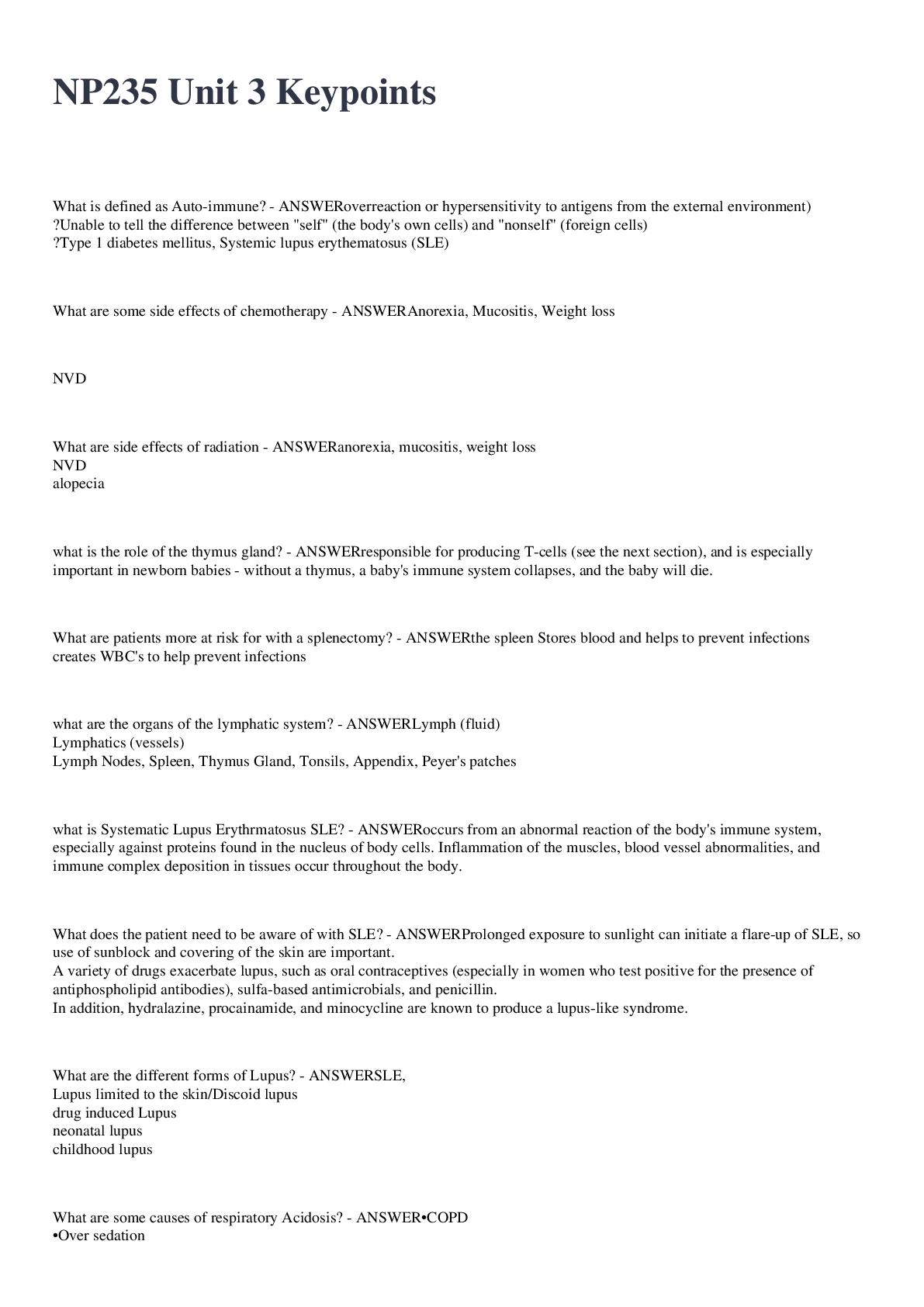
Autoimmune disorders - ANSWER overreaction or hypersensitivity to antigens from the external environment)
Unable to tell the difference between "self" (the body's own cells) and "nonself" (foreign cells)
Type 1 diabetes mellitus, Systemic lupus erythematosus (SLE)
Autoimmune Disorders three categories: - ANSWER Local, which affects only a single organ or tissue
Systemic, which affect many organs or tissues
Mixed localized and systemic, which can cause problems both in a localized area and systemically
Systemic Lupus Erythematosus - ANSWER AKA - Lupus
Autoimmune disorder - what does that mean?
The body begins to produce abnormal antibodies that attack the target tissues or cells instead of foreign agents such as bacteria, fungi, and viruses.
Is it curable or incurable?
Lupus: Signs and Symptoms - ANSWER Fatigue
Fever
Joint pain, stiffness, and swelling
Butterfly-shaped rash on the face that covers the cheeks and bridge of the nose or rashes elsewhere on the body
Skin lesions that appear or worsen with sun exposure (photosensitivity)
Fingers and toes that turn white or blue when exposed to cold or during stressful periods (Raynaud's phenomenon)
Shortness of breath
Chest pain
Dry eyes
Headaches, confusion and memory loss
Lymphoma - ANSWER Lymphoma is a cancer of the lymphatic system, which is part of the body's germ-fighting network. The lymphatic system includes the lymph nodes (lymph glands), spleen, thymus gland, and bone marrow.
Hodgkin's lymphoma (formerly called Hodgkin's disease)
Non-Hodgkin's lymphoma
Lymphoma s/s - ANSWER Painless swelling of lymph nodes in the neck, armpits or groin
Persistent fatigue
Fever
Night sweats
Shortness of breath








![Preview of eBook [PDF] Financial Markets and Institutions 10th Global Edition By Frederic S. Mishkin,](https://browseimages.nyc3.digitaloceanspaces.com/paper-images/2026/04/05/crkbkXzv2026-04-05-05-4569d2757ebc1c9.png)
![Preview of eBook [PDF] A concise guide to opioid addiction for counselors By Kevin G. Alderson and Sa](https://browseimages.nyc3.digitaloceanspaces.com/paper-images/2026/03/13/OkVGzZ1C2026-03-13-11-3369b47483699ed.png)
![Preview of eBook [PDF] Islamic Financial Markets and Institutions By Abul Hassan, Aktham Issa Almagha](https://browseimages.nyc3.digitaloceanspaces.com/paper-images/2026/04/07/lWTvdBpT2026-04-07-01-5169d4e1b4ef2ad.png)
![Preview of eBook [PDF] Invitation to Computer Science 8th Edition By G Michael Schneider, Judith L Ge](https://browseimages.nyc3.digitaloceanspaces.com/paper-images/2026/04/07/qrVGFIrO2026-04-07-01-5069d4e18270f6a.png)