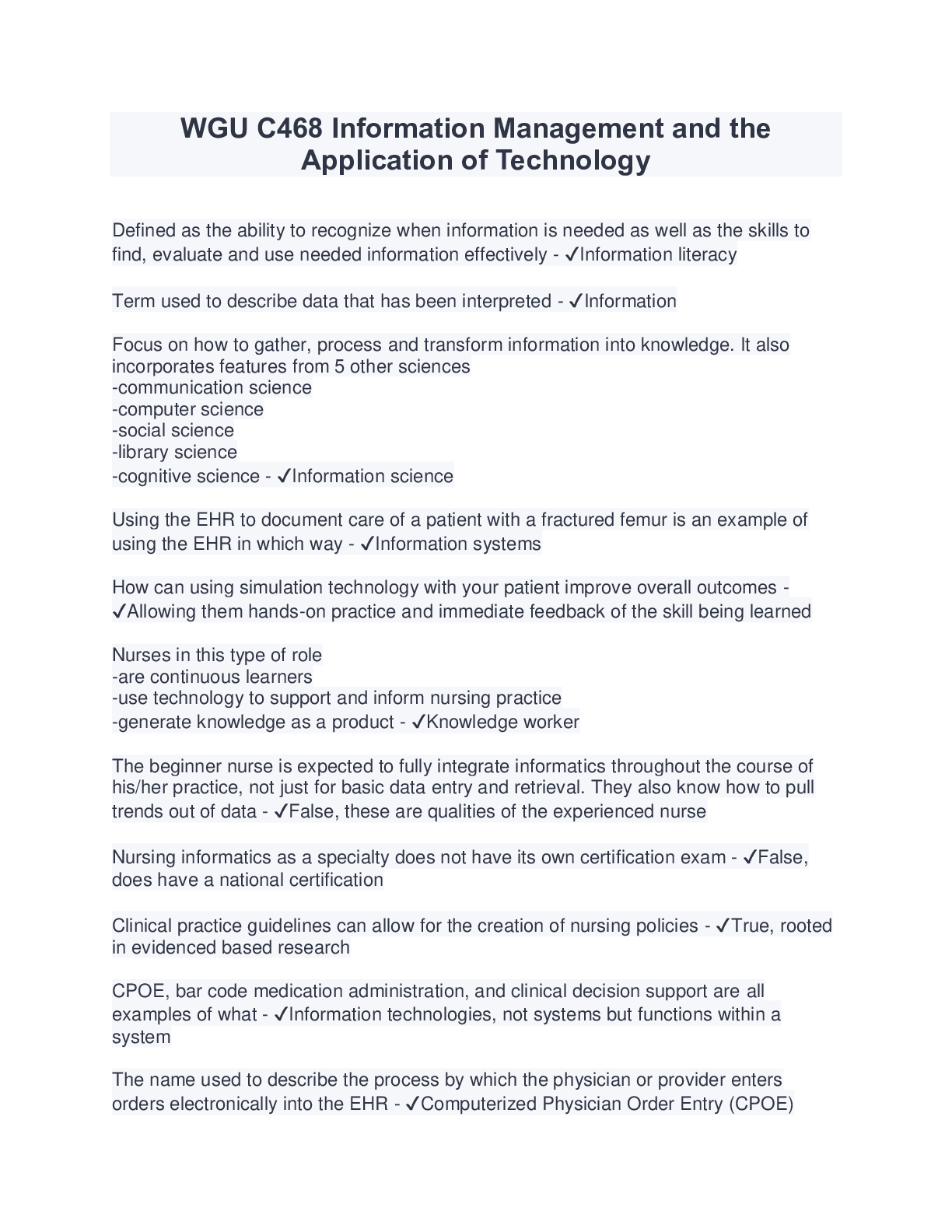
WGU C468 Information Management and the Application of Technology
Document Content and Description Below
1. Information literacy: Defined as the ability to recognize when information is needed as well as the skills to find, evaluate and use needed information effectively
2. Information: Term used to describe data that has
...
[Show More]
Last updated: 4 years ago
Preview 1 out of 7 pages
Instant download
Buy this Document to get the Full Access Instantly
Provided by Students Who Aced it
We Verify Document Content to Gurantee Accuracy
Reviews( 0 )
Document information
Connected school, study & course
About the document
Uploaded On
Oct 13, 2022
Number of pages
7
Written in
All

Additional information
This document has been written for:
Uploaded
Oct 13, 2022
Downloads
0
Views
79
Topic Tags
Recommended For You
Get more on EXAM »
$10.5
8 Pages
WGU Information Management and the Application of Technology -...

$10
26 Pages
WGU C468\WGU C468 Health Computing / Nursing Informatics 2022...
$14
20 Pages
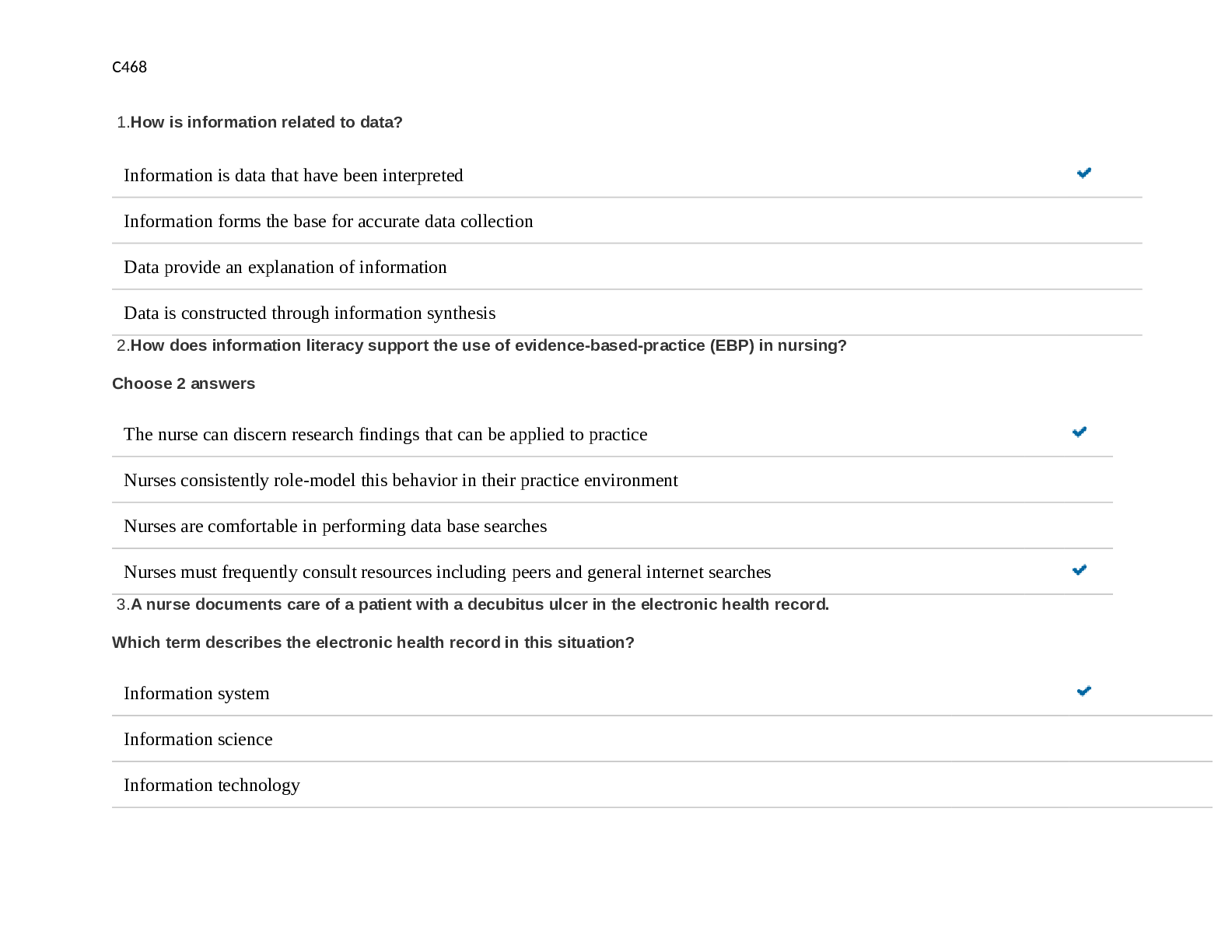
WGU C468 Information Management and Application of Technology...

$29.5
55 Pages
WGU C468 Information Management and Application of Technology

$10
6 Pages
C468 WGU Information Management Questions And Answers;Best sco...
$13
17 Pages
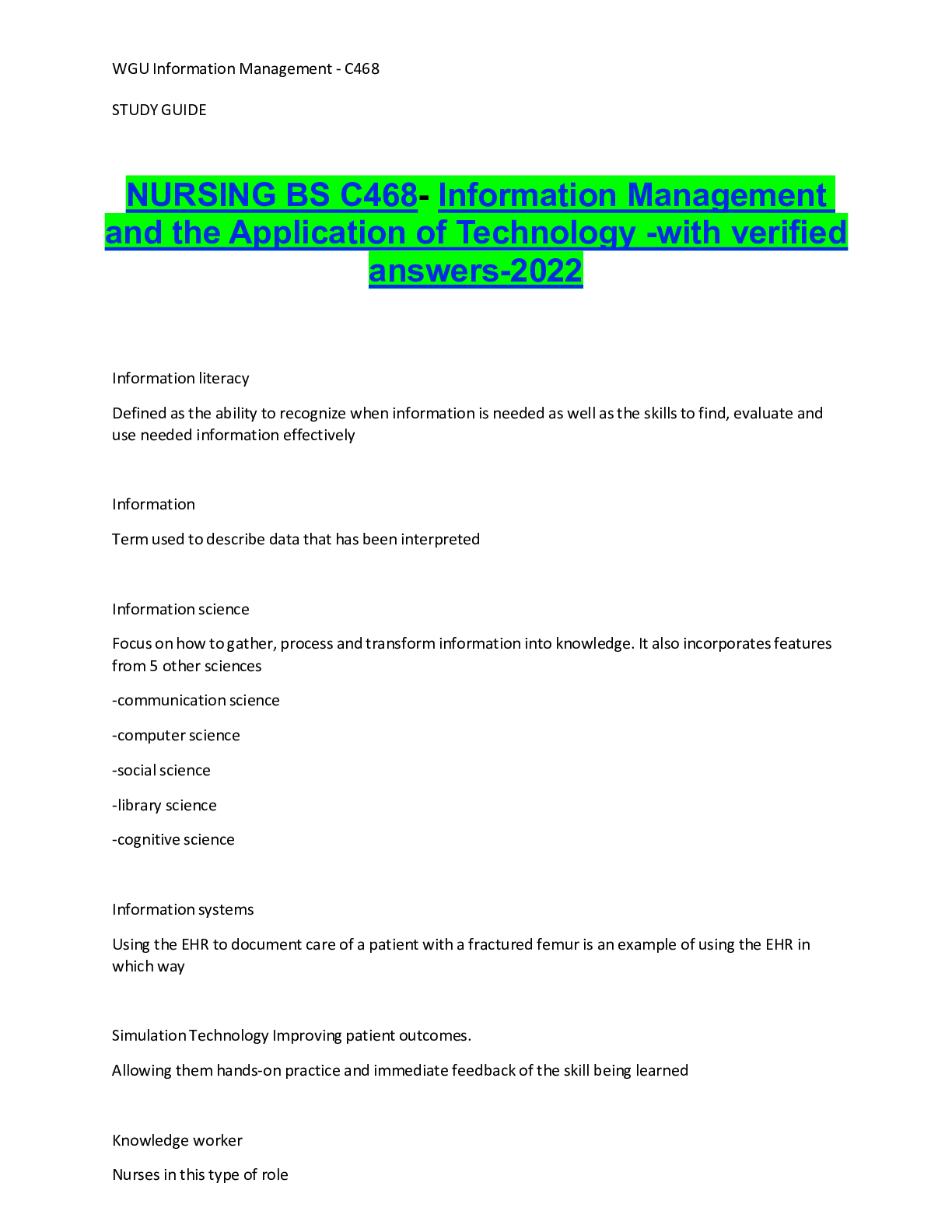
NURSING BS C468- Information Management and the Application of...
$9.5
6 Pages
WGU Information Management and the Application of Technology -...
$14
43 Pages
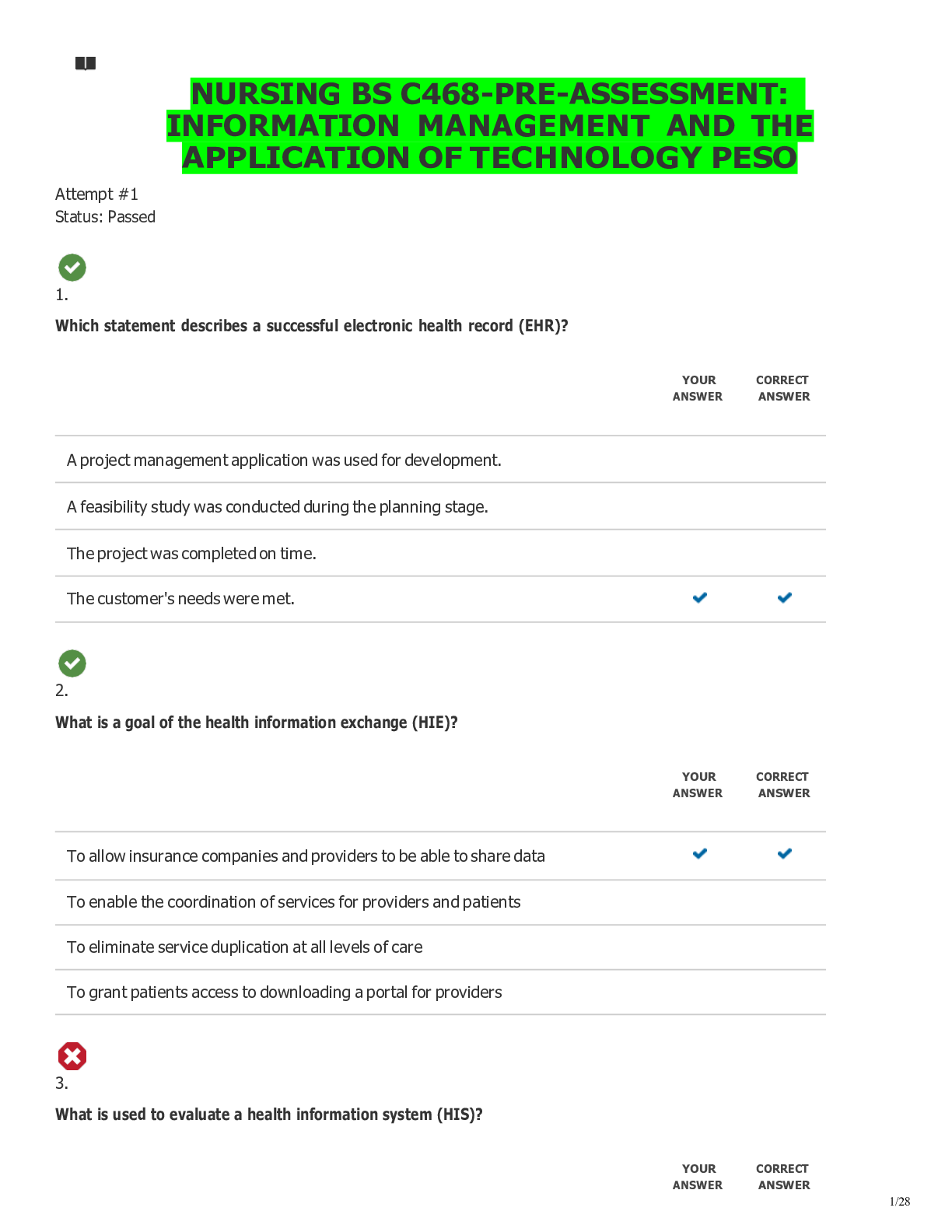
NURSING BS C468-PRE-ASSESSMENT: INFORMATION MANAGEMENT AND THE...
$12
9 Pages
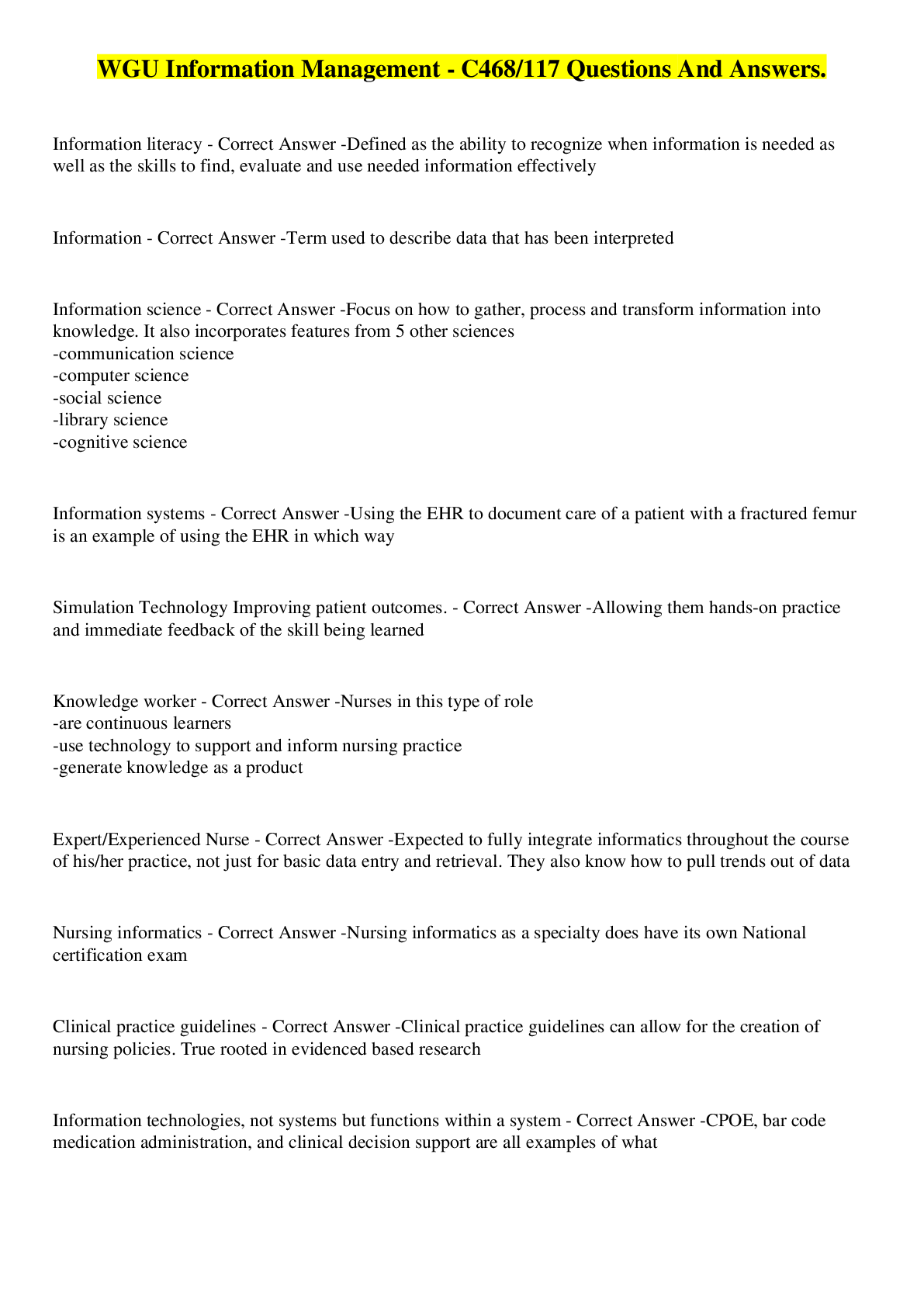
WGU Information Management - C468 Questions and Answers 2022

$8
15 Pages
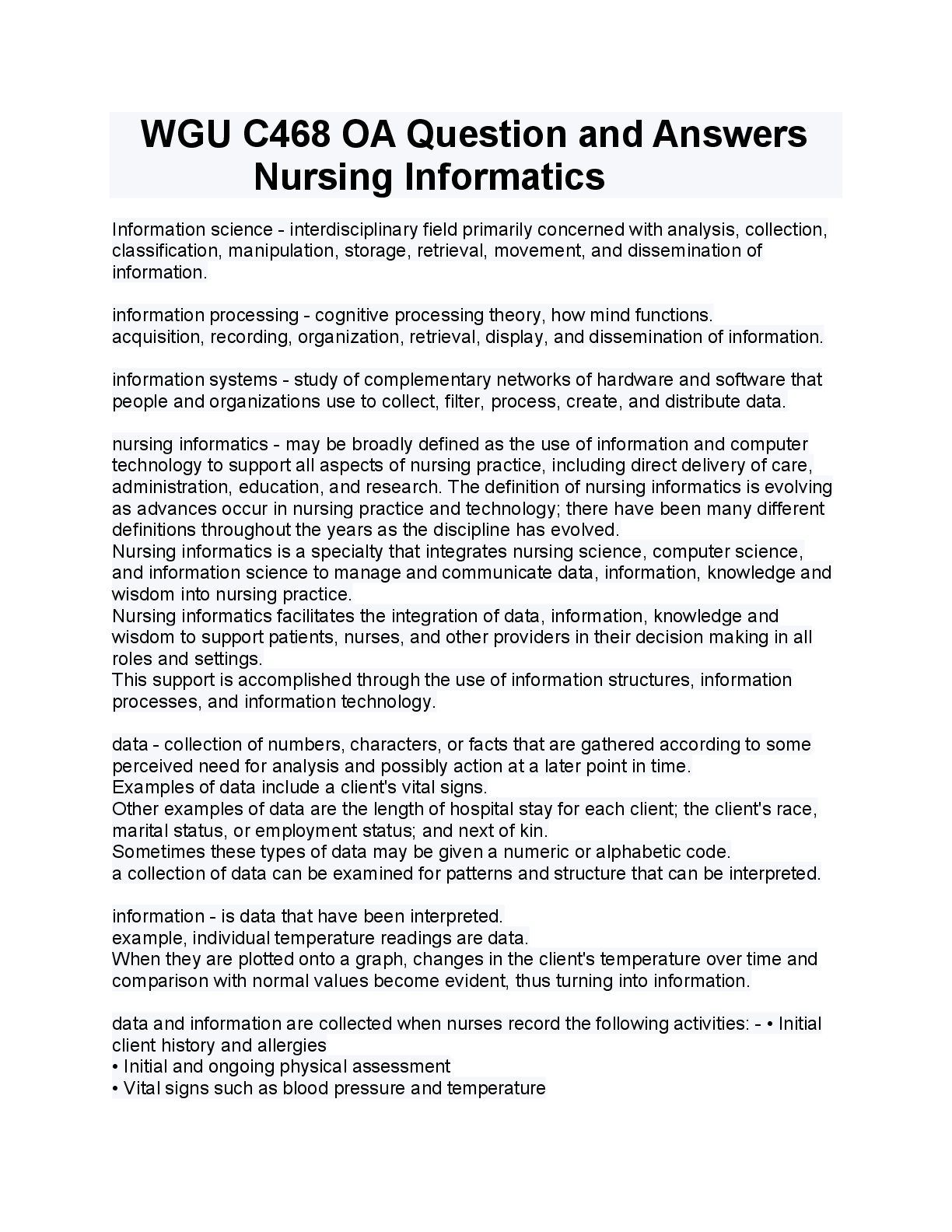
WGU C468 Nursing Informatics Questions with Answers Graded A

![Preview of Western Governors University[C468 Informatics Study Guide]](https://scholarfriends.com/storage/C468_Study_Guide_2020.png)
$8
7 Pages
Western Governors University[C468 Informatics Study Guide]

$10.5
14 Pages
WGU C468 INFORMATION MANAGEMENT AND THE APPLICATION OF TECHNOL...

$10
28 Pages
C468 IT study guide. Information Management and the Applicatio...
More related documents below



.png)
.png)