Competency 1 Vocabulary – Information
Technology
Competency 1 Study Questions
Nursing Informatics-integrates nursing science, computer
science, and information science to manage and
communicate data, information, kn
...
Competency 1 Vocabulary – Information
Technology
Competency 1 Study Questions
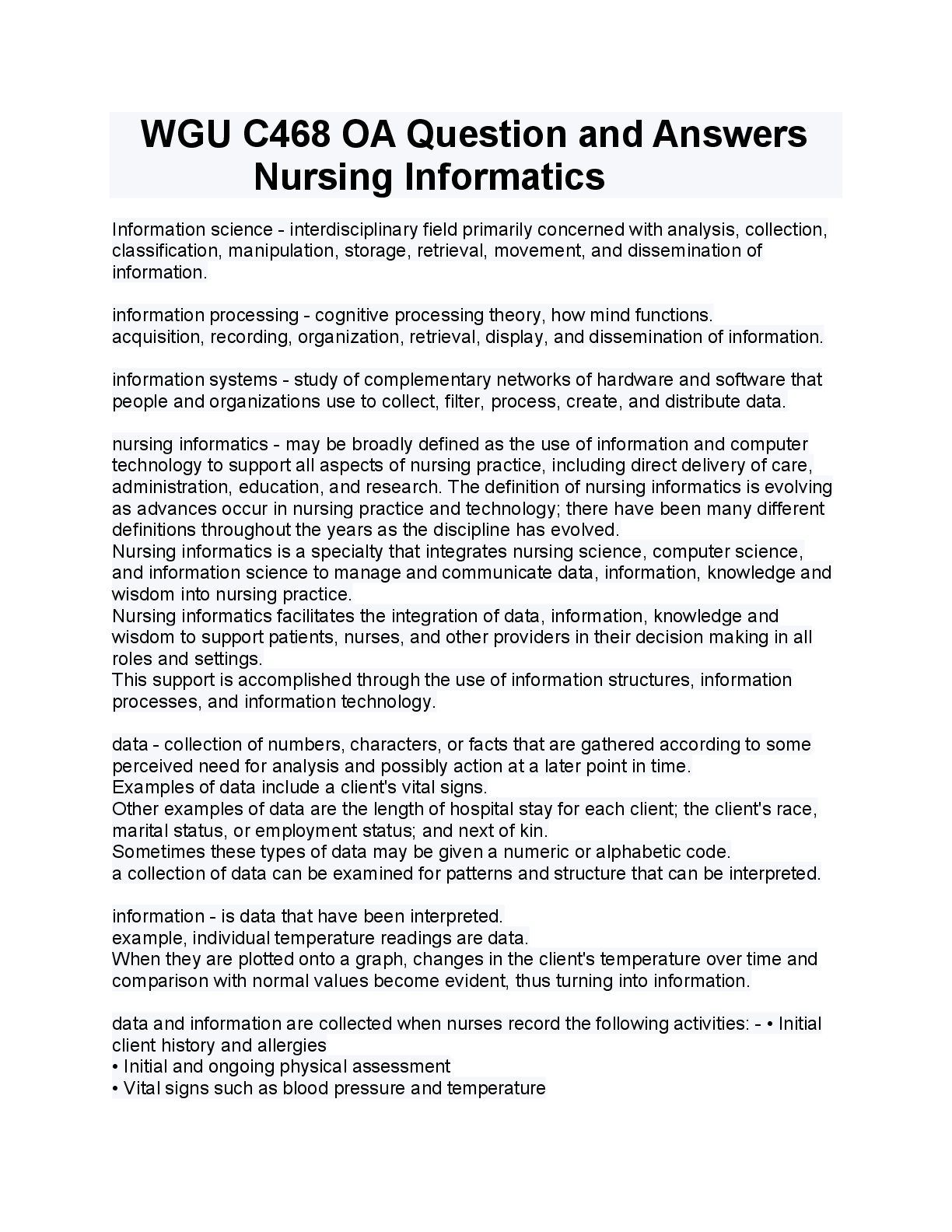
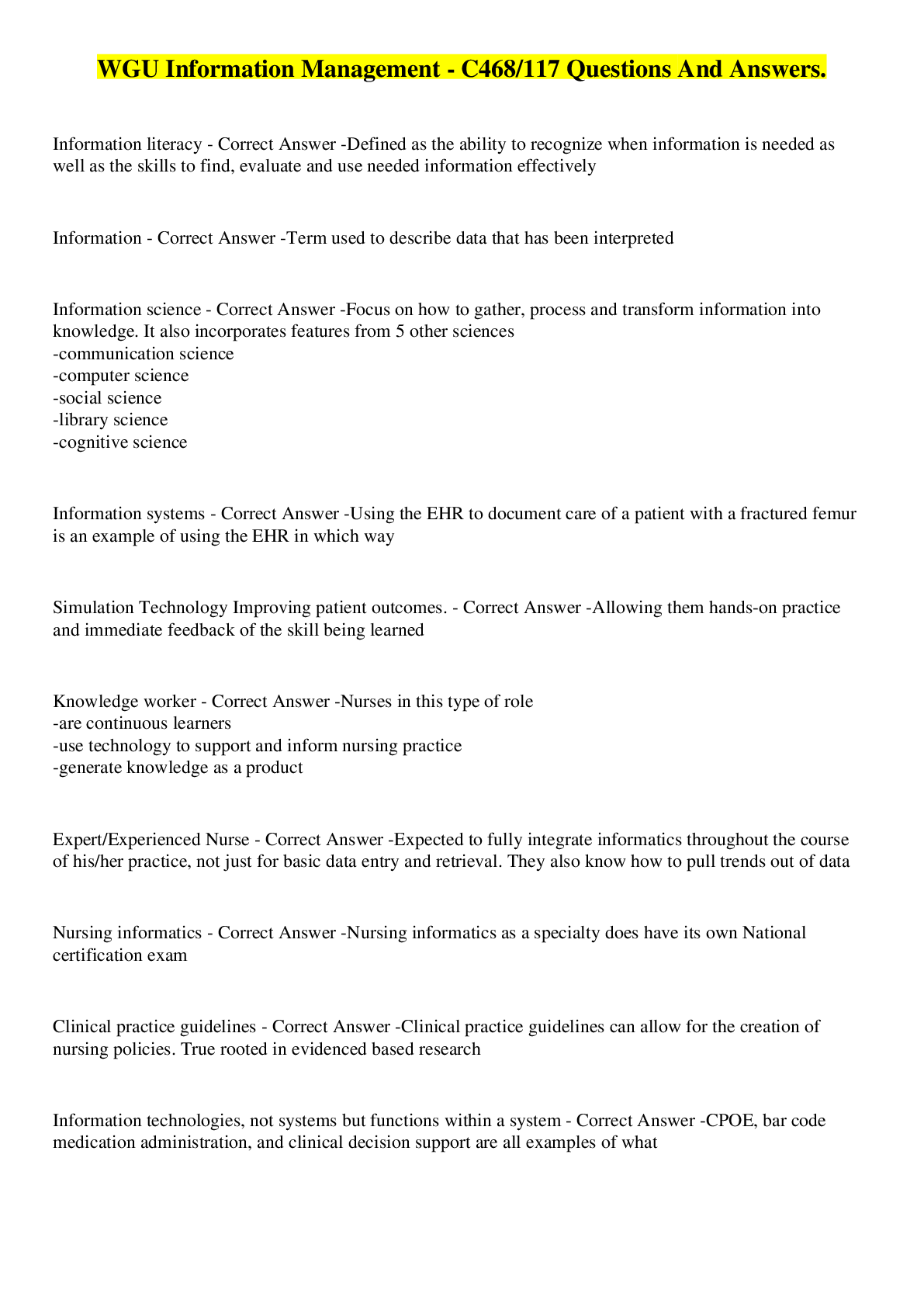
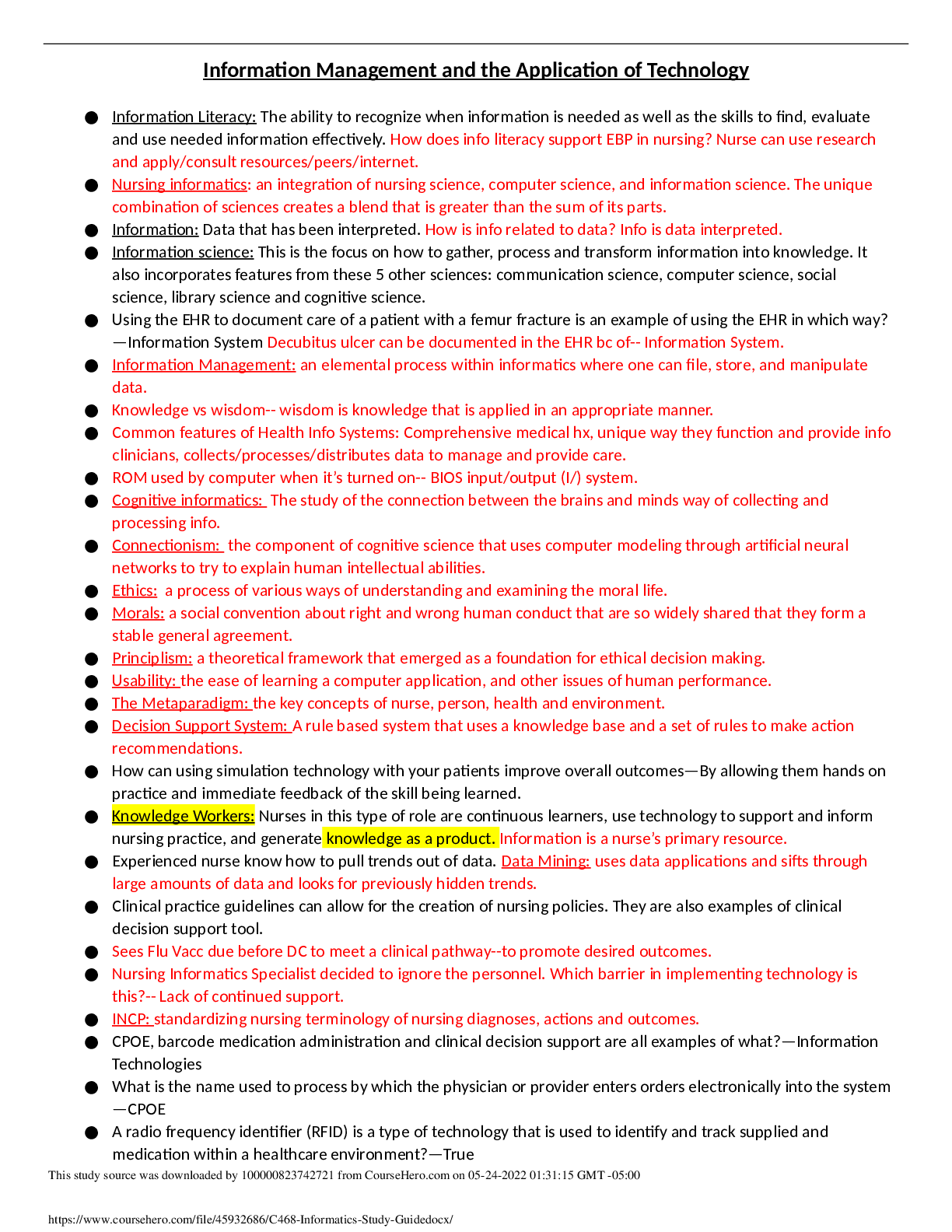
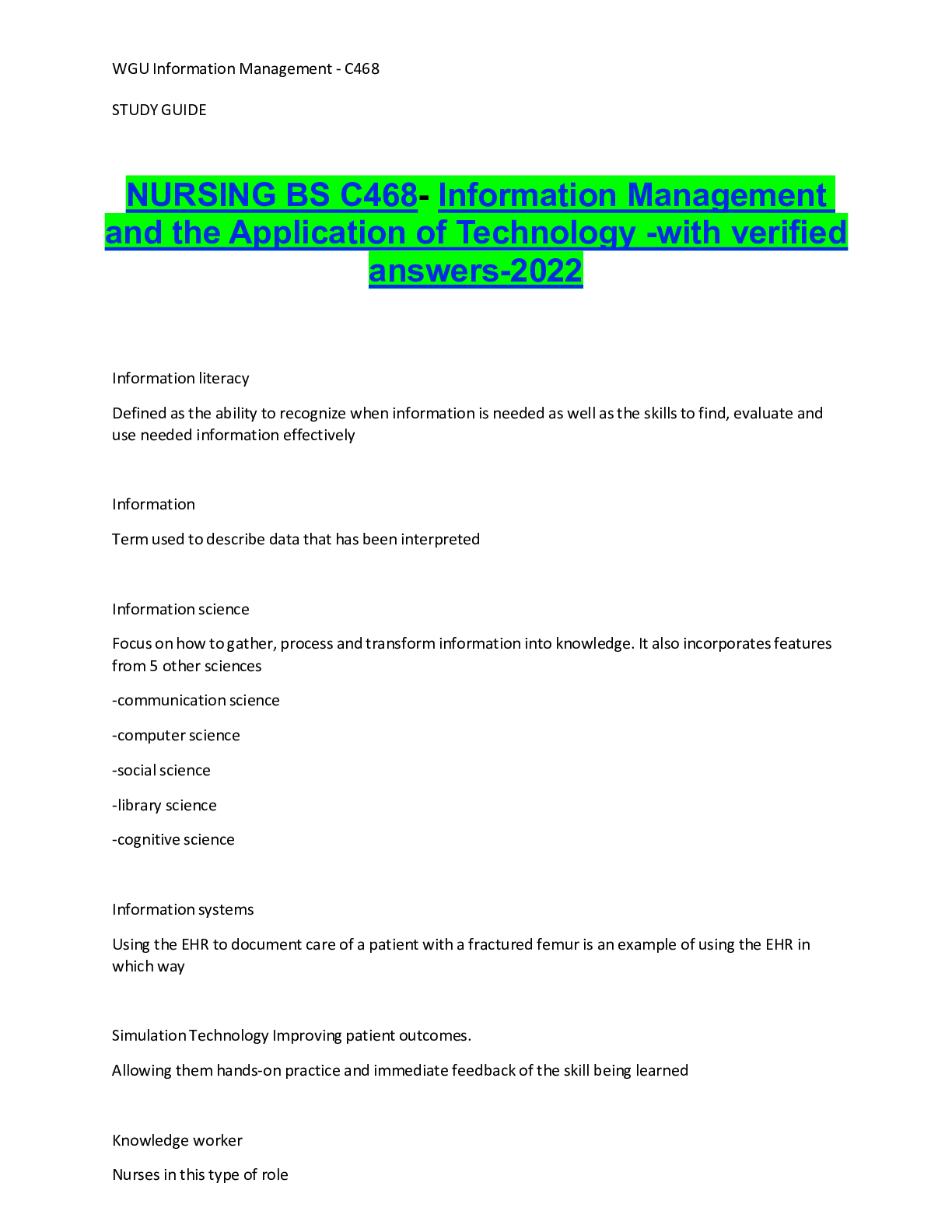
Nursing Informatics-integrates nursing science, computer
science, and information science to manage and
communicate data, information, knowledge and wisdom into
nursing practice. ...facilitates the integration of data,
information, knowledge and wisdom to support patients,
nurses, and other providers in their decision-making in all
roles and settings. This support is accomplished through the
use of information structures, information processes, and
information technology"
Data Characters, numbers, or facts gathered for analysis and
possibly later action
Information- Interpreted data, i.e., B/P reading
Knowledge –
Synthesis of information from several sources to produce a
single concept
Wisdom Occurs when knowledge is used appropriately to
manage and solve problems
Data is the collection of numbers and characters.
Information is processed data.
Knowledge is the processing of information.
Wisdom is knowing what to do with processed knowledge.
Knowledge worker – are continuous learners. Use
technology to support and inform nursing practice. Generate
knowledge as a product.
The Data Gatherer: collects data & documents findings
The Information User : interpret the data that they have
collected and recorded. (pt's bp is high or pain)
The Knowledge User: compares the data with nursing
knowledge
1. Describe the role of nurses as knowledge workers.
Nurses detect patterns to create new knowledge
Data gatherer
-Collects clinical data
Information user
-Interprets clinical data and uses it to monitor patients, aids with decisions
Knowledge user
-Compares data to current knowledge
2. Differentiate among information science, information processing, and
information systems.
-Information Systems (Branch)- Collect, create, distribute useful data / develop, use, and
manage organizations IT infrastructure / umbrella term
-Information Science (Roots)- Focuses on input, processing, output, & feedback through
technology integration / incorporates communication science, computer science, social
science, library science, and cognitive science / support collection and mgmt of information
3. Describe the educational path and role of the Informatics nurse,
Informatics nurse specialist, and the Informatics innovator
The beginning nurse is just working to process information appropriately. The
experienced nurse works to process the information appropriately and organize the
data for better pt care and future improvements. The specialist knows how to get to
the organized data and use the system efficiently and to their advantage. The
informatics innovator works to improve the system.
4. Relate the concepts of information literacy and computer literacy to
evidence-based practice.
Information literacy has a broader meaning. Information literacy is defined as the ability to
recognize when information is needed as well as the skills to find, evaluate, and use needed
1
This study source was downloaded by 100000845557557 from CourseHero.com on 05-26-2022 06:00:46 GMT -05:00
C468 INFORMATION MANAGEMENT STUDY GUIDE
The Knowledge Builder: start to examining clinical data
that shows patterns across patients. And then that info
starts to create new knowledge.
-when nurses take their longitudinal data & offer pt care
suggestions
ARRA (American Recovery & Reinvestment Act) *
Provides funds for adoption of technology and provides the
right for every individual to receive electronic copy of EHR
TIGER Initiative (Technology Informatics Guiding
Education Reform) Initiative aims to enable practicing
nurses and nursing students to fully engage in the
unfolding digital electronic era in healthcare. The
purpose of the initiative is to identify
information/knowledge management best practices and
effective technology capabilities for nurses. TIGER's
goal is to create and disseminate action plans that can
be duplicated within nursing and other multidisciplinary
healthcare training and workplace settings.
information effectively.
EBP requires that decisions about healthcare be based on the best available, current, valid
and relevant evidence providing quality essential to transform healthcare.
nurse can use research and apply/ consul
[Show More]