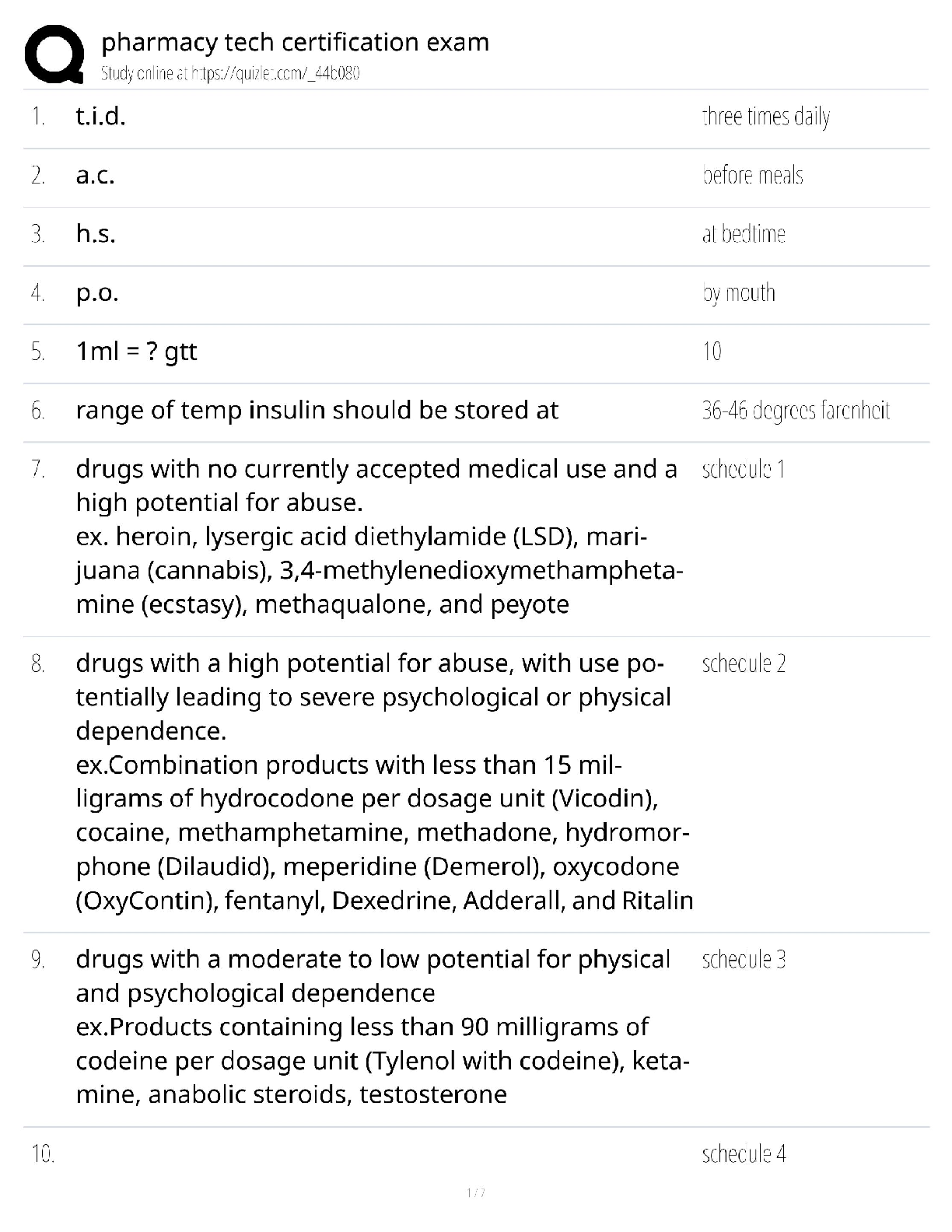
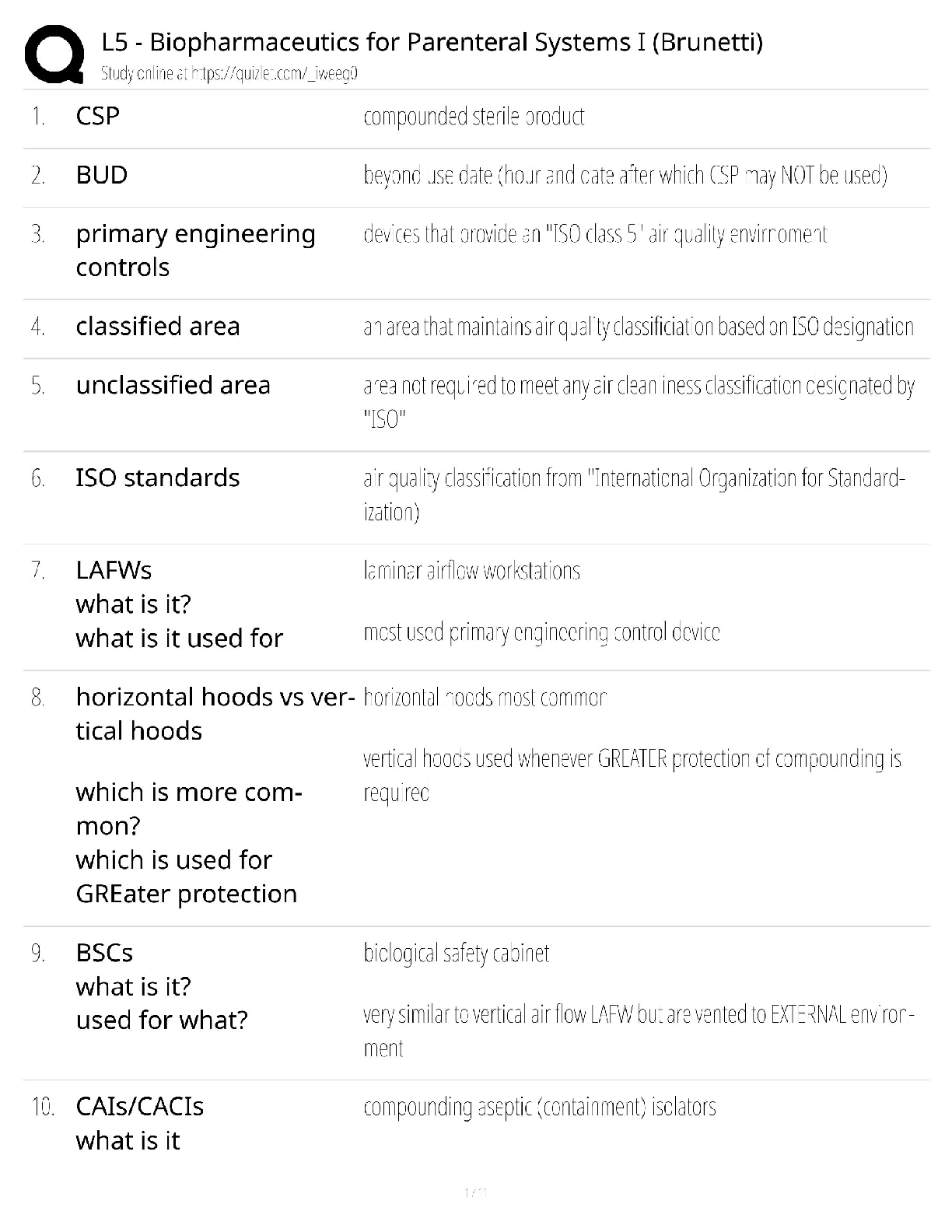
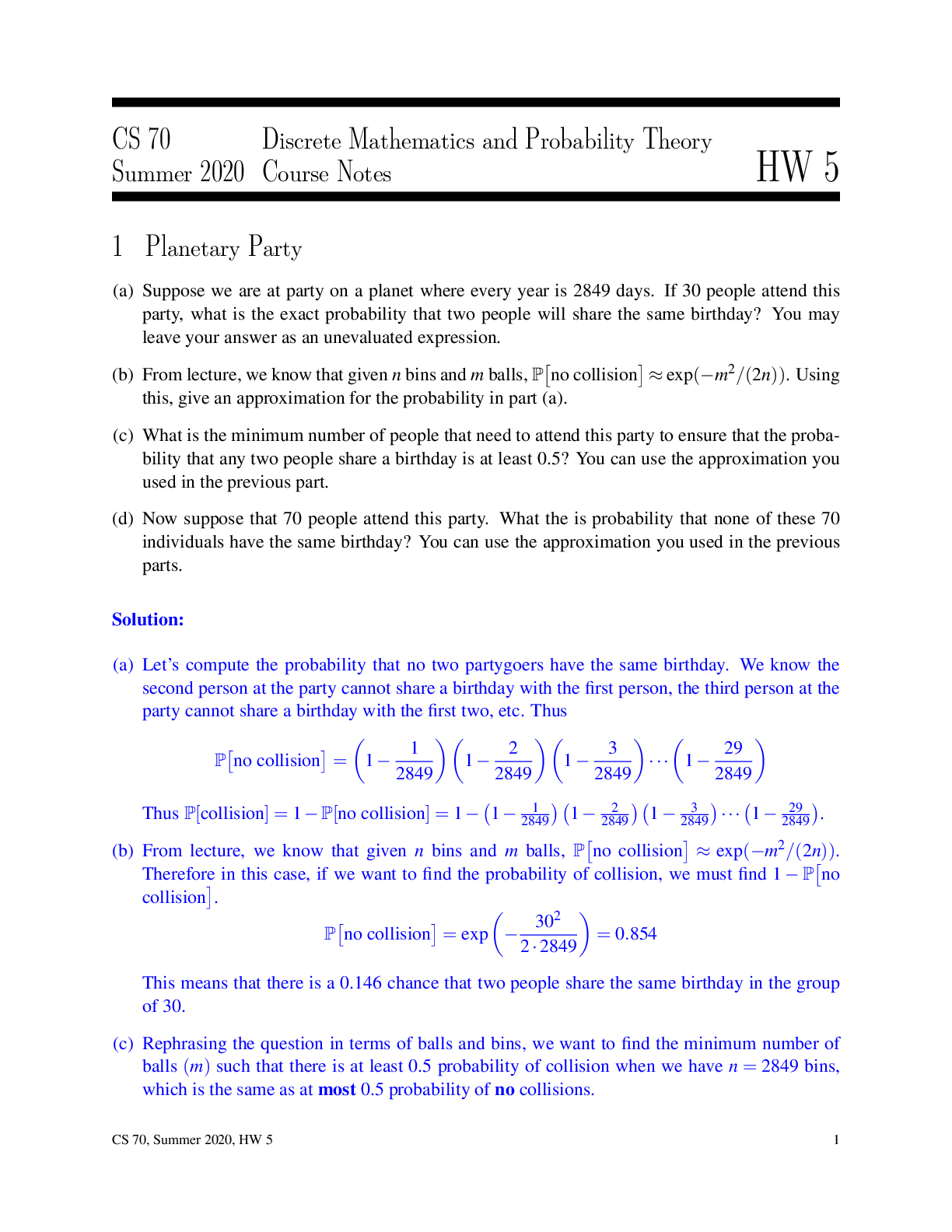
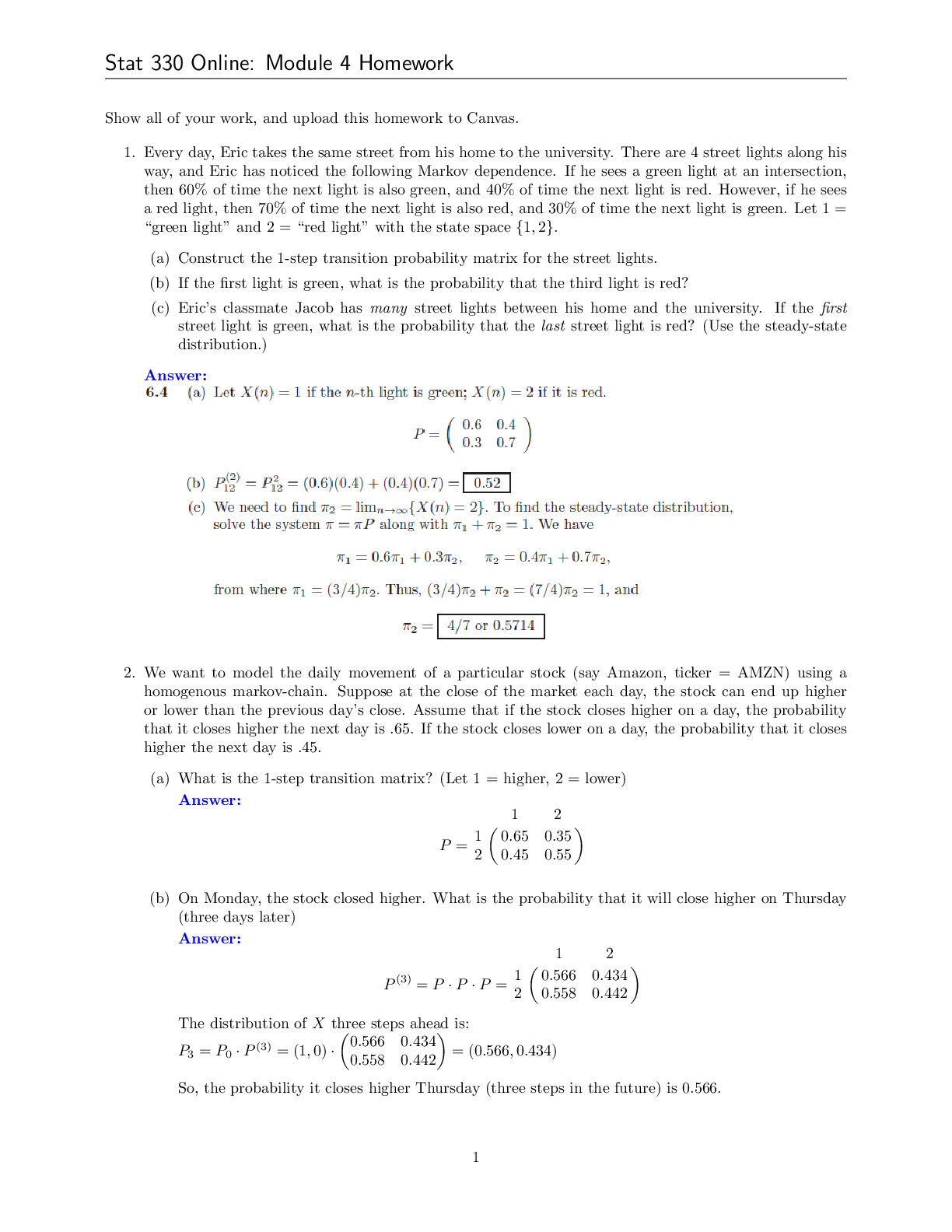
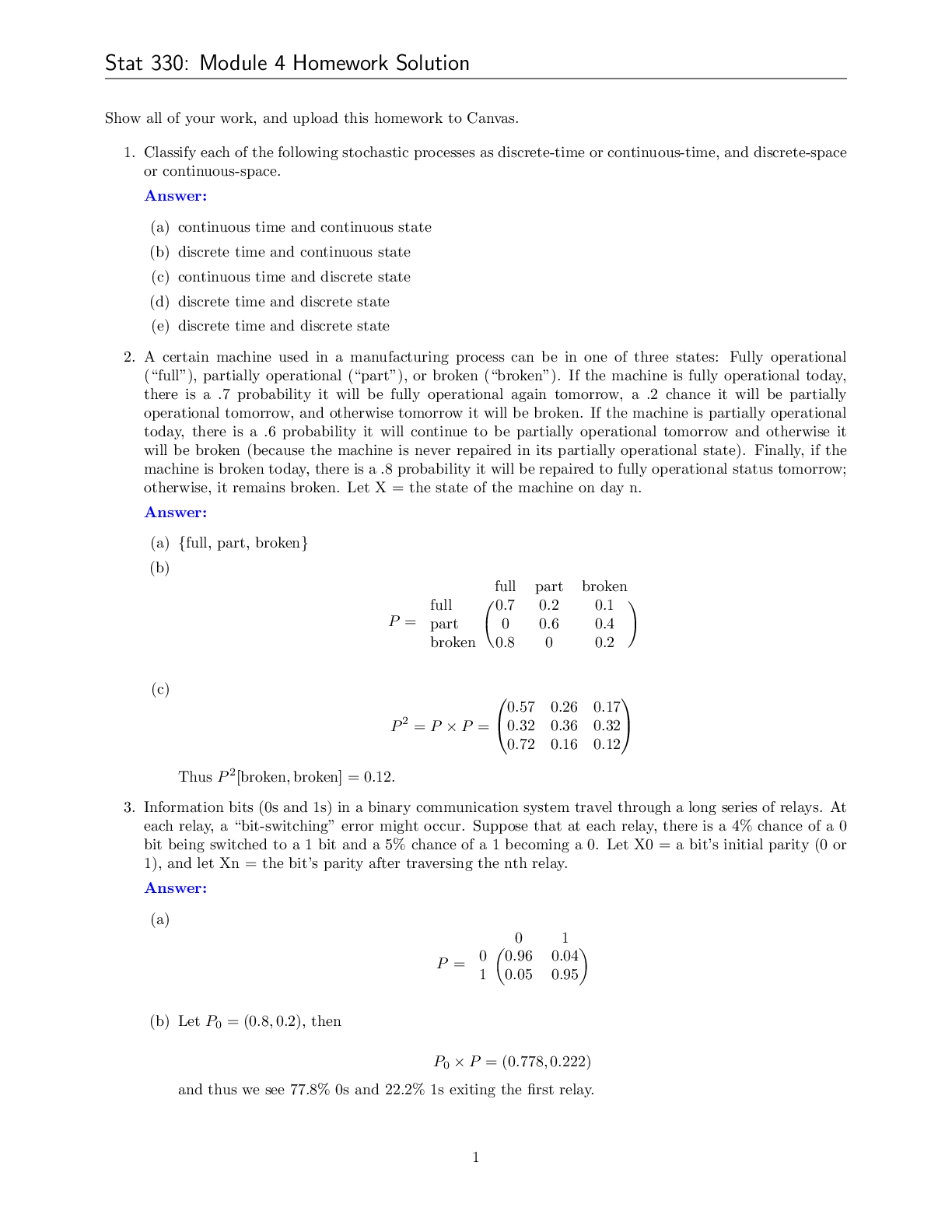
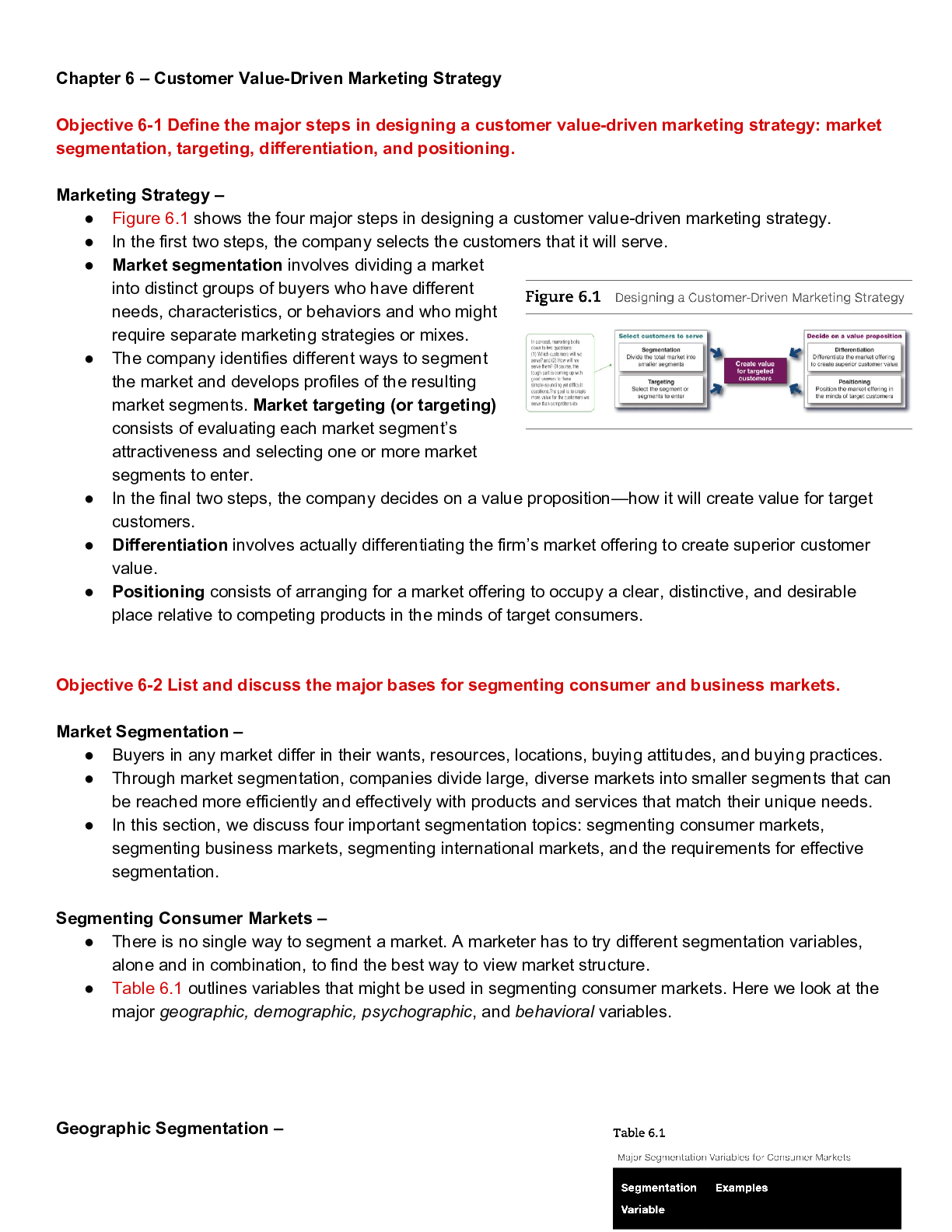
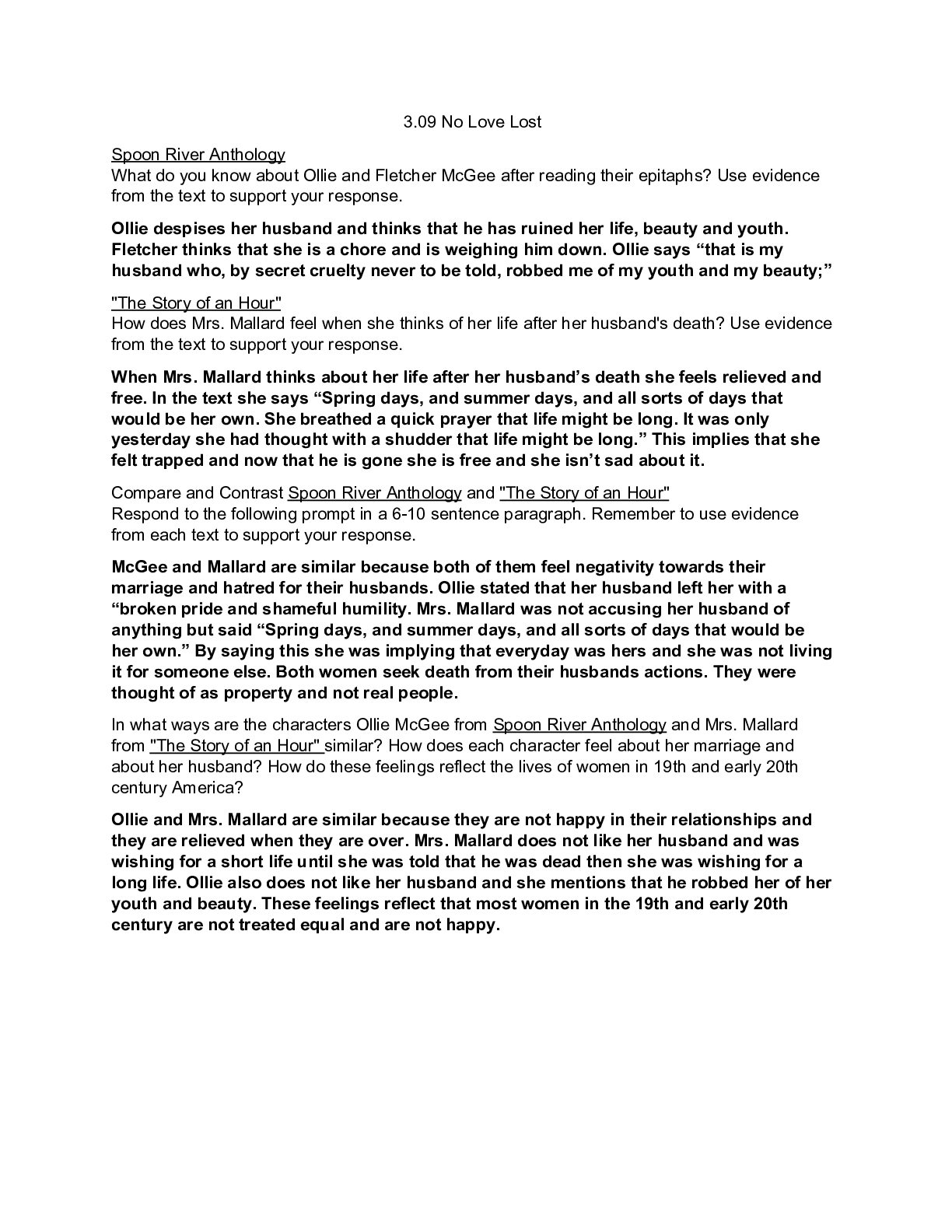
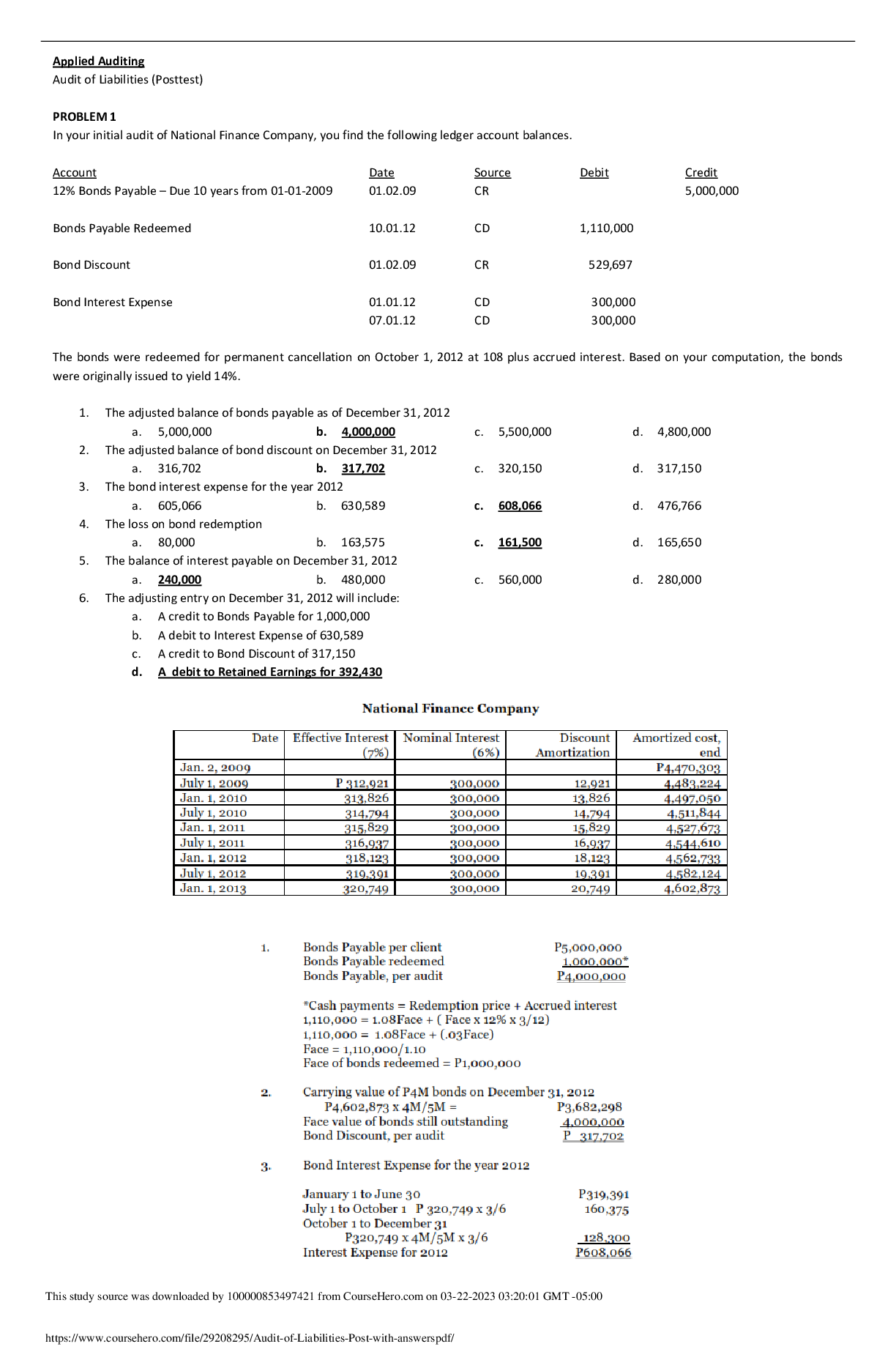
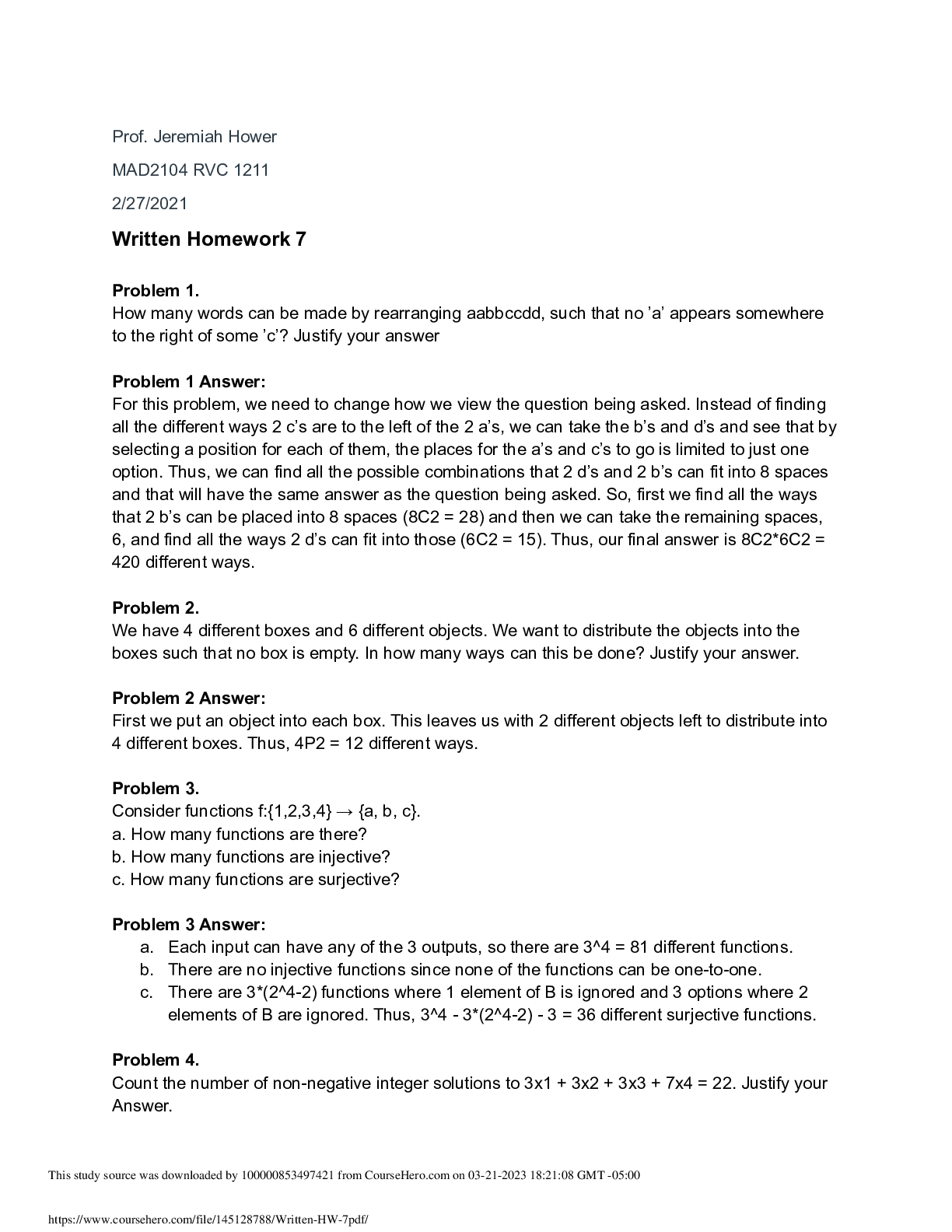
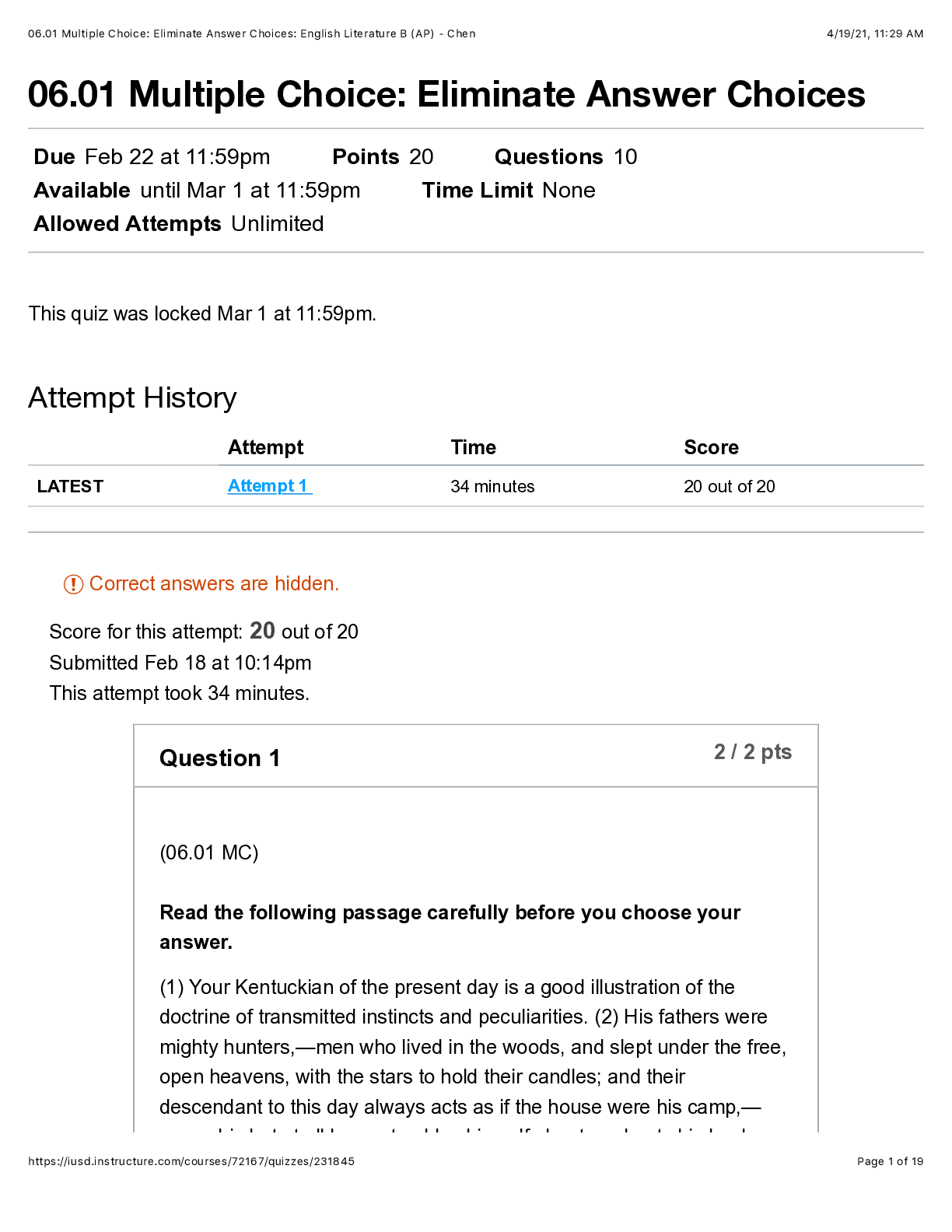
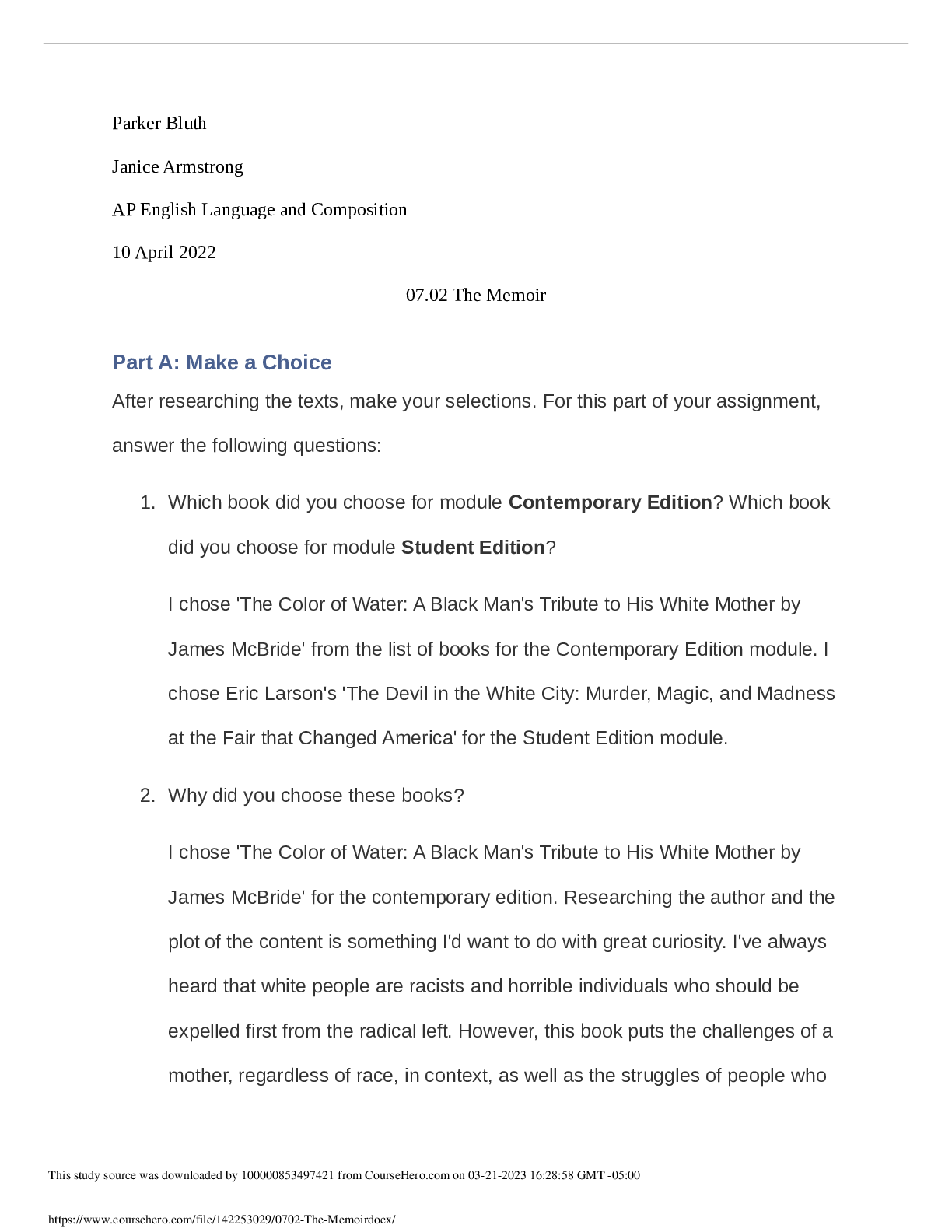
Pharmacology > QUESTIONS & ANSWERS > Practice Problems | For 100% scores (All)
Practice Problems | For 100% scores
Document Content and Description Below
Last updated: 4 years ago
Preview 1 out of 7 pages
Instant download

Buy this Document to get the Full Access Instantly
Provided by Students Who Aced it
We Verify Document Content to Gurantee Accuracy
Reviews( 0 )
Document information
Connected school, study & course
About the document
Uploaded On
Oct 13, 2022
Number of pages
7
Written in
All

Additional information
This document has been written for:
Uploaded
Oct 13, 2022
Downloads
0
Views
66
Topic Tags
Recommended For You
Get more on QUESTIONS & ANSWERS »
NURS 6650 Midterm Exam: Walden University (FOR 100% CORRECT AN...

NURS6670 Midterm Exam: Walden University (FOR 100% CORRECT ANS...

NURS 6512 FINAL EXAM: WALDEN UNIVERSITY (FOR 100% CORRECT ANSW...
Certification Study Guide 2025 / Complete Exam Prep, Test Bank...
CDM Practice Test 2025 / Certified Dietary Manager Exam Prep /...
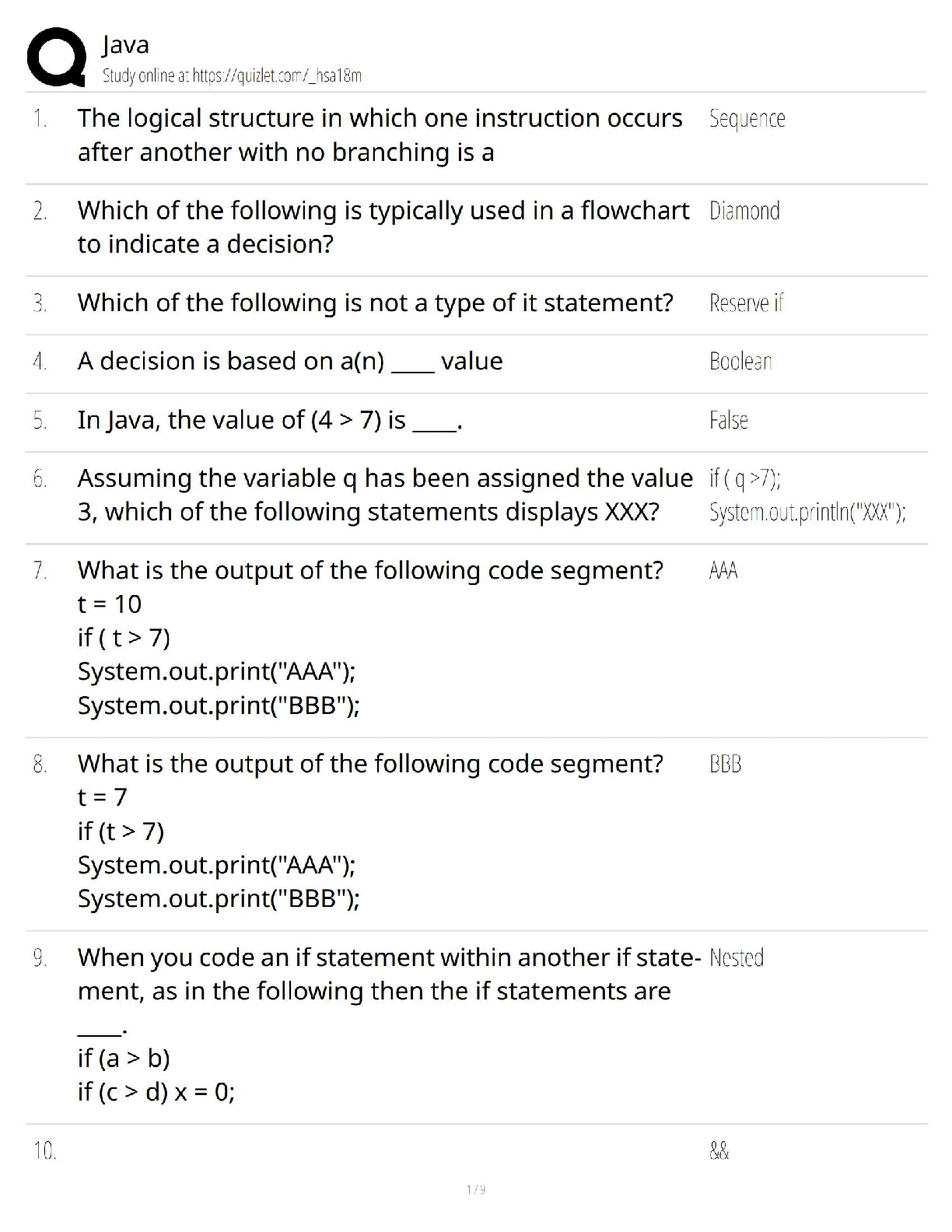
Java Programming Exam 2025 / Practice Test Questions & Answers...
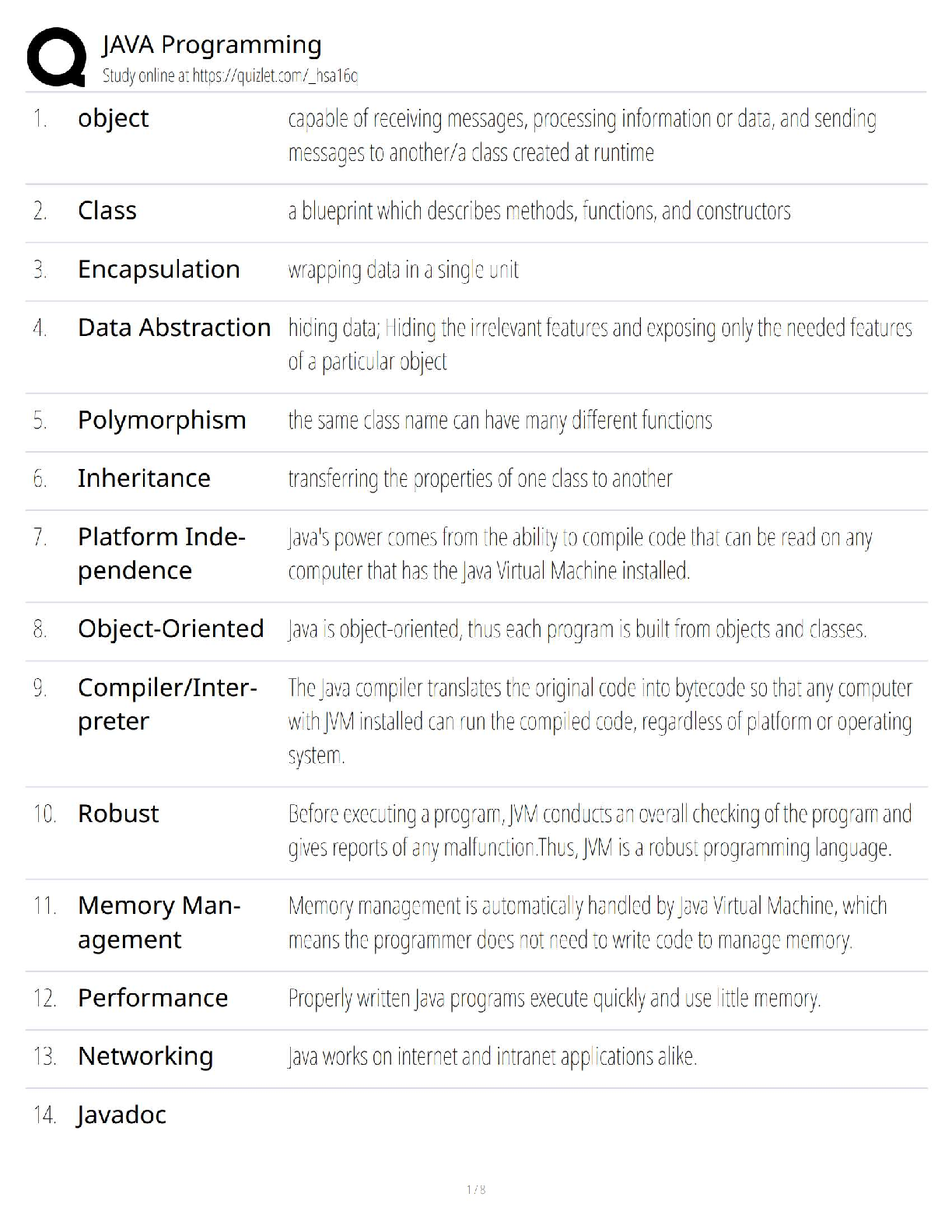
JAVA Programming Final Exam 2025 / Practice Test Questions & A...
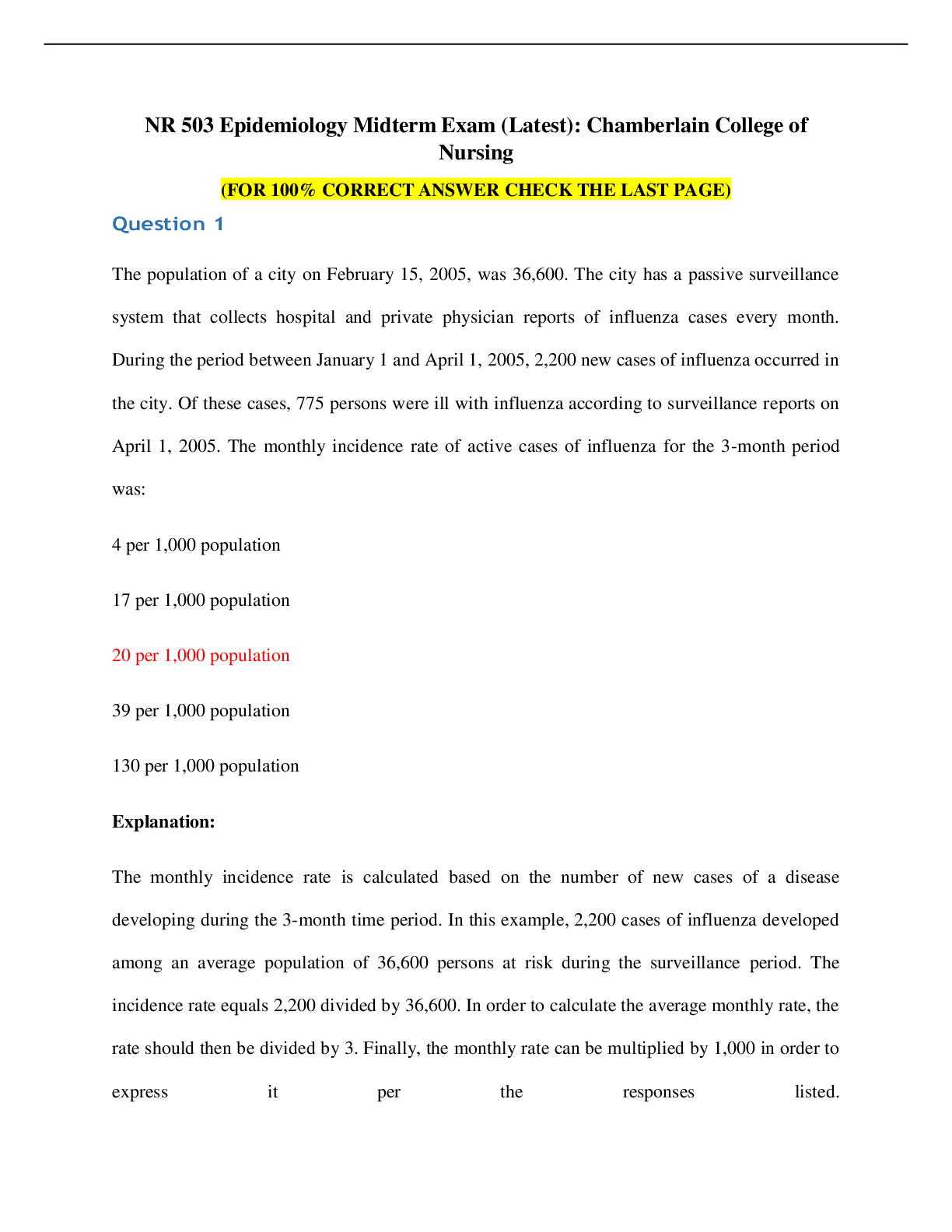
NR 503 Epidemiology Midterm Exam (Latest) (FOR 100% CORRECT A...
2019_TEST_BANK_QUESTIONS_FOR__NCLEX_RN_V12.35__ 865__ question...

NR 507 Week 4 Midterm Exam (Latest): Chamberlain College of...
ATI RN Comprehensive Predictor, Exit and Retake Exam with NG...

University Of Arizona - MUS 354mus alex(1) mus alex. Revised a...

Accounting I: ACC 100 Final Milestone SUMMER 2020. with Answer...
PHI 210- WEEK 5 WEBTEXT. All Answers Explained. For 100% Scor...
Accounting I: ACC 100 Final Milestone SUMMER 2020. with Answer...
Accounting I: ACC 100 Final Milestone SUMMER 2020. with Answer...