CHEM 120 Week 8 Final Exam Review (2022)
Document Content and Description Below
1. Question: Know what is the atomic number, atomic mass, protons, neutrons & electrons
Atomic number – is the number of protons in the nucleus of an atom of any element
Atomic mass – is expressed in amu; is the wigh
...
[Show More]
Last updated: 3 years ago
Preview 1 out of 7 pages
Instant download

Buy this Document to get the Full Access Instantly
Provided by Students Who Aced it
We Verify Document Content to Gurantee Accuracy
Reviews( 0 )
Document information
Connected school, study & course
About the document
Uploaded On
Oct 18, 2022
Number of pages
7
Written in
All

Additional information
This document has been written for:
Uploaded
Oct 18, 2022
Downloads
0
Views
94
Topic Tags
Recommended For You
Get more on EXAM »
$70
29 Pages
CHEM 120 LATEST FINAL EXAM 2023- 2024 SESSION GRADED A+ ACCURA...
$25
35 Pages
CHEM 120/103 MODULES EXAM COLLECTION 2023 FINEST MOD 1-6 PRE P...

$9
9 Pages
Hunter College, CUNY - CHEM 120chem 120 exam 3 ( all answers c...

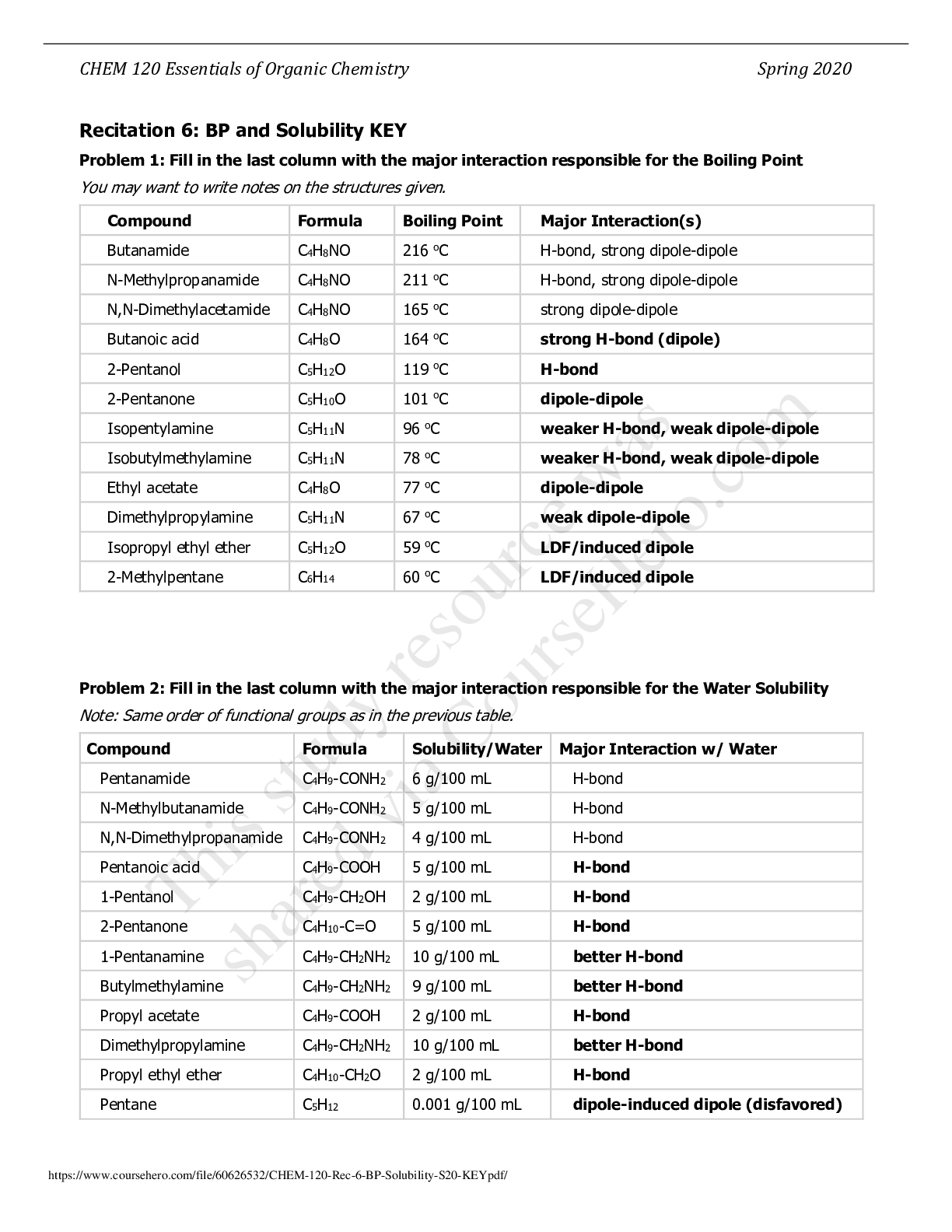
$6
4 Pages
New Jersey Institute Of Technology - CHEM 120CHEM 120 Rec 6 BP...

$14
66 Pages
CHEM120 Week 1 to Week 7 Quizzes / CHEM 120 Week 1 to Week 7 Q...
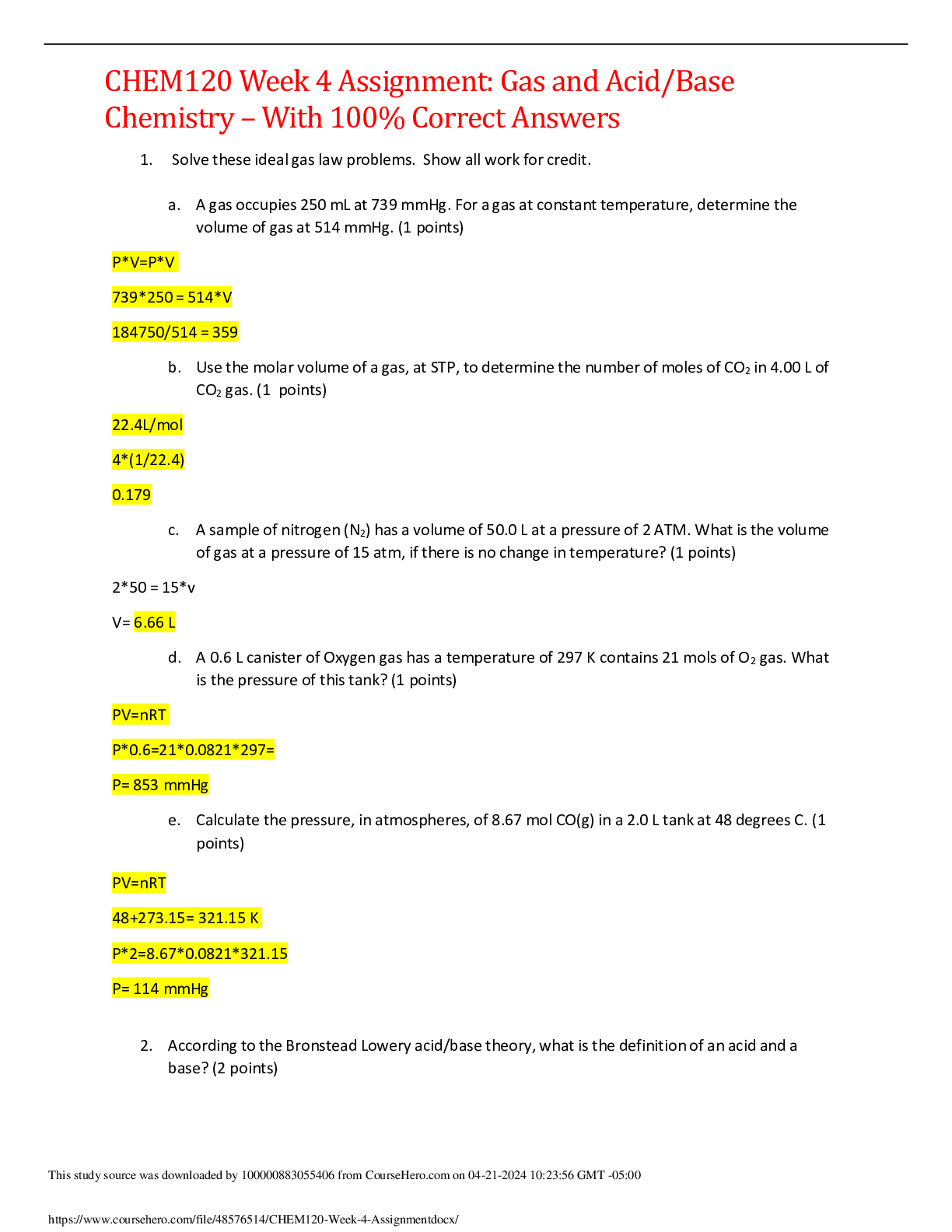
$7
3 Pages
CHEM120 Week 4 Assignment: Gas and Acid/Base Chemistry |100%...
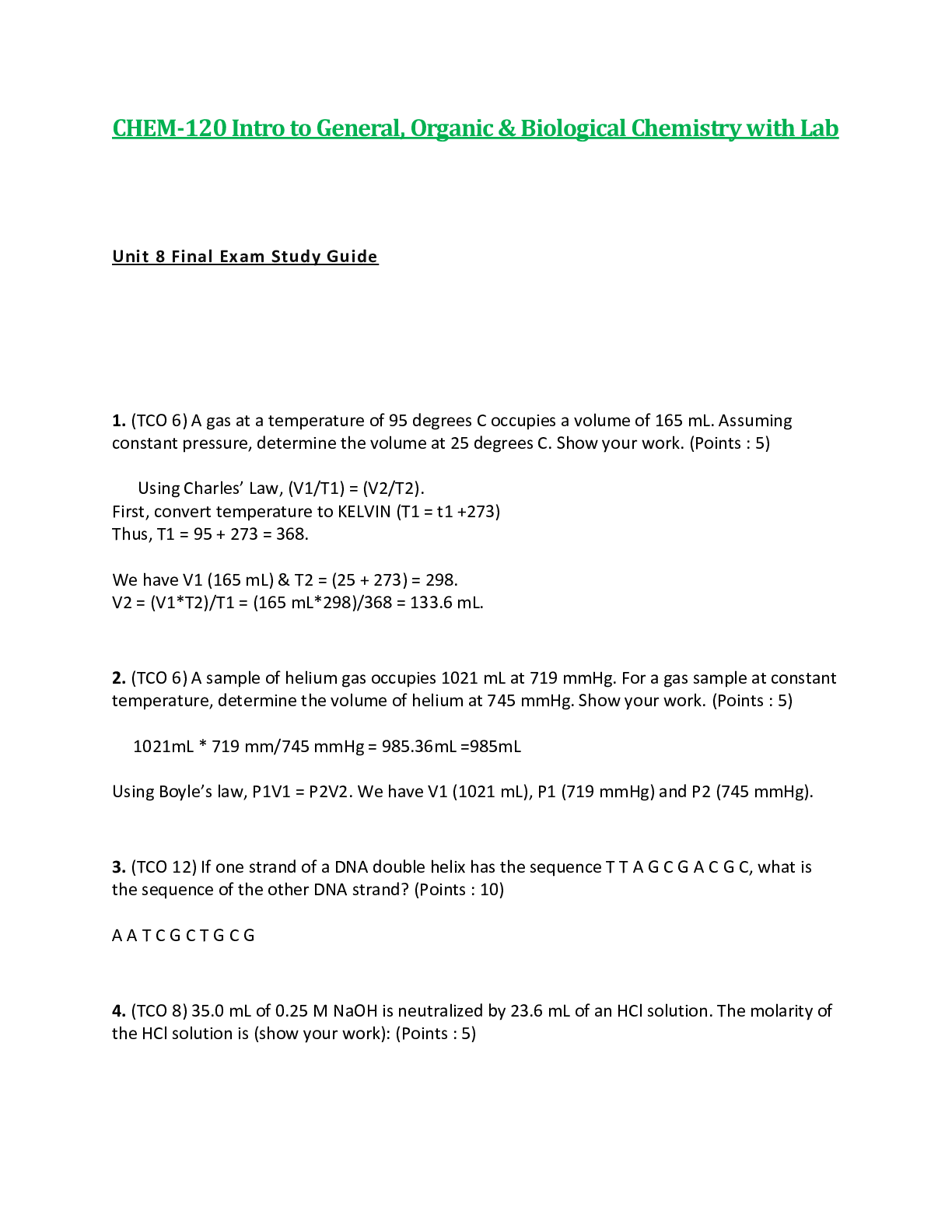
$6
22 Pages
CHEM120 / CHEM 120 Final Exam Study Guide (Latest): Intro to G...

$6
4 Pages
Week 8 : Final Exam - Final Exam CHEM120Final-Exam-Page-3 100%...
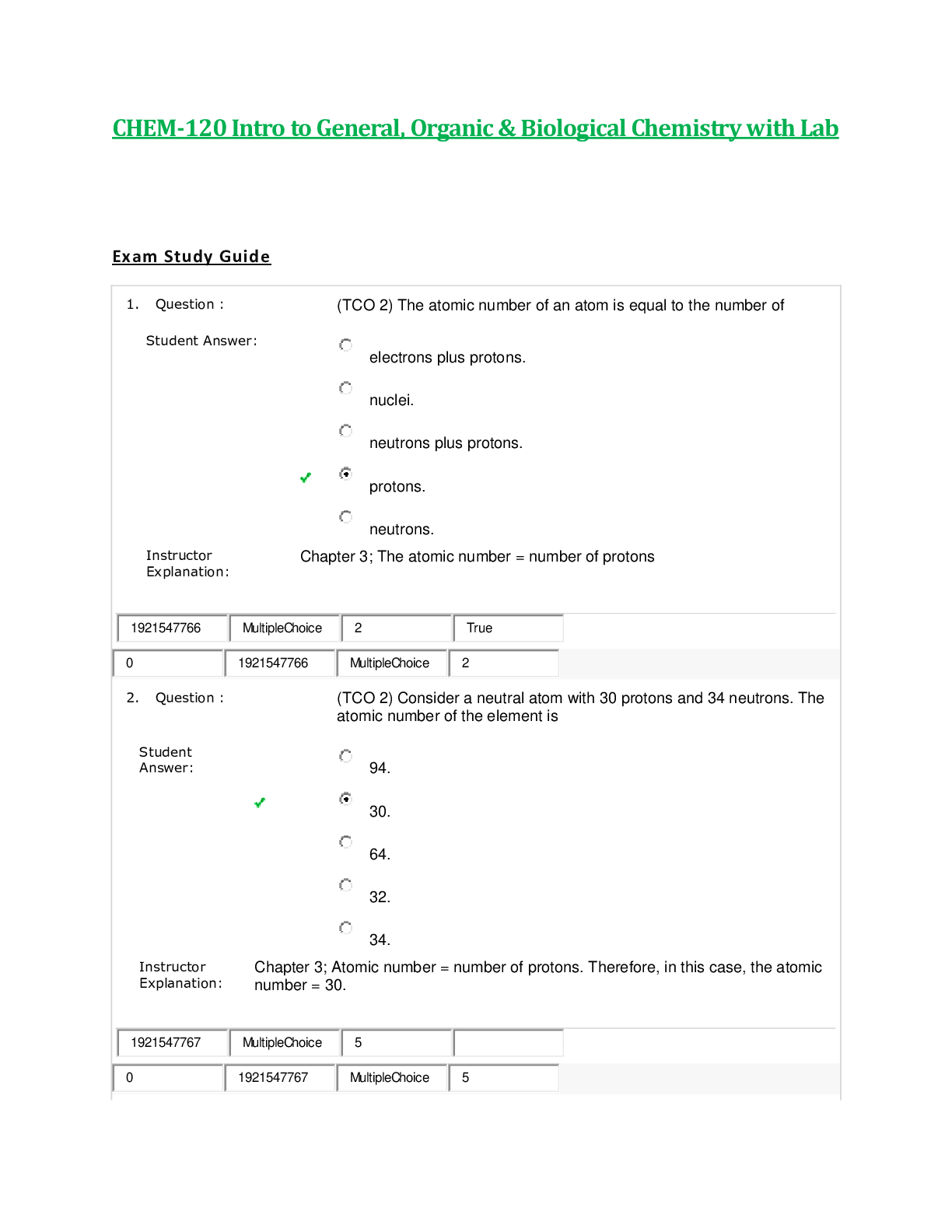
$8
77 Pages
CHEM120 / CHEM 120 Exam Study Guide (Latest): Intro to General...


$25
550 Pages
Achieve for Interactive General Chemistry, 1e by Macmillan Lea...
$25
86 Pages
Forensic Chemistry 3rd Edition by Suzanne Bell | Solutions Man...

$22
645 Pages
Introduction to Chemistry 5th Edition By Richard Bauer, James...
More related documents below


.png)

.png)