NR 324 Adult Health Exam 1
Document Content and Description Below
What is third spacing? -Correct Answer= When fluid accumulates in a portion of the body from
which it is not easily exchanged with the rest of the ECF (e.g., burns, blisters).
What is the normal osmolality range for t
...
[Show More]
Last updated: 4 years ago
Preview 1 out of 5 pages
Instant download

Buy this Document to get the Full Access Instantly
Provided by Students Who Aced it
We Verify Document Content to Gurantee Accuracy
Reviews( 0 )
Document information
Connected school, study & course
About the document
Uploaded On
Oct 24, 2022
Number of pages
5
Written in
All

Additional information
This document has been written for:
Uploaded
Oct 24, 2022
Downloads
0
Views
118
Topic Tags
Recommended For You
Get more on EXAM »
$9
5 Pages
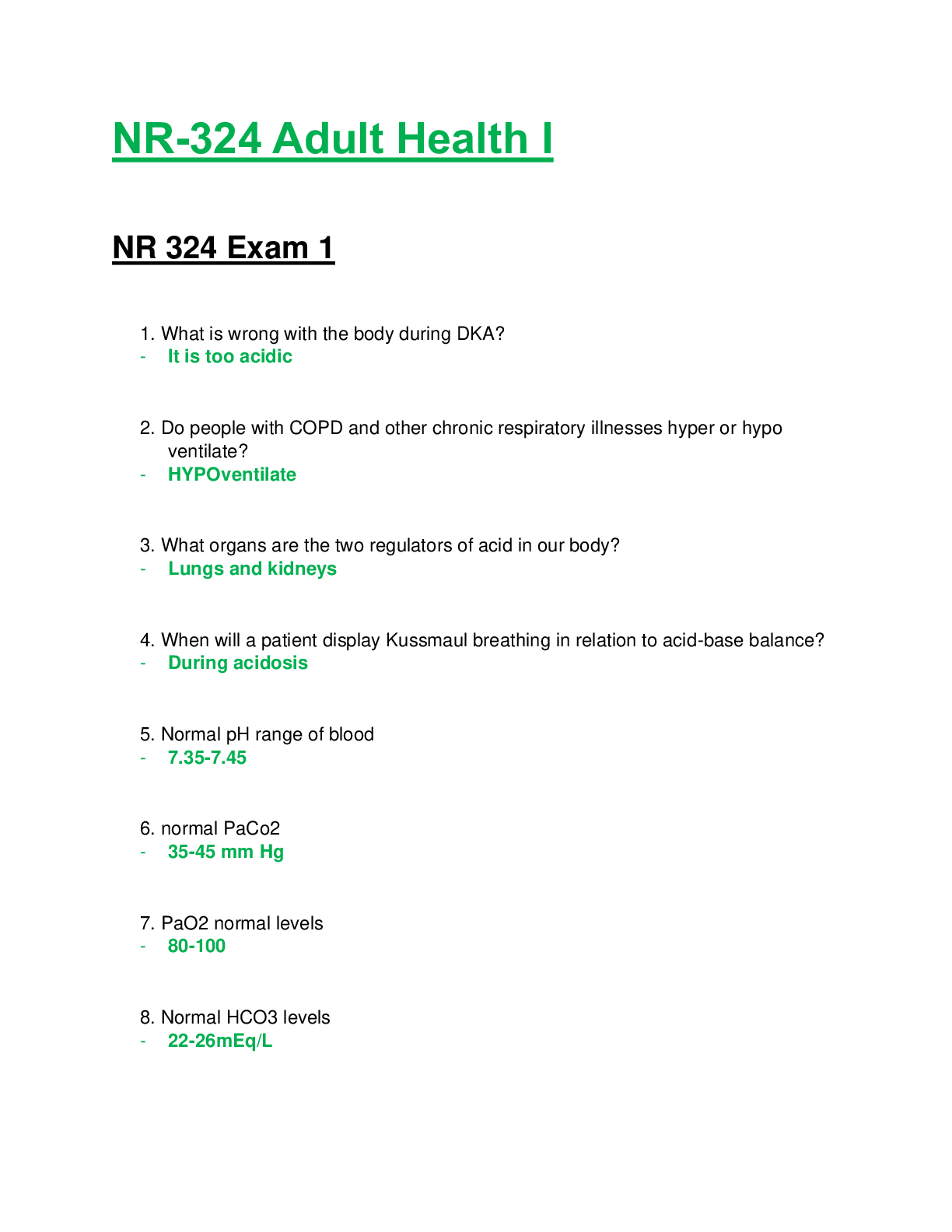
NR324 / NR 324 Adult Health I Exam 1 Practice Quiz - Chamberla...
$15
23 Pages
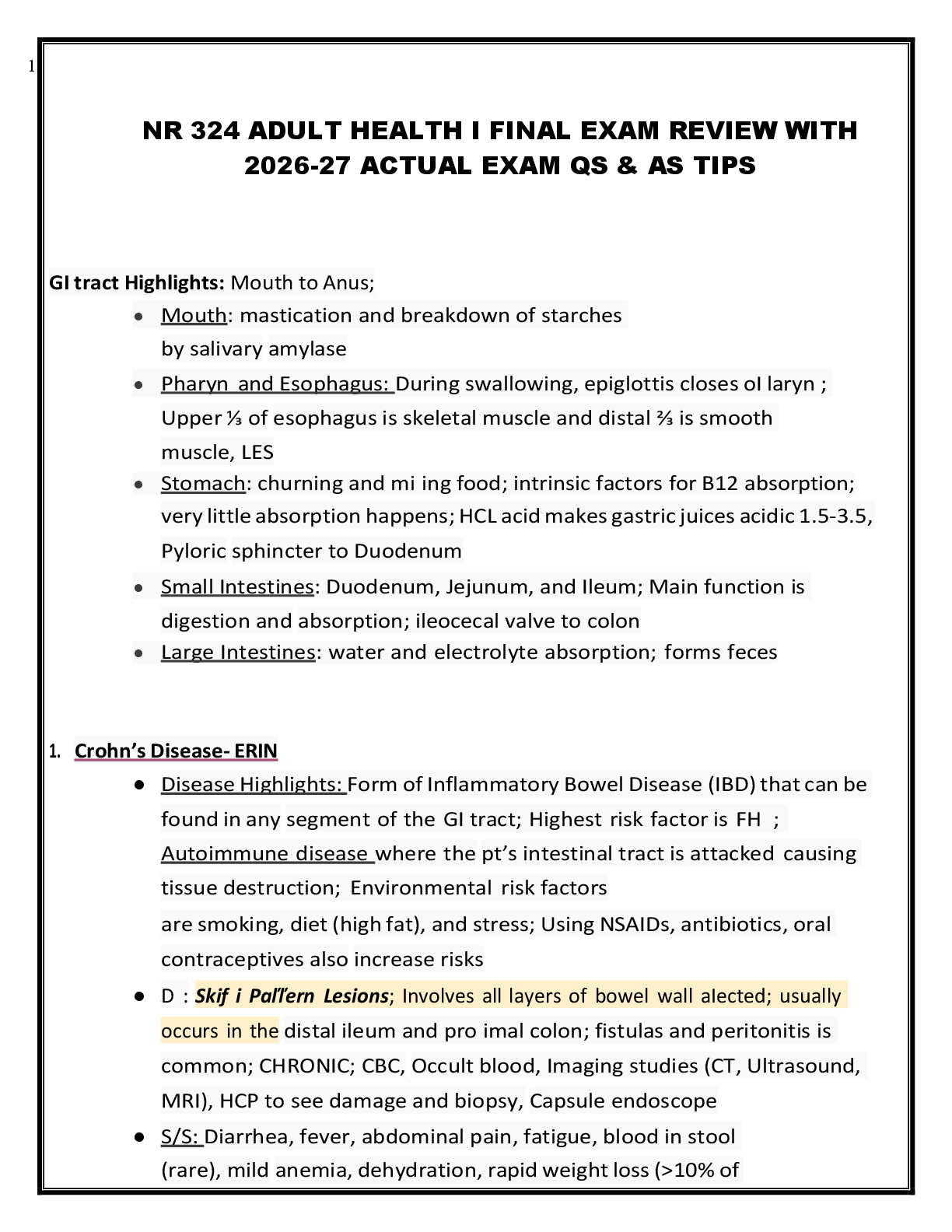
NR324 / NR-324: Adult Health I Exam 1 Latest Update Chamberlai...
$25
42 Pages
NR 324 ADULT HEALTH I FINAL EXAM REVIEW WITH 2026-27 ACTUAL E...

$15
31 Pages
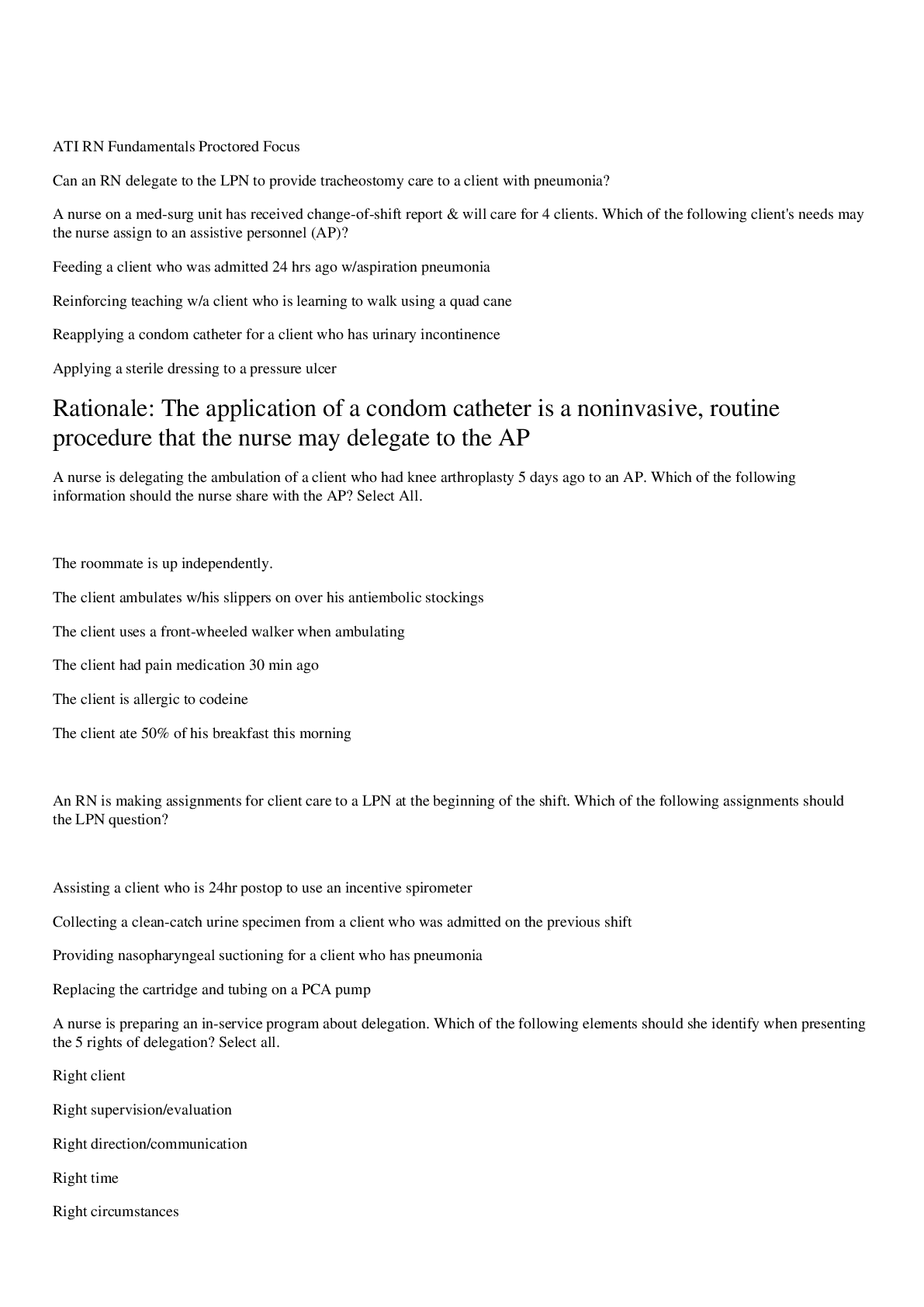
NR 324 Midterm Exam Study – ATI Test 4 Assessment Test Bank, Q...
$13
32 Pages
Nr 324 Exam review RN Fundamentals Proctored Focus, All Correc...

$18.5
27 Pages
NR 324 Exam review ATI RN Fundamentals Proctored Focus–Chamber...

$10
44 Pages
Nr 324 Exam review ATI RN Fundamentals Proctored Focus Questio...

$14.5
13 Pages
NR 324 - Adult Health I Week 5 Edapts (100% CORRECT ANSWERS)
$15
48 Pages
Nr 324 Exam review RN Fundamentals Proctored Focus, All Correc...

$11.5
18 Pages
ADULT HEALTH NR 324 ROK 3 | Answered and Elaborations | Updat...

$14
17 Pages
NR324 / NR 324: Adult Health I Exam 2 Study Guide Chamberlai...

$15
17 Pages
NR324 / NR 324: Adult Health I Exam 1 Study Guide Chamberlai...

$14
36 Pages
NR324 / NR 324: Adult Health I Exam 3 Study Guide Chamberlai...

$15
30 Pages
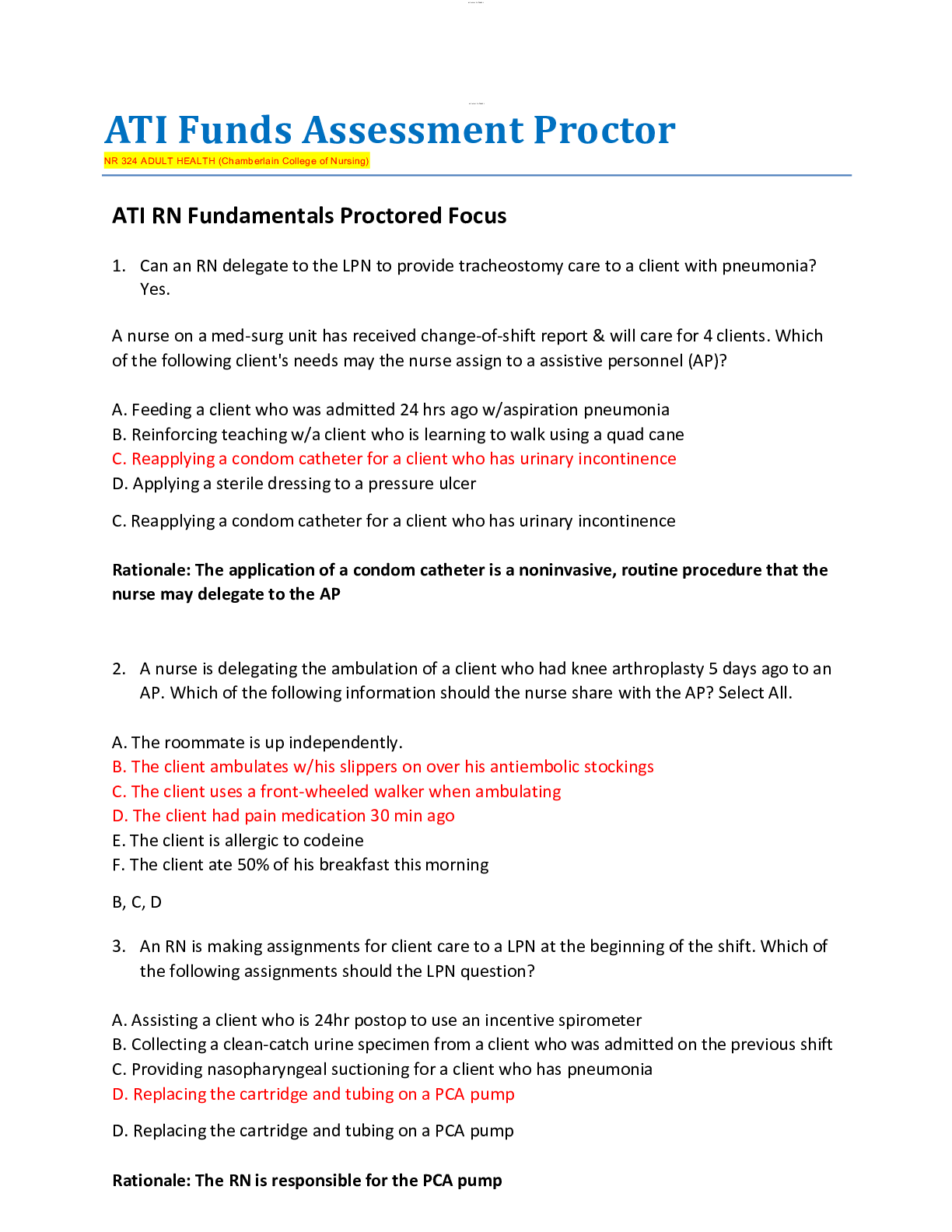
NR 324 ADULT HEALTH | ATI Fundamentals Assessment Proctor | Ch...
$10.5
12 Pages
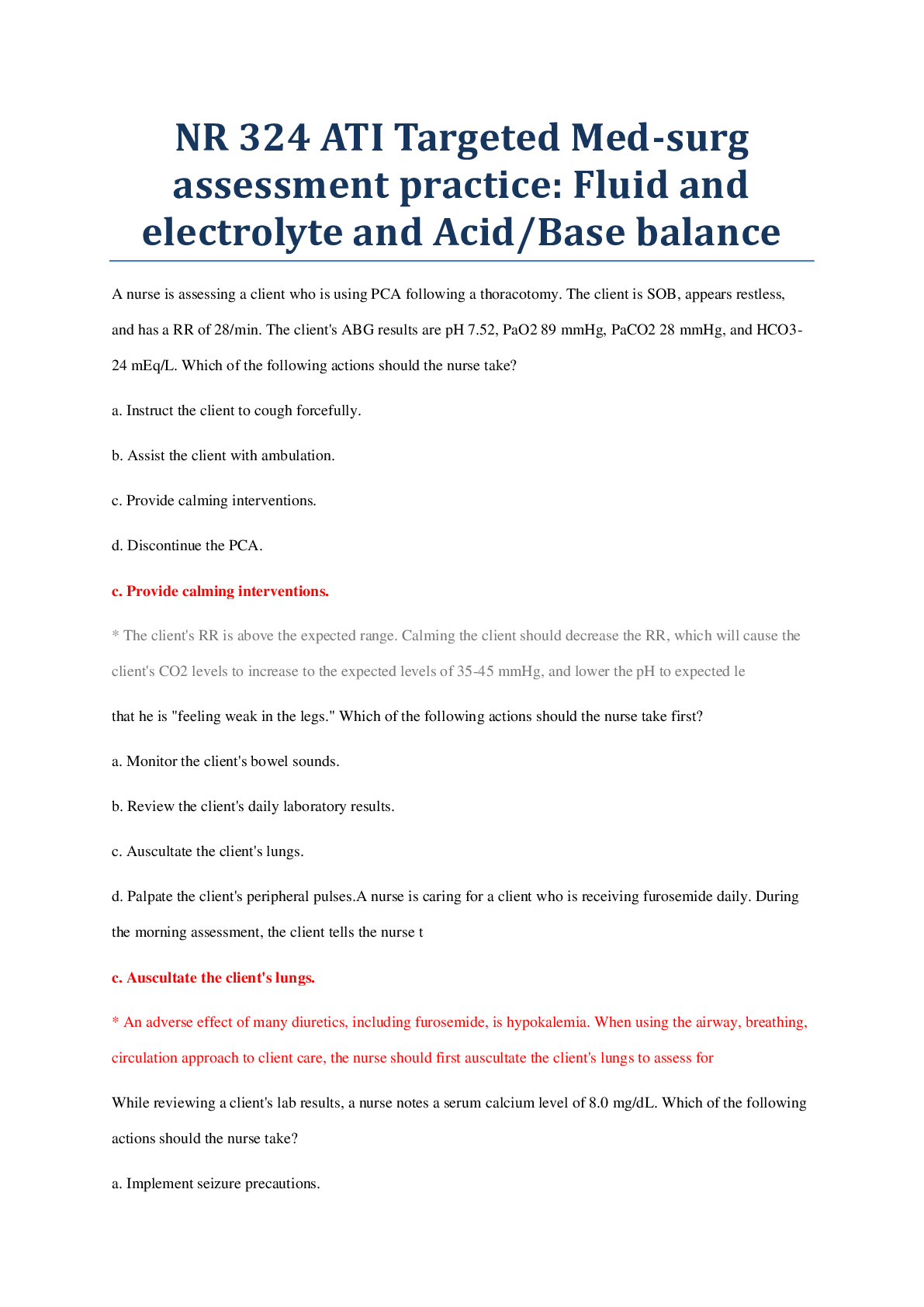
ATI Targeted Med-Surg Assessment_ Fluid and Electrolyte and Ac...


$4
7 Pages
NR 324 Adult Health Week 4 Case study COVID 19 Skinny Reasonin...

$16
14 Pages
NR 324 MEDSURG Exam 1 -Study Guide-with verified answers 2022
More related documents below




.png)


