Law > QUESTIONS & ANSWERS > WGU C963 - Objective Assessment Superset with Complete Solution (All)
WGU C963 - Objective Assessment Superset with Complete Solution
Document Content and Description Below
Last updated: 3 years ago
Preview 1 out of 16 pages
Instant download

Buy this Document to get the Full Access Instantly
Provided by Students Who Aced it
We Verify Document Content to Gurantee Accuracy
Also available in bundle (1)
Click Below to Access Bundle(s)
WGU C963 FULL SOLUTION PACK(ALL WGU C963 EXAMS AND STUDY QUESTIONS ARE HERE ,ALL ANSWERED CORRECTLY)
WGU C963 - Objective Assessment Superset with Complete Solution Pre-Assessment WGU American Politics and the US Constitution C963 WGU C963 OA LATEST VERIFIED GUIDE GRADED A+ WGU C963 - Learni...
By Alphascore 3 years ago
$14
6
Reviews( 0 )
Document information
Connected school, study & course
About the document
Uploaded On
Oct 24, 2022
Number of pages
16
Written in
All

Additional information
This document has been written for:
Uploaded
Oct 24, 2022
Downloads
1
Views
196
Topic Tags
Related Subjects & Courses
Explore similar study resources and related concepts.
Recommended For You
Get more on QUESTIONS & ANSWERS ».png)
WGU C963 Objective Assessment Superset Questions and Answers
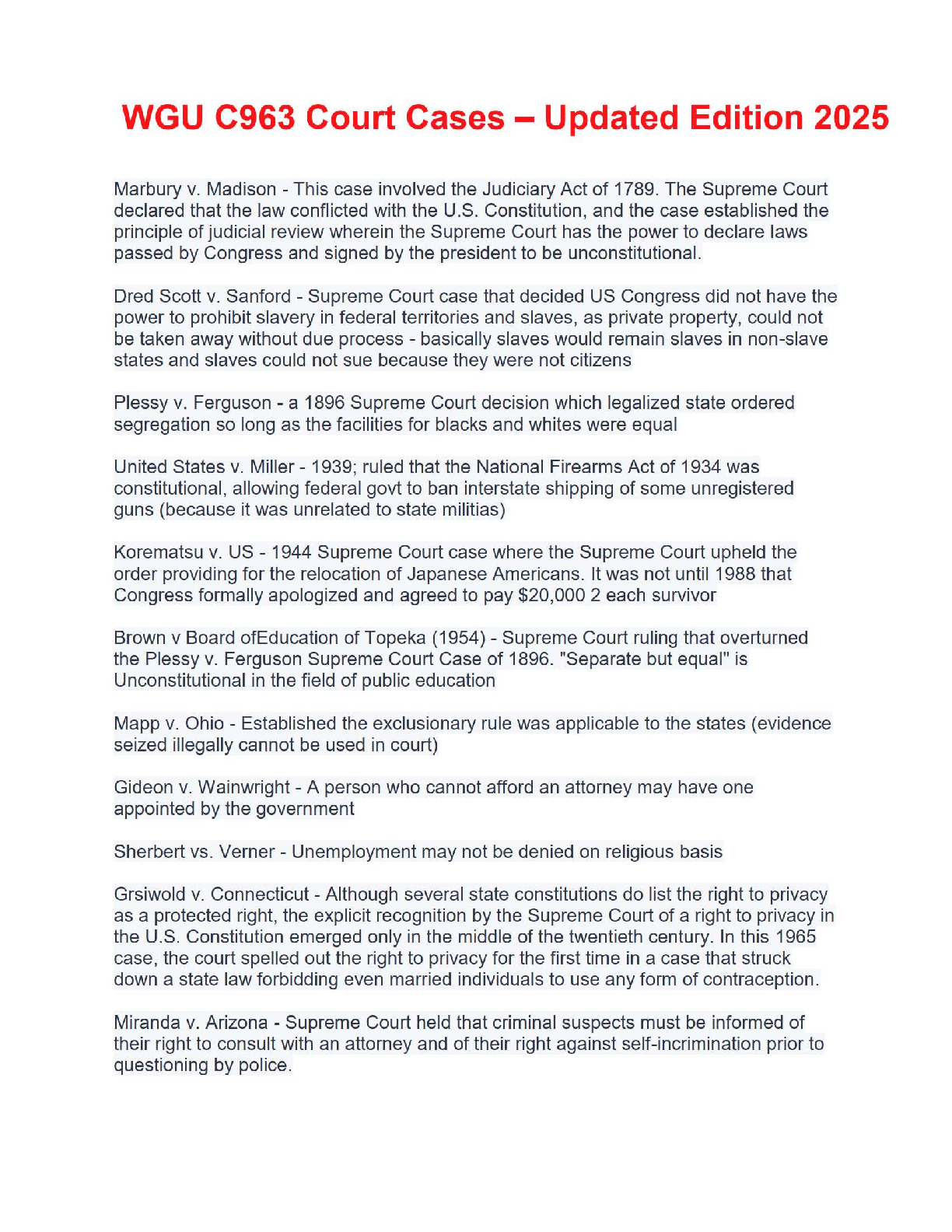
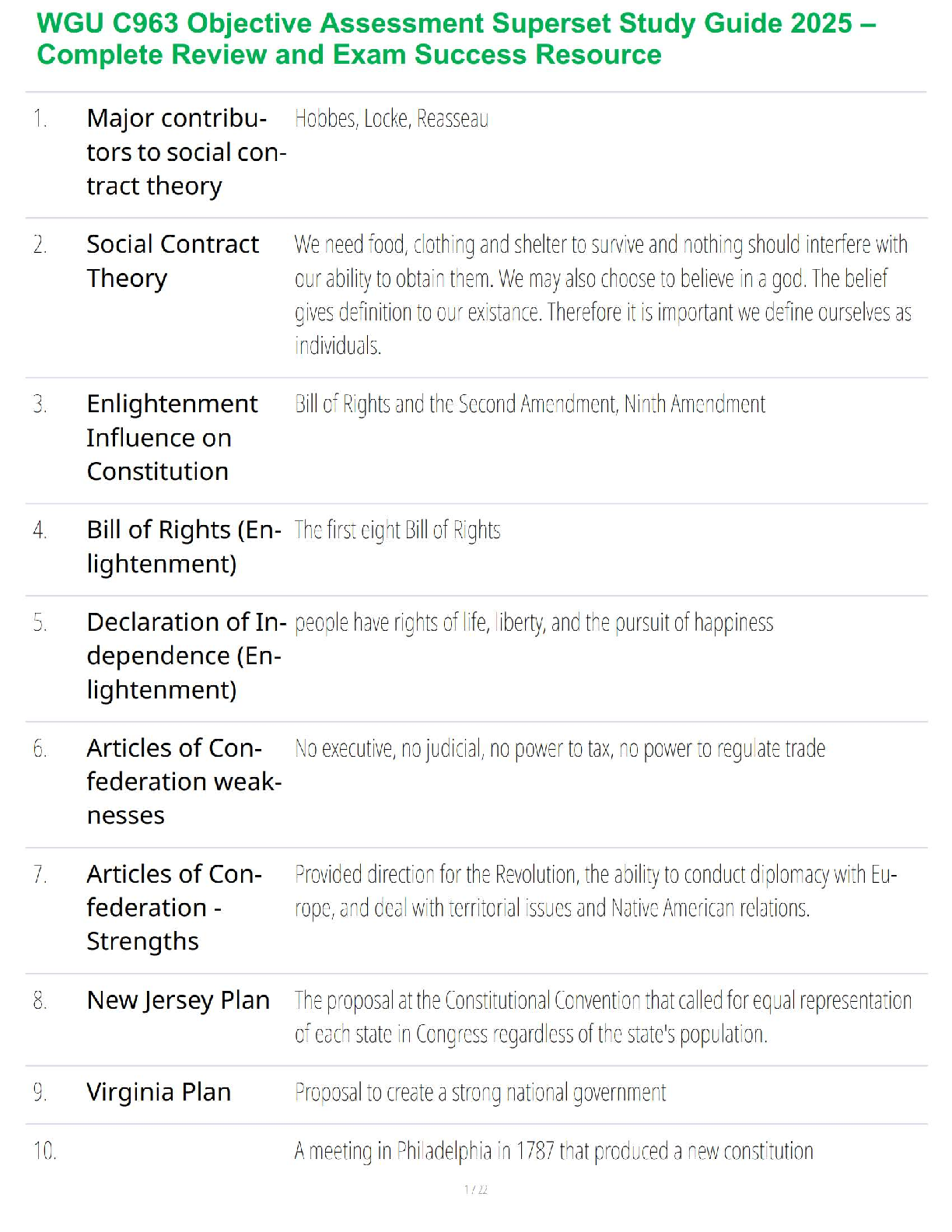
WGU C963 Objective Assessment Superset Study Guide 2025 – Comp...
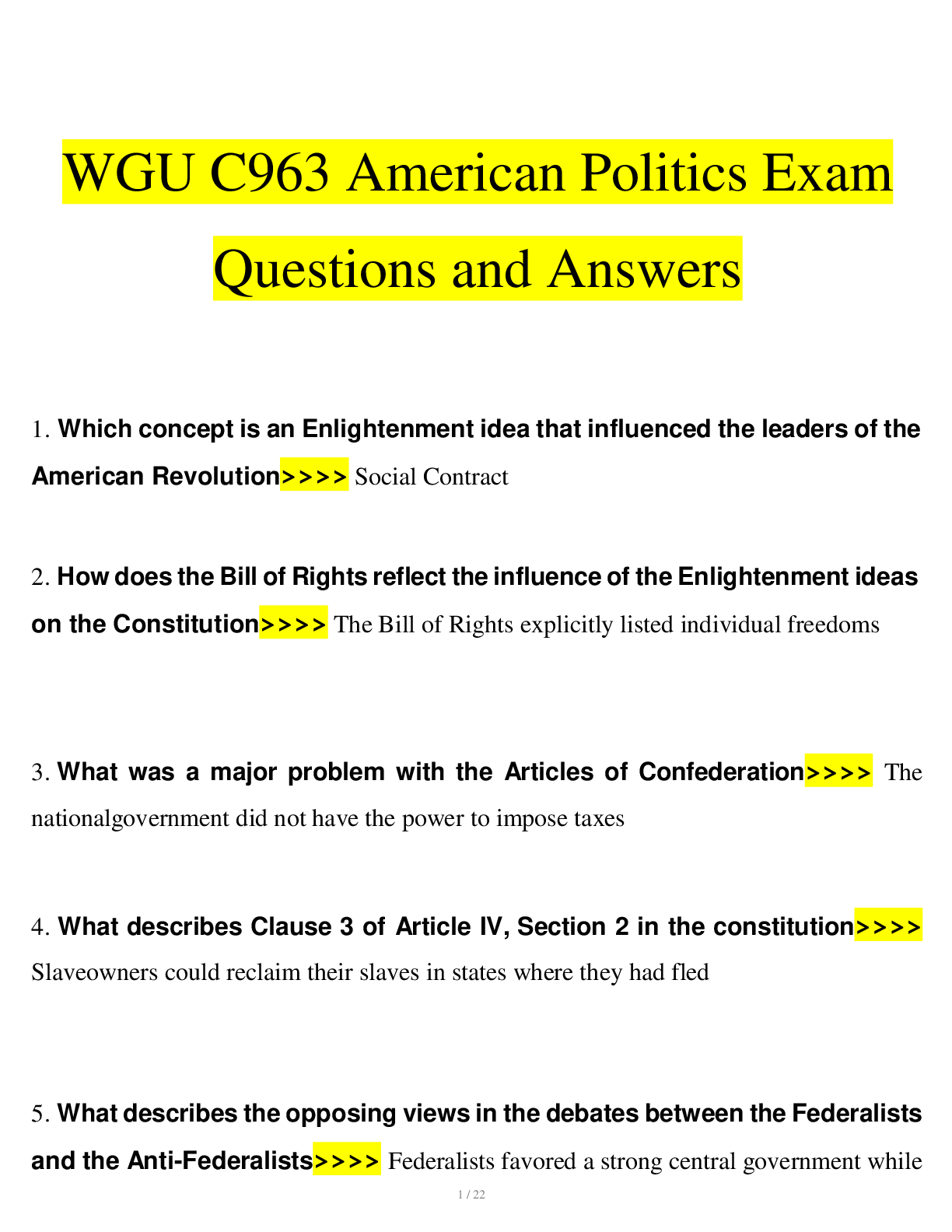
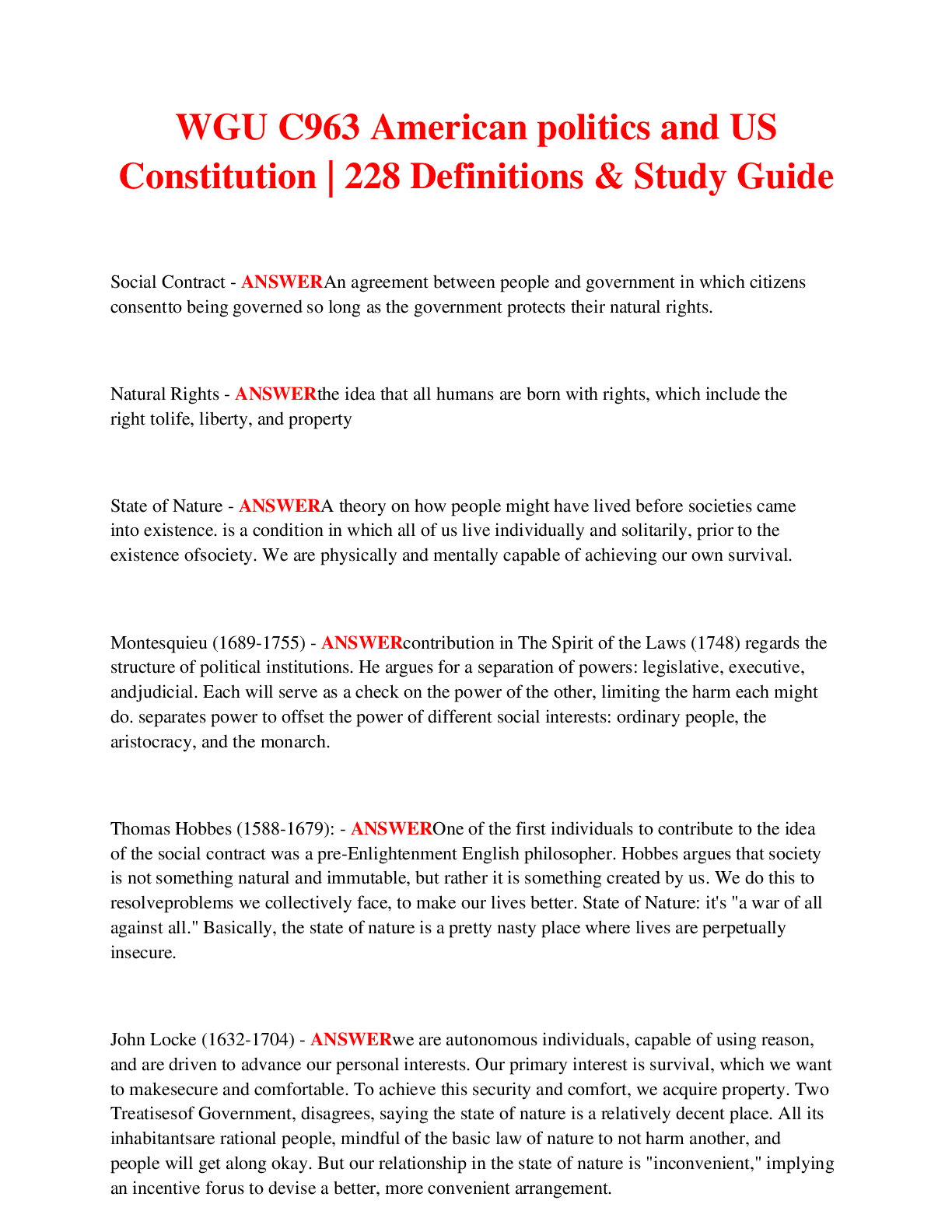
WGU C963 American politics and US Constitution | 228 Definitio...
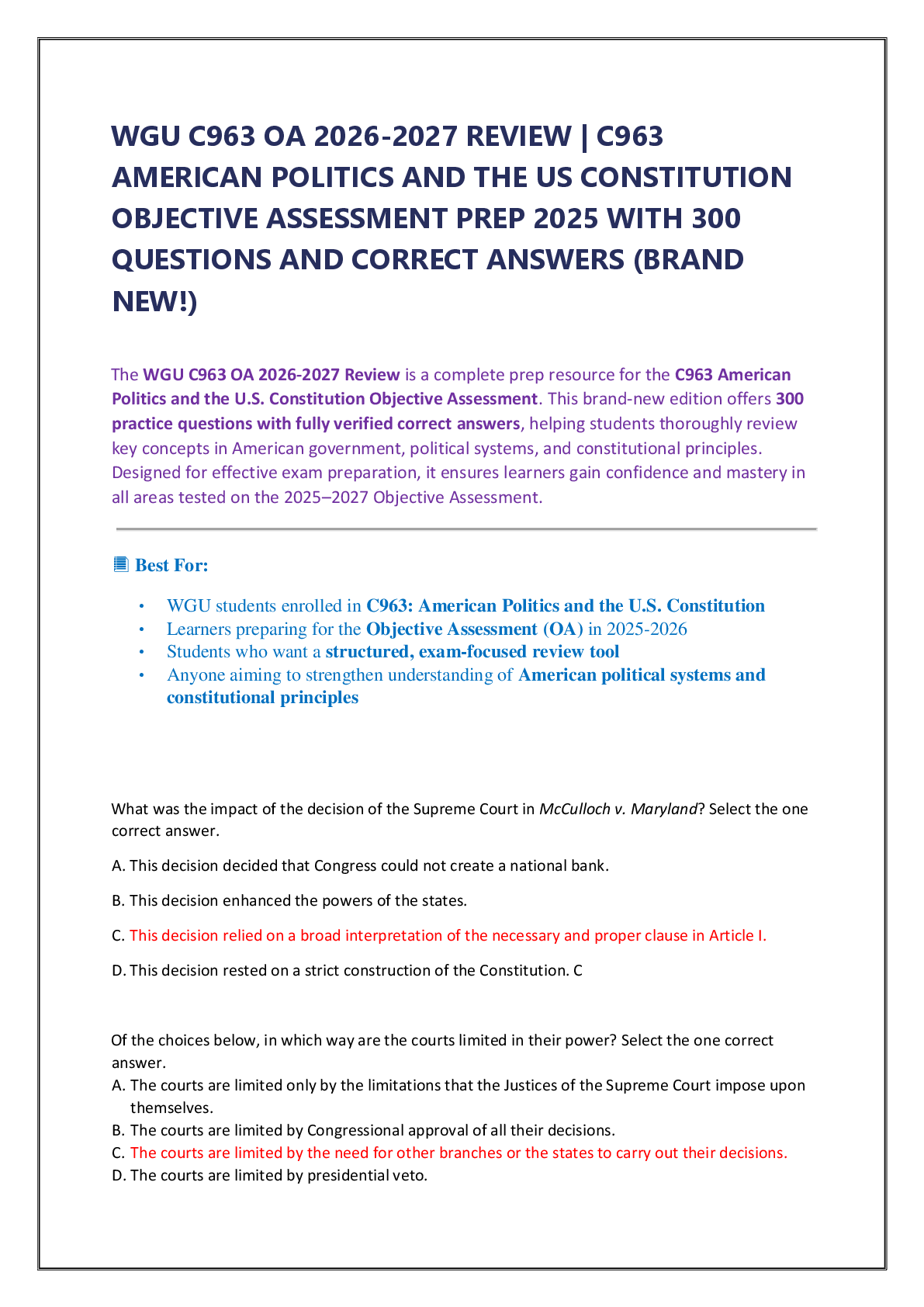
WGU C963 OA 2026-2027 REVIEW | C963 AMERICAN POLITICS AND THE...
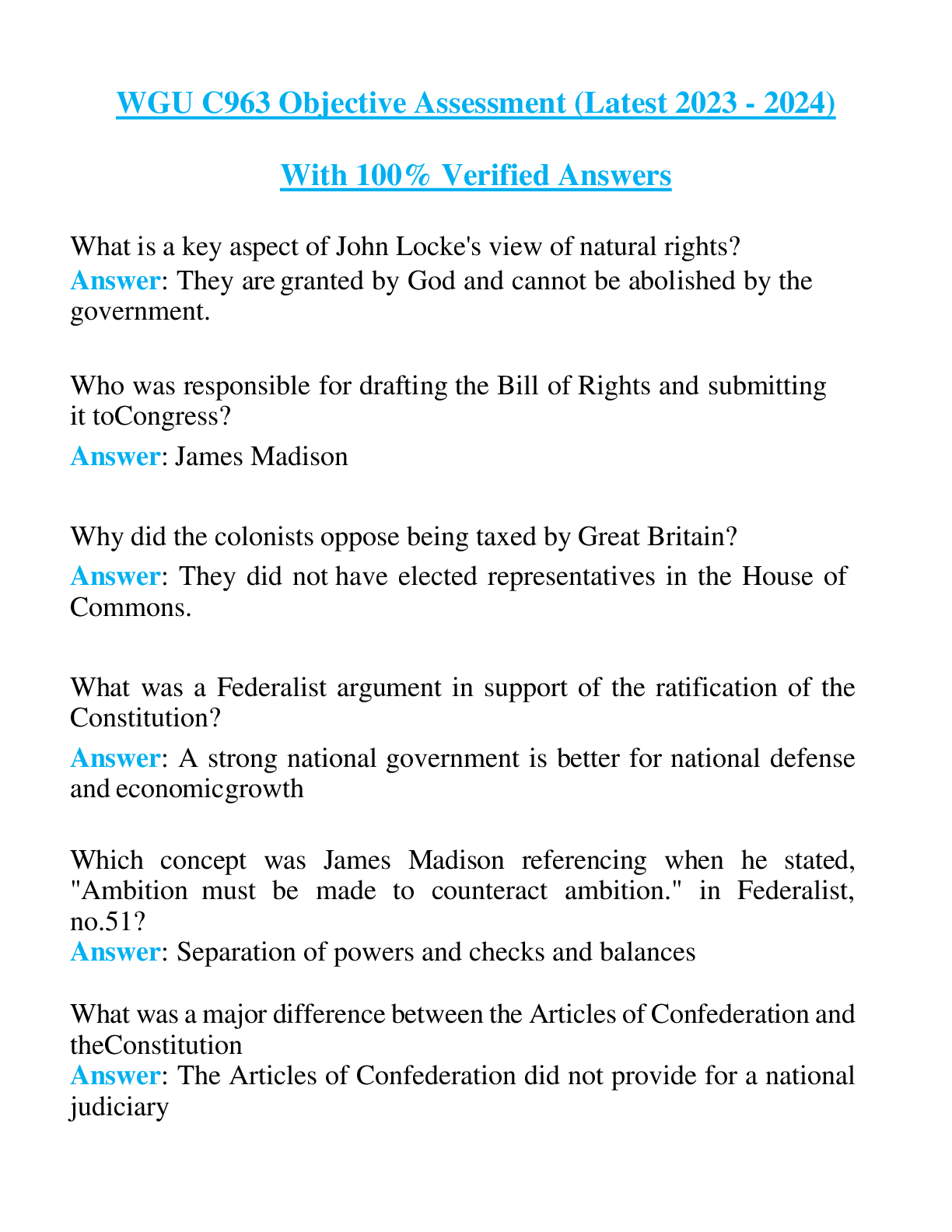
WGU C963 Objective Assessment | 60 Questions With 100% Verifie...

WGU C963 |125 DEFINITIONS in American Politics and the US Cons...
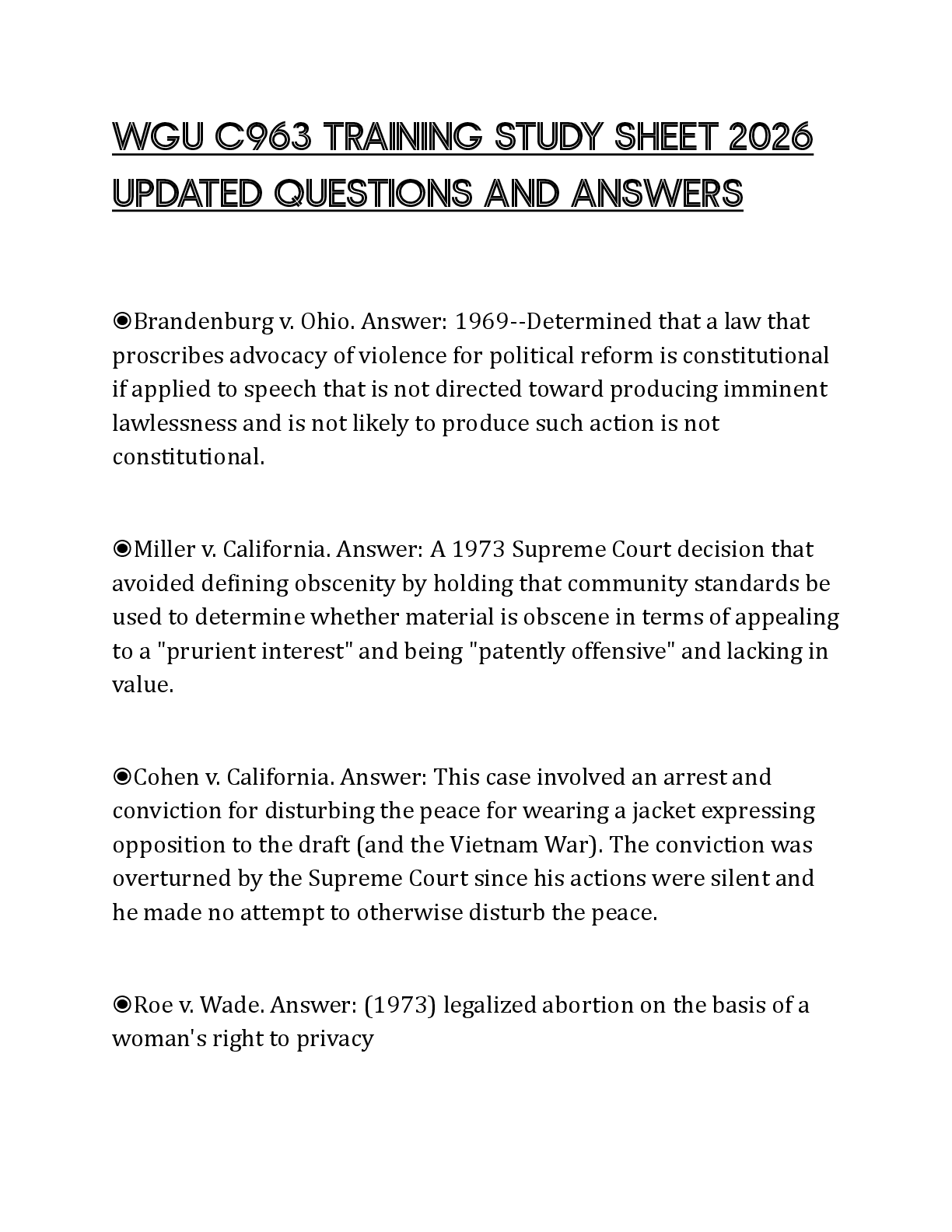
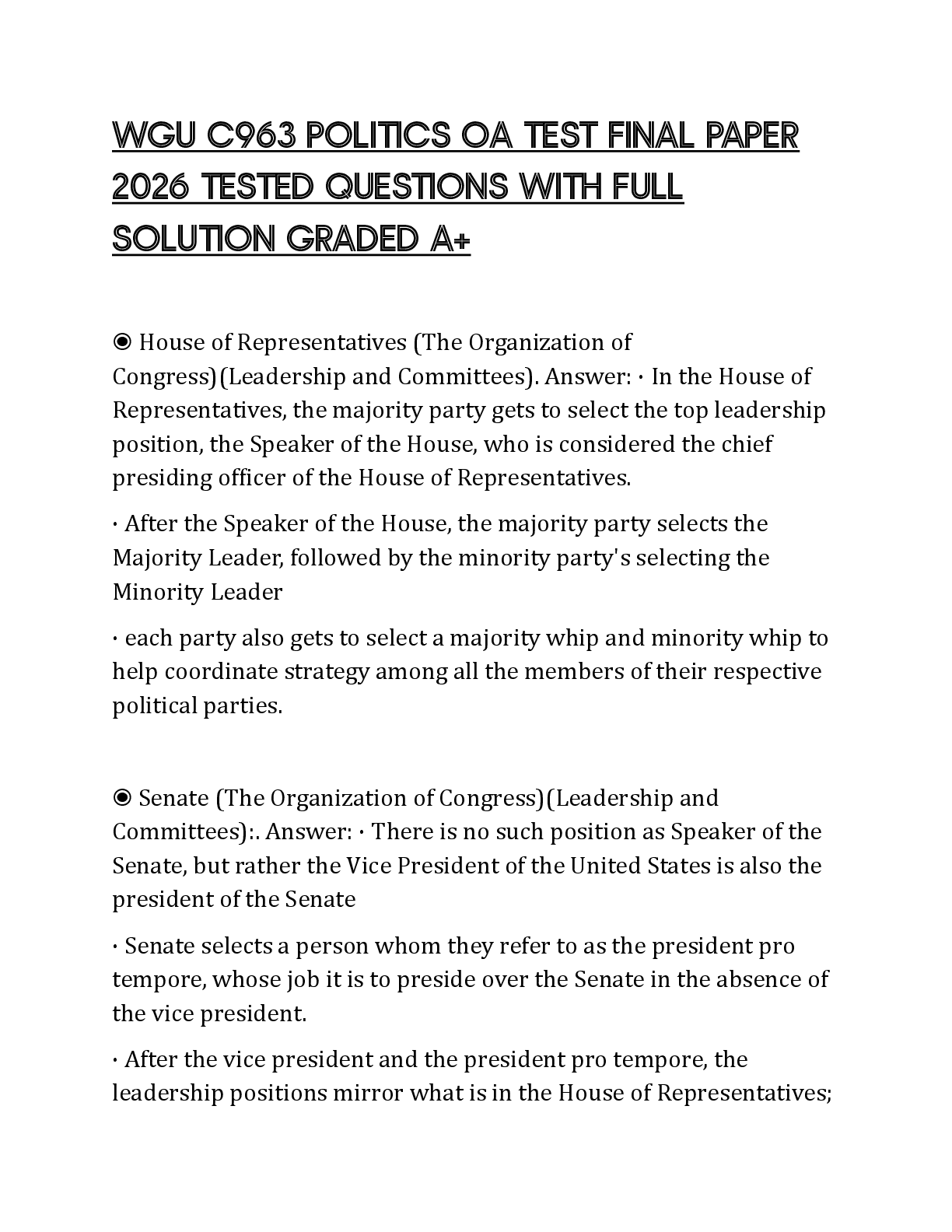
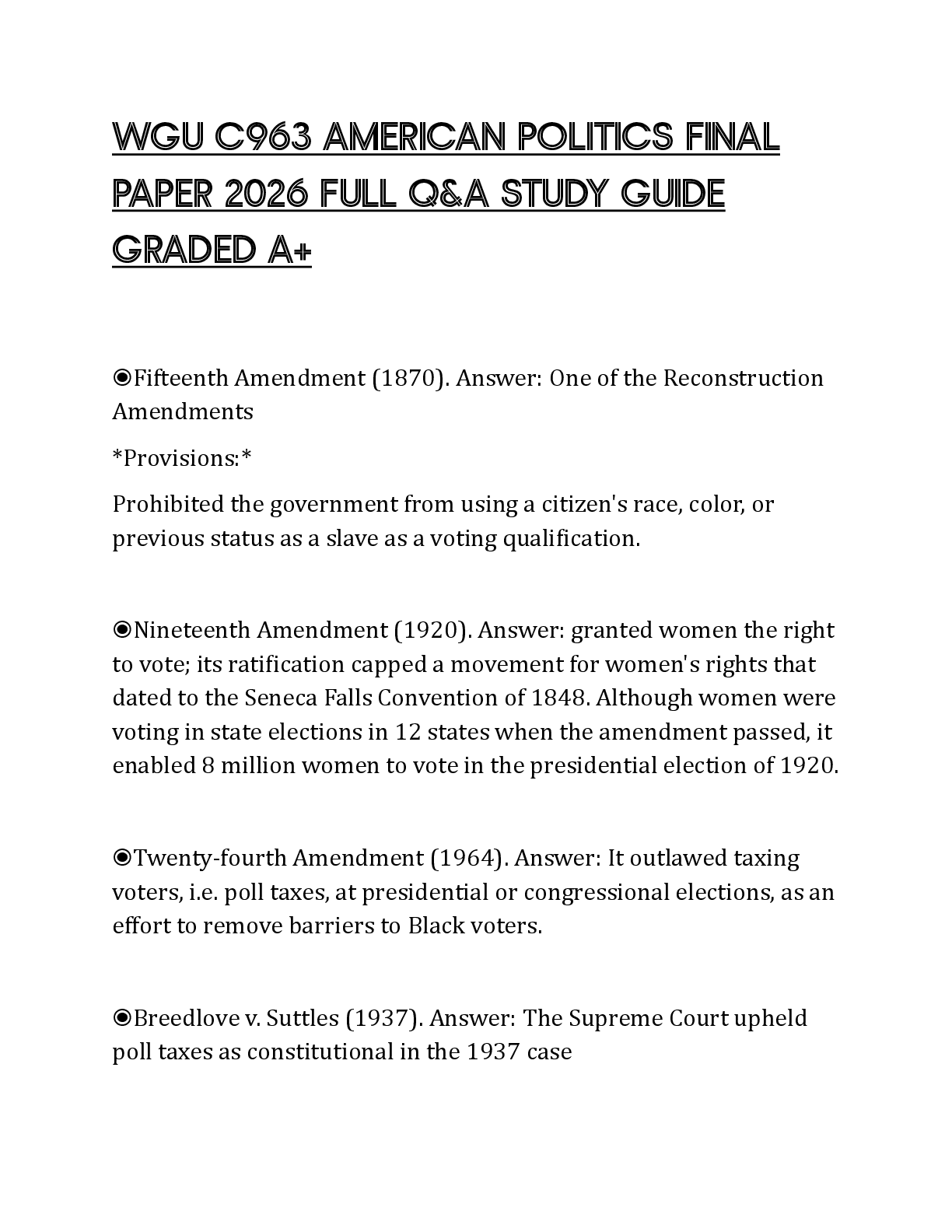
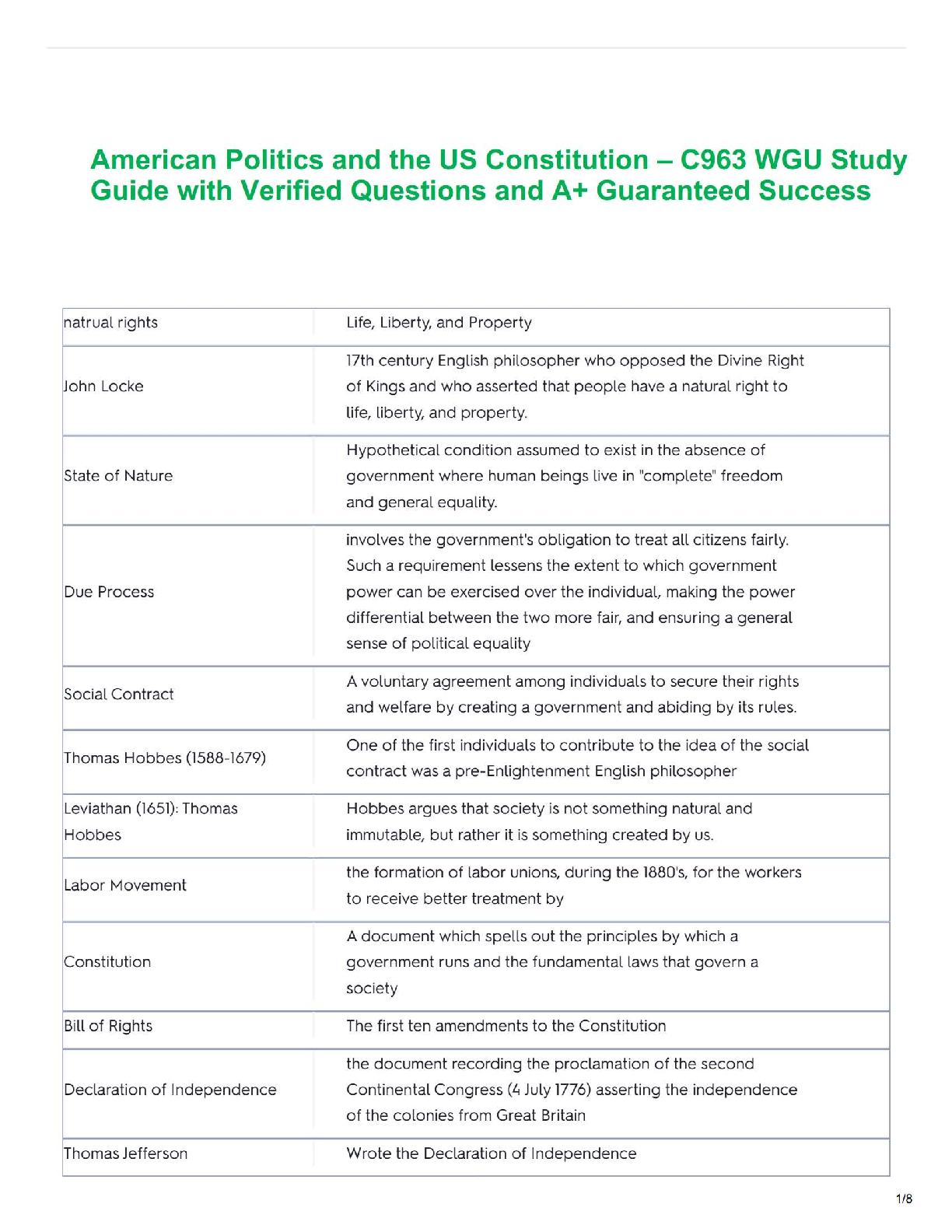
American Politics and the US Constitution – C963 WGU Study Gui...

The Law of Public Communication, 12th Edition William, Daxton...
Briefs of Leading Cases in Law Enforcement, 10e Rolando Del Ca...
WGU C963 Constitutional Court Cases | 35 Q&A Defined and Expla...
WGU C963 All 27 American Constitutional Amendments Defined & E...
WGU C963 American politics and US Constitution | 100% Correct...

 with Complete Solution.png)
 Career Information with Complete Solution.png)


 for E-6 Career Information_watermark.png)