NURSING > QUESTIONS & ANSWERS > School of EMS 202-3 Questions with Correct Answers (All)
School of EMS 202-3 Questions with Correct Answers
Document Content and Description Below
Last updated: 4 years ago
Preview 1 out of 4 pages
Instant download

Buy this Document to get the Full Access Instantly
Provided by Students Who Aced it
We Verify Document Content to Gurantee Accuracy
Also available in bundle (1)
Click Below to Access Bundle(s)

EMS 202 FULL SOLUTION PACK(ALL EMS 202 EXAMS AND STUDY QUESTIONS ARE HERE ,ALL ANSWERED CORRECTLY)
EMS 202 Final Review 68 Questions with 100% Correct Answer. EMS 202 FINAL EXAM 41 Questions with Correct Answers EMS 202 EXAM 5 Questions with Complete Answers EMS 202 EXAM 4 Questions with C...
By Alphascore 4 years ago
$14
9
Reviews( 0 )
Document information
Connected school, study & course
About the document
Uploaded On
Oct 28, 2022
Number of pages
4
Written in
All

Additional information
This document has been written for:
Uploaded
Oct 28, 2022
Downloads
0
Views
452
Topic Tags
Recommended For You
Get more on QUESTIONS & ANSWERS »

NUR 475 HESI-Exit-and-NCLEX-Exam-Gems 2021/2022,100% CORRECT
NUR 475 HESI-Exit-and-NCLEX-Exam-Gems 2021/2022,100% CORRECT

ATI Leadership Questions Part A-NR-562 Leadership and Manageme...

Primary Care 5th ED Sample items 2020/2021 EDITION ALL ANSWERS...

TCIC/TLETS Mobile Access Re-Certification / Law Enforcement Da...

ETC Certification / Entertainment Technology & Lighting System...

S12 Certificate of Fitness Sprinkler / FDNY Fire Protection Sy...

NR 532 Week 2 Graded Discussion 1 – Patient Care Delivery Syst...


NR 511 Health Promotion, Skin Problems and Respiratory Problem...
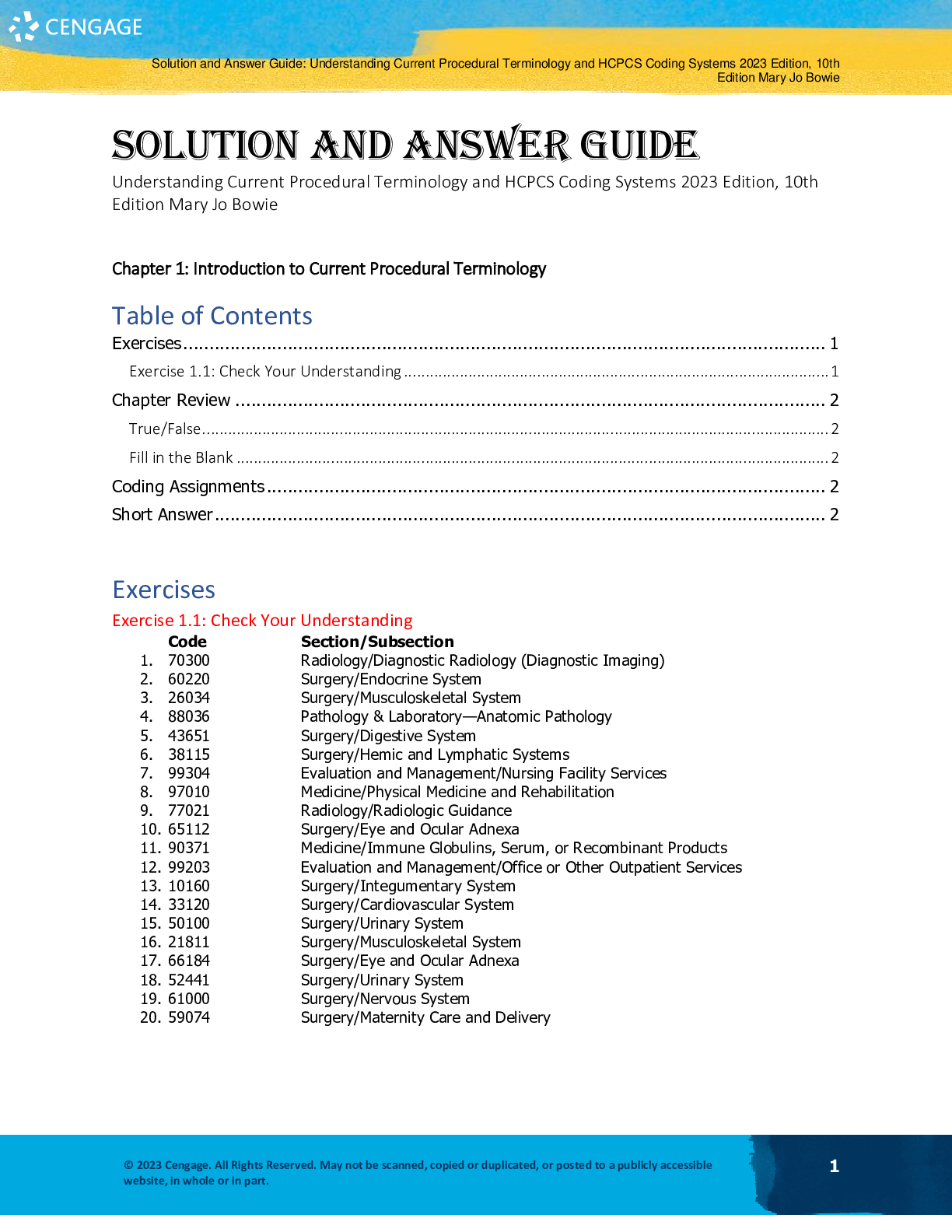
Solutions Manual For Understanding Current Procedural Terminol...
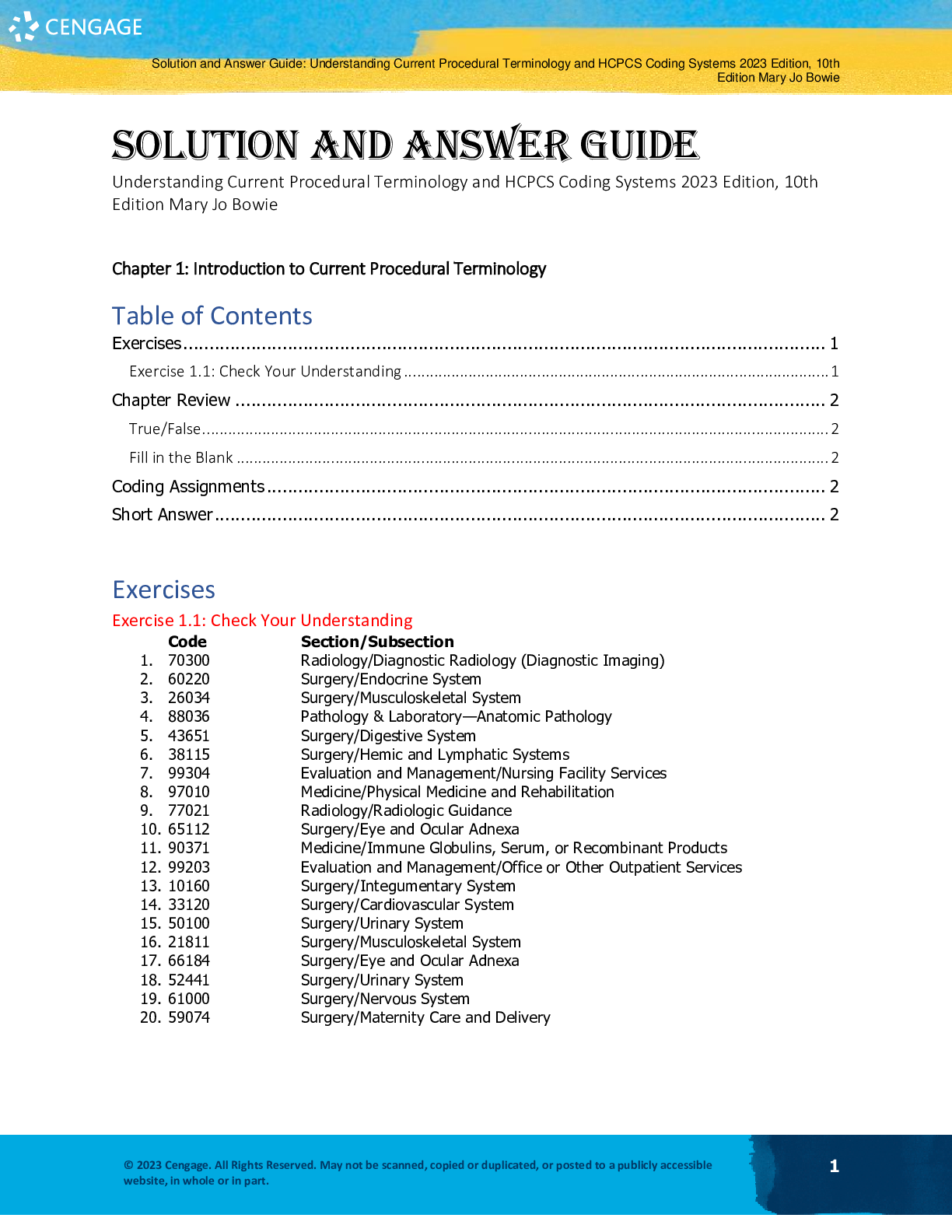
Solution Manual For Understanding Current Procedural Terminolo...
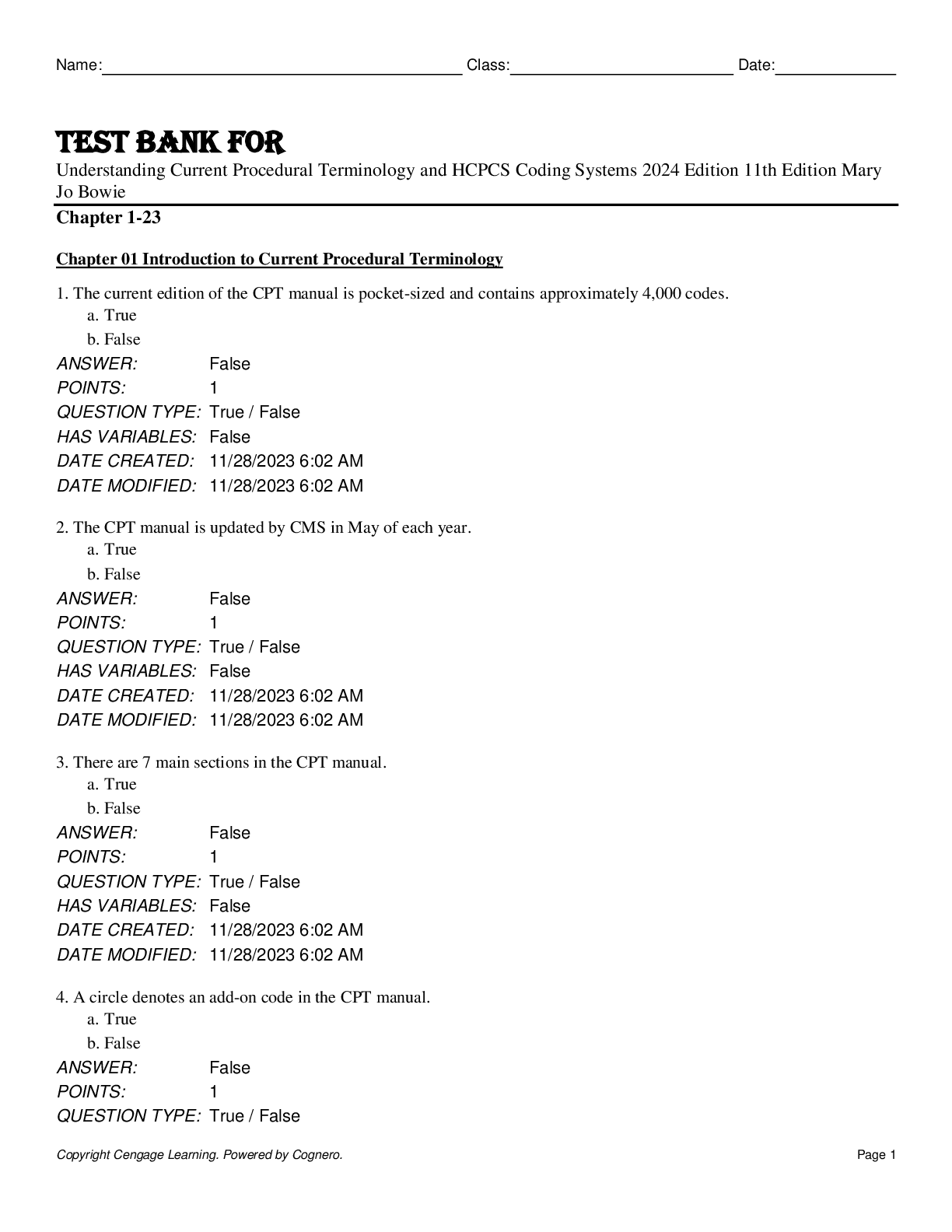
Test Bank For Understanding Current Procedural Terminology and...
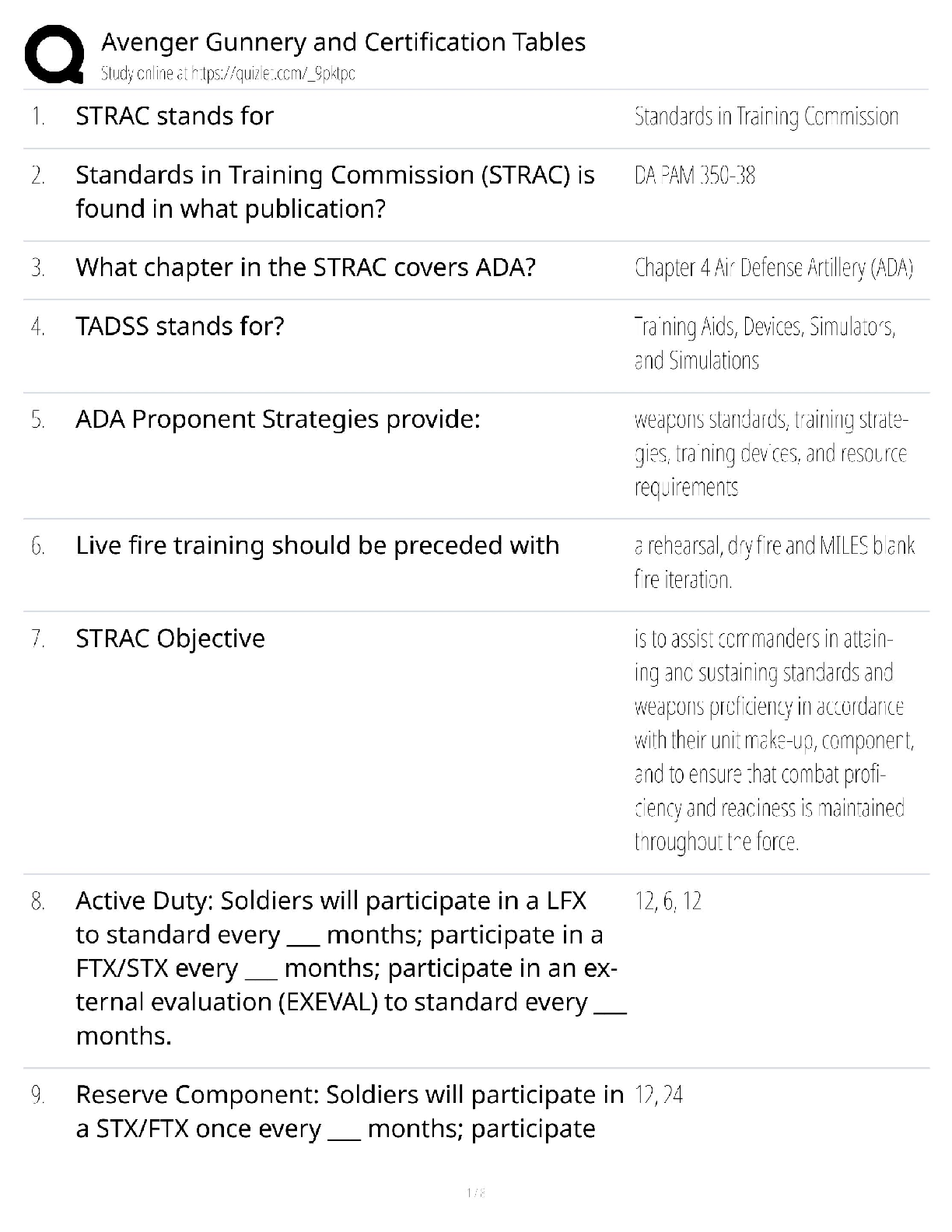
Avenger Gunnery & Certification Tables / Military Weapon Syste...
Solutions Manual Understanding Current Procedural Terminology...

 with Complete Solution.png)
 Career Information with Complete Solution.png)


 for E-6 Career Information_watermark.png)