Anatomy  >  STUDY GUIDE  >  BIOS 255 New final Exam study guide 65 MCQ (65X2=130) (All)

BIOS 255 New final Exam study guide 65 MCQ (65X2=130)

Document Content and Description Below

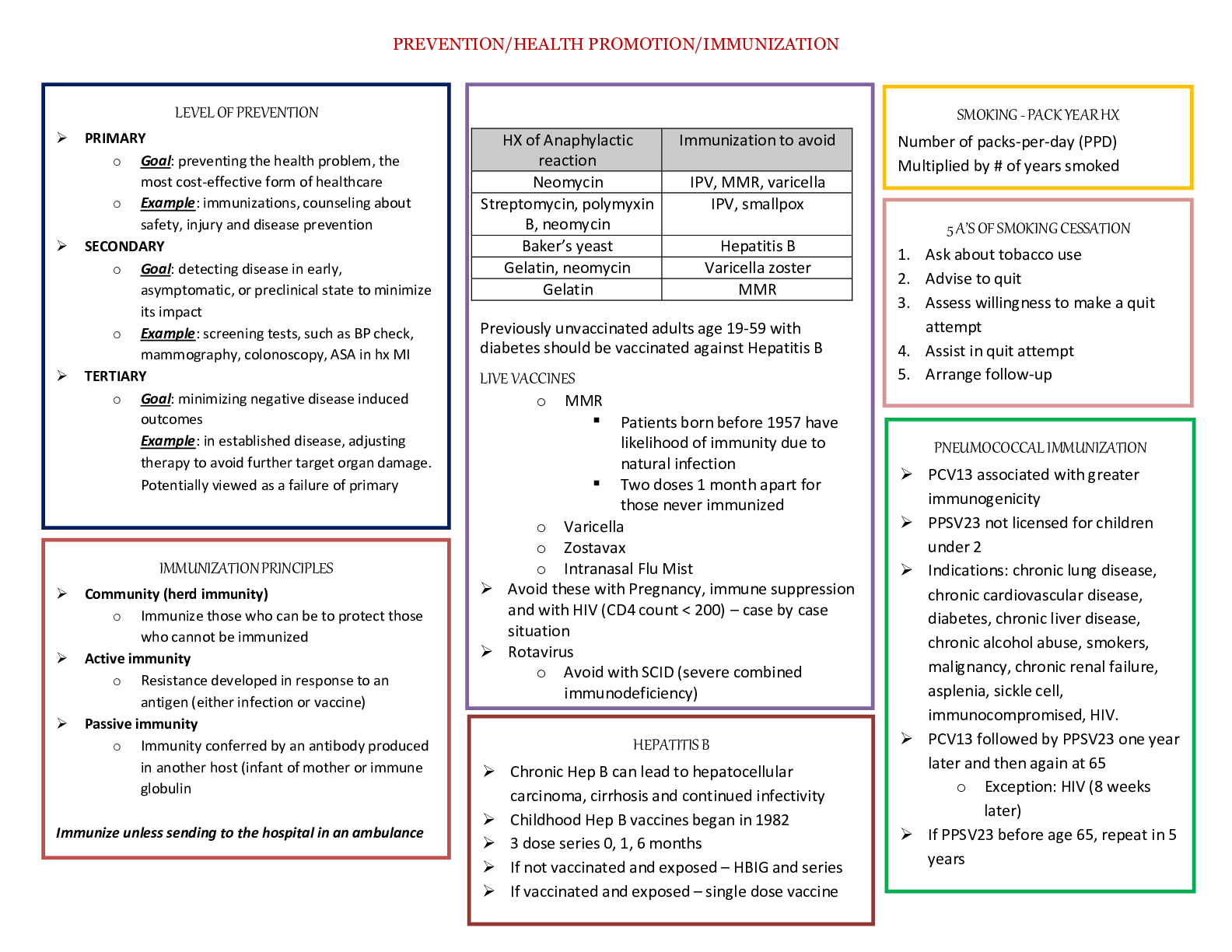
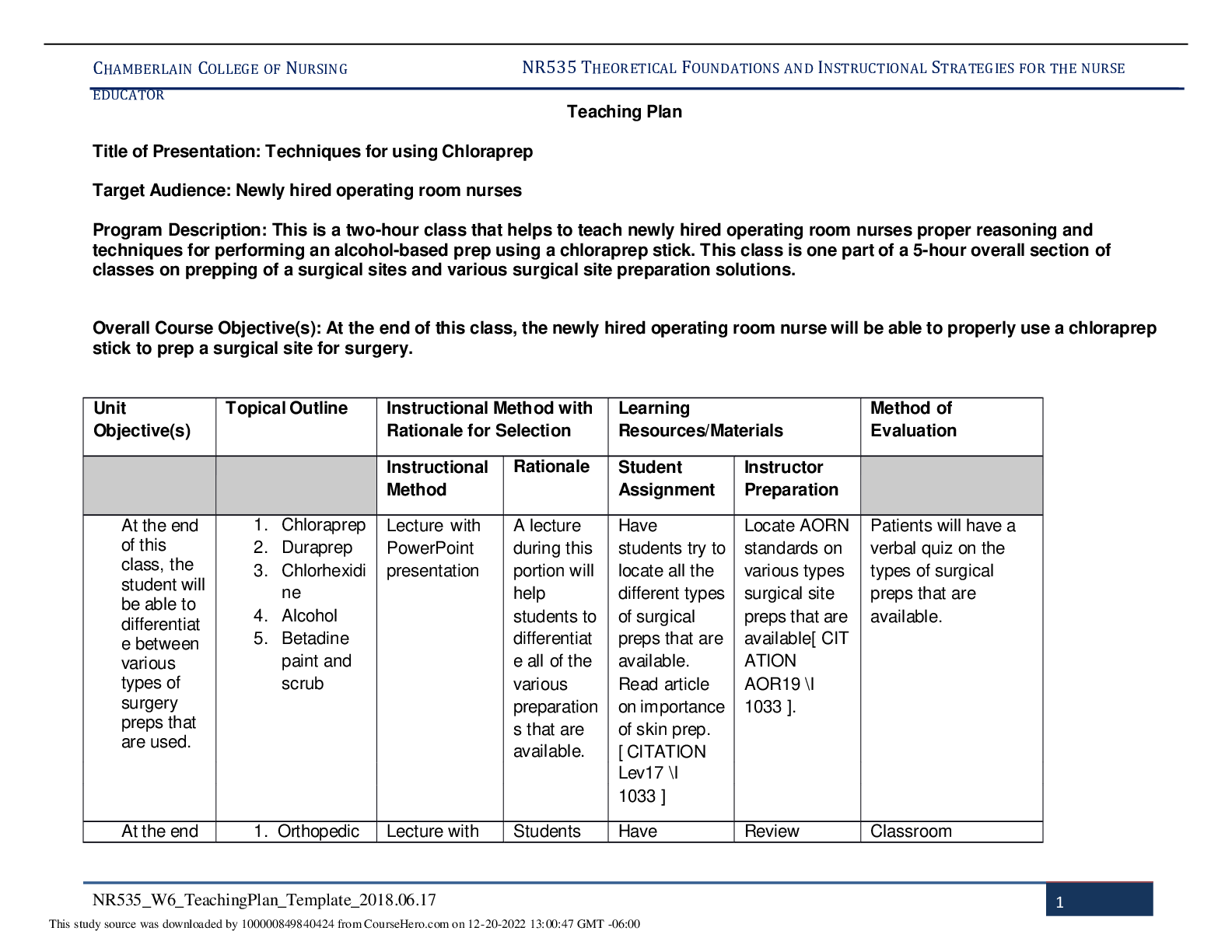
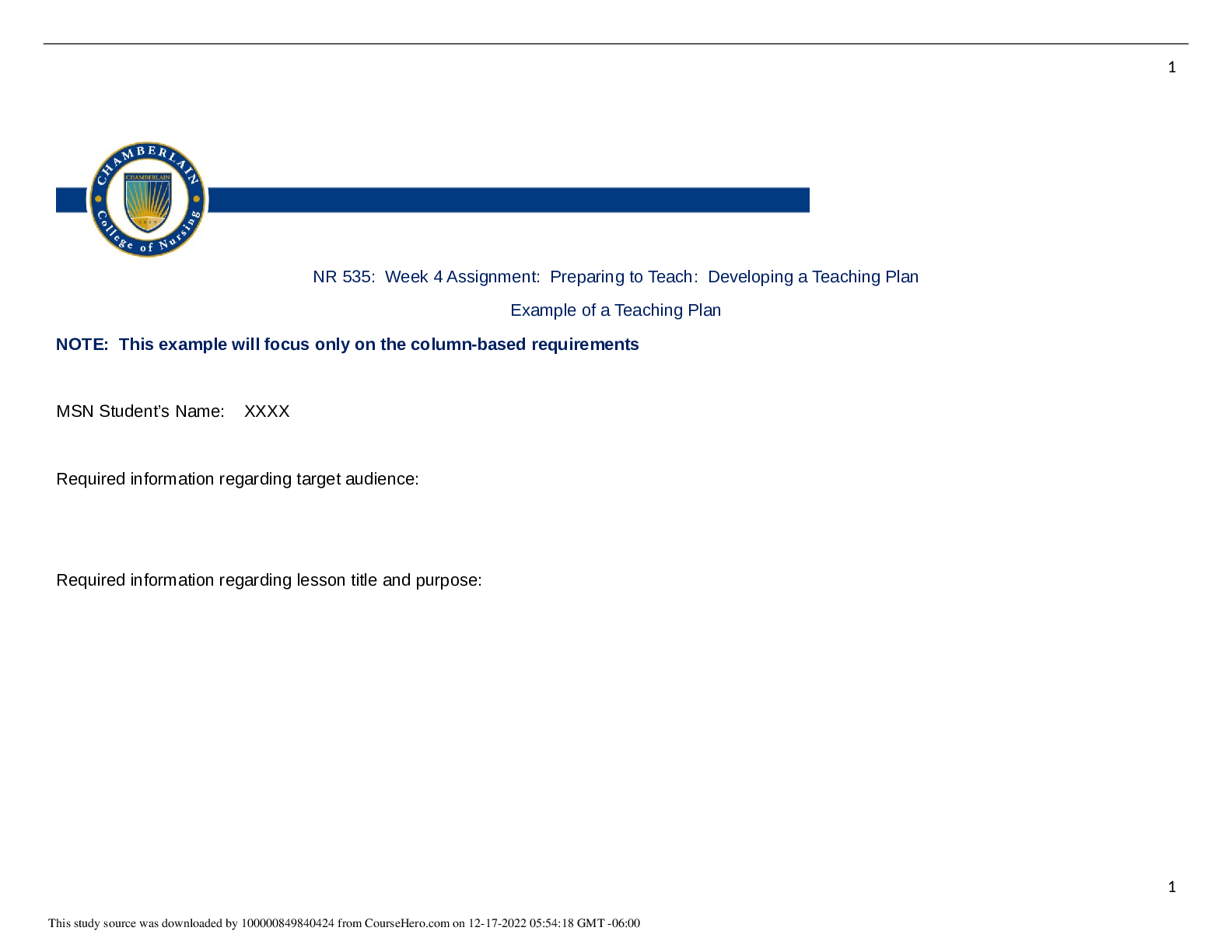
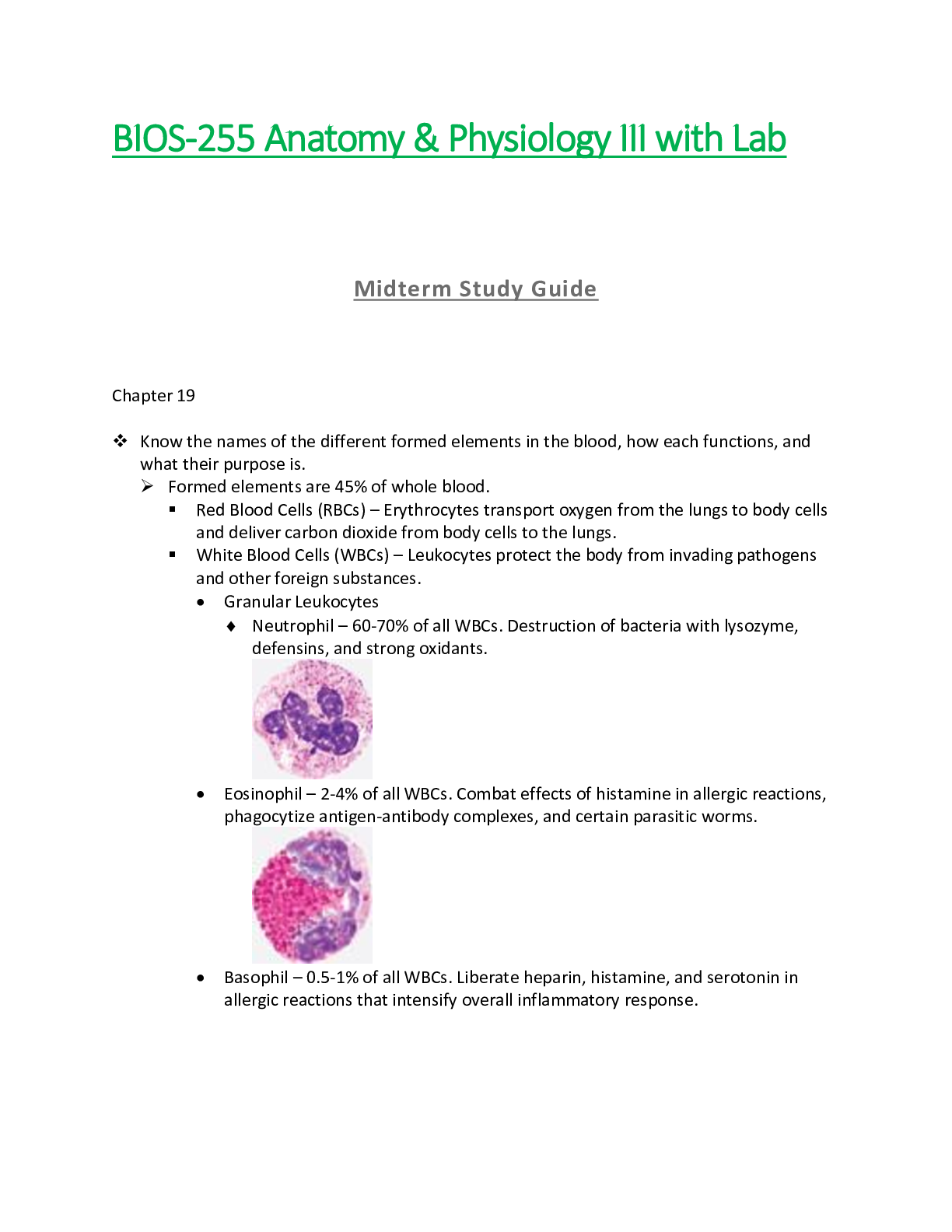
BIOS 255 New final Exam study guide 65 MCQ (65X2=130) Heart Changes happening in damage to different areas of the heart – right heart failure, lung edema etc membranes that surrounds and protects ... the heart structures of the heart – atria, ventricles, valves, routes of blood passage through these structures. Blood entering and leaving the heart, pulmonary circulation, systemic circulation Blood vessels & blood Types of blood cells, functions of each type, Erythrocytes, leukocytes (all types), thrombocytes/platelets, proerythroblast, megakaryoblast, hematopoiesis, plasma proteins that play a role in blood clotting Lymphatic system & immunity Types of immunity, examples- naturally acquired active immunity, naturally acquired passive immunity, artificially acquired active immunity, artificially acquired passive immunity, naturally acquired innate immunity Components of the lymphatic system, locations, functions of each component (thymus, spleen, Functions of the lymphatic and immune system, contents of lymph, Cells of the immune system – T & B cells, cytotoxic T cells, Helper T cells, Memory T cells, plasma B cells, Memory B cells macrophages, neutrophils, natural killer cells and dendritic cells, Antigen presenting cells, T cell receptors, B cell receptors, CD4+, CD8+, MHC Class I and II antigens presentation on T and B cells Allergies (types of allergies), acute allergic response, immune responses involving all the types of immune cells, contact dermatitis, positive selection of T cells, B cell formation, maternal antibodies attacking fetal blood cells during a second pregnancy Antigens, class of antibodies, IgG, IgA, IgM, IgD, IgE – where/what body fluids are they found, structures/configuration, functions of each type Innate & adaptive immunity, active & passive immunity, Primary and secondary immune response, antimicrobial proteins, functions of histamines, perforins, granzymes, cytokines, signs of inflammation, immunodeficiency disease, HIV, membrane attack complexes to eliminate cytolysis in pathogenic cells Respiratory system & respiration Structures of the respiratory system - cardiac notch, false vocal cord, terminal bronchiole, oropharynx, thyroid cartilage, bronchial arteries, pulmonary veins, pulmonary arteries- functions of these structures, gaseous exchange, the conductive and respiratory portion of respiratory system, Which vessel carries highly oxygenated blood from the lungs to the heart, muscles that are important to you when blowing up a balloon, muscles that are important to you when taking a deep breath into your lungs Inspiration & expiration- muscles involved, neural mechanisms of respiratory control, internal & external respiration, gaseous transport (oxygen and carbon dioxide transport mechanisms), Ferritin, gaseous exchange cells of the alveoli - Type I alveolar cells, Type II alveolar cells, Type III alveolar cells, their functions lung volumes-vital capacity, residual volume, tidal volume, expiratory reserve capacity Factors affecting affinity of hemoglobin for oxygen and oxygen delivery to tissues, Sites of gas exchange, direction of the diffusion of gases at the alveoli and tissue, relationship between the pressure and volume of gases, solubility of gases - Dalton’s law, Boyle’s law, Henry’s law what happens in Asthma, Voice pitch control, Eupnea, 20 SA questions (20X2=40) Structure labelling - great saphenous vein, popliteal vein, femoral artery, common carotid artery vertebral artery, vena cava, common iliac vein, radial artery, aorta chambers of the heart, valves, papillary muscles, chordae tendinae nasal meatuses, uvula, epiglottis, oropharynx, laryngopharynx, trachea, bronchi, carina This study source was downloaded by 100000849840424 from CourseHero.com on 11-03-2022 07:43:16 GMT -05:00 thoracic duct, thymus, MALT, cisterna chyli, spleen, peyer’s patch, Bone marrow (B-cells formation) 5 Calculations (6X5=30) Minute ventilation MV= 12 breath /min X 500 = 6 liters/min (minute ventilation ) Respiration Rate : Tidal Volume - Anatomic Dead Space * numbers of breaths ex: (500-150mL)*12 = 4,200mL/min350ml/breath X 12 breath per min = 4200 ml/min Tidal Volume The volume of air inhaled and exhaled in a normal, resting breath - 500 mL. heart rate from ECG tracing=??? Cardiac cycle= 60sec/ any heart rate she gives Mean Arterial Pressure= 1/3(SBP-DBP)+ DBP Stroke volume = EDV- ESV Ejection volume= ( SV / EDV)100 Pulse pressure = Systolic – diastolic 2 Long answer essay (2X15=30) (A) Describe the innate and adaptive immune systems, how they work and how they interact. (B) Explain the similarities and differences between primary and secondary responses of the adaptive immune system (C) List and briefly describe the major functions of the various subclasses of T-cells. (D) Explain the various subclasses of antibodies - how they are similar, how they differ. A) Define ventialtion, external respiration and internal respiration. Be sure to identify their functions and where they occur. (B) Explain the neural control of ventilation including brain centers, sensory and motor signals. (C) Describe how oxygen and carbon dioxide are transported in the blood with a special emphasis on the factors that affect the loading/unloading of these gases in the lungs vs. tissues. [Show More]

Last updated: 3 years ago

Preview 1 out of 6 pages

Buy Now

Instant download

We Accept:

Payment methods accepted on Scholarfriends (We Accept)
Preview image of BIOS 255 New final Exam study guide 65 MCQ (65X2=130) document

Buy this document to get the full access instantly

Instant Download Access after purchase

Buy Now

Instant download

We Accept:

Payment methods accepted on Scholarfriends (We Accept)

Also available in bundle (1)

Click Below to Access Bundle(s)

BIOS 255 Anatomy And Physiology III With Lab/ Entire Course Week 1 – 8 BUNDLE DEAL (100% CORRECT ANSWERS)

BIOS 255 Week 1 Assignment: Case Study – Coagulation BIOS-255 Week 1 Assignment: The Cardiovascular System: Blood BIOS 255 Week 1 Assignment: Onsite Lab BIOS 255 Week 2 Assignment: Case Study – H...

By Prof. Goodluck 3 years ago

$14.5

28  

Reviews( 0 )

$12.00

Buy Now

We Accept:

Payment methods accepted on Scholarfriends (We Accept)

Instant download

Can't find what you want? Try our AI powered Search

200
0

Document information


Connected school, study & course


About the document


Uploaded On

Nov 03, 2022

Number of pages

6

Written in

All

Seller


Profile illustration for Prof. Goodluck
Prof. Goodluck

Member since 4 years

165 Documents Sold

Reviews Received
46
9
10
4
9
Additional information

This document has been written for:

Uploaded

Nov 03, 2022

Downloads

 0

Views

 200

Document Keyword Tags

More From Prof. Goodluck

View all Prof. Goodluck's documents »

Recommended For You

Get more on STUDY GUIDE »
$12.00
What is Scholarfriends

Scholarfriends.com Online Platform by Browsegrades Inc. 651N South Broad St, Middletown DE. United States.

We are here to help

We're available through e-mail, Twitter, Facebook, and live chat.
 FAQ
 Questions? Leave a message!

Follow us on
 Twitter

Copyright © Scholarfriends · High quality services·