Literary Studies > QUESTIONS & ANSWERS > AP European History Chapter 19 Questions and Answers with Complete Solutions (All)
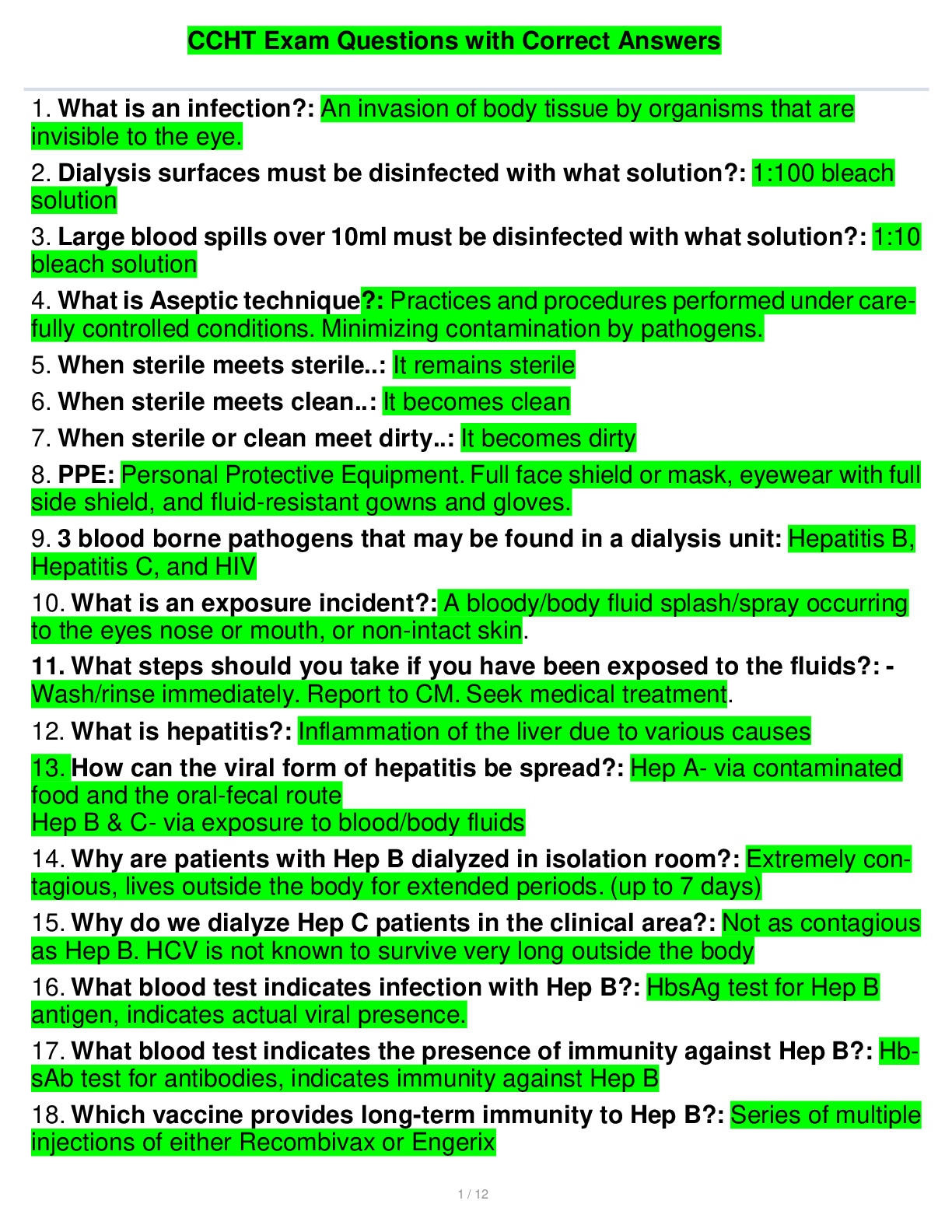
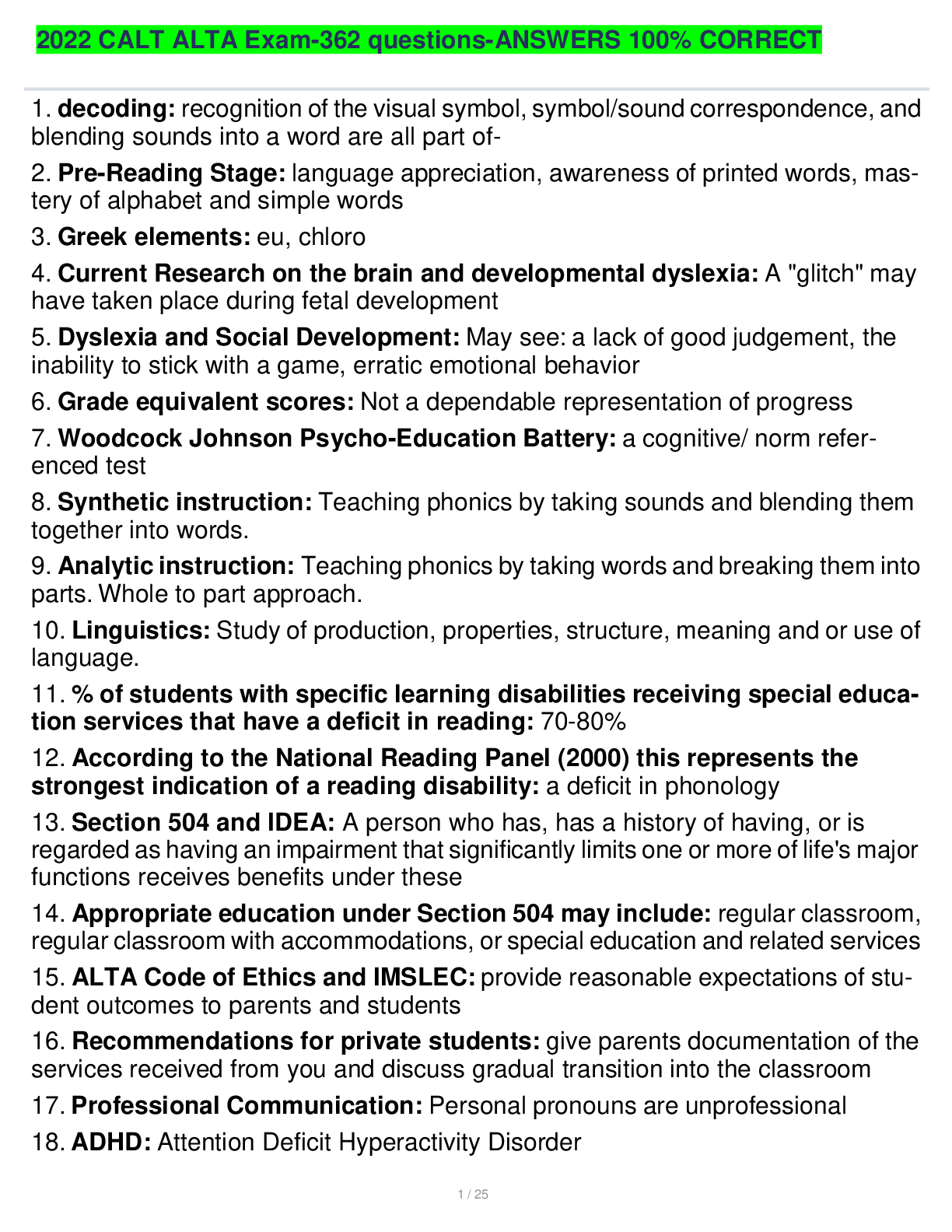
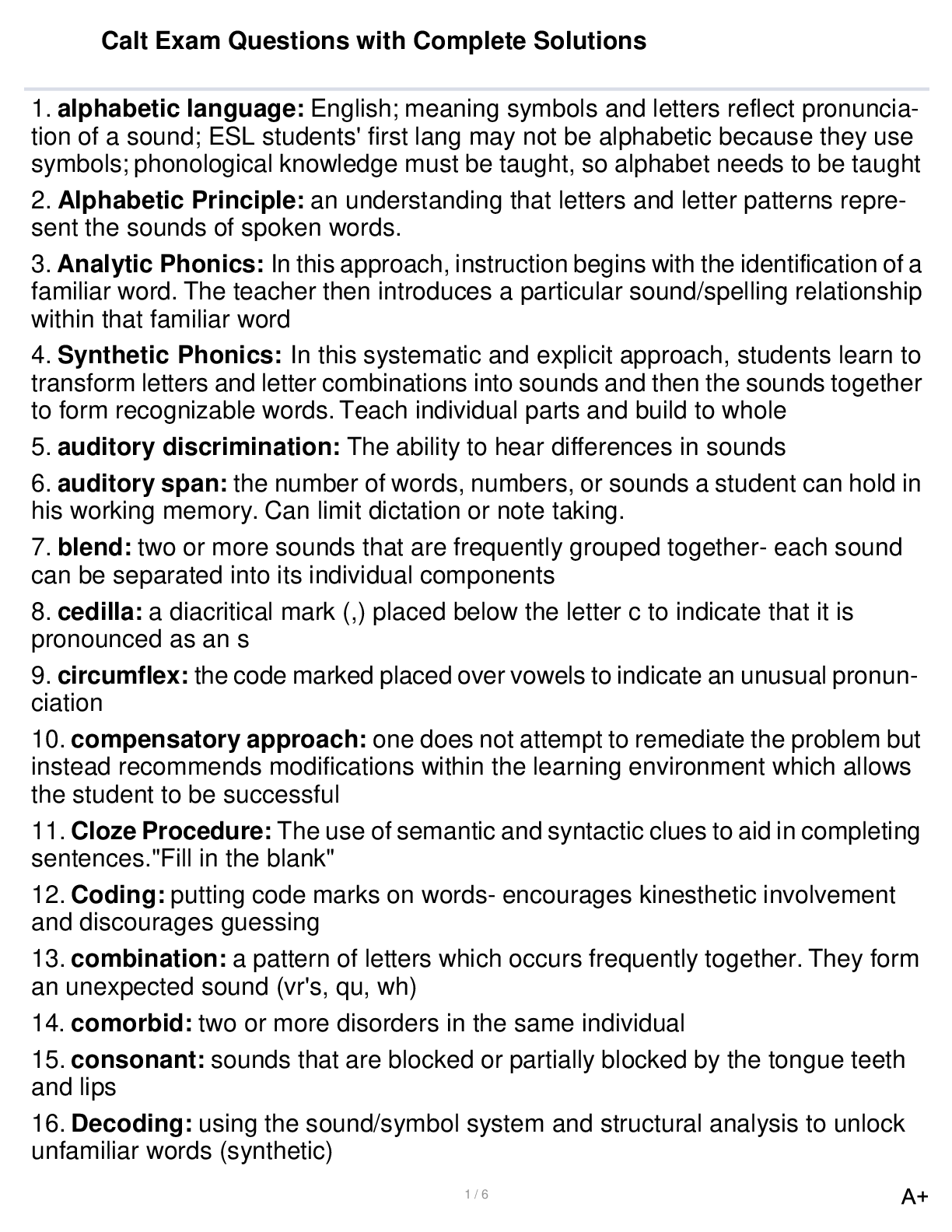
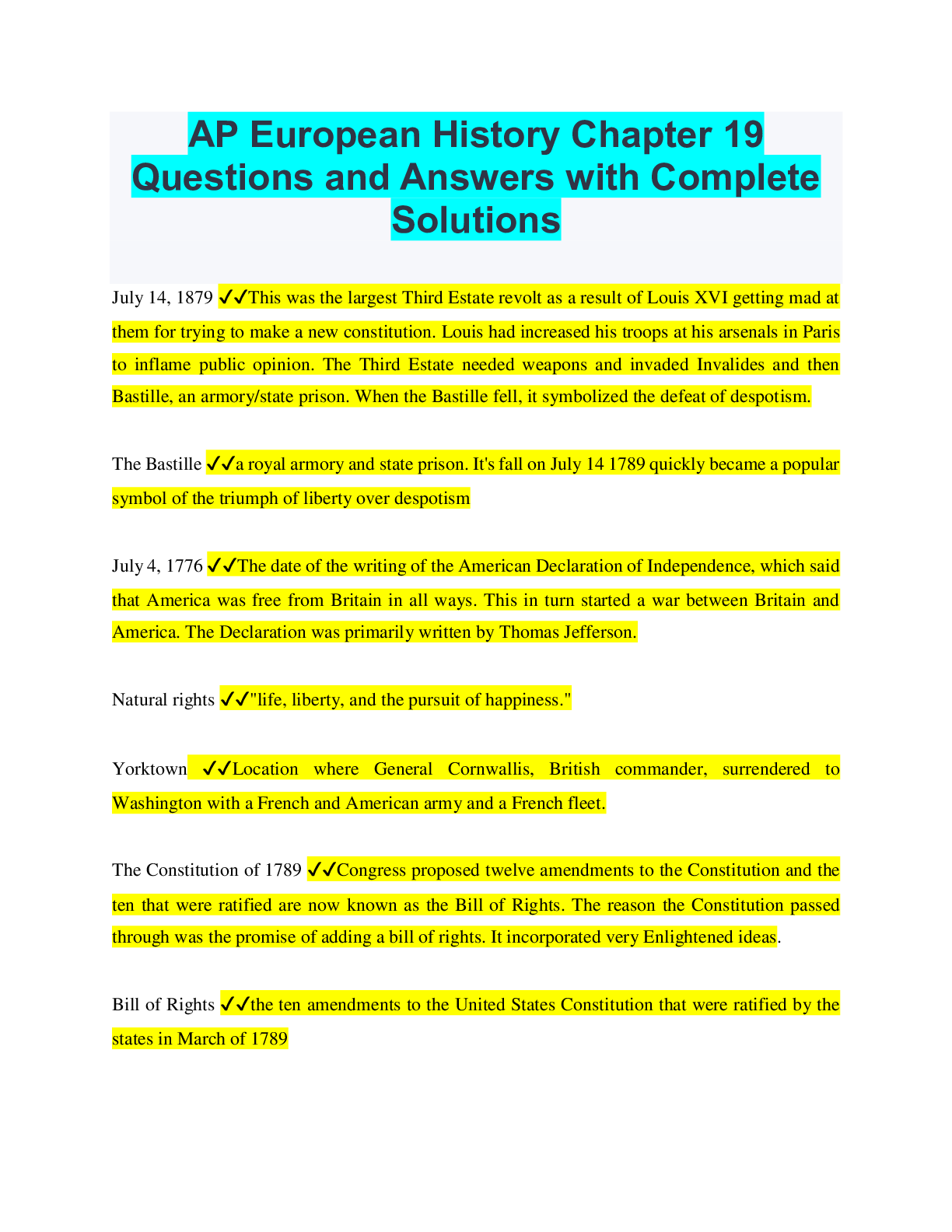
AP European History Chapter 19 Questions and Answers with Complete Solutions
Document Content and Description Below
Last updated: 4 years ago
Preview 1 out of 8 pages
Instant download
Buy this Document to get the Full Access Instantly
Provided by Students Who Aced it
We Verify Document Content to Gurantee Accuracy
Also available in bundle (1)
Click Below to Access Bundle(s)
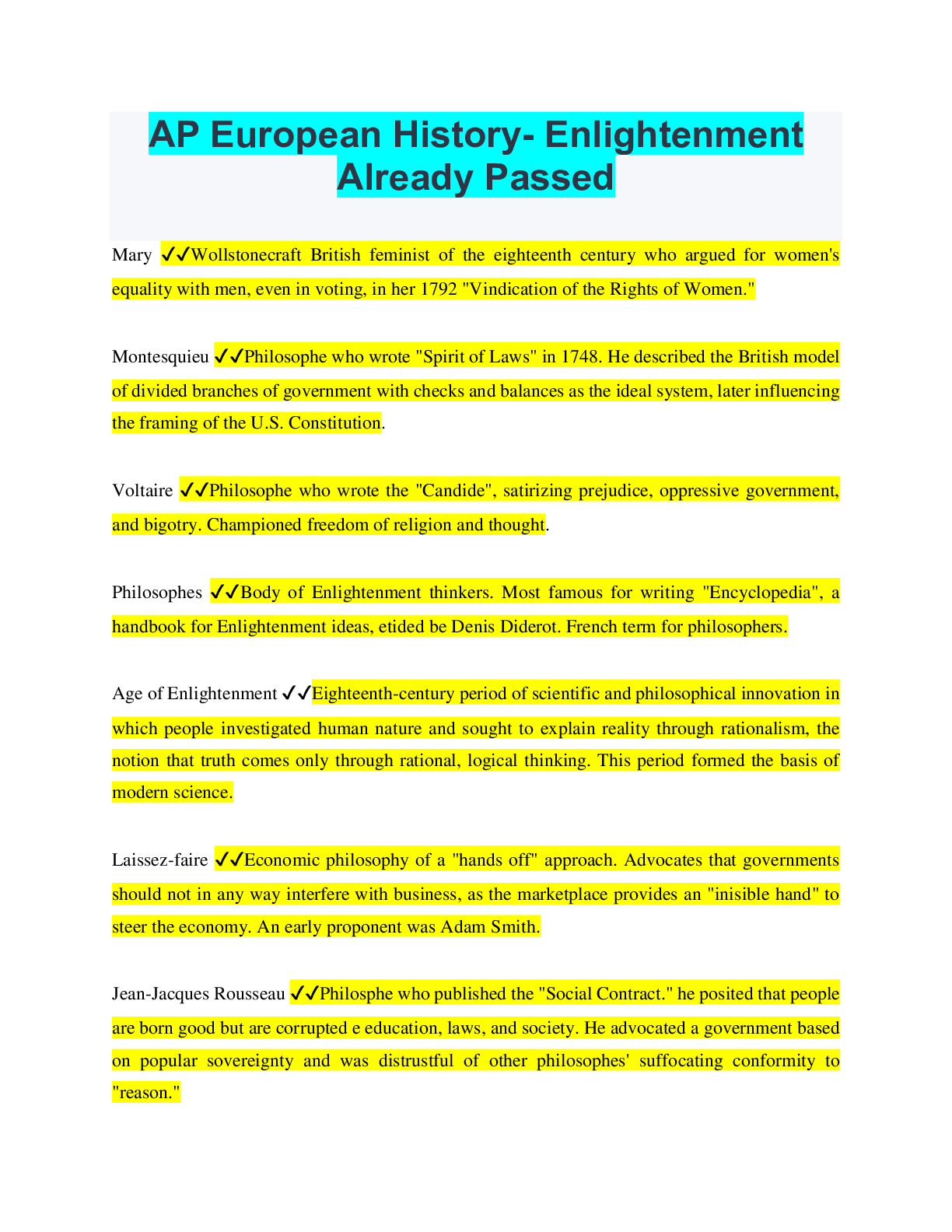
AP European History Exam FULL SOLUTION PACK(ALL AP European History Exams AND STUDY QUESTIONS ARE HERE ,ALL ANSWERED CORRECTLY)
AP European History- Enlightenment Already Passed AP European History- French Revolution Questions and Answers Graded A+ AP European History – Renaissance Already Passed AP European History E...
By Alphascore 4 years ago
$15
20
Reviews( 0 )
Document information
Connected school, study & course
About the document
Uploaded On
Nov 14, 2022
Number of pages
8
Written in
All

Additional information
This document has been written for:
Uploaded
Nov 14, 2022
Downloads
0
Views
318
Topic Tags
Recommended For You
Get more on QUESTIONS & ANSWERS »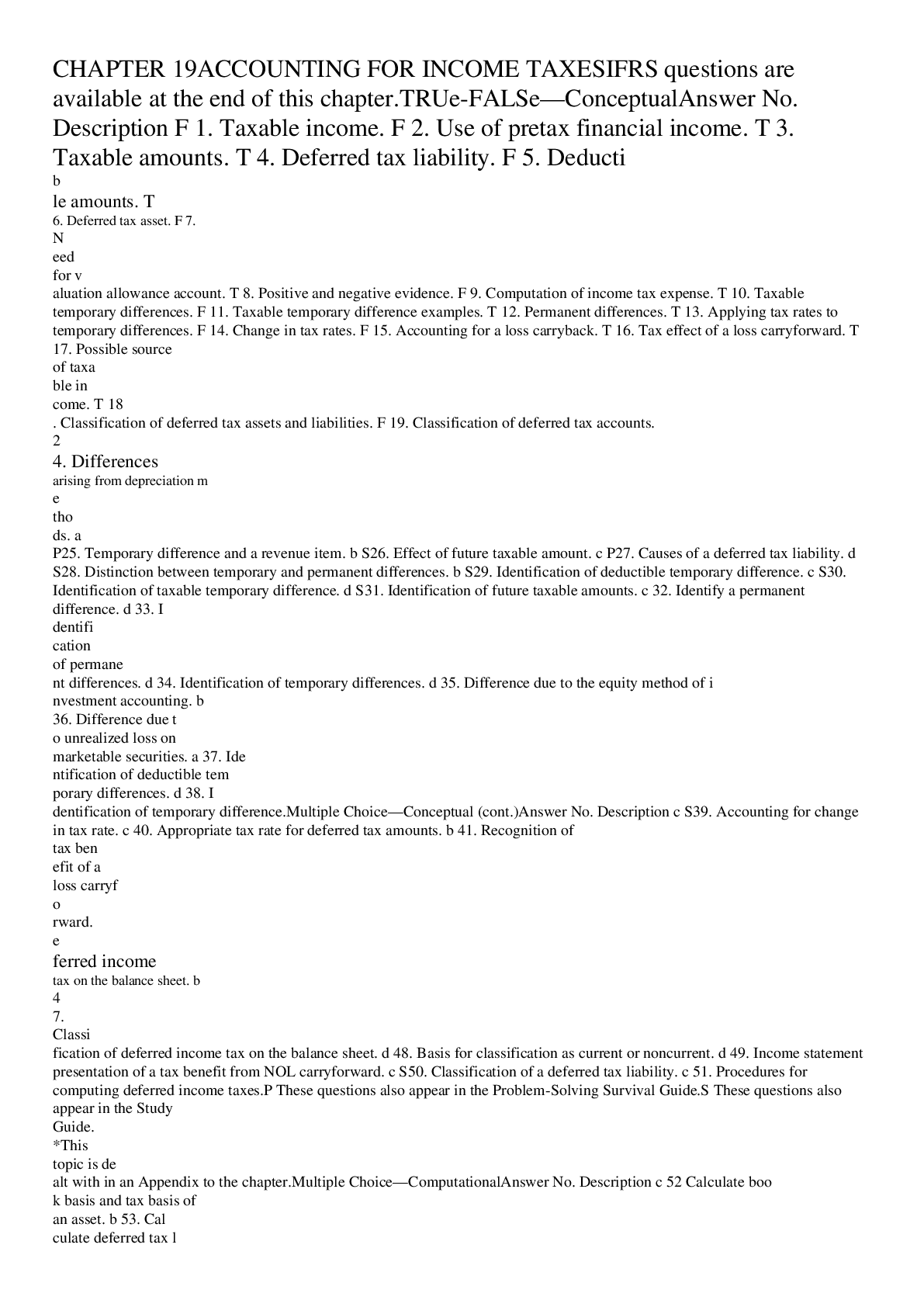
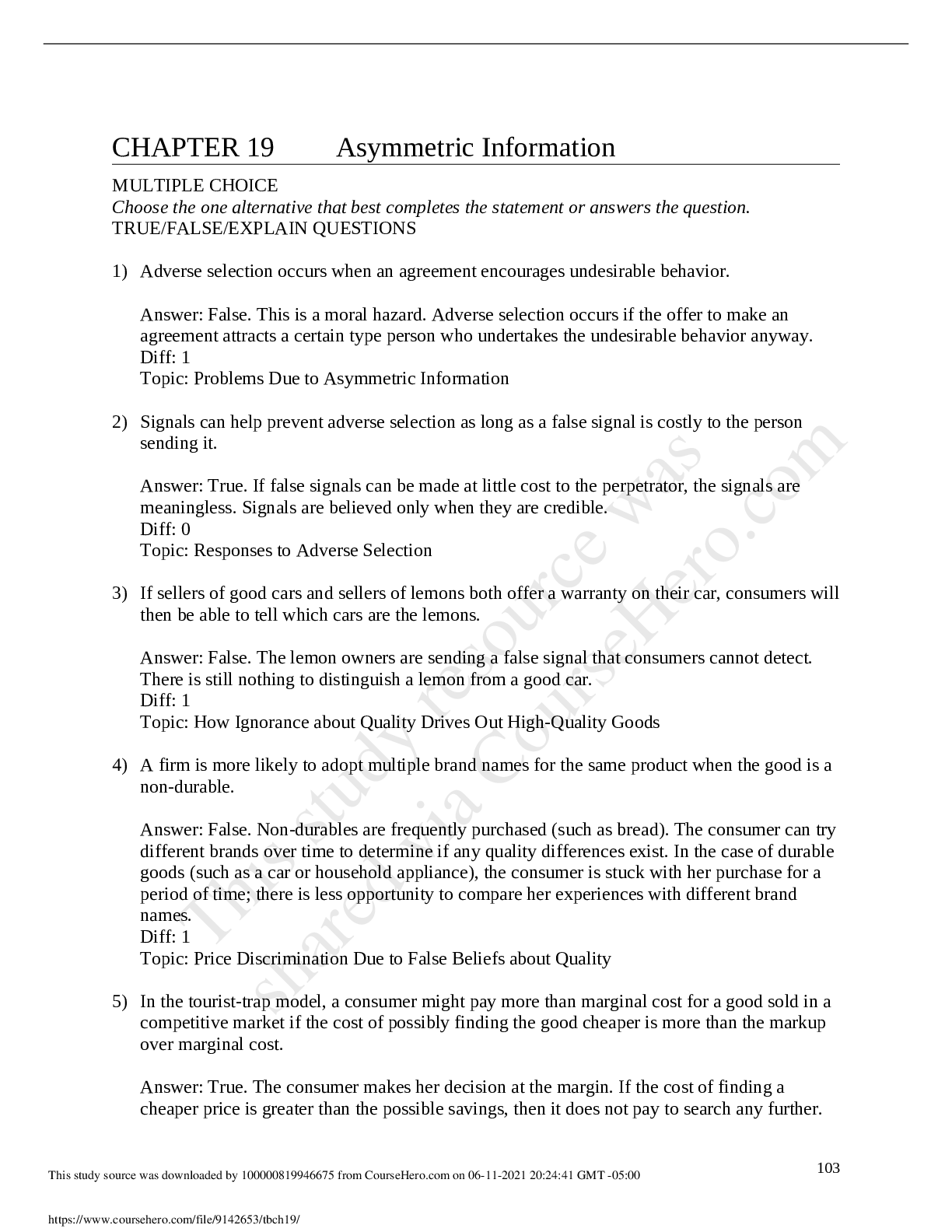
Carleton UniversityECON 2030tbch19 CHAPTER 19 Asymmetric Infor...
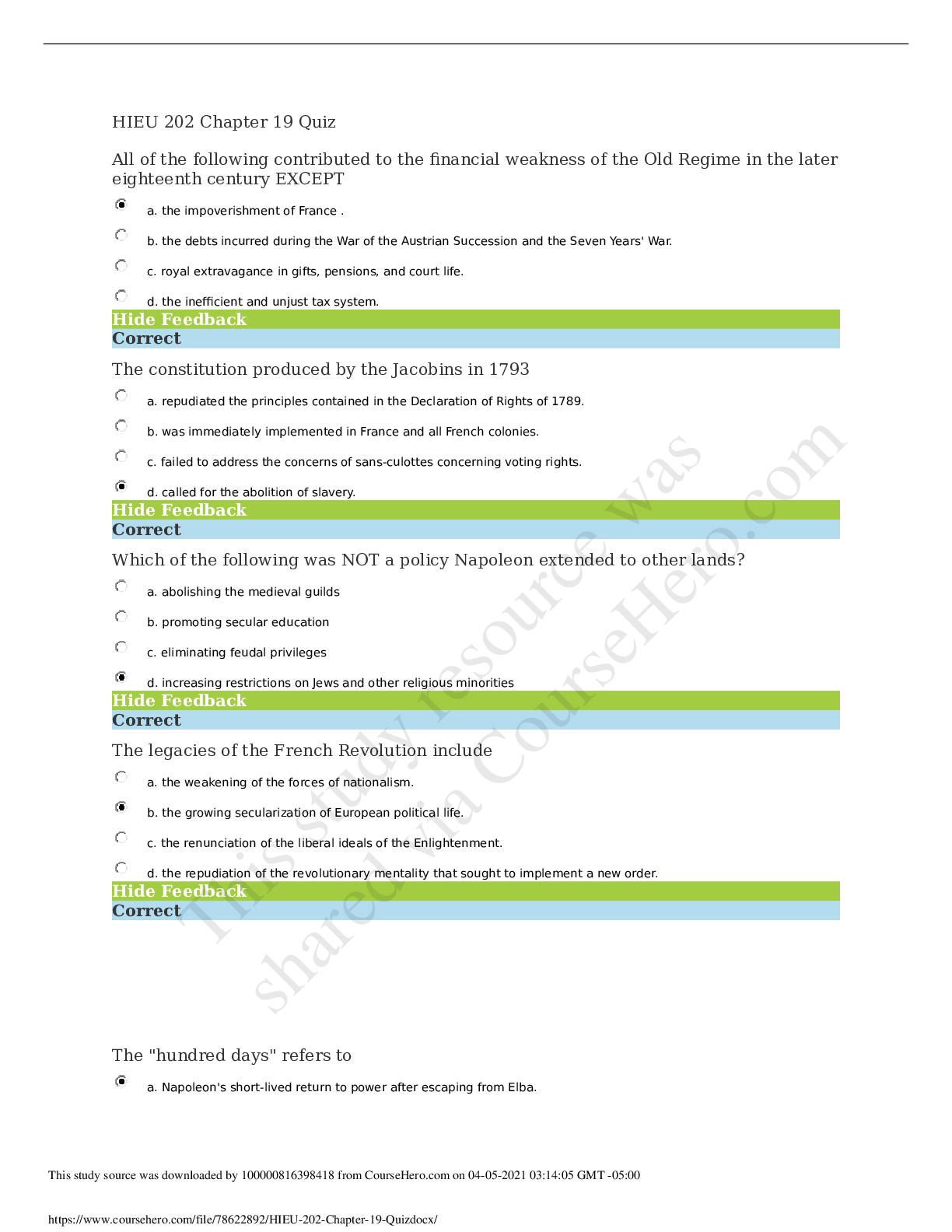
Liberty University - HIEU 202HIEU 202 Chapter 19 Quiz. ( ALL A...
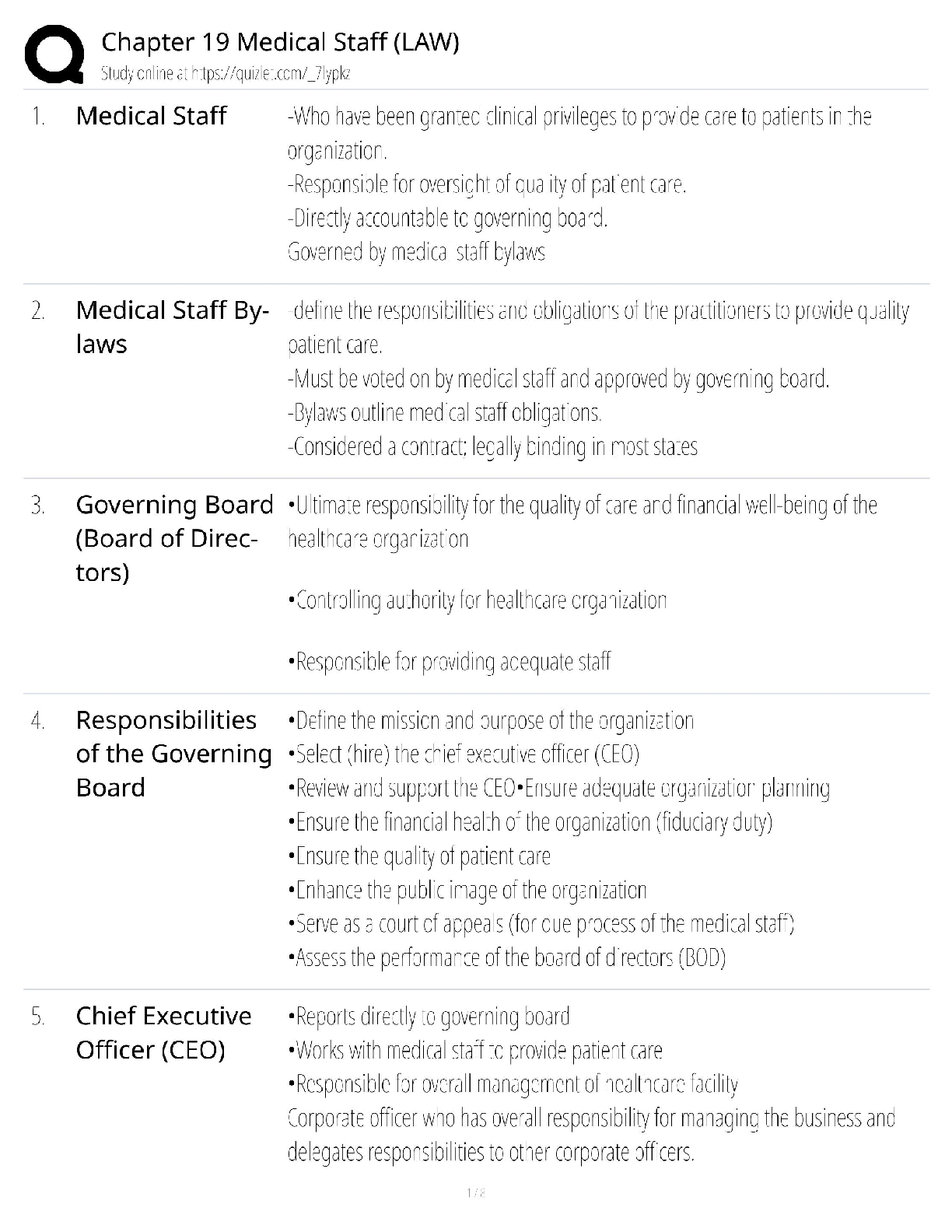
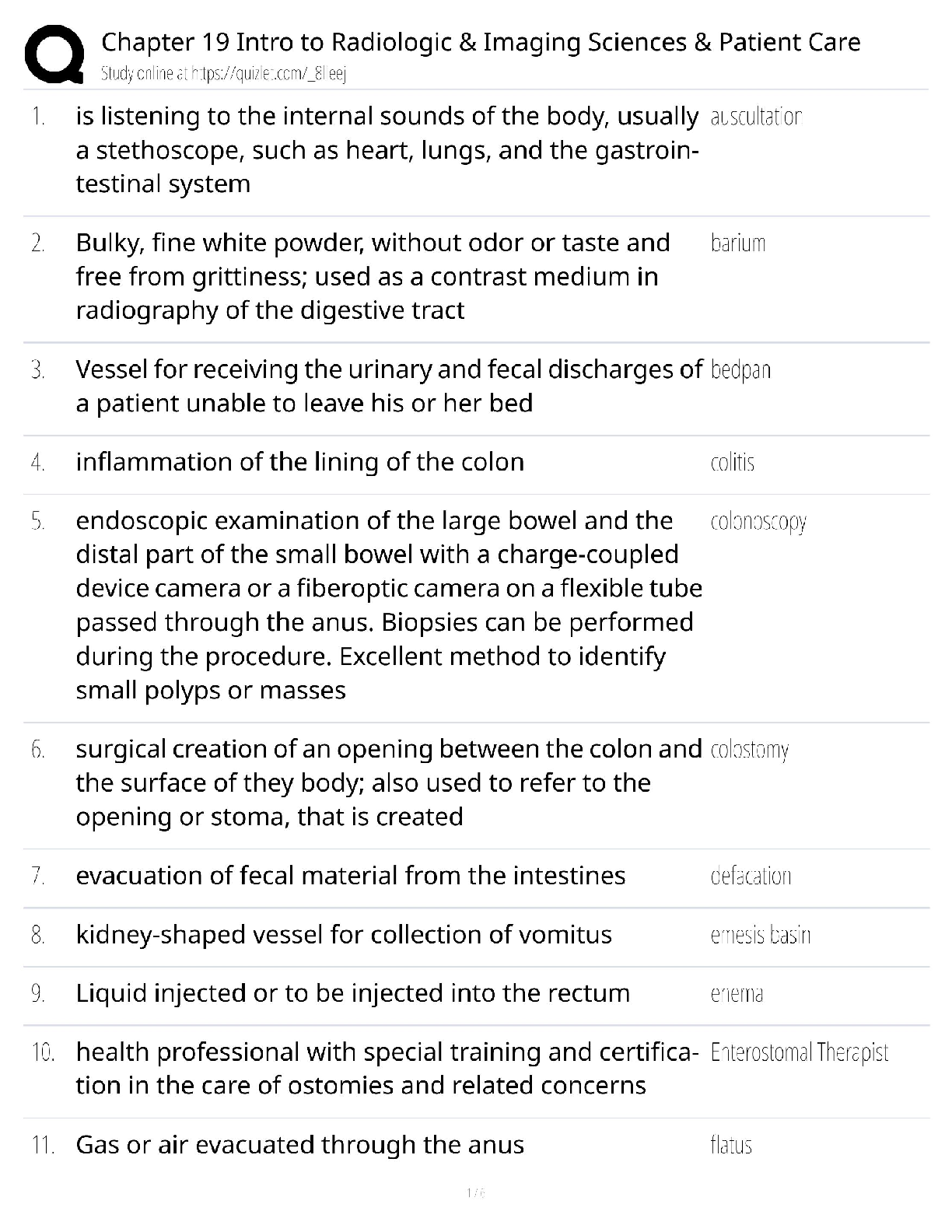
Radiology Chapter 19 / Nonaseptic Techniques Study Guide / 202...
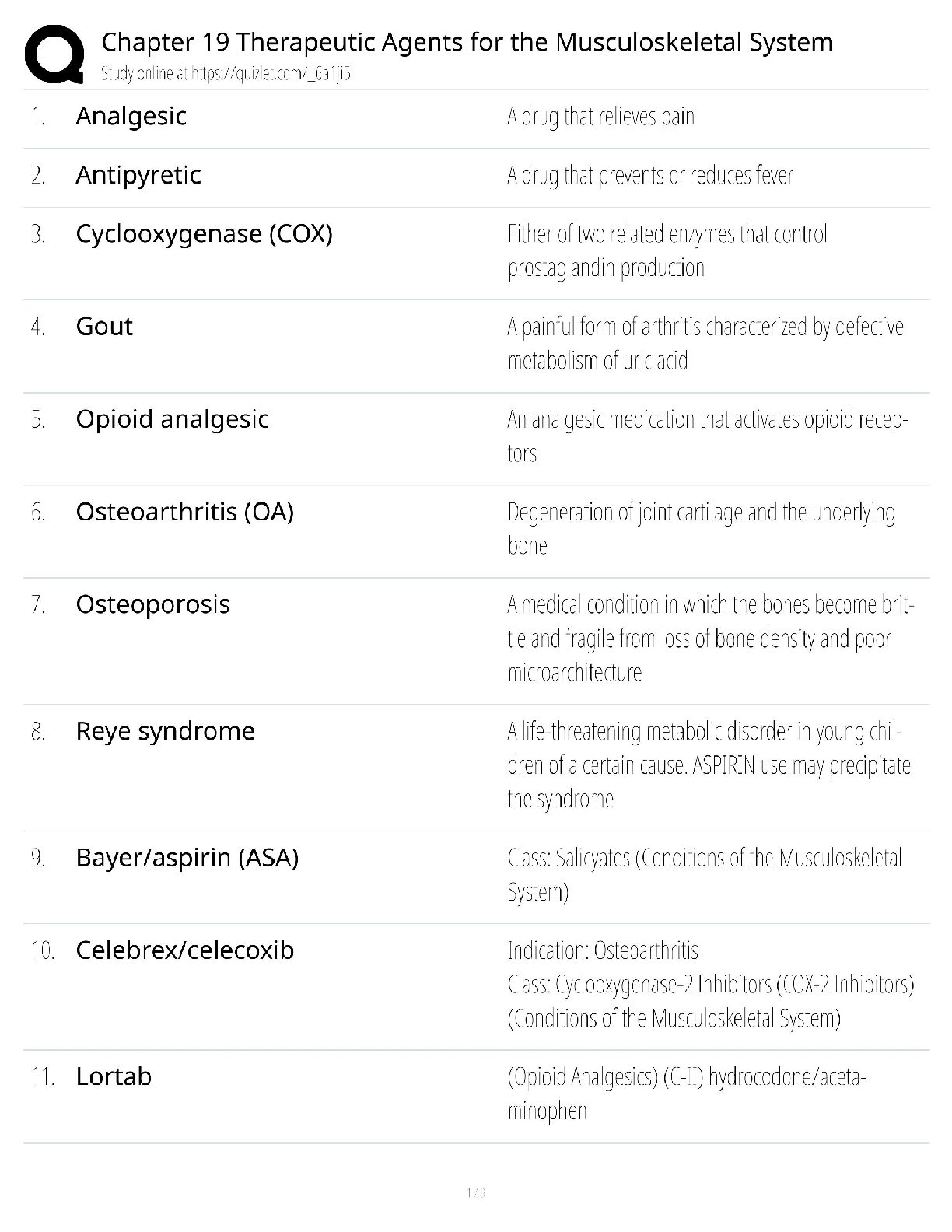

Test Bank Lehne’s Pharmacotherapeutics for Advanced Practice N...

NR601 / NR-601 Question Bank (Chapter 1 - Chapter 19): Primary...
.png)
TEST BANK Chapter 19 Thorax and Lungs: PHYSICAL EXAMINATION AN...
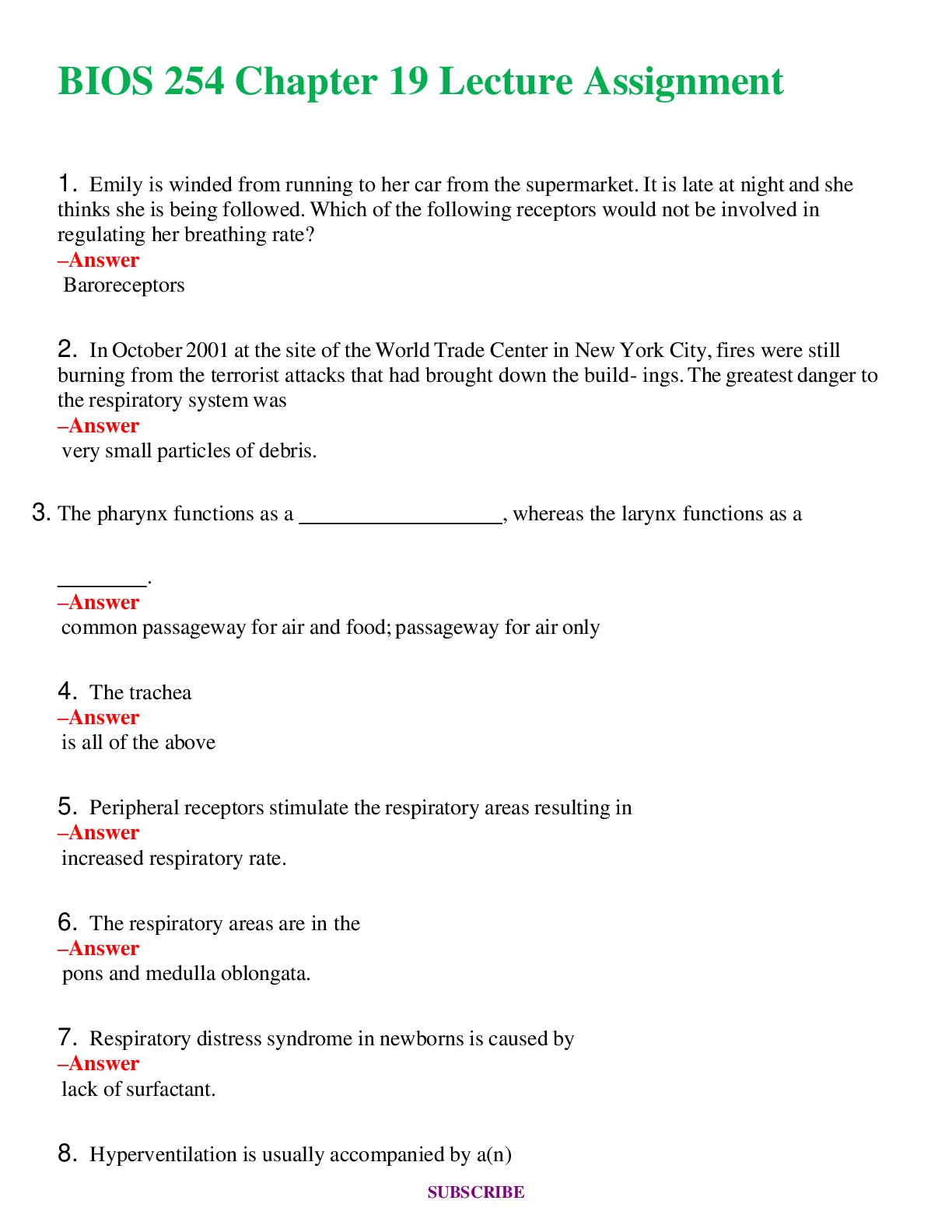
BIOS 254 Chapter 19 Lecture Assignment Questions and Answer...
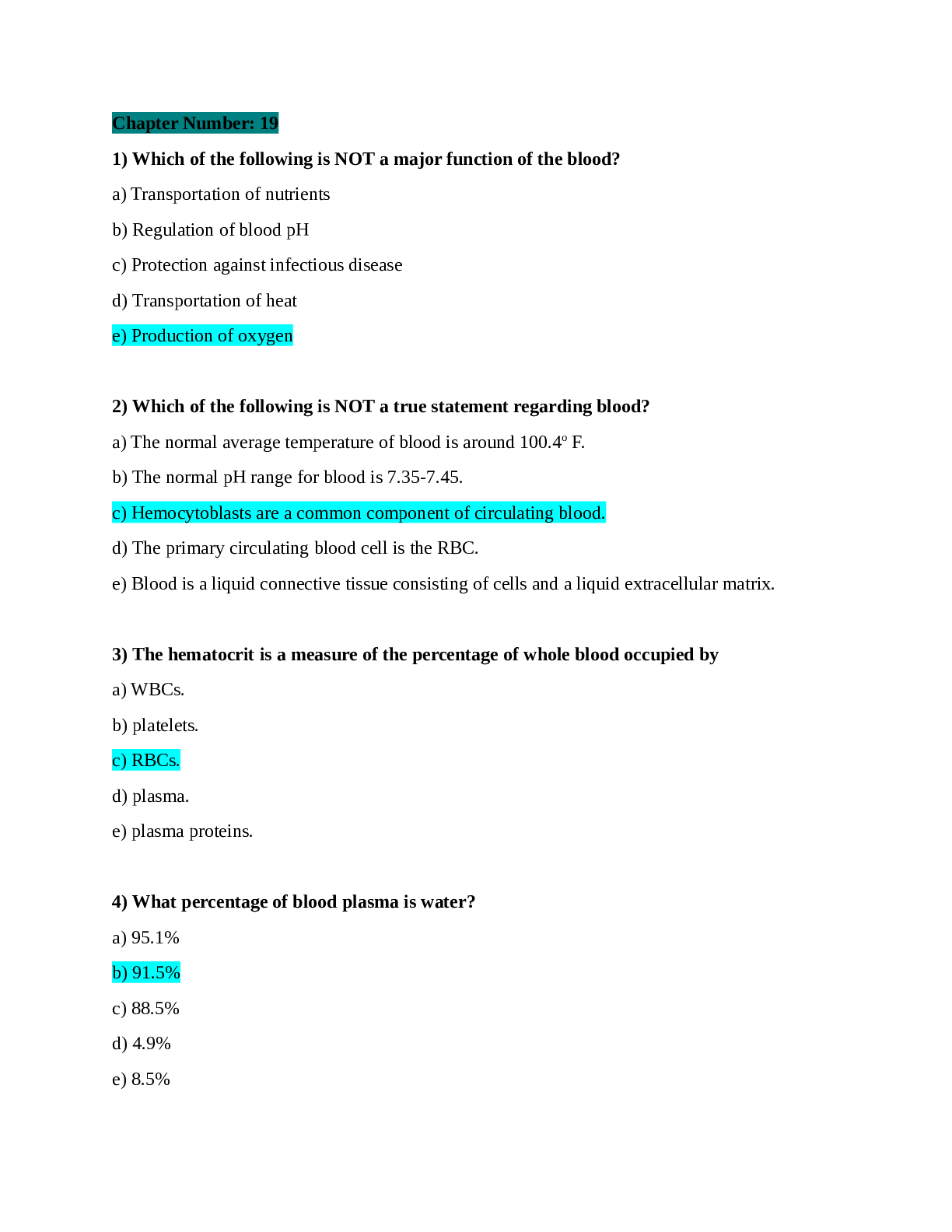
Chamberlain College of Nursing - BIO 255 chapter 19 LATEST UPD...
Solutions Manual for A First Course in Differential Equations...

TEST BANK for Computer Methods in Chemical Engineering 2nd Edi...


NUR 3065 | Chapter 19. Emergency Problems; Attempt Score; 100%

BIOS242 / BIOS 242 Final Study Guide Chapter 1 -9 : Fundamen...

Southern Methodist University - CHEM 3372Chapter 19 Carboxylic...
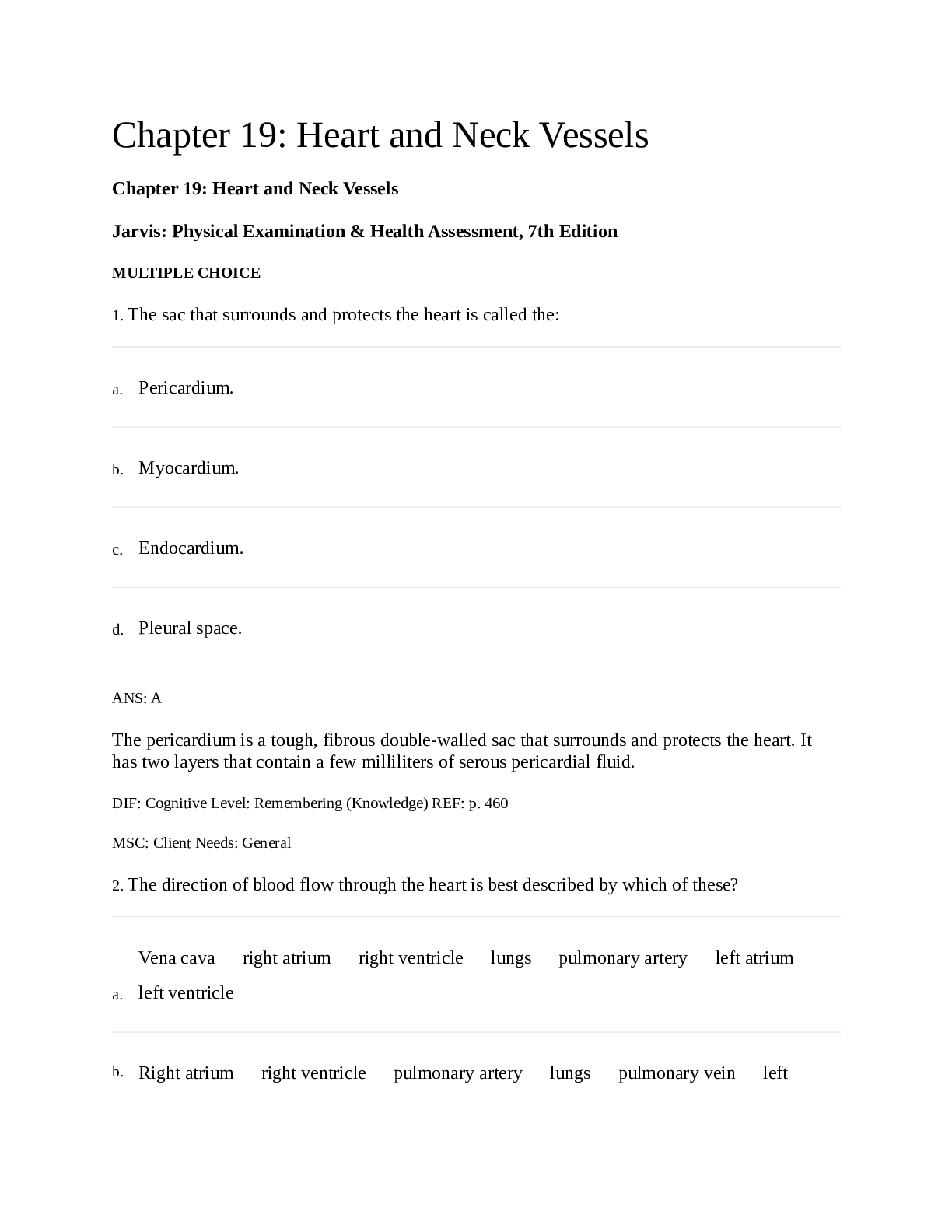
Chapter 19: Heart and Neck Vessels Jarvis: Physical Examinatio...

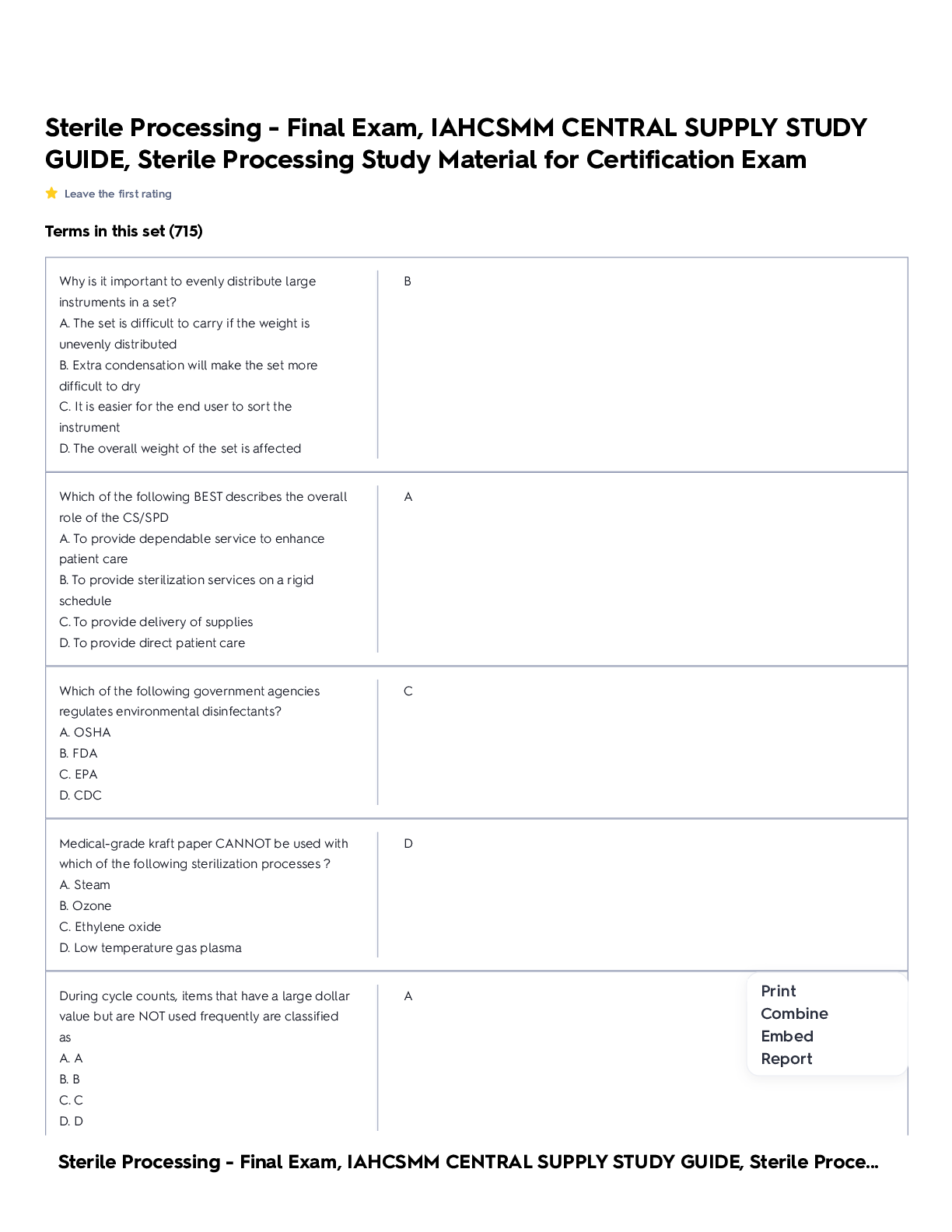

 with Complete Solution.png)
 Career Information with Complete Solution.png)


 for E-6 Career Information_watermark.png)