*NURSING  >  Summary  >  Summary Portage Learning NURS 251 Module 7 Introduction to Gastroenterology (All)

Summary Portage Learning NURS 251 Module 7 Introduction to Gastroenterology

Document Content and Description Below

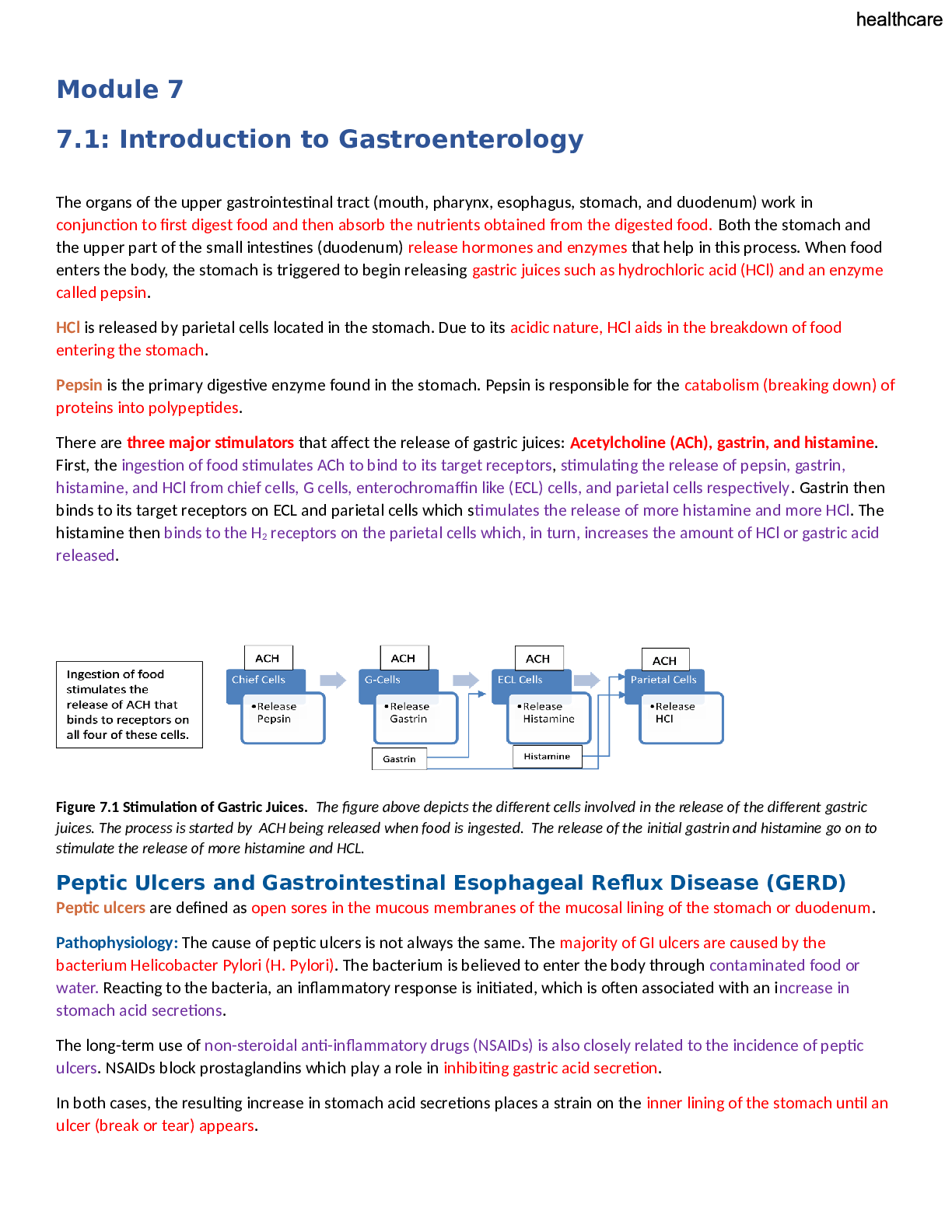
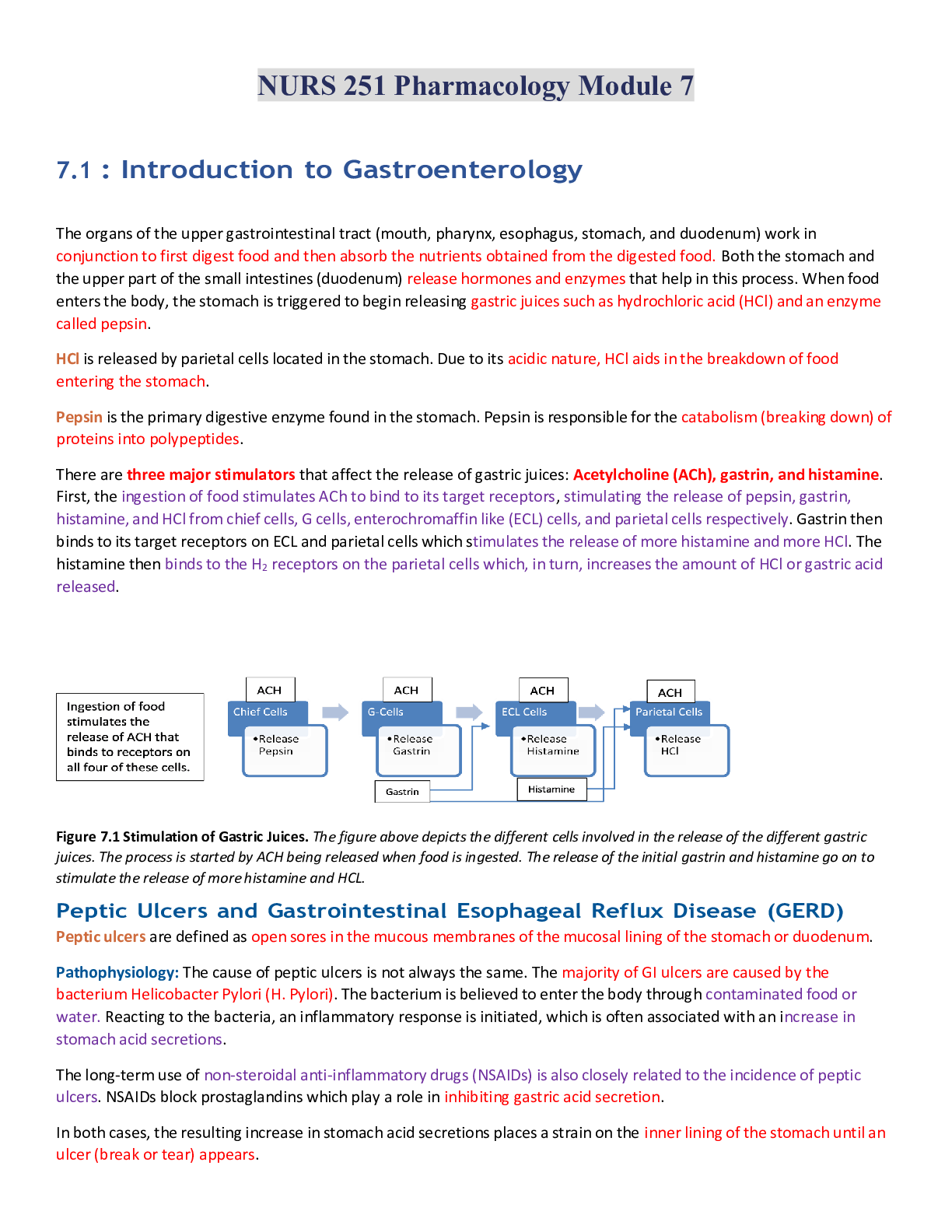
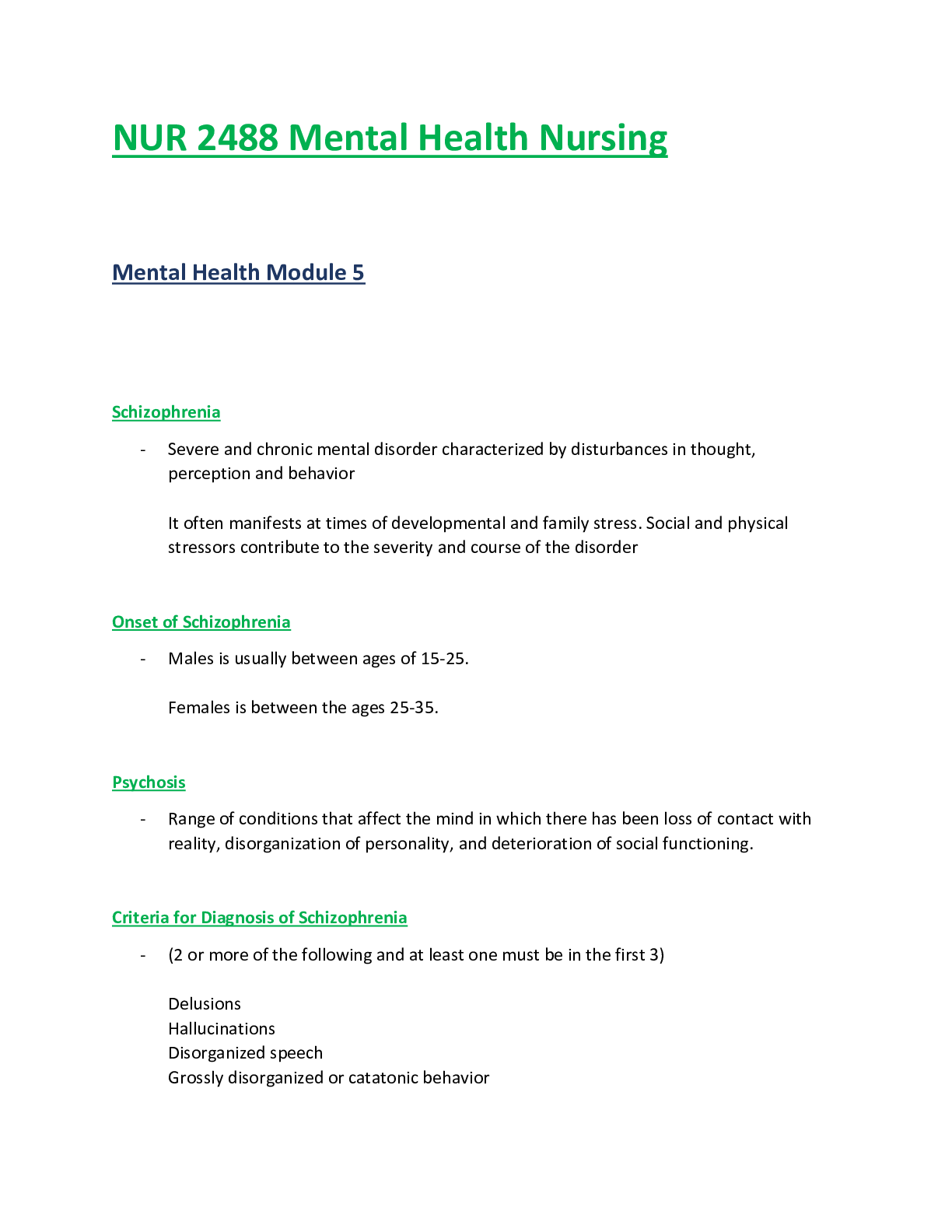
Portage Learning NURS 251 Module 7 Introduction to Gastroenterology The organs of the upper gastrointestinal tract (mouth, pharynx, esophagus, stomach, and duodenum) work in conjunction to first diges ... t food and then absorb the nutrients obtained from the digested food. Both the stomach and the upper part of the small intestines (duodenum) release hormones and enzymes that help in this process. When food enters the body, the stomach is triggered to begin releasing gastric juices such as hydrochloric acid (HCl) and an enzyme called pepsin. HCl is released by parietal cells located in the stomach. Due to its acidic nature, HCl aids in the breakdown of food entering the stomach. Pepsin is the primary digestive enzyme found in the stomach. Pepsin is responsible for the catabolism (breaking down) of proteins into polypeptides. There are three major stimulators that affect the release of gastric juices: Acetylcholine (ACh), gastrin, and histamine. First, the ingestion of food stimulates ACh to bind to its target receptors, stimulating the release of pepsin, gastrin, histamine, and HCl from chief cells, G cells, enterochromaffin like (ECL) cells, and parietal cells respectively. Gastrin then binds to its target receptors on ECL and parietal cells which stimulates the release of more histamine and more HCl. The histamine then binds to the H2 receptors on the parietal cells which, in turn, increases the amount of HCl or gastric acid released. Figure 7.1 Stimulation of Gastric Juices. The figure above depicts the different cells involved in the release of the different gastric juices. The process is started by ACH being released when food is ingested. The release of the initial gastrin and histamine go on to stimulate the release of more histamine and HCL. Peptic Ulcers and Gastrointestinal Esophageal Reflux Disease (GERD) Peptic ulcers are defined as open sores in the mucous membranes of the mucosal lining of the stomach or duodenum. Pathophysiology: The cause of peptic ulcers is not always the same. The majority of GI ulcers are caused by the bacterium Helicobacter Pylori (H. Pylori). The bacterium is believed to enter the body through contaminated food or water. Reacting to the bacteria, an inflammatory response is initiated, which is often associated with an increase in stomach acid secretions. The long-term use of non-steroidal anti-inflammatory drugs (NSAIDs) is also closely related to the incidence of peptic ulcers. NSAIDs block prostaglandins which play a role in inhibiting gastric acid secretion. In both cases, the resulting increase in stomach acid secretions places a strain on the inner lining of the stomach until an ulcer (break or tear [Show More]

Last updated: 3 years ago

Preview 1 out of 10 pages

Buy Now

Instant download

We Accept:

Payment methods accepted on Scholarfriends (We Accept)
Preview image of Summary Portage Learning NURS 251 Module 7 Introduction to Gastroenterology document

Buy this document to get the full access instantly

Instant Download Access after purchase

Buy Now

Instant download

We Accept:

Payment methods accepted on Scholarfriends (We Accept)

Reviews( 0 )

$11.00

Buy Now

We Accept:

Payment methods accepted on Scholarfriends (We Accept)

Instant download

Can't find what you want? Try our AI powered Search

121
0

Document information


Connected school, study & course


About the document


Uploaded On

Nov 17, 2022

Number of pages

10

Written in

All

Seller


Profile illustration for Studybest
Studybest

Member since 3 years

12 Documents Sold

Reviews Received
0
0
0
0
1
Additional information

This document has been written for:

Uploaded

Nov 17, 2022

Downloads

 0

Views

 121

Document Keyword Tags

Recommended For You

Get more on Summary »

$11.00
What is Scholarfriends

Scholarfriends.com Online Platform by Browsegrades Inc. 651N South Broad St, Middletown DE. United States.

We are here to help

We're available through e-mail, Twitter, Facebook, and live chat.
 FAQ
 Questions? Leave a message!

Follow us on
 Twitter

Copyright © Scholarfriends · High quality services·