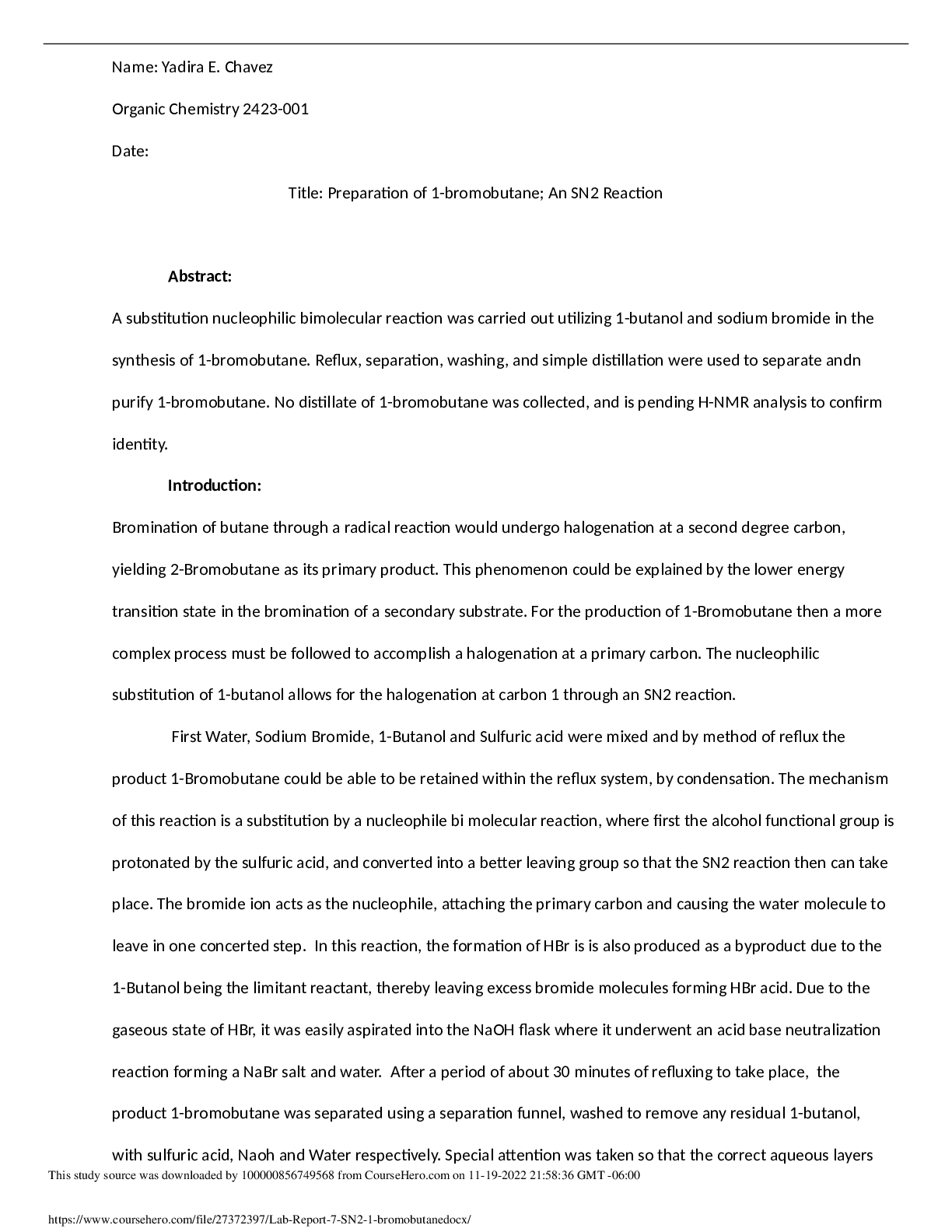
Chemistry > Lab Report > Lab 10 - Synthesis 1-bromobutane Miami Dade College, Miami CHM 2210L (All)
Lab 10 - Synthesis 1-bromobutane Miami Dade College, Miami CHM 2210L
Document Content and Description Below
Last updated: 4 years ago
Preview 1 out of 9 pages
Instant download
Buy this Document to get the Full Access Instantly
Provided by Students Who Aced it
We Verify Document Content to Gurantee Accuracy
Reviews( 0 )
Document information
Connected school, study & course
About the document
Uploaded On
Nov 20, 2022
Number of pages
9
Written in
All

Additional information
This document has been written for:
Uploaded
Nov 20, 2022
Downloads
0
Views
217
Topic Tags
Recommended For You
Get more on Lab Report ».png)
.png)
CH101 CHEMISTRY 101 Lab 10 PreLab Acid-Base Studies. Current S...
 (1)CDWDCW.png)
CH101 CHEMISTRY 101 Lab 10 PostLab - Acid-Base Studies. Curren...
.png)
CH101 CHEMISTRY 101 Lab 10 InLab - Acid-Base Studies. Current...
CHEM 120 Unit 6 Lab: OL Lab 10: Nuclear Chemistry (GRADED A)


PHY 2048L Prelab10: SCIENCE LAB.Lab 10: Properties of Waves. P...

EMISS ISOL532 Telecommunications and network security. Lab 1...
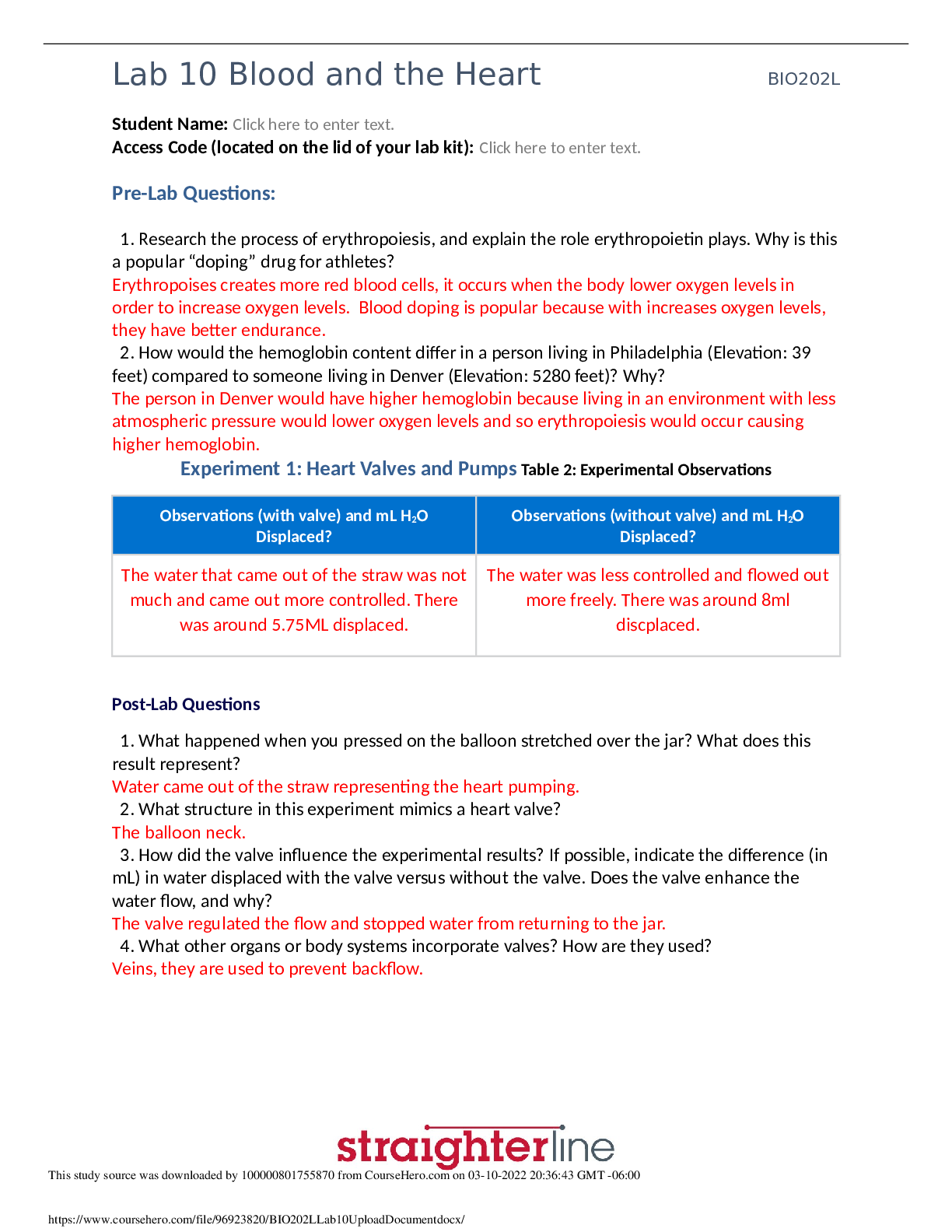
BIOL 202L Lab 10 Blood and the Heart (heart valve) | Questions...
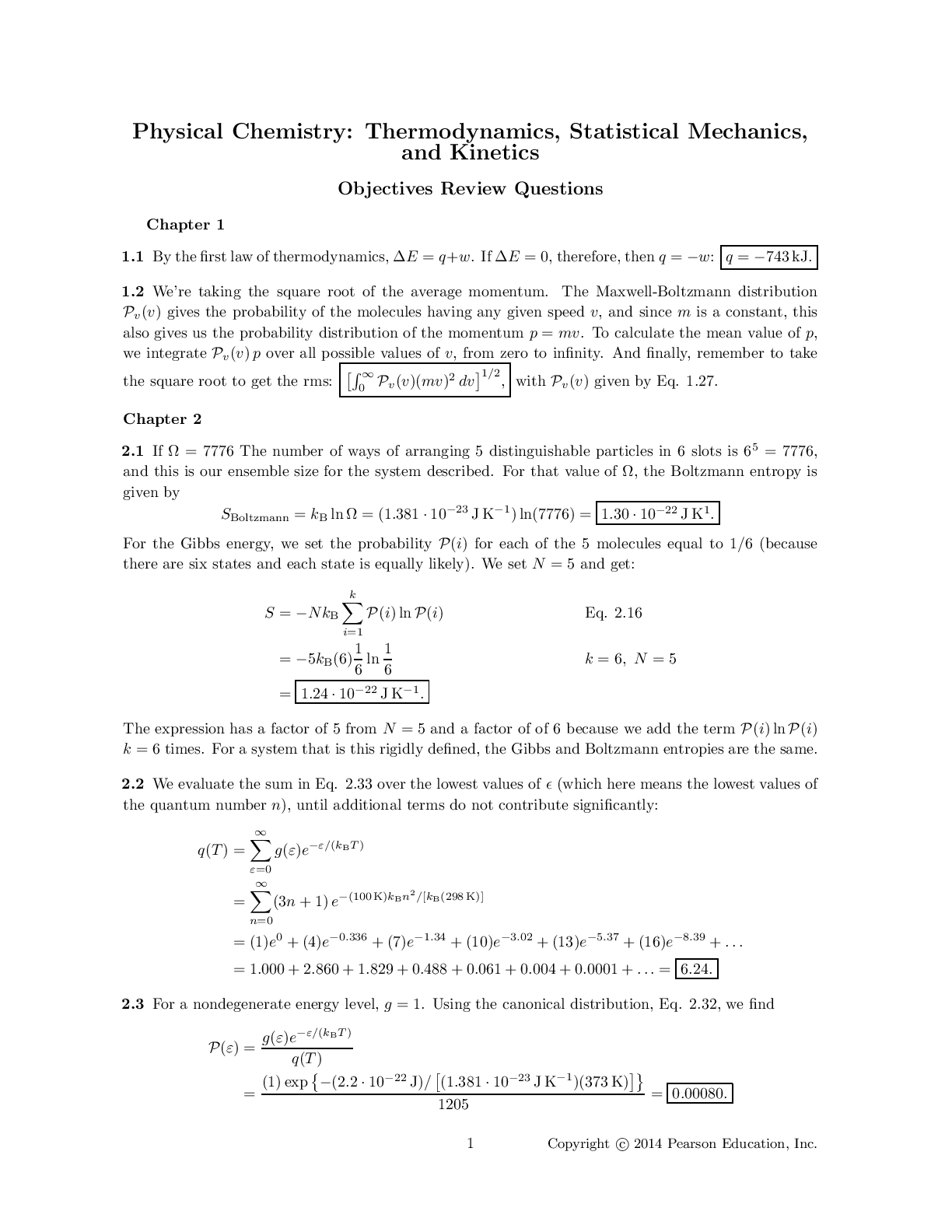
Physical Chemistry Thermodynamics Statistical Mechanics and Ki...

.png)