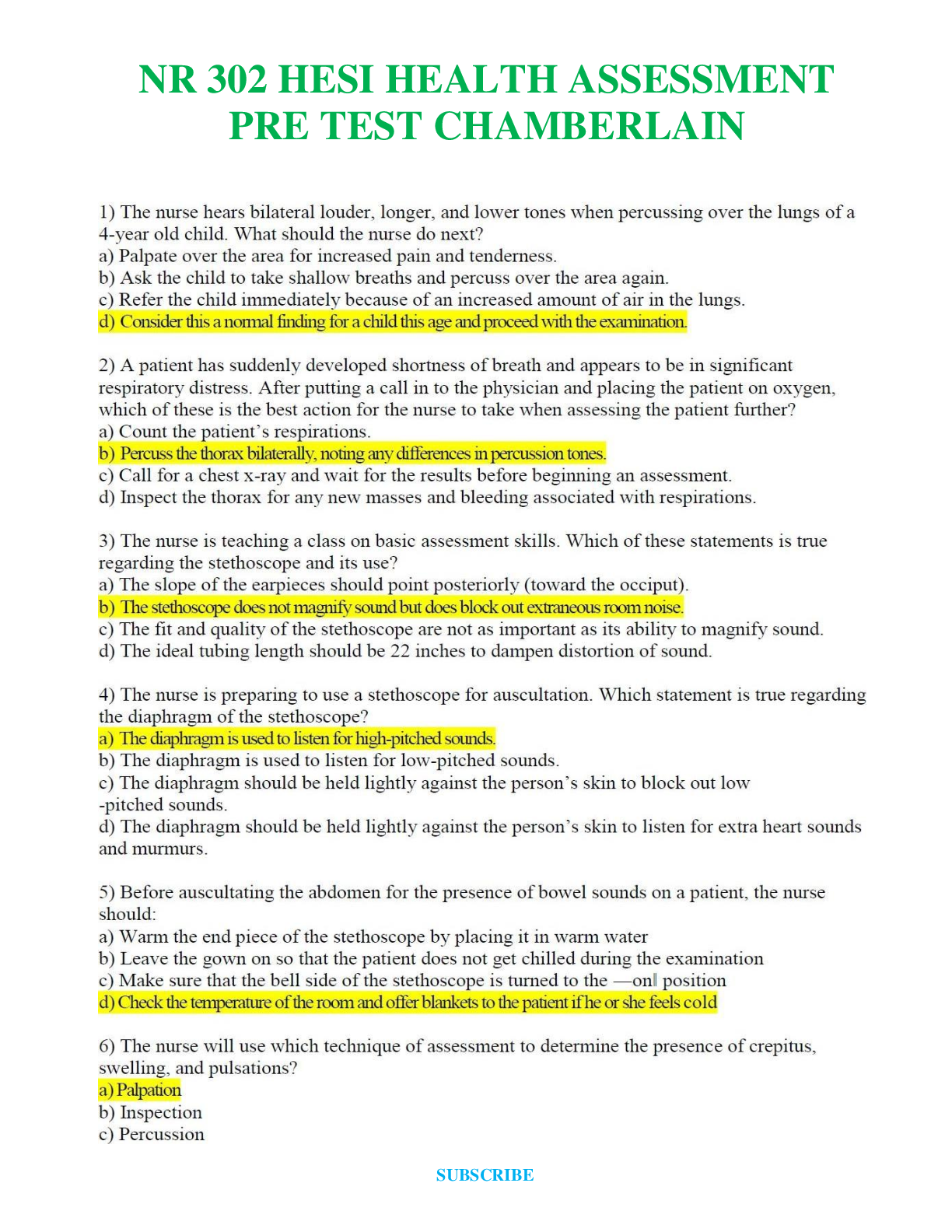
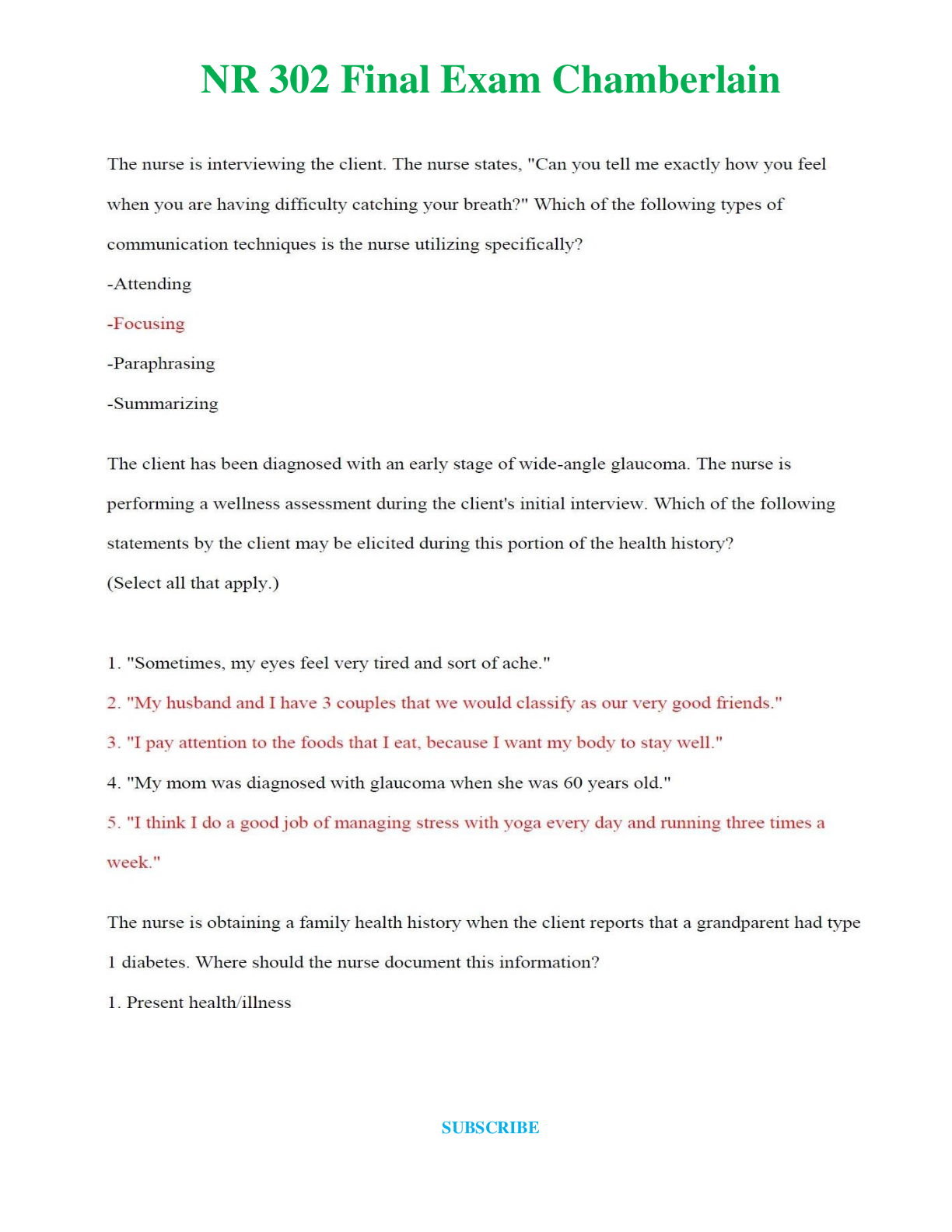
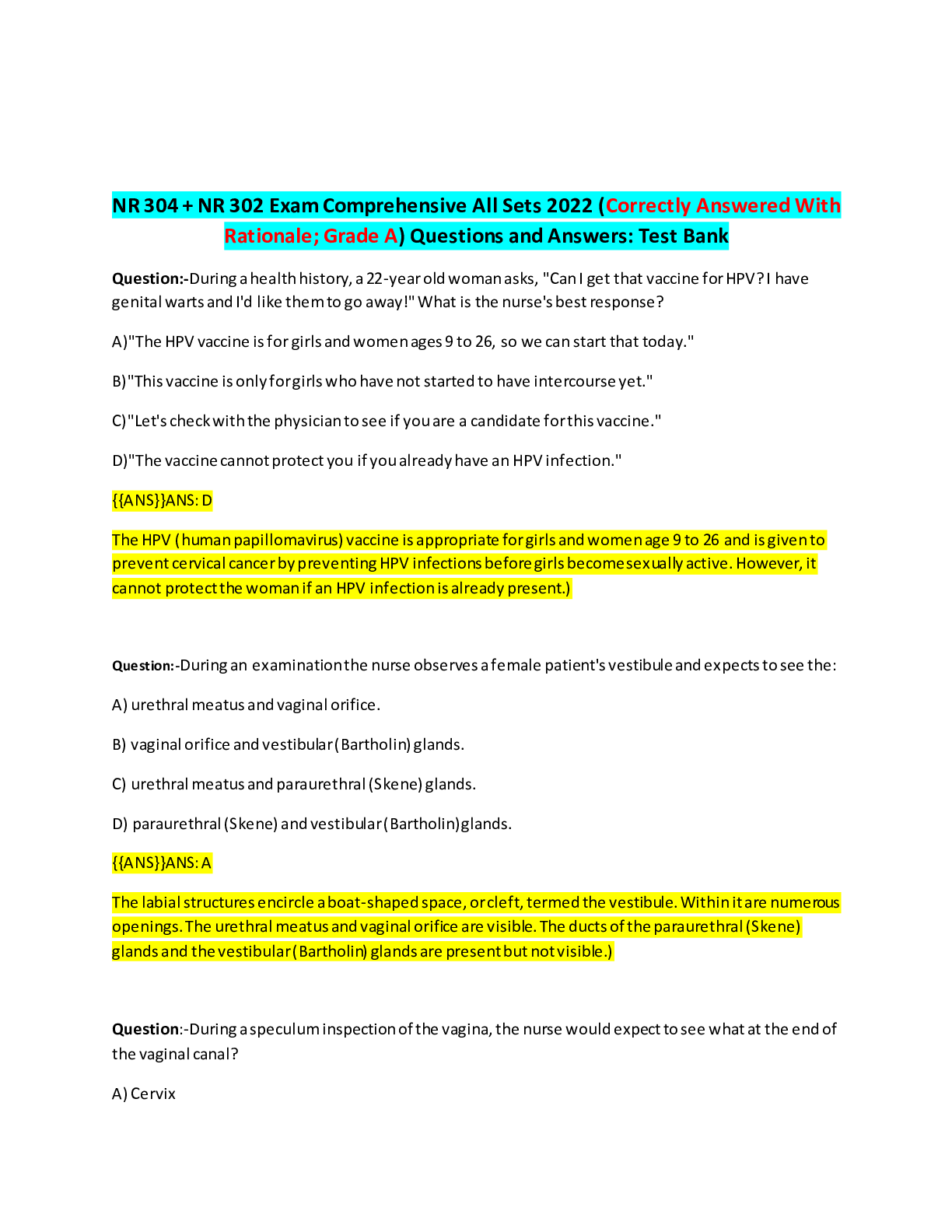
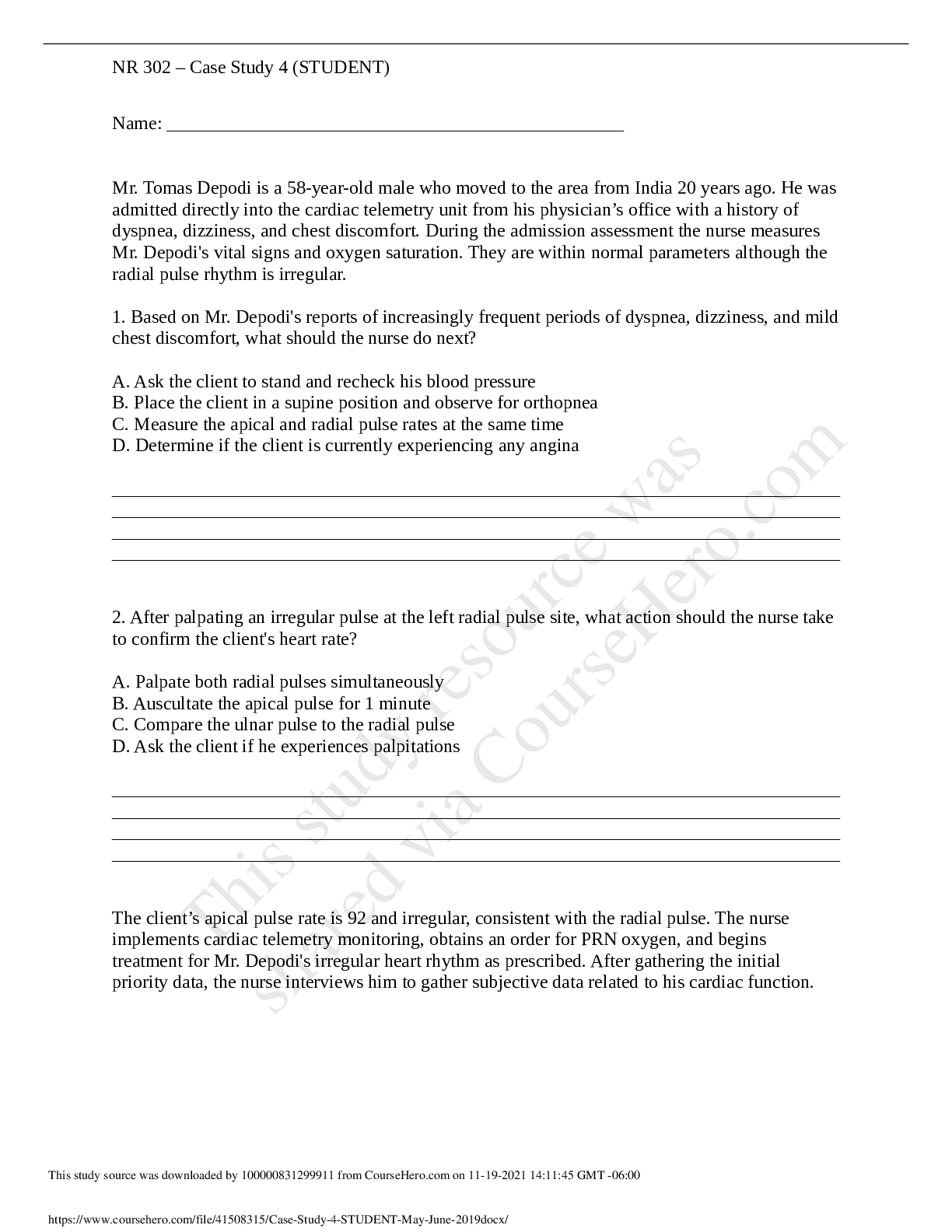
NR 302 Final Exam Concepts to help Pass Exams.
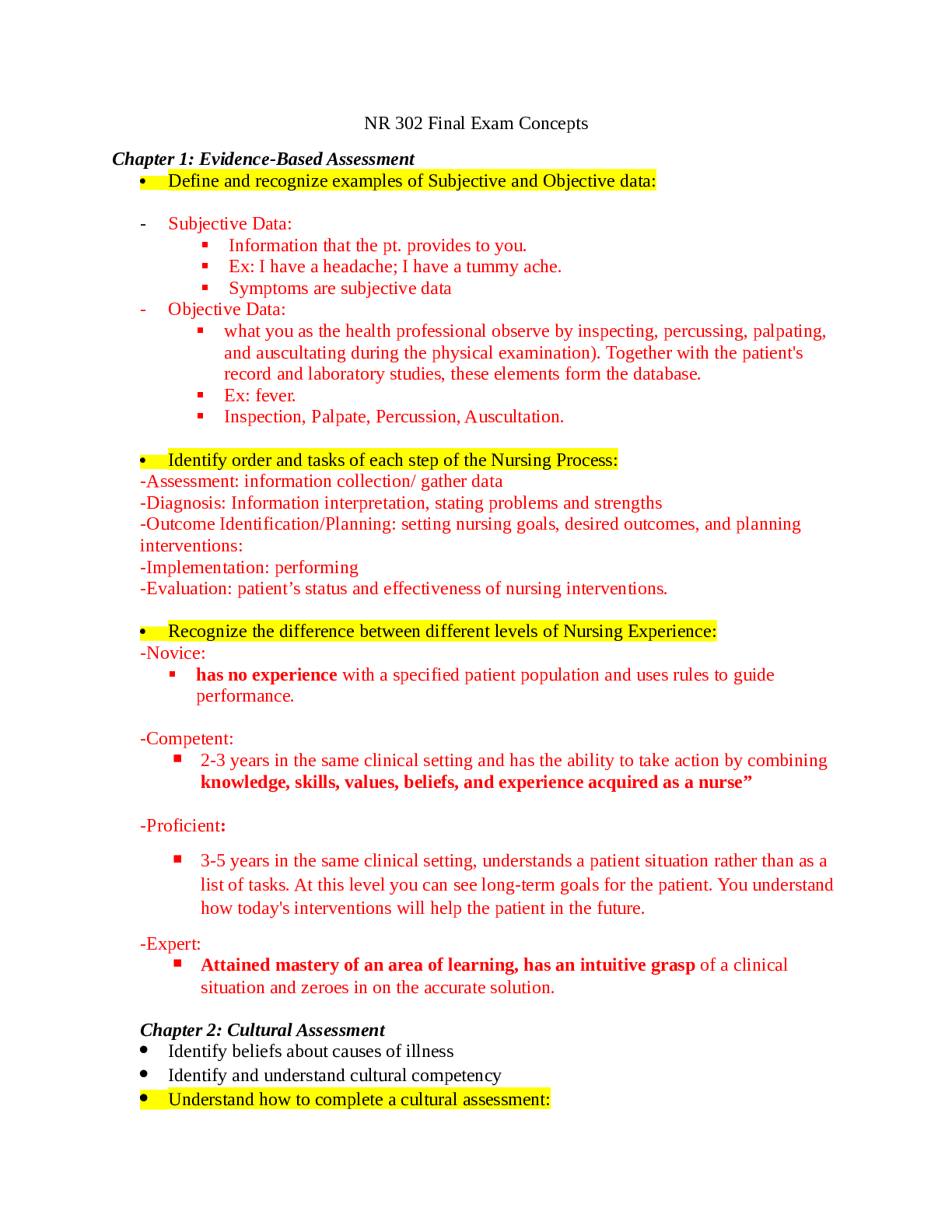
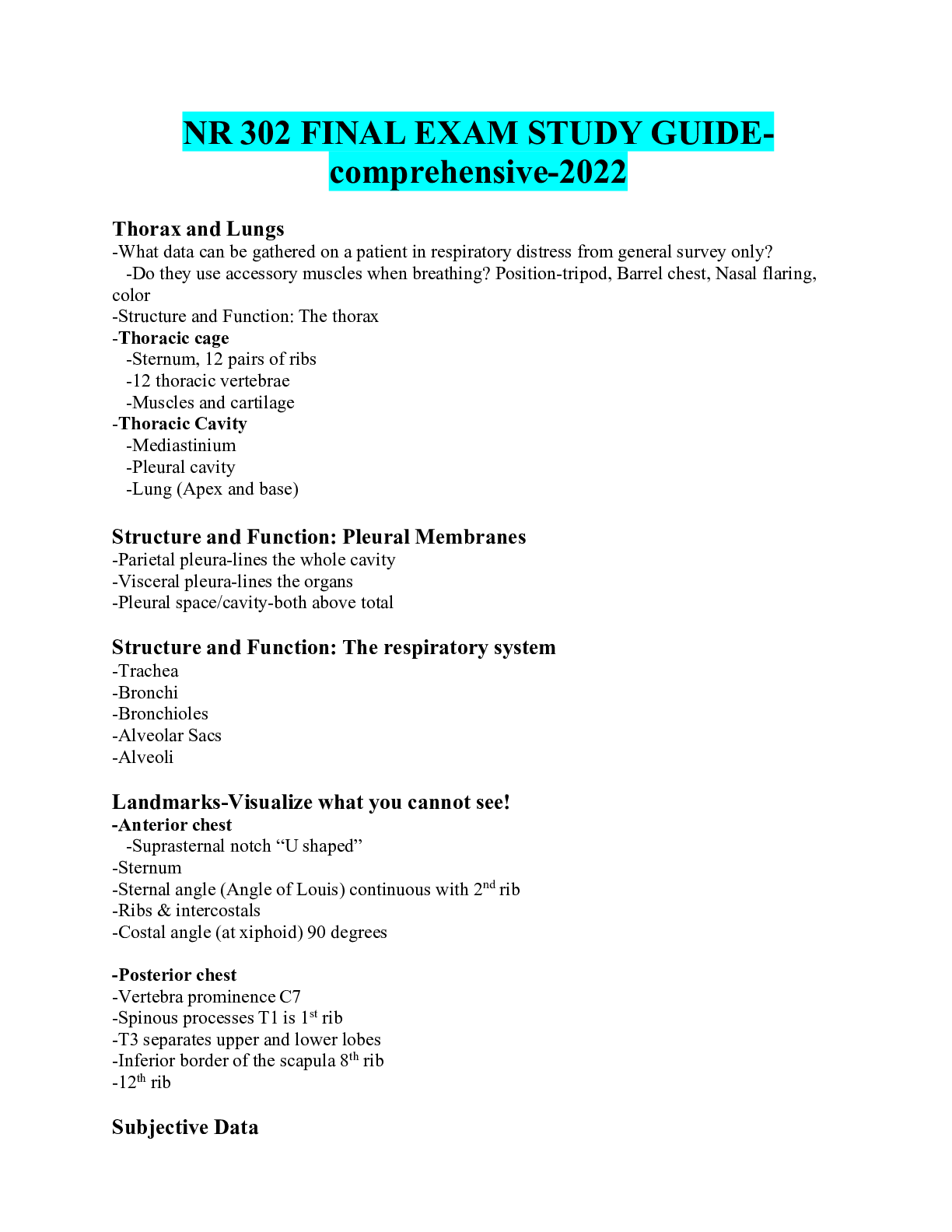
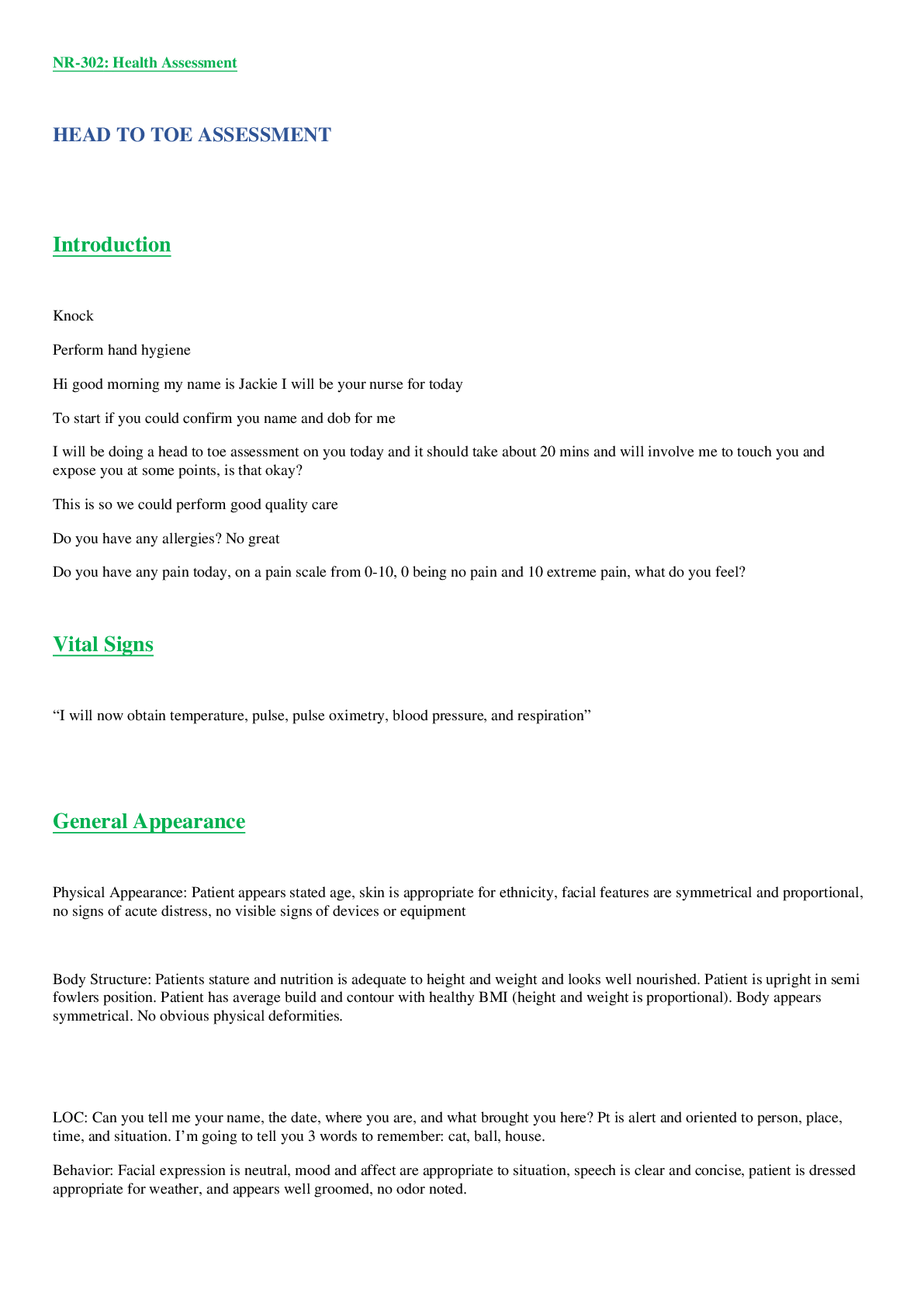
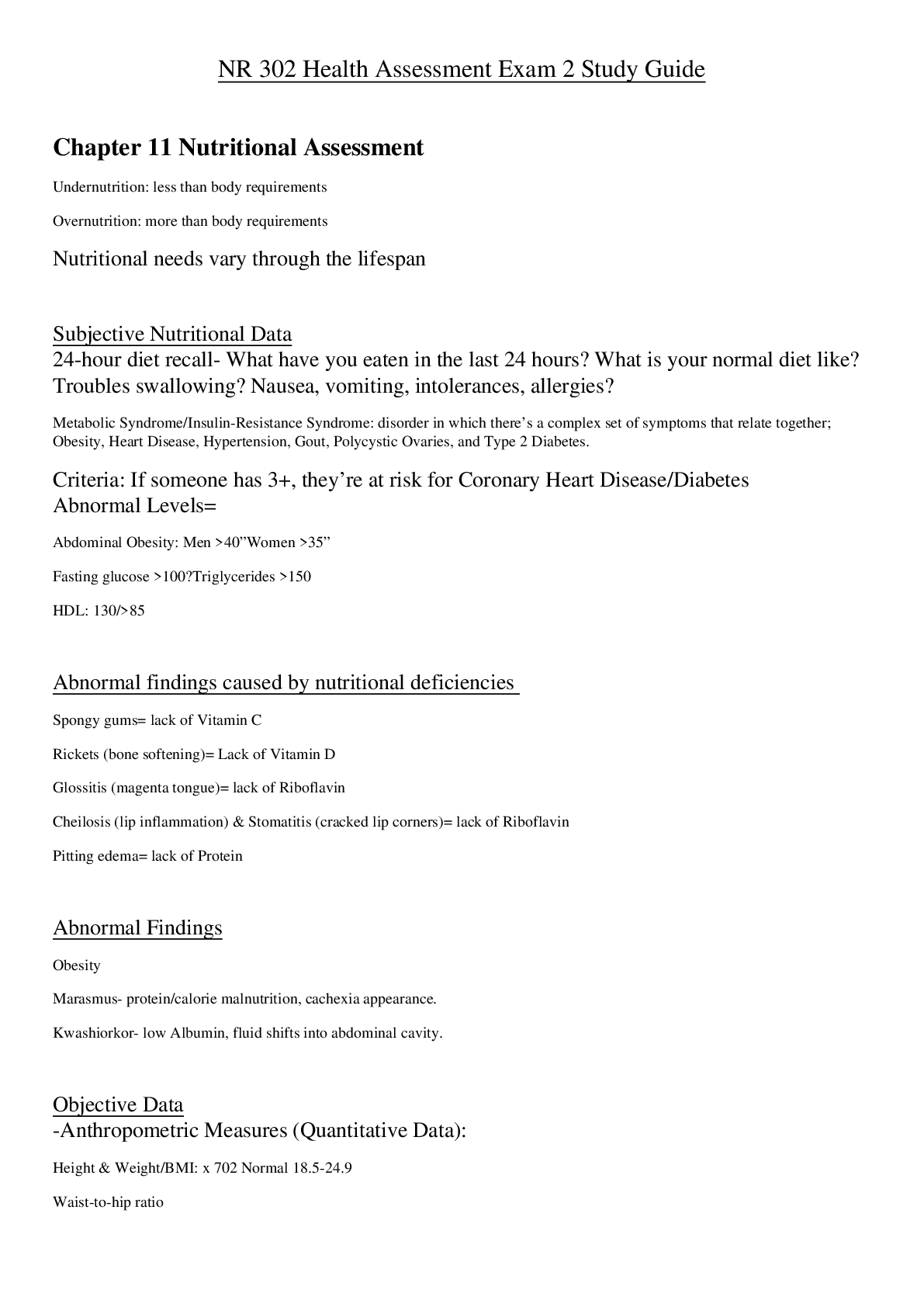
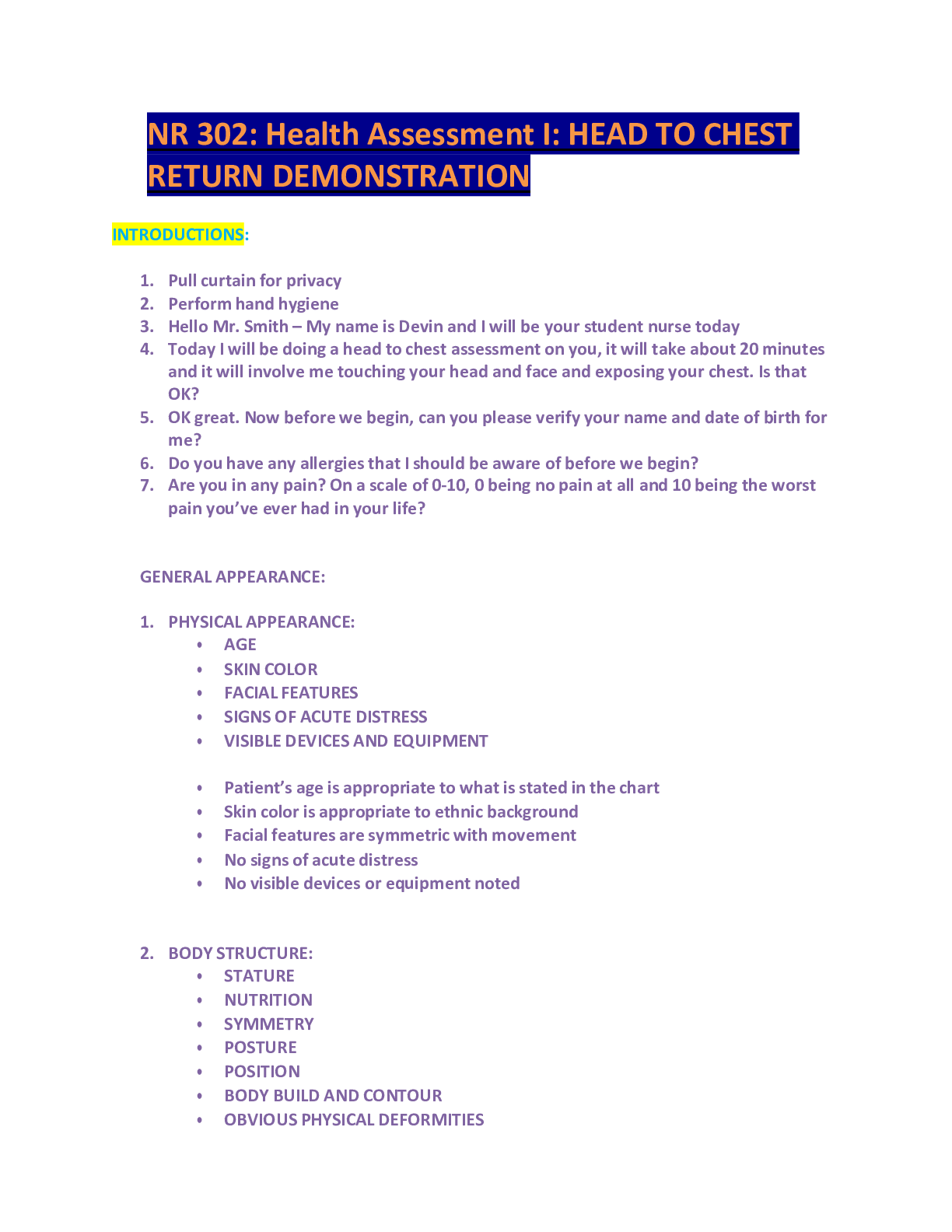
NR 302 Final Exam Concepts
Chapter 1: Evidence-Based Assessment
Define and recognize examples of Subjective and Objective data:
- Subjective Data:
Information tha
...
NR 302 Final Exam Concepts to help Pass Exams.
NR 302 Final Exam Concepts
Chapter 1: Evidence-Based Assessment
Define and recognize examples of Subjective and Objective data:
- Subjective Data:
Information that the pt. provides to you.
Ex: I have a headache; I have a tummy ache.
Symptoms are subjective data
- Objective Data:
what you as the health professional observe by inspecting, percussing, palpating,
and auscultating during the physical examination). Together with the patient's
record and laboratory studies, these elements form the database.
Ex: fever.
Inspection, Palpate, Percussion, Auscultation.
Identify order and tasks of each step of the Nursing Process:
-Assessment: information collection/ gather data
-Diagnosis: Information interpretation, stating problems and strengths
-Outcome Identification/Planning: setting nursing goals, desired outcomes, and planning
interventions:
-Implementation: performing
-Evaluation: patient’s status and effectiveness of nursing interventions.
Recognize the difference between different levels of Nursing Experience:
-Novice:
has no experience with a specified patient population and uses rules to guide
performance.
-Competent:
2-3 years in the same clinical setting and has the ability to take action by combining
knowledge, skills, values, beliefs, and experience acquired as a nurse”
-Proficient:
3-5 years in the same clinical setting, understands a patient situation rather than as a
list of tasks. At this level you can see long-term goals for the patient. You understand
how today's interventions will help the patient in the future.
-Expert:
Attained mastery of an area of learning, has an intuitive grasp of a clinical
situation and zeroes in on the accurate solution.
Chapter 2: Cultural Assessment
Identify beliefs about causes of illness
Identify and understand cultural competency
Understand how to complete a cultural assessment: Heritage: the country of ancestry, years in the United State.
Health practices: the use of traditional healer, alternative & complementary therapies,
preventive medicine,
Communication: primary language, preferred name, and method of communication, use
of touch as a communication strategy.
Family roles and social orientation: who makes healthcare decisions in the family,
relationship status, family priorities.
Nutrition: any forbidden foods, fasting rituals, foods avoided during illness.
Pregnancy, birth, and childbearing: number of children, beliefs surrounding pregnancy &
childbirth, child rearing.
Spirituality or religion: religious affiliation, religious beliefs, spirituality assessment.
Death: rituals in preparation for death, meaning of death
Health providers: role of nurse or doctor, preference for same sex provider or any healers.
Chapter 3:
Identify techniques of communication:
Introducing the interview:
this simply means introducing yourself and keeping it short and formal. It is
best to address the patient with their last name, shake hands if appropriate.
You can use first names for children and teens. If unsure how to pronounce the
patient’s name, ask them in order to avoid bias and it shows sign of respect.
Working phase:
this is the phase of gathering data and the use of verbal skills is best for this.
The nurse should ask appropriate questions related to the patient’s need and
concerns. The use of Open-ended or Closed (Direct) questions are often used
here.
Open-ended questions:
The open-ended question asks for narrative information. It states the topic to
be discussed but only in general terms. Use it to begin the interview, to
introduce a new section of questions, and whenever the person introduces a
new topic.
Ex: “Tell me how I can help you”.
“What brings you to the hospital?”
Closed (direct): Closed or Direct Questions:
Closed or direct questions ask for specific information. They elicit a one- or
two-word answer, a “yes” or “no,” or a forced choice. Whereas the openended question allows the client to have free rein, the direct question limits his
or her answer.Ex: Did you take your medicine today?
SBAR (Situation, Background, Assessment, Recommendation): Is a
method of giving or handling reports with healthcare professionals. It is
also a tool used by healthcare providers to communicate critical
information about a patient.
Understand how to communicate with other professionals:
Chapter 4: The Complete Health History
Identify guidelines for recommending immunizations:
A strong recommendation for Immunization increases compliance on the patient. Nurses
should use the current Centers for Disease Control and Prevention (CDC) for adults but
also be aware of primary contraindications and precautions as well as the person’s
lifestyle, occupation, and travel. Recommendation for adults include the following.
Influenza (annually)
Tdap once every 10 years & to each pregnancy during 27 to 36 weeks’ gestation.
Varicella
Human papillomavirus (HPV)
Zoster (after 60 years)
Measles-mumps-rubella (MMR) if not immunized as a child.
Pneumococcal (after 65 years).
Gay & Bisexual men to receive HPV, hepatitis A & B vaccine
Identify examples of what should be documented in the medication reconciliation:
- List of current and previous list of medications with a previous list, which is done at every
hospitalization and every clinic visit.
-The purpose is to reduce errors and promote patient safety.
-For all currently prescribed medications:
Note the name (generic or trade), dose, and schedule.
Ask “how often do you take it each day, What is it for? How long have
you been taking it? Do you have side effects?”
Ask, if not taking it, “ What is the reason you stopped taking it?”
This is an important opportunity for health teaching.
Take a moment to teach the patient about medications as applicable.
-Medications
-include information about prescribed, OTC (over the counter) drugs such as aspirin, and/ or
herbal therapy
-Obtain information about r/t vitamin supplements.
-Ask about dosage, schedule, and clinical indications
Identify and understand each component of mnemonic PQRSTU and its place within the
health history:
- P: Provocative or Palliative. What brings it on? What were you doing when you first
noticed it? What makes it better? Worse?- Q: Quality or Quantity. How does it look, feel, sound? How intense/severe is it?
- R: Region or Radiation. Where is it? Does it spread anywhere?
- S: Severity Scale. How bad is it (on a scale of 0 to 10)? Is it getting better, worse, staying
the same?
- T: Timing. Onset—Exactly when did it first occur? Duration—How long did it last?
Frequency—How often does it occur?
- U: Understand Patient's Perception of the Problem. What do you think it means?
Identify how a review of systems should be recorded:
Evaluate past and present state of each body system. (2) double check in case any
significant data were omitted in the present illness section. (3) Evaluate health promotion
practices.
It consists of medical terms which do not need to be used on the patient, rather break it
down for them.
Symptoms and health promotion activities are merely listed here.
It uses a Cephalocaudal approach (Organized manner proceeding in a logical
sequence).
Use language to facilitate communication. Translate medical terms. Avoid writing
negative for body systems as you want to record either presence of absence of symptoms.
Do not include objective data. Limit to patient statements or subjective data.
Include all relevant body systems. Include pertinent document relevant to the individual
patient. Focus on health promotion for each identified area.
The nurse needs to ask for the Absence or Presence of disease.
Chapter 5: Mental Status Assessment
Define orientation:
-The awareness of the objective world in relation to the self, including person, place, and
time.
Define Alert, Lethargy, Coma, and Delirium:
-Alert:
Awake or readily aroused; oriented, fully aware of external and internal stimuli and
responds appropriately; conducts meaningful interpersonal interactions.
-Lethargy:
Not fully alert; drifts off to sleep when not stimulated; can be aroused to name when
called in normal voice but looks drowsy; responds appropriately to questions or commands
but thinking seems slow and fuzzy; inattentive; loses train of thought; spontaneous
movements are decreased.
-Coma:
Completely unconscious; no response to pain or any external or internal stimuli
(e.g., when suctioned, does not try to push the catheter away); light coma has some reflex
activity but no purposeful movement; deep coma has no motor response.-Delirium:
Clouding of consciousness (dulled cognition, impaired alertness); inattentive;
incoherent conversation; impaired recent memory and confabulatory for recent events; often
agitated and having visual hallucinations; disoriented, with confusion worse at night when
environmental stimuli are decreased.
Define ABCT and differentiate the components involved within each level:
(Appearance, Behavior, Cognitive, and Thought Processes)
Chapter 10: Vital Signs
Identify how to assess a Pulse and normal findings for the Rate, Rhythm, and Force:
Identify how cardiac output affects blood pressure:
- Cardiac output. If the heart pumps more blood into the container (i.e., the blood
vessels), the pressure on the container walls increases.
Identify vital sign changes in the Aging Adult:
-Temperature:
Changes in the body's temperature regulatory mechanism leave the older adult
less likely to have fever but at a greater risk for hypothermia. Thus, the
temperature is a less reliable index of the older person's true health state. Sweat
gland activity is also diminished.
-Pulse:
The normal range of heart rate is 50 to 95 beats/min, but the rhythm may be
slightly irregular. The radial artery may feel stiff, rigid, and tortuous in an older
person, although this condition does not necessarily imply vascular disease in the
heart or brain. The increasingly rigid arterial wall needs a faster upstroke of blood,
so the pulse is actually easier to palpate.
-Respirations:
Aging causes a decrease in vital capacity (the greatest volume of air that can be
expelled from the lungs after taking the deepest possible breath) and a decreased
inspiratory reserve volume. You may note a shallower inspiratory phase and an
increased respiratory rate.
-Blood pressure:
Blood Pressure. The aorta and major arteries tend to harden with age. As the heart
pumps against a stiffer aorta, the systolic pressure increases, leading to a widened
pulse pressure. With many older people, both the systolic and diastolic pressures
increase, making it difficult to distinguish expected aging values.
Identify Major Risk Factors for Patients with Hypertension:
Smoking
Dyslipidemia: (a high level of lipids).
Diabetes mellitus: disorder in which the body does not produce enough or respond
normally to insulin, causing blood sugar (glucose) levels to be abnormally high.Urination and thirst are increased, and people may lose weight even if they are not trying
to.
Age >60 yr.
Gender (men and postmenopausal women)
Family history of cardiovascular disease: women <65 yr. or men <55 yr.
Chapter 11: Pain Assessment
Determine the most reliable indicator of pain
Identify Physiological Responses to Poorly Controlled Chronic Pain:
Identify Pulmonary Physiological Responses to acute pain:
Hypoventilation
Hypoxia
Decreased cough
Atelectasis
Pain in the Aging Adult: What does pain signify?
-Pain indicates pathology or injury
-It should never be considered something to tolerate or accept in one’s later years.
Identify Chronic Pain Behaviors:
Persistent (Chronic) pain behaviors:
Often live with experience for months and years.
Adaptation occurs over time.
•Clinicians cannot look for or anticipate the same acute pain behaviors to exist in
order to confirm a pain diagnosis.
Shows more variability than acute pain behaviors
•Higher risk for under detection
-Associated Behaviors:
Bracing
Rubbing
Diminished activity
Sighing
Change in appetite
Differentiate Acute versus Chronic Pain:
-Acute Pain:
Acute pain is short term and self-limiting, often follows a predictable
trajectory, and dissipates after an injury heals. Examples of acute pain include
surgery, trauma, and kidney stones. Acute pain has a self-protective purpose; it
warns the individual of actual or threatened tissue damage.
-Chronic Pain: Chronic (persistent) pain is diagnosed when the pain continues for 6 months
or longer. Chronic pain can be divided into malignant (cancer-related) and
nonmalignant.
o Chronic pain doesn’t stop after injury.
o Chronic pain originates from abnormal processing of pain fibers from
peripheral or central sites.
o outlasts its protective purpose, and the level of pain intensity does not
correspond with the physical findings.
Chapter 13: Skin, Hair, and Nails
Identify skin, hair, nail changes for the aging adult:
-Skin:
Coarse wrinkling, decreased elasticity, atrophy with a leathery texture occur.
A loss of elastin, collagen, and subcutaneous fat/ reduction in muscle tone occurs.
Skin color and pigmentations, hyperpigmentation, macules (Senile lentigines)
Skin tags (acrochordons)
Dry skin (xerosis)
Thinner parts of skin: dorsa of the hands, forearms, lower legs, dorsa of feet and
bony prominences.
The skin may feel thicker over the abdomen and chest.
-Hair:
Hair looks gray or white, feels thin and fine.
Hair distribution changes
Hair decreases in the axillae, and pubic areas.
After menopause white women may develop bristly hairs on their chin and upper
lip resulting from unstopped androgens.
-Nails:
Nails grow more slowly
Their surface is lusterless and characterized by longitudinal ridges resulting from
local trauma at the nail matrix.
Toenails become thickened and may grow misshaped, almost grotesque
Brittle, or peeling and sometimes yellowed.
A healthy, capillary refill time is longer in aging adults, (1.5 to 2 seconds, with 4
seconds as the upper limit).
Identify prevention strategies for skin cancer:
-Seek shade esp. the sun 10 a.m. – 4 pm.
- Don’t get sunburned
-Avoid tanning
Never use UV tanning beds
-Cover up with clothing
Broad-brimmed hat UV blocking sunglasses
-Use broad spectrum (UVA/UVB) sunscreen with SPF of 15 or higher every day. For
extended outdoor activity, use a water-resistant, broad spectrum (UVA/UVB) sunscreen with
an SPF of 30 or higher.
-Apply 1 ounce (2 tablespoons of sunscreen to your entire body 30 mins before going
outside. Reapply every two hours or after swimming or excessive sweating.
-Keep newborns out of the sun
-Examine your skin
-See a dermatologist
Identify etiologies for skin color changes: pallor
-Pallor: (pale skin)
Decreased hematocrit: (the percentage by volume of red cells in your blood).
Decreased perfusion: (the local fluid flow through the capillary network and
extracellular spaces of living tissue).
Vasoconstriction: (when the muscles around your blood vessels tighten to make
the space inside smaller).
Identify areas to assess skin color changes for light and dark skin persons: pallor,
cyanosis, jaundice, erythema:
- Pallor in dark skin:
Ashen gray, gull, loss of glow, cool to palpation.
Check areas with pigmentation such as: conjunctivae, mucous membrane
- Pallor in Light skin:
Generalized pallor
- Cyanosis in dark skin:
Dullness
Check conjunctivae, oral cavity, and nails.
- Cyanosis in light skin:
Dusky blue
Nail beds dusky, still will be generalized.
- Erythema in dark skin:
Purplish tinge but difficult to see.
Palpate for increased warmth with inflammation
Taunt skin and hardening of deep tissues.- Erythema in light skin:
Redness, bright pink
Check for redness in nail beds, lips, oral mucosa
- Jaundice in dark skin:
Hard and soft palate, palms
Noted in junction of hard and soft palate, also palms
- Jaundice in light skin:
Yellow sclera, hard palate, skin, mucous membranes
Identify skin danger signs: ABCDEF
-A-asymmetry
-B-border irregularity
-C-color variations
-D-diameter greater than 6mm
-E-elevation or evolution
-F- funny looking “ugly duckling”- different from the other ones.
Identify Primary skin lesions: Macule, Papule, Vesicles:
-Macules: Solely a color change, flat, circumscribed, less than 1 cm
-Papules: felt and caused by superficial thickening of the epidermis
-Vesicles: Elevated cavity containing fluid up to 1 cm (blister)
Identify technique used to assess skin Texture:
Inspection and palpation.
Identify stages of Pressure Ulcers/Injuries:
-Stage 1: Non-blanchable erythema
Intact skin appears red, unbroken. Skin does not blanch.
-Stage 2: Partial- thickness skin loss
Erosion, loss of epidermis/ dermis
Superficial ulcer appears shallow like an abrasion (open blister with redpink wound base.
-Stage 3: Full- thickness skin loss:
Pressure ulcer extending into the subcutaneous tissue a resembling a
crater.
-Stage 4: Full-thickness skin/ tissue loss:
Pressure ulcer involves all skin layers/ extends. Exposes muscle, tendon,
or bone (necrosis) Understand the skin findings for Abnormality: Herpes Zoster (shingles)
- Small, grouped vesicles emerge along the route of cutaneous sensory nerve, then
pustules, then crusts.
-Acute appearance, unilateral, does not cross midline.
-Commonly on truck; can be anywhere.
-If ophthalmic branch of cranial nerve V, it poses risk to eye.
-Most common in adults older than 50 years old.
-Pain often severe and long-lasting in aging adults, (postherpetic neuralgia).
-Caused by the varicella zoster virus (VZV)
Dormant virus of chicken pox
Identify what causes changes in skin turgor:
severe dehydration
extreme weight loss
Diarrhea or vomiting
Decreased fluid intake
Heat exhaustion excessive sweating without enough fluid intake.
Chapter 14: Head, Face, and Neck
Identify changes that occur in head, face, and neck of the aging adult:
-Head/Face:
facial bones and orbits appear more prominent, and the facial skin sags as
a result of decreased elasticity, decreased subcutaneous fat, and decreased
moisture in the skin. The lower face may look smaller if teeth have been
lost.
Characteristics of Headaches: Tension, Cluster, Migraine:
-Tension Headache:
Usually both sides of the head
Band-like tightness
Provoked by overwork, stress, bad posture
Graduate onset, lasts 30 minutes- days
Migraine Headache:
Usually one-sided but can be both.
Throbbing, pulsating
Provoked by hormone changes, foods, stress, weather changes
Rapid onset, lasts 4-72 hours or more
Cluster Headache:
Always one-sided
Burning, piercing
Provoked by alcohol, stress, daytime napping, wind, heat exposure Abrupt onset, peaks in minutes (1-2 days, for 1-2 months)
Sinus Headache:
Pain is behind browbone, or cheekbones
Identify expectations when assessing Lymph nodes in adults:
Lymph nodes are NOT PALABLE for a healthy person.
Identify clinical manifestations of Hyperthyroidism:
increased metabolic rate, just like ramping up the furnace.
manifested by goiter, eyelid retraction, and exophthalmos (bulging eyeballs).
Symptoms include nervousness, fatigue, weight loss, muscle cramps, and heat
intolerance.
Signs include forceful tachycardia; shortness of breath; excessive sweating; fine
muscle tremor14; thin silky hair; warm, moist skin; infrequent blinking; a staring
appearance; and brisk ankle jerks.
Identify clinical manifestations of Hypothyroidism:
A deficiency of thyroid hormone means that the thyroid furnace is cold.
reduces the metabolic rate and, when severe, causes a nonpitting edema or myxedema.
cause is Hashimoto thyroiditis.
Symptoms include fatigue and cold intolerance.
Signs include puffy, edematous face, especially around eyes (periorbital edema);
puffy hands and feet; coarse facial features; cool, dry skin; dry, coarse hair and
eyebrows; slow reflexes; and sometimes thick speech.
Identify clinical manifestations of Bell’s palsy:
Paralysis on one side of the face because of LMN lesion
-Signs/ symptoms:
-Inability to close eyelids
-Drooping of the mouth
-Facial Nerve
-Can’t wrinkle forehead
Identify clinical manifestations of Stroke:Chapter 15: Eyes
Identify normal pupillary light reflex:
-Normal Pupillary light reflex:
Constriction of the same-sided pupil (a direct light reflex)
Simultaneous constriction of the other pupil (a consensual light reflex)
-Abnormal Pupillary light reflex:
Dilated pupils
Dilated/Fixed pupils
Constricted pupils
Unequal/ or no response to light
Pupil abnormalities
Identify effects of Macular Degeneration:
- unable to read books, papers, sew, do fine work.
- unable to distinguish faces.
-Effects central vision
-Causes great distress
Chapter 16: Ears
Identify Ear changes associated with the Aging Adult:
-Age related hearing loss (presbycusis) gradual loss of hearing loss in both ears.
(Common problem linked to age).
- one in 3 adults over age 65 has hearing loss, because of the change in hearing, some
people are not aware of the change at first.
Chapter 17: Nose, Mouth, and Throat
Identify changes that occur in the nose, mouth, and throat of the aging adult:
-Gradual loss of subcutaneous fat
Start during later middle adult years, making the nose appear more
prominent in some people.
- Atrophic Tissue ulcerate easily
Increasing risk for older people for infections, such as oral moniliasis and
malignant lesions
- Natural tooth loss exacerbated by inadequate dental care, poor oral hygiene, tobacco use
Can lead to malocclusion leading to further tooth loss/ pain.- Diminished sense of taste and smell decreases an aging person’s interest in food and may
contribute to malnutrition.
- Trouble with mastication can lead to dietary pattern changes which may place the older
adult at risk for nutritional deficits (protein, vitamins, and minerals).
Chapter 19: Thorax and Lungs
Differentiate breath sounds (bronchial, vesicular, bronchovesicular) and their
locations: (normal breath sounds)
-Bronchial (Tracheal)
Pitch:
High
Amplitude:
Loud
Location:
Tracheal/ larynx
Quality:
Harsh, hallow, tubular
-Bronchovesicular:
Pitch:
Moderate
Amplitude:
Moderate
Quality:
Mixed
Location:
Over major bronchi (fewer alveoli are located)
Posterior b/w the scapula
Esp. on the right; anterior around upper sternum in 1st and 2nd intercostal spaces.
Vesicular:
Pitch:
Low
Amplitude:
SoftLocation:
Peripheral lung fields where air flows through smaller bronchioles/alveoli.
Identify what can cause Hypoventilation and Tachypnea
-Hypoventilation:
An irregular shallow pattern caused by an overdose of narcotics or anesthetics.
May also occur with prolonged bed rest or conscious splinting of the chest to
avoid respiratory pain.
-Tachypnea:
An irregular shallow pattern caused by an overdose of narcotics or anesthetics.
May also occur with prolonged bed rest or conscious splinting of the chest to
avoid respiratory pain.
Identify clinical manifestations of pulmonary embolism: (blood clot in the lungs)
-Hurts when breathing in deeply.
chest pain, worse on deep inspiration, dyspnea, hemoptysis, cyanosis, bloody
sputum, crackles, wheezes, hypertension.
Identify clinical manifestations of pneumonia (mucus filling up alveoli sac, impairing
gas exchange):
High fever with chills, fatigue, leukocytosis, Dyspnea, tachypnea, tachycardia,
Pleural pain, Rales, Productive cough. Typical rusty-colored sputum.
Identify clinical manifestations of emphysema (necrosis/ destruction of alveoli/
comes from smoking):
-Dyspnea (Occurs first on exertion), Hyperventilation with prolonged expiratory
phase (Development of barrel chest), Anorexia, fatigue, Weight loss, Clubbed fingers
Identify ways to describe wheezing, stridor, and crackles:
Chapter 20: Heart and Neck Vessels
Identify clinical manifestations of heart failure:
-Dilated pupils
-Orthopnea
-Dyspnea
-Decreased BP
-Nausea and vomiting
-Ascites
-Anxiety
-Failing 02 saturation
-Confusion
-Jugular vein distention
-Infarct
-Fatigue
-S3, gallop, tachycardia-Enlarged Spleen, and liver
-Decreased urine output
-Weak pulse
-Dependent, pitting edema
REMEMBER!!!!!
Signs and symptoms of heart failure come from two basic mechanisms: (1) the heart's
inability to pump enough blood to meet the metabolic demands of the body; and (2) the
kidney's compensatory mechanisms of abnormal retention of sodium and water to
compensate for the decreased cardiac output. This increases blood volume and venous
return, which causes further congestion.
Identify clinical manifestations and description of acute coronary syndrome (myocardial
infarction)
-Description:
Heaviness; viselike, squeezing, crushing, tightness; vague, burning,
constricting, or pressure; poorly localized pain lasting 20-30 minutes to
hours and does not resolve with rest or nitroglycerin.
- Manifestations
Indigestion-like feeling, nausea, vomiting, dizziness, flushing,
perspiration, palpitations, dyspnea, fatigue.
Identify clinical manifestations and description of angina:
Angina pectoris stable (no change in pain pattern within last 60 days)
- Description:
Pressure like pain (e.g., tightness, squeezing, burning, heaviness that lasts
3-5 minutes precipitated by activity and often resolves with rest and/or
nitroglycerin)
[Show More]