NURS 6521 – PHARM WEEK 9 QUIZ
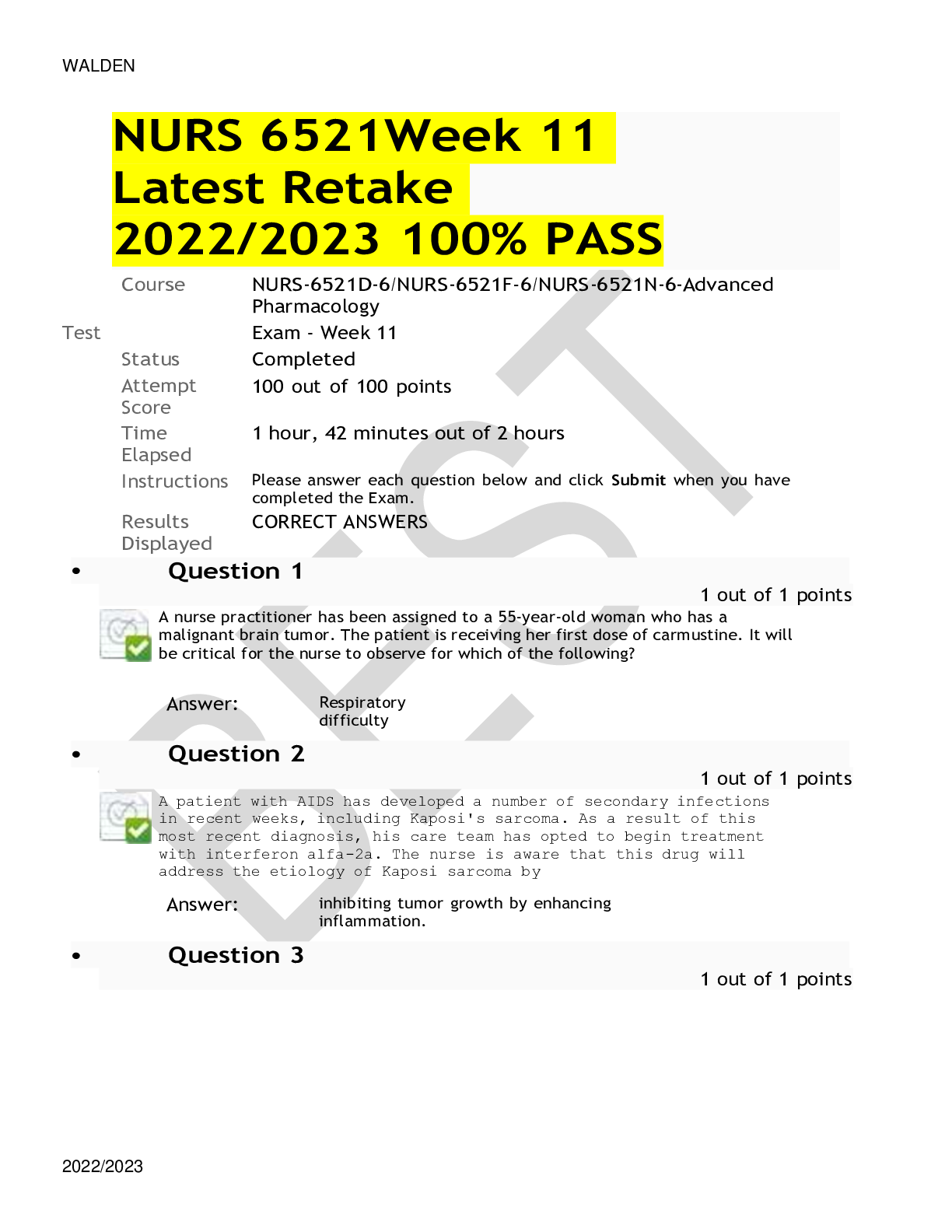
1. A nurse is administering rituximab to a patient via the IV route. The nurse will set the IV pump at
50mg/hour for the first half hour of the initial infusion. If there are not apparent
...
NURS 6521 – PHARM WEEK 9 QUIZ
1. A nurse is administering rituximab to a patient via the IV route. The nurse will set the IV pump at
50mg/hour for the first half hour of the initial infusion. If there are not apparent reactions after 30
minutes of the infusion, the nurse will increase the dosage every 30 minutes by 50mg/hour until the
maximum infusion rate reaches which of the following? – 400mg/hour
2. A nurse has completed a medication reconciliation of a patient who has been admitted following a
motor vehicle accident. Among the many drugs that the patient has received in the previous year is
rituximab. The nurse would be justified in suspecting the patient may have received treatment for
which of the following disease? – Non-Hodgkin’s lymphoma
3. A 62 year old patient taking tamoxifen exhibits increased bone and tumor pain along with a local
disease flare. The nurse interprets this as an indication of which of the following? – A tumor
responding to treatment
4. A nurse has been assigned to a female patient who is to begin chemotherapy. The nurse will initiate
the prescribed oprelvekin therapy: - 6 to 24 hours after therapy
5. A nurse is discussing oprelvekin therapy with a male patient. Which of the following will the nurse
tell the patient is the most common adverse effect of the drug? – Fluid retention/weight gain
6. A nurse educator who coordinates the staff education on an oncology unit is conducting an
inservice on targeted therapies. What potential benefit of targeted therapies should the nurse
highlight in this education session? – Targeted therapies have the potential to damage cancerous cells
while leaving normal body cells less affected
7. A patient has completed 4 weeks of treatment with epoetin alfa. Which of the following
assessment findings would most strongly indicate the treatment has been effective? – The patient’s
hemoglobin level is 11 g/dL
8. A male patient is receiving rituximab therapy for non-Hodgkin’s lymphoma. Which of the following
would be a priority nursing intervention to reduce the risk for cytotoxicity and tumor lysis syndrome?
- Ensure that the patient maintains a normal fluid and electrolyte balance
9. During ongoing assessment of a patient receiving 5-FU therapy, the nurse finds the patient’s
platelet count to be 92,000 cells/mm. The nurse should do which of the following? – The drug should
be discontinued of the patient’s platelet count is less than 100,000 cells/mm
10. A patient will soon begin targeted therapy as a component of her treatment plan for chronic
leukemia. The nurse is conducting health education about this new aspect of the patient’s drug
regimen and the patient has asked about the potential side effects of treatment. How should the
nurse best respond? – Both classes of drugs have adverse effects, but targeted therapies tend to have
less of an effect on healthy body cells11. A patient has just received her first dose of imatinib and the nurse on the oncology unit is
amending the patient’s care plan accordingly. What nursing diagnosis is most appropriate in light of
this addition to the patient’s drug regimen? – Risk for infection related to bone marrow suppression
12. A patient receiving high-dose cisplatin therapy exhibits symptoms of hypomagnesemia. Which of
the following should the nurse suggest to help offset the magnesium losses from the cisplatin
therapy? – Consuming chocolates
13. A 28 year old woman has completed rituximab therapy for an autoimmune disease. She tells the
nurse that she and her husband would like to start a family. The nurse will advise her to: - Continue
using birth control for at least 12 months
14. A patient with chronic lymphocytic leukemia (CLL) will imminently begin a course of treatment
with rituximab. In order to minimize the risk of adverse effects, what strategy for administration will
be adopted? – Administering the initial doses by slow infusion while observing for adverse reactions
15. An older adult woman has been diagnosed with acute lymphoblastic leukemia (ALL) and her care
team has identified potential benefits of imatinib. Which of the following characteristics of this
patient’s current health status may preclude the use of imatinib? – The patient has chronic heart
failure resulting in significant peripheral edema
16. A patient with chronic heart failure has begun treatment with epoetin alfa, which she will receive
in her own home from a home health nurse. The nurse should teach the patient to supplement this
treatment with a diet that is high in: - Iron-rich foods such as beans and leafy green vegetables
17. A patient’s current course of cancer treatment involves the administration of a conjugated
monocional antibody. What characteristic of the drug is specified by the fact that it isclassified as a
conjugated drug? – The targeted therapy is combined with another substance that causes cell death
18. A female patient has follicular non-Hodgkin’s lymphoma and is receiving thalidomide (Thalomid).
It will be most important for the nurse to monitor this patient for which of the following? – Bleeding
19. A middle-aged patient has received a diagnosis of GI stromal tumor following an extensive
diagnostic workup. Imatinib has been recommended as a component of the patient’s drug regimen.
What patient education should the nurse provide to this patient? – It’s important that you let us know
if you develop any significant swelling or puffiness
20. A nurse is assessing a patient who has chronic lymphoblastic myelogenous leukemia. The
treatment plan includes hydroxyurea (Hydrea). The nurse will assess the patient for which of the
following? – Leukopenia
21. A nurse has been assigned to a 55 year old woman who has a malignant brain tumor. The patient
is receiving her first dose of camustine. It will be critical for the nurse to observe for which of the
following? – Respiratory difficulty22. An oncology nurse is reviewing the pathophysiology of cancer and is discussing with a colleague
the factors that contribute to the success or failure of a patient’s chemotherapy. Which of the
following cancerous cells is most susceptible to the effects of chemotherapeutic drugs? – Cells that
have a rapid mitotic rate
23. Which of the following patient will be at the greatest risk for anemia and would be the most likely
candidate for epoetin alfa therapy? – A 62 year old male with cancer
24. A 67 year old man who is being treated for prostate cancer is taking epoetin alfa. The nurse will
instruct the patient to: - Schedule an appointment to measure hemoglobin twice a week for at least 2 to
6 weeks
25. A nurse is caring for a patient with cancer who has been prescribed dronabinol (Marinol) to help
reduce nausea and vomiting from chemotherapy. The nurse will inform the patient that he or she is
taking an oral form of: - Marijuana
26. A male patient is receiving heparin by continuous intravenous infusion. The nurse will instruct the
patient and family members to report which of the following should occur? – Presence of blood in
urine or stools
27. When planning care for a patient who is receiving filgastim (Neupogen) for a nonmyeloid
malignancy, the nurse should formulate which of the following patient outcomes? (Select all that
apply): - The patient will be able to self-administer filgrastim at home, the patient will not experience
bone pain, the patient will not develop febrile neutropenia, the patient will not develop an infection
28. A patient has been scheduled to begin treatment with rituximab for non-Hodgkin’s lymphoma.
The nurse who will administer this drug should understand that it targets: - Specific antigens on the
surface of malignant B cells
29. An oncology nurse is aware of the risks of injury that exist around the preparation, transportation,
and administration of chemotherapeutic agents. In order to reduce these risks of injury, the nurse
should take which of the following actions? – Prime the IV tubing with an approved IV solution rather
than with the drug itself
30. Intravenous carmustine has been prescribed for a patient with cancer. The nurse should help
relieve the discomfort of pain and burning during the infusion by: - Slowing the infusion
31. Mr. Lepp is a 63 year old man who was diagnosed with colon cancer several weeks ago and who is
scheduled to begin chemotherapy. He reports to the nurse that he read about the need for
erythropoietin in an online forum for cancer patients and wants to explore the use of epoetin alfa
with his oncologist. Which of the following facts should underlie the nurse’s response to Mr. Lepp? –
The potential benefits of epoetin alfa must be weighed carefully against the potential adverse effects in
cancer patients32. A 39 year old woman is receiving doxorubicin for the treatment of cancer. After each treatment,
the patient has acute nausea and vomiting accompanied by a slightly increased heart rate. The nurse
will advise her to: - Perform relaxation techniques after the treatments
33. A patient with non-Hodgkin’s lymphoma (NHL) will be starting a course of doxorubicin shortly.
When planning this patient’s care, what nursing diagnosis should the nurse prioritize? – Risk for
infection related to suppressed bone marrow function
34. A nurse is to use a single dose 1mL vial to administer 0.5mL of epoetin alfa to a 39 year old woman
who is being treated for chemotherapy-induced anemia. Which of the following will the nurse do with
the unused portion of the drug? – Discard the unused portion of the drug
35. A nurse on an oncology unit is aware of the need to assess for adverse effects in patients who are
being treated with rituximab. The risks of adverse effects are highest at what point during the course
of treatment? – Shortly after the initiation of the first infusion of rituximab
36. A patient with a diagnosis of chronic myeloid leukemia has met with her oncologist, who has
recommended treatment with kinase inhibitor imatinib. What route of administration should the
nurse explain to the patient? – Oral administration of imatinib in a home setting
37. A patient with a recent diagnosis of chronic myelogenous leukemia (CML) is discussing treatment
options with his care team. What aspect of the patient’s condition would contraindicate the use of
cyclophosphamide for the treatment of leukemia? – The patient’s bone marrow function is significantly
depressed
38. A 60 year old patient experienced a sudden onset of chest pain and shortness of breath and was
subsequently diagnosed with a pulmonary embolism in the emergency department. The patient has
been started on an intravenous heparin infusion. How does this drug achieve therapeutic effect? – By
inactivating clotting factors and thus stopping the coagulation cascade
Question 1
1 out of 1 points
An oncology nurse is aware of the risks for injury that exist around the preparation,
transportation, and administration of chemotherapeutic agents. In order to reduce
these risks of injury, the nurse should take which of the following actions?
Response
Feedback:
IV lines should be primed with a compatible nonhazardous solution
before the actual
drug administration. Intravenous lines should be disposed of in an
approved biohazard container, not normal trash cans. Needleless
systems should be used and a toilet is preferable to a commode
because it can be flushed of contents without prior handling of waste by
care providers. Question 2
1 out of 1 points
A 45-year-old woman with acute leukemia is going to begin chemotherapy with
vincristine. The nurse is aware that vincristine must always be administered
Response
Feedback:
If vincristine is administered as a continuous infusion, a central line
should always be used. It is important to prime IV lines for
chemotherapy administration with 5% dextrose in water or normal
saline, not with vincristine, before administering the drug. The infusion
rate, although important, is not as important a factor for vincristine
administration as is the need for a central line.
Question 3
1 out of 1 points
A patient with a diagnosis of chronic myeloid leukemia has met with her oncologist,
who has recommended treatment with the kinase inhibitor imatinib. What route of
administration should the nurse explain to the patient?
Response
Feedback:
Imatinib is administered orally. Consequently, it can be administered
in an outpatient environment. IV or IM administration is not
performed.
Question 4
1 out of 1 points
A 28-year-old woman has completed rituximab therapy for an autoimmune disease.
She tells the nurse that she and her husband would like to start a family. The nurse
will advise her to
Response
Feedback:
Rituximab is not recommended for use in pregnancy or when women
are lactating. The patient should consequently be advised to continue
using birth control for the duration of treatment.
Question 5
1 out of 1 points
A patient has been scheduled to begin treatment with rituximab for non-Hodgkin's
lymphoma. The nurse who will administer this drug should understand that it targets
Response
Feedback:
Rituximab is a type of monoclonal antibody that binds specifically to the
CD20 antigen found on the surface of normal and malignant B
lymphocytes and causes cell lysis. The drug does not target the
complement system, plasma cell DNA, or the cell membrane of
malignant cells.
Question 6
1 out of 1 points
Which of the following patients will be at the greatest risk for anemia and would bethe most likely candidate for epoetin alfa therapy?
Response
Feedback:
Older adults who have cancer and are receiving chemotherapy are
especially vulnerable to the adverse effects of anemia as a result of
chemotherapy and would therefore be the most likely candidates for
epoetin alfa therapy. Young adults over age 18, pregnant women, and
patients with a high white blood cell count are not as vulnerable to
anemia and would not require epoetin alfa therapy.
Question 7
1 out of 1 points
A nurse is administering rituximab to a patient via the IV route. The nurse will set the
IV pump at 50 mg/hour for the first half hour of the initial infusion. If there are not
apparent reactions after 30 minutes of the infusion, the nurse will increase the
dosage every 30 minutes by 50 mg/hour until the maximum infusion rate reaches
which of the following?
Response
Feedback:
Infusion-related effects occur in 80% of patients within 30 minutes to 2
hours after the first rituximab infusion, but the severity of most reactions
dissipates when the infusion rate is slowed or interrupted. Reactions
may be related to dose, so it is advisable not to exceed the maximum
infusion rate of 400 mg/hour.
Question 8
1 out of 1 points
A patient will soon begin targeted therapy as a component of her treatment plan for
chronic leukemia. The nurse is conducting health education about this new aspect of
the patient's drug regimen and the patient has asked about the potential side effects
of treatment. How should the nurse best respond?
Response
Feedback:
Targeted therapies are generally considered to be less toxic than
traditional chemotherapy drugs. However, adverse reactions to
targeted therapies can occur such as severe skin reactions, GI
toxicities, skin reactions, and thrombosis.
Question 9
1 out of 1 points
Intravenous carmustine has been prescribed for a patient with cancer. The nurse
should help relieve the discomfort of pain and burning during the infusion by
Response
Feedback:
The nurse can relieve the discomfort of infusion by slowing the
infusion, increasing the volume used for dilution, and increasing the
total volume of the primary IV infusion. Giving 2 units of bleomycin
before administering carmustine would not help relieve discomfort.
Question 10
1 out of 1 pointsA 39-year-old woman is receiving doxorubicin for the treatment of cancer. After each
treatment, the patient has acute nausea and vomiting accompanied by a slightly
increased heart rate. The nurse will advise her to
Response
Feedback:
The nurse should explain to the patient that many patients experience
acute nausea and vomiting. The nurse should also explain that
nonpharmacologic measures such as relaxation techniques can
sometimes help alleviate these symptoms. If the patient does not know
how to perform relaxation techniques, then the nurse should teach her.
It is not necessary for the patient to make an appointment for cardiac
function tests, because the nausea and vomiting are not related to
cardiac function. Exercise will likely exacerbate the patient's symptoms.
Question 11
0 out of 1 points
A nurse has administered filgrastim to a diverse group of patients in recent months.
Which of the following patients should the nurse observe for extremely elevated white
blood cell counts following administration of the drug?
Response
Feedback:
Patients who receive cytotoxic chemotherapy or radiotherapy or suffer
from myeloid malignancies need cautious administration of filgrastim.
When the drug is administered from 24 hours prior to 24 hours after
cytotoxic chemotherapy, extremely elevated white blood cell counts
have been known to occur. In myeloid malignancies, myeloid cells may
be sensitive to filgrastim, leading to severe adverse effects. Filgrastim
is used to treat congenital, cyclic, or idiopathic neutropenia, nonmyeloid
malignancies, aplastic anemia, and HIV infection. However, these
conditions are not associated with the high increase of white blood cell
count from filgrastim therapy.
Question 12
1 out of 1 points
A female patient is taking filgrastim (Neupogen) to decrease the incidence of
infection. The nurse notices a small increase in the neutrophil count 2 days after
starting therapy. The nurse's evaluation of the increase is that
Response
Feedback:
A small increase in the neutrophil count 1 or 2 days after starting
therapy indicates only a transient increase and does not indicate the
full therapeutic effects of the drug. It indicates neither slow action nor
ineffectiveness of the drug.
Question 13
1 out of 1 points
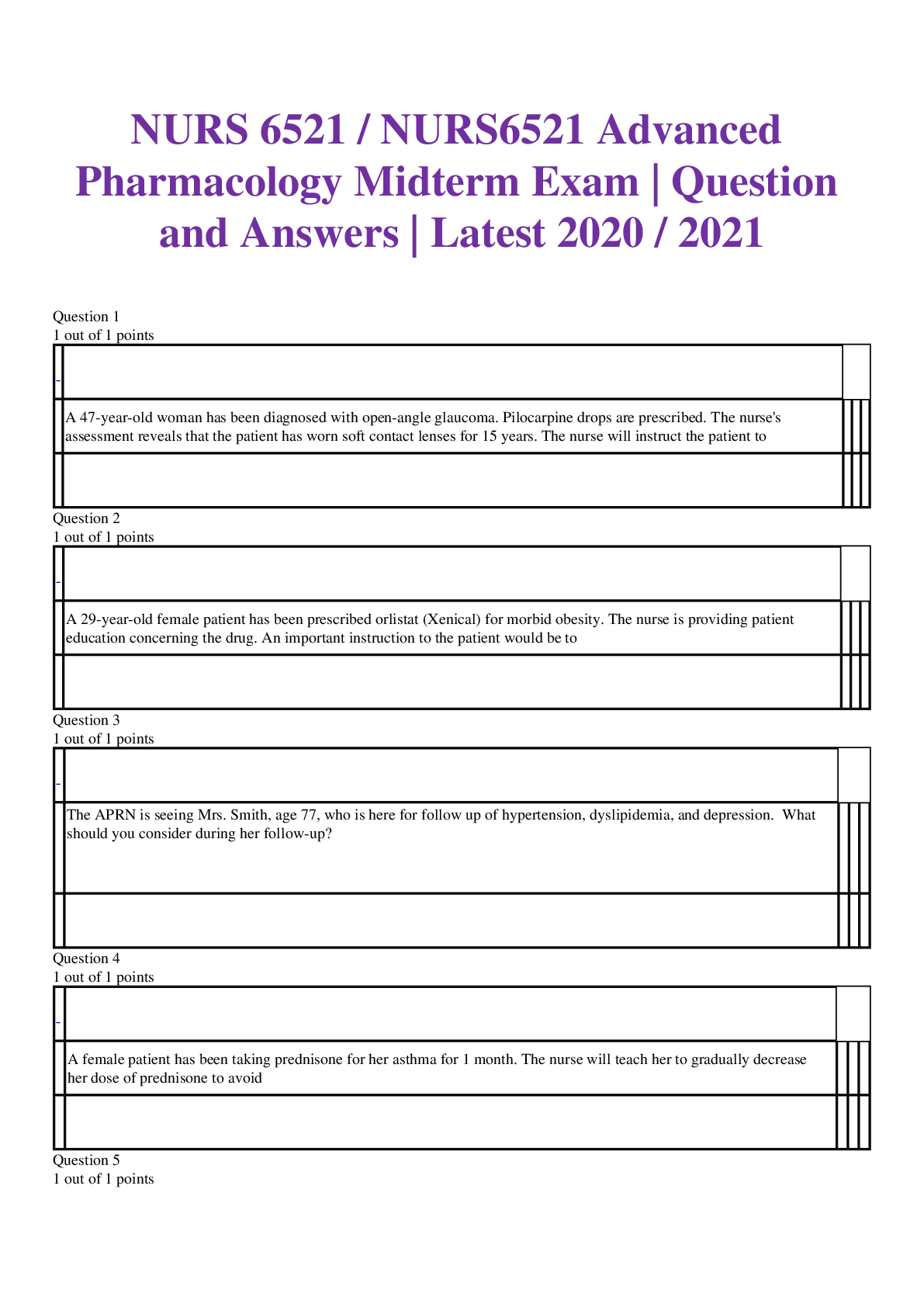
A nurse has been assigned to a 55-year-old woman who has a malignant brain
tumor. The patient is receiving her first dose of carmustine. It will be critical for the
nurse to observe for which of the following?Response
Feedback:
Respiratory difficulty can indicate a hypersensitivity reaction or
anaphylaxis. The nurse would report any breathing difficulties
immediately to the physician. If the patient does not eat or drink for
more than 24 hours, the physician should be notified. Nausea and
vomiting are adverse effects of the drug therapy, and an antiemetic
regimen would be appropriate. Reddish urine is an adverse effect of
doxorubicin, not carmustine.
Question 14
1 out of 1 points
A nurse is assessing a patient who has chronic lymphoblastic myelogenous
leukemia. The treatment plan includes hydroxyurea (Hydrea). The nurse will assess
the patient for which of the following?
Response
Feedback:
Hydroxyurea may be contraindicated in patients with low WBCs. The
drug is not contraindicated with diabetes mellitus, hypertension, or
hypoglycemia.
Question 15
1 out of 1 points
A 60-year-old patient experienced a sudden onset of chest pain and shortness of
breath and was subsequently diagnosed with a pulmonary embolism in the
emergency department. The patient has been started on an intravenous heparin
infusion. How does this drug achieve therapeutic effect?
Response
Feedback:
Heparin, along with antithrombin, rapidly promotes the inactivation of
factor X, which, in turn, prevents the conversion of prothrombin to
thrombin. Heparin does not achieve its therapeutic effect through the
excretion or inhibition of vitamin K or by inhibiting platelet aggregation.
Question 16
1 out of 1 points
A male patient has been on long-term bicalutamide (Casodex) therapy. In order to
assess adverse effects of the drug therapy, the nurse will closely monitor which of the
following?
Response
Feedback:
It is important for the nurse to monitor the patient's liver function closely
if the patient is on prolonged therapy with an antiandrogenic agent.
Adverse effects of the therapy include gynecomastia, diarrhea, hot
flashes, breast pain, impotence, loss of libido, and abnormal liver
functions. Monitoring of blood counts, an annual pap smear, and
regular visual function tests are advised for patients undergoing
tamoxifen therapy.
Question 17
1 out of 1 pointsA 62-year-old patient taking tamoxifen exhibits increased bone and tumor pain along
with a local disease flare. The nurse interprets this as an indication of which of the
following?
Response
Feedback:
Increased bone and tumor pain along with a local disease flare
indicates that the tumor is responding to the tamoxifen treatment. It
does not indicate hypersensitivity, nephrotoxic effects, or
cardiomyopathy.
Question 18
1 out of 1 points
A patient has just received her first dose of imatinib and the nurse on the oncology
unit is amending the patient's care plan accordingly. What nursing diagnosis is most
appropriate in light of this addition to the patient's drug regimen?
Response
Feedback:
Like many cancer treatments, imatinib causes bone marrow
suppression that creates a consequent risk of infection. The drug does
not typically result in cognitive changes, fluid overload, or skin
breakdown.
Question 19
1 out of 1 points
A nurse is discussing oprelvekin therapy with a male patient. Which of the following
will the nurse tell the patient is the most common adverse effect of the drug?
Response
Feedback:
Fluid retention with weight gain is the most common adverse effect of
oprelvekin. Medullary bone pain (pain within the marrow) is the only
consistently observed adverse effect associated with filgrastim.
Papilledema is an adverse effect that is only occasionally reported in
older adults who take oprelvekin. Atrial arrhythmia is not associated
with this drug.
Question 20
1 out of 1 points
A nurse on an oncology unit is aware of the need to assess for adverse effects in
patients who are being treated with rituximab. The risks of adverse effects are highest
at what point during the course of treatment?
Response
Feedback:
Infusion-related effects reportedly occur in 80% of patients within 30
minutes to 2 hours after beginning the first rituximab infusion. These
exceed the incidence of adverse effects at other points in the course of
treatment.
Question 21
1 out of 1 points
A nurse has been assigned to a female patient who is to begin chemotherapy. Thenurse will initiate the prescribed oprelvekin therapy
Response
Feedback:
Administration of oprelvekin should begin 6 to 24 hours after the end
of chemotherapy. Oprelvekin should be discontinued at least 2 days
before the next chemotherapy session begins.
Question 22
1 out of 1 points
Mr. Lepp is a 63-year-old man who was diagnosed with colon cancer several weeks
ago and who is scheduled to begin chemotherapy. He reports to the nurse that he
read about the need for erythropoietin in an online forum for cancer patients and
wants to explore the use of epoetin alfa with his oncologist. Which of the following
facts should underlie the nurse's response to Mr. Lepp?
Response
Feedback:
In patients with cancer, epoetin alfa should only be used when anemia
is due to concomitant myelosuppressive chemotherapy and should be
discontinued when the chemotherapy course is completed. The use of
epoetin alfa during cancer may shorten survival and/or increase the risk
of tumor progression or recurrence. Patients with cancer are also at risk
for serious cardiovascular and thrombovascular events. Consequently,
the benefits of treatment must be considered in light of these potentially
adverse effects.
Question 23
1 out of 1 points
A 67-year-old man who is being treated for prostate cancer is taking epoetin alfa. The
nurse will instruct the patient to
Response
Feedback:
After each dose adjustment, the nurse should ensure that the patient
makes an appointment to have the hemoglobin measured twice a week
for at least 2 to 6 weeks to verify that it is in the normal range. A high
WBC count and hypertension have not been identified as adverse
effects of epoetin alfa.
Question 24
1 out of 1 points
A patient with chronic heart failure has begun treatment with epoetin alfa, which she
will receive in her own home from a home health nurse. The nurse should teach the
patient to supplement this treatment with a diet that is high in
Response
Feedback:
Patients receiving epoetin alfa should maintain adequate iron intake,
which may aid in the effectiveness of epoetin alfa. Foods high in iron
include green leafy vegetables, beans, and organ meats.
Question 25
1 out of 1 pointsA nurse has completed a medication reconciliation of a patient who has been
admitted following a motor vehicle accident. Among the many drugs that the patient
has received in the previous year is rituximab. The nurse would be justified in
suspecting the patient may have received treatment for which of the following
diseases?
Response
Feedback:
Rituximab has historically been used to treat CD20-positive B-cell
malignancies such as B-cell leukemias, chronic lymphocytic leukemia,
non-Hodgkin's lymphoma, and some multiple myeloma. It is not
normally used to treat malignant melanoma, lung cancer, or kidney
cancer.
Question 26
1 out of 1 points
A patient receiving high-dose cisplatin therapy exhibits symptoms of
hypomagnesemia. Which of the following should the nurse suggest to help offset the
magnesium losses from the cisplatin therapy?
Response
Feedback:
Patients with hypomagnesemia, or low magnesium levels, should
increase their dietary intake of magnesium. Dark chocolate is high in
magnesium and will help offset losses from the cisplatin therapy.
Calcium and magnesium compete to gain entrance into the intestines,
so calcium-rich foods should be limited. Consumption of potassium-rich
foods would have no effect on the patient's magnesium levels. The
incidence of hemorrhagic cystitis can be reduced by a vigorous
hydration regimen of at least 2 to 3 liters of fluid a day, but this would
not help control symptoms of hypomagnesemia.
Question 27
1 out of 1 points
A patient's current course of cancer treatment involves the administration of a
conjugated monoclonal antibody. What characteristic of the drug is specified by the
fact that it is classified as a conjugated drug?
Response
Feedback:
Monoclonal antibodies can be conjugated, meaning that they are
combined with another substance such as radiation or a toxic drug that
then produces indirect cell destruction as the conjugate infiltrates the
cell. A conjugated drug is not necessarily derived from nonhuman
sources, and it does not possess the ability to modify pharmacokinetics.
Question 28
1 out of 1 points
A nurse is to use a single-dose 1 mL vial to administer 0.5 mL of epoetin alfa to a 39-
year-old woman who is being treated for chemotherapy-induced anemia. Which of
the following will the nurse do with the unused portion of the drug?Response
Feedback:
The single-dose 1-mL vial does not have preservatives. In order to
prevent contamination, the nurse will discard the unused portion of the
drug. A 2-mL vial does have preservatives and would be stored at 2°C
to 8°C to be used again. The 2-mL vial should be discarded 21 days
after initial entry to prevent use of a possibly contaminated product.
Question 29
0 out of 1 points
During ongoing assessment of a patient receiving 5-FU therapy, the nurse finds the
patient's platelet count to be 92,000 cells/mm 3. The nurse should do which of the
following?
Response
Feedback:
The drug should be discontinued if the patient's platelet count is less
than 1,00,000 cells/mm 3 because it indicates that the patient has
developed thrombocytopenia. Increasing the dosage or continuing the
therapy with a decreased dosage is not appropriate.
Question 30
1 out of 1 points
A female patient has follicular non-Hodgkin's lymphoma and is receiving thalidomide
(Thalomid). It will be most important for the nurse to monitor this patient for which of
the following?
Response
Feedback:
Common adverse effects of thalidomide include thrombotic problems,
drowsiness, photosensitivity, and peripheral neuropathies. Chills,
rigors, fever, and angina are not associated with the use of this drug.
Question 31
1 out of 1 points
When planning care for a patient who is receiving filgrastim (Neupogen) for a
nonmyeloid malignancy, the nurse should formulate which of the following patient
outcomes? (Select all that apply.)
Response
Feedback:
Desired outcomes for a patient receiving filgrastim include that febrile
neutropenia will be avoided and infection and bone pain will not
develop, or at least bone pain will not be unmanageable if it develops.
Also, because this drug is administered subcutaneously every day
during therapy, management of their own administration would be a
positive outcome for patients. A patient who is taking oprelvekin would
be at risk for fluid retention. Filgrastim is not associated with this
adverse effect.
Question 32
1 out of 1 points
A nurse educator who coordinates the staff education on an oncology unit is
conducting an inservice on targeted therapies. What potential benefit of targeted
therapies should the nurse highlight in this education session?Response
Feedback:
By focusing on molecular and cellular changes that are specific to
cancer, targeted cancer therapies may be more effective than current
treatments and less harmful to normal cells so that they may produce
fewer adverse effects. However, adverse effects are not wholly absent.
These drugs are not normally used as cancer prophylaxis and many
are prohibitively expensive.
Question 33
1 out of 1 points
A middle-aged patient has received a diagnosis of GI stromal tumor following an
extensive diagnostic workup. Imatinib has been recommended as a component of the
patient's drug regimen. What patient education should the nurse provide to this
patient?
Response
Feedback:
Patients must understand the importance of reporting edema of weight
gain while taking imatinib. The patient will not likely have a PICC line.
Nausea and dry mouth are not common adverse effects and the
patient should not unilaterally stop taking the drug.
Question 34
1 out of 1 points
A female patient is prescribed oprelvekin therapy to treat thrombocytopenia. Which of
the following should the nurse continuously monitor to determine the efficacy and
duration of the oprelvekin therapy?
Response
Feedback:
Oprelvekin stimulates the formation of platelets, so the nurse should
regularly monitor the platelet count to determine the duration of the
therapy. The therapy should be continued until the postnadir platelet
count is at least 50,000 cells/mm 3. The oprelvekin therapy is effective if
the platelet count rises to a normal range without severe bleeding. Fluid
retention, weight gain, and arrhythmias are major adverse effects of
oprelvekin therapy and would not be a measure of the efficacy and
duration of the therapy.
Question 35
1 out of 1 points
A male patient is receiving heparin by continuous intravenous infusion. The nurse will
instruct the patient and family members to report which of the following should it
occur?
Response
Feedback:
The nurse should instruct the patient and family members to report the
presence of blood in urine or stools and any bleeding from the gums,
nose, vagina, or wounds. The anticoagulation properties of heparin can
sometimes result in abnormal bleeding. Sleepiness, drowsiness, skin
rash, and dizziness are not commonly identified adverse effects of thedrug.
[Show More]