Computer Science > SOLUTIONS MANUAL > a02-solutions - University of Manitoba COMP 3170 (All)
a02-solutions - University of Manitoba COMP 3170
Document Content and Description Below
Last updated: 3 years ago
Preview 1 out of 6 pages
Instant download

Buy this Document to get the Full Access Instantly
Provided by Students Who Aced it
We Verify Document Content to Gurantee Accuracy
Reviews( 0 )
Document information
Connected school, study & course
About the document
Uploaded On
Dec 12, 2022
Number of pages
6
Written in
All

Additional information
This document has been written for:
Uploaded
Dec 12, 2022
Downloads
0
Views
206
Topic Tags
Recommended For You
Get more on SOLUTIONS MANUAL »


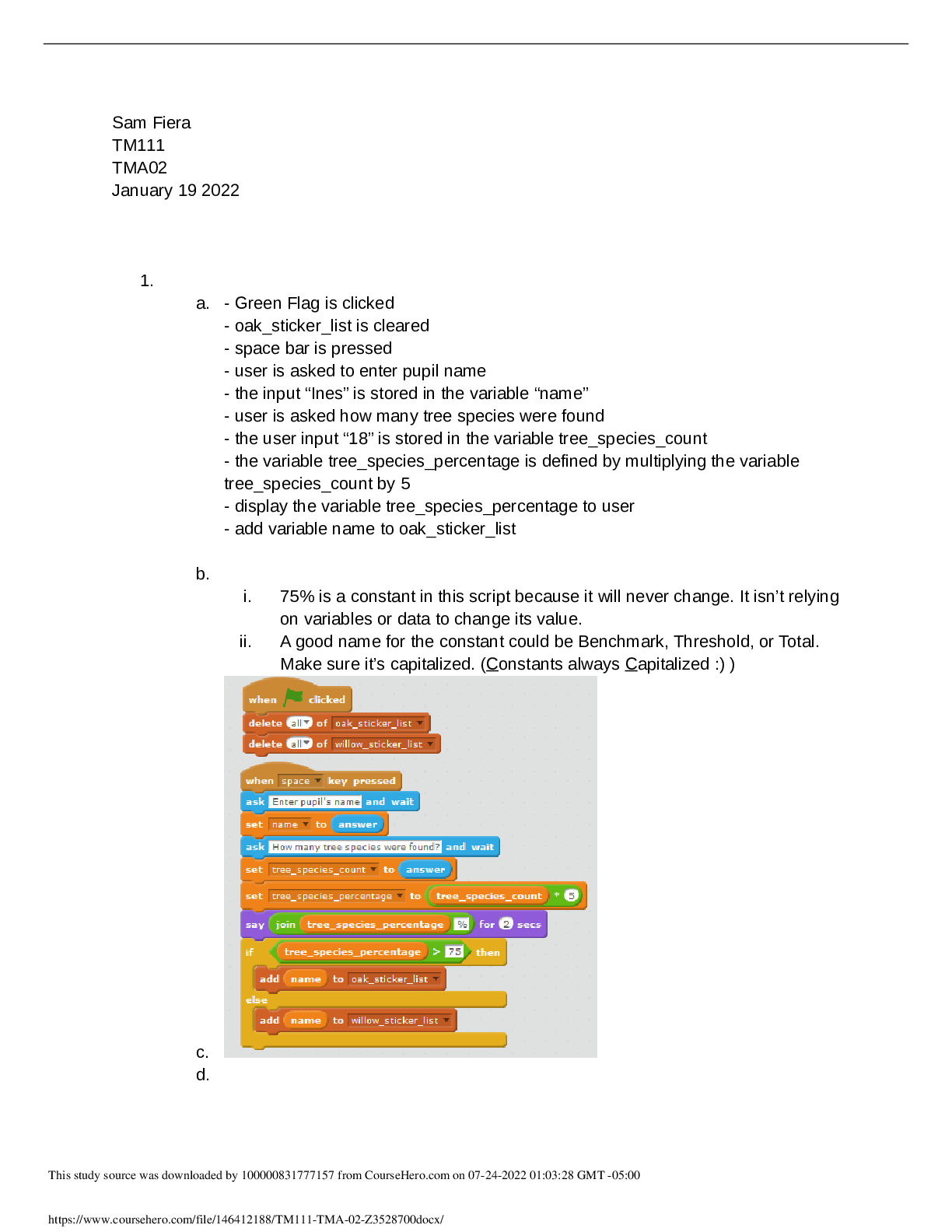
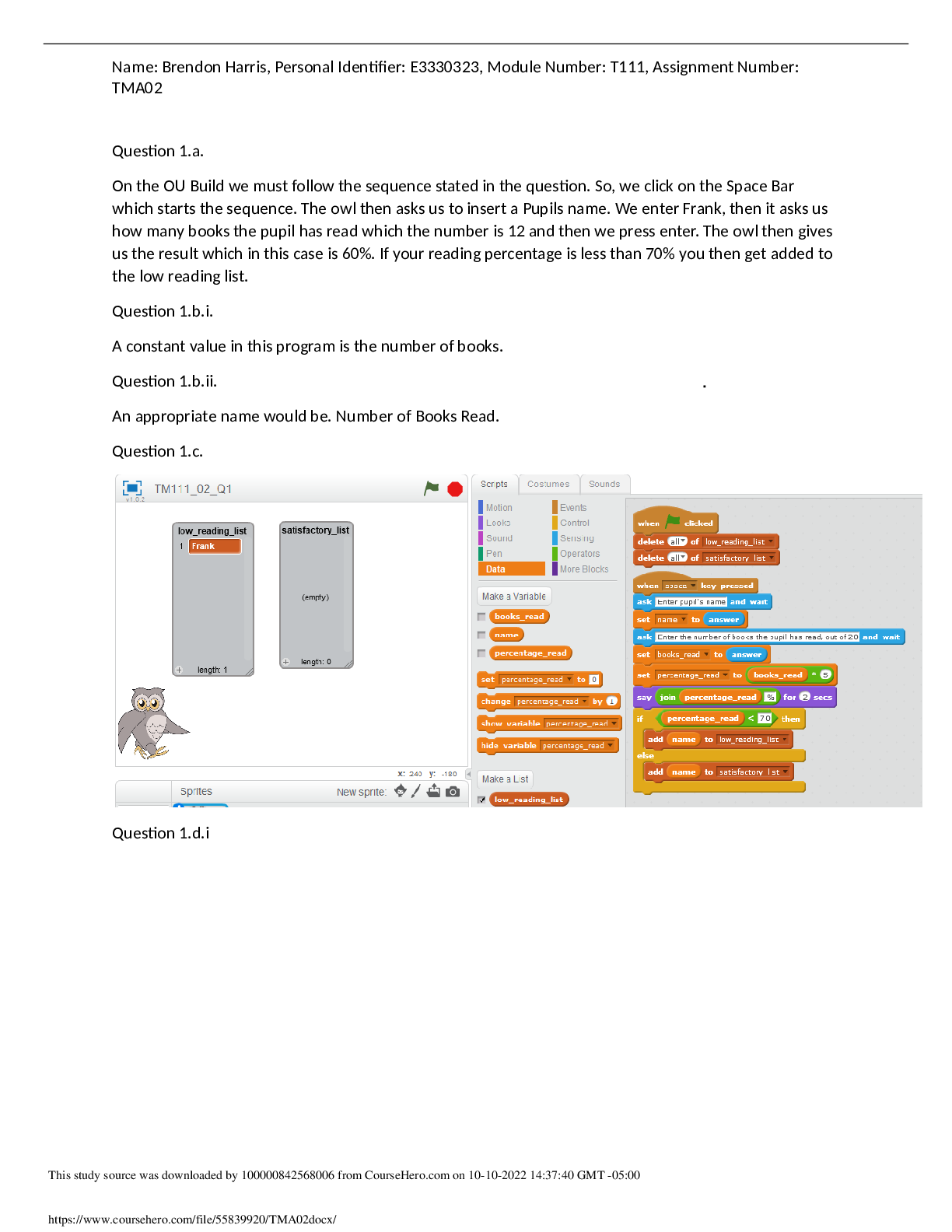
TM111 Introduction To Computing 1 TMA02/TM111 TMA02 | Question...


.png)
Pearson Edexcel GCE Question Booklet + Mark Scheme (Results) N...
.png)
Pearson Edexcel GCE Question Booklet + Mark Scheme (Results) N...
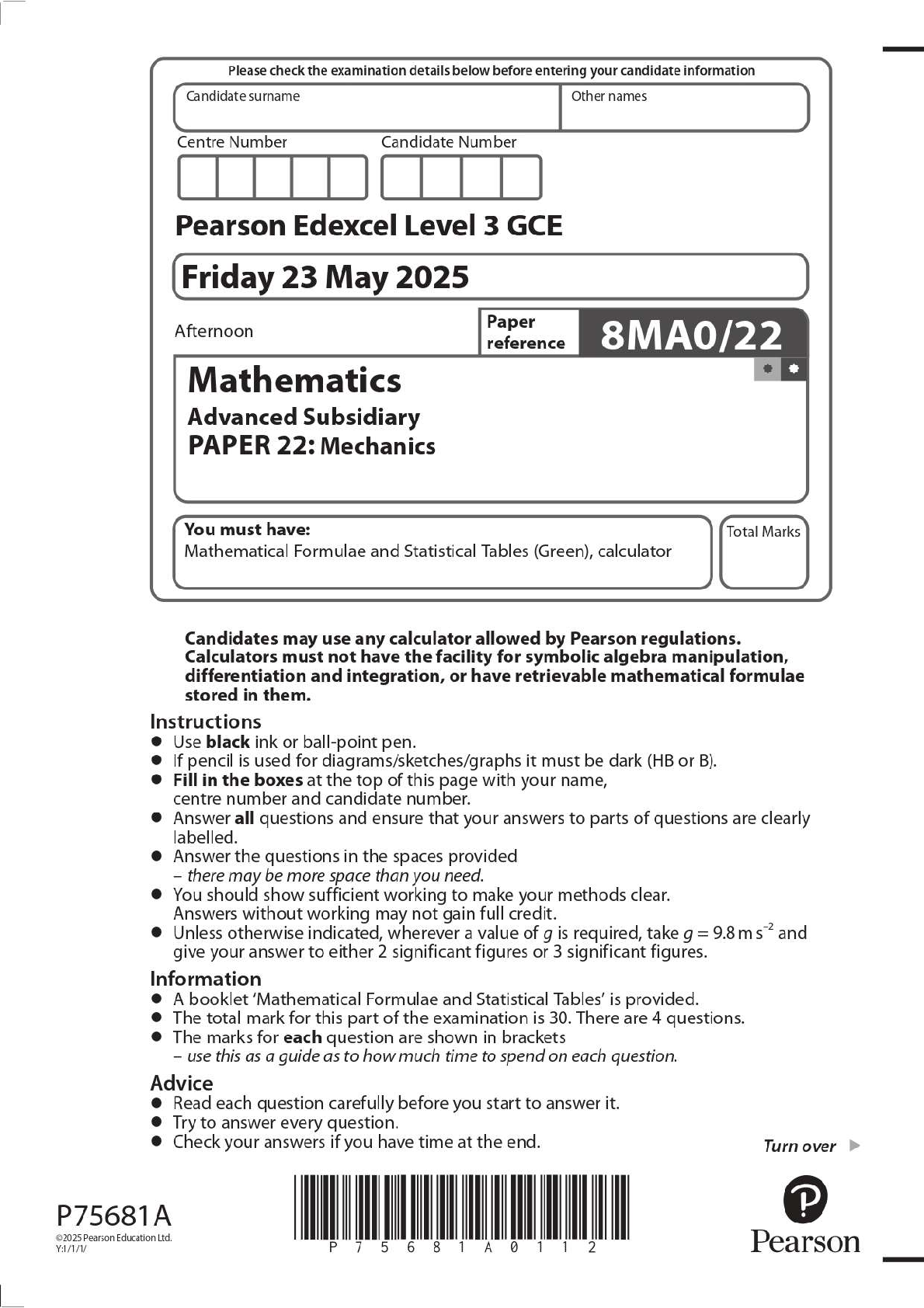
2025 Pearson Edexcel Level 3 GCE 8MA0/22 Mathematics Advanced...
Solutions Manual for Business Statistics Communicating with Nu...
Essentials of Econometrics, 5th Edition by Damodar Gujarati, D...



.png)
.png)


