NURS 6665
Document Content and Description Below
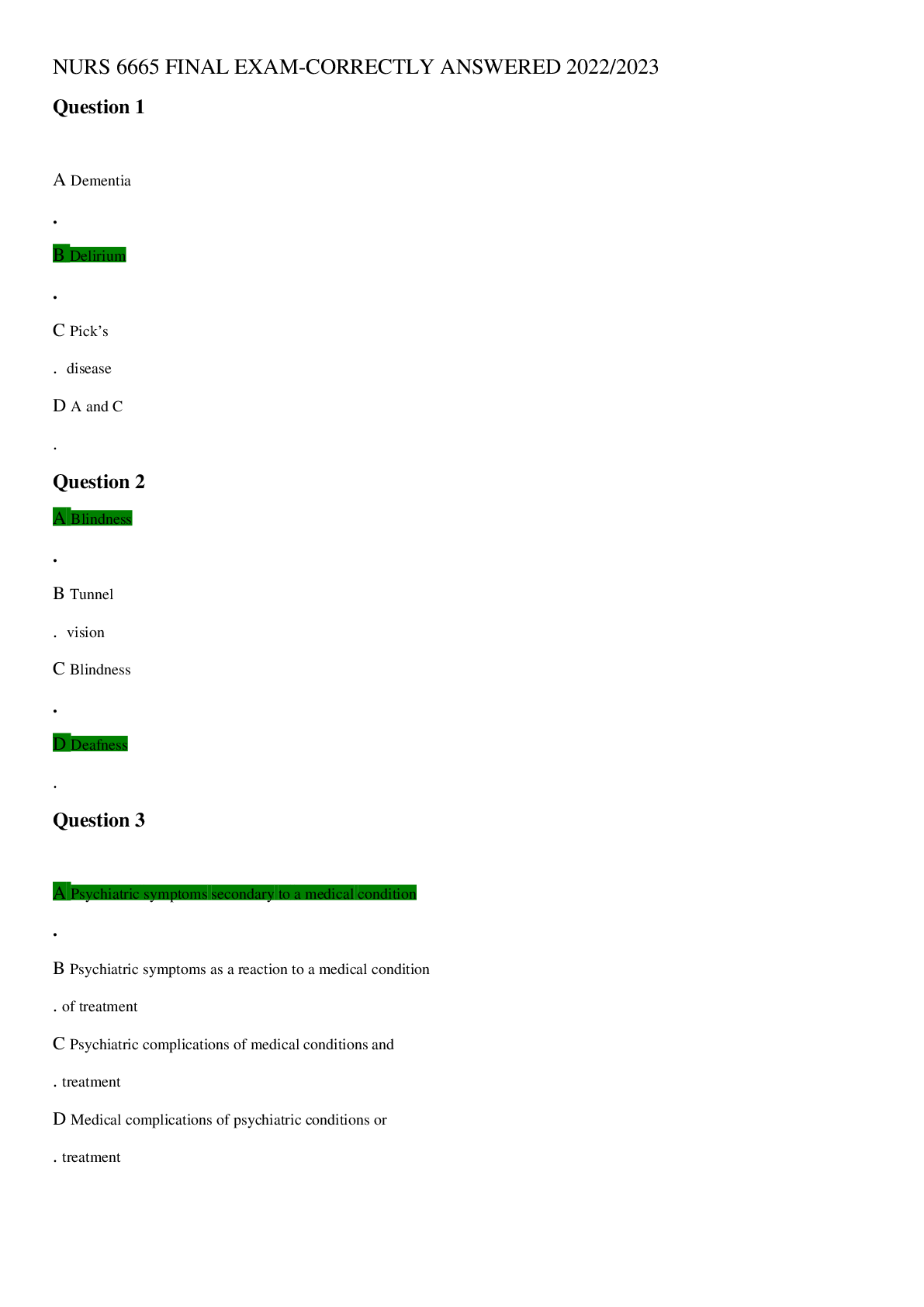
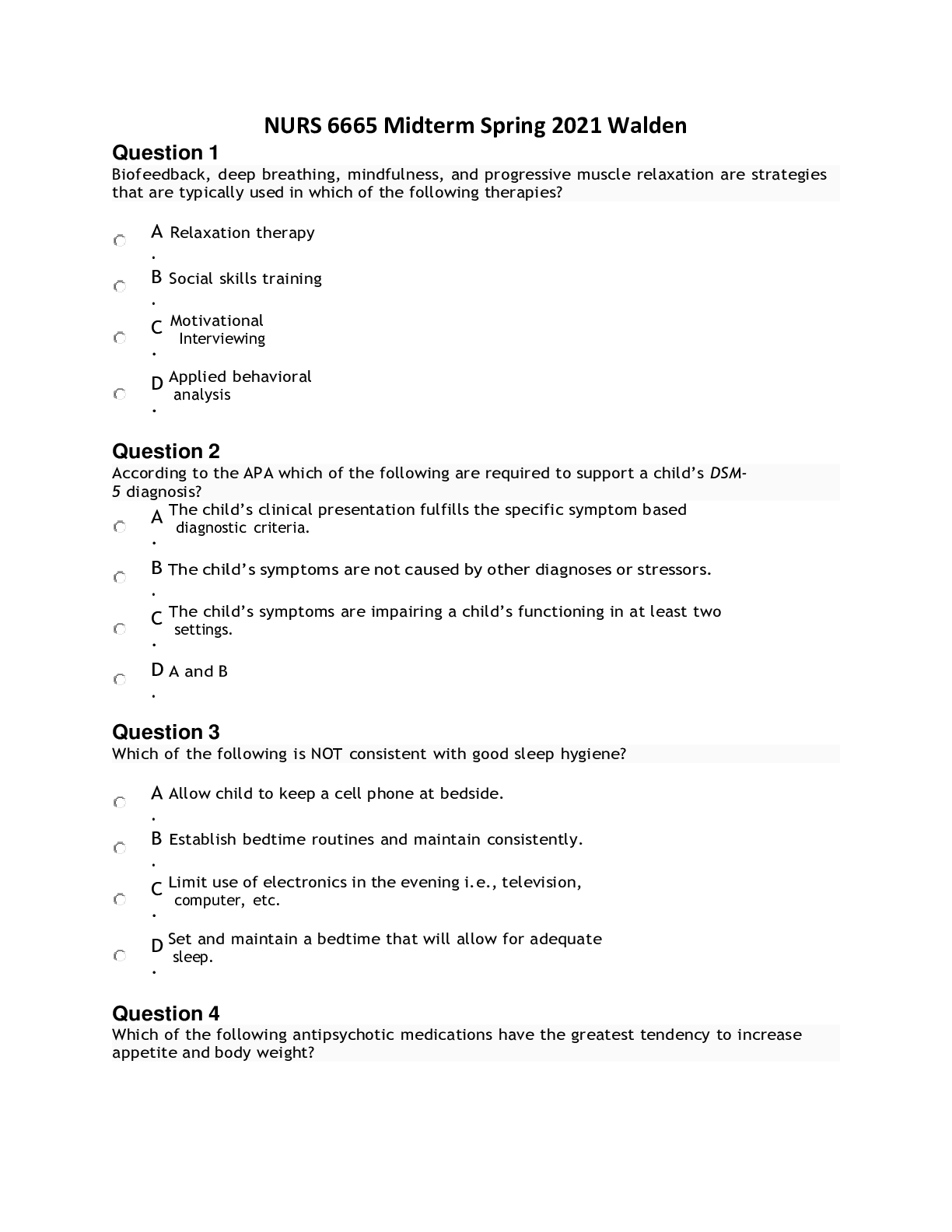
A. The patient is delusional. An estimated 30 to 40 percent of patients with dementia have delusions
12) Question: Which of the following persons hypothesized that the symptoms of conversion disorder reflect unconscious
...
[Show More]
Last updated: 3 years ago
Preview 1 out of 31 pages
Instant download

Buy this Document to get the Full Access Instantly
Provided by Students Who Aced it
We Verify Document Content to Gurantee Accuracy
Reviews( 0 )
Document information
Connected school, study & course
About the document
Uploaded On
Jan 05, 2023
Number of pages
31
Written in
All

Additional information
This document has been written for:
Uploaded
Jan 05, 2023
Downloads
0
Views
82
Topic Tags
Related Subjects & Courses
Explore similar study resources and related concepts.
Recommended For You
Get more on EXAM »
$20
31 Pages
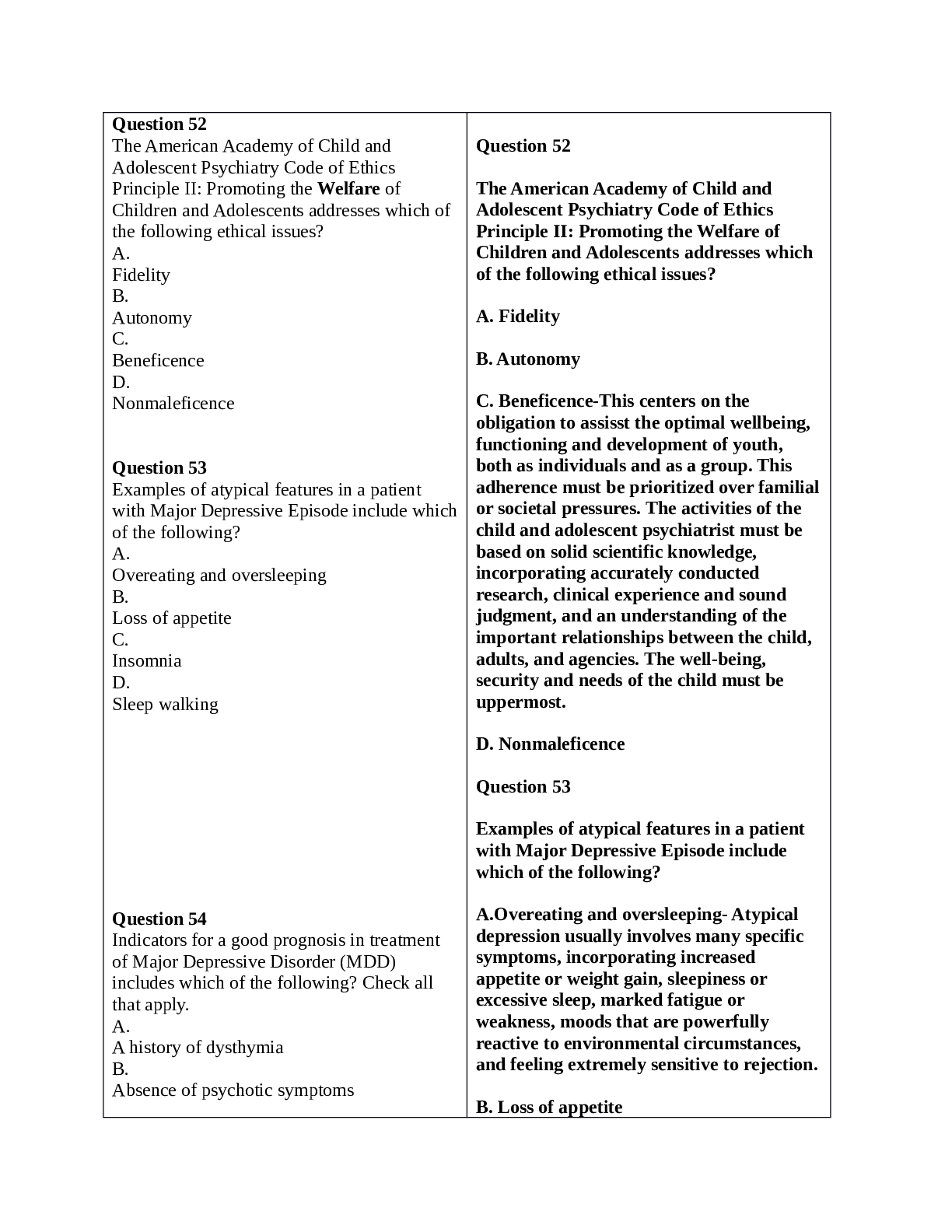
NURS 6665 Final Exam Questions and Verified Answers 2023 Updat...
$16.5
25 Pages
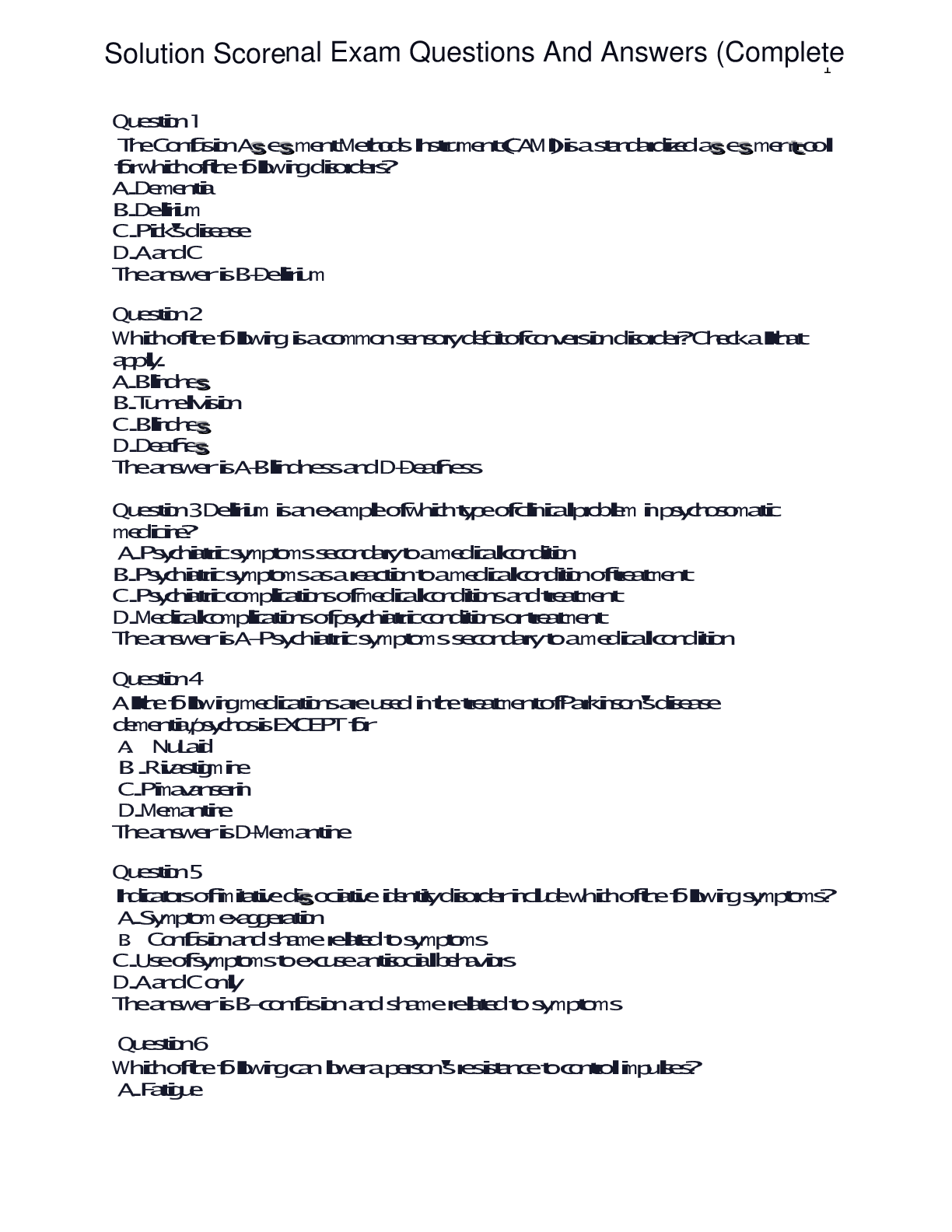
NURS 6665 Midterm Exam Questions and Answers with Rationale 20...
$13
21 Pages
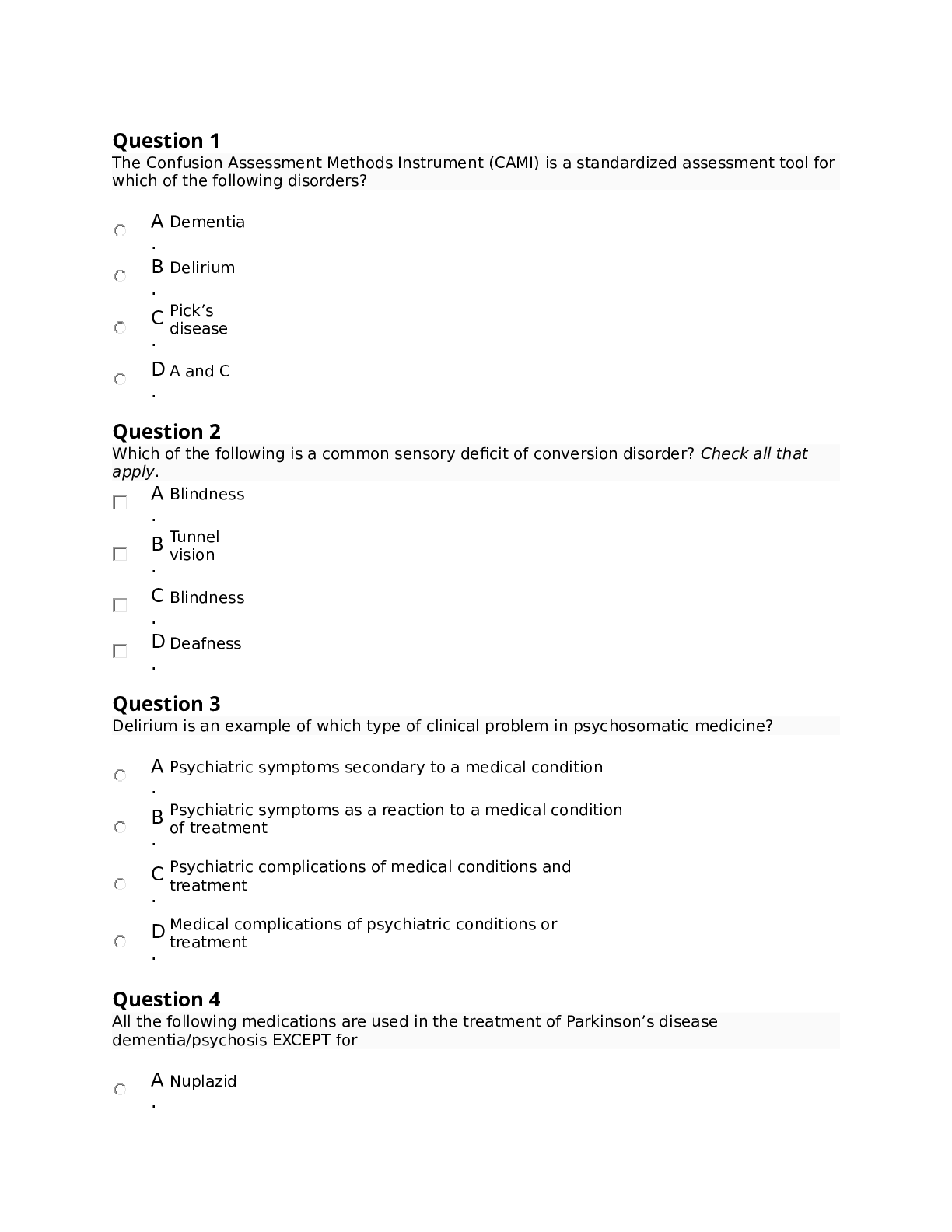
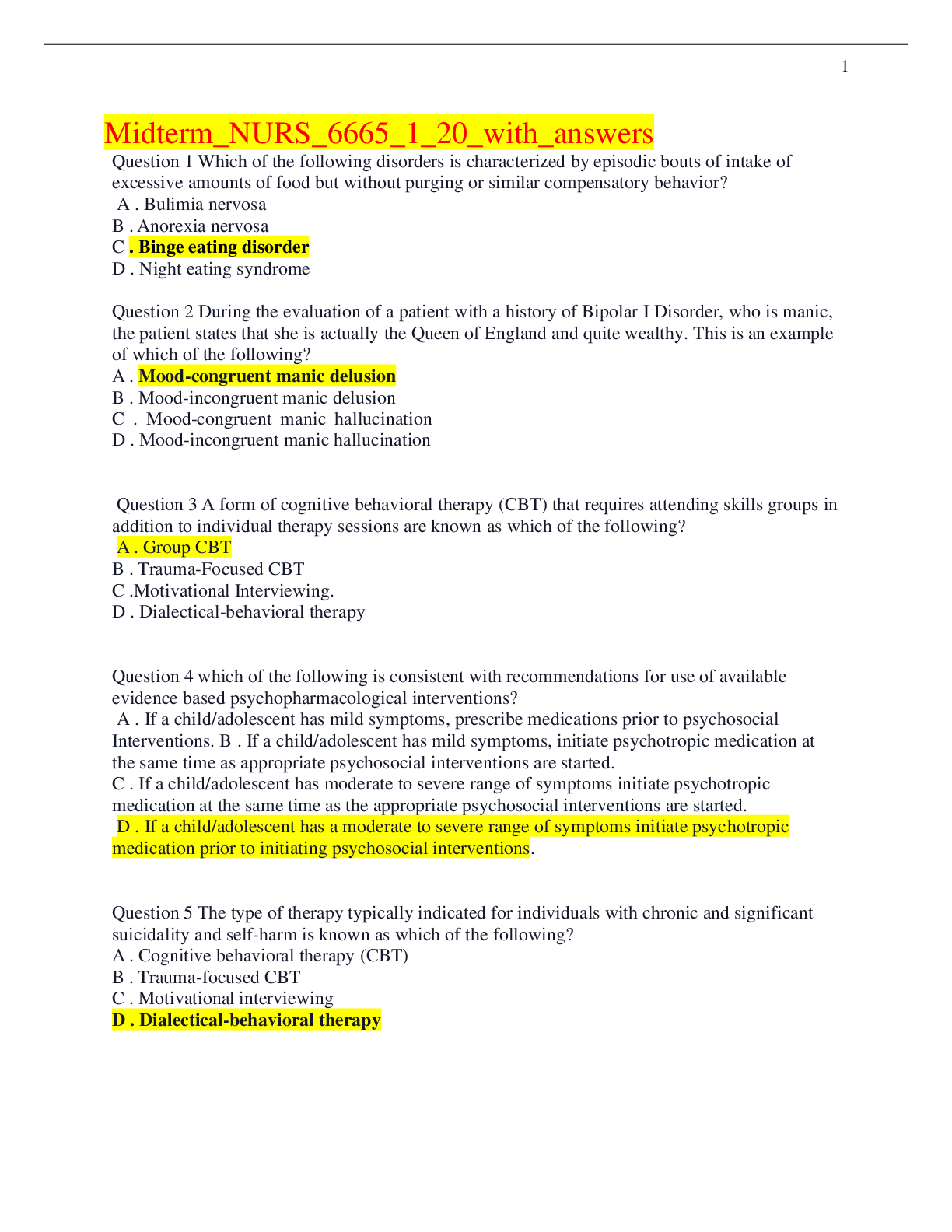
NURS 6665 Final Exam Questions And Answers Complete Solution S...


$100.5
996 Pages
ATI TEAS 7 | 4 Versions for Reading, Math, Science, English, A...
$14.5
345 Pages
Complete Test Bank For Community Public Health Nursing Promoti...
More related documents below