MIDTERM NURS 6665, 20 QUESTIONS WITH VERIFIED ANSWERS
Document Content and Description Below
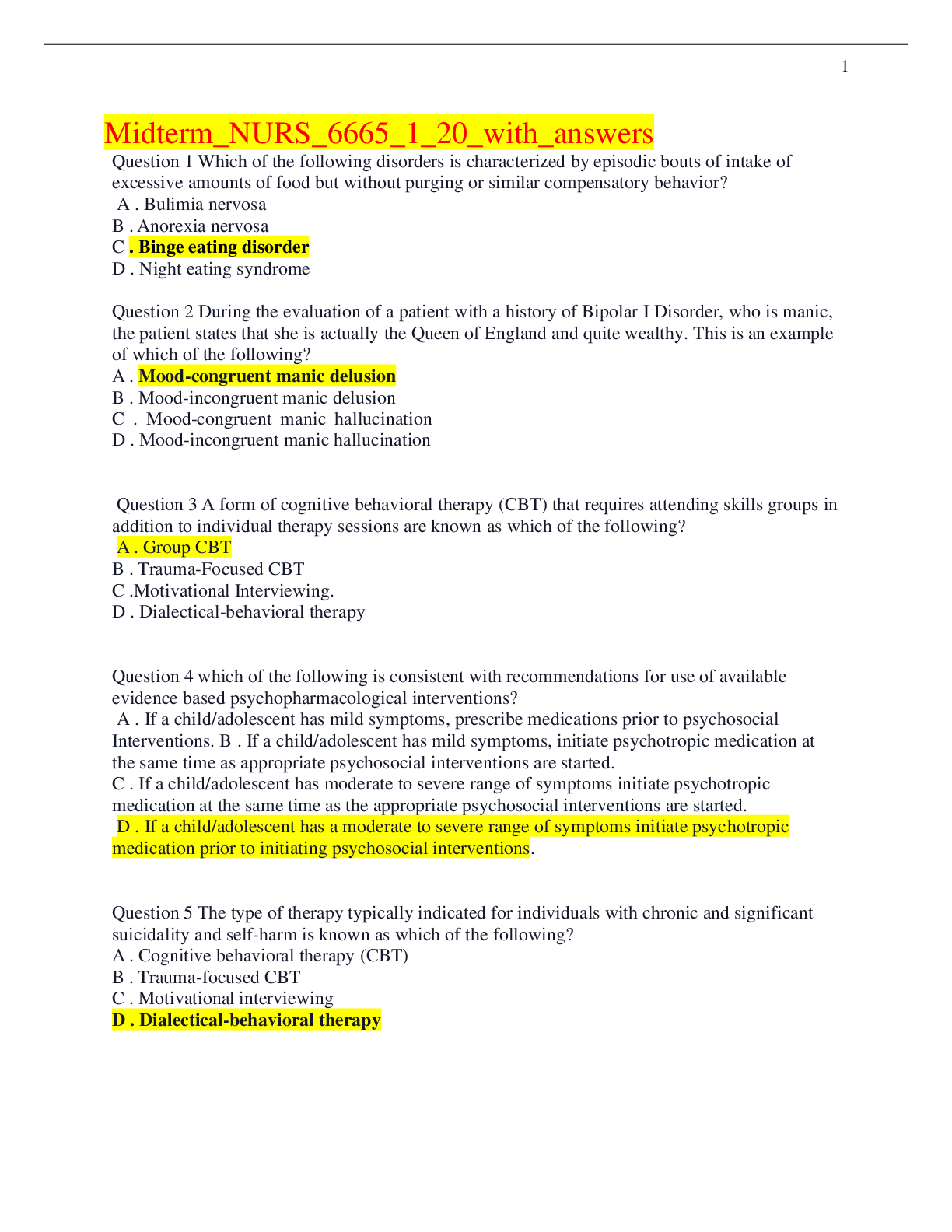
Question 1 Which of the following disorders is characterized by episodic bouts of intake of
excessive amounts of food but without purging or similar compensatory behavior?
A . Bulimia nervosa
B . Anorexia nervosa
C .
...
[Show More]
Last updated: 3 years ago
Preview 1 out of 4 pages
Instant download
Buy this Document to get the Full Access Instantly
Provided by Students Who Aced it
We Verify Document Content to Gurantee Accuracy
Reviews( 0 )
Document information
Connected school, study & course
About the document
Uploaded On
Jan 09, 2023
Number of pages
4
Written in
All

Additional information
This document has been written for:
Uploaded
Jan 09, 2023
Downloads
0
Views
98
Topic Tags
Recommended For You
Get more on EXAM »
$20
31 Pages
NURS 6665 Final Exam Questions and Verified Answers 2023 Updat...
$16.5
25 Pages
NURS 6665 Midterm Exam Questions and Answers with Rationale 20...
$13
21 Pages
NURS 6665 Final Exam Questions And Answers Complete Solution S...
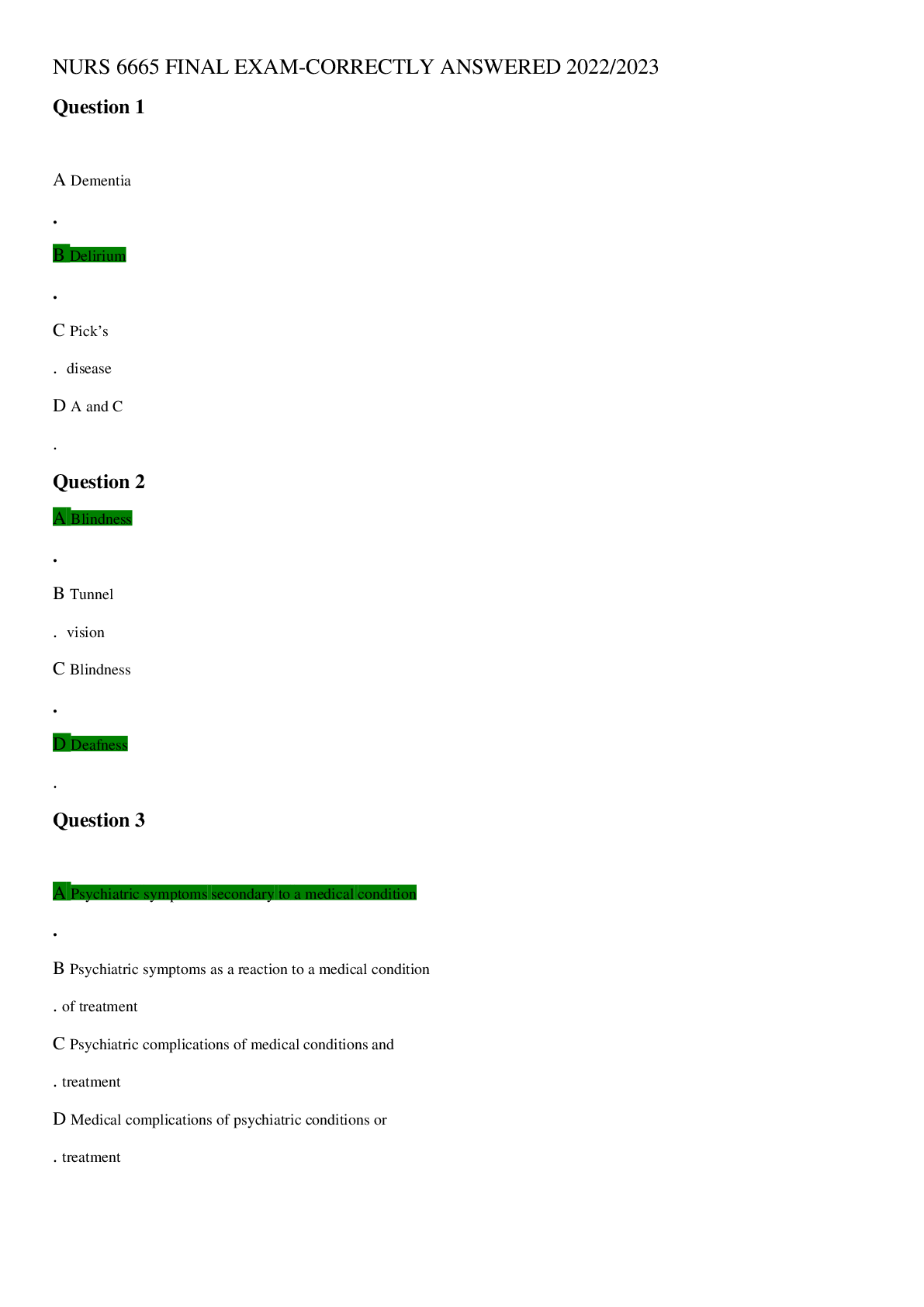
.png)
$12
16 Pages
NURS 6665-01, Week 11 Final Questions And Answers 2022 (Graded...

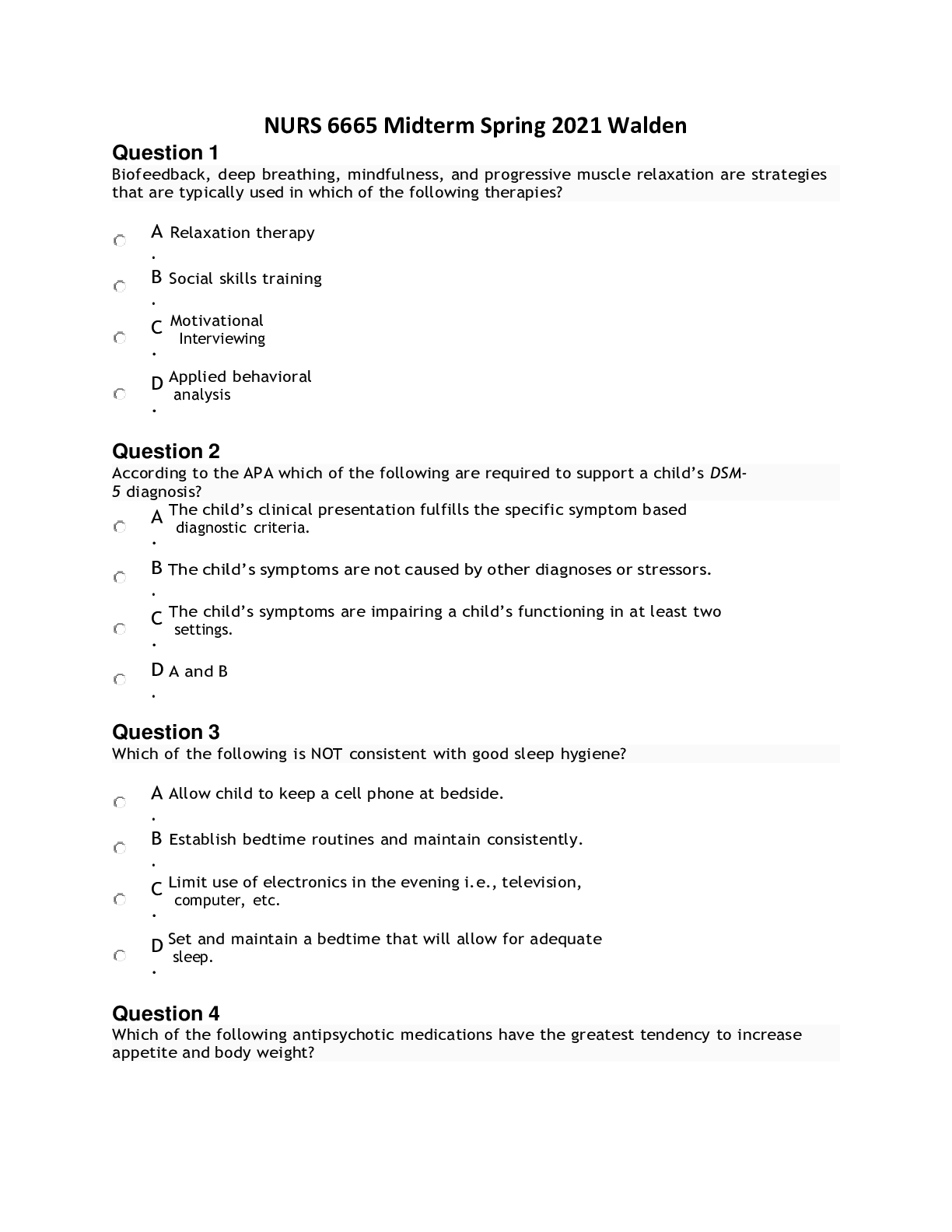

$22.5
307 Pages