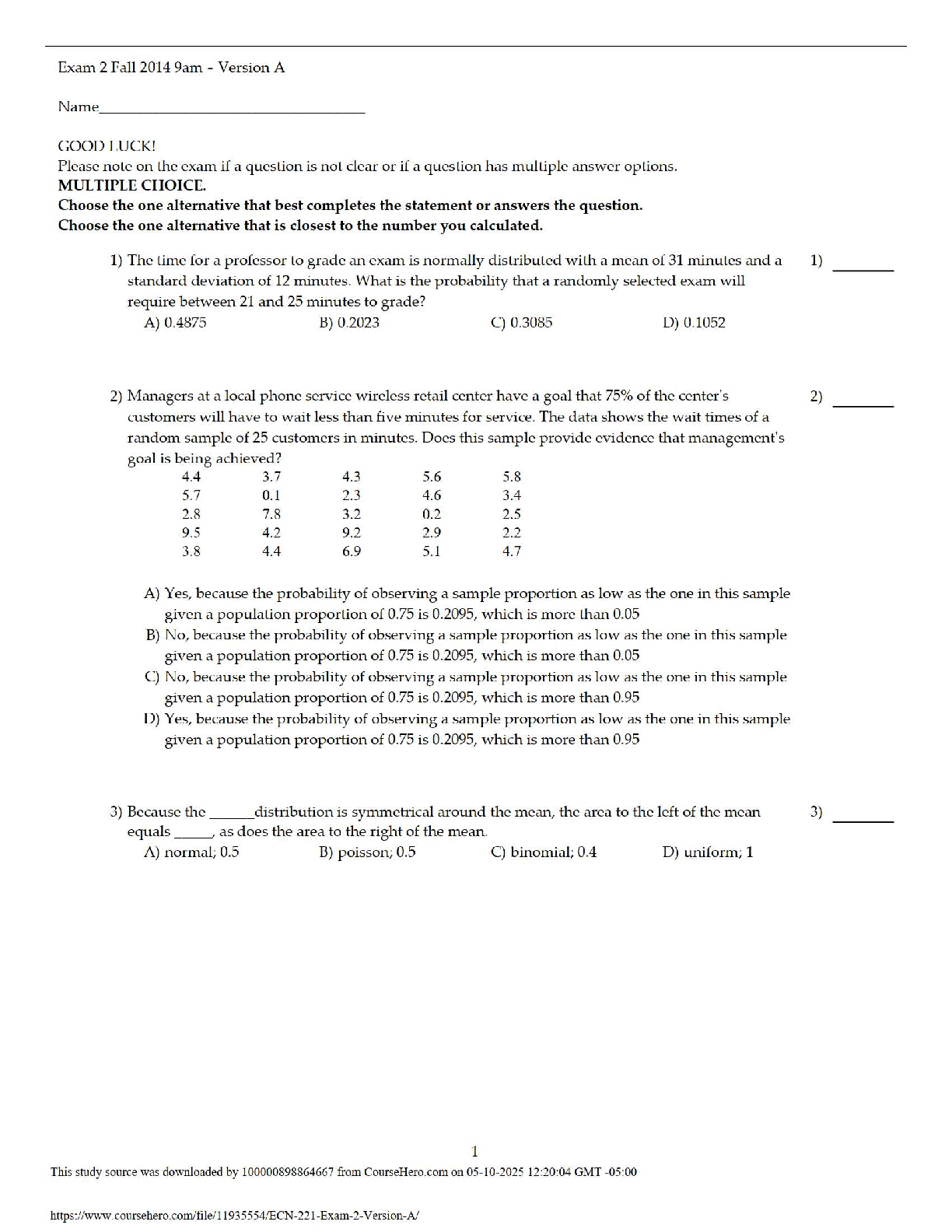
ECN 221 (Business Statistics) Exam 2 - Version A | Arizona State University | Verified Questions & Answers
$ 14.5
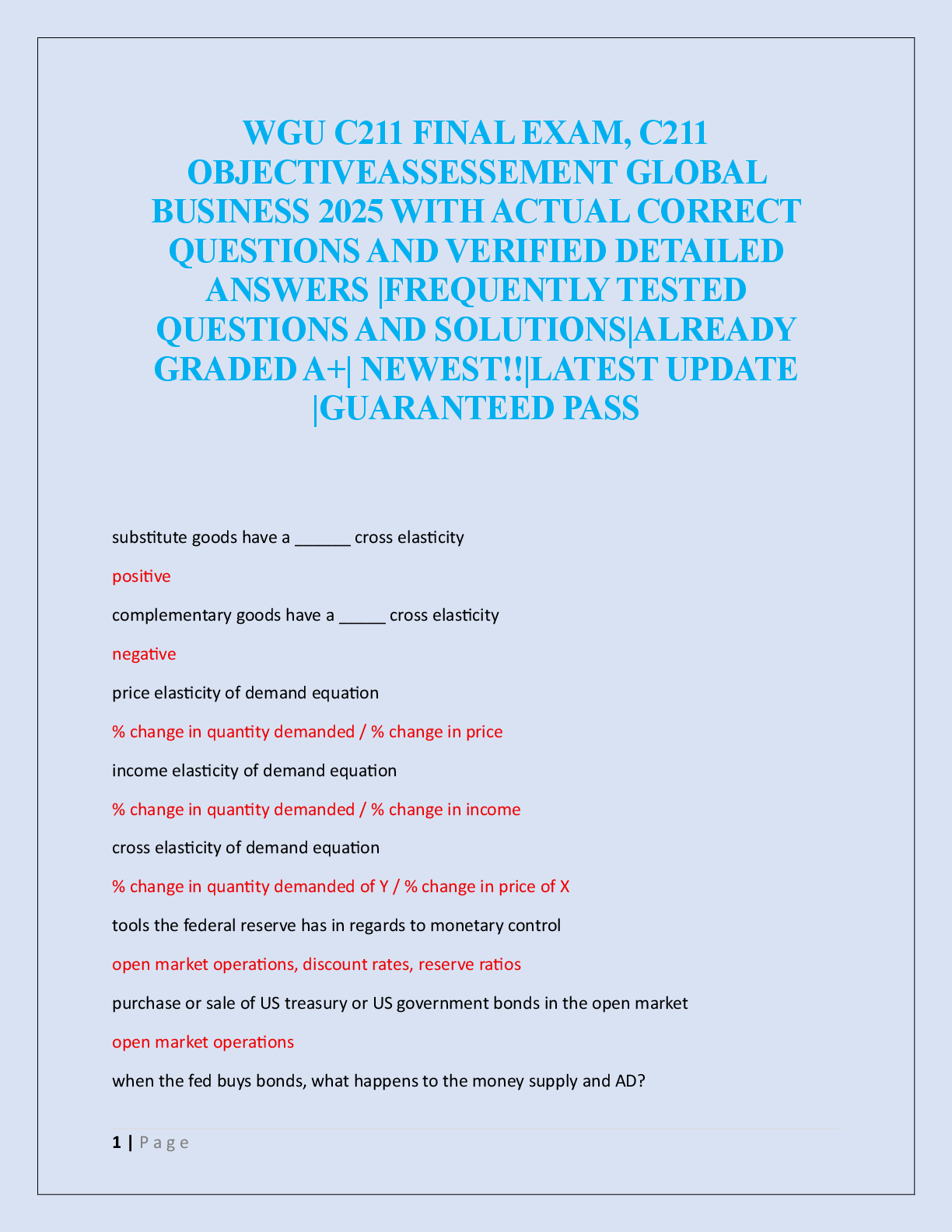
WGU C211 FINAL EXAM, C211 OBJECTIVE ASSESSEMENT GLOBAL BUSINESS 2025
*NURSING > Summary > (Chapter Review) Chapter 22 - Substance-Related and Addictive Disorders [Varcarolis] (Questions & An (All)
Which assessment data would be most consistent with a severe opiate overdose? 1. Blood pressure, 80/40 mm Hg; pulse, 120 beats/min; respirations, 10 breaths/min 2. Blood pressure, 120/80 mm Hg; puls ... e, 84 beats/min; respirations, 20 breaths/min 3. Blood pressure, 140/90 mm Hg; pulse, 76 beats/min; respirations, 24 breaths/min 4. Blood pressure, 180/100 mm Hg; pulse, 72 beats/min; respirations, 28 breaths/min What schedule of drugs have a high potential for abuse, are considered dangerous, and are only available by prescription? 1. Schedule I 2. Schedule II 3. Schedule III 4. Schedule V Which finding indicates that treatment for imbalanced nutrition has been effective for a patient with a history of cannabis abuse? 1. The patient expresses feelings. 2. The patient remains injury free. 3. The patient eats a well-balanced diet. 4. The patient feels refreshed on awakening in the mornings. A nurse is learning how to manage patients with substance abuse disorders. Which step should the nurse apply as a first-line intervention in such cases? 1. Sedating the patients 2. Secluding the patients 3. Providing safety and sleep 4. Encouraging strenuous activities On examination, the nurse finds that a patient who is a drug addict has nasal damage. Which substance abuse does the nurse suspect? 1. Opium 2. Cocaine 3. Hashish 4. Lysergic acid diethylamide (LSD) Which are clinical features of fetal alcohol syndrome? Select all that apply. 1. Spina bifida 2. Short stature 3. Microcephaly 4. Renal agenesis 5. Craniofacial malformations A nurse cares for a patient hospitalized 3 days ago with gastrointestinal bleeding. Today, the patient is irritable and restless and complains to the nurse, "There is too much noise in this hospital. The lights are so bright they are blinding me." What is the nurse's best action? 1. Conduct a thorough search in the patient's room for hidden alcohol. 2. Complete a comprehensive assessment for signs and symptoms of alcohol withdrawal. 3. Assess for a delayed reaction to a blood transfusion given the first day of hospitalization. 4. Notify the facility's maintenance manager to adjust the lighting and intercom level in the patient's room. A patient describes experiences of having blackouts. The nurse suspects abuse of 1. Alcohol 2. Cocaine 3. Mescaline 4. Psilocybin A patient is diagnosed with mouth cancer. Which substance abuse should the nurse inquire about with the patient? 1. Opium 2. Alcohol 3. Cocaine 4. Tobacco A patient presents to the clinic seeking help for excessive gambling. Which type of psychiatric condition is this patient experiencing? 1. Substance addiction 2. Behavioral addiction 3. Substance use disorder 4. Impulse control disorder Which chemical in tobacco causes addiction? 1. Opium 2. Nicotine 3. Cocaine 4. Cannabinoids What is the ethical obligation of the nurse who sees a peer divert a narcotic, compared with the ethical obligation when the nurse observes a peer who is under the influence of alcohol? 1. Supervisory staff should be informed as soon as possible in both cases. 2. Neither should be reported until the nurse has collected factual evidence. 3. No report should be made until suspicions are confirmed by a second staff member. 4. The nurse should immediately report the peer who is diverting narcotics and should defer reporting the alcohol-using nurse until a second incident takes place. The nurse notices withdrawal symptoms in a patient with substance use disorder. What is the priority substance use disorder outcome measure when planning the care of this patient? 1. Motivation for treatment 2. Stabilization of the patient 3. Pursuit of a recovery lifestyle 4. Maintenance of proper nutrition intake The nurse is planning care management for a patient with alcohol misuse. What intervention does the nurse plan for rehabilitation of this patient? 1. Avoid repeated counseling. 2. Develop motivation and self-help skills. 3. Refrain from assessing alcohol consumption. 4. Avoid discussing the effects of alcohol intake. A patient hospitalized after a heroin overdose shares, "I've been using more heroin lately to get my usual high." The nurse determines that this information supports the existence of what abuse-related outcome? 1. Tolerance 2. Addiction 3. Intoxication 4. Withdrawal A patient with severe addiction to alcohol plans to undergo a detoxification program. Why is 24-hour professional supervision needed during this process? 1. To support and motivate patients while they experience detoxification 2. To assess and maintain adequate nutritional intake during the withdrawal process 3. To check if the patient is still abusing any substances while undergoing detoxification 4. To monitor and intervene during the process because there are uncomfortable and even fatal side effects The term tolerance, as it relates to substance abuse, refers to 1. The use of a substance beyond acceptable societal norms 2. The additive effects achieved by taking two drugs with similar actions 3. The need to take larger amounts of a substance to achieve the same effects 4. The signs and symptoms that occur when an addictive substance is withheld The treatment team meets to discuss the plan of care for a patient diagnosed with addiction to heroin. Which factor will have priority when planning interventions? 1. Financial ability 2. Readiness to change 3. Current college performance 4. Availability of immediate family What is occurring in the patient with a substance abuse disorder who no longer responds to the effect of the substance? 1. Addiction 2. Tolerance 3. Withdrawal 4. Intoxication What term is used to identify a syndrome that occurs after stopping the long-term use of a drug? 1. Enabling 2. Amnesia 3. Tolerance 4. Withdrawal The nurse suspects a patient of substance abuse. What should be the nurse's first intervention? 1. Referral to detoxification program 2. Positron emission tomography of the brain 3. Magnetic resonance imaging study of the brain 4. Assessment for substance use and comorbidities The nurse is caring for a patient with a substance use disorder. What statement describes the correct way to deal with transference or countertransference for patient care in substance use disorders? 1. A nurse remains objective throughout the process. 2. A residential care facility is needed for monitoring. 3. An ongoing evaluation of the patient may not be necessary. 4. A new nurse will take over the responsibility of patient care in each session. The nurse is educating a group of adolescents about different kinds of substance abuse. In which category can magic mushrooms be classified? 1. Opioids 2. Stimulants 3. Cannabinoids 4. Hallucinogens [Show More]
Last updated: 2 years ago
Preview 1 out of 5 pages
![Preview image of (Chapter Review) Chapter 22 - Substance-Related and Addictive Disorders [Varcarolis] (Questions & Answers Review) document](https://scholarfriends.com/storage/(Chapter Review) Chapter 22 - Substance-Related and Addictive Disorders [Varcarolis].png)
Buy this document to get the full access instantly
Instant Download Access after purchase
Buy NowInstant download
We Accept:

Can't find what you want? Try our AI powered Search
Connected school, study & course
About the document
Uploaded On
Jan 17, 2023
Number of pages
5
Written in
All
This document has been written for:
Uploaded
Jan 17, 2023
Downloads
0
Views
139
Scholarfriends.com Online Platform by Browsegrades Inc. 651N South Broad St, Middletown DE. United States.
We're available through e-mail, Twitter, Facebook, and live chat.
FAQ
Questions? Leave a message!
Copyright © Scholarfriends · High quality services·

.png)



 Chapter 2 - Application of Pharmacology.png)
 Chapter 12 - Mental Health Schizophrenia Spectrum Disorders.png)
 Chapter 13 - Bipolar and Related Disorders.png)
 Chapter 33 - Diabetes (Q&A).png)
.png)
.png)