Diabetes-Acute Comp
Acute Complications-Dka, Hypoglycemia
Question Answer
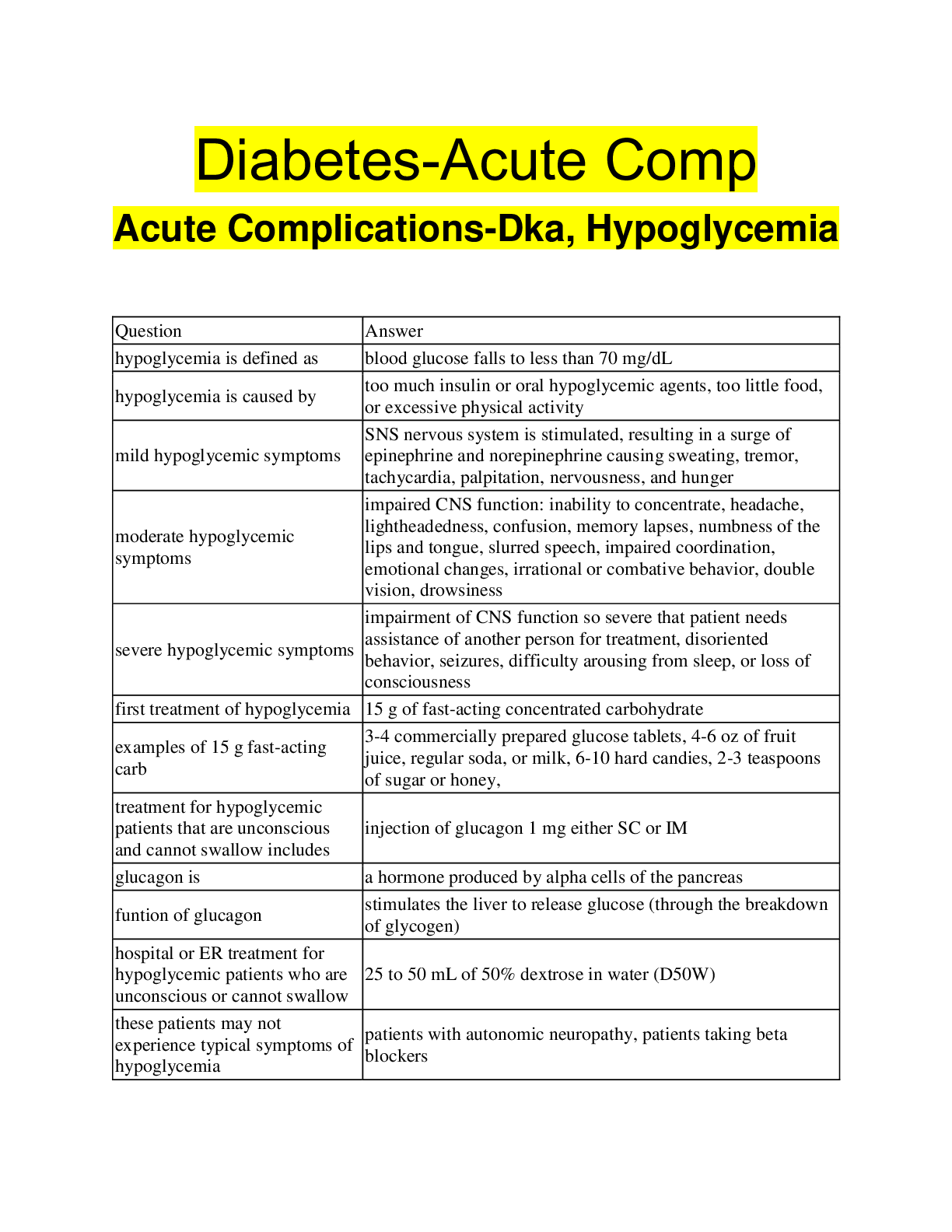
hypoglycemia is defined as blood glucose falls to less than 70 mg/dL
hypoglycemia is caused by too much insulin or oral hypoglycemic agents, t
...
Diabetes-Acute Comp
Acute Complications-Dka, Hypoglycemia
Question Answer
hypoglycemia is defined as blood glucose falls to less than 70 mg/dL
hypoglycemia is caused by too much insulin or oral hypoglycemic agents, too little food,
or excessive physical activity
mild hypoglycemic symptoms
SNS nervous system is stimulated, resulting in a surge of
epinephrine and norepinephrine causing sweating, tremor,
tachycardia, palpitation, nervousness, and hunger
moderate hypoglycemic
symptoms
impaired CNS function: inability to concentrate, headache,
lightheadedness, confusion, memory lapses, numbness of the
lips and tongue, slurred speech, impaired coordination,
emotional changes, irrational or combative behavior, double
vision, drowsiness
severe hypoglycemic symptoms
impairment of CNS function so severe that patient needs
assistance of another person for treatment, disoriented
behavior, seizures, difficulty arousing from sleep, or loss of
consciousness
first treatment of hypoglycemia 15 g of fast-acting concentrated carbohydrate
examples of 15 g fast-acting
carb
3-4 commercially prepared glucose tablets, 4-6 oz of fruit
juice, regular soda, or milk, 6-10 hard candies, 2-3 teaspoons
of sugar or honey,
treatment for hypoglycemic
patients that are unconscious
and cannot swallow includes
injection of glucagon 1 mg either SC or IM
glucagon is a hormone produced by alpha cells of the pancreas
funtion of glucagon stimulates the liver to release glucose (through the breakdown
of glycogen)
hospital or ER treatment for
hypoglycemic patients who are
unconscious or cannot swallow
25 to 50 mL of 50% dextrose in water (D50W)
these patients may not
experience typical symptoms of
hypoglycemia
patients with autonomic neuropathy, patients taking beta
blockers
after administration of D50W,
how long will it take
hypoglycemic patient to show
its effects
within minutes
side affects of D50W headache, pain at injection site
3 main clinical features of DKA hyperglycemia, acidosis, and dehydration and electrolyte loss
in DKA, body attempts to get
rid of excess glucose by
excretion of glucose along with water and electrolytes via the
kidneys
excessive urination leads to dehydration and marked electroyte loss
without insulin, the amount of
glucose entering cells is reduced
without insulin, production and
release of glucose by the liver is increased
in DKA, the lack of insulin
allows excessive production of
ketone bodies (insulin would normally prevent this from
occuring)
accumulation of ketone bodies
in the circulaiton leads to metabolic acidosis
3 main causes of DKA decreased or missed dose of insulin, illness or infection, and
undiagnosed untreated diabetes
in response to physical and
emotional stressors, there is an
increase in the release of what
hormones
glucagon, epinephrine, norepinephrine, cortisol, and growth
hormone
clinical manifestation of DKA
due to hyperglycemia
polyuria, polydipsia, blurred vision, weakness, headache,
orthostatic hypotension, weak/rapid pulse
clinical manifestations of DKA
due to detosis and acidosis
anorexia, N/V, abdominal pain, fruity smelling breath,
hyperventilation (Kussmaul respirations)
DKA blood glucose levels 300-800 mg/dL (some higher, some lower)
DKA bicarbonate level 0-15 mEq/L (low)
dehydration will coincide with
increased levels of creatinine, BUN, and hematocrit
rehydration for DKA patients
includes
0.9% sodium chloride for 1st 2-3 hours, half-strength (45%)
normal saline after 1st few hours, dextrose 5% in water (D5W)
after glucose reaches 300 or less
rehydration effects on K decreased serum K (due to increased plasma volume),
increased urinary excretion of K
reversing acidosis in DKA IV insulin infused slowly and continuously until SC insulin
may be resumed, hourly glucose levels
nursing care of patients with
DKA includes monitoring
fluid, electolyte, and hydration status, blood glucose levels,
urine output, vital signs, breath sounds, ABGs,
nursing care of patients with
DKA includes administering 1st- fluids, insulin, and other meds
DKA onset is rapid (less than 24 hrs)
HHNS onset is slow (over several days)
DKA is usually seen in type I diabetics
HHNS is usually seen in type II diabetics
DKA precipitated by omission of insulin, physiologic stress (infection, surgery,
CVA, MI)
HHNS precipitated by physiologic stress (infection, surgery, CVA, MI)
HHNS blood glucose levels greater than 600 mg/dL
HHNS pH and bicarbonate
levels normal
clinical manifestations of HHNS hypotension, profound dehydration, tachycardia, altered
sensorium, seizures, hemiparesis
HHNS pathophysiology
insulin level is too low to prevent hyperglycemia (and
subsequent osmotic diuresis) but it is high enough to prevent
fat breakdown (preventing ketosis and acidosis)
treatment of HHNS fluid replacement, correction of electrolyte imbalances, and
insulin administration
HHNS fluid treatment
0.9% or 0.45% NS, K is added to IV fluids when UOP is
adequate, insulin administered at a continuous low rate, IV
fluids with dextrose are administered after glucose decreases
to 250-300 mg/dL
[Show More]