Paediatrics  >  QUESTIONS & ANSWERS  >  PEDS ATI B Questions and Answers Already Passed (All)

PEDS ATI B Questions and Answers Already Passed

Document Content and Description Below

PEDS ATI B Questions and Answers Already Passed A nurse in an emergency department is auscultating the lungs of an adolescent who is experiencing dyspnea. The nurse should identify the sound as whi ... ch of the following? ✔✔Wheezes The nurse should identify the sound during auscultation as wheezes, which are high-pitched, musical or whistling-like sounds heard primarily on expiration as air passes through and vibrates narrowed airways. A nurse is admitting a 4 month old infant who has heart failure. Which of the following findings is the nurse's priority? ✔✔Episodes of vomiting When using the urgent vs. nonurgent approach to client care, the nurse should determine that the priority finding is three episodes of vomiting. This can indicate digoxin toxicity, which requires immediate intervention. Therefore, this is the nurse's priority finding. A nurse in a provider's office is caring for a school-age child who has varicella. The parent asks the nurse when their child will no longer be contagious. Which of the following responses should the nurse make? ✔✔When your child's lesions are crusted, usually 6 days after they appear The nurse should inform the parent that the child is contagious 1 day prior to lesion eruption and until the vesicles have crusted over, which usually takes about 6 days. A school nurse is caring for a child following a tonic clonic seizure. Which of the following actions should the nurse take first? ✔✔Check the child's respiratory rate When using the airway, breathing, and circulation approach to client care, the nurse should determine the priority action is to assess the child's respiratory rate. If the child is not breathing, the nurse should administer rescue breaths. A nurse is caring for a 10 year old child following a head injury. Which of the following findings should the nurse identify as an indication that the child is developing diabetes insipidus? ✔✔Sodium 155 mEq/L A child who has a head injury can develop diabetes insipidus as a result of pituitary hypofunction leading to a deficiency of antidiuretic hormone. Underexcretion of antidiuretic hormone leads to polyuria and polydipsia, and possibly dehydration. With the excessive loss of free water, sodium levels rise above the expected reference range of 136 to [Show More]

Last updated: 2 years ago

Preview 1 out of 25 pages

Buy Now

Instant download

We Accept:

Payment methods accepted on Scholarfriends (We Accept)
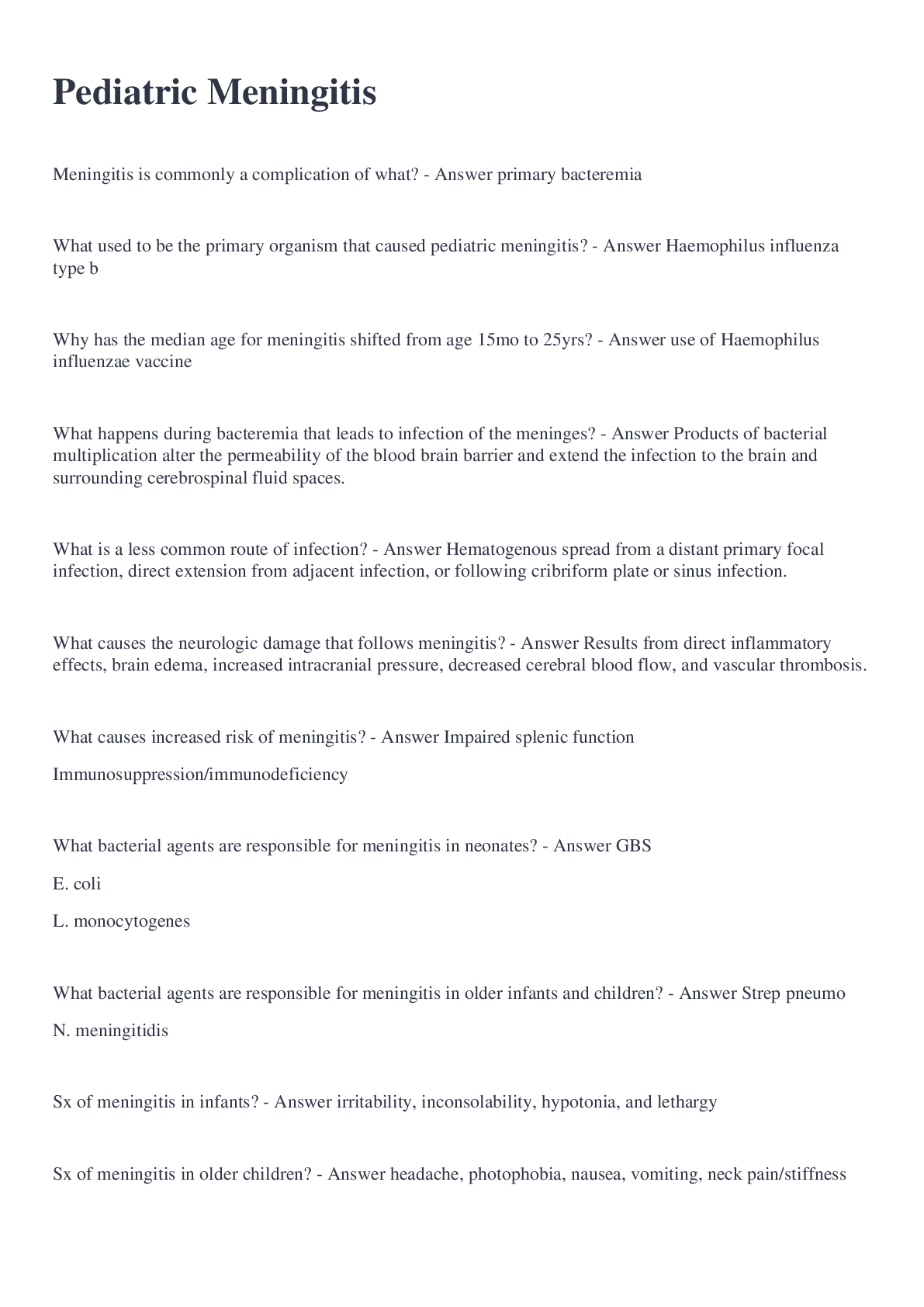
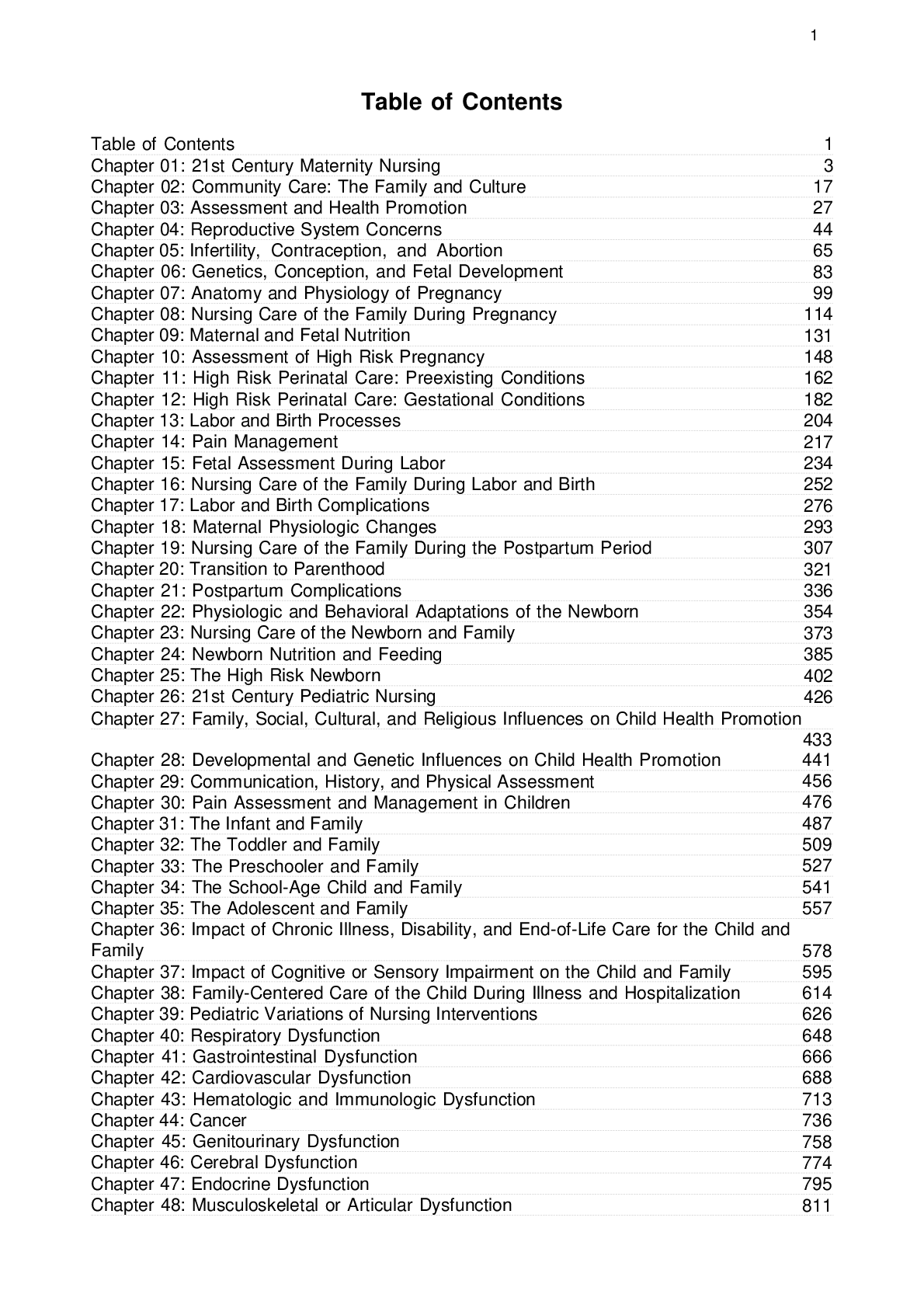
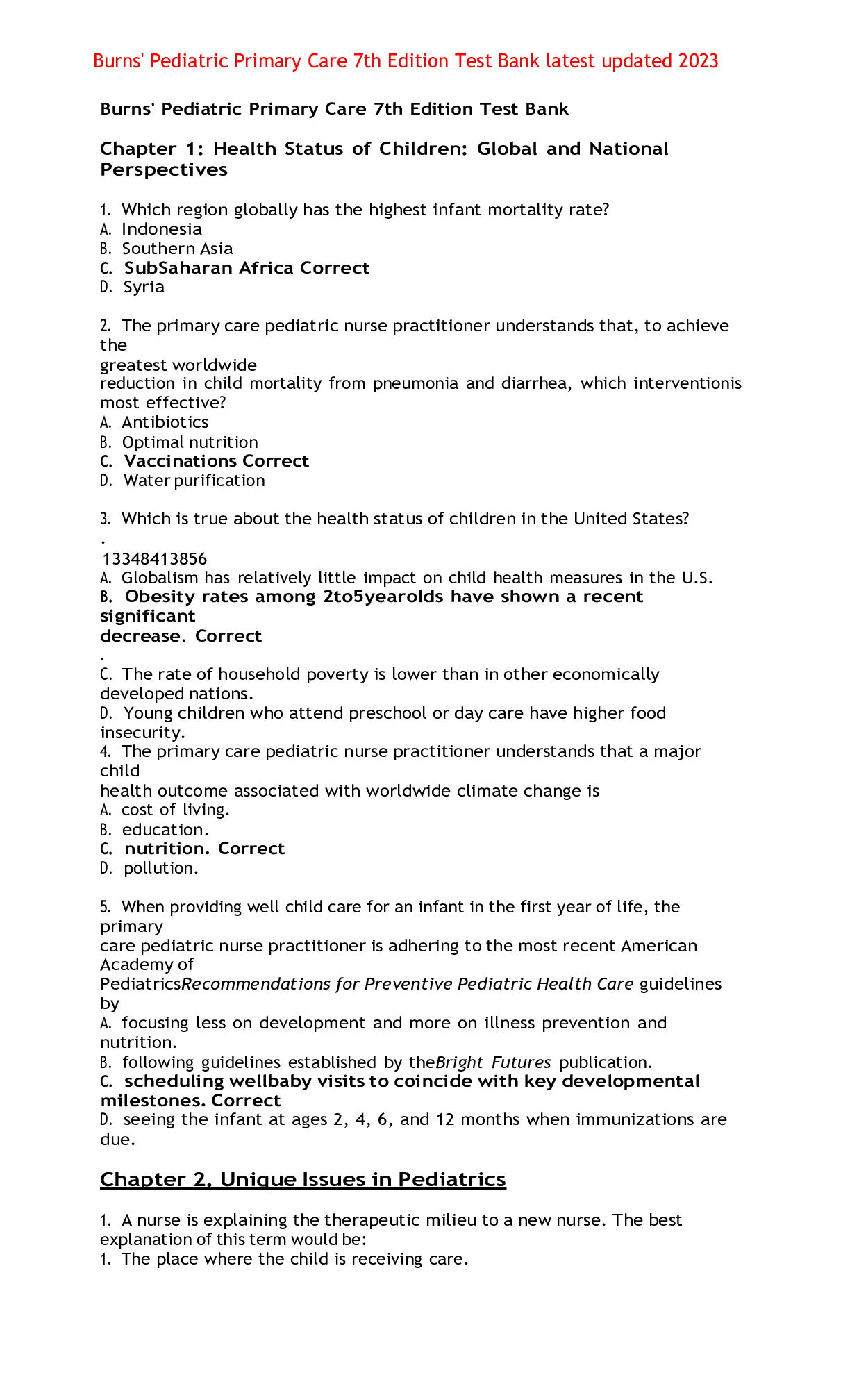
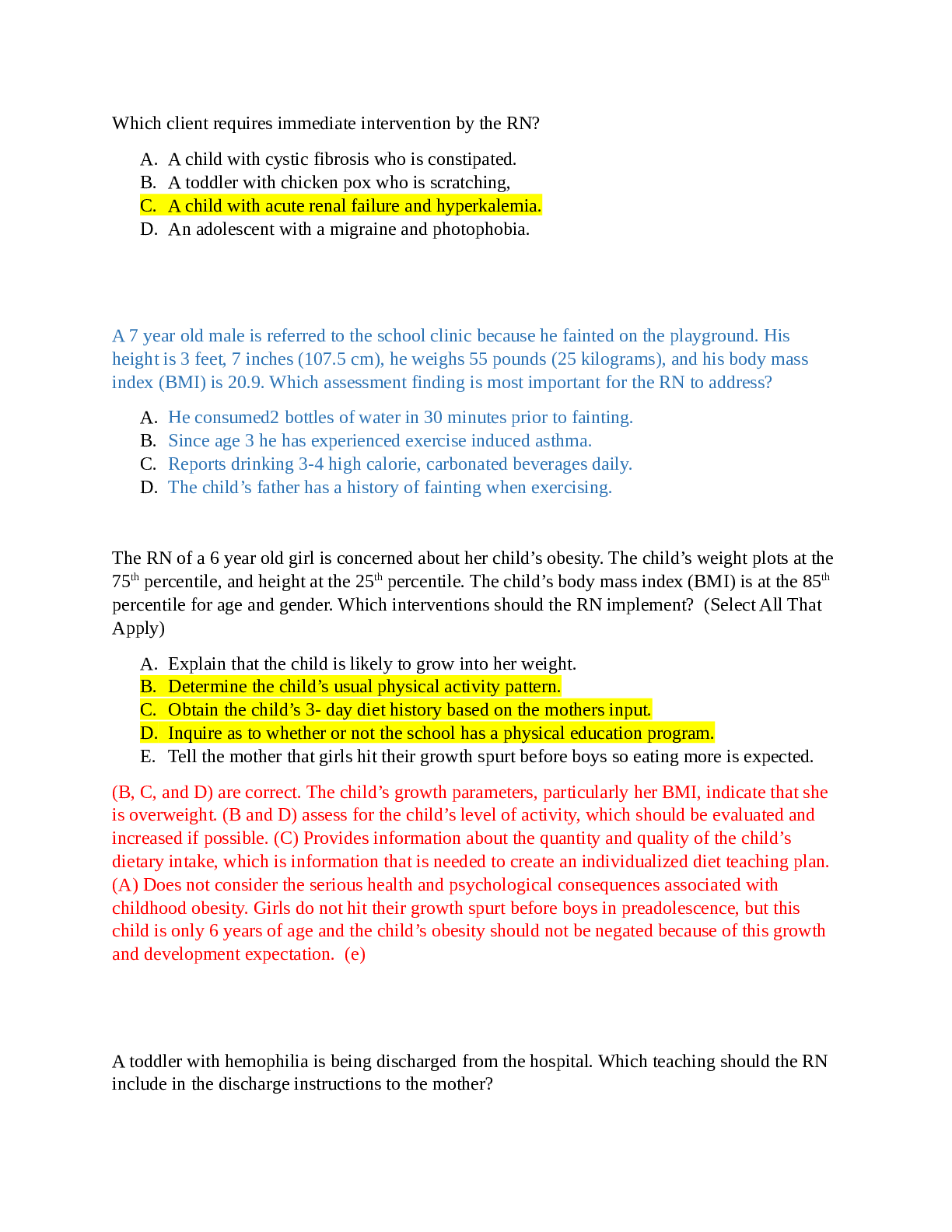
Preview image of PEDS ATI B Questions and Answers Already Passed document

Buy this document to get the full access instantly

Instant Download Access after purchase

Buy Now

Instant download

We Accept:

Payment methods accepted on Scholarfriends (We Accept)

Also available in bundle (1)

Click Below to Access Bundle(s)

ATI PEDS BUNDLED EXAMS QUESTIONS AND ANSWERS WITH COMPLETE AND VERIFIED SOLUTIONS

ATI PEDS BUNDLED EXAMS QUESTIONS AND ANSWERS WITH COMPLETE AND VERIFIED SOLUTIONS

By Nutmegs 2 years ago

$20

15  

Reviews( 0 )

$10.00

Buy Now

We Accept:

Payment methods accepted on Scholarfriends (We Accept)

Instant download

Can't find what you want? Try our AI powered Search

137
0

Document information


Connected school, study & course


About the document


Uploaded On

Feb 02, 2023

Number of pages

25

Written in

All

Seller


Profile illustration for Nutmegs
Nutmegs

Member since 4 years

607 Documents Sold

Reviews Received
77
14
8
2
21
Additional information

This document has been written for:

Uploaded

Feb 02, 2023

Downloads

 0

Views

 137

Document Keyword Tags


$10.00
What is Scholarfriends

Scholarfriends.com Online Platform by Browsegrades Inc. 651N South Broad St, Middletown DE. United States.

We are here to help

We're available through e-mail, Twitter, Facebook, and live chat.
 FAQ
 Questions? Leave a message!

Follow us on
 Twitter

Copyright © Scholarfriends · High quality services·