EMT cardiology FISDAP study guide
with complete solutions
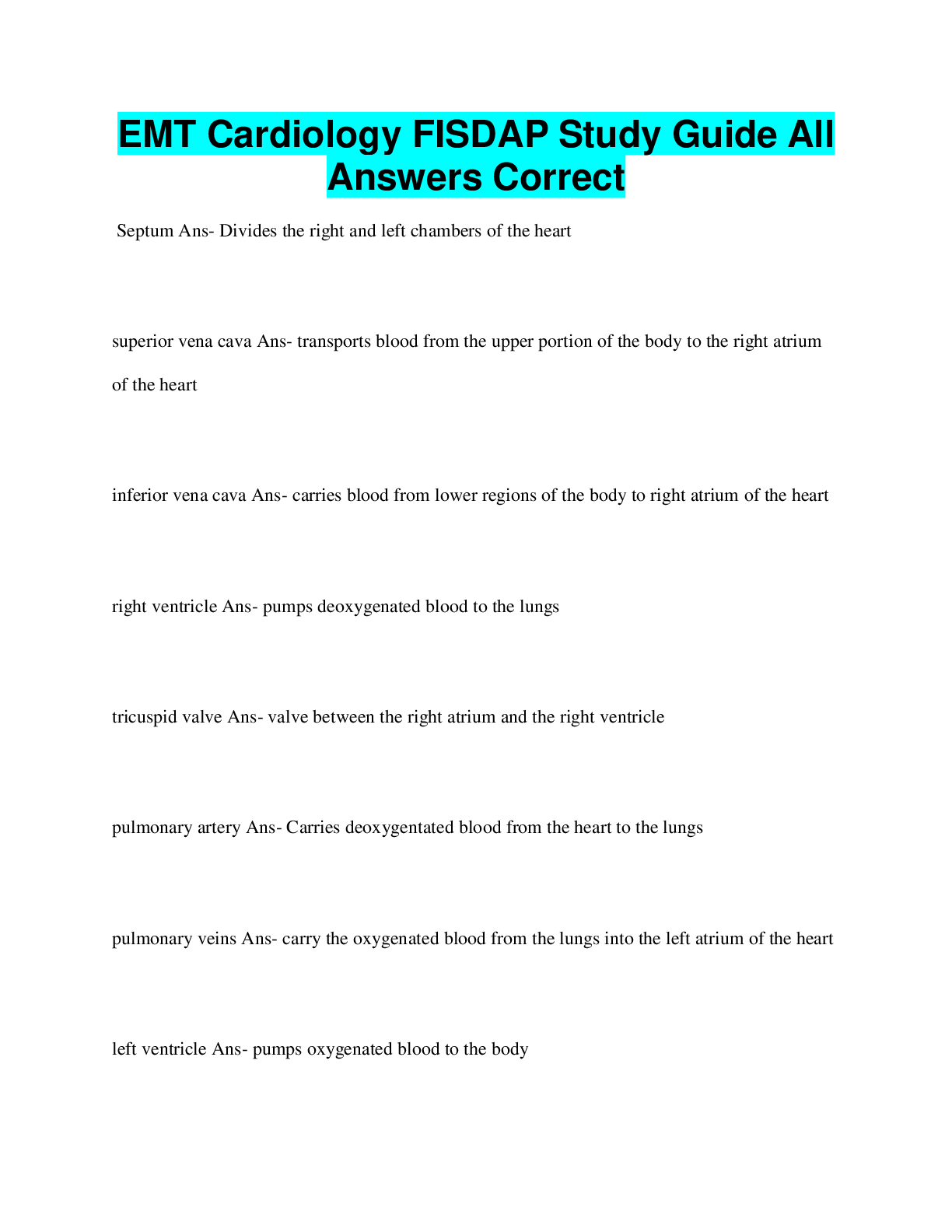
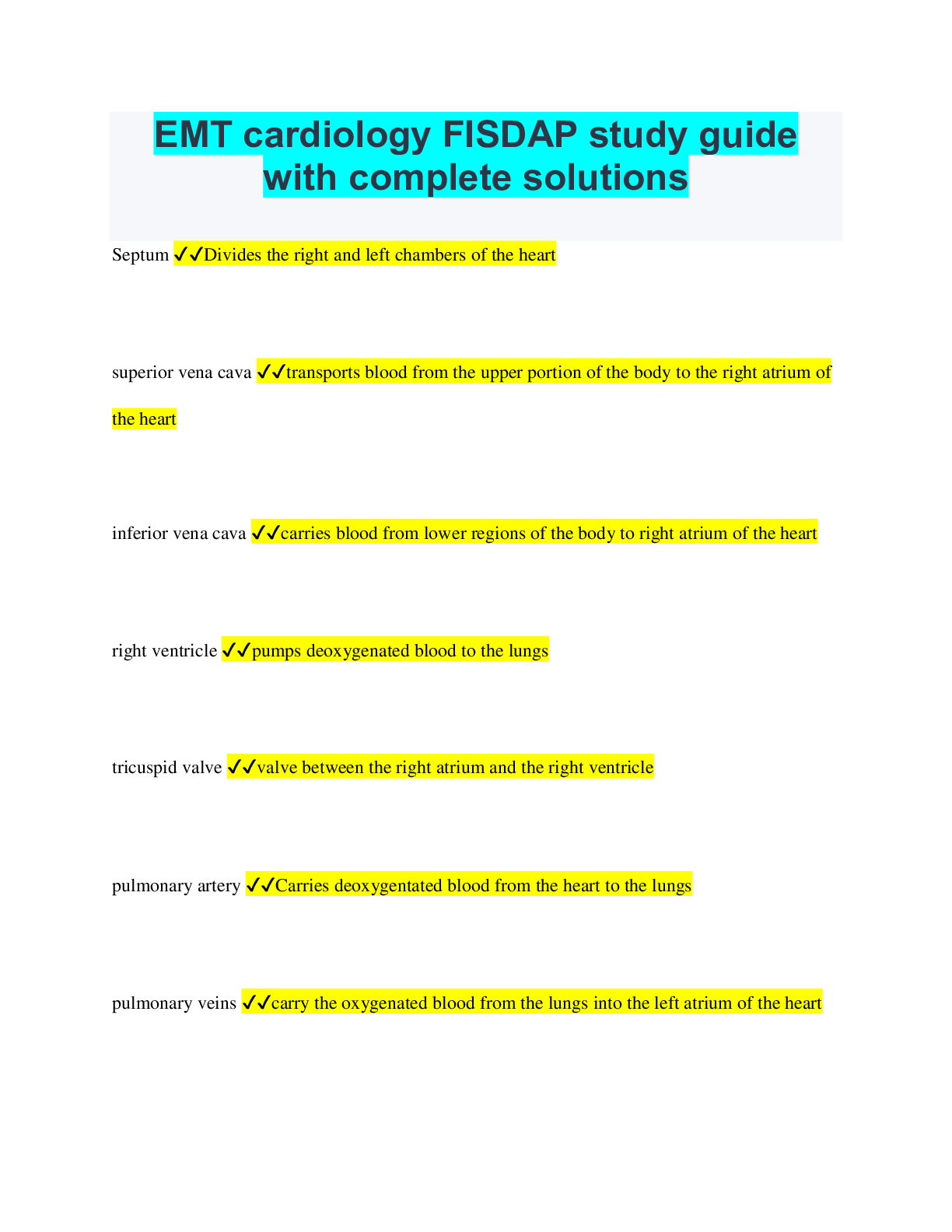
Septum ✔✔Divides the right and left chambers of the heart
superior vena cava ✔✔transports blood from the upper portion of the body to the right atrium of
the
...
EMT cardiology FISDAP study guide
with complete solutions
Septum ✔✔Divides the right and left chambers of the heart
superior vena cava ✔✔transports blood from the upper portion of the body to the right atrium of
the heart
inferior vena cava ✔✔carries blood from lower regions of the body to right atrium of the heart
right ventricle ✔✔pumps deoxygenated blood to the lungs
tricuspid valve ✔✔valve between the right atrium and the right ventricle
pulmonary artery ✔✔Carries deoxygentated blood from the heart to the lungs
pulmonary veins ✔✔carry the oxygenated blood from the lungs into the left atrium of the heart
left ventricle ✔✔pumps oxygenated blood to the body
left atrium ✔✔receives oxygenated blood from the lungs
right atrium ✔✔Receives deoxygenated blood from the body
mitral (bicuspid) valve ✔✔valve between the left atrium and the left ventricle.
SA node ✔✔pacemaker of the heart, where normal electrical impulses begin
AV node ✔✔region where electrical impulse in the heart is slowed to allow blood time to pass
from the atria to the ventricles
sympathetic nervous system ✔✔flight or fight; speeds heart rate, dilates blood vessels in muscle,
increases respiratory speed and depth, constricts blood vessels in digestive system
parasympathetic ✔✔feed and breed; slows heart & respiratory rate, constricts blood vessels in
muscles, dilates blood vessels in digestive system
cardiac output ✔✔heart rate x stroke volume
stroke volume ✔✔The amount of blood ejected from the heart with each ventricular contraction.
blood consists of ✔✔plasma, red blood cells, white blood cells, platelets
Ischemia ✔✔an inadequate blood supply to an organ or part of the body, for this chapter to the
heart muscles.
Atherosclerosis ✔✔condition in which fatty deposits called plaque build up on the inner walls of
the arteries
thromboembolism ✔✔A blood clot that has formed within a blood vessel and is floating within
the bloodstream.
acute myocardial infarction ✔✔A blockage of blood flow to the heart muscle. Also called a heart
attack.
acute coronary syndrome ✔✔A term used to describe a group of symptoms caused by
myocardial ischemia; includes angina and myocardial infarction.
angina pectoris ✔✔when the heart's need for oxygen exceeds its supply, usually during periods
of physical or emotional stress where the heart is working hard
tachycardia ✔✔>100 bpm
Bradycardia ✔✔<60 bpm
Ventricular fibrillation (V-fib) ✔✔abnormal heart rhythm which results in quivering of
ventricles SHOCKABLE
Ventricular tachycardia ✔✔a very rapid heartbeat that begins within the ventricles (150-
200bpm) can deteriorate into v fib
asystole ✔✔absence of all heart electrical activity
cardiogenic shock ✔✔the heart lacks the power to force proper volume of blood through
circulatory system
cardiogenic shock signs/symptoms ✔✔anxiety; pale, cool, clammy skin; high pulse rate; rapid
shallow breathing; nausea/vomiting
Cardiogenic shock treatment ✔✔semifowler, oxygen, assist ventilations (if needed), blankets,
prompt transport to ED
congestive heart failure (CHF) ✔✔ventricular heart muscle is permanently damaged and can no
longer keep up with the return flow of blood from the atria, leads to left ventricle failure
left ventricular failure ✔✔fluid and blood back into the lungs leading to pulmonary edema;
frothy sputum and dyspnea
right heart damage ✔✔dependent edema (fluid in the lower limbs)
Hypertension ✔✔systolic 140mmHg+ or diastolic 90mmHg+
Hypertension emergency ✔✔systolic 180mmHg+ or rapid rise in systolic BP; headache; strong
bounding pulse, ringing in ears, nausea, altered mental status
Hypertensive emergency treatment ✔✔elevate head, rapid transport
aortic aneurysm ✔✔A weakness in the wall of the aorta that makes it susceptible to rupture.
Bulges.
dissecting aneurysm ✔✔inner layers of the aorta become separated, allowing for blood flow
between the layers (hypertension is primary cause)
dissecting aneurysm signs/symptoms ✔✔abrupt onset of pain with no additional symptoms,
sharp/tearing pain, pain level is maximal from onset and does not abate; pain felt in back,
possibly between shoulders; blood pressure discrepancy between arms, decrease in femoral or
carotid pulse
chest pain + pulse ox of less than 94% ✔✔administer oxygen at 4L/min via nasal cannula
worsening of condition ✔✔nonrebreathing mask 15L/min
Inadequate breathing or no breathing ✔✔BVM 100% oxygen
Pulmonary Edema ✔✔positive pressure ventilation BVM or CPAP
CHF breathing assistance with ✔✔CPAP
asprin dose ✔✔4 baby asprin, 81mg each, 324 mg total
Nitroglycerin contraindication ✔✔ED medicine (viagra, cialis)
Cerebrovascular accident (CVA) Stroke ✔✔interruption of blood flow to the brain that results in
the lack of brain function
ABC's, high flow O2, continuous talk, fast transport
Ischemic stroke ✔✔when blood flow is stopped by a blood clot inside a blood vessel thrombosis
or embolus
hemorrhagic stroke ✔✔occurs when a blood vessel in the brain leaks or ruptures; also known as
a bleed
Hemorrhagic stroke can be caused by ✔✔high BP over many years, aneurysm
transient ischemic attack ✔✔temporary interruption in the blood supply to the brain; mini stroke
Cincinnati Prehospital Stroke Scale ✔✔Facial droop, arm drift, speech
Los AngelesPrehospital Stroke Screen ✔✔facial smile/grimace, arm strength, grip strength
[Show More]
.png)
.png)


![Preview of Antibiotics Simplified, 5th Edition, By Jason C. Gallagher, Conan MacDougall [PDF] [eBook]](https://scholarfriends.com/storage/eBook for Antibiotics Simplified, 5th Edition, By Jason C.png)