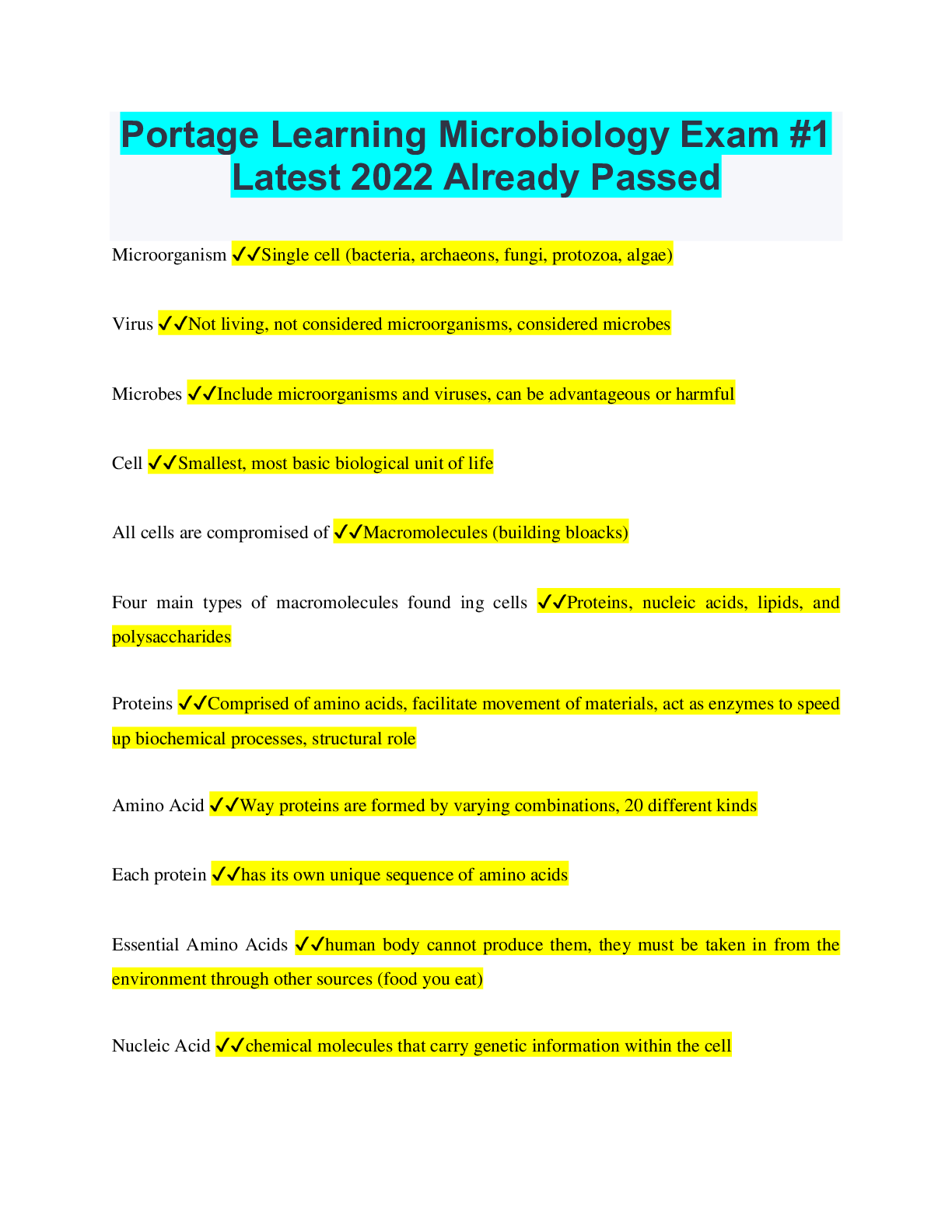
Microbiology is the study of what?
Microbiology is the study of microbes (microorganisms and viruses) and their biological
processes.
What is the smallest biological unit of life?
A cell
00:1001:24
What is a macro
...
Microbiology is the study of what?
Microbiology is the study of microbes (microorganisms and viruses) and their biological
processes.
What is the smallest biological unit of life?
A cell
00:1001:24
What is a macromolecule?
A macromolecule is classified as a complex molecule that is composed from smaller subunits.
What are the four main types of macromolecules?
Proteins, nucleic acids, lipids and carbohydrates
What various functions do proteins have in a cell?
Proteins may facilitate the movement of materials in or out of a cell. Some can act as enzymes
that catalyze, or speed up, biochemical processes. Others play a structural role while other
proteins, such as filaments, enable movement.
What are the two major types of nucleic acids and their roles?
There are two major types of nucleic acids: DNA (deoxyribonucleic acid) and RNA (ribonucleic
acid). Nucleic acids are chemical molecules that carry genetic information within the cell. DNA
contains a vast amount of hereditary information and is responsible for the inheritable
characteristics of living organisms. RNA is responsible for deciphering the hereditary
information in DNA and using it to synthesize proteins.
What is the plasma membrane, and what is it made up of?
The plasma membrane serves the cell as a surrounding barrier that separates the inside of the cell
from the outside surrounding environment. The plasma membrane also restricts the movement of
materials (water, nutrients, etc) either in or out of the cell, thus allowing a cells to absorb and
keep what is needed (influx) while also preventing the escape (out flux) of essential nutrients.
The plasma membrane is composed of lipids (hydrophobic hydrocarbons).
What are the three main components of polysaccharides?
Polysaccharides are composed of carbon, hydrogen and oxygen atoms. Examples would include,
C6H12O6 (glucose) C12H22O11 (sucrose) and C6H10O5 (cellulose).
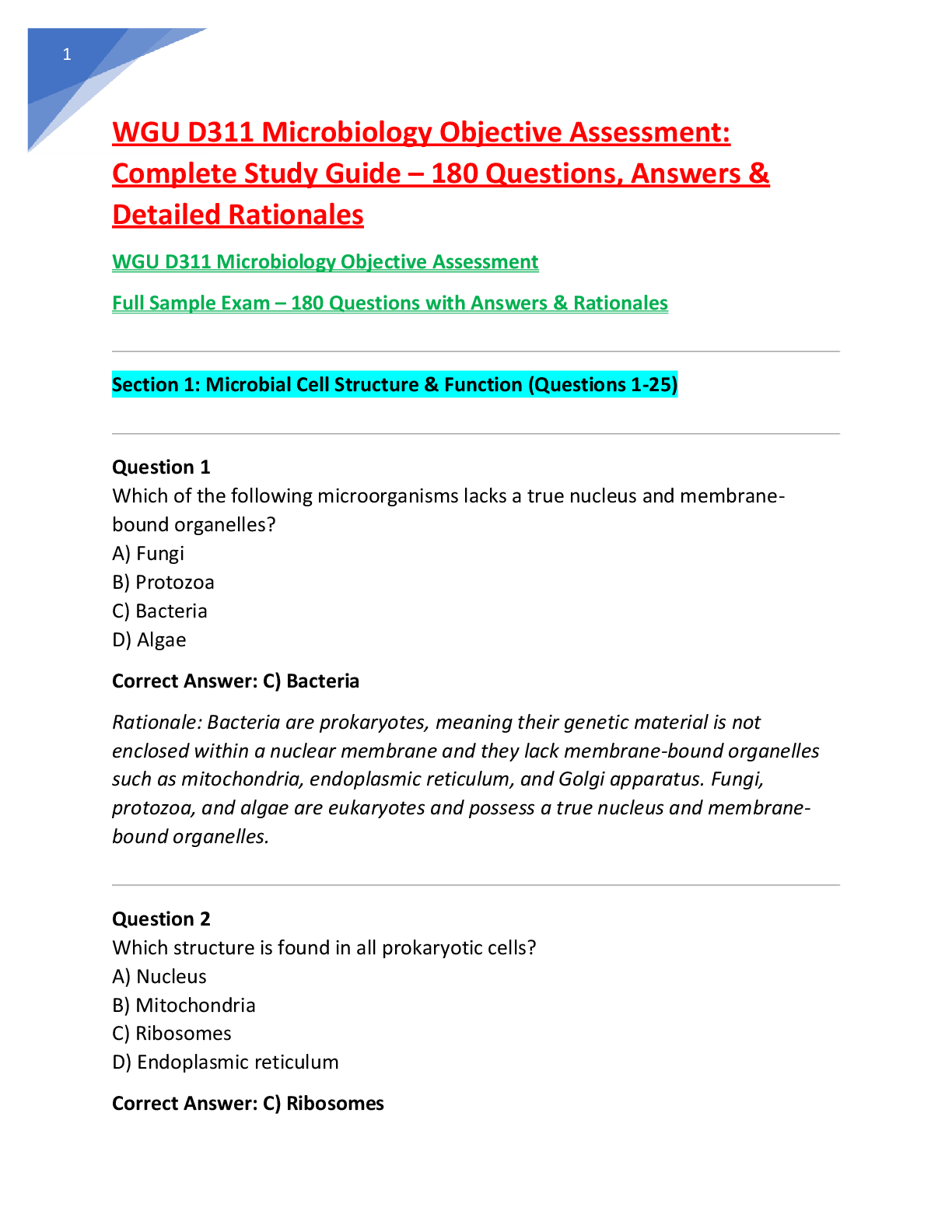
What is the primary difference between prokaryotic and eukaryotic cells?
Eukaryotic cells contain a nucleus, a membrane enclosed region within the cell that contains the
genetic material. Prokaryotic cells do not have a nucleus and can be further classified as either
Bacteria or Archaea.
What are the main morphologies of bacteria?
Bacteria can be described as coccus (round/spherical), bacillus (rod), vibrio (curved rod) or
spirillum (spiral/corkscrew).
Which group (classification) of microbes is noted for its ability to survive under harsh
conditions?
Archaea. They are able to survive in extremely harsh environmental conditions such as high salt
levels, acid conditions, high temperatures and oxygen-poor conditions.
What are the four main classifications of Eukarya?
Eukaryotic microorganisms are classified as either belonging to Animalia, Plantae, Fungi or
Protista.
00:0201:24
Can viruses be classified as either prokaryotic or eukaryotic?
No. Viruses are considered neither prokaryotic nor eukaryotic. Viruses are not considered living
and do not replicate on their own, meaning they must replicate within a host.
The lipid bilayer of the plasma membrane is composed of what?
The cell membrane is a bilayer composed primarily of amphipathic phospholipids, meaning they
contain a polar hydrophilic (water loving) head group and a non-polar hydrophobic (water
fearing) tail region. The lipid bilayer is situated in such a way where the non-polar tail groups
face inward thus orienting the polar head groups to interact with water both outside and inside of
the cell.
What are the primary cellular organelles described in this module? Be sure to know the roles of
each.
Ribosomes (protein synthesis), ER (site of protein synthesis), Golgi (protein modification and
distribution), lysosomes (waste disposal), mitochondria (ATP generation) and chloroplasts
(plants only; site of photosynthesis).
Be able to identify the primary organelles within a cell as shown in Figures 1.4
Prokaryotic Cell
Be able to identify the primary organelles within a cell as shown in Figures 1.5
Eukaryotic Cell
Be able to identify the primary organelles within a cell as shown in Figures 1.6.
EC magnified
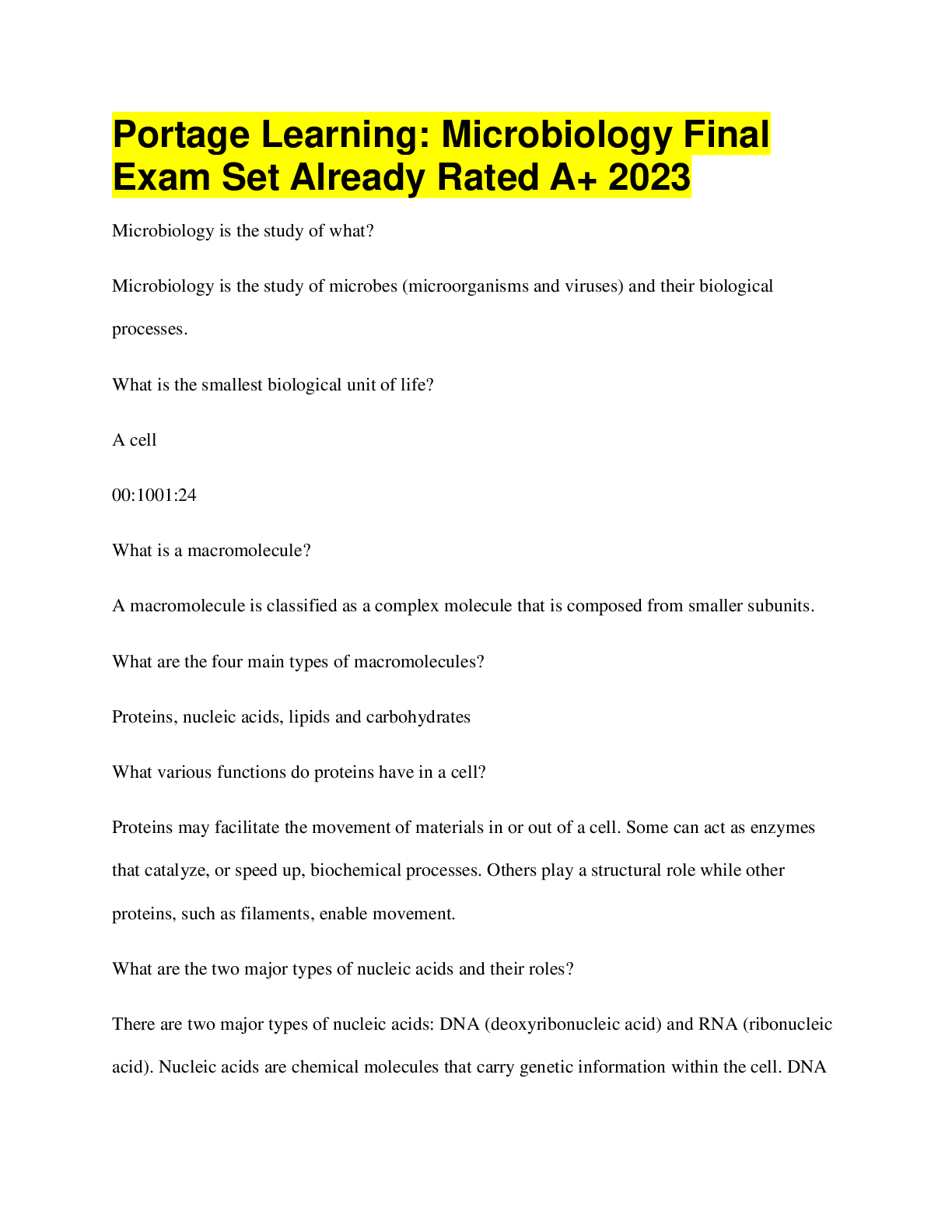
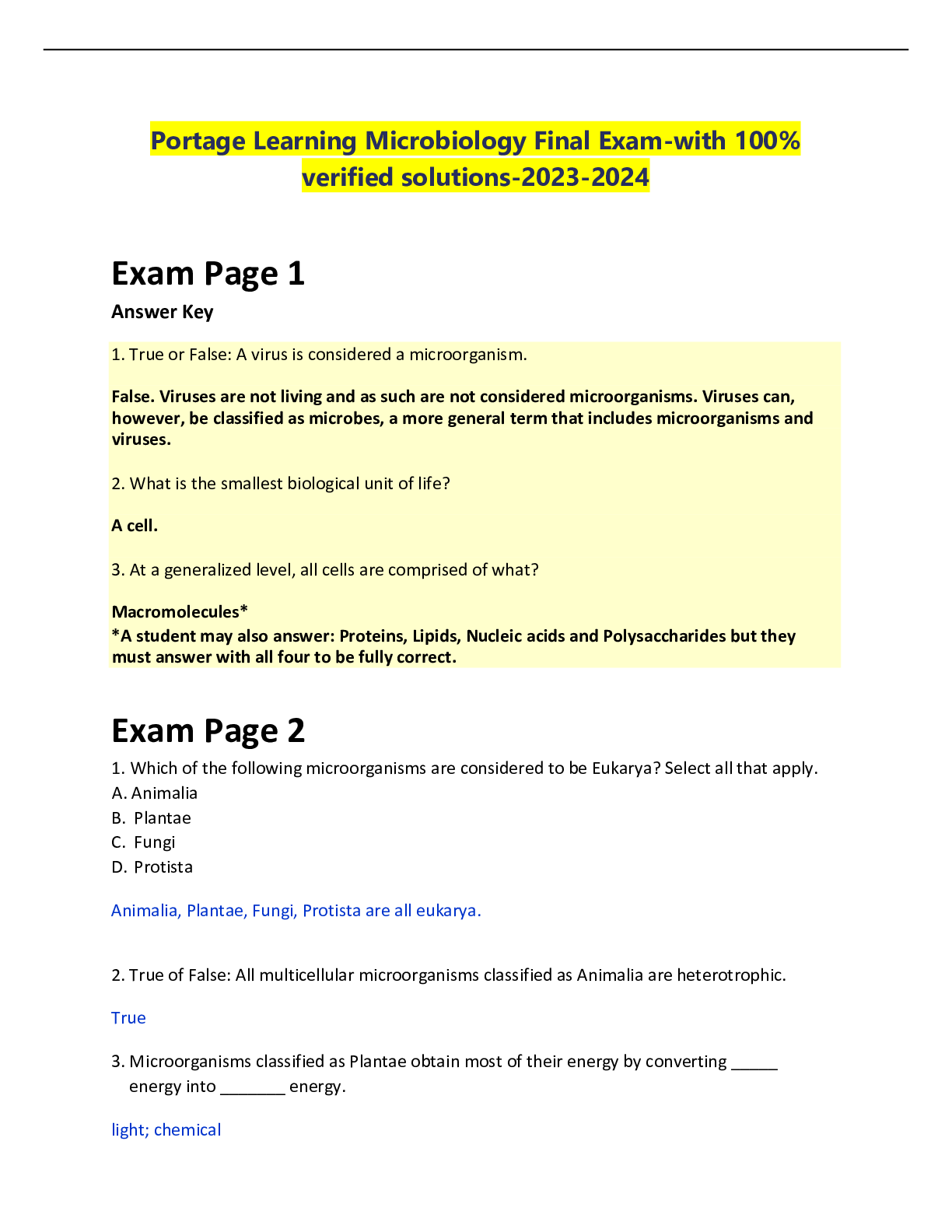
True/False. A virus is considered a microorganism.
False.
Viruses are not living and as such are not considered microorganisms. Viruses can, however, be
classified as microbes, a more general term that includes microorganisms and viruses.
What is the smallest biological unit of life?
A cell
At a generalized level, all cells are comprised of what?
Macromolecules*
*A student may also answer: Proteins, Lipids, Nucleic acids and Carbohydrates, but they must
answer with all four to be fully correct.
How many different types of amino acids are available from which to make proteins?
20
How many amino acids are classified as being essential amino acids?
9
What are the two major types of nucleic acids and their roles?
There are two major types of nucleic acids: DNA (deoxyribonucleic acid) and RNA
(ribonucleic acid). Nucleic acids are chemical molecules that carry genetic information
within the cell. DNA contains a vast amount of hereditary information and is responsible
for the inheritable characteristics of living organisms. RNA is responsible for deciphering
the hereditary information in DNA and using it to synthesize proteins.
Complete the following DNA strand, and indicate how many bonds are formed for each
complementary pair:
3' GGTCATCG 5'5' CC AGC 3'
3’ GGTCATCG 5’5’ CCAGTAGC 3’There are 2 bonds formed between A and T, and 3
bonds between G and C.
The plasma membrane (select all that are true):
A) Only restricts movement of materials into the cell.
B) Is often a bilyaer comprised of lipids
C) Cannot prevent essential nutrients from escaping
D)Contains hydrophobic tails pointing inward.
B & D
How many carbon atoms are present in glucose?
6, The molecular formula of Glucose is C6H12O6
True of False: Eukaryotic cells do not have a nucleus.
False, Eukaryotic cells do have a nucleus (prokaryotic cells do not).
True or False: Prokaryotic cells can be subdivided into Bacteria and Archaea.
True
True or False: Archaea is noted for its ability to survive under harsh conditions.
True, Archaea can often be found in harsh conditions such as high salt levels, high acid
conditions, high temperatures and even oxygen-poor condi
[Show More]

.png)




![Preview of Prescott's Microbiology, 11th Edition By Joanne Willey [eBook] [PDF]](https://browseimages.nyc3.digitaloceanspaces.com/paper-images/2023/Sep/16/INhqfthz2023-09-16-10-23650557eca0fc1.png)
![Preview of eBook [PDF] Microbiology: An Introduction 13th Edition by Gerard Tortora.](https://browseimages.nyc3.digitaloceanspaces.com/paper-images/2025/Jan/21/bnz06W1O2025-01-21-07-39678fcdca414ba.png)




.png)

.png)