Medicine > QUESTIONS & ANSWERS > ISSA Unit 1 – 31 Questions and Answers Already Passed (All)
ISSA Unit 1 – 31 Questions and Answers Already Passed
Document Content and Description Below
Last updated: 3 years ago
Preview 1 out of 59 pages
Instant download
.png)
Buy this Document to get the Full Access Instantly
Provided by Students Who Aced it
We Verify Document Content to Gurantee Accuracy
Also available in bundle (1)
Click Below to Access Bundle(s)
.png)
ISSA Bundled Exams Questions and Answers [2022/2023] [Correct & Verified Answers]
ISSA Bundled Exams Questions and Answers [2022/2023] [Correct & Verified Answers]
By Nutmegs 3 years ago
$22
16
Reviews( 0 )
Document information
Connected school, study & course
About the document
Uploaded On
Feb 19, 2023
Number of pages
59
Written in
All

Additional information
This document has been written for:
Uploaded
Feb 19, 2023
Downloads
0
Views
180
Topic Tags
Recommended For You
Get more on QUESTIONS & ANSWERS »

Solutions Manual for Fluid Mechanics Fundamentals and Applicat...
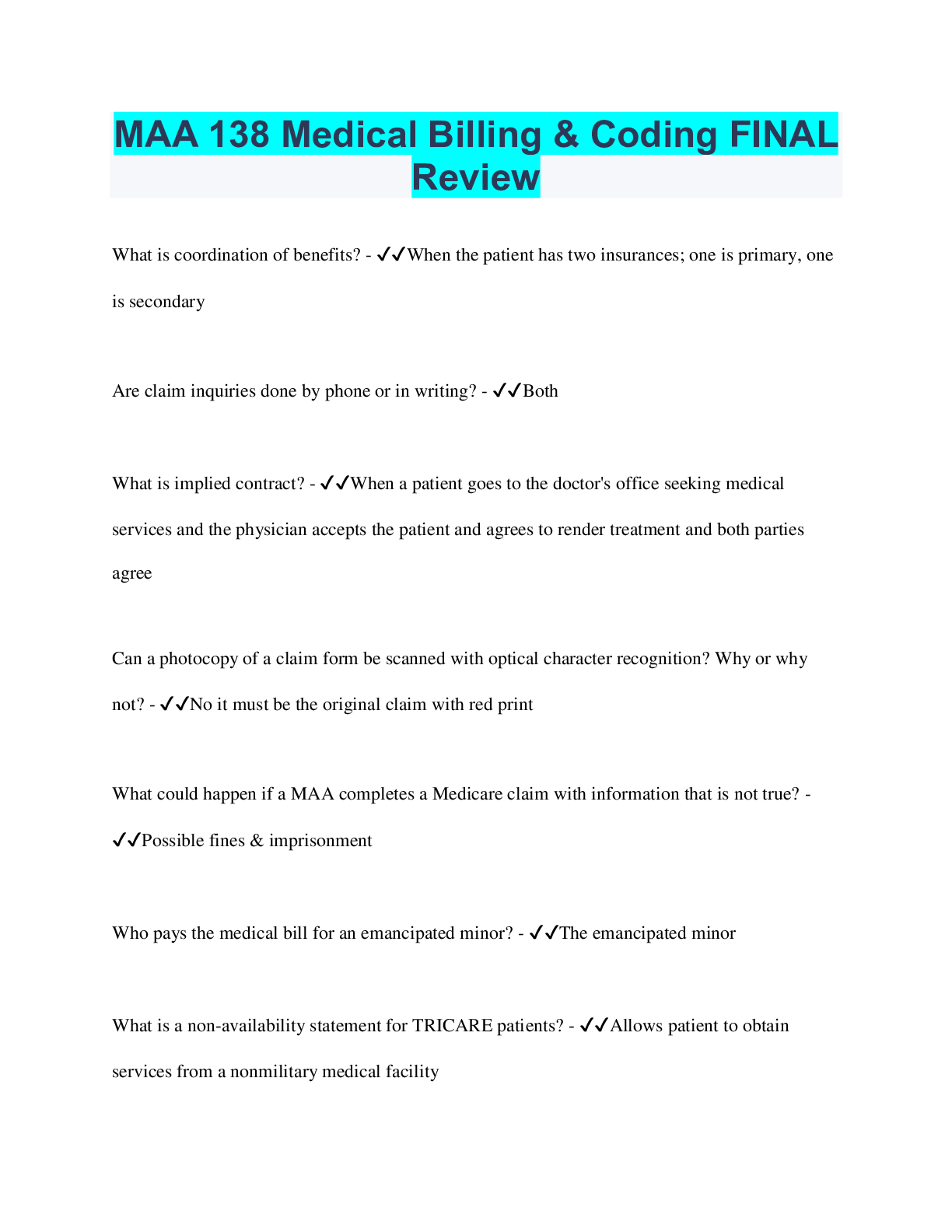
.png)
Test Bank for Drugs, Behavior and Society 3rd Canadian Edition...
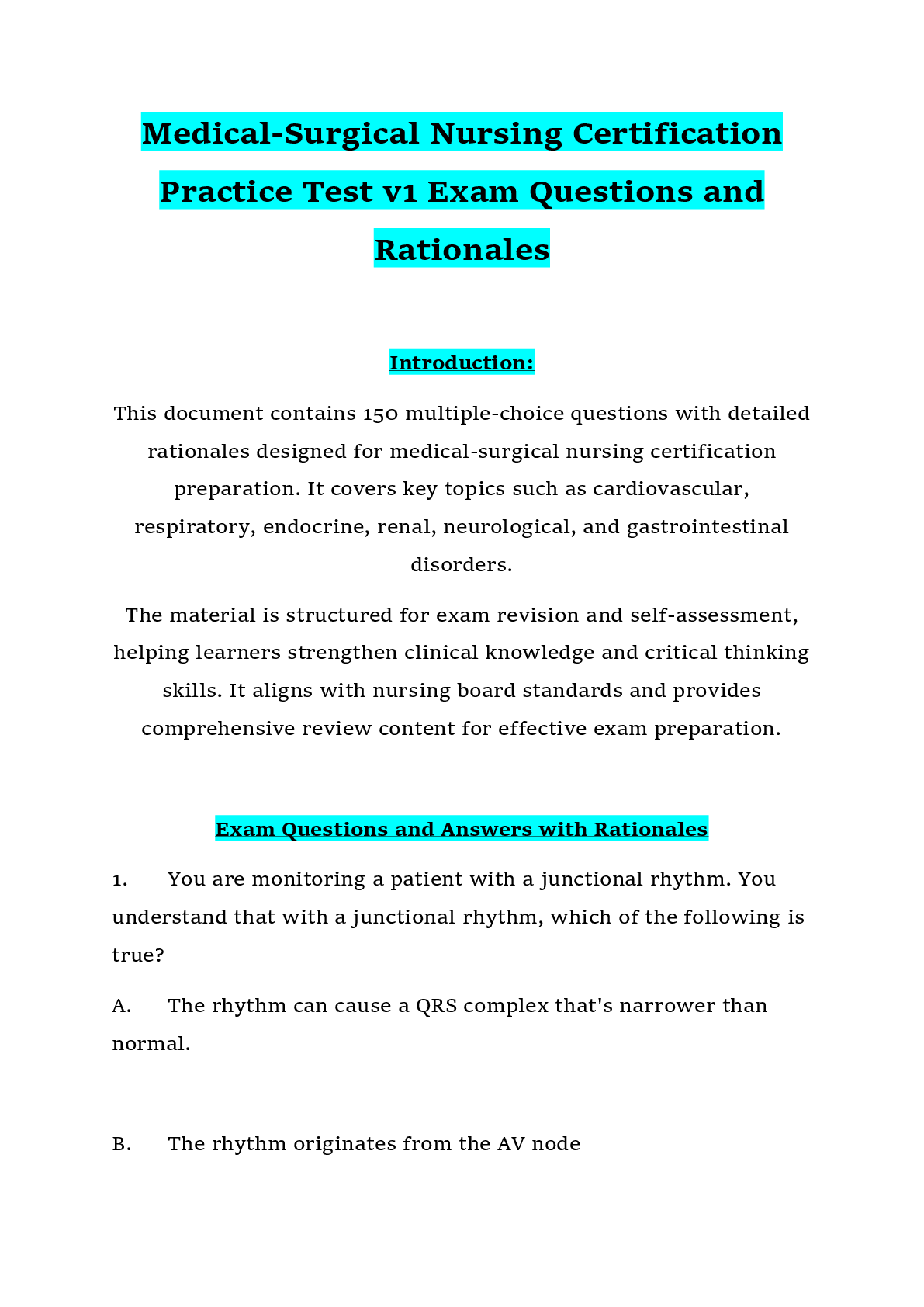
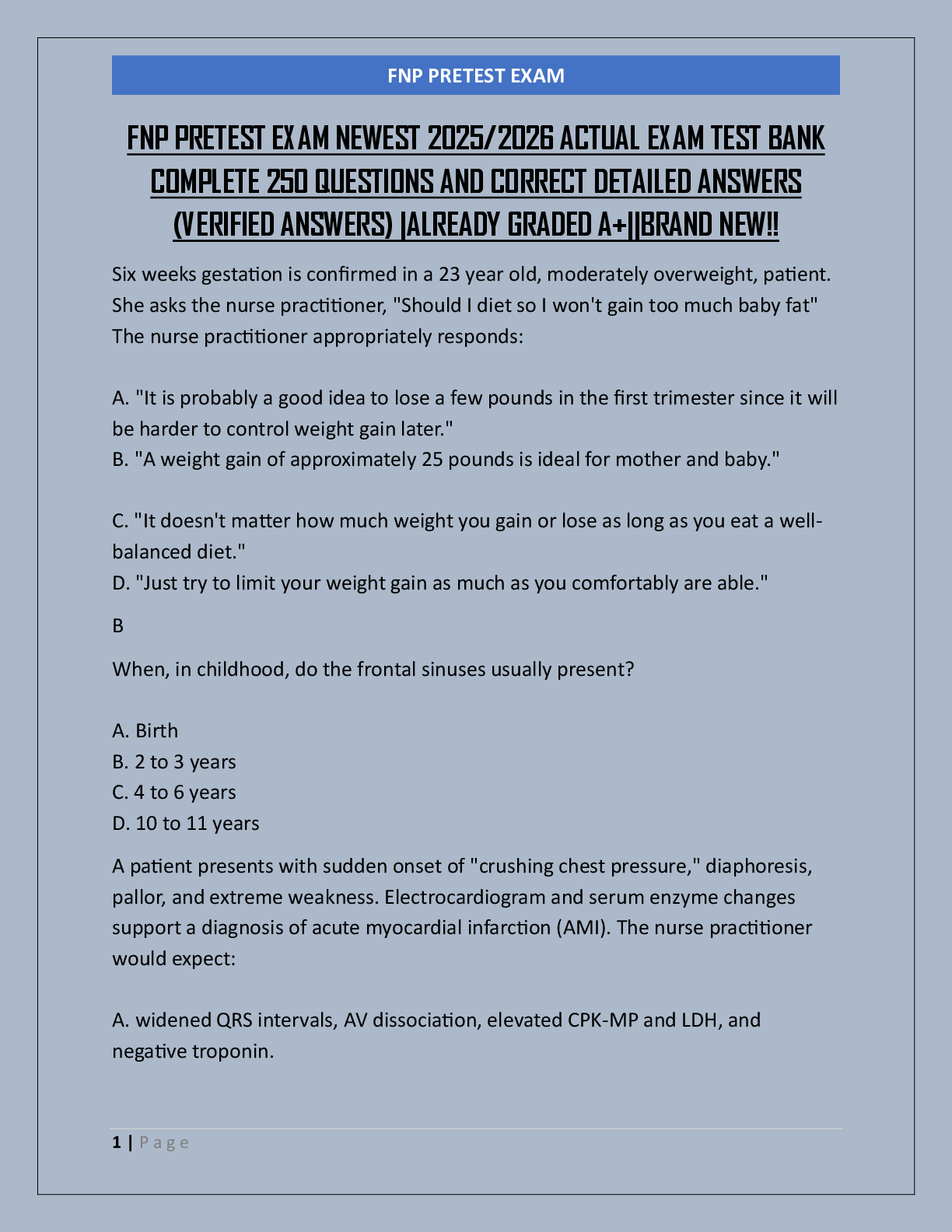
FNP PRETEST EXAM NEWEST 2025/2026 ACTUAL EXAM TEST BANK COMPL...
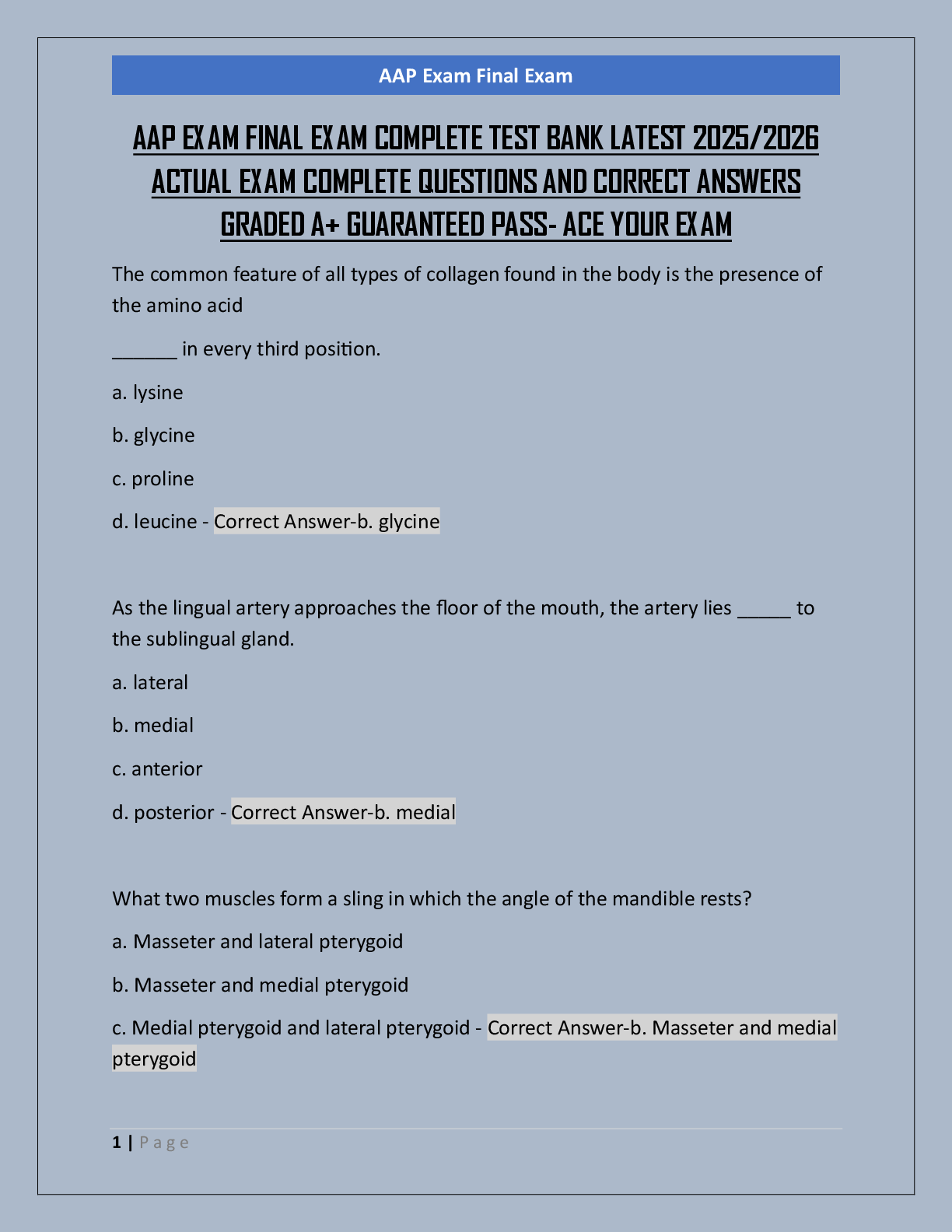
Henke's Med-Math Dosage Calculation, Preparation, & Administra...
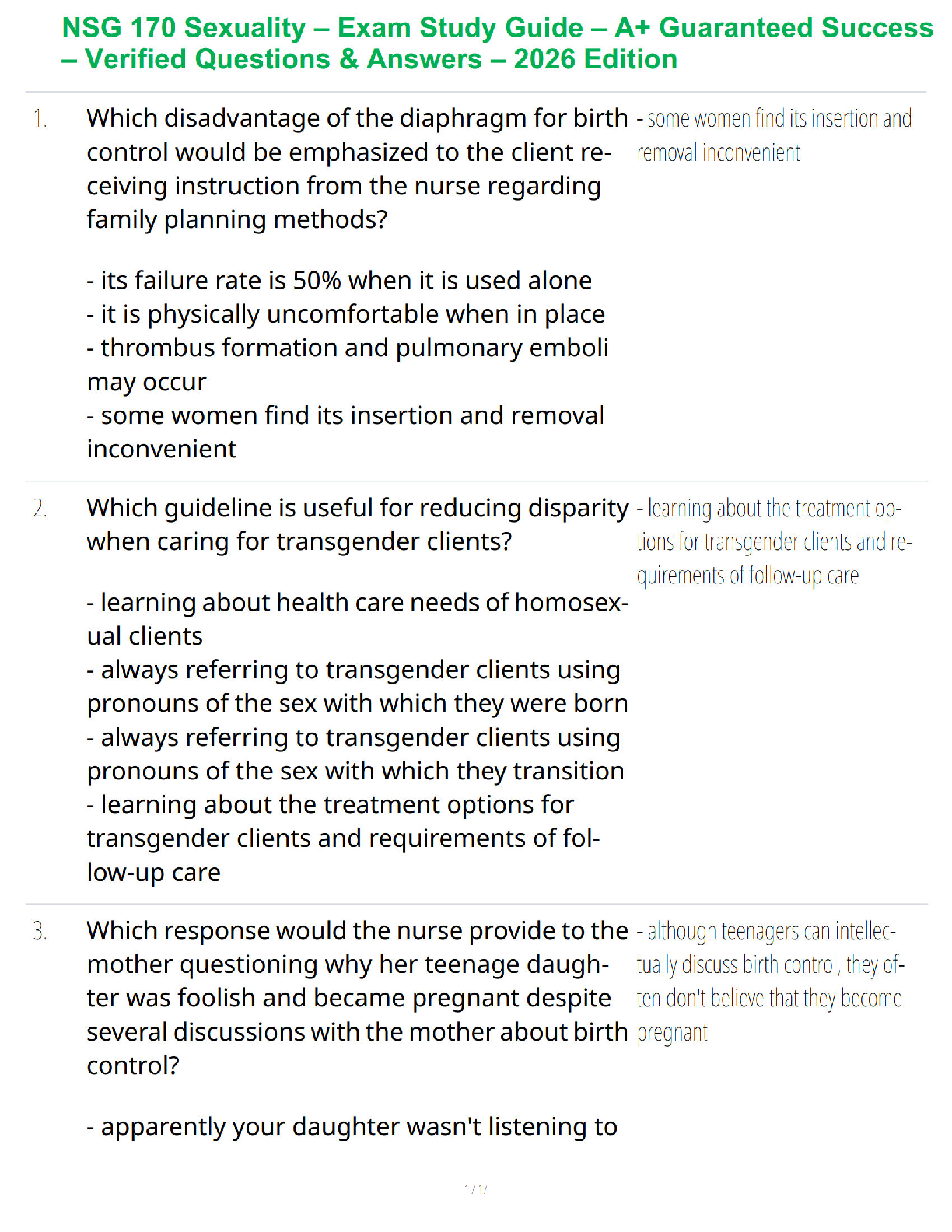
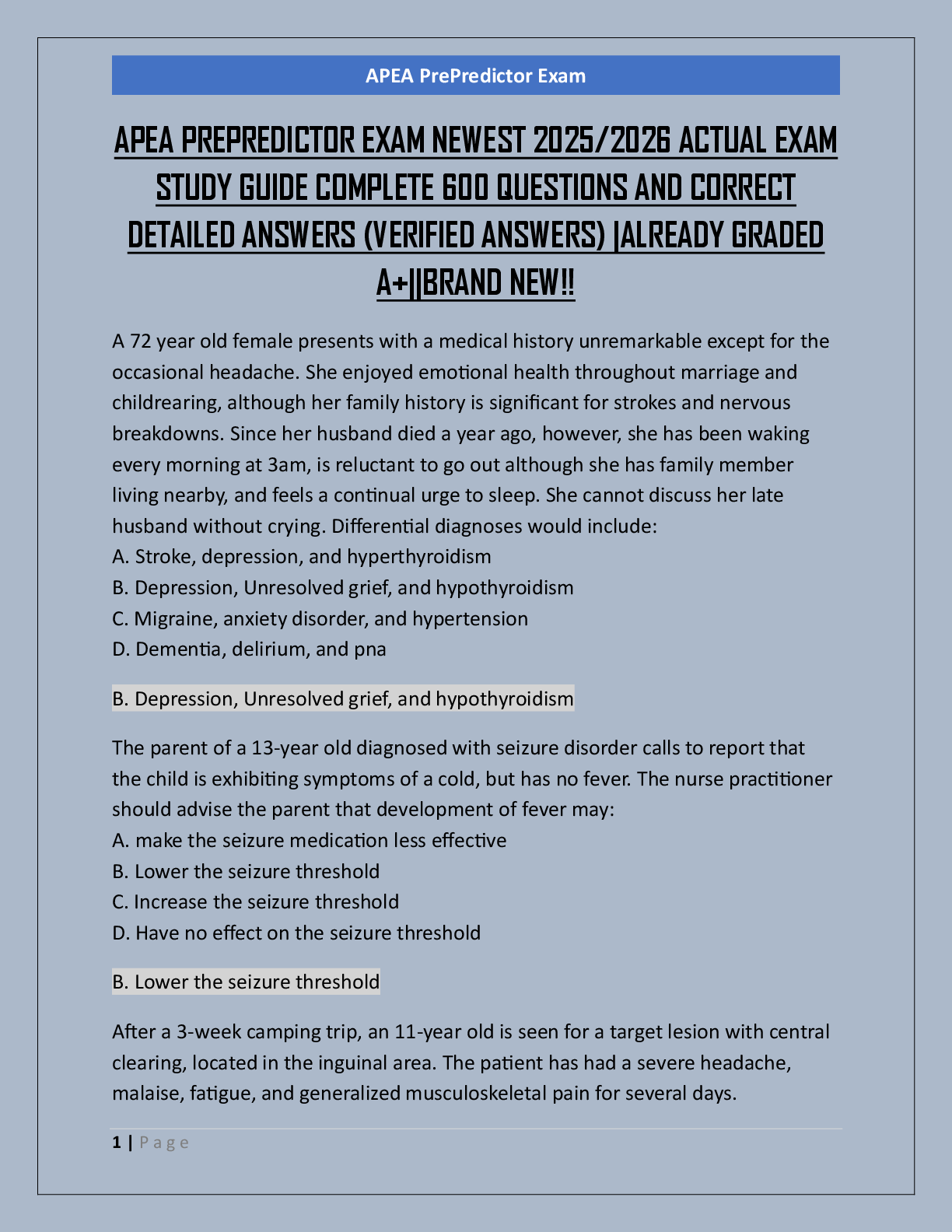
APEA PREPREDICTOR EXAM NEWEST 2025/2026 ACTUAL EXAM STUDY GUI...
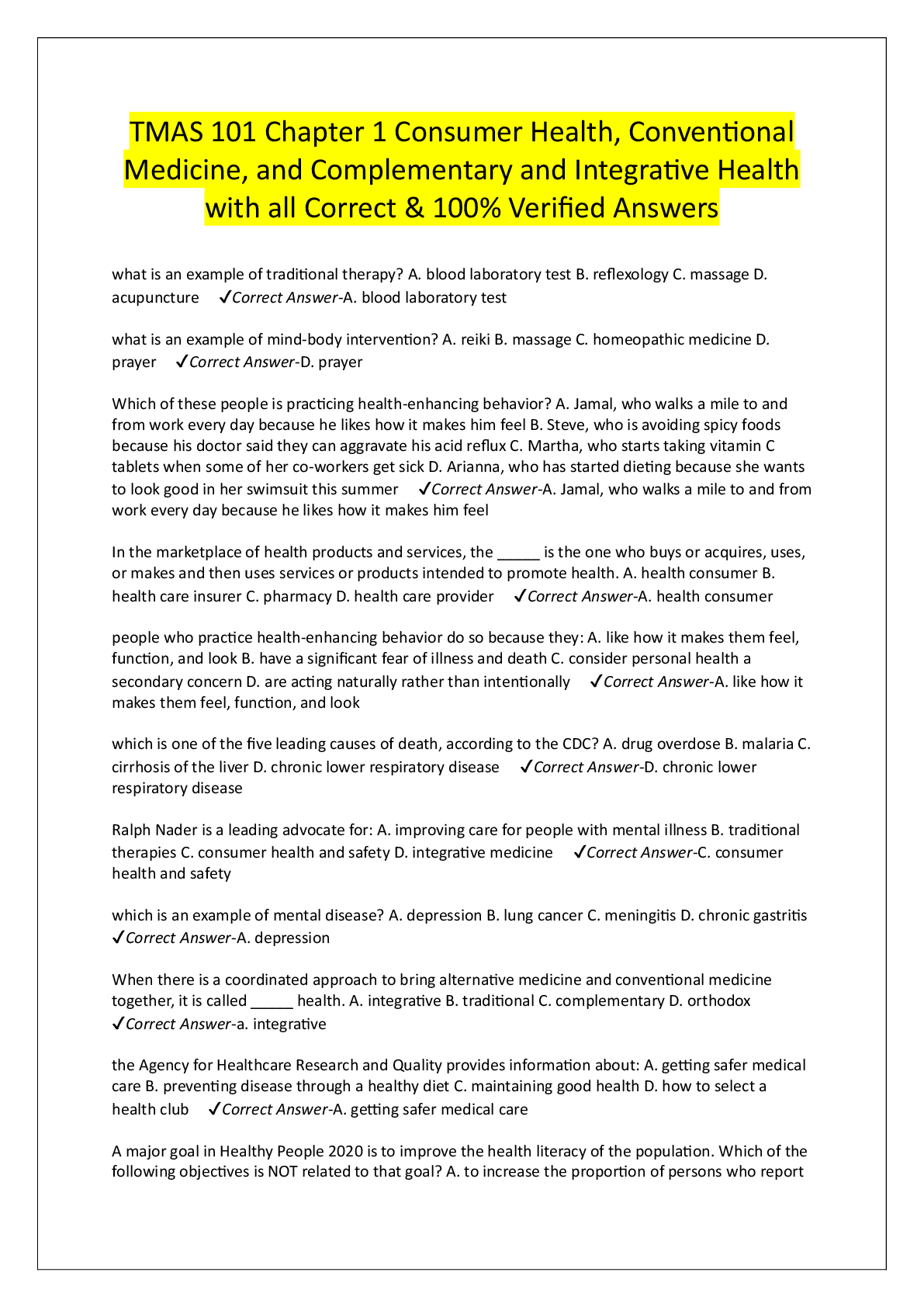
TMAS 101 Chapter 1 Consumer Health, Conventional Medicine, and...