Pregnancy, Labour, Birth, and Post-partum (uncomplicated)
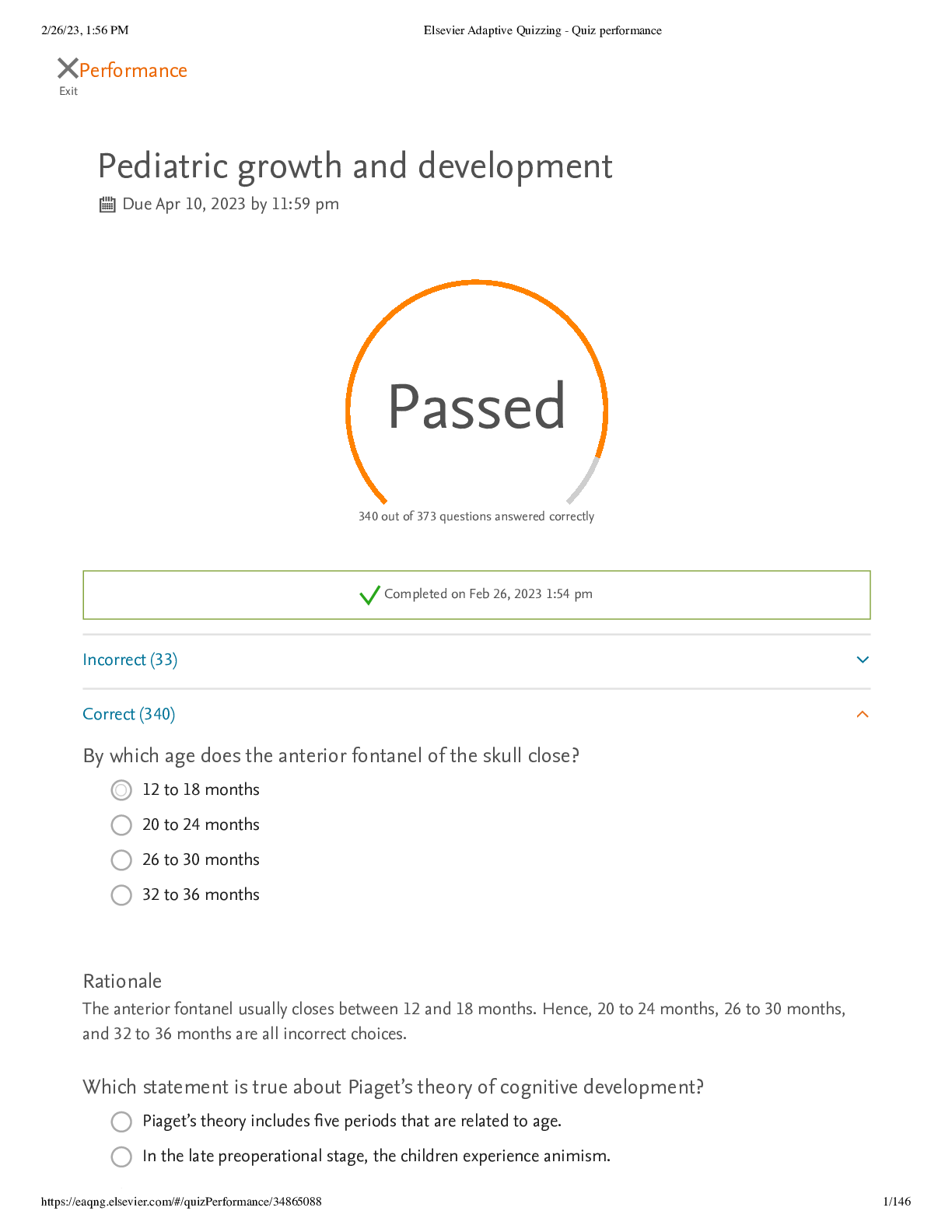
Due Apr 10, 2023 by 11:59 pm
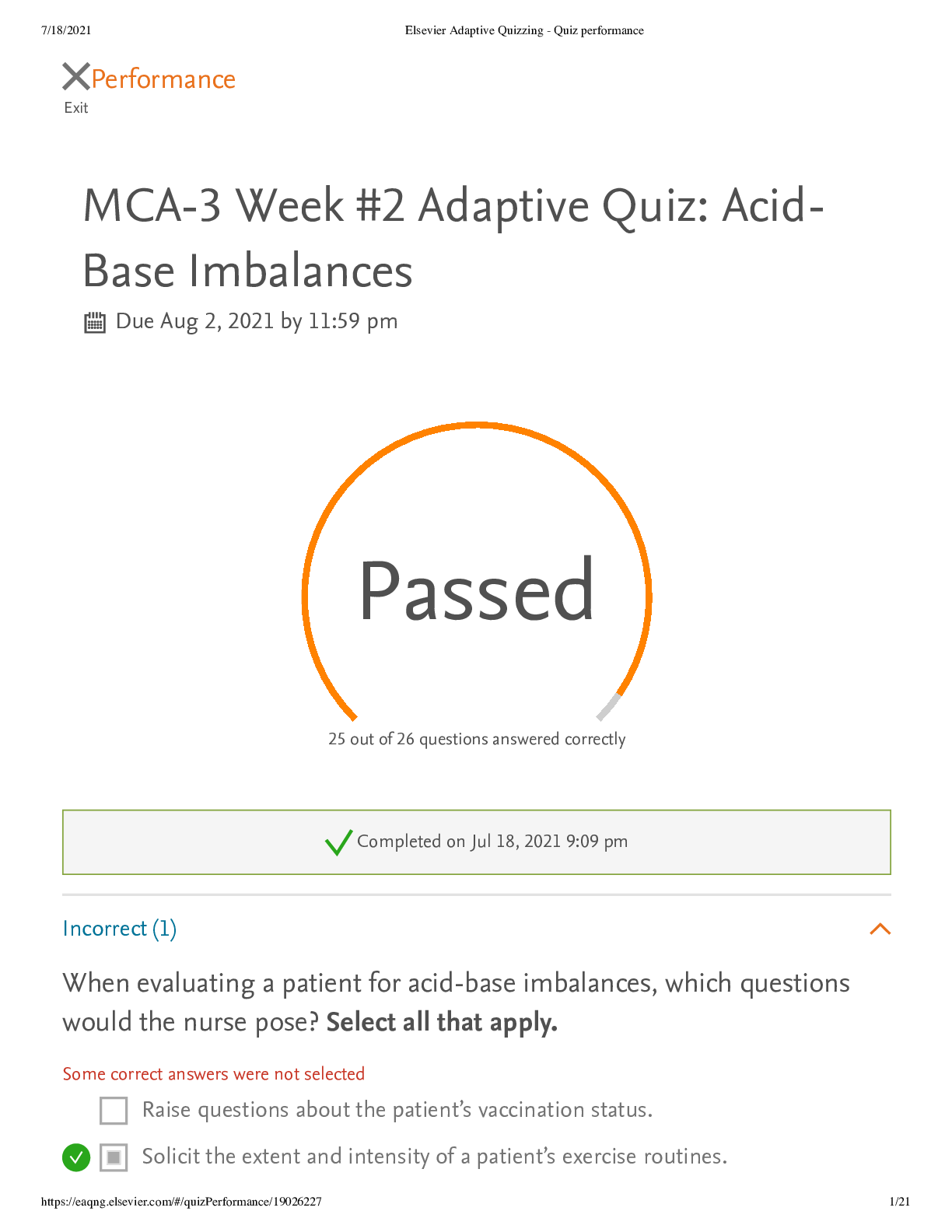
Passed
252 out of 286 questions answered correctly
Completed on Feb 14, 2023 5:37 pm
Incorrect (34)
Correct (252)
Morning sick
...
Pregnancy, Labour, Birth, and Post-partum (uncomplicated)
Due Apr 10, 2023 by 11:59 pm
Passed
252 out of 286 questions answered correctly
Completed on Feb 14, 2023 5:37 pm
Incorrect (34)
Correct (252)
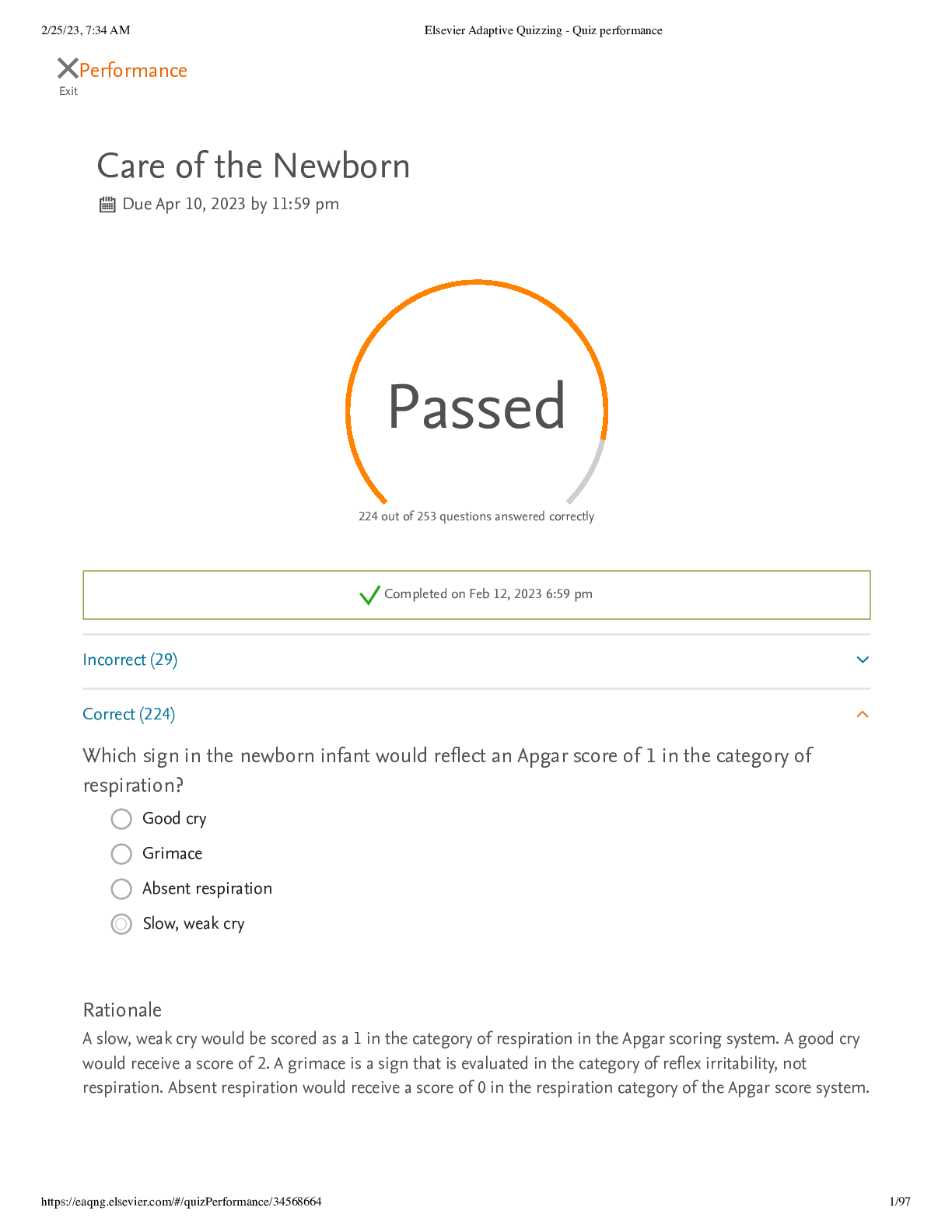
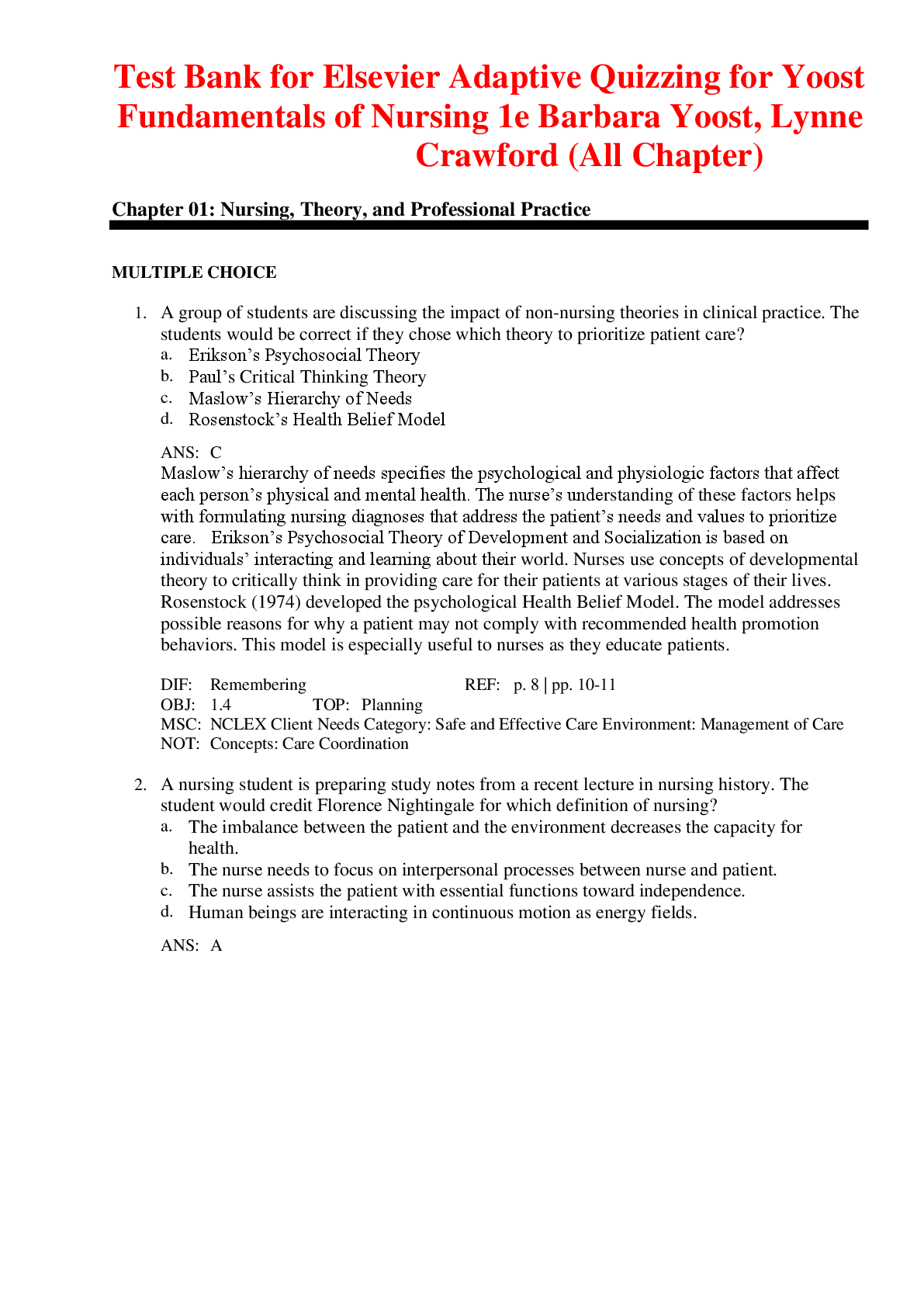
Morning sickness generally disappears by the end of which month?
Rationale
Because of a decrease in chorionic gonadotropin, morning sickness seldom persists beyond the first trimester. Morning sickness usually ends at the end of the third month, not the second month, when the chorionic gonadotropin level falls. It is still present in the second month because of the high level of chorionic gonadotropin but has usually diminished by the fifth month.
Fifth month Third month Fourth month Second month
2/25/23, 7:35 AM Elsevier Adaptive Quizzing - Quiz performance
https://eaqng.elsevier.com/#/quizPerformance/34876303 2/110
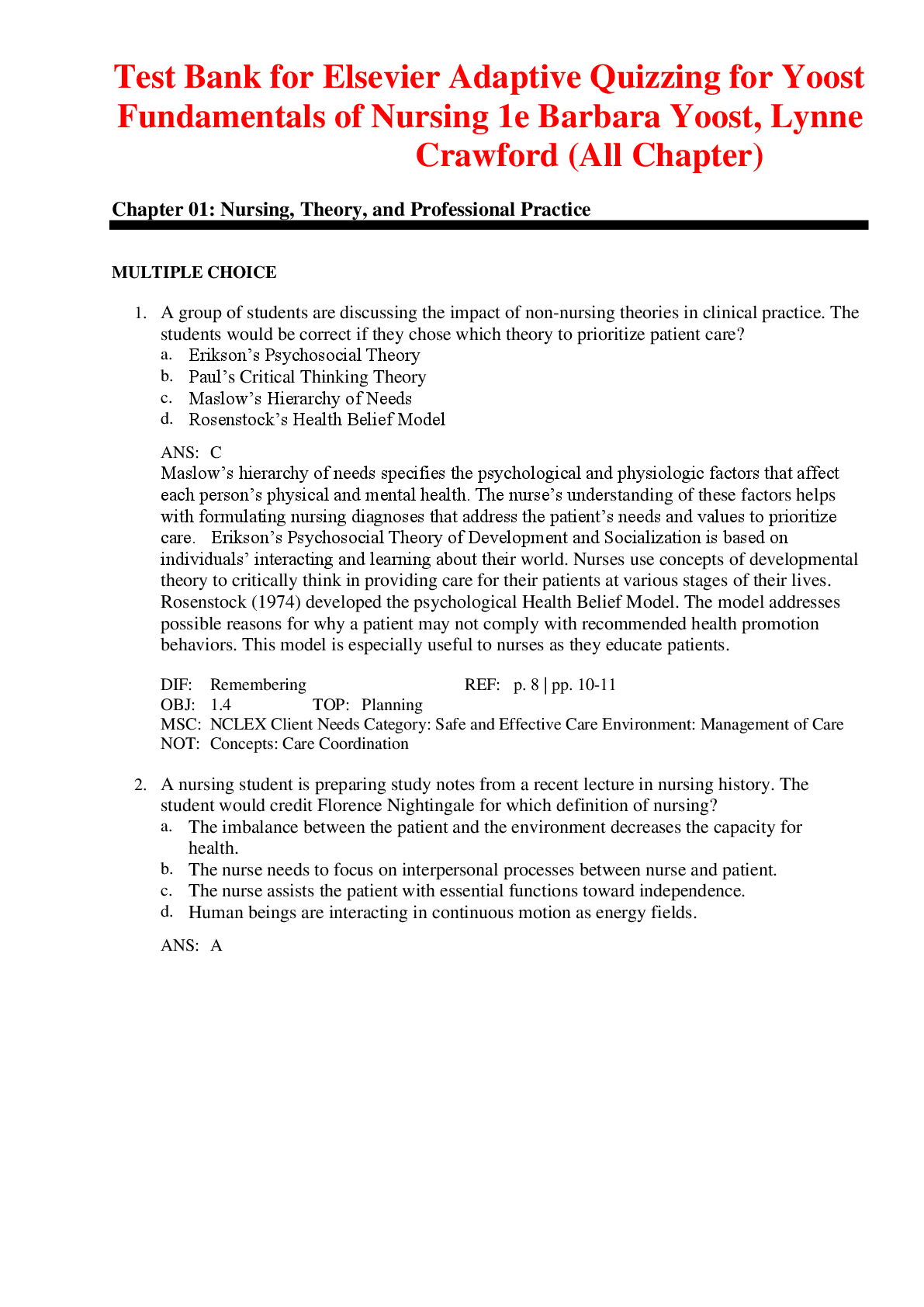
Which descriptor would the nurse use when explaining to a client how to time the frequency of contractions? Rationale
The frequency of contractions is timed from the beginning of 1 contraction to the beginning of the next; this is the definition of 1 contraction cycle. The beginning, not the end, of a contraction is the starting point for timing the frequency of contractions. The time between the end of 1 contraction and the beginning of the next contraction is the interval between contractions. Timing from the beginning of 1 contraction to the end of the next contraction is too long a time frame and will produce inaccurate information.
Which technique would the nurse suggest to a laboring woman’s partner that involves gently stroking the woman’s abdomen in rhythm with her breathing during a contraction?
Rationale
Effleurage is the gentle stroking of the abdomen in rhythm with her breathing during a contraction. Massage is the application of therapeutic touch and pressure on the body. Acupressure is the application of pressure along special acupressure points. Counterpressure is the application of pressure to the sacrum during a contraction.
At which point during a human pregnancy does the embryo become a fetus?
Rationale
From the end of 1 contraction to the end of the next contraction
From the end of 1 contraction to the beginning of the next contraction From the beginning of 1 contraction to the end of the next contraction From the beginning of 1 contraction to the beginning of the next contraction
Massage
Effleurage
Acupressure
Counterpressure
During the 8th week of the pregnancy At the end of the 2nd week of pregnancy When the fertilized egg becomes implanted
When the products of conception are seen on the ultrasound
2/25/23, 7:35 AM Elsevier Adaptive Quizzing - Quiz performance
https://eaqng.elsevier.com/#/quizPerformance/34876303 3/110
During the 8th week of pregnancy the organ systems and other structures are developed to the extent that they take the human form; at this time the embryo becomes a fetus and remains so until birth. At the end of the 2nd week of pregnancy, the developing cells are called an embryo. At the time of implantation, the group of developing cells is called a blastocyst. The embryo can be visualized on ultrasound before it becomes a fetus.
When a client at 39 weeks’ gestation arrives at the birthing suite she says, 'I’ve been having contractions for 3 hours, and I think my water broke.' Which action would the nurse take to confirm that the membranes have ruptured?
Rationale
Nitrazine paper will turn dark blue if amniotic fluid is present; it remains the same color in the presence of urine. Temperature assessment is not specific to ruptured membranes at this time; vital signs are part of the initial assessment. Although this may be done as part of the initial assessment, a urine test is unrelated to leakage of amniotic fluid. Inspecting the perineum for leaking fluid will not confirm rupture of the membranes.
A client who is at 20 weeks’ gestation visits the prenatal clinic for the first time. Assessment reveals temperature of 98.8°F (37.1°C), pulse of 80 beats per minute, blood pressure of 128/80 mm Hg, weight of 142 lb (64.4 kg) (prepregnancy weight was 132 lb [59.9 kg]), fetal heart rate (FHR) of 140 beats per minute, urine that is negative for protein, and fasting blood glucose level of 92 mg/dL (5.2 mmol/L). Which would the nurse do after making these assessments?
Rationale
All data presented are expected for a client at 20 weeks’ gestation and should be documented. There is no need for immediate intervention or an emergency admission because all findings are expected.
Take the client’s oral temperature.
Test the leaking fluid with nitrazine paper. Obtain a clean-catch urine specimen. Inspect the perineum for leaking fluid.
Report the findings because the client needs immediate intervention. Document the results because they are expected at 20 weeks’ gestation.
Record the findings in the medical record because they are not within the norm but are not critical.
Prepare the client for an emergency admission because these findings may represent jeopardy to the client and fetus.
2/25/23, 7:35 AM Elsevier Adaptive Quizzing - Quiz performance
https://eaqng.elsevier.com/#/quizPerformance/34876303 4/110
The first day of a client’s last menstrual period was July 22. Which is the estimated date of birth (EDB)?
Rationale
Her EDB is April 29. Naegeles rule is an indirect, noninvasive method for estimating the date of birth: EDB = last menstrual period + 1 year – 3 months + 7 days. May 7 is beyond the EDB. April 22 and March 6 are both before the EDB.
A prenatal client’s vaginal mucosa is noted to have a purplish discoloration. Which sign would be documented in the client’s clinical record?
Rationale
A purplish coloration, called the Chadwick sign, results from the increased vascularity and blood vessel engorgement of the vagina. The Hegar sign is softening of the lower uterine segment. The Goodell sign is softening of the cervix. After the fourth month of pregnancy, irregular, painless uterine contractions, called Braxton-Hicks contractions, can be felt through the abdominal wall. Test-Taking Tip: The following are crucial requisites for doing well on the NCLEX exam: (1) a sound understanding of the subject; (2) the ability to follow explicitly the directions given at the beginning of the test; (3) the ability to comprehend what is read; (4) the patience to read each question and set of options carefully before deciding how to answer the question; (5) the ability to use the computer correctly to record answers; (6) the determination to do well; and (7) a degree of confidence.
A nonstress test (NST) is scheduled for a client with mild preeclampsia. During an NST, the client asks what it means when the fetal heart rate goes up every time the fetus moves. Which is an appropriate response?
May 7
April 29
April 22
March 6
Hegar
Goodell
Chadwick
Braxton-Hicks
'These accelerations are a sign of fetal well-being.'
'These accelerations indicate fetal head compression.' 'Umbilical cord compression is causing these accelerations.'
2/25/23, 7:35 AM Elsevier Adaptive Quizzing - Quiz performance
https://eaqng.elsevier.com/#/quizPerformance/34876303 5/110
Rationale
The NST is performed before labor begins. Accelerations with movement and a baseline variability of 5 to 15 beats/min indicate fetal well-being. This reactive NST is considered positive. Early decelerations are associated with fetal head compression during a contraction stress test (CST) or during labor. Variable decelerations are associated with cord compression during a CST or during labor. Late decelerations during a CST or during labor are associated with uteroplacental insufficiency.
Which statement by a breast-feeding mother indicates that the nurse’s teaching regarding stimulating the let-down reflex has been successful?
Rationale
Applying warm packs and massaging the breasts before each feeding help dilate milk ducts, promote emptying of the breasts, and stimulate further lactation. Taking a cool shower before each feeding will contract the milk ducts and interfere with the let-down reflex. Heavy consumption of milk products is not required to stimulate the production of milk. Breast binders may inhibit lactation by fooling the body into thinking that milk secretion is no longer needed.
Which response would the nurse give to a postpartum client who asks if she can drink a small glass of wine before breast-feeding the first time to help her relax?
Rationale
Stating that the client seems tense and initiating a discussion honors the client’s feelings and encourages expression of them; there is no reference to alcohol consumption and its relaxing effects. Alcohol ingestion should not be encouraged, because it enters the breast milk. Stating that the client needs to find another way to relax reflects the client’s statement but not her underlying feelings. Suggesting that she find another way to relax may make the client defensive and shut off communication. Although alcohol ingestion should not be
[Show More]











.png)