NURSING > Research Paper > Nursing Care Plan - Small for Gestational Age, Large for Gestational Age and Failure to Thrive (All)
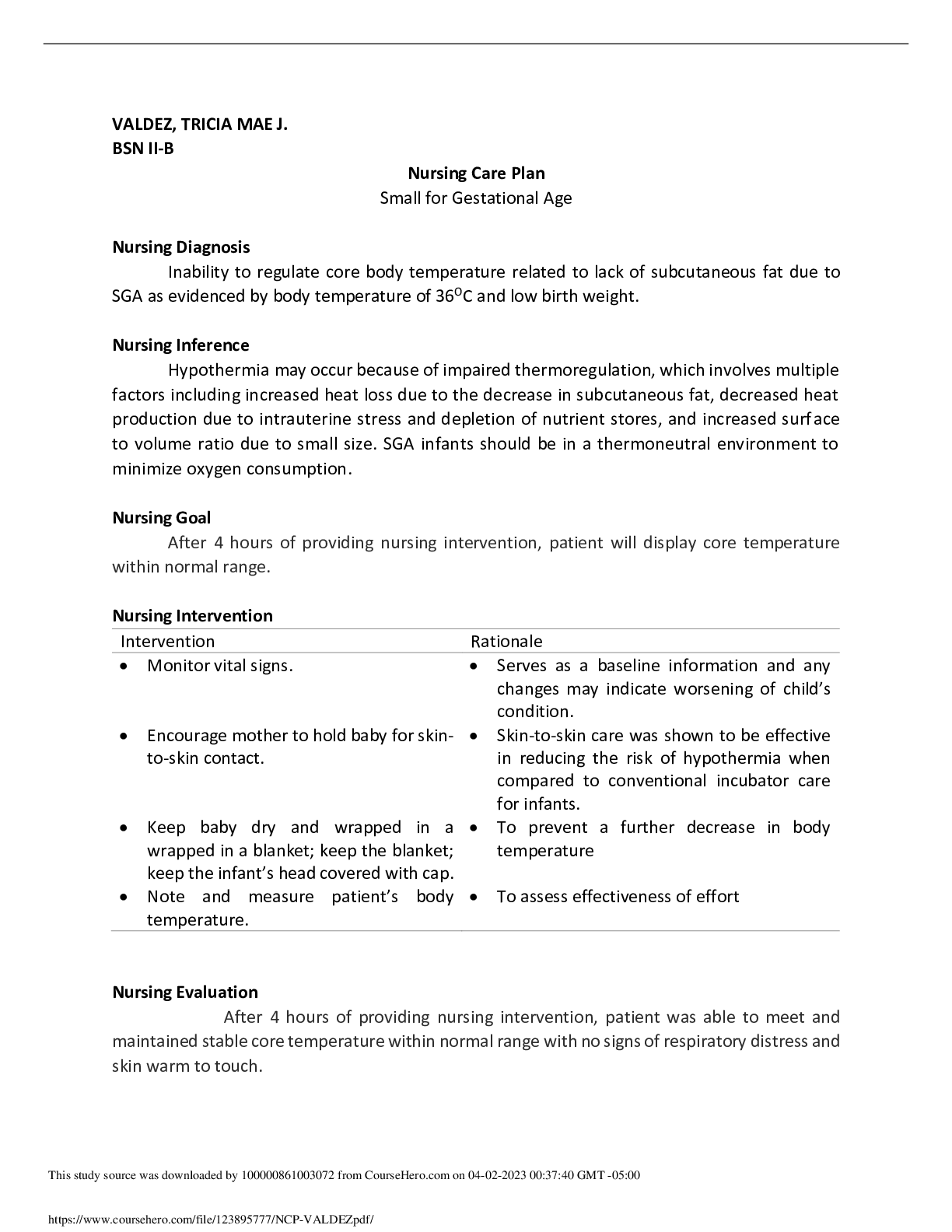
Nursing Care Plan - Small for Gestational Age, Large for Gestational Age and Failure to Thrive
Document Content and Description Below
Last updated: 3 years ago
Preview 1 out of 4 pages
Instant download
Buy this Document to get the Full Access Instantly
Provided by Students Who Aced it
We Verify Document Content to Gurantee Accuracy
Reviews( 0 )
Document information
Connected school, study & course
About the document
Uploaded On
Apr 12, 2023
Number of pages
4
Written in
All

Additional information
This document has been written for:
Uploaded
Apr 12, 2023
Downloads
0
Views
156
Topic Tags
Recommended For You
Get more on Research Paper »
Nursing Diagnoses in Psychiatric Nursing Care Plans and Psycho...
Nursing Diagnoses in Psychiatric Nursing Care Plans and Psycho...
Nursing Diagnoses in Psychiatric Nursing Care Plans and Psycho...
West Coast University:NURS 100 Nursing care plan example Lates...



University of California, Santa BarbaraMCDB 1ALMCDB 1AL C ELEG...

Evidence Based Practice and Applied Nursing Research Rasmussen...


Chamberlain High SchoolLANGUAGE ARTS 1012.3.4 Project_Your Pla...

Nursing Care Plans: Guidelines for Individualizing Client Care...
 GASTROENTERITIS.png)


dfdfefe.png)