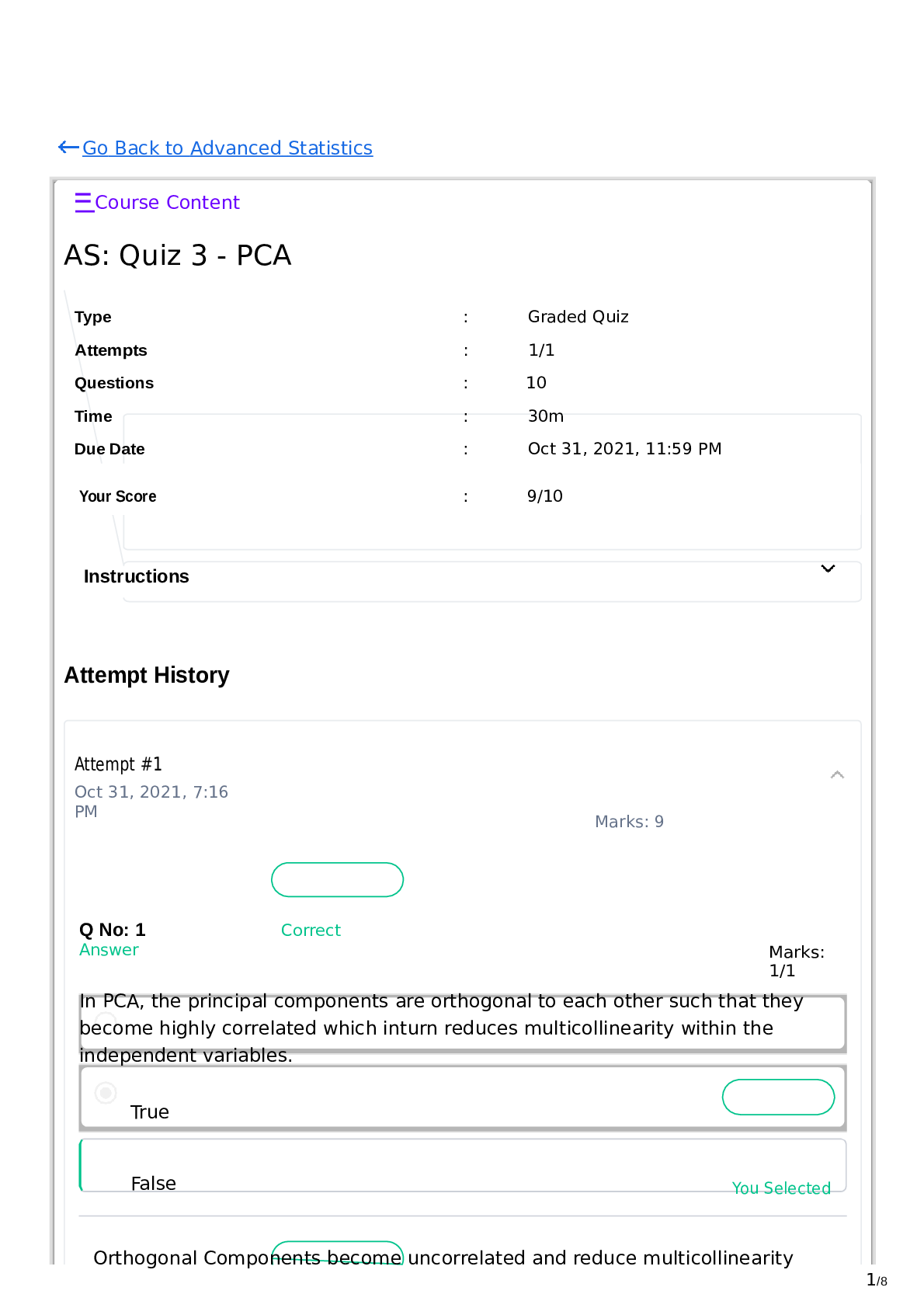
Statistics > QUESTIONS & ANSWERS > AS_ Quiz 3 - PCA_ Advanced Statistics - Great Learning. Graded Quiz. Score 9/10 (All)
AS_ Quiz 3 - PCA_ Advanced Statistics - Great Learning. Graded Quiz. Score 9/10
Document Content and Description Below
Last updated: 3 years ago
Preview 1 out of 12 pages
Instant download
Buy this Document to get the Full Access Instantly
Provided by Students Who Aced it
We Verify Document Content to Gurantee Accuracy
Reviews( 0 )
Document information
Connected school, study & course
About the document
Uploaded On
Apr 18, 2023
Number of pages
12
Written in
All

Additional information
This document has been written for:
Uploaded
Apr 18, 2023
Downloads
0
Views
141
Topic Tags
Related Subjects & Courses
Explore similar study resources and related concepts.
Recommended For You
Get more on QUESTIONS & ANSWERS ».png)
TEST BANK for Business Statistics, 4e Norean Sharpe, Richard V...
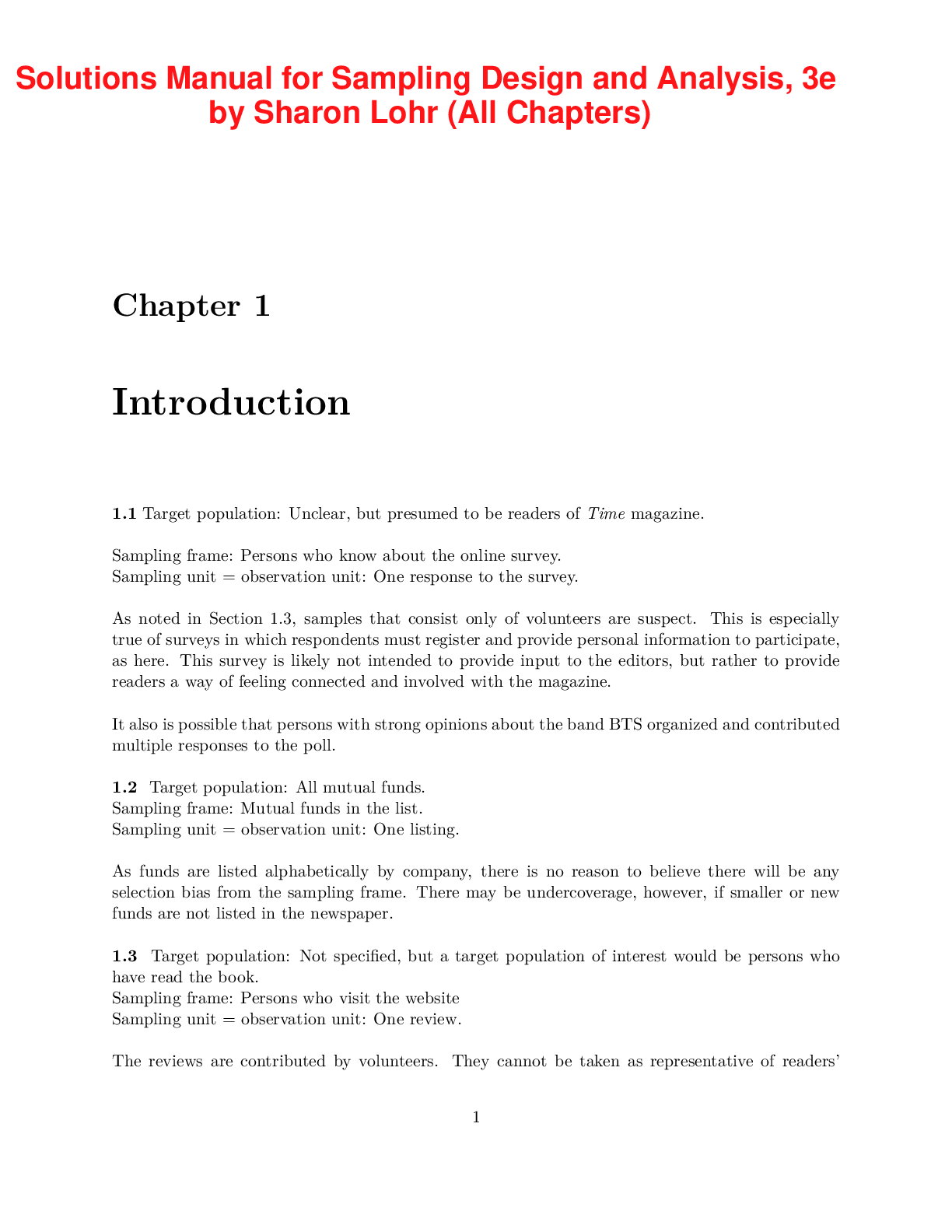
Sampling Design and Analysis, 3e by Sharon Lohr (Solutions Man...

Statistics: Informed Decisions Using Data, 6th edition Michael...

The Basic Practice of Statistics, 9th Edition Moore, Notz, Fli...

Probability, Statistics, and Data A Fresh Approach Using R, 1s...

Solutions Manual for Modern Data Science with R, 2nd Edition b...

Foundations of Statistics for Data Scientists With R and Pytho...
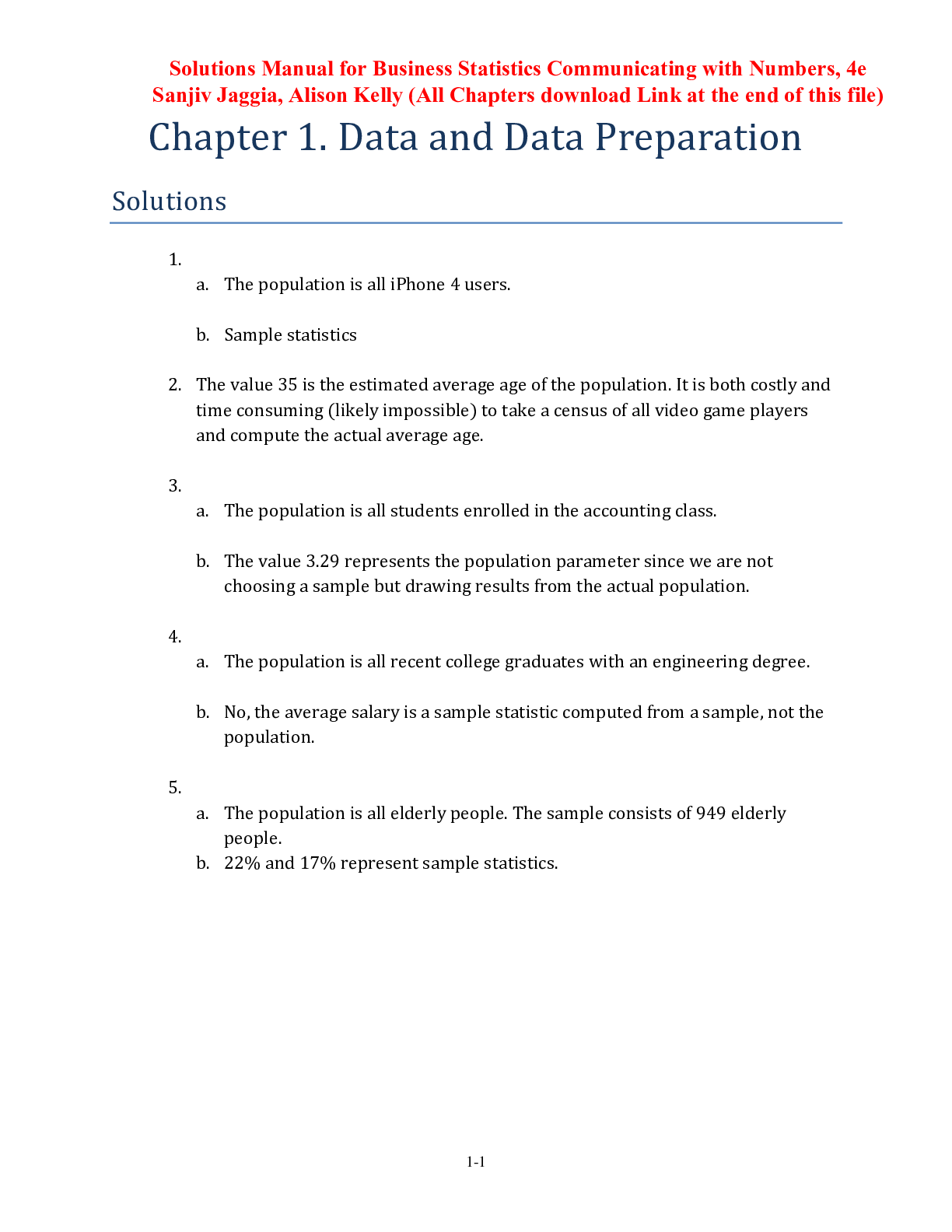
Solutions Manual for Business Statistics Communicating with Nu...

Introduction to Mathematical Statistics 7th Edition By Robert...
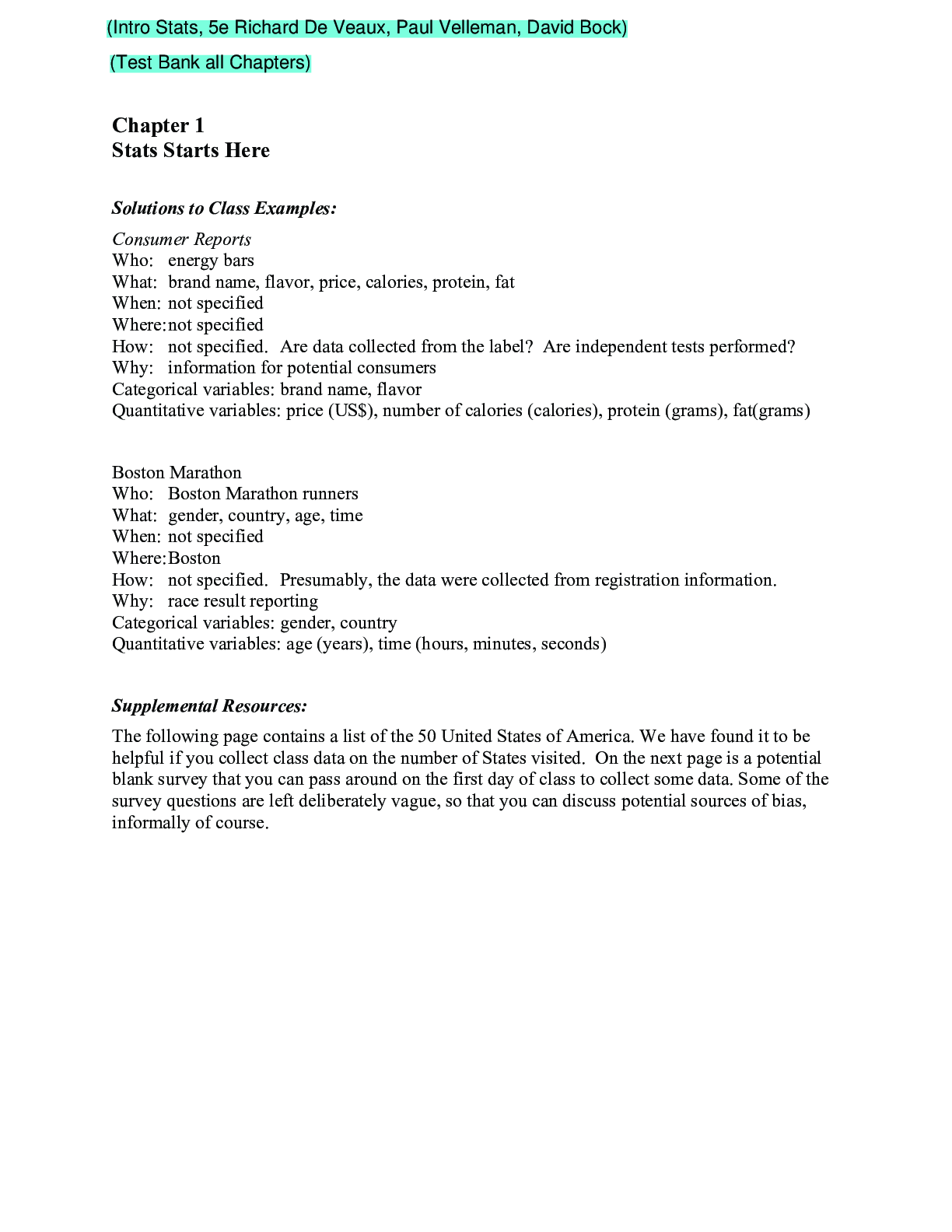
Intro Stats, 5e Richard De Veaux, Paul Velleman, David Bock (T...
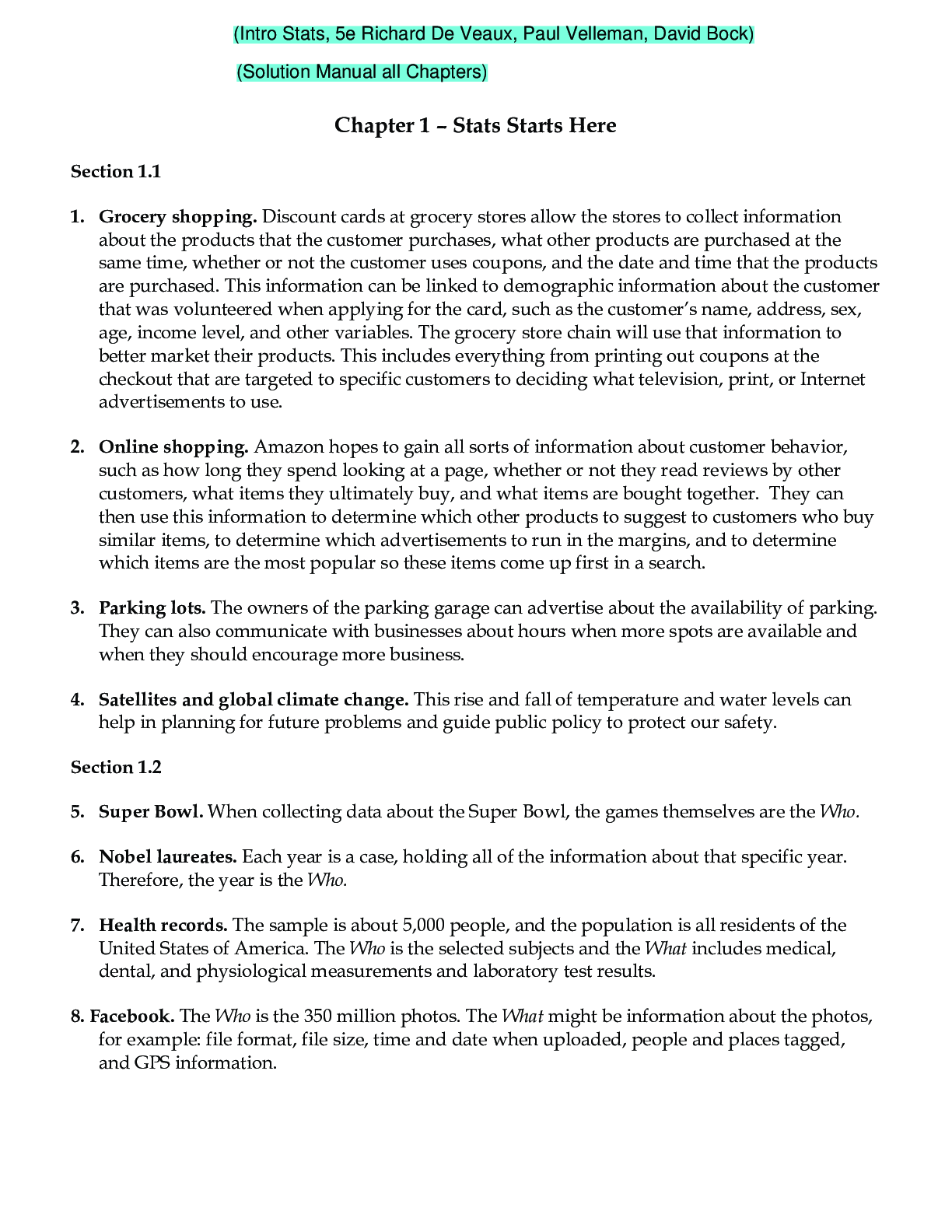
Intro Stats, 5e Richard De Veaux, Paul Velleman, David Bock (S...


Exploratory Data Analysis Using R, 1e Ronald Pearson (Solution...

Test Bank for Elementary Statistics A Step By Step Approach 10...
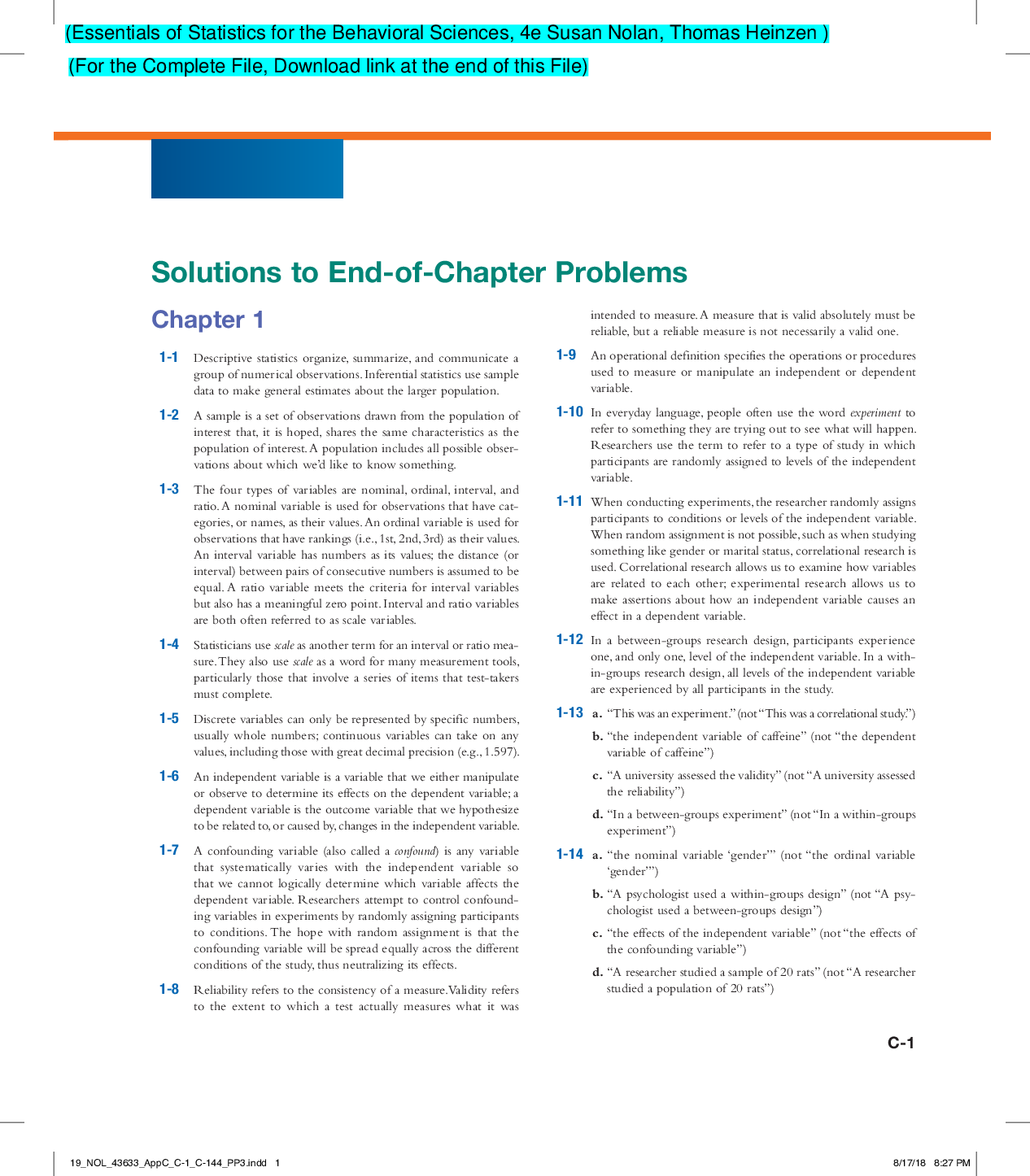
Essentials of Statistics for the Behavioral Sciences, 4e Susan...

Essentials of Statistics for Business and Economics, 9e David...

Essentials of Statistics for Business and Economics, 8e David...
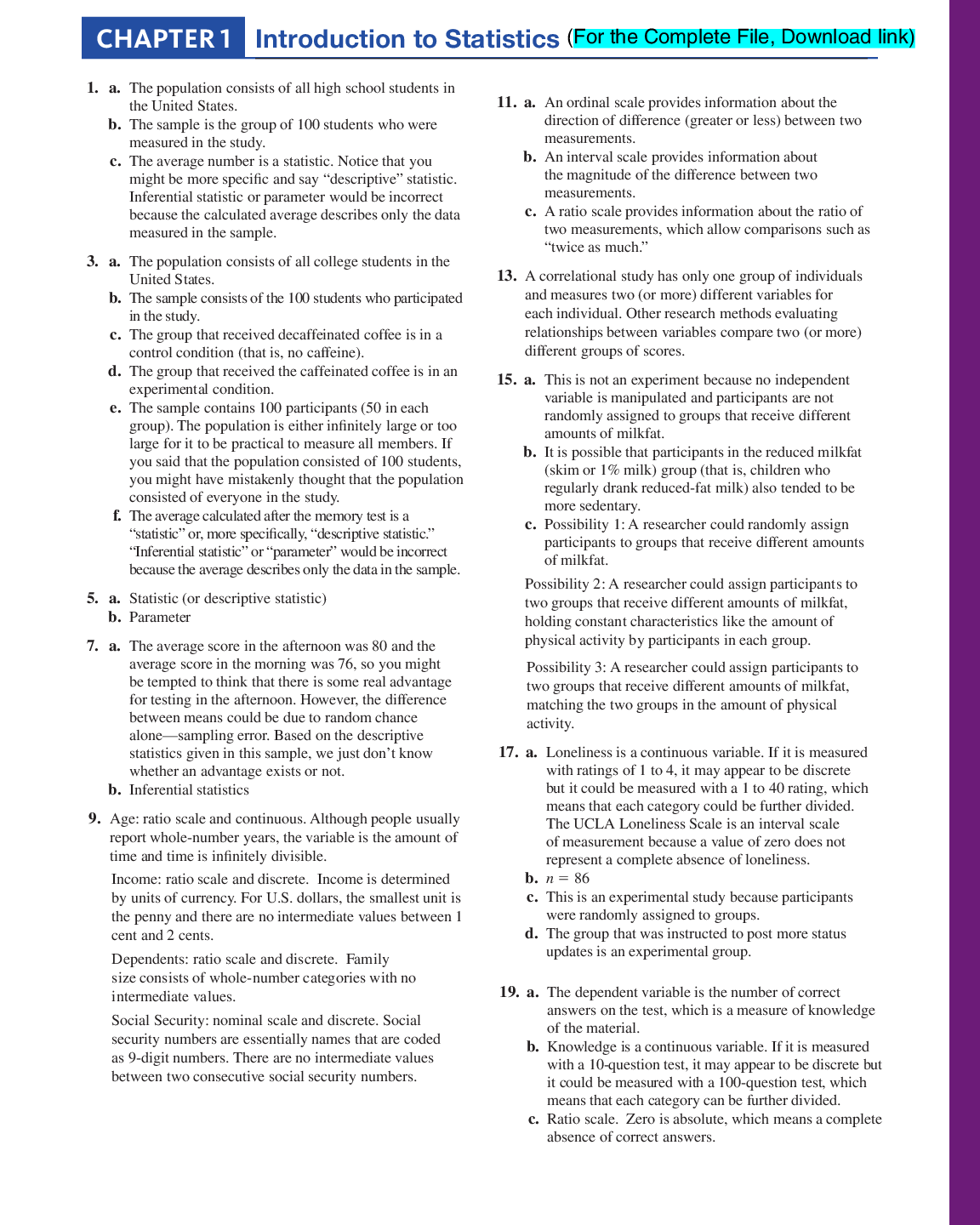
Essentials of Statistics for the Behavioral Sciences, 10e Fred...

Essentials of Business Statistics 5e Bruce Bowerman Richard O'...