International Business > QUESTIONS & ANSWERS > International Business _ BSBA-1 Chapter 9: THE FOREIGN EXCHANGE MARKET (All)
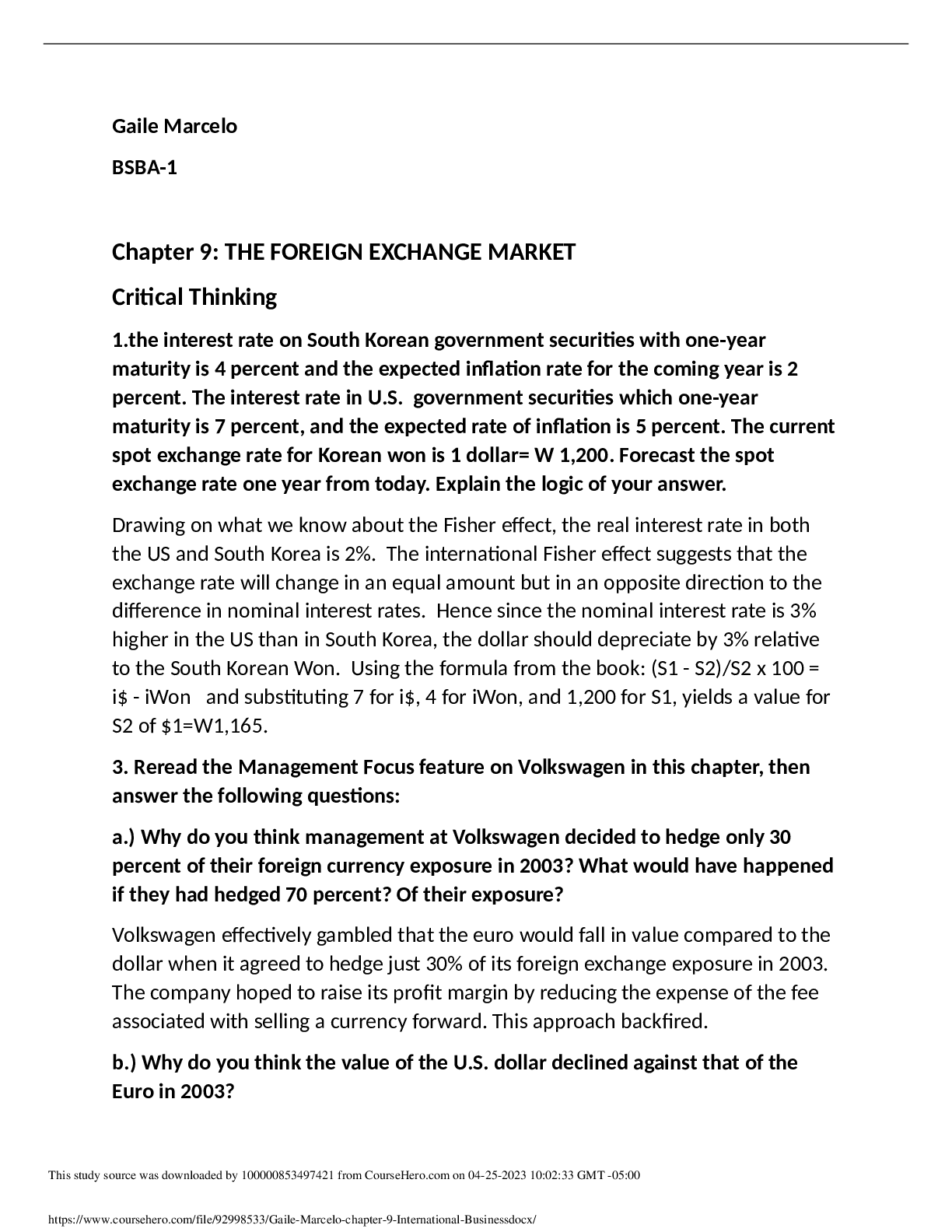
International Business _ BSBA-1 Chapter 9: THE FOREIGN EXCHANGE MARKET
Document Content and Description Below
Last updated: 3 years ago
Preview 1 out of 4 pages
Instant download
Buy this Document to get the Full Access Instantly
Provided by Students Who Aced it
We Verify Document Content to Gurantee Accuracy
Reviews( 0 )
Document information
Connected school, study & course
About the document
Uploaded On
Apr 29, 2023
Number of pages
4
Written in
All

Additional information
This document has been written for:
Uploaded
Apr 29, 2023
Downloads
0
Views
116
Topic Tags
Recommended For You
Get more on QUESTIONS & ANSWERS »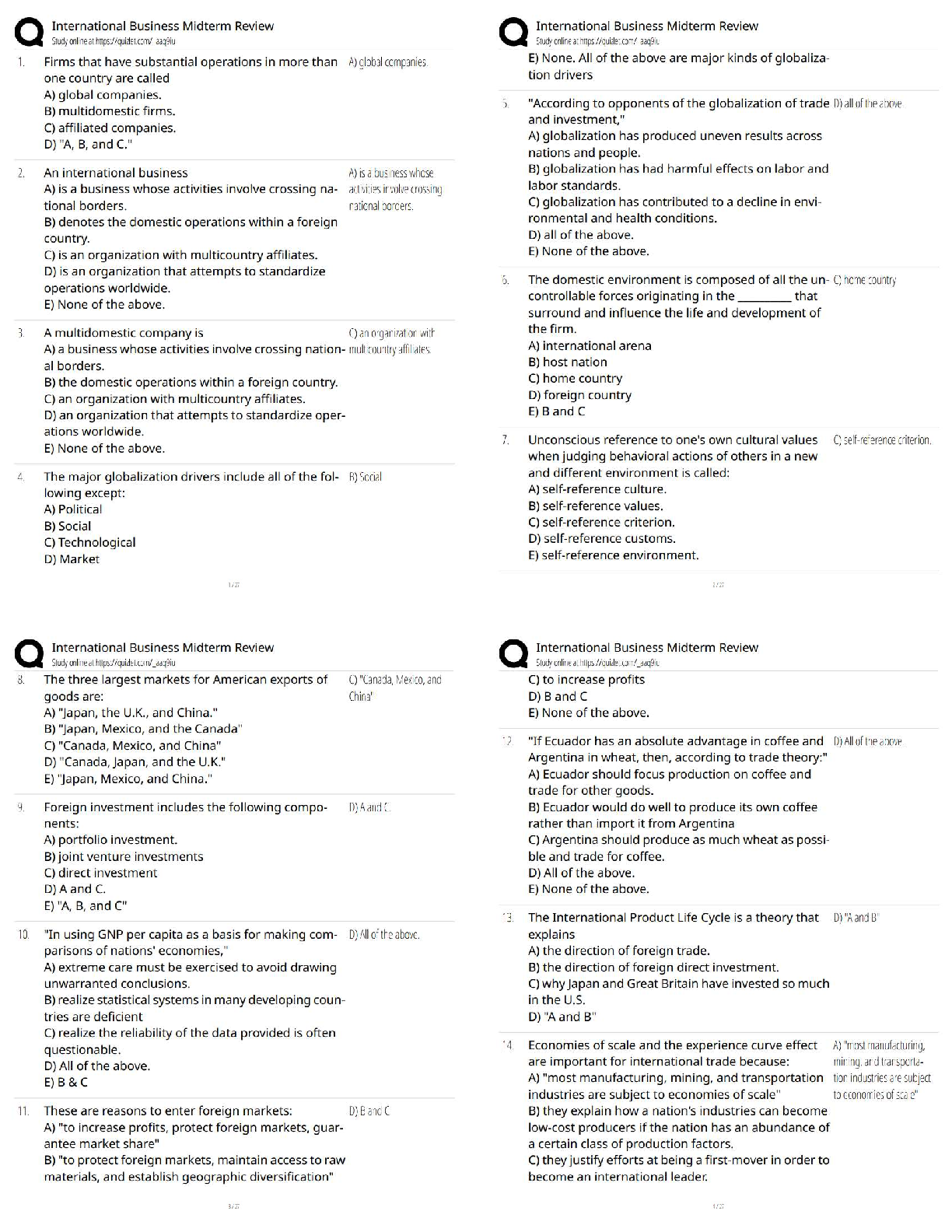
International Business The New Realities, 5e Cavusgil, Knight,...
International Business 8e Michael Czinkota, Iikka Ronkainen, M...

Test Bank for International Business The New Realities 5th Edi...

SOLUTIONS MANUAL for International Business, Competing in the...
Solution Manual For International Marketing 11th Edition by Mi...
Solution Manual for Global Business, 5th Edition by Mike W. Pe...
Solution Manual For International Financial Management 14th Ed...


eBook Entrepreneurship 5th Edition By Andrew Zacharakis, Willi...

The Intentional Relationship Occupational Therapy and Use of S...
International Financial Management 14th Edition by Jeff Madura...