Ethical Hacking > QUESTIONS & ANSWERS > Certified Ethical Hacker -WGU C701 Already Passed (All)
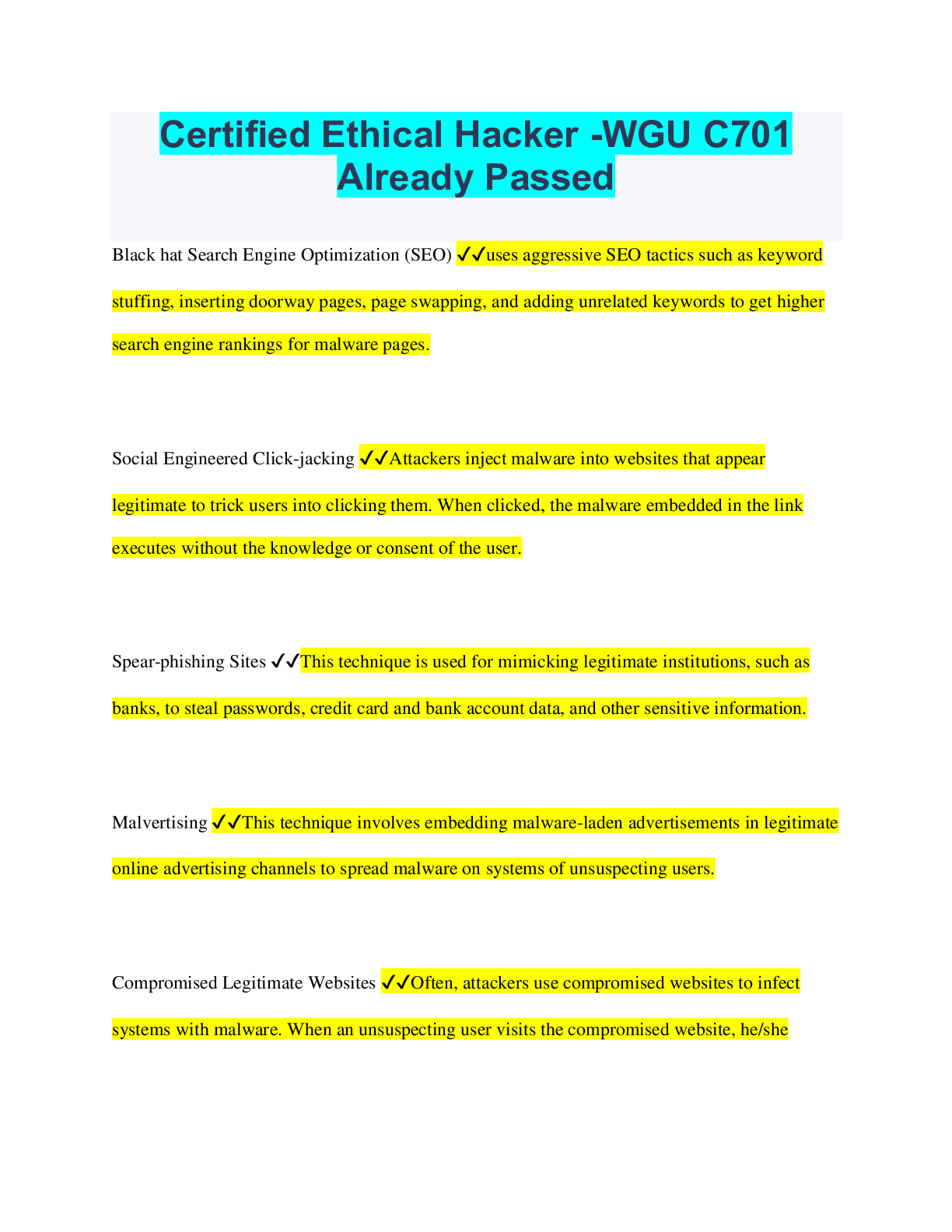
Certified Ethical Hacker -WGU C701 Already Passed
Document Content and Description Below
Last updated: 3 years ago
Preview 1 out of 33 pages
Instant download
Buy this Document to get the Full Access Instantly
Provided by Students Who Aced it
We Verify Document Content to Gurantee Accuracy
Also available in bundle (1)
Click Below to Access Bundle(s)

WGU Master's Course C701 Bundled Exams with Verified Solutions
WGU Master's Course C701 Bundled Exams with Verified Solutions
By Nutmegs 3 years ago
$15
5
Reviews( 0 )
Document information
Connected school, study & course
About the document
Uploaded On
May 21, 2023
Number of pages
33
Written in
All

Additional information
This document has been written for:
Uploaded
May 21, 2023
Downloads
0
Views
398
Topic Tags
Recommended For You
Get more on QUESTIONS & ANSWERS »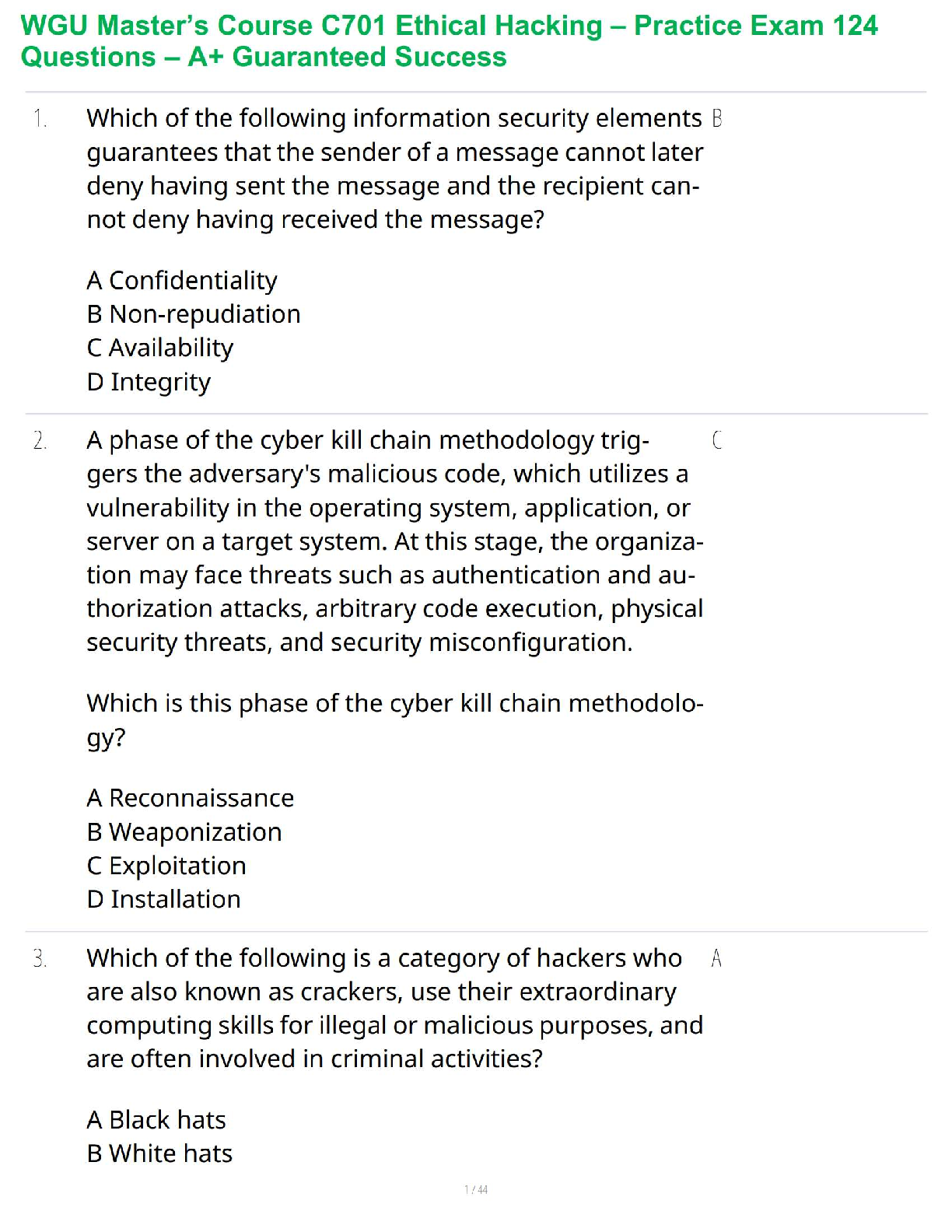
WGU Master’s Course C701 Ethical Hacking – Practice Exam 124 Q...
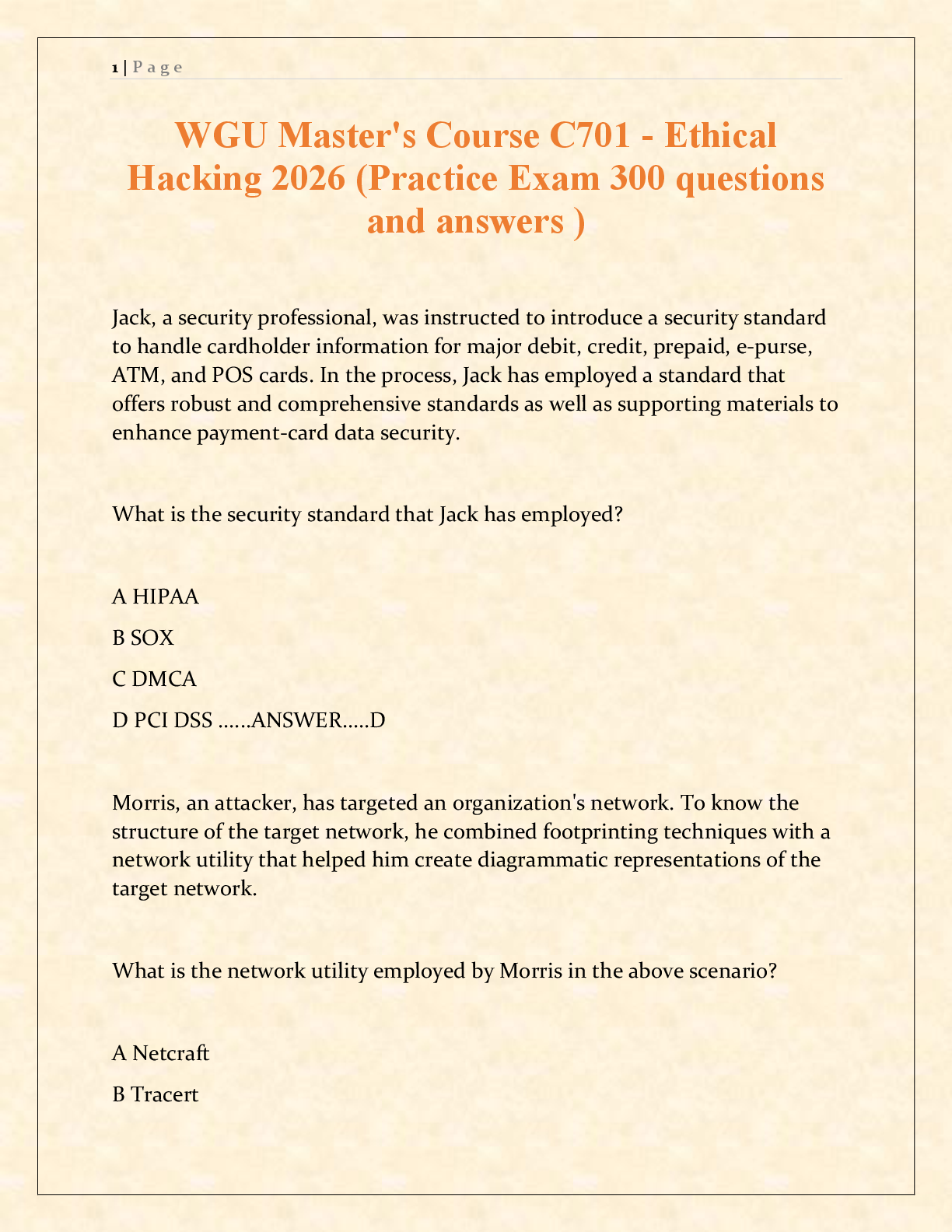

WGU Master's Course C701 - Ethical Hacking Questions And Answe...

WGU Master's Course C701 - Ethical Hacking (Practice Exam 124...
Liberty University - EDUCATION EDUC 701 apa quiz Latest 2021 R...
.png)
WGU Master's Course C701 - Ethical Hacking (Practice Exam 124...

PHI 2000 Introduction to Ethics Final Exam Sophia Course/PHI 2...

Hands-On Ethical Hacking and Network Defense, 4e Rob Wilson (T...
Hands-On Ethical Hacking and Network Defense, 4e Rob Wilson (S...
.png)
.png)
ENV 101 Introduction to Environmental Science Study Guide for...
Sophia Ethics Test Bank - Final Study Guide - All Units Combin...
🔐 E-CES 212-81 Module 5: Cryptanalysis – Study Guide & Exam P...
Liberty University - ETHICS 205 Test 24 Latest Study Guide (La...

 UHC Ethics & Compliance 2022.png)