LCDC Exam Questions and Answers
100% Pass
12 Core Functions ✔✔1. Screening
2. Intake
3. Orientation
4. Assessment
5. Treatment Planning
6. Counseling
7. Case Management
8. Crisis Intervention
9. Client Educatio
...
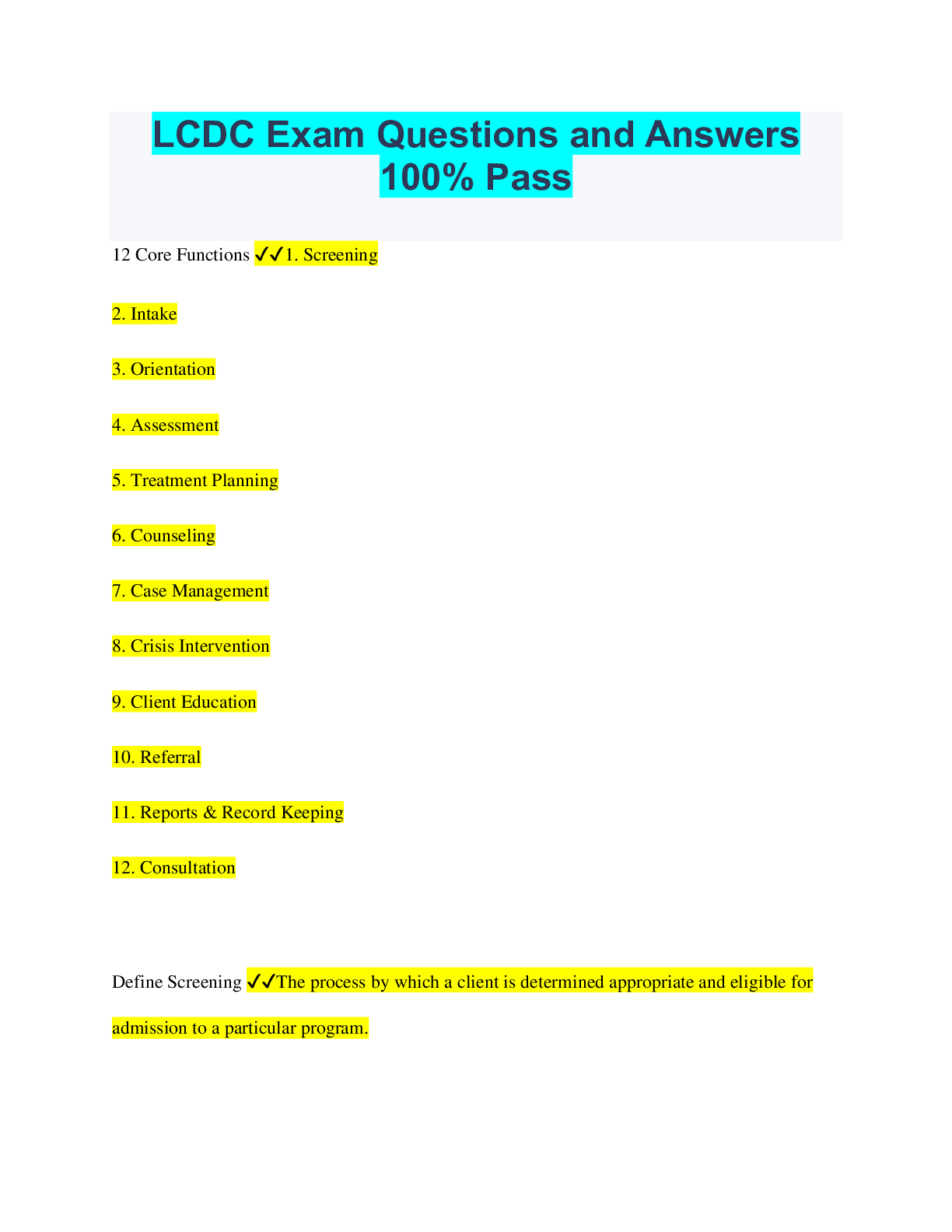
LCDC Exam Questions and Answers
100% Pass
12 Core Functions ✔✔1. Screening
2. Intake
3. Orientation
4. Assessment
5. Treatment Planning
6. Counseling
7. Case Management
8. Crisis Intervention
9. Client Education
10. Referral
11. Reports & Record Keeping
12. Consultation
Define Screening ✔✔The process by which a client is determined appropriate and eligible for
admission to a particular program.
Define Intake ✔✔Administrative and initial assessment procedures for admission to a program.
Define Orientation ✔✔Describing to the client the general nature and goals of the program; the
rules governing client conduct and infractions that can lead to disciplinary action or discharge
from the program, the hours during which services are available; the treatment costs that are to
be borne by the client, if any; and the client's rights.
Define Assessment ✔✔Those procedures by which a counselor/program identifies and evaluates
an individual's strengths, weaknesses, problems, and needs for the development of the treatment
plan.
Define Treatment Planning ✔✔The process in which the counselor and the client identify and
rank problems needing resolution, establish agreed upon immediate and long-term goals, and
decide on the treatment methods and resources to be used.
Define Counseling ✔✔The utilization of special skills to assist individuals, families, or groups in
achieving objectives through exploration of a problem and its ramifications; examination of
attitudes and feelings; consideration of alternative solutions; and decision making.
Define Case Management ✔✔Activities intended to bring services, agencies, resources, or
people together within a planned framework of action toward the achievement of established
goals. It may involve liaison activities and collateral contacts.
Define Crisis Intervention ✔✔Those services which respond to an alcohol and/or other drug
abuser's needs during acute emotional and/or physical distress.
Define Client Education ✔✔Provision of information to individuals and groups concerning
alcohol and other drug abuse and the available services and resources.
Define Referral ✔✔Identification of client's needs that cannot be met by the counselor or agency
and assisting the client to use the support systems and community resources available.
Define Reports and Record Keeping ✔✔Charting the results of the assessment and treatment
plan; writing reports, progress notes, discharge summaries, and other client-related data.
Define Consultation ✔✔Relating with counselors and other professionals in regard to client
treatment (services) to assure comprehensive quality care for the client.
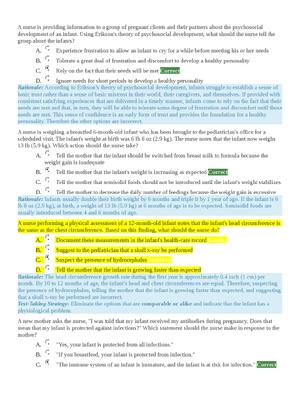
Psychosocial Stage: Infancy (Birth to 18 months) ✔✔Trust vs Mistrust:
Psychosocial Stage: Early Childhood (2 to 3 years) ✔✔Autonomy vs Shame and Doubt
Psychosocial Stage: Preschool (3 to 5 years) ✔✔Initiative vs Guilt
Psychosocial Stage: School Age (6 to 11 years) ✔✔Industry vs Inferiority
Psychosocial Stage: Adolescence (12 to 18 years) ✔✔Indentity vs Role Confusion
Psychosocial Stage: Young Adulthood (19 to 40 years) ✔✔Intimacy vs Isolation
Psychosocial Stage: Middle Adulthood (40 to 65) ✔✔Generativity vs Stagnation
Psychosocial Stage: Maturity (65 to death) ✔✔Ego Integrity vs Despair
The 12 Steps: Step 1 ✔✔We admitted we are powerless over our addiction--that our lives had
become unmanageable.
The 12 Steps: Step 2 ✔✔Came to believe that a Power greater than ourselves could restore us to
sanity.
The 12 Steps: Step 3 ✔✔Made a decision to turn our will and our lives over to the care of God as
we understood God.
The 12 Steps: Step 4 ✔✔Made a searching and fearl
[Show More]