Mathematics > QUESTIONS & ANSWERS > Questions and Answers > Worcester Polytechnic Institute - CS 584Homework 2 Solutions. CS 584 Algorit (All)
Questions and Answers > Worcester Polytechnic Institute - CS 584Homework 2 Solutions. CS 584 Algorithms: Design and Analysis. Solutions for Homework 2
Document Content and Description Below
Last updated: 3 years ago
Preview 1 out of 4 pages
Instant download

Buy this Document to get the Full Access Instantly
Provided by Students Who Aced it
We Verify Document Content to Gurantee Accuracy
Reviews( 0 )
Document information
Connected school, study & course
About the document
Uploaded On
Feb 11, 2021
Number of pages
4
Written in
All

Additional information
This document has been written for:
Uploaded
Feb 11, 2021
Downloads
0
Views
198
Topic Tags
Recommended For You
Get more on QUESTIONS & ANSWERS »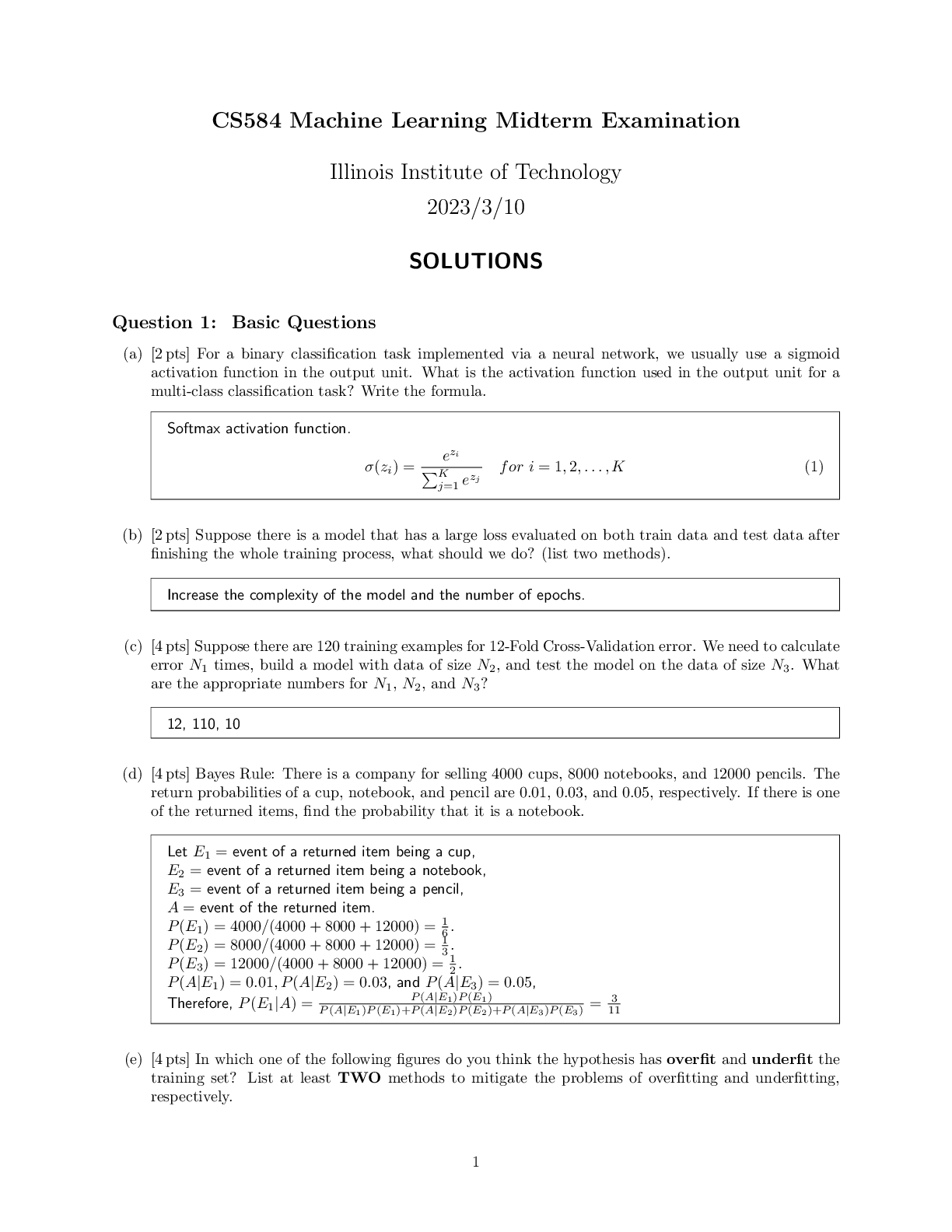
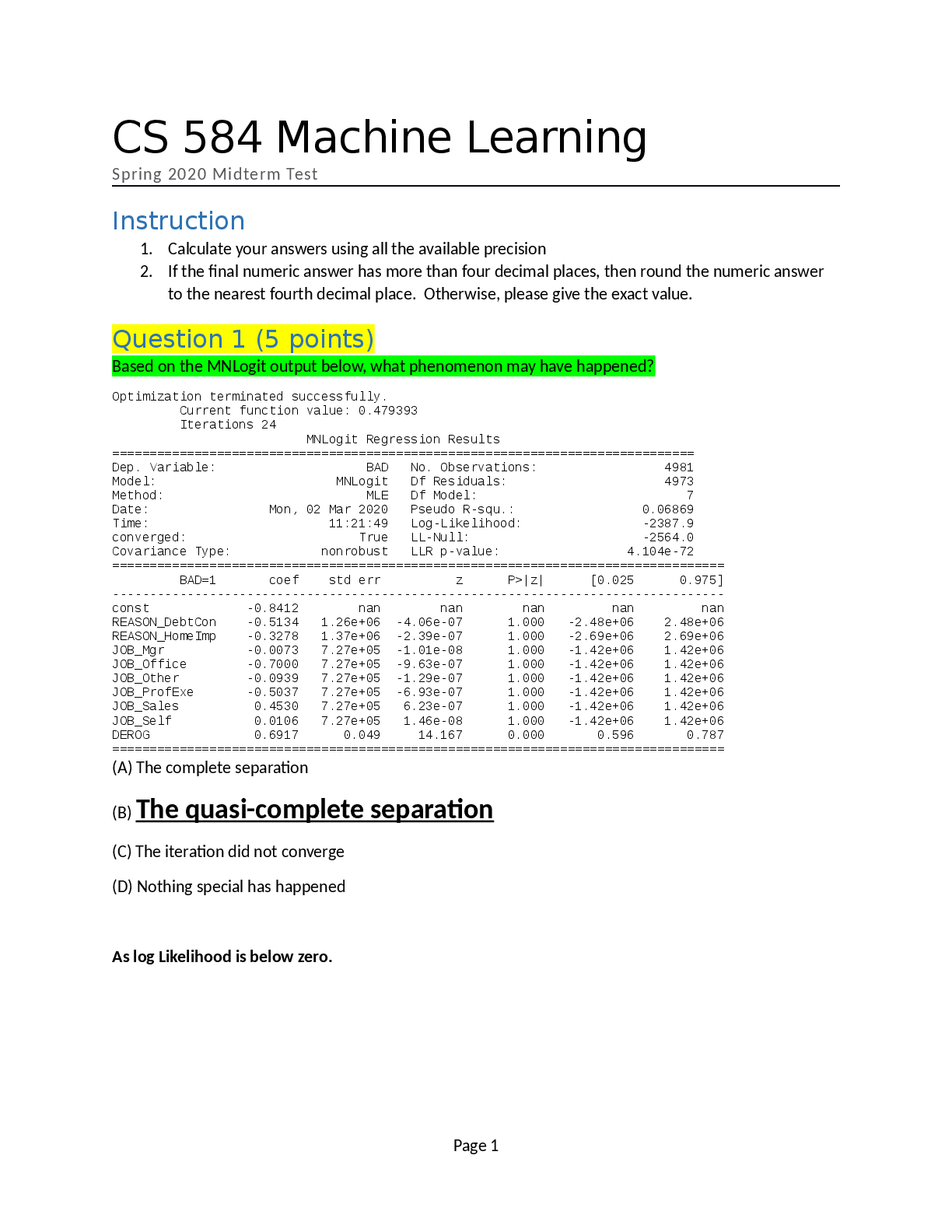
CS 584 Machine Learning Midterm Examination SOLUTIONS - Illino...
Discrete Mathematics and Its Applications 8th Edition by Kenne...
Finite Mathematics & Its Applications, 13e Larry Goldstein, Da...
.png)
 2e Peter Olver, Chehrzad Shakiban.png)
Applied Linear Algebra (Undergraduate Texts in Mathematics) 2n...
Student Solutions Manual for Mathematics for Economics, 4th Ed...

Probability & Statistics Homework 2: Theoretical Probability:...